
To his readers, Thornton Wilder’s life may as well have begun in 1926, when at age 29 he published his first novel, The Cabala. It was followed almost immediately by his smash hit, The Bridge of San Luis Rey, which earned him his first of three Pulitzer Prizes. But in those years preceding his meteoric rise to literary acclaim, as Wilder honed his writing skills and began to flirt with many of the literary strands and conventions that would come to run through many of his works, he had already endured a number of deep infatuations and devastating heartbreaks that seemed to form the basis of his views on love and, with them, a resistance to sexual openness and romantic pursuit. The experiences in this period of young adulthood, when many are developing an understanding of their innate sexual desires and romantic attractions, have largely been overshadowed in Wilder’s biographic works by a singular, albeit protracted, affair with Samuel Steward that would begin in Switzerland in the mid-1930s.
Nevertheless, Wilder’s letters, journals, and friendships suggest that he grappled with, and was surrounded by, homosexuality throughout his long life. One may glean from them that for Wilder, shared emotional connection over art and literature was as, or probably more, critical to a same-sex infatuation than physical lust. On the heels of heartbreak in his late twenties, Wilder appears to have separated these two components of attraction, prioritizing emotional satisfaction—which could be achieved through close friendships regardless of gender or sexual orientation—over fulfillment of physical desire, which he embraced when opportunities presented themselves. Nevertheless, Wilder’s biographers have focused primarily on fulfillment of physical same-sex desire as the determining factor in considering whether Wilder was a gay man, or at least a person who experienced same-sex attractions. Their approach is at odds with modern conceptions of gayness, which recognizes same-sex emotional intimacy as central to the experience as physical consummation.
Perhaps Wilder’s reprioritization of platonic friendships over same-sex infatuations just at the time his star was rising can account for why his sexuality never had the firm hold on his reputation in the way that contemporary Tennessee Williams’s did. Wilder was able to fly under the radar, and any allusions to homosexuality in his plays (such as Our Town’s Simon Stimson) existed well beneath the surface; his work, the focus of public consumption, was existential, but on a global or universal scale. There were no Bricks or Skippers in Grover’s Corners.
But that’s not to say that gay undercurrents are not there. In her 1979 biography Thornton Wilder: His World, Linda Simon declares confidently that Wilder, “did not bring his own sexuality to his works,” a notion that has been parroted by others.1 But is that really the case? Or is it only just there for those willing to see?
What can we glean, for instance, about his experiences of masculinity and tenderness in that most essential same-gender interaction between father and son? If Our Town’s Stage Manager is widely seen as a proxy for Wilder, and we accept that Wilder was a man who experienced a lifetime of same-sex attraction, how does that reshape our notion of that character’s wisdom and role in the town and the text, not to mention his possible counterpart in town drunk Simon Stimson? And if camp and diva worship are regarded as shared culture experiences among many gay men, what does it mean that Wilder, who himself was prone to idolizing the women in his family and social circles, created a magnetic role for gay icons in Dolly Levi?
“I’m going to have a copy of this play put in the cornerstone and the people a thousand years from now’ll know a few simple facts about us,” the Stage Manager says of Our Town. “This is the way we were: in our growing up and in our marrying and in our living and in our dying.”2
Thanks to the mountain of paper he left behind—as well as the family who have made those papers public, and the biographers, archivists, and scholars who have parsed and organized it—we have a strong handle on his growing up, his living, and his dying. Though there never was a “marrying” Wilder, there was most certainly a loving Wilder. Our handle on that part of him is much weaker.
For better or worse, the biographic road to Wilder’s sexual reputation often begins and ends with historian, artist and writer Samuel Steward. He is the elephant in the room, the bull in the china shop, and, seemingly, the thorn in Wilder’s private side.
But his persistent presence in Wilder’s biography is itself remarkable, in light of inconsistencies and embellishments of his drawn-out tale, told in fits and starts over years. Against the reserved Wilders and prim intelligentsia with which Wilder was known to associate, Steward is an exceptional case. In many ways, he is an anti-Wilder in his elaborations, his sexual openness, and his aversion to abstraction when discussing the deepest parts of one’s soul. If Wilder is the mayor of Grover’s Corners, Steward is decidedly its “bad boy.” And despite varying views on his reliability, shaking him out of Wilder’s story has proven an impossible endeavor. His connection with Wilder’s rumored attraction is practically as old as the rumors themselves; some would argue he started them.
But the facts of their initial meeting are among the few that go uncontested: Steward and Wilder met in Zurich, Switzerland in 1937 on the suggestion of their mutual friend, Gertrude Stein.3 The story of their association begins to muddle there. In Steward’s account, he had the dual-charge from Stein to deliver a vest that Wilder had reportedly left behind in Paris and to use the errand to discuss his own literary aspirations with a man whose work had already garnered the first of three Pulitzer Prizes. While there is no tangible evidence to back up many of Steward’s claims—namely that they engaged in some degree of sexual, non-penetrative activity and that a walk in the rain inspired the opening of the final act of Our Town—there is plenty of evidence in Wilder’s papers that they met; discussed the work of Walt Whitman (of whom Wilder had once described himself as the literary “grandson”4), Herman Melville, and other suspected gay authors; and continued their correspondence for some years thereafter with additional meetings in other cities.5 It was in one of those cities and during one of those meetings that Wilder left behind his watch, which Steward kindly returned to his hotel.6
Aside from poet and longtime Wilder friend Glenway Wescott, who Gilbert Harrison quotes in his 1983 Wilder biography The Enthusiast, Steward is the foremost and earliest named source regarding Wilder’s same-sex attraction. His initial appearance in the Wilder biographical canon is Simon’s Thornton Wilder: His World, but she skirts the details of their affair, omitting the sexual aspects of the relationship on which Steward would later elaborate to Harrison. She primarily suggests that the two were “friend[s]” and quotes an anonymous acquaintance (who is also likely Steward) with an air of exasperation: “[Wilder] was perhaps the most closeted one of his day…Despite all his advice and lecturing about the great homosexuals of the past, he would not have dared admit he was one of them; and all his life was spent in a series of elaborate charades to explain away his bachelorhood.”7
Harrison’s accounting for Wilder’s sexual orientation, to which he devotes a brief chapter, is notable in the degree to which he attempts to somehow balance Steward and Wescott’s suggestions with testimony to the contrary. “The idea that Thornton’s attraction to men had a strong erotic component was challenged by many who knew him well,” Harrison writes, referencing friends and colleagues Bill Nichols, Terry Lewis, Jerome Kilty, William Roerick, Charles Newton, and Frank Harding.8 Indeed Kilty insists that Wilder was, “a most fastidious man,” and, to Harding, “a neuter.”9
Penelope Niven, whose 2012 Thornton Wilder: A Life was published three decades after Simon and Harrison’s works, is more explicit in her examination and evaluation of Steward’s accounts and reputation. She is also more adamant about debunking his claims, carefully cataloging Steward’s embellishments and offering them as evidence of an unreliable narrator. In rehashing his quest to seduce an aged Lord Alfred Douglas as a means to spiritually connect with a long-dead Oscar Wilde, a pilgrimage inspired by a lesser connection to an associate of Whitman, she casts Steward as an attention-seeking star chaser with a bent for spurious scandal more than a credible once- or several-time lover of Wilder.10 She considers, appropriately, but begrudgingly, that both may be true.
But despite the thirty years of social progress between Simon’s biography and Niven’s, and the developed understanding of all that encompasses a gay life, the biographers consistently hinge Wilder’s sexuality on proof of physical consummation. Perhaps as the only major account of such an event, Steward’s unshakable place in Wilder’s history is a direct result of that reductive reliance on physical proof as confirmation of same-sex attraction, whether his story is entirely true to the letter or not. But just because Steward’s experience is the first we know of does not mean it was the only one.
The focus on Steward’s story and the physical act of sex reinforces an outdated notion of “homosexuality” as a transactional act, rather than a holistic life experience. In its singularity, Steward’s account has also become the standard from which all other discussions of Wilder’s sexuality are measured:
“Thornton went about sex almost as if he were looking the other way, doing something else, and nothing happened that could be prosecuted anywhere, unless frottage can be called a crime. There was never even any kissing.”11 Steward continues, “if there were others, I knew nothing of them, for there was a double lock on the door of the closet in which he lived…He could never forthrightly discuss anything sexual; for him the act was quite literally unspeakable. His Puritan reluctance was inhibiting to me as well…”12
Steward’s account in combination with the absence of further proof of physical consummation, the resistance of friends to discuss Wilder’s sexuality, and the insistence that Wilder was a “private man,” whose half-century-old inhibitions are to be still adhered to by scholars has forged a picture of a man who was repellent to sex and romantic attraction.13
In Richard Goldstone’s 1975 biography Thornton Wilder: An Intimate Portrait, which precedes the published accounts of Steward’s story, the author contrasts Wilder with a range of authors who are known to experience same-sex attraction.
“Most men in their late adolescence or even in their twenties commit themselves—sometimes deliberately, sometimes purposefully, but usually unquestioningly—to a heterosexual existence leading to marriage, children, and a circle of friends and acquaintances who have made similar commitments,” Goldstone writes.14 He then compares Wilder to Thomas Mann, Wilde, and Marcel Proust, among others, but concludes, “in contrast to all these examples, Wilder chose to make no commitment at all…Wilder’s capacity for both love and affection increased with the distance that separated him from the object of those feelings.”15 Of course, in Our Town, The Skin of Our Teeth, and The Matchmaker, Wilder extols the very family experiences Goldstone has him rejecting, though never adopts them for himself.
Others have taken Goldstone’s notion that Wilder actively turned himself off from any flirtations with same-sex attraction a step further, to say that Wilder was somehow obtuse to his own desires, or outright unaware of them. In a Library of America note to an essay from Wilder on sex during his time at Yale, the editors assert this clearly: “He was homosexual—though never openly so, probably not even to himself.”16
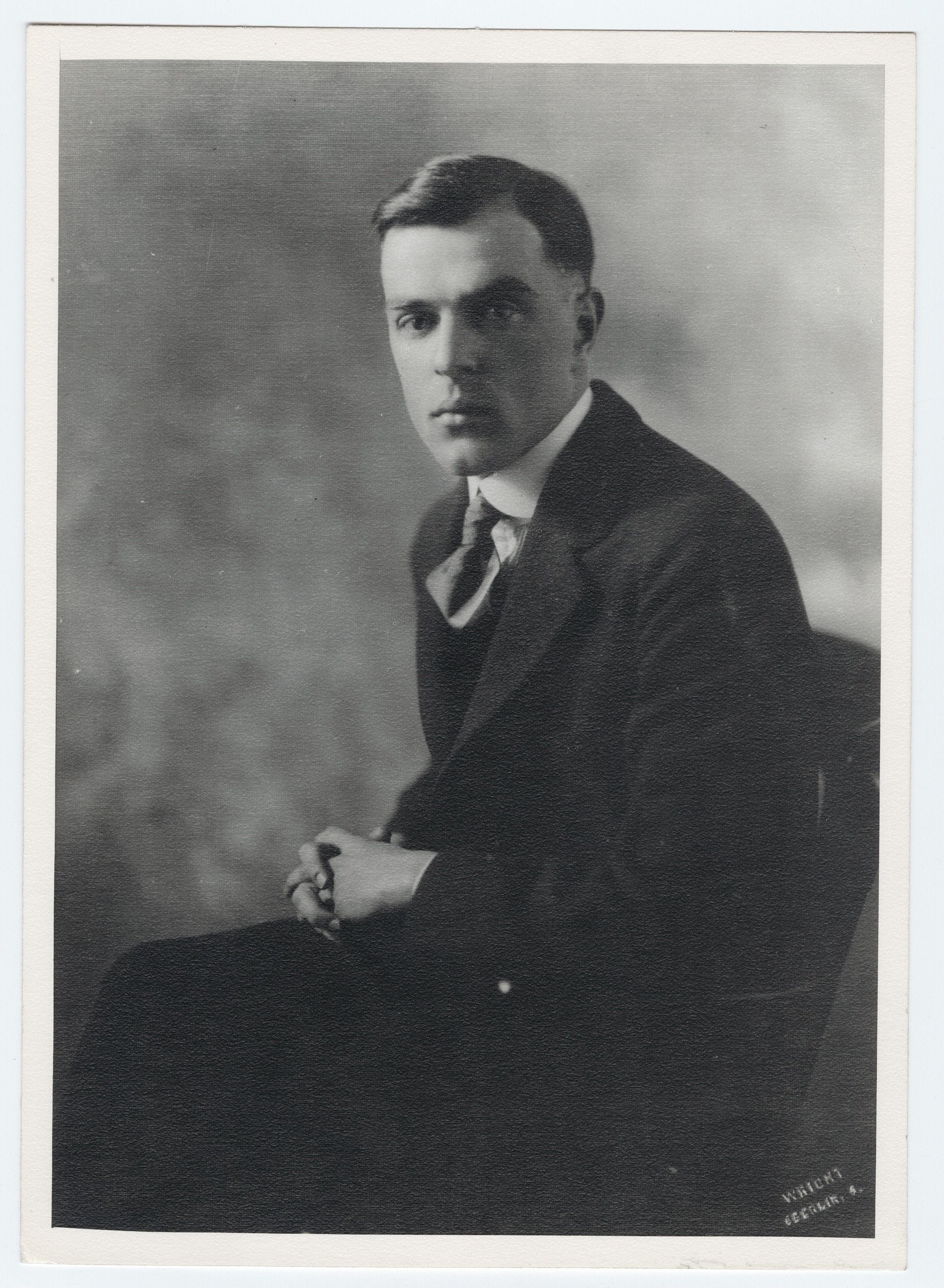
While Niven, for her part, refrains from making an ultimate judgment as to whether Wilder was gay, she does confidently assume his motives, had he purposefully concealed his attractions: “He would have instinctively protected his own privacy as well as that of his sex partners, not out of hypocrisy but out of affection, out of courtesy, out of propriety, out of respect for others, and himself.”17
This attitude ignores the intimacy, however abstract, that can be found in Wilder’s letters as a younger man in the throes of his first experiences with love and infatuation.18 His messages to Dr. Charles Wager, a married Oberlin professor twenty years his senior, as a young mentee betray that image of the older Wilder as uptight and sexless. In these letters, many written before Wilder had any sense of the kind of fame he’d achieve, we see the excitement of his affections and infatuations. Wilder hints at his heightened feelings, his fascination with male bodies, and the sense of emotional connection he achieves with other men. They are more obvious than one would expect of a man who engages in such “elaborate charades.”19 These infatuations, which center on classmates and acquaintances, are described by Niven as “hero worship,” but their language and the circumstances of the meetings they describe imply emotion that transcends polite admiration.20
They also tend to be directed toward people who are not only physically beautiful, but who share Wilder’s intellectual, literary, or artistic interests. Wilder seems to have had an especially strong fascination with actors, beginning with Gareth Hughes, and continuing with Glenn Hunter and then Montgomery Clift, but the inclination was not exclusive.
Hunter was three years older than Wilder when the two met in Rhode Island in 1918.21 Niven describes Hunter’s letters to Wilder (which are the only side of the correspondence that survives), as offering a, “hint of infatuation, if not intimacy.”22 Hunter, who had big aspirations for a stage career, hopes “their relationship could grow through letters,” and includes an invitation for Wilder to rent a room on the same floor of his New York City apartment building so they could live close together.23 In another note, Hunter writes, “I wish I might have a long talk with you just tonight. I need patting on the shoulder by someone—like you—someone with whom I could tell what I hope and dream—how I loved being with you that night—more than you could know.”24 Wilder must have mailed Hunter a photo of himself, which the young man praised: “I like your picture so very much, Thornton, and am glad to have it. I’m going to find a neat little frame for it.”
If he cared enough to send him a photo, and to have developed a relationship in which Hunter felt free enough to be so effusive, one wonders what Wilder’s side of the exchange may have contained. Were there reciprocal hints at romance or sex? Would such letters be sufficient to meet the necessary level of proof?
The episode is reminiscent of another encounter earlier that year with Hughes, who Wilder had been following in newspapers for months. In January, Wilder worked up the nerve to call Hughes and request a meeting under the guise of inviting him to perform at Yale. Their meeting began around 4:30 p.m. in Hughes’ apartment on Waverly Place, and Wilder finally left at 1 a.m. the following morning.25
Wilder wrote of the meeting to Wager—who was aware of Wilder’s infatuation and teased him about it—saying that Hughes was, “Ariel, but more pathetic than Ariel. He is sheer genius and poetry. And when his glasses are off, the divinest thing to look upon that I have ever seen. He was calling the comparatively gloomy and stone-like visitor ‘Thornton dear’ within three-quarters of an hour.”26
Wilder elaborated that Hughes, “didn’t want me to go even then,” and, after making clear Hughes knew Shakespeare “up and down,” Wilder makes reference to Romeo and Juliet: “[he] assured me it was the nightingale and not the lark I heard.”27 The following night, Wilder introduced Hughes to his mother, Isabella, and praised his social skills, as well as his beauty, to Wager. “No one can take his or her eyes off of him.”28
If Wilder was unattuned to his attractions, would he have specified that he could not stop looking at Hughes? Is this unmistakable desire really nothing more than “hero-worship?”
Wilder’s letters on Hughes are not the only examples of romantic and physical yearning in letters to Wager. In October 1917, Wilder described his efforts to get onto The Yale Literary Magazine, including an invited visit to the rooms of one of its editors, Stephen Vincent Benét. Wilder describes in detail the disarray of a small room several men used as their library, stuffed with hundreds of books. While waiting for his appointment to begin, another young man—“a most perfect of southern aristocrats”—entered the room and changed his clothes in front of Wilder.29 Wilder then describes in farcical detail the search for a misplaced sock and the entrances and exits of other boys, including Benét, who took turns reading his spec submissions.
“I myself was obsequious and Uriah Heepish the while but you doubt not that I shall assert myself like Chanticleer in time. But what a glimpse I got of what I thought I would have to go to Oxford for. And I don’t suppose they ever let it occur to them that they are so perfect. It takes one from the jaded middle-class, one too used to pinching and window-shopping and chatting with the grocers sons to really appraise the amenities, and timbres of such a group. And to think there was still a fourth I didn’t see.”30
Wilder’s jealous insecurity about his economic standing compared to the boys who hold the power of publication is entwined with an appraisal of their attributes. He refers to the boy who changed his clothing as “fair-haired, good-looking,” and with a “most beautiful southern accent.” A second boy, “a dark one this time with tortoise-shell glasses and a proud subdued air…had a remote and wandering graciousness, that quite equaled in distinction the other boy’s golden casualness.” He seems to indicate that though he is jealous of them, he is drawn to them and, further, he wants to be one of them. What could Wilder have felt, in that small library, as a “perfect” young man stripped before him? He signs the letter, “Thornybusch.”31
In a follow-up letter to Wager, which further chronicles his efforts to get published at Yale and a brief flirtation with joining the ROTC, Wilder closes with another illustration of his envy, this time of a boy still at Oberlin. “I can imagine that it is beginning to get chill and that the little stove in your room is in service again, and that the Socratean Method is penetrating into some others boys’ tempers,” he writes. “Remember the one–the one with the notable face; quite common here however in just that type–the one I am so jealous about, and the one who dared to reproach you about letterwriting. Does he call every Sunday afternoon?” Wilder senses his petty envy emerging and signs off, “But now I’m getting backbitey and take my leave. Your affectionate pupil, Thornton.”32
It’s clear that Wilder felt more comfortable in Wager’s company than that of his patrician classmates at Yale, and that a lifelong reverence of the professor at least began as rooted in an affectionate infatuation. Wilder’s letters to Wager—who is treated as a mentor, friend, and object of affection concurrently—are rife with over-the-top compliments and acknowledgments of his influence. The connection with Wager was likely Wilder’s greatest takeaway from his time in Ohio.
“How many hours I sat under your rostrum, burning with awe and emotion, while you unfolded the masterpieces,” Wilder writes following the success of his novel The Cabala.33 “I am an old fashioned believer and when I assert that I believe that lives are planned out for us I am always thinking of the fact that my father....sent his two sons to Oberlin where the younger could get the nourishment without which he would have remained a bright blundering trivial hysteric.”
These expressions of longing and hints of lust for Hughes, Hunter, and Wager do not support the assertions that Wilder, at least in this early stage of life, was refusing to acknowledge the attractions he was feeling, or was entirely unaware of them. On the contrary, he seems to be admitting to them, albeit with carefully selected language and literary allusion. If the words are not explicit, the subtext is clear.
And of the boys and men in his life at that time, Hughes, Hunter, and Wager do not constitute an exhaustive list: there’s also the “young instinctive prince” he met on Cape Cod in August 1917 and casual correspondence with ballet dancer Hubert Jay Stowitts in 1915.34 And all those possible flirtations, as few or many as there were, of which there are no records; all of this twenty years before he met Samuel Steward.
Even if her extrapolation of Wilder’s personal motives for concealing his sexual relationships later in life is naive, Niven’s assessment of the societal factors at play is painfully level-headed: “[he was] the product of a repressive upbringing in an intolerant, unforgiving, legally repressive era.”35 Following graduation at Yale, Wilder joined the staff at the Lawrenceville School, a then all-boys prep school in New Jersey, in 1921. It would have been extremely difficult for him to have carried on affairs with other men while in residence at the school during the school year. However, the summer and winter breaks would have given him more room to explore, and it appears he did, with heartbreaking results, at least twice.
The sheer volume of letters within the Wilder collection at Yale makes clear that Wilder, who traveled extensively, worked across disciplines and lived 78 years, was a man of many associations. Though not romantically involved with them, he had a knack for developing deep friendships with women, typically older than himself, throughout his life. He recognized this habit early and prophesied its continuance in a 1915 letter to family: “I’m going to be an expert in Old Lady psychology.”36 Among the most enduring friendships of his life were those with Amy Wertheimer, a married woman seven years older than Wilder, and Sybil Colefax, a British socialite and interior decorator thirteen years his senior.
In an autumn 1925 letter to Wertheimer, he makes clear his desire for a platonic female friendship: “I’m looking for a wise, intelligent and fairly tranquil friend. I should like it to be a lady, somewhat older than myself who will understand me so well (so humorously and with a touch of superiority) that I can write conceitedly and she will understand that that’s my only way; trivially, and she will understand that that’s my vacation; tragically, and that that’s my nerves.”37
Establishing this trust and his needs from their relationship, he then alludes to the first of the two heartbreaks, an “awful experience in Europe that left [me] so marred with woe that it is unimaginable that [I] will ever love again.”38 He is purposefully vague about the particulars of what occurred in the midst of this heartbreak, as well as exactly where and when it occurred. As a man who was a regular user of pronouns, he notably avoids them entirely in describing the affair, further avoiding definitive indication of the person’s gender.
As their correspondence deepens over the following weeks, Wilder signals another budding infatuation colored by a mutual affinity for art and literature in the form of a French professor at Princeton, where Wilder was pursuing a Master’s degree: “My fierce intellectual honesty requires my saying that his comments are not very deep or original, but he loves the same authors I do, their names keep coming back to his lips, he daydreams aloud in front of us–the other boys are bored—but Saint-Simion, Montaigne and Pascal must be treasure for him. When a great author is praised for some special beauty, above all for some transformation he has made of the troubles of his life into the gold of his art: lo, then I can be discovered crying in the corner. What about? I do not know. That’s my private way of praising. It has nothing to do with grief or regret. What a funny way to applaud. It is weak and unmanly to weep because things are sad and that I do not do; but who forbids us to when things are beautiful?”39
The strengthening of their friendship arrived just in time for a second shattering heartbreak. Some months later, Wilder writes to Wertheimer that he had a humiliating encounter with unrequited affection that left him no more than “a heart and a pen” over the 1925-1926 winter break.40
“I loved with all the exaggeration one can imagine,” he writes. “But I was not only not loved so in return. I was laughed at. The cleverest humiliations were set for me. And for a long time I am going to be the most cautious, the most distrustful (of myself) man in the world.”41 Wilder again leaves no hint to the gender of the person in question, omitting pronouns.
In a journal entry later that year, Wilder reveals the striking depths of his heartbreaks and their influence on his writing: “The Cabala was written because I brooded about great natures and their obstacles and ailments and frustrations. The Bridge was written because I wanted to die and I wanted to prove that death was a happy solution. The motto of The Bridge is to be found in the last page of The Cabala: Hurry and die! In The Cabala I began to think that love is enough to reconcile one to the difficulty of living (i.e. the difficulty of being good); in The Bridge I am still a little surer. Perhaps someday I can write a book announcing that love is sufficient.”42
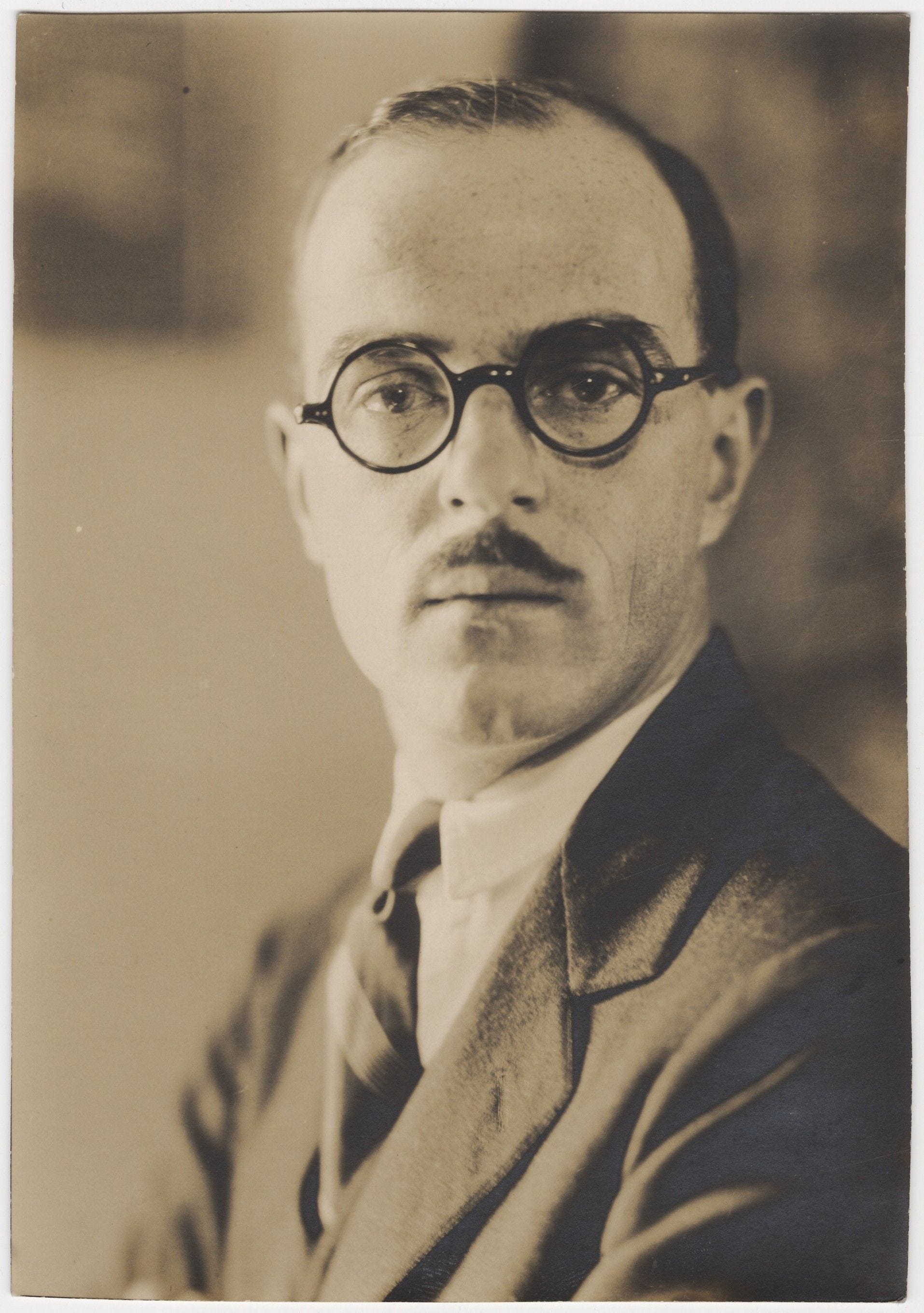
In that same journal, Wilder writes directly of the portrayal of same-sex attraction onstage, criticizing a playwright’s characterizations of two women in love. It was a Berlin production of Édouard Bourdet’s La Prisonnière, which he saw on November 11, 1926, directed by one of his artistic heroes (and future The Merchant of Yonkers director) Max Reinhardt.
“The new change [to a dramatic trope] (i.e. lesbianism) is not profoundly enough done to justify its attempt,” he says. “If the play were sincere the opening of the [second] act and all the Mme. Meillant scenes would be unthinkable. The young husband’s casting off of his wife at the close is not in the [Christian] tradition exacted of Anglosaxon heroes who are expected to cling to their wives through incurable paralyses, etc…The assumption before a play that first [deals with] such a subject is apt to be that this is a typical case, and that Mme. d’Aiguines’ hold over Iréne is the model of all such alliances…The fact is Boudet has written a play about ordinary heterosexual love in a powerful and tyrannical older man towards a girl and later gone back and back and called the unscrupulous man: a woman.”43 When his sister Charlotte endured a prolonged mental health episode following years of tumultuous same-sex relationships and her own struggles with intimacy, perhaps Wilder’s reaction was colored by this experience, as well as his later friendship with Gertrude Stein and Alice Toklas.44
Wilder would write again about sexuality 27 years later in a journal entry on, “Whitman and the Breakdown of Love and Sex.”45 In the passage, he groans about being overwhelmed by the “neurotic woes” of five friends who, though not explicitly named as gay people, are at least in part likely so. He echoes the stereotype of an unloving parent and, in the case of one man, the influence of an overbearing mother on her son’s failure to achieve, “harmonious sexual adjustments.” As Wilder laments the unhealthy acceptance and extension of love in these friends, he makes an aside: “I am more and more willing to agree with certain authorities that homosexuality is negative—that it is, even when apparently aggressive, a submission to solicitations. These solicitations are not necessarily those coming from the outside; they come from within also, from an exorbitant need for tenderness, i.e., to be valued by another.”46
It’s astonishing that in the first sentence Wilder distances himself from those who pursue same-sex intercourse, but then confirms that it is something he has thought about over time and with evolving understanding. He directly links the sexual and romantic, refuting Steward’s assertions that his physical sexual consummations were decidedly unromantic (which, in the absence of other accounts, are taken as the standard). And though his relationships would indicate a distinct separation between physical and emotional fulfillment, he nevertheless links them as a function of love.
“Well, this is only a first skirmish with a deeply complicated subject,” he concludes.47 But it clearly wasn’t. He was 56 years old, the alleged affairs with Steward were 16 years prior, and perhaps his greatest heartbreak, whose identity has never been revealed, occurred nearly 30 years before. In the entry, he alludes to Whitman’s lover Peter Doyle only as a, “streetcar conductor,” but even this diss is an example of his personal association with a gay writer to whom he related and idolized.48
It’s not outrageous to see why some may seize on the passage—with its judgment of homosexuality—as evidence against his rumored attractions or as a strong indicator of repressive self-loathing. But, on the contrary, it makes it clear that Wilder was grappling with homosexuality, in some capacity, throughout his life, and thinking of it in relation to emotional love.
It’s not impossible that Wilder, facing two devastating heartbreaks in his twenties—at a time when the public revelation of his sexuality would be ruinous to his career and, most likely, his family life—would turn himself off from the prospect of a long romantic relationship in favor of platonic, emotionally fulfilling friendships, and seek physical fulfillment in isolated, sporadic encounters. If Wilder were able to separate his emotional connections from the sexual aspects of his attraction, he could then continue to experience some degree of fulfillment through shared intellectual and artistic appreciation. Wilder’s attractions seem as much (if not more) to the mind—those who could engage on topics like literature and theatre, and who appreciated the beauty of the artistic world—as to the body anyway. The allusions to male beauty that show up in his letters to Wager and others are frequently entwined with references to intellectual connection. Such connections may have even heightened the physical attractions he felt for the men he encountered, or provided convenient cover for those attractions when relating his interactions to people like Amy Wertheimer or his family.
The period that followed his heartbreaks, when Wilder was approaching 30, reflects the evolving prioritization from romantic infatuations to deep friendships. Aside from Wertheimer and Colefax, and his continued correspondence with Wager, the mid- to late-1920s and early 1930s also saw the introduction of some of Wilder’s soon-to-be closest friends, including Gene Tunney, Alexander Wollcott, Ruth Gordon, Gertrude Stein, and Alice Toklas. These connections coincided with his rise to fame and publishing success.
Though Wager was an early instance of Wilder’s connection with straight male friends, he was certainly not the last with whom he developed a complex adoration. Consider Wollcott, to whom he dedicated Our Town, or champion boxer Tunney, with whom he hiked Europe. There’s danger in labeling any instance of emotional intimacy between Wilder and another man as a same-sex attraction or romantic event and to do so would perpetuate the notion that masculinity and emotional vulnerability are incongruent attributes; that gay men are incapable of a relationship with other men that is neither romantic nor sexual in nature. But perhaps Wilder found a greater degree of comfort and safety in men with whom he knew there was no possibility of sexual connection; that even if infatuation was possible, consummation was not.
One could easily argue that his abstinence—real or perceived—is in part responsible for the “fastidious” reputation he’s enjoyed as a writer, even contributing to preserving his legacy. Perhaps the inverse is also true, though: has a sexless perception of Wilder further cemented a reputation for nostalgia and sentimentality? Has it obscured his contributions to drama and literature as a structural experimentalist whose public and private experiences only sharpened his understanding of the miracles and struggles of daily human survival?
In an angry letter to Goldstone, who Wilder dismissed as not understanding of his work and thus an incompatible biographer, he writes, “for a large part of the reading public—and for you—The Bridge of San Luis Rey and Our Town are tender, tear-drenched, and consoling. But they aren’t, they’re hard and even grimly challenging.”49
To live as Wilder was not simply to live as an observer, as many of his characters do. To live as Thornton Wilder was to live as an outsider; as an American expat in a Chinese boarding school; to experience separation from his family for much of his childhood; to view life on a cosmic scale when his own neighbors were struggling to see their country in the context of a global society; or to navigate the world as a man with same-sex attractions who embraced the value of a family model that was not compatible with his orientation.
Despite, or perhaps because of, his outsider status, Wilder produced work full of clear, definitive, universal truths that cut to the heart of our most enduring social conventions and institutions. Ironically, in their efforts to understand his same-sex attractions, his biographers have largely rooted their evaluations in those heterosexual institutions and norms, failing to consider that his experience cannot adequately be judged by them because they were not conceived with people like him in mind. What if a more complete evaluation of Wilder and his sexuality doesn’t hinge on additional proof, but rather a different rubric? What if when we talked about Wilder and sex, we meant Wilder and intimacy?
This post is part of a larger collection, A Walk on The Wilder Side: A Queer Reading of Thornton Wilder, available on Substack and to view here:
Download the full PDF version of the report by D.R. Lewis here.
Read the next section, Part Two: Artists, Laymen, and the “Failure In Living,” here.
Simon, Linda. 1979. Thornton Wilder, His World. First ed. N.p.: Doubleday., 105.
Wilder, Thornton. 2020. Three Plays: Our Town, the Skin of Our Teeth, and the Matchmaker. New York, NY: HarperCollins Publishers, 35.
Stein, Gertrude, and Thornton Wilder. 1996. The Letters of Gertrude Stein and Thornton Wilder. Edited by Edward Burns, Ulla E. Dydo, and William Rice. New Haven, CT: Yale University Press, 173.
Niven, Penelope. 2012. Thornton Wilder: A Life. First ed. New York: HarperCollins, 357.
Spring, Justin. 2011. Secret Historian: The Life and Times of Samuel Steward, Professor, Tattoo Artist, and Sexual Renegade. N.p.: Farrar, Straus and Giroux, 51-53.
Wilder, Thornton to Samuel Steward, March 9, 1938. Thornton Wilder Papers, Yale Collection of American Literature. Beinecke Rare Book and Manuscript Library.
Harrison, Gilbert A. 1983. The Enthusiast: A Life of Thornton Wilder. N.p.: Ticknor & Fields, 168.
Goldstone, Richard H. 1975. Thornton Wilder, an Intimate Portrait. New York: Saturday Review Press, 264.
“Thornton Wilder on Sex at Yale.” 2020. Thornton Wilder. https://www.thorntonwilder.com/blog/2020/4/7/thornton-wilders-yale.
Wilder, Thornton Letters to Charles Wager. Thornton Wilder Papers, Yale Collection of American Literature. Beinecke Rare Book and Manuscript Library.
Hunter, Glenn to Thornton Wilder, December 23, 1918. Thornton Wilder Papers, Yale Collection of American Literature. Beinecke Rare Book and Manuscript Library
Wilder to Wager, January 18, 1918.
Wilder to Wager, October 1917.
Wilder to Wager, October 1917.
Wilder to Wager, October 1917.
Wilder to Wager, October 1917.
Wilder to Wager, May 25, 1926.
Wilder, Thornton to Amy Wertheimer, October 8, 1925. Thornton Wilder Papers, Yale Collection of American Literature. Beinecke Rare Book and Manuscript Library.
Wilder to Wertheimer, October 8, 1925.
Wilder to Wertheimer, November 4, 1925.
Wilder to Wertheimer, January 5, 1926.
Wilder to Wertheimer, January 12, 1926.
Wilder, Thornton, Cahier E. Thornton Wilder Papers. Yale Collection of American Literature, Beinecke Rare Book and Manuscript Library.
Wilder, Cahier E, November 12, 1926.
Wilder, Thornton. 1985. The Journals of Thornton Wilder, 1939-1961. Edited by Donald C. Gallup and Donald Gallup. N.p.: Yale University Press, 182.
Wilder, Journals 1939-1961, July 10, 1953, 183.
Wilder, Journals 1939-1961, July 10, 1953, 184.
Wilder, Journals 1939-1961, July 10, 1953, 184.
Wilder, Thornton. 2008. The Selected Letters of Thornton Wilder. Edited by Robin G. Wilder and Jackson R. Bryer. N.p.: HarperCollins, 663.
Thornton Wilder photographs courtesy of the Thornton Wilder Papers, Yale Collection of American Literature. Beinecke Rare Book and Manuscript Library. With the consent of The Wilder Family LLC and The Barbara Hogenson Agency, Inc. All rights reserved.
Quotations and excerpts from The Angel That Troubled the Waters and Other Plays © 1928, The Merchant of Yonkers © 1939, The Journals of Thornton Wilder, 1939-1961 © 1985, Wilder’s Classic One Acts © 2011, Three Plays: Our Town, The Skin of Our Teeth, and The Matchmaker by Thornton Wilder Reprinted by arrangement with The Wilder Family LLC and The Barbara Hogenson Agency, Inc. All rights reserved.
Thornton Wilder: A Life by Penelope Niven © 2012. Reprinted by arrangement with Jennifer Niven and The Barbara Hogenson Agency, Inc. All rights reserved.
To learn more about Thornton Wilder, visit www.ThorntonWilder.com
No posts
Comments
Nothing yet. Say the first thing.
Sign in to join the conversation.