
To varying degrees of explicitness, writers in the American theatre have turned to their art to provide cover for personal experiences and introspective exploration, from Tennessee Williams’s Tom in The Glass Menagerie to David Henry Hwang’s DHH in Yellow Face and Soft Power. By his own admission, Thornton Wilder was of the same ilk.1 He blurred the lines between himself and his characters—like Our Town’s Stage Manager and The Skin of Our Teeth’s George Antrobus—by playing the roles himself in stock productions.2 And imaginative readings of characters like The Long Christmas Dinner’s Cousin Brandon, who exhibits characteristics of the “bachelor uncle” trope, or Our Town’s Simon Stimson, whose sexuality has been questioned by scholars and theatermakers alike, provide fodder for more speculative analysis into Wilder’s own rumored, repressed same-sex attractions.
Wilder’s women—from Our Town’s Emily Gibbs, to The Skin of Our Teeth’s Sabina and Mrs. Antrobus—are beloved for the emotional depth they afford the actors who portray them. Outwardly, these women carry fewer of the markers of Wilder’s identity and biography than their male counterparts, and perhaps it’s easier to see shades of his mother, Isabella, in Mrs. Antrobus, or the mothers in Our Town and The Happy Journey to Trenton and Camden. But Wilder’s explicit admission that he writes himself into all his characters, even the women, means they must also be considered extensions of him.3
Wilder’s diaries and letters provide evidence that gender was a topic of lifelong fascination for him, not only in how it determines roles and responsibilities in the home or society, but also its implications for individual expression.4 He saw specified gender roles play out in his home life as a child, and later saw friends, like Gertrude Stein and Alice Toklas, subvert and mimic those roles in stark and surprising ways. His own repressed same-sex attractions would have been at odds with the strict expectations of masculinity imposed by his father, Amos Parker Wilder, who reflected the expectations of contemporary society. But Wilder’s dabblings in theatre and his deep friendships with queer people who stood in contrast to gender prescriptions would have regularly exposed him to alternative ways of living, loving, and habitating throughout his life.
In the early 1940s, on the heels of success with Our Town and failure with The Merchant of Yonkers (which would be revised as The Matchmaker more than a decade later), Wilder found himself in France working through the play that would become The Skin of Our Teeth. That play features two women who themselves stand in stark contrast with their own exhibitions of femininity: Sabina is both a maid and a mistress, tempting the man of the house while Mrs. Antrobus, the wife of that man, is tasked with holding the family together. Wilder’s diaries from the time show a hang-up on such dichotomy:
“Woman lives in our minds under two aspects: as the untouchable, the revered, surrounded by taboos…and as the accessible, even—in spite of the mask of decorum and dignity-indignity—inviting. To maintain the first of these two roles all the buttresses of society and custom are necessary: the marriage institution, the prestige of virtue, the law, and custom. A woman on the stage is bereft of these safeguards. The exhibition of her bare face in mixed society, for money, under repetition, speaking words not her own, is sufficient….Under those bright lights, on that timeless platform, all the modesty of demeanor in the world cannot convince us that this is not our hereditary ghost, the haunter of our nervous system, the fiend-enemy of our dreams and appetites.”5
The entry is yet another piece of evidence that Wilder viewed all characters, including (or perhaps especially) female characters as a vehicle for personal exploration. He admits here that they are viewed by audiences as extensions of our most intimate, self-exploratory, and perhaps sexual feelings. But while the entry leaves little room for a middle between the “accessible” (Sabina) and “revered” (Mrs. Antrobus), Wilder had already found it in The Merchant of Yonkers’s Dolly Levi, a widowed matchmaker determined to procure a marriage for herself and secure her future in the process. In The Skin of Our Teeth, Wilder takes Sabina and Mrs. Antrobus to separate, extreme corners, and the women of Our Town fall primarily into the “revered” category as pillars of the family (or, in the case of Emily, a would-be pillar who lost her life in service to that role). But Mrs. Levi walks a fine line down the middle, inhabiting both the “revered” and the “accessible,” and subverting her role as a respectable broker of the family through a series of innocent deceptions that toy with expectations of her in and outside of the play.
In her nimbleness and such subversions, Mrs. Levi becomes a proxy for an aspirational Wilder beyond the male characters who are more closely associated with him. In her, he is able to grapple with gender and its expression, as she performs her suitability for a prospective suitor, her social consciousness for the audience, and the limitations of the world in which she exists for herself. But through it all, she is determined to make the most of what is given to her and strive for more, a natural outgrowth of her newfound responsibility to humanity. What’s more, Dolly has provided inspiration to subsequent generations of gay men—namely Michael Stewart and Jerry Herman, who musicalized The Matchmaker into Hello, Dolly!—evolving to become an object of attention for gay icons, and affection for people who long to find the same self-actualization and sense of purpose she finds in a world that is not particularly willing to validate her.
The association of theatre as a sandbox for playful gender expression was forged in Wilder’s earliest dramatic experiences. Among the first shows he saw was As You Like It, a Shakespeare comedy that hinges heavily on cross-dressing and homoerotic undertones, in Milwaukee.6 He was smitten and bitten by the same bug that so often captures the imagination of young people destined for a lifelong love of drama, and that experience was built upon during a subsequent stint in California. While his father served as a diplomat in China, Isabella volunteered at the Hearst Greek Theatre, which afforded her children the opportunity to perform in the ensemble and take in the shows.7 Wilder attempted to recreate those experiences at home, staging original dramas in his yard with family and friends, to his father’s remote disapproval. Amos Parker Wilder dismissed acting and drama as an unserious distraction from the larger ills of the world (an irony considering his son would go on to write plays that concerned humanity’s most essential questions) and yearned to instill, “sense and steadiness,” in the young Thornton, insisting he, “concentrate on his books and study to be quiet.”8 In 1911, the Wilder family reunited with their father in China, allowing Amos Parker to witness his son’s artistic tendencies firsthand. He enrolled Thornton in the China Inland Mission School at Chefoo in hopes that a rustic education would, “make a man of him,” and the experience catalyzed Amos’s growing insistence that Thornton’s creative gifts would be a detriment to his adult career.9 He wrote to Amos Niven Wilder, Thornton’s older brother, that Thornton, “will go through life radiating good nature, I hope, but unless he gets more ‘practical’ I guess you have to support him!—tho these dreamers sometimes surprise one.”10 He hardly means “dreamer” as a compliment, but the profits from those dreams-come-true would support the father in old age, and provide a home for the family for years.
Amos Parker’s efforts to butch Thornton up extended beyond simply the practical. He seems to have chafed at the social implications of having a son who was not a paragon of masculinity, and aside from sending Thornton to all-boys schools in China and California, Amos Parker would later enlist Thornton in summer farmstays in Massachusetts and Kentucky in hopes the boy would find purpose in physical exertion.11 Thornton did find some satisfaction in exercise throughout these experiences, particularly in the solitary acts of swimming and running (patterns that would continue in his travels around Europe), though they did little to temper the more sensitive tendencies his father hoped to suppress.
In 1912, when Wilder was 15 and away from his father’s watchful eye, he dressed in drag for perhaps the first time in his life, donning a borrowed evening dress and wearing yellow rope as a wig for a costume party during a month-long voyage from China to California.12 An additional attempt to perform in drag as Lady Bracknell in Oscar Wilde’s The Importance of Being Earnest during the all-boys Thacher School’s festival was thwarted by his father. As he was memorizing lines one night, the schoolmaster approached him and conveyed Amos Parker’s disapproval of his son, “taking female parts.”13 The role was recast and Wilder’s devastation at the humiliation—not only between father and son, but himself and his classmates—is a recurring topic in subsequent letters between Thornton, his father, and the rest of the family.14
It’s obvious that incident remained top of mind for Amos Parker, too, perhaps because of Thornton’s harping on it. By the conclusion of their schooling at Thacher, Amos Parker noted his sons were, “more manly in consequence,”15 for having attended, praising founder and headmaster Sherman Day Thacher for his role in transforming Thornton from, “a delicate, girl-playing, aesthetic lad in the early teens.”16 He continued, “this kind of boy making a one-sided, often unhappy, inadaptible man is familiar. By wise contact with outdoor life, wholesome farm work, physical weariness and honest country people, Thornton is really quite a man…What was done with him can be done with many another ‘difficult’ boy. But it requires wisdom.”17
If Amos Parker’s agenda was clear, so was Thornton’s continued dissatisfaction with it. In public school the following year, Wilder staged an original skit to help raise money for a new gymnasium. “Of course I have adhered to your demand that I remain in masculine clothes,” he wrote to his father. “When you have changed your mind as to it please notify.”18
The tension between Amos Parker and Thornton reeks of an emasculation that would be familiar to plenty of gay men whose effeminacies and innocent crushes on other boys as children were the source of scorn from insecure fathers. Paternal relationships recur in Wilder’s work, as extreme as the third-act confrontation between George and Henry Antrobus that has the fate of the warring world practically hanging in its balance, or as tender as that between Our Town’s Doctor Gibbs and George, which is among the play’s most moving scenes.19 There, Doctor Gibbs does not scold his son for leaving Mrs. Gibbs to do the chores he should have done, but through pointed questions allows the boy to arrive at his own acceptance of guilt. When George begins to cry—which could be construed as an act of effeminacy—Doctor Gibbs simply hands George a handkerchief, indicating his approval of the sensitive reaction, rather than rejecting it or humiliating George for it.20
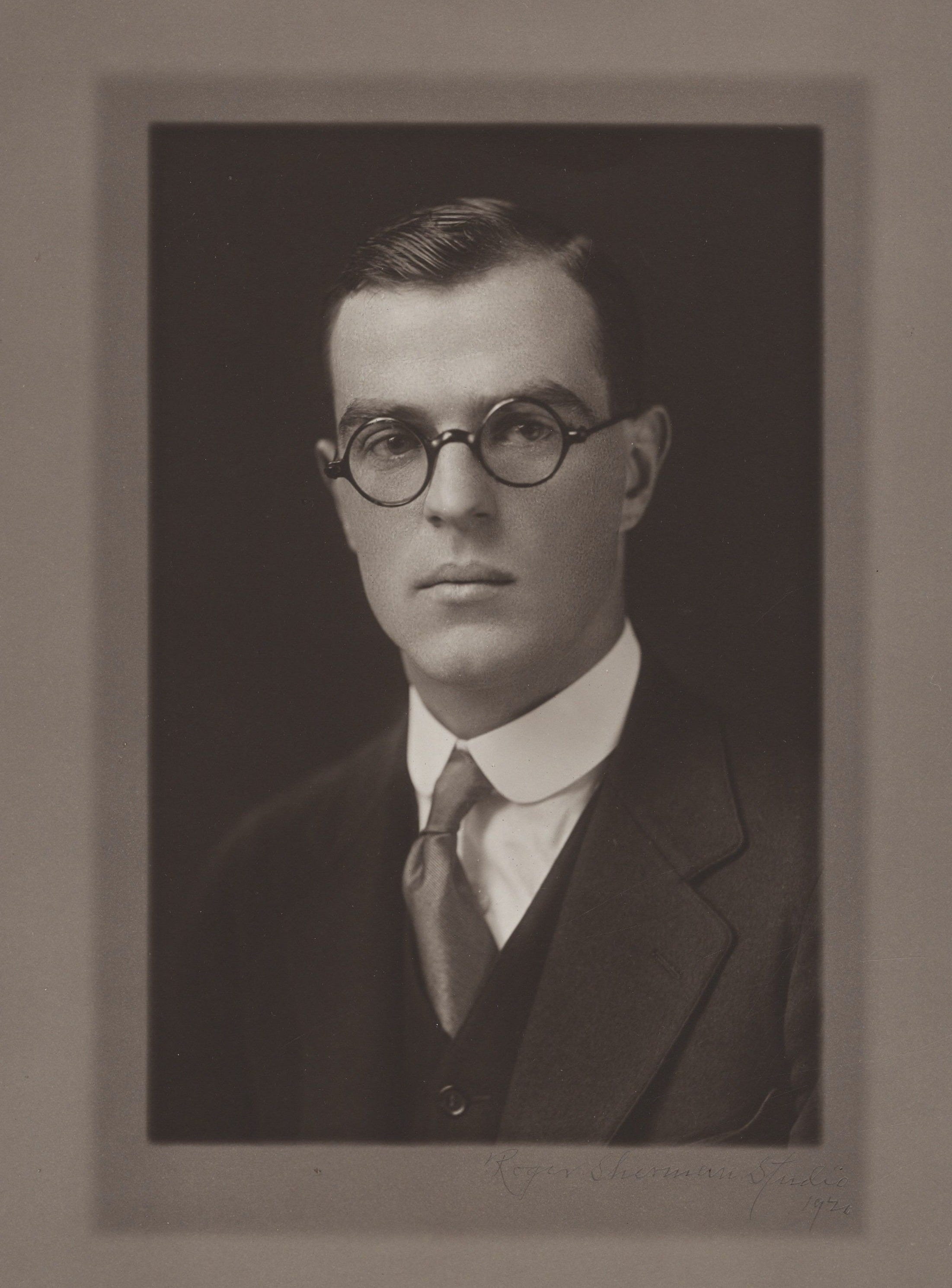
Amos Parker’s tactics to “make a man” of Wilder and discourage his exercises in drama carry plenty of irony: at boys schools, Wilder was probably exposed to homoerotic experiences that exacerbated the confusion around his sexuality; by pushing so hard against Thornton’s love of theatre, Amos Parker probably fueled his son’s rebellious obsession with it; and in failing to foster Thornton’s creative talent and drive, he cemented himself as a discourager of emerging genius. Perhaps we cannot blame Amos Parker for his mistakes—how could he know that his son would come to be regarded as one of history’s finest playwrights?—but we should be thankful that Thornton’s drive to create was strong enough to push his father’s disapproval aside. Literature, theatre, and the human spirit are certainly better for it.
But from a personal standpoint, what are the bounds of the father’s emasculation? Wilder’s letters as a young man reflect the crushes and confusing romantic feelings he exhibited for other men his own age, but also older, as in the case of Dr. Charles Wager.21 Had Wilder been encouraged, or at least not discouraged, from acting on perceived effeminacies or outlets of expression—and not been conditioned to police them out of concern of his father—would he have felt free to act on those suspected urges and pursue love with another man? Would he have exhibited the hurried, detached sexual dysfunction that alleged lover Samuel Steward describes, or would he have indulged in sensuous sexual experiences beyond Steward?22 And would he have felt comfortable enough to come out and secure his place as a trailblazer in American theatre, but also as a pioneer in the movement for queer visibility?
The Wilder of photos is dapper, but not dandy. He often wears a suit and mustache, markers of a brand of “manliness” of which father would surely approve. He looks like our image of the Stage Manager, or Mr. Antrobus, or Doctor Gibbs. But beneath the clothing and the skin exists the heart and soul that produced Emily Webb, and Sabina, and Mrs. Antrobus. Is it possible that for Wilder, repression was a cost of doing business? If Wilder had a father who accepted his effeminacies and encouraged his creative expressions, would we have a Simon Stimson and Cousin Brandon? Would we have a Dolly Levi?
The Merchant of Yonkers (and revised The Matchmaker) follows a day near the turn of the 20th century when Dolly Levi, a widowed marriage broker and jill of all trades, arrives in Yonkers to help wealthy hay and feed purveyor Horace Vandergelder procure a suitable second wife. Though his eye is on Mrs. Irene Molloy, a widowed milliner, Dolly is determined to secure the proposal for herself and use Vandergelder’s money to ensure her comfort and elevate the community around them. Vandergelder is persistently resistant to her advances, which are both subtle and overt, and is determined to keep a niece named Ermengarde and his team of store clerks, including Barnaby and Cornelius, under his thumb. Through little fibs, maneuvers, and sheer force, Dolly succeeds, facilitating budding romances in Cornelius and Irene, Ermengarde and her artist beau Ambrose, and Barnaby and Irene’s assistant, Minnie, in the process.
Wilder based The Merchant of Yonkers on Johann Nestroy’s 1842 farce Einen Jux will er sich machen (He’ll Have Himself a Good Time) and John Oxenford’s 1835 A Day Will Spent, and drew additional inspiration from Molière’s 1668 L’Avare (The Miser), though Dolly is his original and most consequential contribution to the story.23 She is extremely savvy and practical, though still in love with her late husband, Ephraim, whose death sent her into a two-year period of mourning from which she has only recently emerged with the determination to live among people, and a realization that self-isolation is a foolish squandering of a most precious gift. She is clear that she does not expect to find the same kind of love she had with Ephraim in Horace, but that his wealth will allow her to make something more meaningful of the time she has left. This is not a kind of silly folly that she describes in a monologue. Poor, without a husband, and confined by gendered expectations of the period, the stakes could not be higher for her. Her survival hinges on the farcical machinations of her cat-and-mouse game with Horace, even if she doesn’t want to let on that it’s so. Determined to live a good life, full of spirit and charm, and hell-bent on making the most of what she has left, Wilder gave Nestroy’s story a new axis on which to spin, and she is the perfect catalyst for his thesis, which comes via Barnaby in the final moments of the show: “the sign that something’s wrong with you is when you sit quietly at home wishing you were out having lots of adventure.”24
Taken with Our Town, which premiered before it, and The Skin of Our Teeth, which premiered after it, The Merchant of Yonkers is something of a stylistic pit stop between the two. It has the musings on human nature that define Our Town (particularly in asides Dolly, Cornelius, Horace, and a third clerk, Malachi Stack, offer to the audience), but as a farce, it exhibits the structural whimsy that Wilder later employs on a grander scale in The Skin of Our Teeth. Farce is at its best when played seriously, and Dolly embodies that notion; maintaining facade is of the utmost importance. Wilder’s stage directions seem to get at this: “Uncertain age; mass of sandy hair; impoverished elegance; large, shrewd but generous nature, an assumption of worldly cynicism conceals a tireless amused enjoyment of life.”25
She is an exemplar of contradictions: a middle-aged ingénue; a non-virginal romantic lead; an arranger of relationships that should arise naturally; a romantic pursuing a practical marriage; hungry for wealth to disperse, not hoard; down on her luck, but self-sufficient; a benevolent liar.
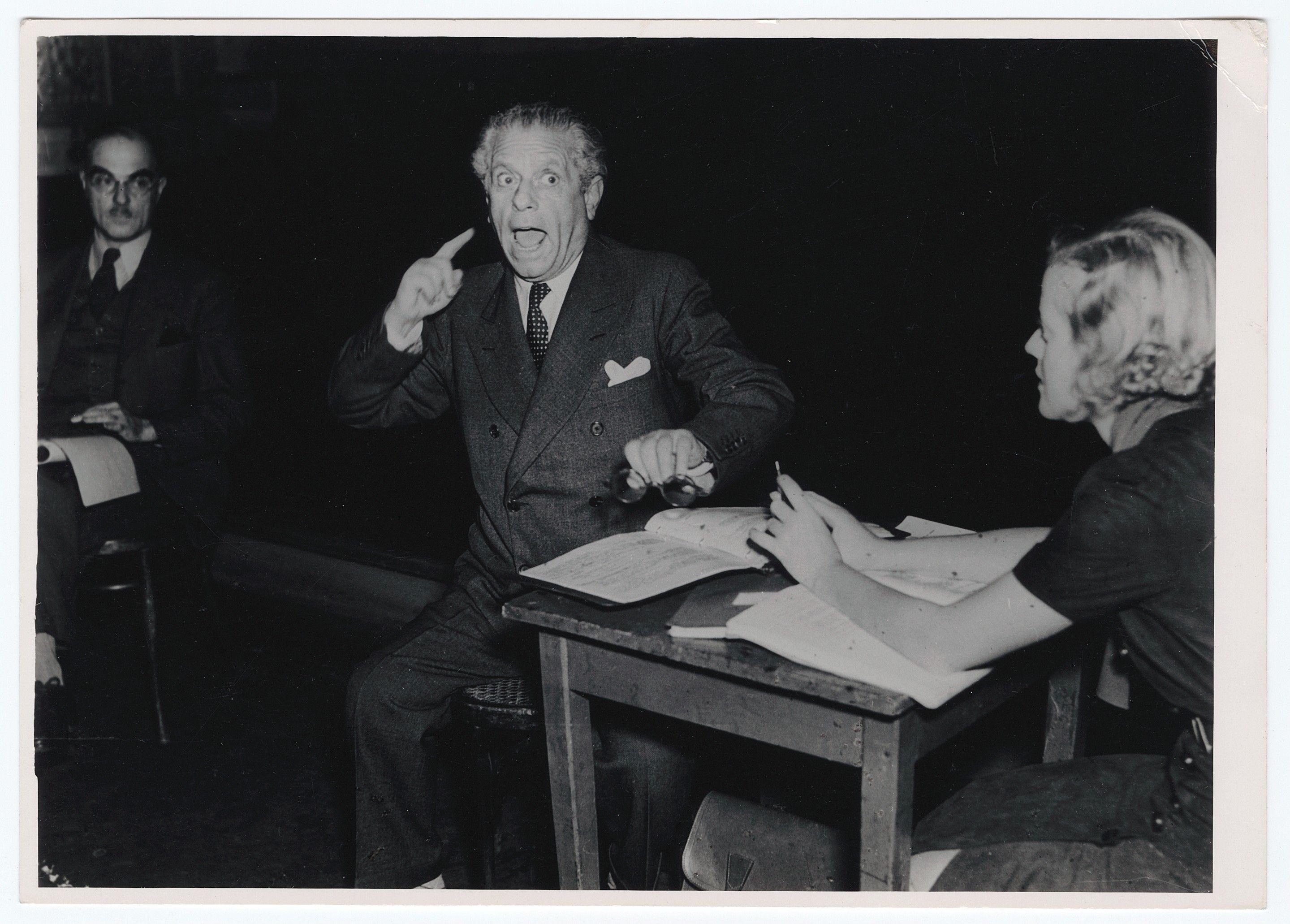
In walking the thin middle between the reserved “revered” and more aggressive “accessible” Wilder describes in his diary, Dolly embodies and at times leans into the outward femininities that would make her a suitable wife for Vandergelder (which he uses to write her off in his misogyny), but also exerts a brand of control that he can neither comprehend nor control; she is outfoxing the ultra-masculine man who would otherwise believe that he is stronger and more savvier than her. Little does he know that she will soon be running the business of the family, capitalizing on both her feminine and masculine strengths, to take over his world and improve it. Though she is poor, she has the power, and we cannot resist her.
Though Dolly may possess all the traits that allow her to win in the end, she begins the play in many of the same circumstances—albeit slightly adjusted—that Wilder existed in. She is a single, multi-talented misfit who survived heartbreak and cobbled together jobs to make ends meet under the persistent specter of economic collapse. Wilder’s letters and journals from young adulthood show a man hungry for new experiences and social connections, curbed by his meager income, familial expectations, and self-consciousness.26 As when Dolly found Ephraim, his early adult years saw two romantic encounters that were transformational in the romance they inspired in him, but both ended in devastation and retreat. For Wilder, they came at a pivotal moment as he was just beginning to enjoy literary success, and the road before him became clear. Like Dolly, he lived, loved, and lost, writing to a friend soon after, “I am a heart and a pen.”27 Dolly is broken out of her isolation only by a realization that she is squandering her life and resolves to begin again with a clear head. Though her first pursuit of marriage hinges on love—personal, private, inexplicable—her second is all about practicality, as Horace brings immense wealth and security to the match. Like Dolly, Wilder seems to have accepted that love was not in the cards for him, so he retreated, away from the crushes and dabblings in affection that characterized his life before literary success, and leaned into his career entirely. Dolly never had children, defying a responsibility core to society’s notion of women’s role in that era, but she is nevertheless matriarchal. She cares deeply for the young people around her, arranging matches for love, while also setting them up for financial success. She is arranging lives in the way that Wilder does, though his matches are confined to the page and his imagination. He is building the world he wants to see, in his vision and his morality, as she is in Yonkers.
Wilder’s life and work possess their own bevy of contradictions, too, though. He extols the virtues of family life, but remained a single man and had no children. He was adamant about living each moment to the fullest, but probably cordoned off attractions to other people. He wrote beautifully of love and relationships, but seems to have forbidden himself from pursuing uninhibited sex and romance. And though Wilder seems to have recognized and toyed with his same-sex attractions early on, he also seems to have turned his back on them in adulthood, remaining closeted in the period just before gay liberation would gain traction in the culture. Of figures at that transitional time, one sometimes hears a refrain of being the first who could come out. Playwright Paula Vogel said to me recently, Wilder “was the last playwright who could stay in the closet in the American landscape.”
Though Wilder’s gender would have given him an economic advantage over Dolly, their ultimate prospects in life were impeded by virtue of their birth and the period in which they existed. But in Dolly, Wilder instills the possibility for a “second act” he doesn’t afford to Simon, Cousin Brandon, or even Emily Gibbs. There is something intrinsically aspirational about her character that arises from emerging out of her devastating mourning. She is reborn on the realization that her retreat into solace was damaging. It is an expansive revelation, one that sees a selfless acceptance that the world is larger than grief and experience. If Wilder did have a similar breakthrough, it could cut two ways: his own second act could be defined as the literary success following romantic setbacks and his father’s discouragement of his career. But I suspect it’s more pleading than that; a yearning for connection, for acceptance of the world he was born into and for it to accept him. Dolly’s monologue, especially in its evolved form in The Matchmaker, which was informed by the intervening years, serves as both an admission and a reminder to himself that life is not over until it’s over; and, more so, that life is meant to be lived among people.
For all of its empowerment, Dolly’s final monologue is also a cry of mercy. “I’m tired of living from hand to mouth,” she tells an imagined Ephraim. Perhaps Wilder was, too. Where were the models who successfully reconciled same-sex attractions with public careers? Even if he’d wanted to be open about his sexuality and pursue such relationships, it would have almost certainly meant career implosion. So, though Wilder never married, he was wedded to his work, choosing security, consciously or not, like Dolly, even as his loving soul comes through so clearly in his work. Like Dolly, he could live vicariously through Irene and Cornelius, and Ermengarde and Ambrose; and also George and Emily, and any of the characters who are not his children, but his progeny, nevertheless. His career couldn’t buy him love, but it secured his immortality.
Both gay men born approximately thirty years after Wilder, Herman and Stewart belonged to a generation that was in middle-age when the budding gay liberation movement, and then the onset of the AIDS crisis, encouraged or forced large numbers of gay men out of the closet. Raised on American musical comedy and early Hollywood films, their musicalization of The Matchmaker asserts Dolly as a stronger romantic lead and blurs the lines of her attraction to Horace, offering a more loving attitude toward him than the more pragmatic Dolly Wilder initially created. Though Stewart relied heavily on Wilder’s plays to form the basis of the musical’s book, he distributes her single monologue—in which she recounts her relationship with Ephraim, her financial reasons for marrying Horace, and her journey to “rejoin” the human race—into several smaller pieces spread across the musical’s two acts. And what Herman chooses to musicalize is the most telling indicator of what the men connected to most strongly.
In Horace’s solo, “It Takes a Woman,” his misogyny is stated plainly, though with less self-awareness than in Wilder’s plays. He wants his wife to be hyperfeminine, but also eager to conduct the household chores, and the resulting song is intentionally demeaning and cheeky. Herman is lampooning the kind of man who believes, “marriage is a bribe to make a housekeeper think she’s a householder,” a line Stewart preserved from The Matchmaker; one who sees a wife as an employee, or subordinate.28 Dolly hums a reprise of the melody in the musical, but Herman would later add a more pointed reprise for her in the 1969 film version: “It takes a woman to quietly plan/To take him, to change him to her kind of man/And to gently lead him/Where fortune can find him/And not let him know that the power behind him/Was that dainty woman/That fragile woman, that sweetheart/That mistress, that wife.”29 Horace seems to be the only one who doesn’t realize that Dolly is in the driver’s seat, and that she intends to use his rigid notions of femininity and masculinity to her advantage.
But more than that, what Herman and Stewart connect to most strongly is the “second act” that brings Dolly to the audience from the start. Herman writes of this in his memoir, Showtune:
“What I wanted to do with the song, ‘Hello, Dolly!’ was to capture the moment when this lady who had locked herself away from life finally gets the guts to put on all her old finery and walk down the staircase to face the world again,” he said. “That was such a brave, tough thing for her to do. I just loved her for it.”30
There is no staircase in Wilder’s Harmonia Gardens, though his stage directions indicate she has put on an elaborate dress. Herman’s (and director Gower Champion’s) introduction of the grand staircase heightens the occasion and tees up the title song, maximizing the sense that Dolly is enjoying a kind of “coming out.” It is a triumphant, powerful moment that Herman would later replicate to some degree in Mame (“It’s Today”) and La Cage Aux Folles (“I Am What I Am”). It is evident that he saw in Wilder’s Dolly a yearning to be her truest self, and wrote a song that would glamorize her declaration (inspired, according to Herman, by Alice Faye in the 1940 film Lillian Russell.)31
Herman also writes that Dolly’s reentry into the human race inspired him to face his own repressed attractions in the period following the musical’s opening. With Wilder’s character whispering in his ear, he did what Wilder would not. “During this time in my life I also became more comfortable with my sexuality,” Herman says. “I began dating and feeling good about who and what I was.”32
The best songs in Hello, Dolly!, “Before the Parade Passes By” and “It Only Takes a Moment,” explode with the same feeling of reinvention and rebirth as the title song. The former is especially resonant as an anthem of self-acceptance.
Herman and Stewart didn’t change Dolly, they added to her, accentuating the nimbleness and irrepressible spirit that Wilder imbued her with from the outset. Hello, Dolly! has come to be loved by generations of gay men who recognize Dolly’s quirkiness not as a hindrance, but an asset, and they’ve come to worship the actresses—who mostly achieved gay icon status in their own right before playing the role—who are themselves drawn to those aspects of her personality. One could argue that Dolly, particularly in her musical form, lends herself to many of the elements core to the camp sensibility Susan Sontag set out in her 1964 essay, “Notes on Camp.”33 Channing’s portrayal captured, “instant character…a state of continual incandescence—a person being one, very intense thing,”34 while Streisand, too often wrongfully dismissed as too young to play the role effectively, embodies a “spirit of extravagance,” which elevates the character into a vision of glamour beyond Wilder’s—and perhaps even Stewart and Herman’s—imaginings.35 Midler’s portrayal was defined by many of the vocal mannerisms and physical movements central to her Divine Miss M persona, and in doing so reflects, “little triumphs and awkward intensities of ‘character,’” that make Wilder’s savvy chameleon so distinct from his other women.36 In each instance, the elements that connected the performer to Dolly are part of what endeared them to gay fans in the first place.
I reject the notion that Midler’s 2017 portrayal of Dolly is too far removed from Wilder’s 1938 Dolly to be connected to the man. Dolly’s DNA is his, in any adaptation or form, and especially given how close Stewart’s book is to Wilder’s original text. Wilder cannot be extracted from the character, or the piece, even as she has taken on a life of her own.
At the heart of gay culture—including diva worship—is some sense of recognition in one another; shades of shared experience; common triggers and triumphs; mutual aspirations and dreams. Wilder made Dolly from the stuff of hopes and fears; of a masculine femininity, and a feminine masculinity; of romantic memory and repressed desire. He gave her an outlet for a meaningful life, if not a perfect one. He gave a gift, which Stewart and Herman accepted and glamorized, then passed onto the audience with an expanded capacity to dream alongside her, because to rejoin the human race means that you always were a part of it, even when you felt you weren’t.
So, when actor Lee Roy Reams—who played Cornelius in the 1978 Broadway revival of Hello, Dolly! and directed and choreographed the 1995 Broadway revival—put on the elaborate dress and came down the stairs as Dolly in the 2015 Wick Theatre production in Boca Raton, Florida, he was not simply performing as Dolly in drag.37 He was making good on the promise of progress; doing exactly what Wilder had been denied.
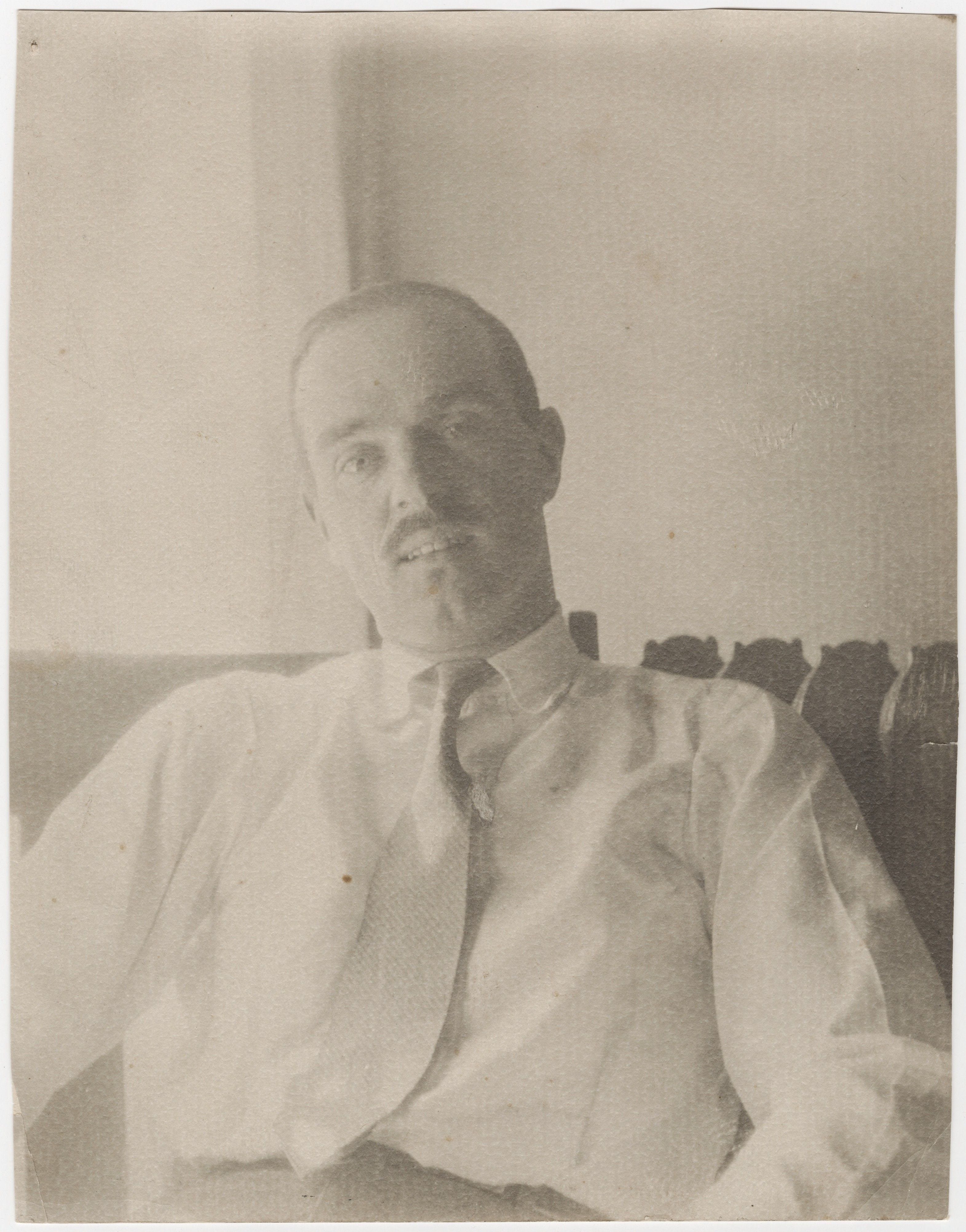
In terms of social acceptance of same-sex love, we are generations removed from Wilder. But perhaps the reason we return to Dolly—that Wilder needed to introduce her to the worlds of Molière, Nestroy, and Oxenford’s original plays, that Herman and Stewart needed to give her new ways to communicate, that she calls to us and our icons—is that not so much has changed on the individual level. How many still face emasculation or scorn for their effeminacies? How many must still make the choice between love and security? How many are waiting for their second act, or the opportunity to walk among the human race as their fully realized selves?
Dolly is a force of love and a force of life. Herman didn’t connect with the dress or the stairs, but rather the decision to put it on and walk down. Dolly’s life hinges on that choice. In many ways, Wilder’s did, too, and he chose a path that allowed him to move our spirits and stir our souls every day, at the expense of something so precious that Dolly spent two years locked away after she’d lost it.
Like gay icons, characters and costumes give us room to imagine ourselves in a time, a place, a world, or a body other than our own. What would Wilder have become if he’d made a different choice? What would he have written had he never known the devastation of heartbreak and specter of poverty, or felt the strain of living in a society that dictated how to behave and how to feel? A person with less resolve would’ve given up on their creativity when they were told to.
But Wilder was no ordinary man, so he did what he knew how to do and created a character who did what he couldn’t: make the world bend to him, not through exercises of power or dominance, but through love and benevolence.
In Dolly, Wilder found his perfect match. Ours too.
This post is part of a larger collection, A Walk on The Wilder Side: A Queer Reading of Thornton Wilder, available on Substack and to view here:
Download the full PDF version of the report by D.R. Lewis here.
Read the final section, Postscript: Eleven O’Clock in a Grover’s Corners Gay Bar, here.
Wilder, Thornton to Amy Wertheimer, February 7, 1926. Thornton Wilder Papers, Yale Collection of American Literature. Beinecke Rare Book and Manuscript Library.
Niven, Penelope. 2012. Thornton Wilder: A Life. First ed. New York: HarperCollins, 591.
Wilder to Wertheimer, February 7, 1926.
Wilder, Thornton. 1985. The Journals of Thornton Wilder, 1939-1961. Edited by Donald C. Gallup and Donald Gallup. New Haven, CT: Yale University Press. 138–140.
Wilder, Thornton. The Journals of Thornton Wilder, 1939-1961. 24-25.
Wilder, Thornton. 2008. The Selected Letters of Thornton Wilder. Edited by Robin G. Wilder and Jackson R. Bryer. New York, NY: HarperCollins. 29-34.
Wilder, Thornton. 2020. Three Plays: Our Town, The Skin of Our Teeth, and The Matchmaker. New York, NY: HarperCollins Publishers. 235-239.
Wilder, Thornton. Three Plays. 38-40.
Wilder, Thornton to Charles Wager, October 1917. Thornton Wilder Papers, Yale Collection of American Literature. Beinecke Rare Book and Manuscript Library.
Spring, Justin. 2011. Secret Historian: The Life and Times of Samuel Steward, Professor, Tattoo Artist, and Sexual Renegade. N.p.: Farrar, Straus and Giroux. 52-53.
Wilder, Thornton. 1939. The Merchant of Yonkers. First ed. New York, NY: Harper & Brothers Publishers.
Wilder, Three Plays, 415.
Wilder, Three Plays, 272.
Wilder, Thornton. The Selected Letters of Thornton Wilder.
Wilder, Three Plays, 269-270.
Streisand, Barbra, performer. “It Takes a Woman (Reprise),” by Jerry Herman, recorded 1968-1969, track 3 on Hello, Dolly!, 20th Century Fox Records, 1969, vinyl LP.
Herman, Jerry, and Marilyn Stasio. 1996. Showtune : A Memoir. New York, NY: Donald I. Fine Books, 71-72.
Herman and Stasio, Showtune, 94.
Sontag, Susan. 1964. “Notes on "Camp."” Partisan Review 31, no. 4 (December): 515-530.
Sontag, “Notes on “Camp””, 525.
Sontag, “Notes on “Camp””, 523.
Sontag, “Notes on “Camp””, 530.
Playbill. 2015. “Hello, Dolly! in Drag! See Song and Dance Man Lee Roy Reams as the Iconic Leading Lady.” November 10, 2015. https://playbill.com/article/hello-dolly-in-drag-see-song-and-dance-man-lee-roy-reams-as-the-iconic-leading-lady-com-370953.
Thornton Wilder photographs courtesy of the Thornton Wilder Papers, Yale Collection of American Literature. Beinecke Rare Book and Manuscript Library. With the consent of The Wilder Family LLC and The Barbara Hogenson Agency, Inc. All rights reserved.
Quotations and excerpts from The Angel That Troubled the Waters and Other Plays © 1928, The Merchant of Yonkers © 1939, The Journals of Thornton Wilder, 1939-1961 © 1985, Wilder’s Classic One Acts © 2011, Three Plays: Our Town, The Skin of Our Teeth, and The Matchmaker by Thornton Wilder Reprinted by arrangement with The Wilder Family LLC and The Barbara Hogenson Agency, Inc. All rights reserved.
Thornton Wilder: A Life by Penelope Niven © 2012. Reprinted by arrangement with Jennifer Niven and The Barbara Hogenson Agency, Inc. All rights reserved.
To learn more about Thornton Wilder, visit www.ThorntonWilder.com
No posts
Comments
Nothing yet. Say the first thing.
Sign in to join the conversation.