
I remember well my personal “Golden Era” of biography. It was the summer of 5th grade, when the bookmobile was parked just two blocks from my house in Minot. And while today I still read a biography here and there, they are nearly always on people with whom I’m already familiar. As a 5th grader, however, I was wide-open in my tastes, eager to read any and all biographies I found on the shelves; all the better if I had never heard of the person before.
As a kid, biographies seemed perfectly straightforward: true-life accounts of fascinating people. It was only much later that I came to see the complications inherent in such accounts. Much of my new-found appreciation of the potential–and perils–of the form has been thanks to my colleague Daniel S. Levy, who, in addition to being a journalist for TIME and People magazines for 40 years, is also a biographer and historian of New York City.
Biography is an ancient form. Its beginnings can be traced to Egyptian funerary inscriptions that date from 4,500 years ago and recount the achievements of deceased kings and high royal officials. For centuries, biography combined elements of history, myth, and religion. By the arrival of the Hellenistic era, however, biography was striving for greater historical accuracy. Xenophon, a contemporary of Plato, was a Greek military leader, historian, and philosopher who chronicled the life and times of Cyrus, the founder of the Persian Empire. Four centuries later, Plutarch wrote his Parallel Lives, published around 80 AD, in which he paired famous Greeks with famous Romans, the orators Demosthenes and Cicero, for example, and the generals Alexander the Great and Julius Caesar.
The first “modern” biography was published in 1791: James Boswell’s The Life of Samuel Johnson, a study of the English writer, who, in addition to being a biographer himself, was also a distinguished poet, playwright, essayist, and literary critic, but probably best known for his monumental Dictionary of the English Language. What Boswell pioneered was in-depth, firsthand research in the service of telling the whole truth about his subject, a warts-and-all depiction of Johnson’s life and character, his strengths and ambitions, as well as his weaknesses and lapses.
The Life of Samuel Johnson established the template that still serves as both challenge and model for biographers today. And Boswell knew he was breaking the mold, boasting that, thanks to his diligence, his subject Johnson could be seen “more completely than any man who ever lived.” Boswell was modern in another literary sense as well. According to Adam Sisman, author of Boswell’s Presumptuous Task: The Making of The Life of Dr. Johnson, “The special flavour of The Life of Johnson derives from the fact that the biographer is a character in his own book... It is like watching a play when you can see the stage-hands, the actors waiting to come on, and indeed the playwright scribbling in the wings.”
In the ensuing two centuries, of course, new wrinkles have been added to the “presumptuous task” of biography. At the turn of the 20th century, biographers began to embrace the emerging perspectives of sociology and psychology in order to more deeply investigate their subjects’ motives, decisions, and actions. One of the most influential examples of “psychobiography” was Leonardo da Vinci, A Memory of His Childhood by Sigmund Freud in 1910. Biographies with similar intent have been written about Socrates, Shakespeare, Isaac Newton, Beethoven, Vincent van Gogh, Edgar Allan Poe, Tolstoy, Dostoevsky, Napoleon, Lincoln, Gandhi, Stalin, Hitler, and Richard Nixon. Why stop at recording the facts of a life when you can speculate on the interior experience of the subject?
Biography also took root in the worlds of TV, documentary film, and now, YouTube channels. There is no reason to think the genre will ever diminish. But that doesn’t mean biographers are universally loved. Kitty Kelly’s unauthorized biographies of Elvis, Sinatra, Jackie Kennedy Onassis, and Nancy Reagan, among others, nearly always ruffled feathers with their trademark mix of fact and gossip. There have also always been writers who seem to oppose biography on principle. As Oscar Wilde observed, “Biography lends to death a new terror.” Saul Bellow likened biographers to coffin-makers and Janet Malcolm considered their work to be that of a “professional burglar.”
And yet, for writers as well as readers, the opportunity to explore the inner lives of intriguing people can be irresistible. Daniel Levy first encountered Morris “Two-Gun” Cohen in the pages of a 1954 biography based on the colorful stories Cohen told about himself. Cohen certainly had those in spades. “I found out about Cohen through Charles Drage’s bio, and I just became fascinated by him. He was this odd and interesting character, a Jewish kid from the East End of London who goes off to China and becomes a general. I remember thinking, if even half of the story is real, it’s fascinating, and I decided to do a book on him.”
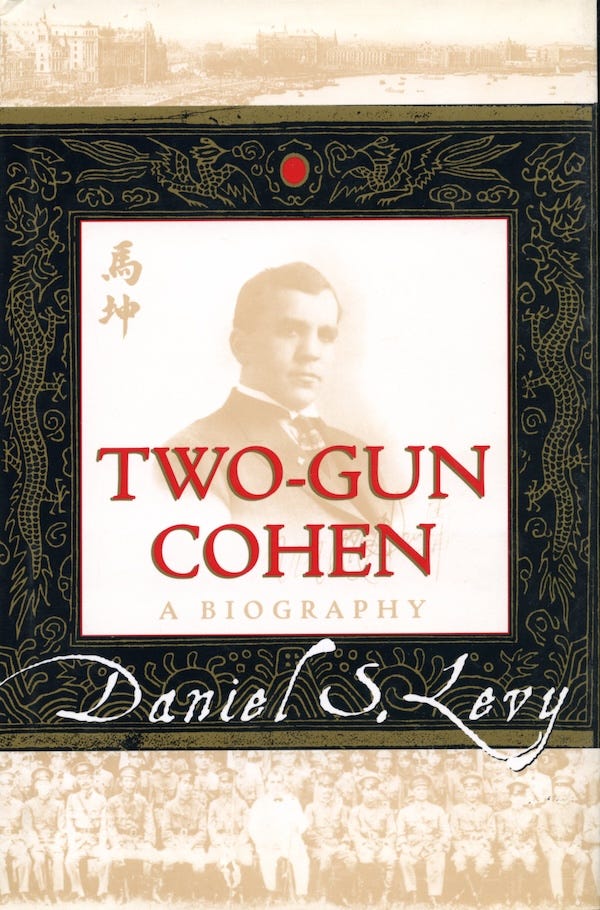
The fundamental challenge Levy faced, however, was separating fact from fiction, history from legend. “I needed to approach the project like an investigative reporting assignment and take the account Cohen gave Drage, especially the timeline, and follow it, or find out where it diverged from reality, which I found it did quite often.” Levy began his research in 1992 while on a TIME Magazine fellowship at Duke University, where he met a renowned China scholar who helped introduce Levy to the wide world of British and Chinese historical archives. Levy also remembers a TIME colleague giving him an especially important bit of advice. “When you do a book on somebody you have to be fascinated by your subject, whether you love them or hate them; you have to keep in mind that you’ll be stuck writing about them for years.”
David: How much research did this book require and what did that research entail? When you began your project, the internet was barely in its infancy. You had no choice but to do this old school. How did you approach the research?
Daniel: This was 1992 and of course not many people used email back then. So I wrote letters. In fact, I wrote more than fifteen hundred letters, made countless phone calls, and tracked down and interviewed more than one hundred people who knew Cohen. I contacted archives and libraries and was often surprised to find Cohen mentioned in everything from foreign office accounts and reminiscences to prison logs and personal letters. In the process I amassed piles of documents and contemporary accounts…
I also felt that I had to travel along the route Cohen traveled. During vacations and a one-year National Arts Journalism Program fellowship at Northwestern University, my wife, Lillie, and I set off to visit almost every place that Cohen passed through. This involved tramping around the East End of London, visiting small towns in Saskatchewan and British Columbia, getting into abandoned jails in Manitoba, walking down the backstreets of Canton and Shanghai, and strolling along the shoreline of a former Japanese prison camp in Hong Kong.
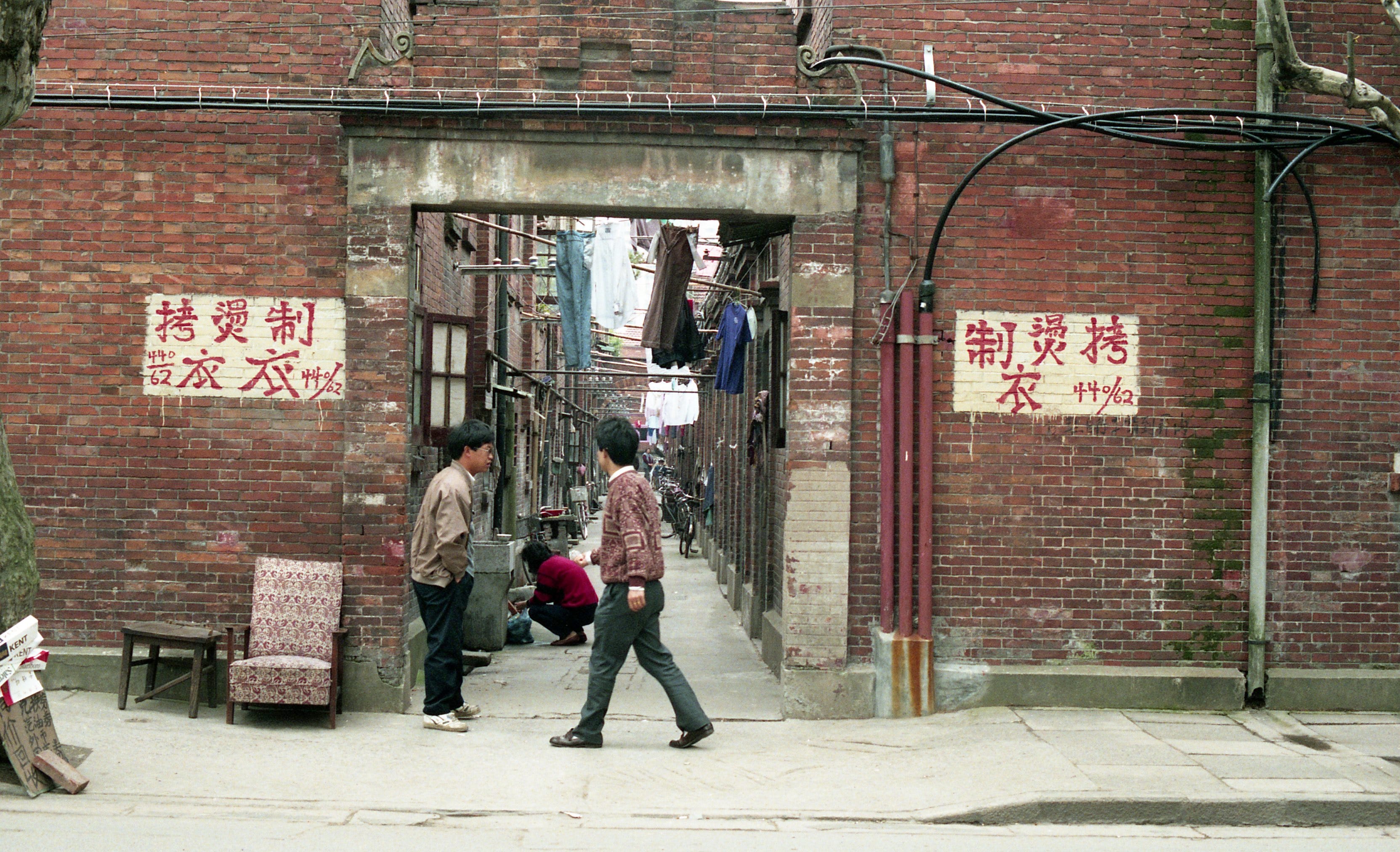
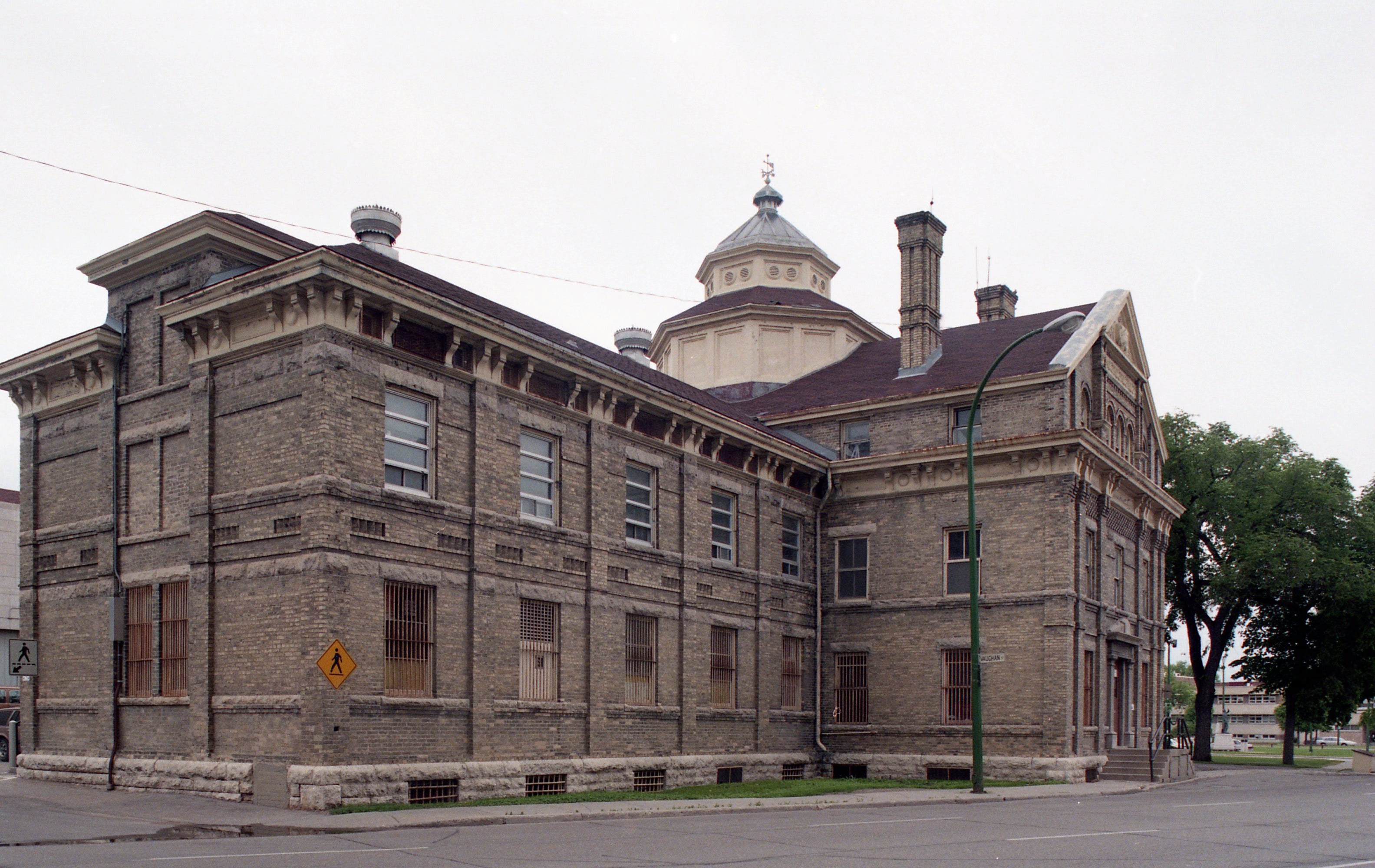
I wanted very much to try to capture a sense of place. Which is why it was important for me to walk specific streets and neighborhoods... I was able to locate the family farm in Whitewood, Saskatchewan, where Cohen found work after he was released from an industrial school for wayward Jewish boys. I was able to walk over the property and get a sense of the landscape he would have experienced. In London I asked the owner of a house where the Cohen’s family lived if he would let me have a look inside. And he let me go in. I could see the layout, the staircase and banister, details like that. And I did that everywhere I traveled. When I was in Winnipeg, they were actually just about to demolish the jail he had been held in. But they let me inside, and I was able to see what the cells looked like, especially some of the deep cells, in the basement, for the really bad guys.
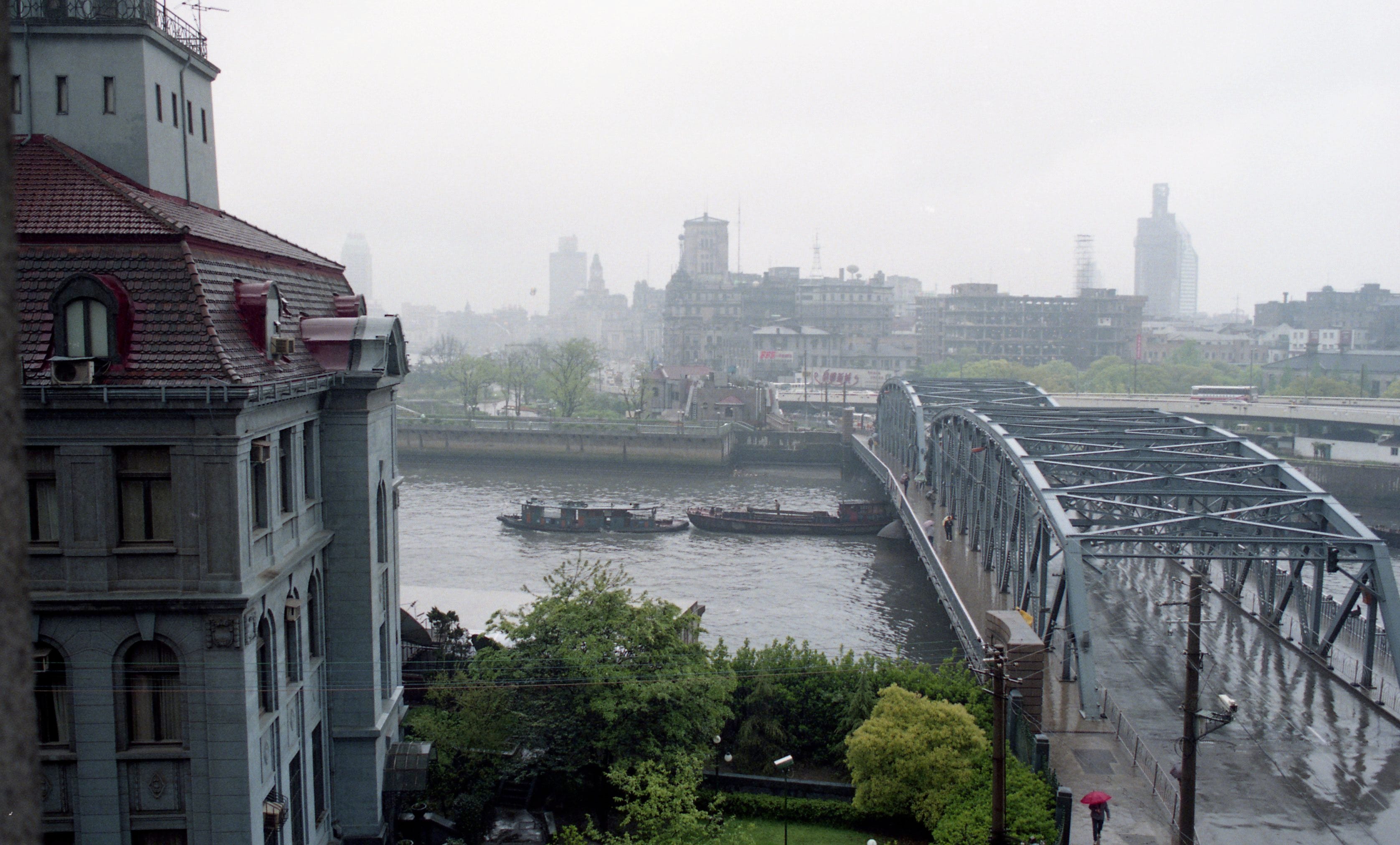
When I went to China, I knew the hotel he stayed in, when he first arrived in Shanghai, which was also going to be demolished. And they let me go upstairs, so I could see the view he would have had. On my second trip to China, when we went to Hong Kong, we visited other hotels he stayed in, and also the Stanley Prison Camp, where he was held as a prisoner of the Japanese. We were able to walk along the beach and see where he cooled his heels for a year or so before he was freed as part of a rare prisoner exchange. Similarly, we visited the various sites where Cohen had resided in Montreal.
David: As I was reading a bit about the history of biography, one of the quotes that caught my eye was from Mark Twain: “Biographies are but the clothes and buttons of the man. The biography of the man himself cannot be written.” I think I get his point, but nonetheless, “the clothes and buttons” can still be fascinating–and revealing. To what extent do you agree or disagree with Twain? And what were some of your favorite personal details about Cohen and his life? Were there surprises?
Daniel: “The man himself cannot be written.” That is true. I couldn’t get into Cohen’s mind. I could try. But the problem with Cohen was, even though I got access from Cohen’s family to his personal letters, the letters were oftentimes simply, “Things are great, I’m doing great, I’m saving the world” types of letters. They weren’t confessional, like a diary might be. And even with diaries, sometimes people write with the sense that people will read them at some point, and therefore, the writer wants to make himself look as good as he can.
Some of my favorite personal details about Cohen and his life were the parties he threw. I loved reading about the parties and I wanted to describe that scene. Emily Hahn was a writer for The New Yorker who went to a lot of parties in China in the ‘30s, and she mentioned Cohen in her memoir on China and her biography of the famed Soong sisters, because of Cohen’s connection with Sun Yat-sen (the three Soong sisters all married powerful men–Sun Yat-sen, Chiang Kai-shek, and H. H. Kung–who played key roles in China’s politics in the early 20th century). Hahn was kind of a wild lady–she walked around town with her pet gibbon, Mr. Mills, on her shoulder–and I wrote to her and met her for lunch at The New Yorker and visited her at her home in England when she was in her late 80s.
Hank Luce, son of TIME‘s founder, Henry Luce, gave me a contact for Madam Chiang Kai Shek. Her niece and I exchanged letters and phones calls, but Madam Chiang was already about 100 years old, and according to her niece, was just too tired of talking about that period. Oftentimes, though, people were happy to talk. When I was in Nanjing during my first trip I found Sun Yat-sen’s last surviving bodyguard. He was a wizened old guy who Cohen had taught to box and shoot in 1924 and he was very willing to talk about the past.
There were so many interesting Cohen trails to follow, but I came to realize I had to double check everything he said. For example, he always talked about being born in on Umberston Street, in London. But the family gave me a taped interview of one of Cohen’s sisters, who had already passed on, about Morris, and she talked about how he was actually born in Poland, and that they left Poland when he was an infant. That’s why there was no birth record in England, which, of course, led me down another trail to figure out where in Poland he was born. And I remember going to the map room at the New York Public Library, and they had very detailed World War II US Army maps of Poland. I learned from the family the hamlet’s name, and I remember sitting there with a magnifying glass going over it to finally figure out where the hamlet was... So it became clear I couldn’t trust his timeline at all; I was tracking someone who was not always reliable.
He also always talked about being in the Battle of Passchendaele [the third battle of Ypres, a WWI battle, fought from July to November 1917, so deadly and futile–more than half a million Allied and German soldiers were killed or wounded, and there was minimal tactical gain–that it has come to symbolize the immense folly and human cost of trench warfare]. Cohen was a sapper, a combat engineer, helping to build railway lines that made it possible for small gauge trains to take supplies to the front and bring the wounded back. They had to constantly be repaired, because they were being shelled and bombed. Cohen told the story that while at the front he was hit in the face with shrapnel and was sent back to England with a brace on his face. But I went through his military record, which included his medical records, and I brought those records to my own doctor, and he looked at them and could see that Cohen wasn’t wounded, but rather had gonorrhea arthritis, which affected joints, in Cohen’s case, the jaw, and that’s why he had a brace on his face. Right before he shipped out to the front, he had slept with a prostitute in London.
Another example of Cohen’s selective memory involved his criminal record. According to the Drage biography, he was arrested, I think, just once, maybe twice, on trumped-up charges. According to my research, however, I have him arrested 9 times for everything from being a pimp to a pickpocket.
David: One of biography’s fundamental goals is, of course, to bring its subject vividly alive to readers. In order to do that, what resources does a biographer most hope to find? It must be hard to resist including every single little detail. How do you decide which details matter most?
Daniel: Well, one of the places I started was an extensive search through newspaper clips. Because he was fascinating to so many people–journalists were amazed to find this colorful Jewish guy in China and they loved to quote him–there were a lot of newspaper articles, though sometimes they seemed overblown, because he was a bit of a braggart.
I was lucky to work at TIME because it had a very extensive news and reference library. The library had a bio folder on Cohen with newspaper clips going back to the ‘20s and ‘30s, from newspapers that don’t even exist anymore. I actually also called the head librarian at Newsweek, our competitor, and I introduced myself and explained I was doing this biography, and asked if they also had a folder on Cohen and they did, and gave me access to it.
I put in three years of research and it was pretty intense research, and then began writing. I remember the first few chapters took a while, and the next six chapters were faster, and the last nine chapters were even faster, once I got that sort of roll of things.
I had been trained as a TIME reporter-researcher to constantly check not only my writing, but also the reliability of my sources. I had government records, foreign office records, colonial office records, things like that, which oftentimes included transcripts of meetings officials in Shanghai and Canton had with Cohen. But even those I had to take with a grain of salt because they could reflect bias. I had to take what Cohen said with a grain of salt, and also other people’s memories. I was asking them to remember what happened 40, 50 years earlier. Some of them went through very tough times. There was this woman who lost her child in the Japanese prison camp where Cohen was held. Others were apologists for the Chinese government. I remember there was one guy who was held in Chinese prisons for 16 years, but didn’t speak badly about China, even after that.
This all had to do with context, which was also part of our training at TIME, understanding when and why something was happening. To track down where Cohen was actually born, I had to learn about Poland in the 1880s and the pogroms, and what was it that drove Cohen’s family to leave. I had to learn about what it was like to grow up on the East End of London, where Morris became a pickpocket, whether it was to make money or because he was bored or he fell in with the wrong crowd. Why was the British government sending these trouble-making kids like Cohen over to Canada? What were those towns and cities in Canada like during that period? And in China there was so much to learn about what was happening, what the political, social and cultural landscape was like.
That’s all a formidable challenge. But again, you have to love looking into this person’s life and trying to figure out what made him or her tick. That’s the challenge and reward of writing biography.
Daniel S. Levy is a native New Yorker. He studied history at New York University and then architecture at Columbia. While at Columbia, he started working in Time magazine’s art department and following graduation was made the magazine’s architecture and design reporter. At Time he wrote on a wide array of topics, from efforts to save ancient Cambodian documents, and rescuing orangutans in the jungles of Borneo, to classical music and historic preservation. He moved over to People magazine in 2001, and then a decade later to the company’s books division, and has worked on specials for Time, Life, People and Entertainment Weekly on such topic as the Vietnam War, and Anne Frank, to Lucille Ball and Cheers. In 1997 his biography of Morris “Two-Gun” Cohen appeared and in 2022 Manhattan Phoenix: The Great Fire of 1835 and the Emergence of Modern New York. An avid street photographer, he loves roaming his hometown taking photos of festivals, luncheonettes and old buildings.
Comments
Nothing yet. Say the first thing.
Sign in to join the conversation.