
This year’s semiquincentennial of the signing of the Declaration of Independence has provided the opportunity to collectively reflect on some of the highlights of our nation’s history.
This spring I taught a Study ND course on the history of early space exploration called Race to the Moon: Sputnik to Apollo. It reminded me again how America’s successful reach for the Moon and beyond has been one of the finest chapters in our first 250 years.
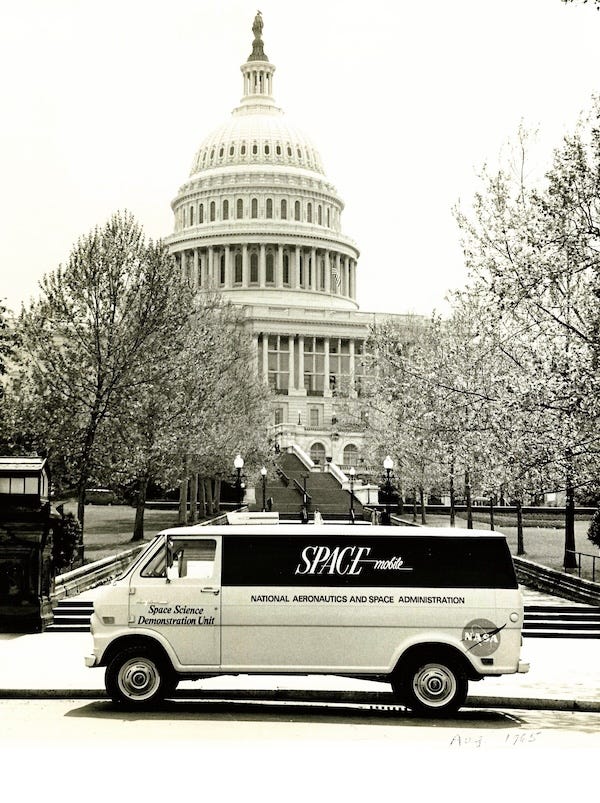
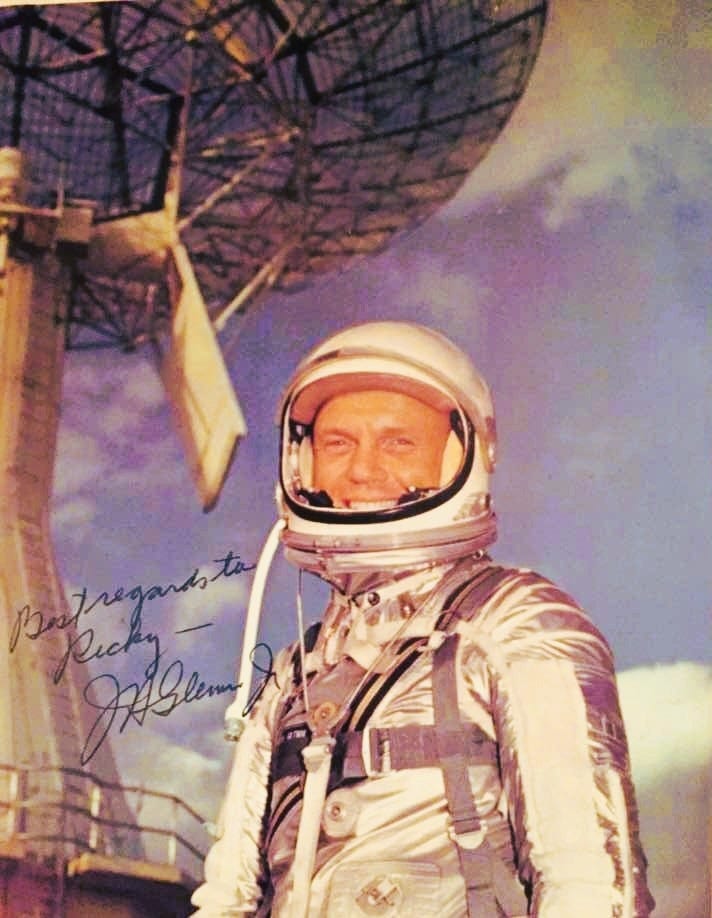
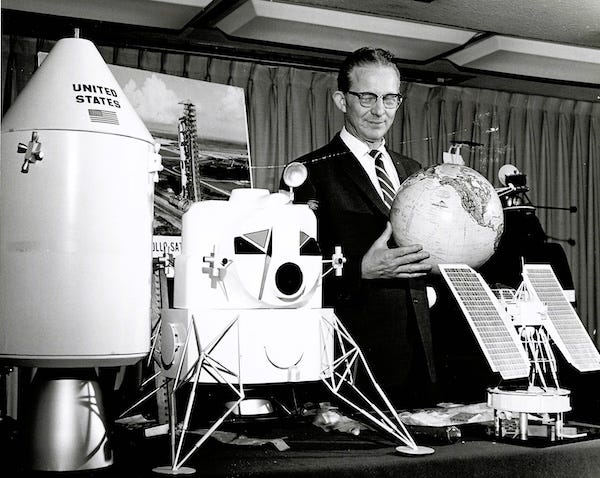
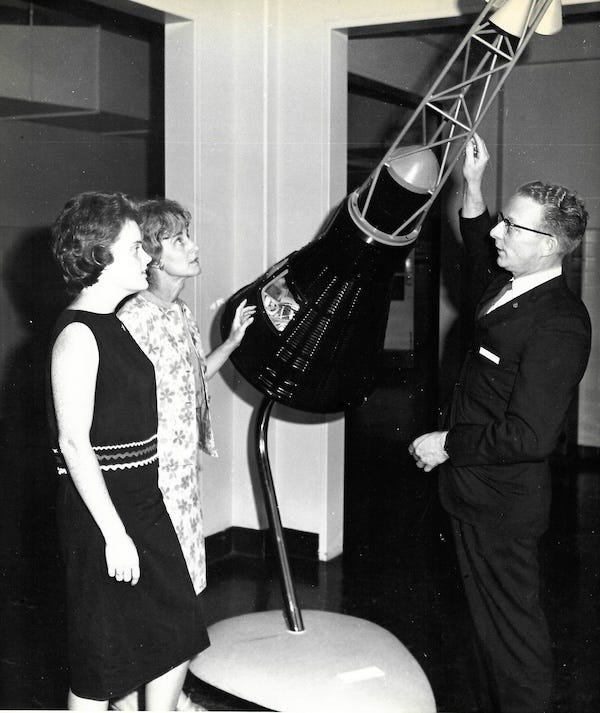
Growing up in suburban Washington, D.C., in the 1960s gave me a front-row seat to this exciting era of American space exploration. My father, Everett Collin, worked at NASA Headquarters from 1961-74, which included a stint as deputy director of education. His work included developing and coordinating the Spacemobile Program that shared the excitement of space travel with audiences of all ages worldwide, especially school children. During this golden age of manned space flight with Projects Mercury, Gemini and Apollo, he often brought home NASA-produced 35mm films about the latest mission. Being able to invite my friends over to watch the newest film brought me instant status as the most popular kid in the neighborhood. Dad also brought home autographed photographs of several Mercury astronauts, including John Glenn, Scott Carpenter and Wally Schirra. They are cherished keepsakes which still hang in my office to this day.
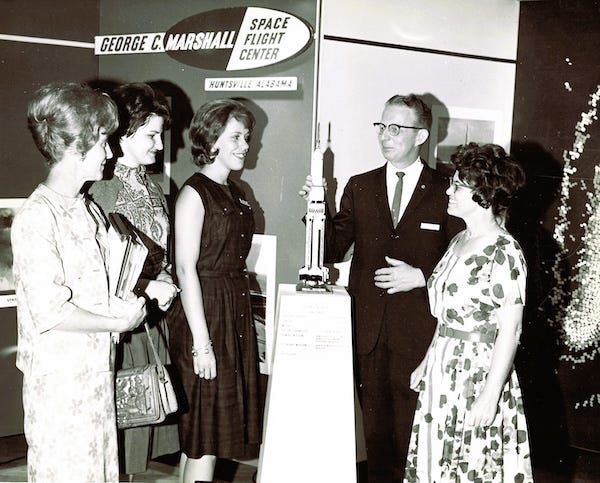
Fast forward to 1990. I found myself studying for a Master of Science degree in Space Studies at what is now the University of North Dakota’s John D. Odegard School of Aerospace Sciences in Grand Forks. There I focused on the history of the U.S. space program, which included a summer internship back in Washington working at NASA Headquarters. I then spent two years at Oklahoma State University in Stillwater as part of a NASA contract as a videoconference coordinating producer for NASA’s education series, Update for Teachers. This was transmitted several times each school year to more than 2,000 sites in the United States, Canada and Mexico.
From the mid-1990s on, my professional employment shifted to mostly general history and communications positions and away from space exploration and aerospace. But I always maintained a deep interest in America’s space missions, closely following their successes, failures and tragedies.
Teaching this spring’s Race to the Moon course gave me the opportunity to package a dozen years of space history from 1957-69 into classes that highlighted efforts by the U.S. and Soviet Union to land the first man on the Moon. In May 1961, President Kennedy set the goal of landing a man on the Moon before the end of the decade, at a time when achieving such a goal seemed impossible. It was accomplished with five months to spare when Apollo 11 astronaut Neil Armstrong set foot on the Moon in July 1969.
I enjoyed examining this extraordinary era in our nation’s history with my students, many who lived through it and added much to the course with their memories and insights. And the timing of the course could not have been more ideal, occurring during the Artemis II Moon mission in April. This presented the perfect opportunity to look back as well as consider the exciting challenges space exploration promises to bring in the years to come.
Here are three personal observations from these past decades of space exploration:
1. The engineering feats – The 1961-72 Project Apollo era was both a product of its time and something timeless. It was driven by Cold War rivalry, yet it produced achievements that transcended national boundaries. It required enormous resources, yet its benefits extended far beyond its original purpose. It was a story of risk and resilience, of failure and triumph. Today, as new missions like Project Artemis aim to return humans to the Moon, Apollo serves as both a foundation and an inspiration. Apollo proved that reaching the Moon was not just a dream – it was a problem that could be solved.
2. The technology transfers – So many technology innovations modern-day society now takes for granted sprang from early space exploration. They include weather and Earth-sensing satellites to track storms and hurricanes more accurately and strengthen disaster response and agricultural planning; improved medical devices; and extensively refined methods for freeze-drying food. One of my favorites is realizing how primitive by today’s standards was the computer technology that powered the Apollo 11 mission. NASA liked to brag about the fact that it was then state of the art. To put that into perspective – the Apollo 11 computer system had 32 kilobytes of Ram memory. There hasn’t been a device with kilobytes since the Commodore computers of the 1980s. By comparison, the cell phone in your pocket today has an average of 64 gigabytes of Ram memory, which translates into more than 67 million kilobytes. That’s 100,000 times the processing power of the computer system that took Apollo 11 to the Moon and back.
3. The rivalry between superpowers – The space race competition with the Soviet Union helped motivate the United States to meet the challenge of landing the first man on the Moon. The Soviet Union was a worthy adversary and had many early space “wins,” including the first satellite (Sputnik 1 in October 1957); the first flight of a living creature (a dog, Laika, aboard Sputnik 2 in November 1957); the first photographs of the far side of the Moon (Luna 3 in October 1959); the first man in space (Yuri Gagarin in April 1961); the first woman in space (Valentina Tereshkova in June 1963); the first three-man mission in space (Voskhod 1 in October 1964); and the first man to walk in space (Alexei Leonov in March 1965). This valid question from a student in class generated a lively discussion – “How did the competition with the Soviet Union make us better and where would we have been without it?” What are your thoughts about this?
The U.S. space program is one of America’s greatest legacies. Its heritage is ushering our nation into a new age of even bolder successes. These early projects were ultimately successful because of the talented scientists, engineers and supporting staff, as well as the courageous astronauts who executed their complex calculations. However, no small factor in the success of those years was also the bold leadership of our Presidents. When signing the legislation that created NASA in 1958, Dwight Eisenhower insisted the space agency be managed by civilians instead of the military, and Lyndon Johnson and Richard Nixon did not waver in their support of the space program’s missions and goals. And then there was John Kennedy, who defended his goal of landing the first man on the Moon before the end of the 1960s in his famous 1962 address at Rice University, “We choose to go to the Moon in this decade and do the other things, not because they are easy but because they are hard … As we set sail we ask God’s blessing on the most hazardous and dangerous and greatest adventure on which Man has ever embarked.”
This fall I will be teaching a course for The Study continuing the leadership theme that was evident during the Race to the Moon. Defining Moments in Presidential Leadership: From Washington to Reagan will examine how decisive Presidential leadership has shaped the direction of the United States during periods of uncertainty, competition and national ambition. From early Presidents such as George Washington to modern leaders like Ronald Reagan, the course will examine how Presidents have faced difficult challenges and persuaded Americans to pursue larger goals, sometimes amidst great opposition.
President Kennedy’s vision during the Moon Race reflects the same qualities we will examine in Defining Moments in Presidential Leadership – courage, confidence and the ability to unite the nation behind a common purpose.
Another shared theme is the idea that Presidential leadership becomes most important during times of crisis or competition. The Space Race was a centerpiece of the Cold War, when the United States and the Soviet Union were competing for military, technological and ideological superiority. The Soviet launch of Sputnik 1 in 1957 shocked Americans and created fears that the United States was falling behind. Eisenhower and Kennedy responded by strengthening science education in the schools and universities, and expanding the nation’s space program by dramatically increasing federal funding for space exploration.
Their actions demonstrated how Presidents can successfully guide the nation through moments of enormous pressure and uncertainty. Likewise, this course will examine how Presidents throughout our history have made difficult and often unpopular decisions during wars, economic struggles and international conflicts that ultimately proved to be in the nation’s best interest.
Landing astronauts on the Moon became more than a scientific achievement. It symbolized American creativity, skill and determination. Kennedy’s leadership helped transform space exploration into a national mission that reflected American values. The Space Race illustrated how Presidential vision and perseverance can accomplish extraordinary goals.
The same approach can be seen in Presidents like Washington, Lincoln, both Roosevelts, Reagan, and others, all who demonstrated the importance of strong American leadership during especially demanding times.
These same leadership qualities have been essential throughout American history, examining how Presidents have made bold and sometimes highly unpopular decisions that proved critical in shaping our nation’s future. They offer important lessons to remember as we commemorate and celebrate the first 250 years of our nation’s independence.
Rick Collin is a historian passionate about history as told through stories. Rick worked for the State Historical Society of North Dakota for 16 years. Previous The Study ND/Public University he has taught include America and the Modern Presidency: From Franklin Roosevelt to Ronald Reagan, 1933-1989; 50 Years Later: America and the Vietnam War, 1945-1975; From Camelot to Woodstock: America in the 1960s, and Race to the Moon: Sputnik to Apollo.
Comments
Nothing yet. Say the first thing.
Sign in to join the conversation.