
Good afternoon everyone,
I thought we would get into the next batch of questions and focus in on some risk related questions. Last time we covered adaptation, the move from flat size to dynamic sizing, and what a drawdown actually costs you.
In this post we will look deeper into all of this and look at models, principles but also some of my personal trading data underneath all of it: How I grade, bet, how I bucket risk across a book, and how I decide the total amount of risk I am allowed to carry at all and more.
I also received a lot of questions around pyramiding and how to make sure to do it right. I started writing a document in that regard and will post a dedicated blog post about it shortly.
Here is every fill since January 2020, roughly 2,100 trades, plotted as a 100-trade moving average of my win rate.
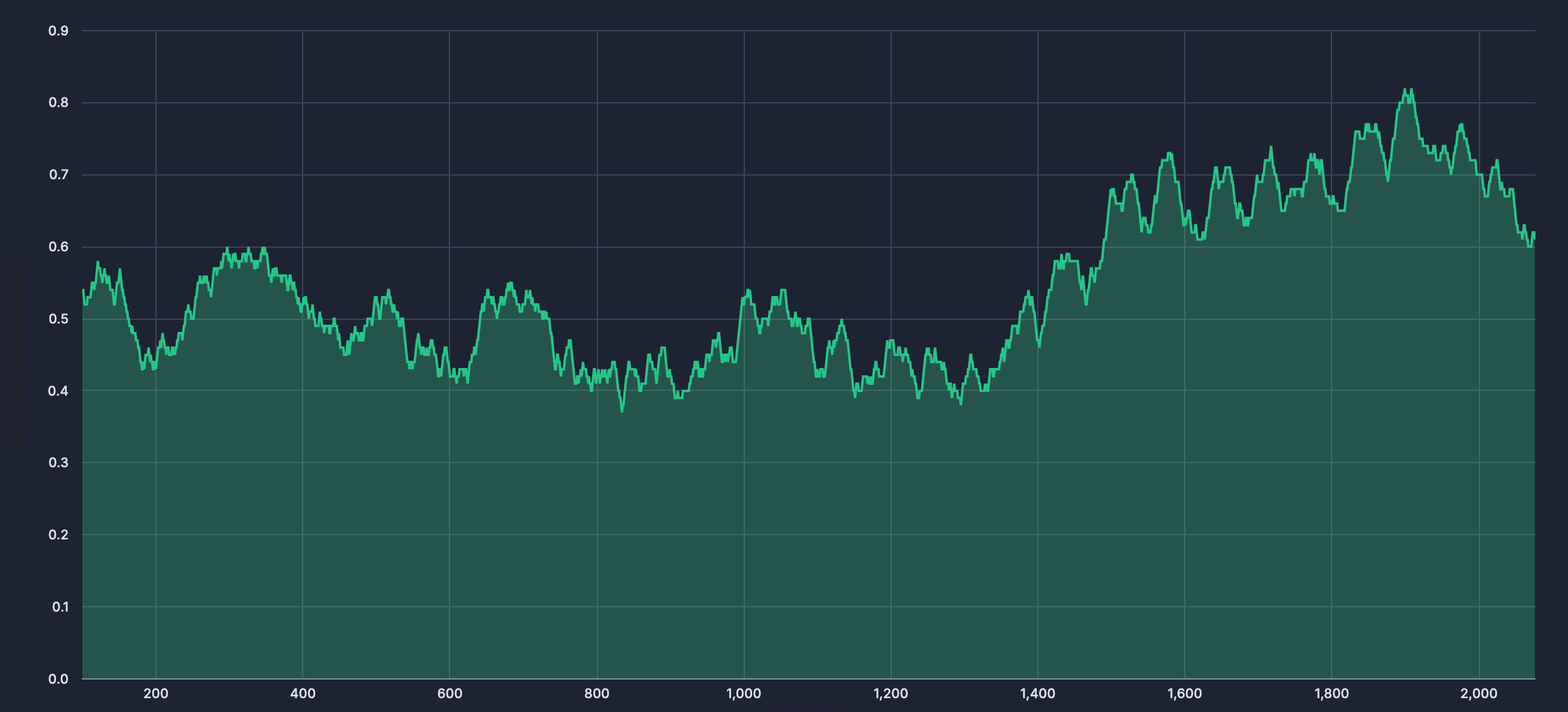
We will focus on my active trade period which was mostly 2020 until the end of 2024.
After that trades were mostly focused on the long term for me and blends a few different approaches which does not show what we are aiming for here, active trading management rather than buy and hold.
You will see this period here, which represents my profit factor over time.
As you will note my historical pattern has been periods of base trades into mega trades and fully capitalizing on them.
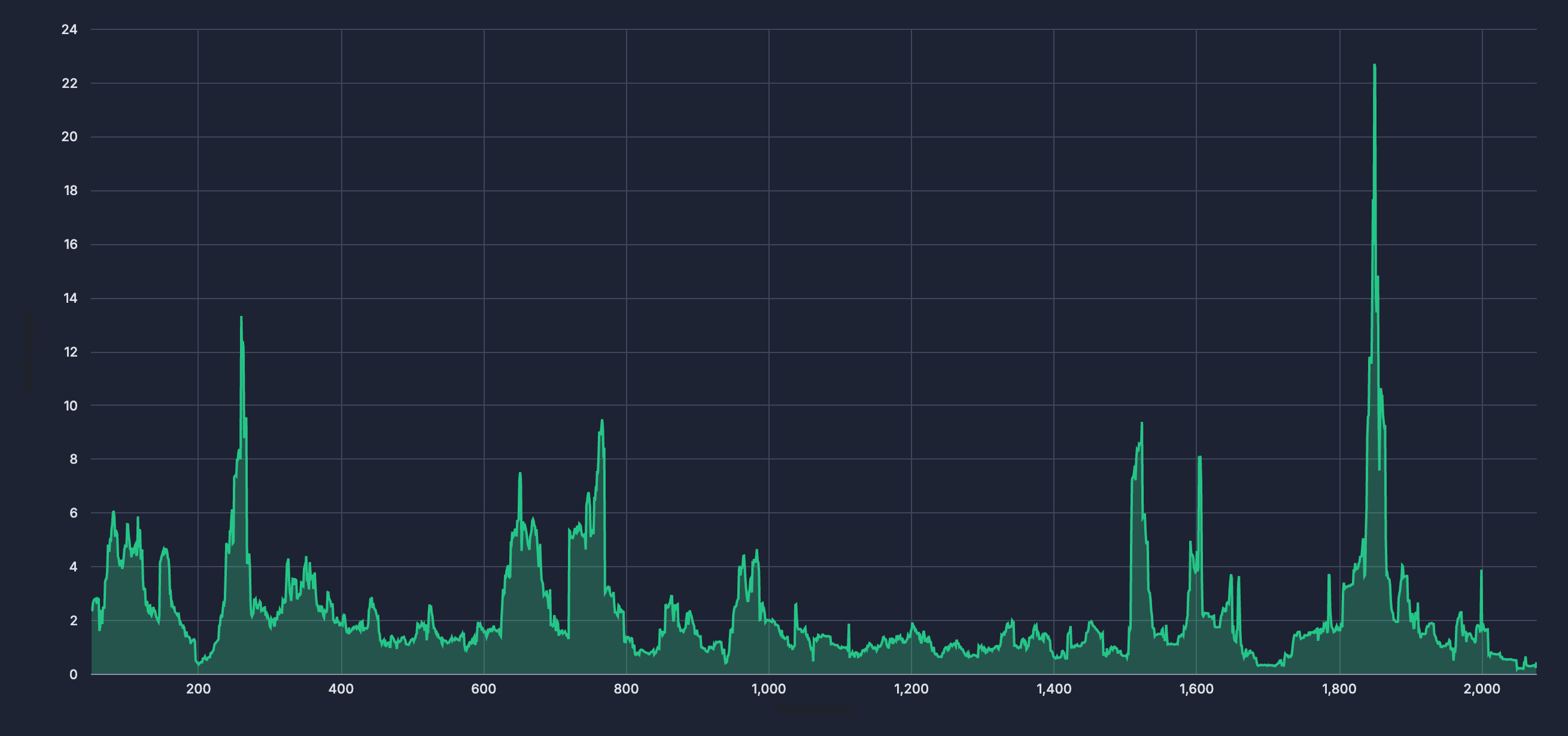
My overall approach has been about balancing out being early and through it being wrong more but letting winners run and capitalizing on pyramiding and riding my winners.
Overall my longs have had the biggest risk to reward ratio and have a hockey-stick distribution, the win rate is close to 40-45% on those. They do not pay for the bills but they pay for the big items at the end of the year.
Short opportunities have a higher win rate, roughly 65-70%, which helps to create a cushion and balance between waiting for the big long opportunities by staying sharp and create cash flow through the shorts.
Win rate is a description of the trade you are taking. It is not a measure of how good you are.
Win rate and Risk to reward are linked, they do not exist on their own, the real question a trader asks is if the Expected value and expectancy is titled in their favor.
Expectancy = (win rate × average win) − (loss rate × average loss)
Everything else, the screenshots, the streaks, the fintwit scorecards, is decoration on those four inputs. So instead of a win rate, here is the approximate grid that describes what trades are good enough:
Comments
Nothing yet. Say the first thing.
Sign in to join the conversation.