
Happy Tuesday, writing friends!
Yesterday was a Bonus Episode on the podcast, so make sure you don’t miss out on CeCe interviewing Rachel Hochhauser, author of Lady Tremaine. They discuss the craft behind her unforgettable opening and ending, and the lessons Rachel learned on the long road to publication—including why critiquing other writers’ work may be the best writing education of all.
Sarah Adler, author of Wild Goose Chase, discusses what ‘high concept’ really means in publishing. In her author video, she also:
shares a practical exercise for generating stronger story premises,
discusses the difference between premise and plot, and
argues that a great high-concept idea only works if you fully deliver on it from the first page to the last.
Then, Natalie Moss, author of The Night Hunter pens a wonderful essay titled Landscapes with Teeth:
“And yet, for all the glorious obsession available in the craft world I think one element gets talked about a little less often: setting. It’s a big loss because to me, setting matters just as much as plot or character. They’re three sides of the same very odd, very lopsided, and probably structurally unsound coin.
So I sat down and went back through all of my favourite books set in wonderful places and tried to see what they had in common. After that, I created a short checklist of things to try when writing that perfect setting for your novel.”
You’ll want to check out Natalie’s checklist as well as a few excerpts she shares from some incredible novels.
Our Meet Your Dream Agent profile today is of Tali Shammas from Storm Literary Agency:
“My first 24 hours open, I received 1,000 queries. I closed to queries for a little while to catch up and recently reopened. At this point, my inbox has been open for about two weeks in total and I have received about 2,000 queries. I haven’t requested any partials yet, but according to QueryManager, I have requested 47 fulls. That’s approximately a 2% request rate.”
Keep reading to find out if you and Tali would make a great fit! She’s also created a special QueryTracker link just for you fabulous TSNOYAWERs. 👏 Scroll down for it!
Today’s Q&A is with Catherine Ryan Howard, author of Buyer Beware. Her answer about knowing when a book is ready to query made us laugh:
“I wouldn’t advise anyone to do what I did which is a long story involving me implying a book was written that wasn’t, lying to an agent that I was about to go on vacation for a very suspicious-sounding 3 weeks, and then me crapping out 50k words in that same timeframe. My 10-years-later, professional, experienced, sane advice is to imagine that your manuscript is about to be read by your dream agent. They’ll only read it this one time. They do and they say no. What’s your reaction? Do you think (a) well, I gave it my best shot, there was nothing else I could have done, we’re just not meant to be together or (b) shit, I KNEW I should’ve changed that thing at the end! Obviously, if it’s (b), it’s not ready.”
We totally get it. Querying can make you do some really stupid 💩! 😂
Finally, don’t forget that registrations are open for the next Beta Reader Match Up!
That’s all for now. Thanks for reading! ❤️
❤️ The Shit No One Tells You About Writing Team
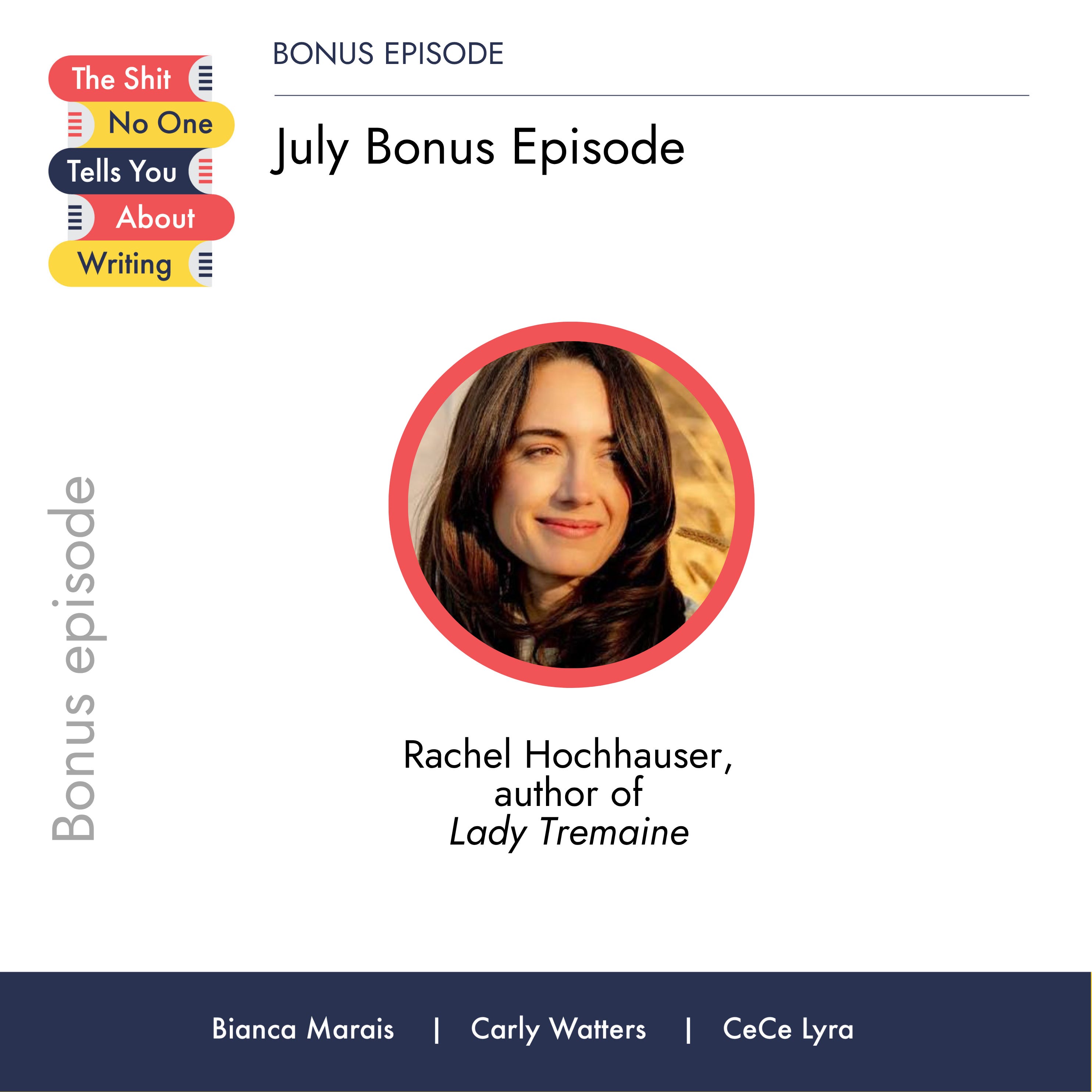
In this month’s bonus episode, Rachel Hochhauser joins CeCe Lyra to discuss Rachel’s debut, Lady Tremaine, an ‘untelling’ of Cinderella from the infamous stepmother's perspective. Rachel shares how personal tragedy reignited her writing career, why she believes there are no hard rules in storytelling, and how she blended pantsing with plotting to create a layered, emotionally resonant novel. She also dives into the craft behind her unforgettable opening and ending, the surprising inspiration for the book's falconry, and the lessons she learned on the long road to publication—including why critiquing other writers' work may be the best writing education of all.
Listen to it here or watch it on YouTube!
Comments
Nothing yet. Say the first thing.
Sign in to join the conversation.