
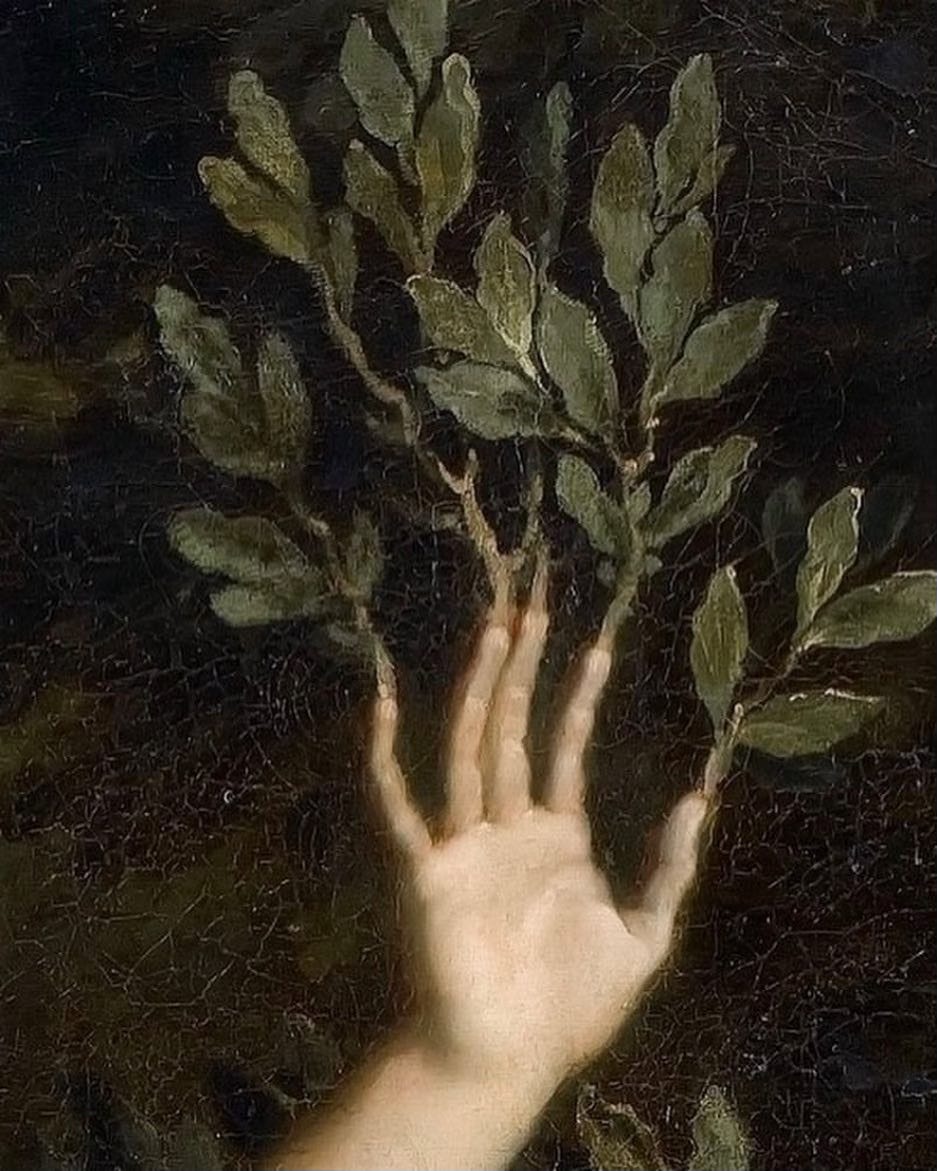
The boundary between the human body and the natural world has never been fixed, though Western thought frequently positions humanity as physically and spiritually separate from it.
We try to contain or reduce nature and distance ourselves from it. Our actions as a species speak to this; we cut away forests and pour concrete, build housing estates beside pristine boglands and drain lakes for data centers.
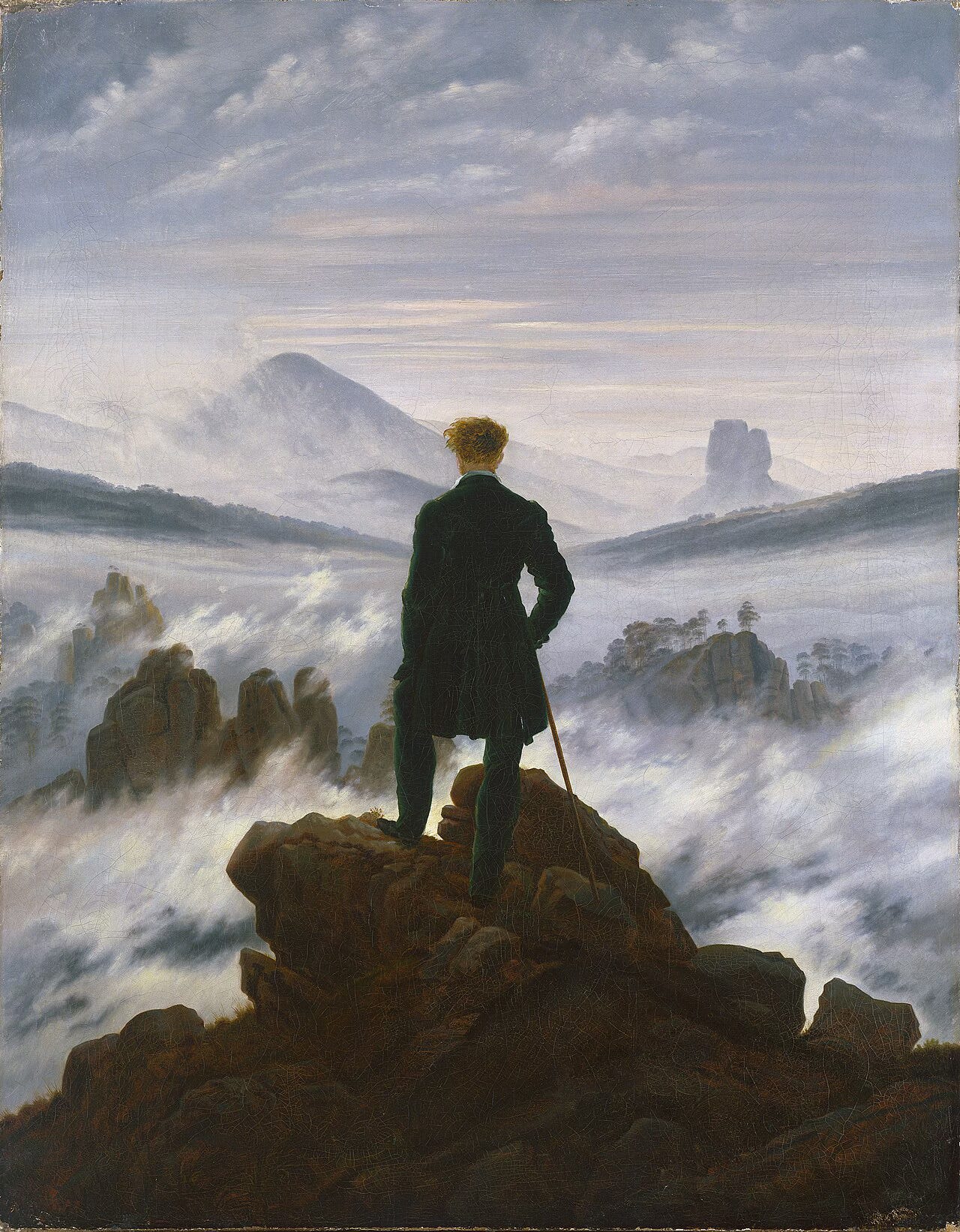
Despite our attempts at control and destruction, nature’s power persists. Great floods destroy villages. Flowers emerge from corpses. Animals hunt and kill us.
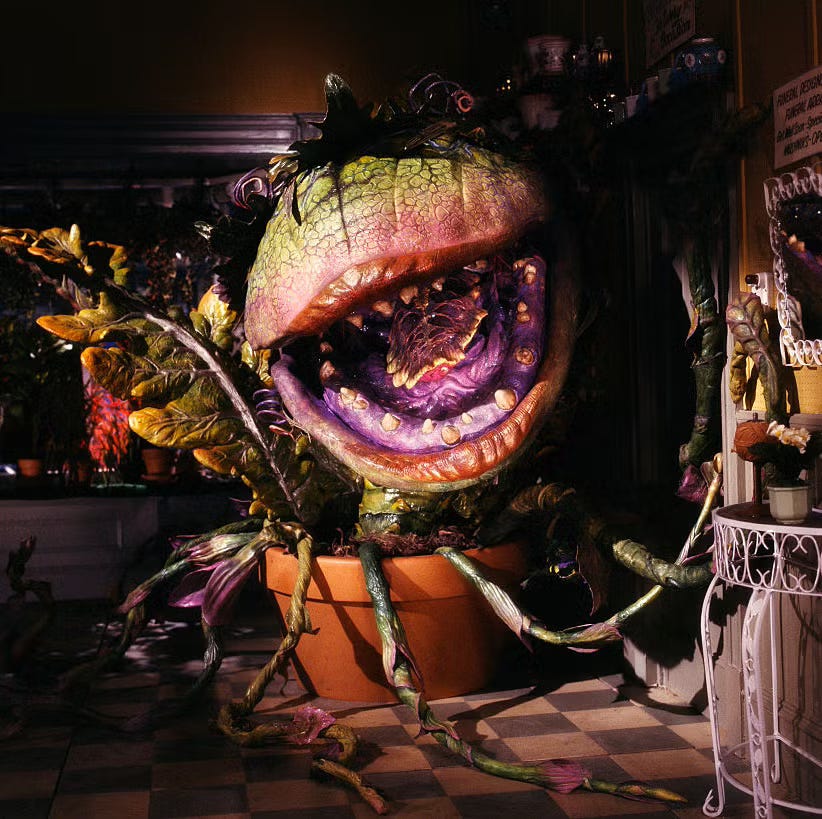
Myths and folklore have long expressed our fears about nature. In cinema, eco-horror continues this tradition. Some stories speak about the dissolution of the self into nature through either consumption or metamorphosis.
The Ruins (2008), Annihilation (2018), and The Last of Us (2023) echo classical myths of Daphne, Narcissus, and Myrrha, where the boundary between the human self and nature dissolves entirely.
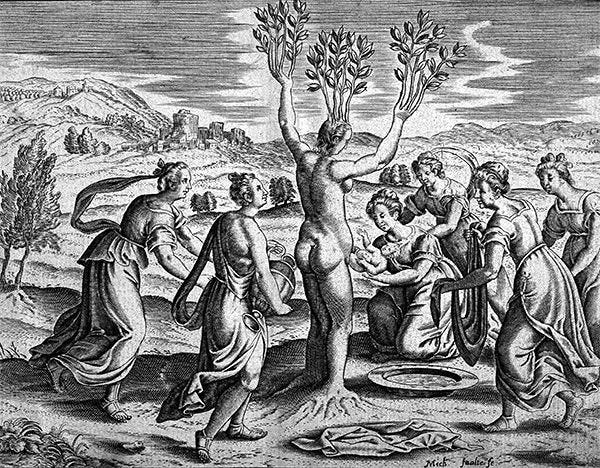
A particularly grim myth is that of Myrrha. She is cursed with an incestuous desire for her father, Cinyras, and flees in shame after becoming pregnant with his child. She is pursued, overwhelmed by grief and she is transformed by the gods into a myrrh tree. Even as a tree she continues her pregnancy. She eventually gives birth to Adonis. Her tree body splits to release him.
Myrrha’s transgression, leads not only to exile from community but absorption into nature itself. Her humanity is erased. While her transformation is framed as a mercy, it is far closer to being cruel.
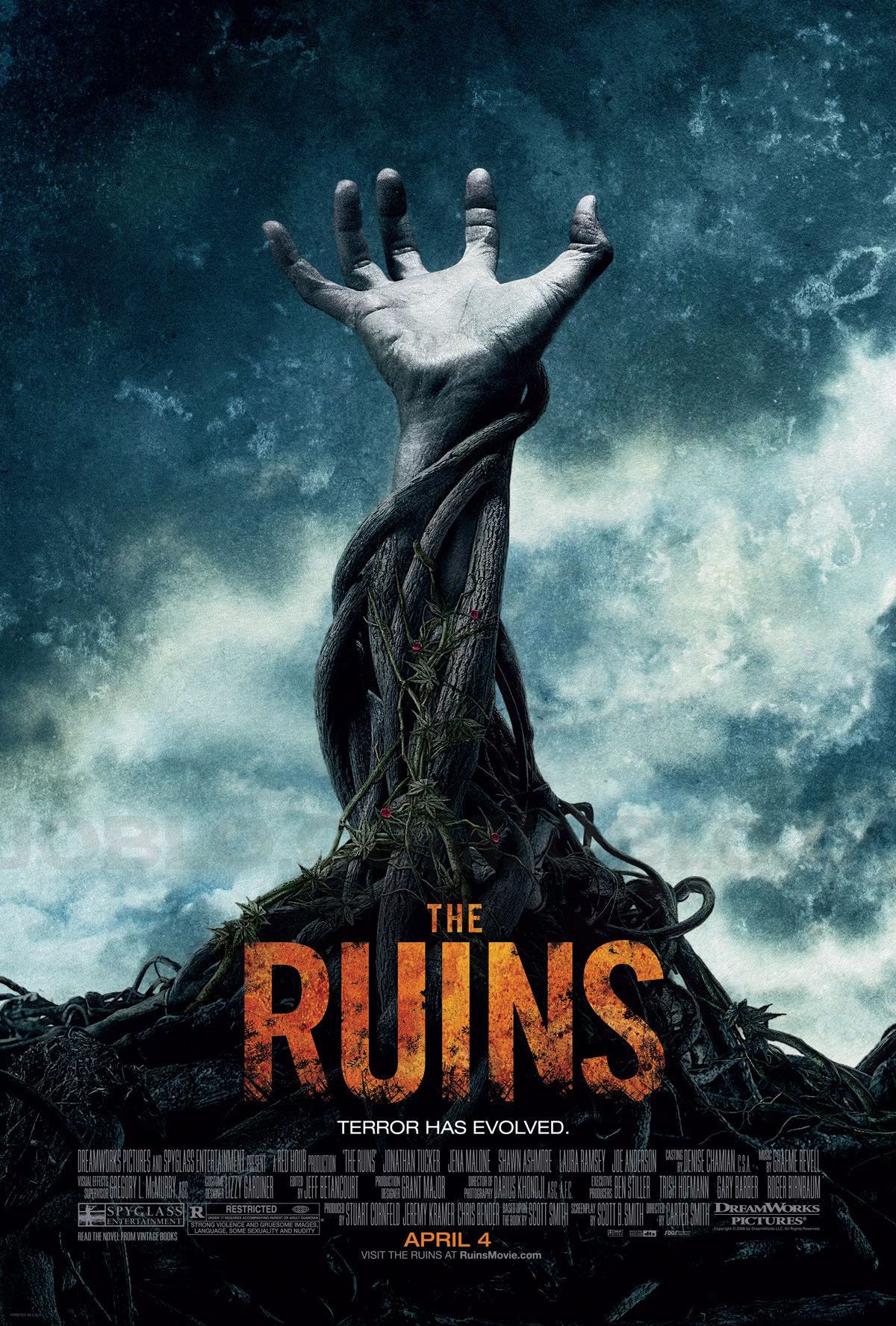
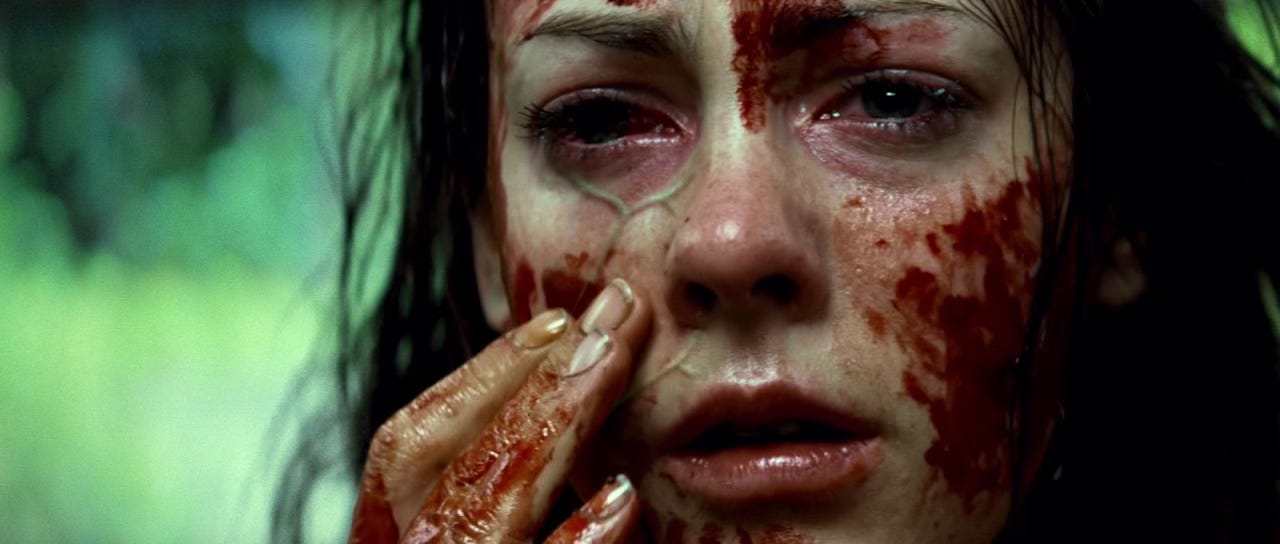
In The Ruins (2008) based on the book of the same name by Scott B.Smith, a group of American tourists take a trip deep into the jungle where they discover an overgrown ancient temple. Despite warnings from locals they do not leave and instead they enter. Inside they encounter creeping, carnivorous vines and are prevented from leaving by armed locals that surround them.
The plants eat them alive.
The tourists realise too late that they have made a fatal mistake. In the story, their innocence or guilt is unimportant. In both The Ruins and the myth of Myrrha, we see those who cross forbidden thresholds being punished by forces that are powerful and indifferent to their suffering.
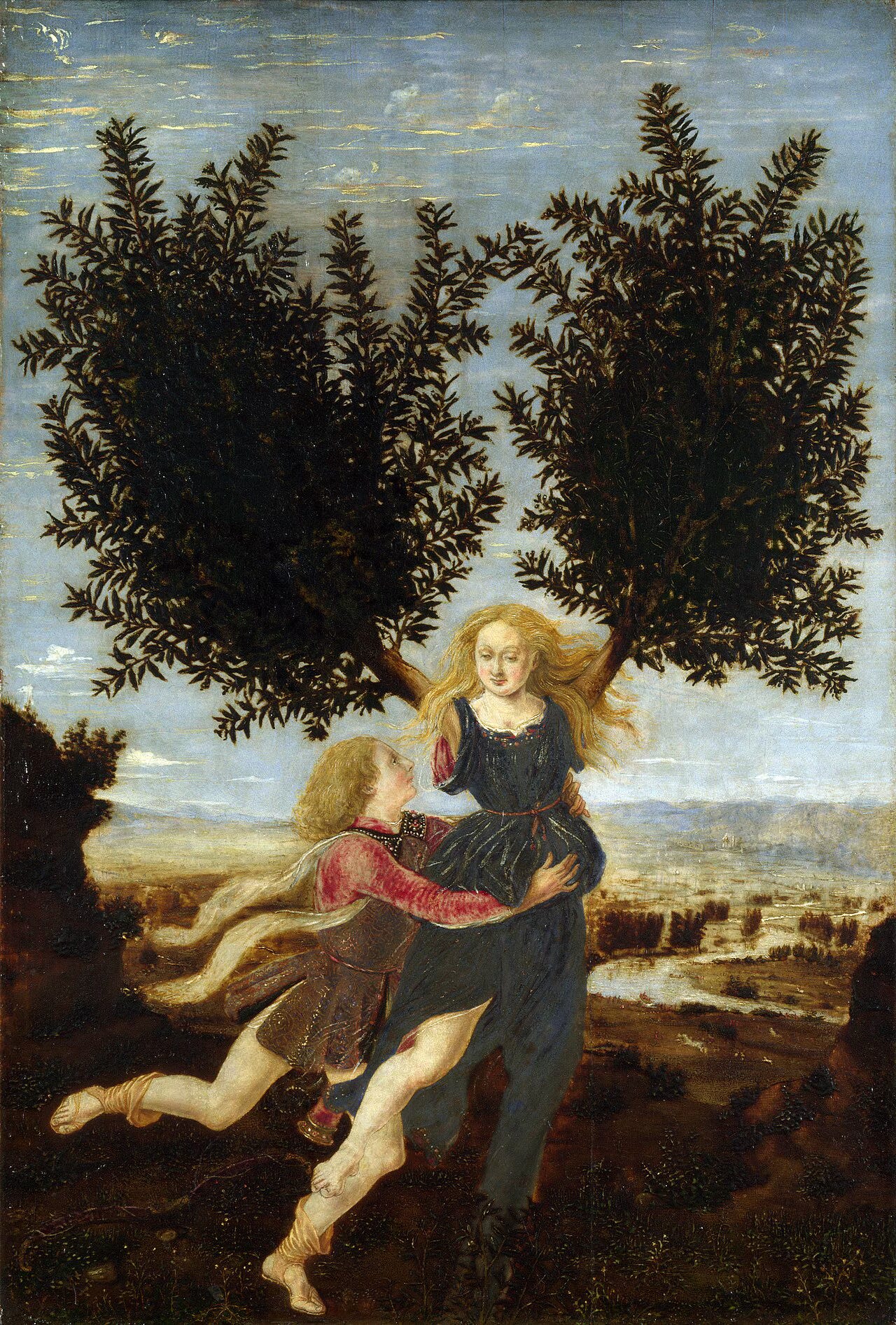
A tale that has always stayed close to my heart is that of Daphne. Apollo becomes obsessed with her and pursues her relentlessly. Daphne is distraught. She refuses his advances and calls out to her father Peneus, a river god, for help. As Apollo closes in, she is transformed by magic into a laurel tree. She is preserved from violation only through complete metamorphosis into nature.
In the retellings of the myth, I found little about Daphnes interiority after being changed to a tree. Like the story of Myrrha, the transformation is framed as a mercy, though the absence of their thoughts or feelings reads more like metamorphosis being a complete loss of selfhood. A death.
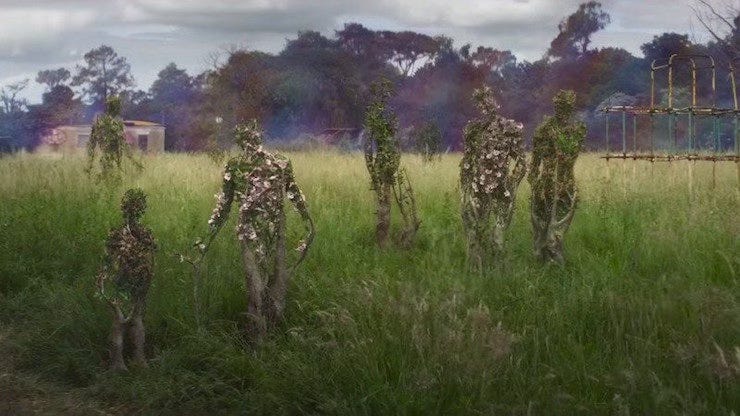
The story of Daphne reminds me of Josie in Annihilation (2018), based on the book by Jeff Vandermeer, who also dissolves into nature as means of releasing herself from suffering. In Annihilation, a group of scientists enter “the shimmer,” a mysterious expanding zone where the laws of biology are distorted and DNA is constantly mutated.
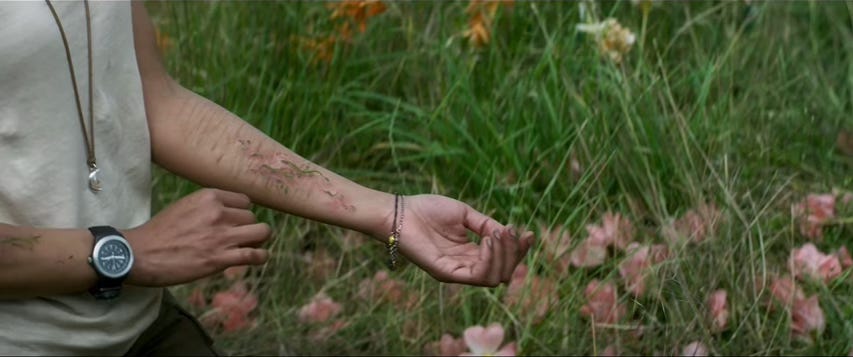
Josie becomes increasingly withdrawn while inside the shimmer, in one scene, she reveals self harm scars on her arm, pointing to her past mental anguish. She says of the shimmer; “Ventress wants to face it, you want to fight it. I don’t think I want either of those things.”
Here we see Josie relinquish any resistance. She sees metamorphosis as inevitable.
In the stories of Daphne and Josie, annihilation of the self becomes necessary to escape suffering.
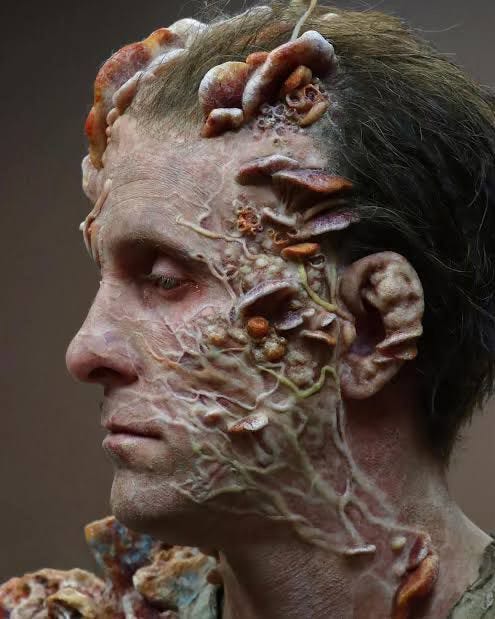
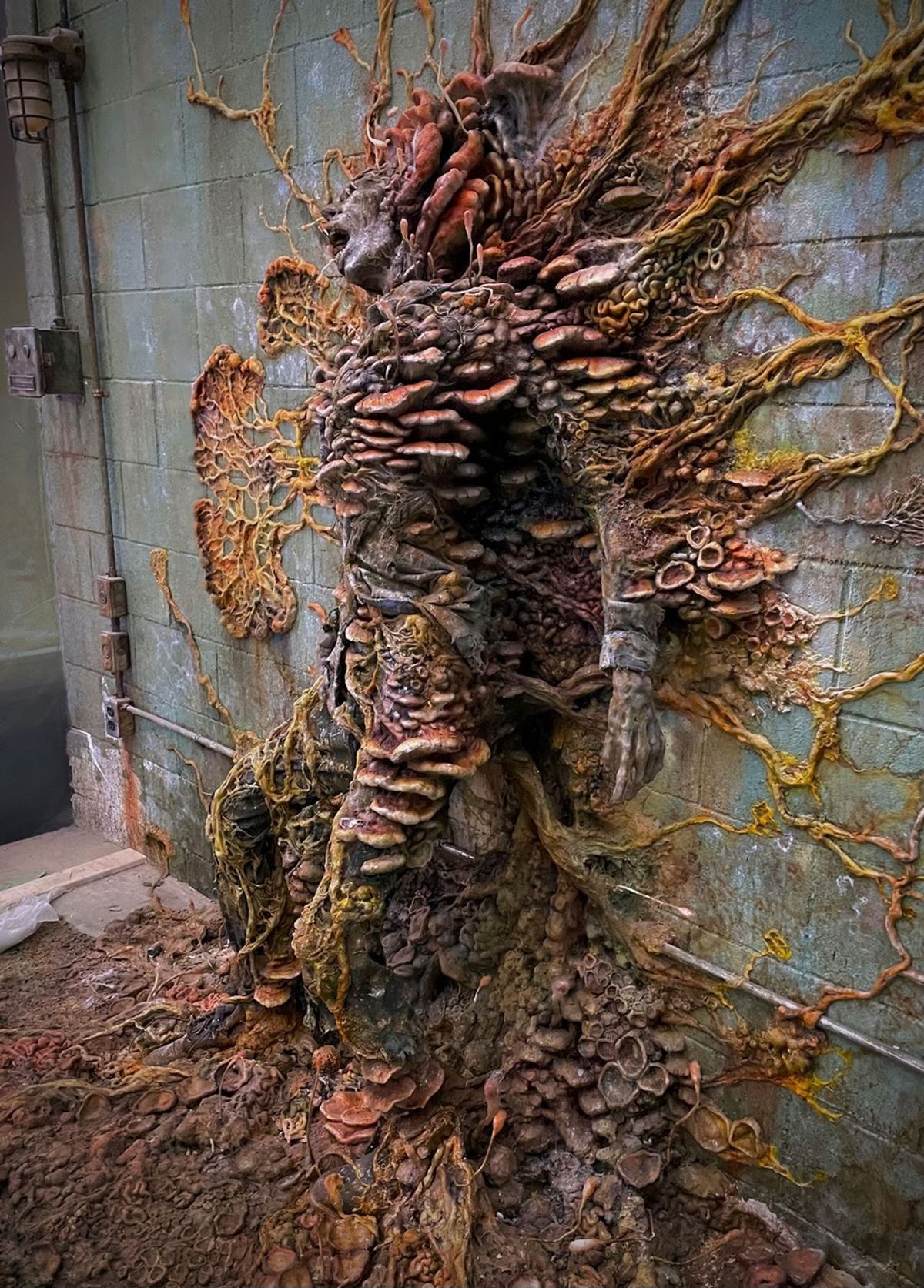
In The Last of Us (2023), civilisation collapses after the Cordyceps fungus mutates and begins spreading through human hosts. The infected are human shaped, mostly, but their individuality is erased as they become part of the fungal network. The horror lies in how easily the infection is internalised before it is recognised as a threat. Beneath the apocalyptic horror sits a familiar anxiety: humanity’s tendency to ignore catastrophe until it is too late.
A similar thread is seen in the myth of Narcissus. Narcissus, a beautiful young man becomes entranced by his own reflection in a pool of water. Unable to recognise that the image is only an illusion, he falls in love with it and remains fixed in contemplation until he wastes away. After his death, he is transformed into a flower that bears his name, growing from the spot where his corpse decayed. His fixation is not simply vanity, but a total collapse of awareness.
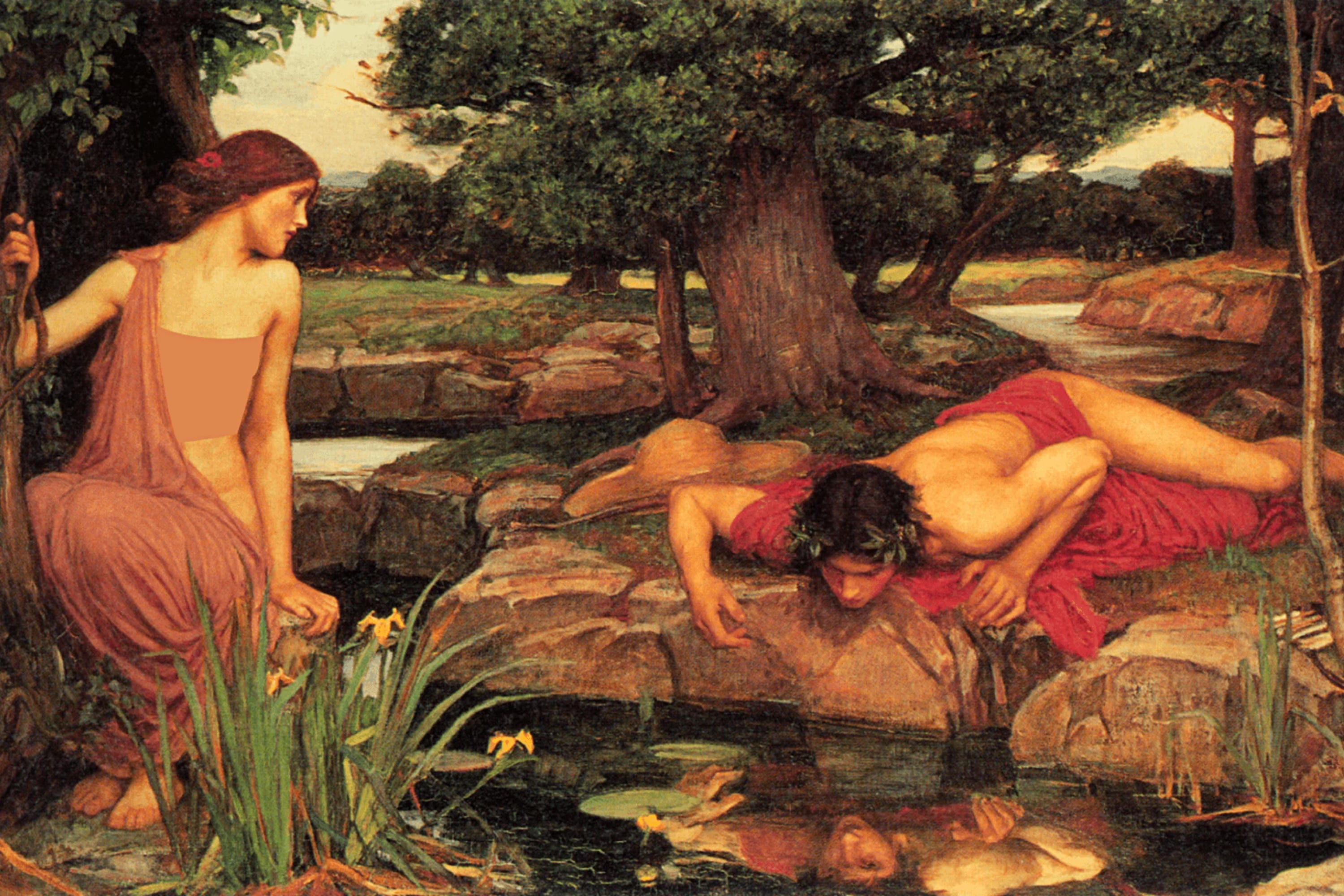
Both The Last of Us and the myth of Narcissus are rooted in an inability to properly “see” the world beyond the self. Hubris in one case, vanity in the other.
These stories endure because they articulate our anxiety about the instability of the body itself. Botanical metamorphosis is horrifying because it forces us to recognise that we are subject to the same cycles of consumption and decomposition that govern all living matter. They remind us of our own mortality and destiny. When we die and are buried, we are folded back into the earth, transformed from human into plant matter and we become the very thing we fear- we lose the self and become part of the whole.
Detail from “Apollo pursuing Daphne,” by René-Antoine Houasse, 1677
Wanderer above the Sea of Fog by Caspar David Friedrich, 1818
Audrey from Little Shop of Horrors 1986
Myrrha, being transformed into the myrrh tree, gives birth to Adonis. Engraving by M. Faulte, 1619.
Scene from The Ruins
Apollo and Daphne by Pollaiuolo, c. 1470–1480
Josie in Annihilation
Scene from Annihilation
Makeup from The Last of Us
Echo and Narcissus by John Waterhouse
Set piece from The Last of Us
TikTok by @vitamin_be7
Comments
Nothing yet. Say the first thing.
Sign in to join the conversation.