
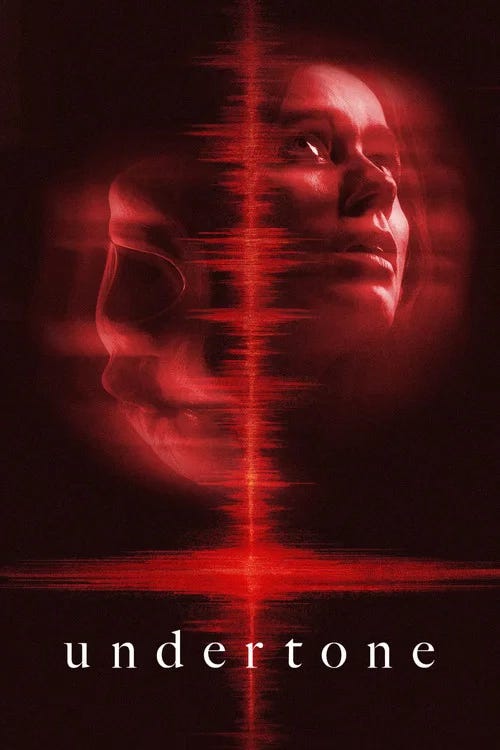
Undertone is a new-ish release from A24, who are describing it as “the scariest film you’ve ever heard”.
So does it live up to expectations? Read on to hear what Harry and I made of it.
The reviews are pretty spoiler heavy so I’d consider avoiding it if you haven’t seen it just yet, though if you’re interested in hearing our thoughts and aren’t so fussed about watching, scroll on!
It’s available on Apple TV, Youtube and is still showing in some cinemas across the world.
by Harry of Hellish Views
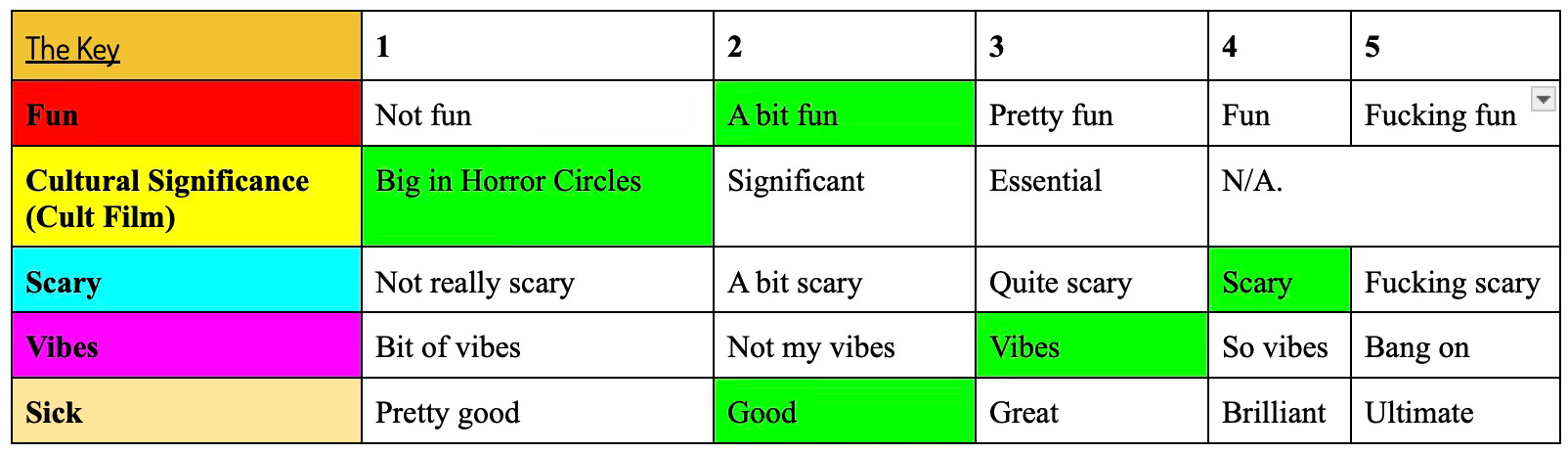
Total Score: 12/23.
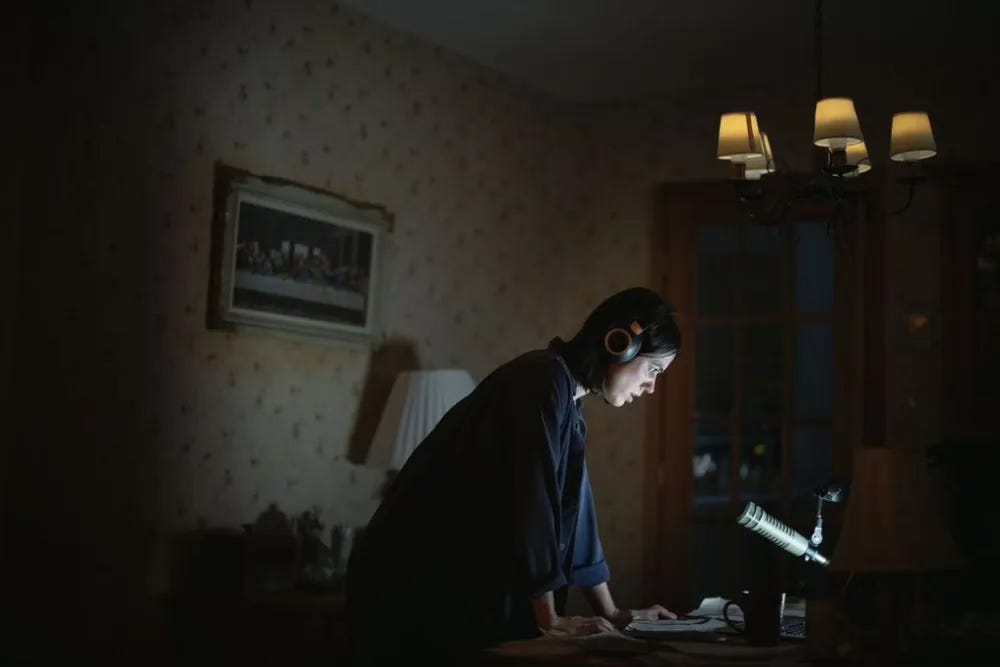
Frankly, I can’t make my mind up about this film. It left me on edge with all the slow panning shots, and put me in mind of The Witch in The Window (2018) the way I was scouring the backgrounds for ghosts. You’d think Flanagan made this movie. Speaking of - our protagonist Evy, definitely put me in mind of Eleanor. Her situation, stuck at home with a dying mother, is unenviable, and perfect for horror shenanigans.
It surprised me that Undertone is the name of the podcast (sick name to be fair), but I enjoyed the dynamic between the two hosts, Evy and Justin. When they discuss cursed videos, spooky audio, it feels real, and familiar.
What feels a bit unreal, as a nitpick, is listening “live” to an unvetted audio. Though I suppose it is in the editing stages, initially. More on this later.
We’re quickly thrown in the deep end with somnambulant renditions of children’s nursery rhymes and sinister reverse lyrics. Whatever is going on here, it reeks of the supernatural.
The daily routine of Evy’s life is monotonous and claustrophobic, until it isn’t. Her incontinent, unconscious mother slips out of bed onto the floor. An angelic figurine moves, seemingly on its own. Faucets, or rather, taps, turn on without a soul touching it.
Meanwhile, in the tapes, we’re getting some genuinely solid spooks. A hideously creepy doll. Strange banging, and guttural whispers. It is unnerving to hear. It leads beautifully into the flickering lights and (FINALLY) background ghost appearance. Then come strange dreams - death rattles, a figure standing disturbingly still in the blackness. This last shit me up, I can tell you.
Note - one shot, going toward the clock, put me in mind of Raimi. Love that.
At this stage Abyzou is introduced. Did we need this? Maybe not. Does it work? Sorta. The idea that the audio files are a summoning ritual of sorts is very interesting. Personally, I’m not sure I’d wear headphones over both ears to listen to the terrifying audios if I was caring for a dying parent in a dark house late at night. But that’s just me.
The first time we truly see mum move, it gets you because you have been waiting and waiting for it to happen. It is a shock to the system, and the guided sleep nightmare follows on brilliantly from it, sending you and Evy spiralling. Again, the sound design really is excellent.
Then come the phone calls. I’m torn on this. Abby’s, particularly, is super intense, but crying babies and infant murder will always be intense. When the demon voice arrives, I felt myself relax rather than tense up. Real horror, as Laura will touch on, is often more distressing than any ghost. It is a good scene, though, regardless. Learning the fate of the recorded couple is a nasty surprise, and a Chekov’s Gun too.
As things ramp up, ghostly figures move behind Evy as she talks about her own struggles. Reverse audio blares, and lights glow unnaturally in their bulbs.
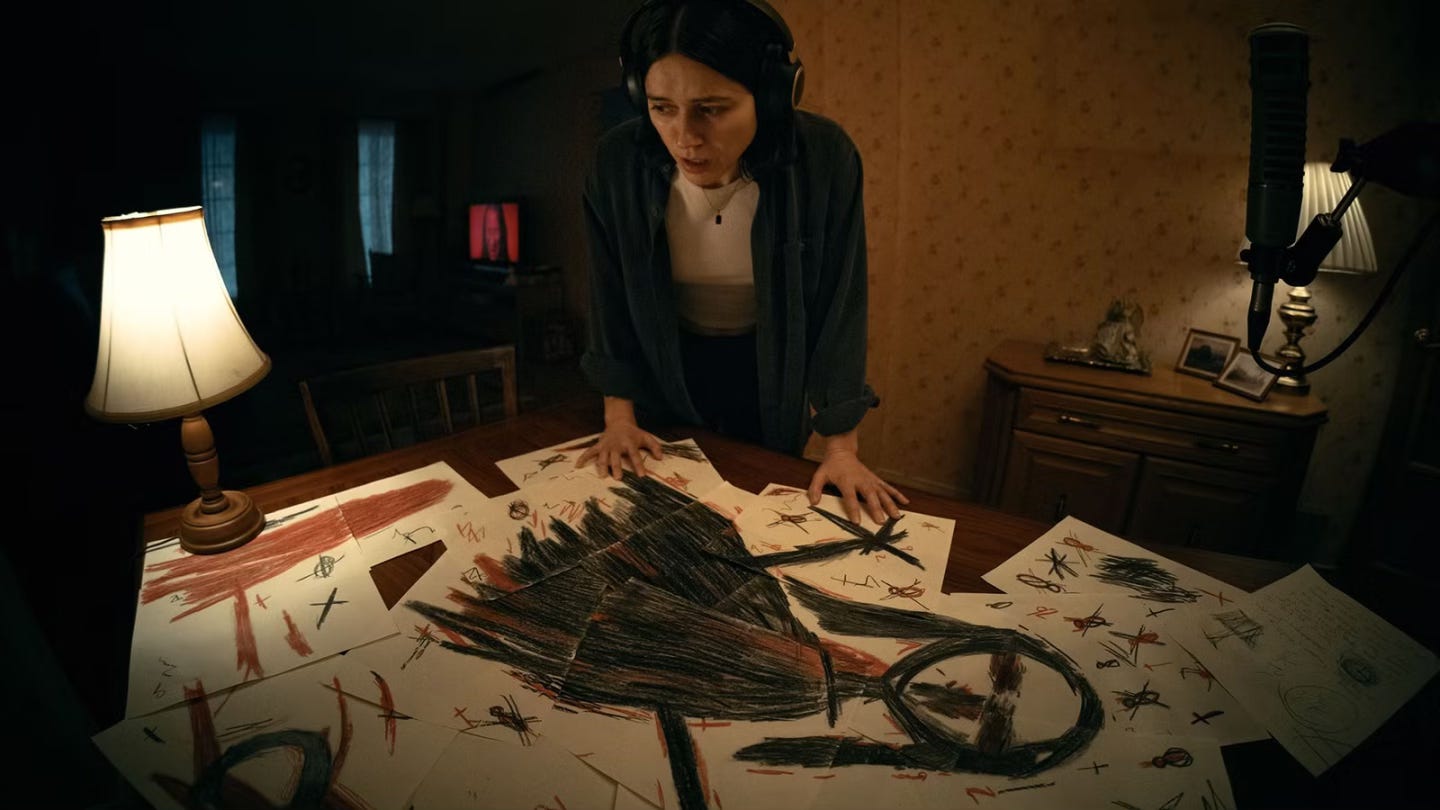
This is atmospheric as can be. The trouble is, it’s Trope City. The reveal that our protagonist has drawn a big picture of her killing a baby is borderline funny. It undercuts some of the better moments, like gravity changing and the kitchen looking filthy. The wheelchair literally and symbolically blocking the door is a deliberate and well-chosen image.
Strangely, while the first drawing was silly, the ones that coat the walls did do it for me a bit. As we cut to clips of suffocation (a hint at a dark secret, perhaps), and edge up those stairs, you know something terrible is coming. In the bedroom, the angel statue sits on the empty bed. Empty, for Mum lurks in the bathroom. Then comes the darkness, the death rattle. The end.
We are left with nothing but lurching music and a pervasive unease.
Upon reflection, there is a lot to think about in this film. The mental health of mothers. The importance of support networks. Religion and guilt and the weight of pregnancy and being a carer. I’d touch on these elements myself, but @ Pale Horse is absolutely better suited. Get reading to see her sharp analysis!
Overall, my reckoning is that Undertone is intensely creepy, and thematically intriguing, but has some undeniable holes in places.
As ever, thanks for reading,
Until next time,
H.E.
by Laura of The Pale Horse
I watched Undertone in the exact way I hadn’t wanted to- on a laptop with my headphones on. I had hoped to see this in the cinema, to feel and hear the full impact of the much talked about sound design. Undertone’s marketing has told Horror fans that the film is all about sound, or rather listening.
Overall, my headphones did a pretty good job of immersing me in the story and considering the premise - following the day to day of a woman, confined to a house due to caregiving- my set up actually felt pretty appropriate. I’m the primary caregiver for my children and as such, trips to the one and only cinema in the country that was showing this particular A24 horror film was complicated to arrange.
Undertone introduces us to Evy, a paranormal podcast host, caring for her dying mother. Her life is monotonous, soul crushing and filled with grief. Visually, the film is restrained for most of its runtime: pale yellow-ish interiors, dim corners, muted lighting, domestic repetition.
She speaks to her comatose Mama.
She draws weird childlike pictures.
She records her podcast and that’s…kind of all she does.
At one point, a palliative care nurse visits and Evy asks about how she will know if her Mother is actively dying; will she hear the “Death rattle”? - the wet, gurgling and strained final breaths from a person as their body begins to shut down.
Yes, says the nurse, though she doesn’t like to call it that. And so, it is here in my opinion that we meet the story’s true premise; this film is a death rattle.
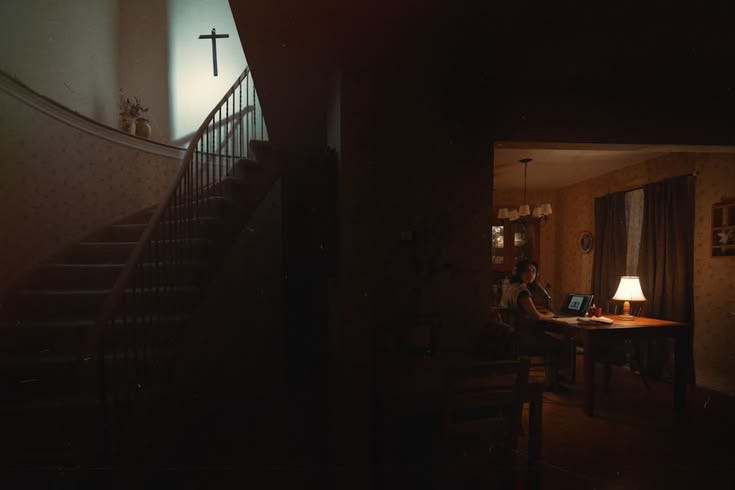
One night, ten mysterious audio files are emailed to her podcast co-host, Justin. The pair endeavor to listen to the recordings live on air and pick apart the mystery.
Beyond the scenes where we listen to the, at times, very short tapes, what we see onscreen is sparse. I think to compensate for this, choices were made to stuff Undertone with very familiar horror tropes: creepy kids, black crayon drawings, backwards music, possession, demons and religious imagery.
To me, those elements are the least interesting thing about the film.
Evy is a skeptic working on a spooky podcast. Presumably she has spent years listening to stories about demons, hauntings and possessions. Under ordinary circumstances, a collection of unsettling audio files filled with nursery rhymes, distorted voices and crying infants would simply register as pretty standard horror material.
Is it a coincidence that now, when she finds out she’s pregnant she gets these strange tapes? Or is it fate?
I don’t think its either.
Undertone understands that context and timing changes everything. A woman already submerged in grief, caregiving exhaustion and the hormonal surges of early pregnancy does not experience the world in a usual way, or at least in her usual skeptical way.
One cannot logic oneself out of such fear. It is visceral. Embedded. The supernatural becomes disturbing and believable precisely because her reality has already begun to fracture through circumstance.
One could argue that this film’s events are entirely supernatural, but, I would ask that you consider the setting. The story unfolds within one house, a symbol that Freud often used to represent the human psyche. If we use this lens, we can consider that actually, Evy is the house and the house is Evy.
At the beginning of the film, the house is contained. The rooms are tidy and brightly lit. Then, as the story progresses, shadows creep in. Lights flicker. Doors open and close. The integrity of the house begins to splinter, and so too does Evy’s psyche.
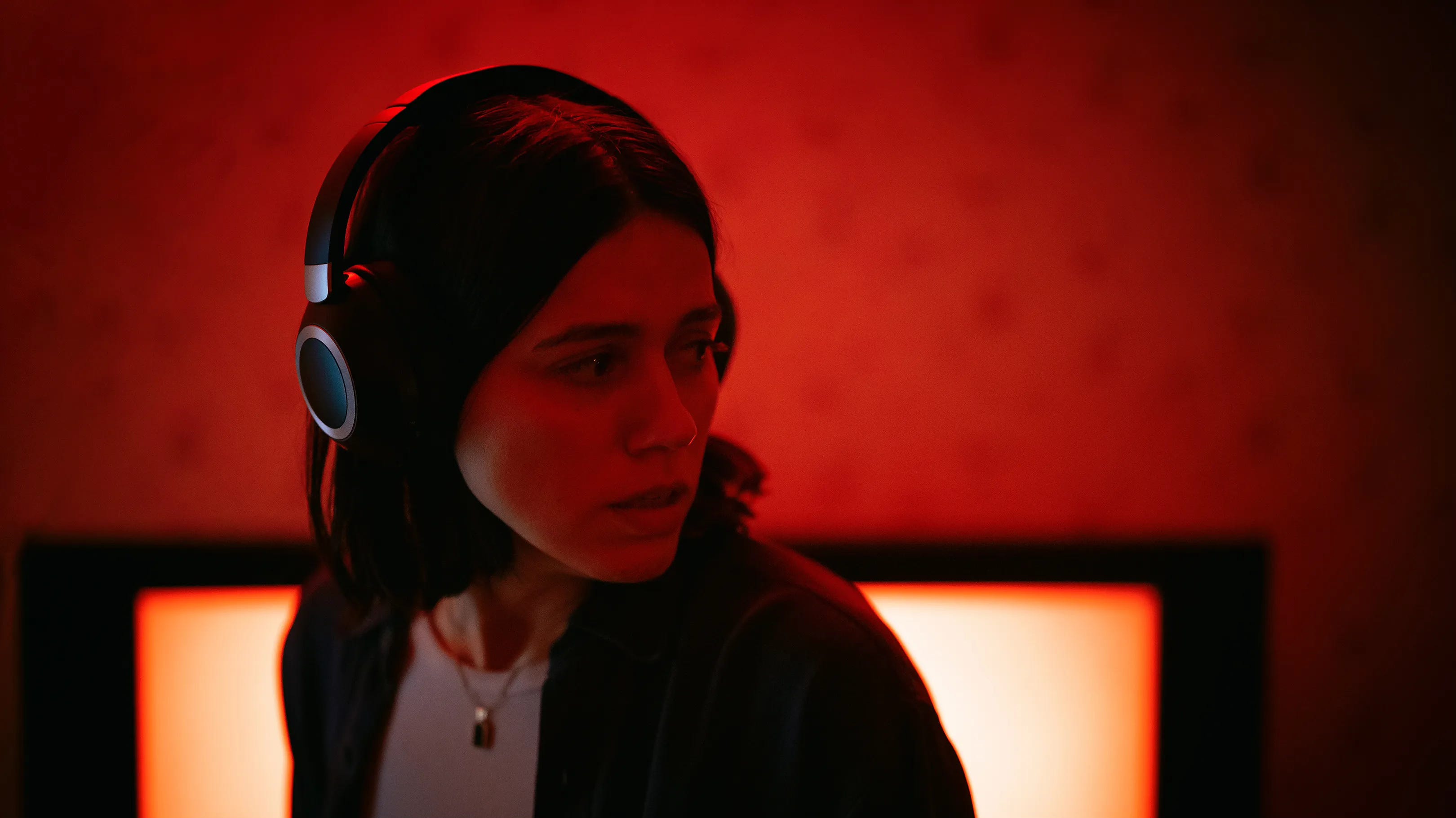
In one of the most unsettling scenes, Evy and her co-host take calls from listeners detailing stories of mothers killing their infants, husbands murdering their pregnant wives and tragic suicides.
Those kinds of stories are far from supernatural and that truth, in my opinion, is far more frightening than backwards nursery rhymes, demons or shadowy figures in hallways.
This is real world horror- postpartum psychosis, for example, can come on with terrifying speed, sometimes within hours, whereas usually, psychosis takes weeks to develop. In the period during and after pregnancy, a person is at a 35% higher risk of being murdered.
Thats scary as hell.
Motherhood has always been tangled up with fears based on the realities of the world. Undertone introduces us to the myth of Abyzou, a demon that functions as an archetype of maternal anxiety. Cultures all the way back to Sumeria, Egypt and Mesopotamia have stories of jealous female demons that kill children and pregnant women. When we consider how high infant and maternal mortality rates were in the past, those demons became a manifestation of very real tragedies. As with all human fears, we often make myths of them in order to make sense of them.
Evy considers ending her pregnancy, she books into a women’s health clinic and who can blame her considering her circumstances? She is isolated, alone, grieving. But this choice, when placed side by side with a narrative around destructive baby killing demons muddied the message a little for me. At times it edges uncomfortably close to older patriarchal ideas about unstable or dangerous motherhood and about abortion being evil.
I’ve been thinking about this; I would argue that externalising female psychological collapse into a demon risks flattening the material into something regressive or mythic rather than human.
But, perhaps that contradiction is the point.
In fairness, Undertone does not suggest that women suffer in a vacuum. Religion, folklore, myths, expectations about motherhood, fear surrounding pregnancy and inherited stories about female bodies all press down simultaneously on Evy. Her isolation is very pointed, so too are the religious images of the Virgin Mary.
The ending is unclear, messy, though I believe that any film that tackles mental health ought to be a little ambiguous, I would say that I think the ending was the right one all things considered.
Overall, I admired it more than I loved it, though I suspect it may have worked even better as an audio drama or stage play where the sound design and psychological ambiguity could take centre stage completely.
I think there is a message in Undertone is that caregivers and pregnant women are afraid- of loneliness, of failing, of breaking.
We always have been.
Undertone gives voice to the fears of Evy, a woman alone, without a village to support her. It is her death rattle, the last gasps and sounds she releases before disaster strikes.
I think we both agree it’s worth a watch. As with many films in the genre, they act as an experience rather than a neat and tidy narrative, and personally I think experimentation is a good thing. Psychological horror by its very nature is fragmentary. It does not need to be wrapped up neatly with a bow. The film is beautifully shot, has great performances and some solid scares.
If you’ve seen Undertone, please leave your thoughts and theories below!
Comments
Nothing yet. Say the first thing.
Sign in to join the conversation.