
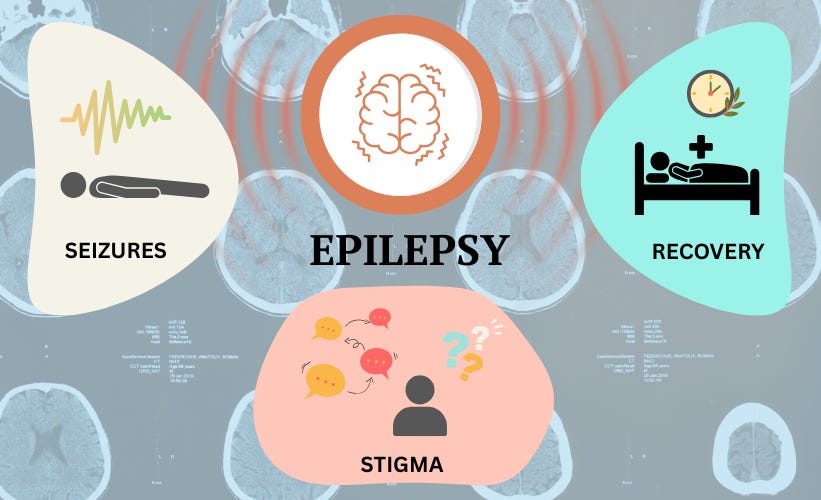
Beginning centuries ago with misconceptions about being caused by spiritual possessions or sins leading to punishment from the gods, the true understanding of what epilepsy is and what it does has come a long way. Epilepsy affects millions around the world. However, even now, many still have a narrow understanding of the condition. The word “epilepsy” usually brings seizures to mind first, even though the experience can include much more than the seizure itself. Epilepsy involves what is truly occurring in the brain during a seizure, what recovery can feel like afterward, and how misunderstanding of it can shape everyday life.
This post focuses on the bigger picture: seizures, recovery, basic safety, and stigma. For diagnosis and treatment, it is always best to speak with a medical professional. The aim here is to understand epilepsy more clearly, with less fear and more respect for anyone living with it.
A seizure occurs when a group of nerve cells in the brain suddenly begins sending signals much faster than usual, all at once. This interrupts the brain’s normal activity. Depending on where it happens, a seizure can affect movement, awareness, sensation, emotions, or behavior. Some seizures are easy to notice, while others can be much less obvious.
Having one seizure does not always mean someone has epilepsy. Epilepsy is usually defined as a tendency to have two or more unprovoked seizures. In this case, “unprovoked” means the seizure was not caused by something temporary, such as a fever or a recent injury. Epilepsy involves an ongoing tendency in the brain to produce these sudden bursts of unusual electrical activity.
Seizures can be different from one another because the unusual electrical activity can start in different parts of the brain and spread in different ways. Some seizures, called focal seizures, begin in one area of the brain. Generalized seizures involve both sides of the brain from the beginning. And in other cases, a seizure starts in one spot and then spreads farther.
The location where seizures begin physically manifests in different ways. One person may have a hand twitch, a strange feeling, or a short gap in awareness. Someone else may lose consciousness, fall, or have full-body jerking. This is one reason epilepsy is often misunderstood; when convulsive seizures are the only well-known example, other kinds and symptoms of seizures can be overlooked or misunderstood.
Some seizures are quiet and easy to miss at first. A person might suddenly stop what they are doing and stare for a few seconds. This can happen during absence seizures, where awareness briefly cuts out. Some seizures can also include small repeated movements, called automatisms, like rapid blinking, lip-smacking, chewing movements, or picking at clothes without realizing it. To someone nearby, the person may seem confused, dazed, or briefly disconnected.
Even though these signs are subtle, they still stem from unusual activity in the brain. In school or other busy places, these short episodes can be mistaken for distraction or tiredness. Seizures are not always obvious and easily recognizable.
The seizure itself may end, but recovery follows in the period after. The brain often needs time to settle again, and this recovery phase is called the postictal period. It can last from a few minutes to several hours. During that time, someone may feel very tired, weak, confused, or unsure of what just happened. Memory loss or amnesia can be part of this period as well, and the person may not remember the seizure itself or what happened immediately before/after. There can also be an emotional side to recovery; some individuals may feel anxious, melancholic, or unsettled for a while afterward.
In some cases, there can also be temporary weakness or paralysis on one side of the body after a seizure known as Todd’s paralysis. It usually fades away within about a day, but because it can resemble a stroke, first-time one-sided weakness should be examined as an emergency. Recovery can impact school, work, travel, and everyday routines. Quiet, rest, reassurance, and patience can help while the brain and body settle again.
Seizure first aid focuses on keeping the person safe and staying calm until the seizure is over, while moving harmful objects away and putting something soft and flat under their head if needed. It helps to stay with the person, move away anything hard or sharp nearby, and, if they are on the ground, gently turn them onto one side. Timing the seizure can also be useful.
Some things should be avoided: the person should not be held down, and nothing should be put in their mouth. Food, water, or medicine should wait until the person is fully awake.
Emergency medical help is required in some situations. These include a seizure lasting more than five minutes, another seizure starting soon after the first, trouble breathing or waking afterward, injury, a seizure in water, a first seizure, pregnancy, or diabetes with loss of consciousness. After the seizure ends, the person may still feel confused, tired, or upset, so patience and reassurance can help during recovery.
Epilepsy has been surrounded by stigma for a long time. The World Health Organization (WHO) shares that fear, misunderstanding, and discrimination have followed epilepsy for centuries. Some of this comes from old myths, including the false idea that epilepsy is contagious. There is also felt stigma, which refers to the shame, embarrassment, or fear of being judged that someone may carry because of how others might respond.
This can impact more than the seizure itself and carry into everyday life. Stigma isolates people as they stay quiet about what they are going through or miss out on support and opportunities at school, work, and in social situations. For some, this social side can be just as difficult to deal with as the seizures. Better awareness, calmer responses, and basic respect can help make things easier.
Learning about epilepsy can replace fear and confusion with calmer and more educated understanding. Knowing what a seizure is, how recovery can feel, and what first aid involves can help keep everyone involved safer, and push back against the stigma that has surrounded epilepsy for so long.
Epilepsy includes more than the seizure itself: recovery, support, and dignity are a large and important part of it as well. Having clear and accurate information encourages a safer, kinder, and more respectful environment for anyone living with epilepsy.
Comments
Nothing yet. Say the first thing.
Sign in to join the conversation.