

Dr. Gelinas is an Associate Professor of Pediatrics and Anatomy and Neurobiology in University of California, Irvine’s School of Medicine, where her work focuses on epilepsy, memory, cognition, neural networks, and how brain disorders can affect learning and attention beyond seizures themselves. She earned both her Ph.D. in Neuroscience and her M.D. at the University of Alberta and later completed pediatric neurology training at the University of British Columbia. She also leads the Epilepsy and Cognition Lab, which studies how epileptic activity disrupts brain networks involved in memory and cognition and explores ways to protect brain function alongside seizure treatment. Most recently, a study she co-led on closed-loop stimulation and memory preservation in epilepsy was recognized by the National Institute of Neurological Disorders and Stroke as one of the top 10 brain research advances of 2025.
In this NeuroKnow Conversations feature, Dr. Gelinas reflects on why epilepsy should be understood as more than seizures, how it can shape memory and learning, and why protecting cognition is such an important part of brain-focused treatment and research.

Q: Many individuals think of epilepsy mainly in terms of seizures. What tends to be overlooked about how it can also affect memory, learning, and attention?
Dr. Gelinas: Seizures are of course the defining feature of epilepsy. But many patients report problems in other areas of their lives, including cognition, mood, and sleep among others. Children with epilepsy can also have abnormal development due to their epilepsy. These symptoms can impact quality of life similarly, or even more, than seizures, but we have far fewer options in how we can address them.
“These symptoms can impact quality of life similarly, or even more, than seizures…”
Q: Some studies in epilepsy look closely at brain activity between seizures, not just during them. How can those “in-between” signals still interfere with memory and thinking?
Dr. Gelinas: The brain networks of people with epilepsy typically show abnormalities even when there is no seizure activity ongoing. One type of abnormality is the interictal epileptiform discharge (IED). These abnormal signals disrupt the ongoing activity patterns that our brains need to perform functions like remembering and paying attention. Such functions rely on precise activation and coordination of specific brain cells. IEDs can activate too many brain cells at once or change the interaction between brain cells, essentially introducing "noise" into the system.
Q: Another important idea in this field is that epilepsy can affect entire brain networks, not just one seizure focus. How does this broader network view change the way scientists think about cognitive symptoms?
Dr. Gelinas: It is increasingly established that cognitive functions require coordination between multiple brain regions. We are also realizing that epileptic signals are particularly adept at interfering with communication between brain regions. Therefore, cognition can be at risk when epileptic signals are frequent or occur in critical time periods.
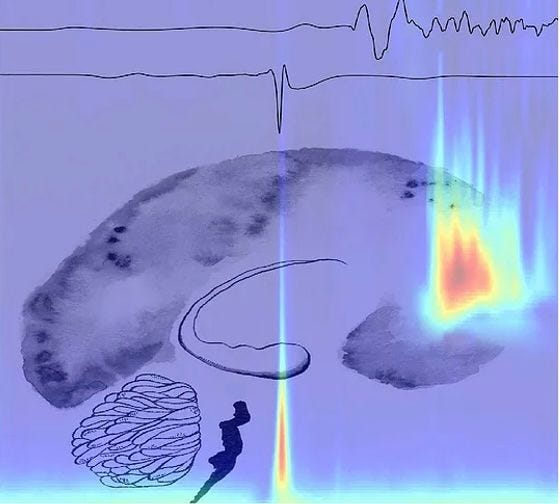
Q: Your recent closed-loop stimulation study was recognized by NINDS as one of the top brain-research advances of 2025. What felt most meaningful about this result, especially in relation to memory?
Dr. Gelinas: This recognition was so meaningful to us because it spreads awareness about memory impairment as an often debilitating and under-recognized symptom of epilepsy. It also identifies treatment of memory impairment as a key therapeutic goal for patients with epilepsy and supports our work to translate our findings in animal models to clinical relevance in humans.
Q: That study suggests it may be possible to protect memory even when seizures are still ongoing. How does that change the way people might think about treatment goals in epilepsy?
Dr. Gelinas: The ultimate goal for epilepsy is cure - not just for seizures, but for all associated comorbidities too. We still have a long way to go in this goal, and I think that our work provides optimism that even when seizures are difficult to treat, we can make strides to improve other symptoms that also impact quality of life.
“… even when seizures are difficult to treat, we can make strides to improve other symptoms that also impact quality of life.”
Q: How has working with patients shaped the way you think about cognition as part of epilepsy treatment, especially in cases where the cognitive effects of epilepsy are hard to ignore?
Dr. Gelinas: Working with patients and families has emphasized to me the critical importance of addressing the cognitive component in epilepsy. For instance, when a child has a difficulty to treat epilepsy, opportunities for them to learn, play, socialize and mature are so meaningful. If we could optimize cognitive development, we could enhance these opportunities and improve overall outcomes.
Q: The lab also studies neurodevelopmental disorders linked to epilepsy, autism, and intellectual disability. What makes early brain development such an important window for understanding later cognitive function?
Dr. Gelinas: The brain is importantly shaped by early life experiences, and is primed to be maximally "plastic" or adaptable in early years. For example, our ability to remember our life experiences only emerges in the toddler years. When brain signals are disrupted by epilepsy during these developmental windows, the capacity to perform cognitive functions may be negatively impacted, or even lost.
Q: What do you wish more people understood earlier about epilepsy and the brain?
Dr. Gelinas: We now understand that epilepsy changes the way our brain cells interact and communicate, leading to seizures but potentially many other problems. If we had a clearer mechanistic understanding of how brain networks affected by epilepsy have difficulty performing their normal functions, it would have been possible to develop targeted treatments for the cognitive and psychiatric symptoms of epilepsy earlier.
Thank you, Dr. Gelinas!
Comments
Nothing yet. Say the first thing.
Sign in to join the conversation.