
Welcome to the latest edition of Global Nature Beat. This edition includes:
Updates on climate change, plastics treaty talks, biodiversity negotiations, deep-sea mining, COP17 of the Convention to Combat Desertification.
Features about mangrove conservation in India, bomb-fishing in Indonesia, a critically endangered deer in the Philippines, surf breaks as conservation zones in West Africa.
Journal papers on ‘paper parks’, shorebirds and rising seas, wind turbines and wildlife collisions, climate change and dengue, food systems transformation, snakebite predictability, US wildlife commissions, illegal wildlife trade, endemic species in Mexico.
Plus, the usual mix of news from around the world, useful resources, jobs and opportunities for environment journalists, and more.
There will be no newsletter next week as I am heading to the wilds of Wales for a few days with my family.
Climate: The 36th annual State of the Climate report — published on 10 August — shows that greenhouse gas concentrations, global sea level and ocean heat content all reached record high levels in 2025 — see the press release. And on it goes… Last month, the non-polar parts of the ocean had their hottest ever July, according to the Copernicus Climate Change Service. The United Kingdom is on track for its hottest ever summer. Sections of the media — particularly in the United Kingdom and the United States — are engaged in denialism, self-censorship and outright negligence. On 6 August, Media Matters published an analysis of nearly 200 news segments that the US networks ABC, CBS and NBC broadcast about July’s heatwaves — not one mentioned climate change. Meanwhile, 45 countries — including Argentina, Egypt, the Philippines and Viet Nam — have still not submitted their updated climate change plans under the Paris Agreement. The deadline was a year and a half ago.
Deep-sea mining: “Decisions with potentially irreversible consequences for ecosystems we have barely begun to map should not be made under commercial or geopolitical pressure,” writes former President of the Seychelles, James Alix Michel. Summarizing the recent meeting of the International Seabed Authority (ISA), he highlights the ongoing failure of ISA member states to agree a Mining Code to govern deep-sea mining, and rising the support for a precautionary pause until the impacts of deep-sea mining are better understood. As Victoria Schneider reports, Mauritius, Mozambique and the Republic of the Congo are the latest countries to call for such a pause. They join another 43 nations that support a pause or moratorium.
Biodiversity: Nearly three weeks of negotiations under the UN Convention on Biological Diversity (CBD) ended on 12 August with mixed progress on draft decisions to be adopted by parties to the convention when they meet in Armenia in October. As Vibha Varshney reports, many of the texts remain heavily bracketed, meaning that the contentious issues are unresolved. As usual, the main sticking points relate to the money needed to implement the CBD and its strategy for halting and reversing nature loss: the Global Biodiversity Framework — see the CBD secretariat’s press release or the statement by the civil society CBD Alliance. A final chance to unlock progress before the UN biodiversity conference in Armenia will come in China, which will host the Kunming Dialogue on 7-9 September.
Plastics: Julio Cordano, chair of the beleaguered negotiations on a global treaty on plastics pollution, released a document on 8 August setting out elements of a possible treaty. It has received widespread criticism for being weaker than earlier drafts of the treaty and failing to mention limits on plastic production. “This text seems designed with one objective in mind: To stay sufficiently empty to ensure the biggest polluters won’t reject it,” said David Azoulay, Director of Environmental Health at the Center for International Environmental Law, in a strongly worded statement, which is worth reading in full. Twice, a supposed final round of negotiations has failed to agree a treaty. The next attempt is in early 2027. But next month, negotiators will meet for informal talks in Thailand that may result in a more agreeable text.
Desertification: The 17th conference of parties to the UN Convention to Combat Desertification (UNCCD) takes place in Ulaanbaatar, Mongolia from 17-28 August. Talks will focus on the legal form of a new global initiative to tackle drought, agreement on how to protect rangelands and pastoralists from land degradation, and work to develop the UNCCD’s next long-term strategy for post-2030. See last week’s edition for a preview, listen to the Wildlife Conservation Society’s podcast about the conference, or read Wetlands International’s five goals.
Shalinee Kumari reported on corporate mangrove conservation projects in India that are prioritizing community resilience and biodiversity, while keeping an eye on blue‑carbon markets.
“The net fell with a dull thud. Abraham thrashed once, twice, then went still” — Pippo Carmona wrote about how genetic data is informing efforts to save a critically endangered species of deer in the Philippines.
James Dacey wrote about how cheap acoustic monitors expose the widespread blast fishing that is devastating Indonesia’s coral reefs.
Joshua Rapp Learn wrote about research suggesting that protecting West Africa’s surf breaks could simultaneously safeguard coastal biodiversity.
Impacts of sea level rise on the world’s shorebirds are mostly negative — read the full paper.
A global review of tools for mitigating wildlife collisions with wind turbines shows that site-specific solutions are needed — read the press release or the full paper.
How climate change will shape distributions of dengue-transmitting mosquitoes and disease risk in France — read the full paper.
Most countries that have committed to transform their food systems for sustainability by 2030 are failing on most indicators on health, environment, livelihoods, governance and resilience — read the press release or the full paper.
Snake–human conflict and snakebite occur within predictable contexts shaped by interacting environmental, occupational, behavioural and socioeconomic factors — read the press release or the full paper.
The first national inventory of wildlife commission structures, policy guidance and decision transparency across the United States — read the full paper.
Illegal wildlife markets have characteristics distinguishing them from other illegal markets so required tailored response strategies — read the full paper.
The ranges of most of the 1,600-plus species found only in Mexico coincide with moderate to high human pressure, while conservation areas cover only a small fraction of their distributions — read the full paper.
What distinguishes ‘paper parks’ from ineffective or underperforming protected and conserved areas? — read the full paper.
“If you can use iNaturalist, you can write a paper”, says biologist Matt Forister, who has launched a new scientific journal on lost species that have not been seen for a decade or more.
Resti Salmayenti and colleagues wrote about their recent research showing that peatland restoration has reduced fire risk in Indonesia’s tropical forests
Madagascar and Suriname have become the 40th and 41st members of the Forest & Climate Leaders’ Partnership, a political platform aiming to accelerate action to halt and reverse forest loss by 2030 — see the press releases here and here.
Jerry Toth suggests five alternative ways to fund the Tropical Forest Forever Facility.
Naina Rao reports that Uzbekistan’s recent releases of more than 2,000 captive-bred Asian houbara bustards has nothing to do with conservation, according to an expert on the species.
India’s population of endangered Asiatic lions increased by more than 70 percent in the decade to 2025, and now stands at 891.
A new report says Africa is losing billions by exporting raw tree commodities instead of capturing processing value, and that closing this value gap could transform trees, forests and agroforestry into engines of green growth — see the press release.
Martine Maron and colleagues argue that nature-positive policy must consider ecological irreplaceability to prevent irreversible biodiversity loss.
Five former chairs of the Committee on the Status of Endangered Wildlife in Canada say the Canadian government’s proposed changes to the Species at Risk Act could enable ‘wilful extinction’, reports Sarah Cox.
The fragmented way the United Nations addresses climate change, nature and land with three separate treaties limits participation by Indigenous peoples, according to a new report from Nia Tero — see the press release.
I publish this newsletter as a free service to thousands of readers in more than 120 countries. If that is something you can support, please consider becoming a paying subscriber for less than £1 a week. If you can spare that, you will be helping me to keep Global Nature Beat going for those who cannot afford to pay.
The Global Investigative Journalism Network (GIJN) shared a collection of its recent masterclass videos on using data in investigations.
On 8 September, the GIJN has a webinar on how to find funding for investigative journalism — register here.
RECOFTC’s free Community Forestry 101 e-course is running until 18 December.
Patricia Miloslavich provides a useful short history of the Intergovernmental Science-Policy Panel of Biodiversity and Ecosystem Services (IPBES), covering its findings, its recommendations and the challenge of implementing them.
Laura Chaparro of Spain’s Science Media Centre outlines experts’ expectations for the upcoming desertification, biodiversity and climate COPs.
Covering Climate Now launched the South Atlantic Climate Journalism Hub for journalists in eight US states.
The International Union for the Conservation of Nature published a brief on the resolutions that it and its members have adopted on Indigenous Peoples in nature conservation.
InfluenceMap has developed a tool that tracks corporate messaging on the biodiversity crisis and engagement with policy to limit the key drivers of biodiversity loss.
Climate Tracker América Latina published a journalist’s guide to covering the energy transition in Latin America.
See past editions for more tips and resources.
Follow the Money is hiring an editor — deadline 28 August.
Princeton University is hiring a science writer — no deadline listed.
The Savannah Morning News is hiring a climate change/environment reporter — no deadline listed.
Bonus content: There are 35 jobs, grants, fellowships and other opportunities listed here for Global Nature Beat’s paying supporters. Paid subscriptions are less than £1 per week.
7-9 September 2026: The Kunming Dialogue on collective progress in the implementation of the Global Biodiversity Framework will convene in Kunming, China.
8-11 September: BirdLife International will host its second Global Flyways Summit in Nairobi, Kenya.
21-25 September: The 13th World Environmental Education Congress takes place in Perth, Australia.
25-28 September: The ScienceWriters2026 conference will take place in Corvallis, Oregon.
27-30 September: The second informal in-person meeting of Heads of Delegation to the negotiations on a global plastics treaty will take place in Bangkok, Thailand.
Bonus content: The full calendar for Global Nature Beat’s supporters includes nature-related intergovernmental negotiations, scientific conferences, report launches, and other events up until 2029.
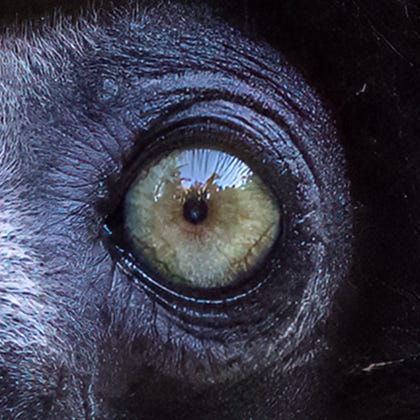
The eye belongs to a crowned sifaka. Photo credit: Diego Delso — Wikimedia Commons.
My other newsletter Planet Ficus is devoted to stories about the world’s most fascinating plants — the strangler figs and their kin, which have shaped our world and our species in profound ways. Take a trip there for a rich mix of stories about the ecological and cultural importance of these trees.
Thanks for reading. For past editions, see the Archive. If you found it interesting or useful, please share and subscribe. If you want to get in contact, you can reach me at: thenaturebeat@substack.com.
Comments
Nothing yet. Say the first thing.
Sign in to join the conversation.