
Welcome to the latest edition of Global Nature Beat. This edition includes:
Updates on the incoming ‘super El Niño’, land restoration, climate and biodiversity COPs, natural regeneration, and rewilding and wildfire risk.
Features about lost pelicans, giant sequoias, conservation in palm oil plantations, and more.
Journal papers on solar farms and birds in China, bird flu and vultures, women in illegal wildlife crime networks, bird trafficking in Mexico, the biodiversity footprint of oil palm, new estimates of snakebite deaths, ridge-to-reef conservation, ineffective wolf culling, factors behind big cat attacks in India, and many more.
Plus, the usual mix of news from around the world, useful resources, jobs and opportunities for environment journalists, and more.
El Niño: The periodic El Niño climatic phenomenon that began in June is likely to be the strongest ever recorded, the UK Met Office has warned, saying it is “very likely” that 2027 will be the hottest year on record globally. El Niño causes worldwide changes in rainfall, increases in temperature and impacts on ecology. The effects of this El Niño are already being felt, months ahead of its expected peak. See Robert McSweeney and Daisy Dunne’s explainer about how the El Niño is going to mess with us, this Asia-focused explainer by David Fogarty and Lim Yong, Chris Lang’s look at what the El Niño means for the Amazon rainforest or Ligin Joseph’s warning that it could make India’s monsoon drier yet more dangerous.
Natural regeneration: Encouraging natural regeneration of tropical forests can reduce extinction risks and increase carbon storage at low cost, according to new research that identified where best to take this approach. Jiaqi Li of the University of Queensland and colleagues assessed the costs and benefits of natural restoration across the tropics. They showed that in 9.7 percent of the total area, natural regeneration could provide both high carbon and biodiversity benefits. The ‘holistic hotspots’ for both benefits are concentrated in five countries — Indonesia, Madagascar, Malaysia, Mexico and the Philippines. The full paper is behind a paywall, but there is a press release here and a publicly accessible interactive map presenting the data. The power of nature to restore lost habitats is also evident in abandoned farmland in the UK. When farmer Derek Sayer stopped farming a field that grew just one crop species, more than 150 species of wildflowers and other plants recolonized the land. See the press release or Patrick Barkham’s story.
COP hosts: Some potentially big news for the climate: China is reportedly considering offering to host the COP33 climate change conference in 2028, when it is the Asia-Pacific region’s turn to hold the rotating presidency. The conference is the next major milestone in climate global policy as it will mark the end of the second Global Stocktake under the Paris Agreement and the launch of the next set of more ambitious national climate targets. As Andreas Sieber notes, COP33 will come days after the US presidential election. “China is arguably the only [COP] presidency that could lead a credible response to both election outcome scenarios,” he writes. Meanwhile, the next host of a biodiversity COP after this year’s conference in Armenia was due to be from the Latin America and Caribbean region, also in 2028. But as no regional party to the Convention on Biological Diversity has offered to host it, the search has been extended to all regions.
Land restoration: On 21 August, the International Union for the Conservation of Nature published a report showing that, worldwide, an area of land twice the size of France is now under restoration, rehabilitation or improved management — but it says this is only a tenth of the area in commitments that countries have made.
Rewilding and fire-risk: Right-wing political commentators and media outlets in the United Kingdom have recently blamed rewilding for the spread of some of the summer’s wildfires. Writing in response to the Daily Mail, Rebecca Wrigley — the CEO of Rewilding Britain — says this is nonsense. “It’s hard to light a soaked sponge,” she says. “Rewilding puts the water back in.” Aerial footage of drought-stricken parts of the country makes her point, as shown in this story by Sandra Laville. Restoring lost wetlands will be critical, says Christian Dunn of Bangor University. But the task is immense — he notes that more than 75 percent of the United Kingdom’s wetlands have been drained or destroyed.
Erik Olsen tells the story of how a forest of 8,000 giant sequoia trees in California was obliterated by 19th‑century logging.
“I arrived in Cambridge by train on a warm June day last year, empty suitcase in my hand, and took a taxi to a former nuclear bunker” — Lucia Snyderman investigates why and when England’s pelicans went extinct and what is needed to bring them back. Part 2 of this series, by Benedict Macdonald, is here.
Qing Han wrote about why NGOs in China can bring public-interest lawsuits to prevent environmental harm on land but not in the sea.
Watch the winners of the 2026 Yale Environment 360 Film Contest: Breech Asher Harani’s film on cacao farmers facing climate change in the Philippines (first place), Natascha Otoya’s film on industrial farms replacing the Brazilian savanna (second) and Alexi Liotti’s film about activists fighting to save a vast area of Alaskan rainforest from logging (third).
Siva Selan explored how palm oil plantations could protect biodiversity if companies greatly expanded habitat connectivity beyond minimum legal requirements, and if governments rewarded them for conservation activities.
Assessing the impact of the UNEP-IUCN-WWF World Conservation Strategy after 45 years — read the full paper.
Scientific and policy rationales for positioning the ocean as a unifying agenda to advance the UN conventions on climate change, biodiversity and land degradation — read the full paper.
Solar energy expansion in China reduces local bird diversity, making strict safeguards necessary — read the press release or the full paper.
Insights into the under-examined roles of women in illegal wildlife trade networks — read the full paper.
The pantropical biodiversity footprint of oil palm plantations — read the full paper.
Seventeen new papers on the function, value and vulnerability of African tropical peatlands — read the full papers.
Ridge-to-reef conservation avoids future deforestation and sediment exposure of coral reefs — read the full paper.
Killing wolves does not reliably prevent domestic animal losses and may even elevate them — read the full paper.
How microplastics affect ecosystem function, structure and signalling — read the full paper.
Spatio-temporal analysis of more than 2,000 tiger and leopard attacks on people in India suggests routes to mitigation — read the full paper.
Rising carbon dioxide is boosting grass growth in African savannas, with as yet-unknown consequences for fire risk, wildlife habitat and the global carbon cycle — read the press release or the full paper.
Urgent action is needed to address the special threat H5N1 bird flu poses to vultures and the services they provide us — read the full paper.
Diverse forms of autonomous conservation are widespread and ecologically relevant in Indonesia — read the full paper.
Climate warming exposes freshwater fish to dangerous extremes and drives thermal fragmentation of their habitat — read the full paper.
From Anthropocene to Symbiocene: a transformation vision to stimulate action — read the full paper.
Planting the wrong trees can raise ozone pollution in megacities — read the press release or the full paper.
Global snakebite envenoming and mortality are higher than previously reported — read the press release or the full paper.
Citizen science can provide robust, scalable and cost-effective biodiversity monitoring in oil palm plantations — read the full paper.
Urban tree canopy fragmentation is associated with increased infant mortality in low- and middle-income countries — read the full paper.
Revealed: The hidden highways that traffickers use to smuggle birds in Mexico — read the press release or the full paper.
Orphaned grizzly bear cubs rescued and later released back into the wild often die within a year, reports Rebecca Ratcliffe.
India’s large-scale tree‑planting schemes are misguided, failing to account for biodiversity, climate and livelihood goals, argue Pooja Choksi and Forrest Fleischman.
The United Nations University published a policy brief on how to address governance and financing gaps that hinder forest conservation across Southeast Asia.
Italian scientists have released 130,000 baby octopuses into the sea to control an invasive crab species, reports Gennaro Tomma.
Ruth Kamnitzer wrote about why migratory seabird flyways need global protection and coordination.
Indonesia launched a ten-year conservation plan for its beleaguered elephant population, whose numbers have fallen by more than 40 percent since 2007, reports Dyna Rochmyaningsih.
The heads of the three UN conventions on climate change, biodiversity loss and desertification issued a joint call for greater private-sector action to address the three linked challenges.
Social media influencers seeking selfies with sharks are being bitten, reports Will Vernon.
Spain has proposed 23 new marine protected areas that would bring the proportion of its waters under protection to 24.5 percent, reports Francesco De Augustinis.
Researchers in South Africa suspect that rabies has jumped from land mammals to seals, explaining a surge in their attacks on people, reports Nic Bothma.
I publish this newsletter as a free service to thousands of readers in more than 120 countries. If that is something you can support, please consider becoming a paying subscriber for less than £1 a week. If you can spare that, you will be helping me to keep Global Nature Beat going for those who cannot afford to pay.
The Earth Journalism Network launched a free online course to help journalists and communicators understand journalism from the perspectives of Indigenous peoples.
On 3 September, journalists can join a press briefing on the COP17 biodiversity conference with Astrid Schomaker, executive secretary of the UN Convention on Biological Diversity — register here.
With six charts, Cecilia Keating explains why carbon emissions from deforestation and other types of land-use have fallen by a third in the 21st century.
Esra Öz shared ten tips for verifying claims in scientific papers.
Starting on 10 September, the Centre for Investigative Journalism has a three-part webinar series on impactful reporting on climate change — part one is on biodiversity and ocean reporting.
The Earth Journalism Network shared the questions and answers from its recent ‘ask me anything’ session on reporting on air pollution.
On 30 September, Resilience is hosting a webinar on two large-scale, long-term environmental restoration projects: the undamming of the Klamath River and the reforestation of the Sahel — register here.
On 6 October, the Earth Journalism Network has a webinar on reporting on deep-sea mining — register here.
Joseph A. Davis wrote about Watch Duty, an app that can help US journalists report on wildfires.
See past editions for more tips and resources.
Dialogue Earth is hiring a part-time Brazil editor — deadline 8 September.
Spotlight PA and Grist are seeking an environment reporter to cover the impacts of climate change in Pennsylvania — no deadline listed.
Twin Cities PBS is hiring an environmental & natural resources reporter — no deadline listed.
Baltimore Public Media is hiring a multi-platform environmental reporter — no deadline listed.
The Centre for Journalism Innovation and Development invites applications from West Africa for the 2026 Excellence in Journalism Awards — deadline 12 September.
The Pulitzer Center is accepting applications for its reporting grants for stories on climate change and its effects on workers and work.
Journalists can apply for travel fellowships to attend the World Conference of Science Journalists in London next year — deadline 23 October.
The Pulitzer Center is providing grants for journalists who want to report on rainforests in the Amazon, the Congo Basin and Southeast Asia — rolling deadline.
Bonus content: There are 35 jobs, grants, fellowships and other opportunities listed here for Global Nature Beat’s paying supporters. Paid subscriptions are less than £1 per week.
7-9 September 2026: The Kunming Dialogue on collective progress in the implementation of the Global Biodiversity Framework will convene in Kunming, China.
8-11 September: BirdLife International will host its second Global Flyways Summit in Nairobi, Kenya.
21-25 September: The 13th World Environmental Education Congress takes place in Perth, Australia.
25-28 September: The ScienceWriters2026 conference will take place in Corvallis, Oregon.
27-30 September: The second informal in-person meeting of Heads of Delegation to the negotiations on a global plastics treaty will take place in Bangkok, Thailand.
Bonus content: The full calendar for Global Nature Beat’s supporters includes nature-related intergovernmental negotiations, scientific conferences, report launches, and other events up until 2029.
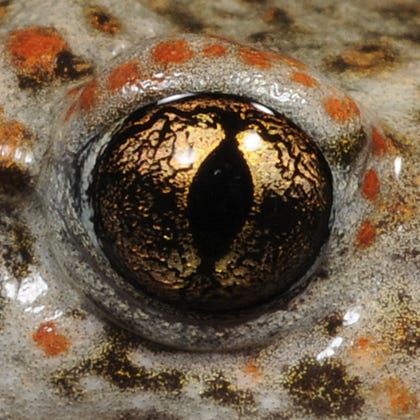
The eye belongs to an Iberian midwife toad. Photo credit: Benny Tapp — Wikimedia Commons.
My other newsletter Planet Ficus is devoted to stories about the world’s most fascinating plants — the strangler figs and their kin, which have shaped our world and our species in profound ways. Take a trip there for a rich mix of stories about the ecological and cultural importance of these trees.
Thanks for reading. For past editions, see the Archive. If you found it interesting or useful, please share and subscribe. If you want to get in contact, you can reach me at: thenaturebeat@substack.com.
Comments
Nothing yet. Say the first thing.
Sign in to join the conversation.