
Welcome to the latest edition of Global Nature Beat. This edition includes:
Updates on COP17 of the Convention to Combat Desertification, the Ebola outbreak in the Democratic Republic of the Congo, the Phoenix Species Project, H5N1 bird flu in Australia, and environment journalism in Africa.
Features about offshore wind farms helping marine life, pet dogs versus invasive insects, a critique of Kenya’s wildlife conservancies, conflict and community environmental action in Thailand, a migrating tree species that shapes fire risk, the race to host the high seas treaty on marine biodiversity.
Journal papers on social forestry and biodiversity in Indonesia, honeybees and wild pollinators in Europe, grain yields in China’s protected areas, climate-induced ranges shifts of butterflies, how mining overlaps with threatened species, rising seas and US coastal wetlands, and more.
Plus, the usual mix of news from around the world, useful resources, jobs and opportunities for environment journalists, and more.
Saving species: The Bezos Earth Fund and conservation organization Re:wild — respectively set up by Amazon founder Jeff Bezos and actor Leonardo DiCaprio — have announced the Phoenix Species Project, a US$200-million project that aims to save 100 critically endangered species worldwide. “More than 100 local and international partners around the world — including Indigenous Peoples, local communities, conservationists, and governments — will lead the work, tailoring recovery efforts to each species and place,” states the press release. The International Union for the Conservation of Nature’s (IUCN) Species Survival Commission is collaborating with the project. For perspective, IUCN’s Red List includes 10,947 species in the ‘critically endangered’ category. Scaling up the Phoenix Species Project’s average investment per species to cover all of them would cost an additional US$21.7 billion — less than ten percent of Jeff Bezos’s net worth of US$279 billion, according to Forbes’s real-time billionaire tracker.
Bird flu: On 1 August, Australia reported its first case of mass mortality in wild birds caused by the H5N1 bird flu virus that was first detected in the country in June. Environment Minister Murray Watt said the government has invested in “building up the resilience of the populations of our native birds and mammals” over the past two to three years. Scientists at the Biodiversity Council say they have seen no evidence of this and have demanded that the minister substantiate his claim. In a statement on 3 August, the council called on the government to “release details of the conservation work undertaken, where it occurred, which species benefited, how the investment went above and beyond ‘business as usual’, and what evidence demonstrates it improved their resilience”. On 4 August, the government of Australia published an assessment concluding that nearly 400 native bird and mammal species are at a high risk from H5N1. See Graham Readfearn’s story.
Land COP: The 17th conference of parties (COP17) to the UN Convention to Combate Desertification will take place in Ulaanbaatar, Mongolia, from 17–28 August. As the Earth Negotiations Bulletin (ENB) explains here, the convention has evolved to focus on land degradation and restoration globally, not only in the planet’s drylands — see also ENB’s preview of COP17. The Wildlife Conservation Society published a series of COP17 policy papers and a video explainer. In a press release it said: “During COP17, WCS will emphasize that successful land restoration depends on protecting functioning ecosystems, conserving wildlife and migration corridors, strengthening climate resilience, and ensuring that science and local knowledge guide decision-making.” The International Union for the Conservation of Nature has also published a COP17 position paper and a set of issue briefs.
More COPs: With the conferences of parties to the UN Convention on Biological Diversity and the UN Framework Convention on Climate Change following the UNCCD COP in quick succession, the International Union for the Conservation of Nature has published its common messages for negotiators at all three conferences. The document makes a series of recommendations in each of three areas: recognising nature as the link between the three conventions, strengthening coordination and national integration of the conventions, and boosting implementation with capacity building and inclusive and equitable planning.
Ebola: When I last mentioned the current Ebola outbreak, back on 28 May, there had been 134 confirmed cases including 18 deaths. Those numbers have rapidly grown to 3,895 cases and 1,753 deaths, mostly in the Democratic Republic of the Congo. It is now the country’s largest ever Ebola outbreak. The World Health Organization said on 1 August that the most recent complete reporting week had the highest numbers of reported cases and deaths to date, “underscoring the exceptional pace of transmission”.
On 1 August, Africa 21 published the second edition of its report on the state of environmental journalism in Africa — read it in English or French. The report is based on a survey of 171 journalists in 47 countries. Notable proportions of respondents said they had experienced censorship (37 percent), intimidation (36 percent) and physical threats (38 percent). Such challenges feature in a submission that the International Press Institute (IPI) made on 31 July to the African Commission on Human and Peoples’ Rights, which is developing legal guidance on the right to a “satisfactory environment” under the African Charter on Human and Peoples’ Rights. IPI’s submission calls for stronger protections for climate and environmental reporters, improved access to information, and safeguards against SLAPPs — a class of lawsuits increasingly deployed to dissuade journalists from exposing environmental harms.
Pet dogs are sniffing out an invasive insect that causes major economic losses in the United States, reports Riley Farrell.
Chris Baraniuk wrote about how offshore wind farms inadvertently create thriving artificial reefs that shelter recovering marine life.
Karen Mockler reported on the surprising high‑elevation spread of a tree species in California, and what it means for fire risk.
Paritta Wangkiat reported how a decades-long conflict between insurgents and the Thai state suppresses community environmental action and fuels mistrust in the deep-south of the country.
Regina Lam wrote about how China, Chile and Belgium all want to host the secretariat of the high‑seas treaty on marine biodiversity, and the deep geopolitical tensions at play.
Kariũki Kĩrigia argues that Kenyan wildlife conservancies often entrench green colonialism and marginalise Indigenous communities.
With the right policy incentives and connectivity-led management, community forests in Indonesia can contribute to biodiversity conservation — read the full paper.
Honeybee dominance across Europe affects how wild pollinators forage, highlighting a need to manage hive numbers — read the full paper.
Staple-grain yield gains are weaker for Chinese villages inside protected areas than for those outside — read the full paper.
A new way to rank protein-rich foods by combining environmental impact, health, affordability and availability into a single score — read the press release or the full paper.
A study of 1,758 butterfly species found that 80 percent have experienced range shifts, 79 percent of which were linked to climate change and extreme weather — read the press release or the full paper.
Multi‑goal protected‑area strategies balance biodiversity, carbon and equity more effectively than single‑target approaches — read the full paper.
Mining areas overlap the ranges of 28 percent of threatened species, most of which are not currently listed as mining-threatened — read the full paper.
What the rising sea level means for coastal wetlands in the United States — read the press release or the full paper.
DNA barcoding on nearly one million arthropod specimens trapped in ten sites reveals ‘unprecedented diversity’ — read the full paper or the Rainforest Trust’s story about one of the sites.
Regulations to prevent shark finning have little impact on global trade — read the press release or the full paper.
Twelve years of ecological monitoring of a solar farm in the United Kingdom have recorded a notable increase in biodiversity alongside renewable energy generation.
Police from five countries have arrested hundreds of people in one of the largest coordinated crackdowns on environmental crime in the Amazon rainforest, reports Steven Grattan.
Australia launched a public consultation on proposed expansions to two marine parks that would bring the country’s total protected area of ocean to 30 percent ahead of the target’s 2030 deadline.
Controversial plans for the world’s first octopus farm have been scrapped, reports Charlotte Lytton.
An important game reserve in South Africa is “dying in plain sight”, writes Simon Pooley.
Maarten van Zonneveld and colleagues call for action to align efforts to reverse vegetable biodiversity loss with goals on dietary quality and malnutrition.
The Indian state of Assam has invoked the National Security Act to keep in prison an activist who peacefully protested against a planned luxury hotel near Kaziranga National Park, reports Chris Lang.
Scientists raise concerns about livestream‑driven cicada harvesting in a Chinese village and suggest farming the insects instead, reports Li Xin.
Soaring oil prices are forcing some conservationists to cut patrols, travel and fieldwork, writes Ava Eucker.
Between 2018-2025, global banks provided US$31 billion in sustainability-linked loans to palm oil companies with alleged supply-chain links to deforestation in Indonesia, according to Global Witness.
Only a third of India’s tiger reserves have both adequate habitat and prey for the big cats, reports Jayanta Basu.
In Scotland, an annual seabird hunt dating back 400 years has been blocked by authorities for the first time.
Jonathan Vit reports on a Japanese project planting dense coastal forests to bolster tsunami resilience.
Pacific Island nations want more support to meet the monitoring and reporting requirements of the Convention on Biological Diversity and its Global Biodiversity Framework, reports Rebekah Rasmussen.
I publish this newsletter as a free service to thousands of readers in more than 120 countries. If that is something you can support, please consider becoming a paying subscriber for less than £1 a week. If you can spare that, you will be helping me to keep Global Nature Beat going for those who cannot afford to pay.
On 13 August, Systems Change Lab is hosting a webinar on the state of the global freshwater system — register here.
The Intergovernmental Panel on Biodiversity and Ecosystem Services (IPBES) published the final laid-out version of its Business and Biodiversity Assessment Report.
The secretariat of the Convention on Biological Diversity is accepting media accreditation requests for the 2026 UN Biodiversity Conference — deadline 15 September.
See past editions for more tips and resources.
The Solutions Journalism Network is hiring a part-time Southeast Asia Consultant — deadline 12 August.
The Bloomberg Green Docs competition has a US$25,000 grand prize for a short climate documentary — deadline 14 August.
The Earth Journalism Network is offering grants to support in-depth reporting on biodiversity in West Africa — deadline 21 August.
Want to become a solutions journalism trainer? Apply to join the Solutions Journalism Network’s train-the-trainers program — deadline 23 August.
Climate Tracker Latin America and partners invite journalists to join a training program on the zero-waste strategy and its relationship to the climate crisis — deadline 30 August.
The Agroecology Fund is hiring a content writer and editor — deadline 31 August.
The Earth Journalism Network invites journalists in Ghana, Uganda, Democratic Republic of the Congo and South Africa to apply to join a three-day virtual media workshop in November on mining, the environment and human rights — deadline 6 September.
Bonus content: There are 42 jobs, grants, fellowships and other opportunities listed here for Global Nature Beat’s paying supporters. Paid subscriptions are less than £1 per week.
17-28 August 2026: The 17th Conference of Parties to the UN Convention to Combat Desertification takes place in Ulaanbaatar, Mongolia.
8-11 September: BirdLife International will host its second Global Flyways Summit in Nairobi, Kenya.
21-25 September: The 13th World Environmental Education Congress takes place in Perth, Australia.
25-28 September: The ScienceWriters2026 conference will take place in Corvallis, Oregon.
Bonus content: The full calendar for Global Nature Beat’s supporters includes nature-related intergovernmental negotiations, scientific conferences, report launches, and other events up until 2029.
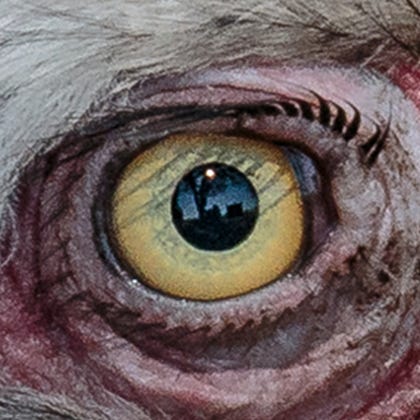
The eye belongs to a Southern yellow-billed hornbill. Photo credit: Andy Morffew — Wikimedia Commons.
My other newsletter Planet Ficus is devoted to stories about the world’s most fascinating plants — the strangler figs and their kin, which have shaped our world and our species in profound ways. Take a trip there for a rich mix of stories about the ecological and cultural importance of these trees.
Thanks for reading. For past editions, see the Archive. If you found it interesting or useful, please share and subscribe. If you want to get in contact, you can reach me at: thenaturebeat@substack.com.
Comments
Nothing yet. Say the first thing.
Sign in to join the conversation.