
“The real issue is not who is going to let me; it’s who is going to stop me.”— Ayn Rand
On March 19, 2011, American and allied forces launched Operation Odyssey Dawn against Libya. Over the following months, hundreds of aircraft, cruise missiles, intelligence assets, and NATO airpower systematically dismantled Muammar Gaddafi’s military while rebel forces advanced across the country. By October, Gaddafi was dead, his government had collapsed, and the regime that had ruled Libya for more than four decades ceased to exist.
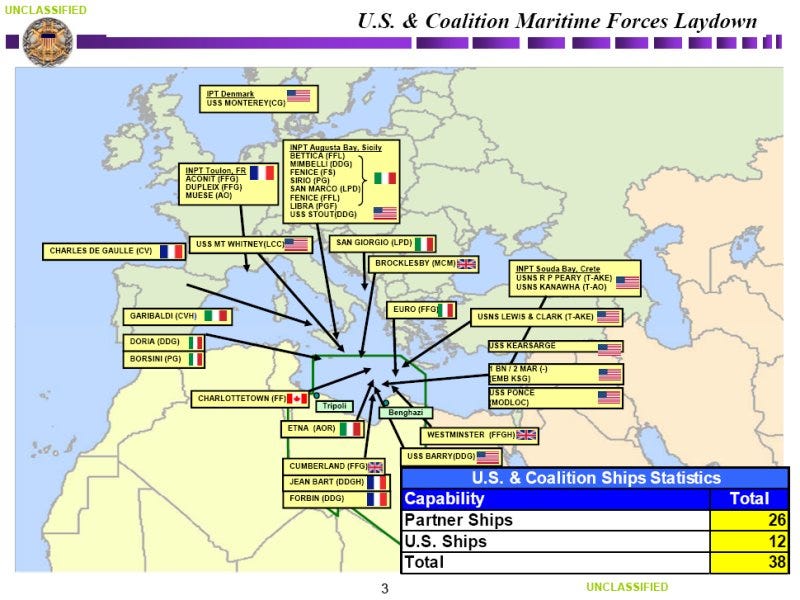
The operation remains one of the more uncomfortable episodes in modern military history because it challenges a long-standing assumption held by many strategists: that air power alone rarely produces decisive political outcomes. Strategic bombing can destroy infrastructure, cripple military formations, and impose enormous economic costs, but it generally struggles to compel governments to surrender. Libya appeared to be an exception. A color revolution was already underway. Rebel forces supplied the boots on the ground NATO was unwilling to deploy itself. International sanctions isolated the regime. Financial pressure restricted its options. Air power supplied the hammer while local actors provided the anvil. Together they created a perfect storm that transformed a bombing campaign into regime collapse.
Who said bombing could not achieve capitulation?
"You can bomb the world into pieces, but you can't bomb it into peace." — Barbara Tuchman (Historian, writer, 1912 – 1989)
Libya demonstrated what can happen when airpower, sanctions, financial pressure, and internal opposition align in the same direction. Against that backdrop, the opening phases of the Iran War begin to look less like a nebulous aperture into foreign affairs and more like an attempt to replicate a framework first tested over the skies of North Africa. The objective was never a large-scale invasion. The United States showed little appetite for another Iraq and even less interest in nation-building. Instead, the early contours of the campaign bore a familiar shape: economic isolation, financial pressure, overwhelming airpower, and the expectation that internal fractures would eventually provide the political force necessary to finish the job.
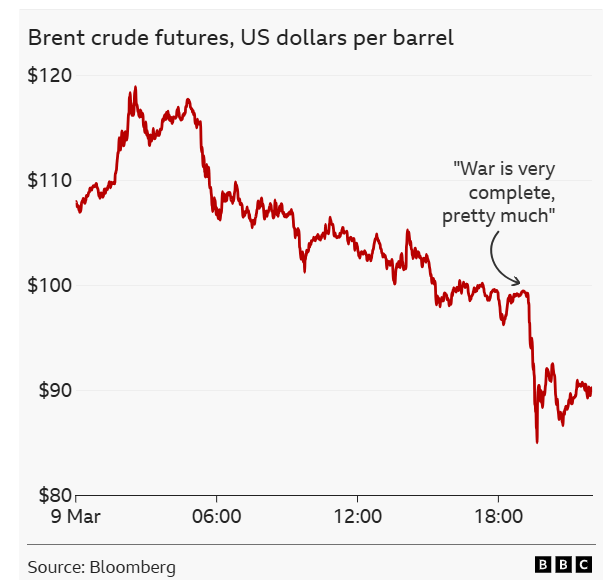
While the Iran War has not followed the same script, an interesting development has occurred. The signing and attempted implementation of a memorandum of understanding between Washington and Tehran has introduced a new variable into the conflict. After months spent manipulating oil markets through presidential tweets and Truth Social Post, it appears détente has been chosen as the path of least resistance.
When discussing the MOU, the arrangement appears strangely one-sided. Iran receives investment, reconstruction, and reintegration. At the center of the framework reportedly sits a private investment vehicle worth as much as $300 billion. For perspective, Iran’s economy generated roughly $400 billion in annual GDP before the war, while its oil and natural gas resources are often valued at more than $10 trillion. Viewed through that lens, $300 billion begins to look like a pittance to pay for access to one of the world’s largest undeveloped energy prizes and the opportunity to reliquefy a global energy market that spent months bracing for an annus horribilis. If implemented, the initiative would rank among the largest reconstruction and investment programs ever attempted in the modern Middle East.
So let’s see what’s the understanding?
Comments
Nothing yet. Say the first thing.
Sign in to join the conversation.