
“War is not merely a political act, but a real political instrument.”— Carl von Clausewitz
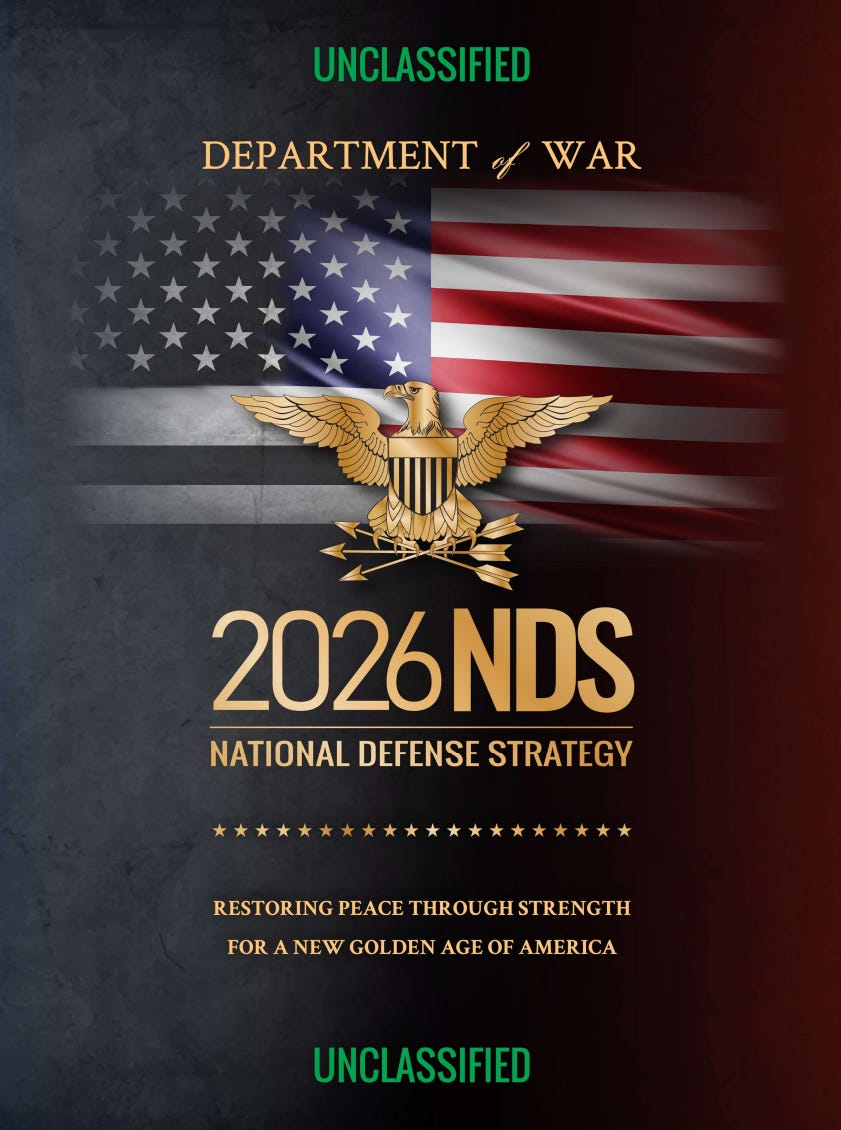
Since Donald Trump’s return to the White House, a broad consensus has emerged regarding American foreign policy, reinforced by the administration’s National Defense Strategy and its senior cabinet appointments. Friends and critics alike have reached much the same conclusion: the United States is abandoning the international order it painstakingly constructed after the Second World War. Washington has questioned NATO, withdrawn from international agreements, criticized the United Nations, the World Health Organization, UNESCO, and a growing list of multilateral institutions that once stood as pillars of American global leadership. Tariffs have increasingly replaced free trade. “America First” has supplanted globalization as the guiding principle of American statecraft. To many observers, the postwar order is no longer being managed—it is being dismantled.
The United States’ actions, however, have thus far provided evidence to the contrary.
Yet no institution has found itself more frequently in President Trump’s crosshairs—save perhaps NATO—than the United Nations. His administration has withdrawn from dozens of UN-affiliated organizations, suspended participation in others, withheld more than $1.5 billion in assessed contributions, sought sweeping reductions in peacekeeping and voluntary funding, instructed American diplomats to challenge ideological language embedded throughout the UN system, and repeatedly questioned whether American taxpayers should continue underwriting organizations that, in Washington’s view, had drifted far beyond their founding purpose. The criticism has been every bit as direct as the policy.
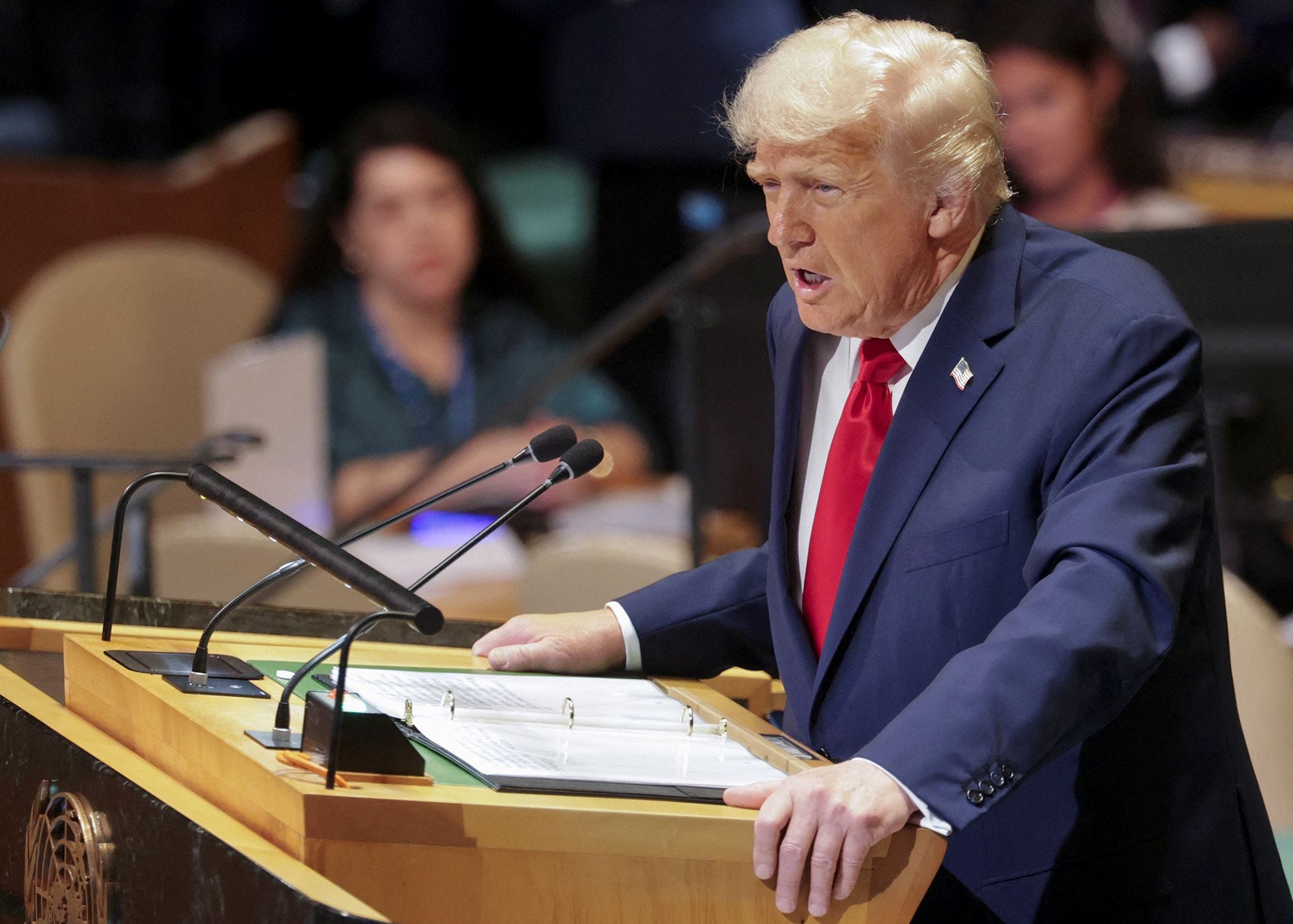
“What is the purpose of the United Nations? All they seem to do is write a really strongly worded letter and then never follow that letter up. It’s empty words and empty words don’t solve war.”
— Donald Trump
To most observers, the message appeared unmistakable. Washington was preparing to walk away from one of the principal institutions of the postwar order.
One of the more overlooked aspects of the conflict with Iran is that America’s re-engagement with the international community occurred while the United States and Israel were still conducting military operations. As aircraft struck Iranian facilities and military planners focused on degrading Tehran’s strategic capabilities, American diplomats were simultaneously taking the Iran file to New York. The administration sought to restore United Nations sanctions through the snapback mechanism, preserve international restrictions on Iranian arms transfers, strengthen the role of the International Atomic Energy Agency, rally diplomatic support for continued inspections, and transform what had largely been an American maximum-pressure campaign into one carrying the legal and political weight of the international system. It was not simply about military force. It was about persuading the rest of the world to participate in the peace that would follow.
The irony is difficult to ignore. Trump’s dispute was never with international institutions themselves. It was with international institutions that had, in Washington’s view, drifted beyond their original purpose. His administration proved perfectly willing to withdraw from, defund, or discipline agencies increasingly devoted to climate policy, migration, gender initiatives, development ideology, and bureaucratic mission creep. Yet when the issue returned to the United Nations’ founding mission—maintaining international peace and security, enforcing sanctions, verifying nuclear compliance, coordinating maritime security, and upholding the sovereignty of nation-states—the same administration proved equally willing to employ the institution as an instrument of American statecraft. Taken a panoramic view, Washington’s behavior ceases to appear contradictory. The objective was never to abandon the international order. It was to restore those parts of it that continued to generate strategic value for the United States.
To the chagrin of those who insisted there was no plan, one appears to have been quietly taking shape all along.

Within days of the memorandum of understanding, the United Nations quietly entered the implementation phase of the settlement through one of its specialized agencies. The International Maritime Organization announced a coordinated operation to evacuate hundreds of merchant vessels carrying approximately 11,000 stranded seafarers, an undertaking requiring governments, naval forces, insurers, port authorities, and the global shipping industry to move in concert. Individual transit windows were established, temporary navigation routes were organized, and commercial traffic began the slow process of returning to one of the world’s most strategically important waterways.
“This large-scale operation will be carried out in close cooperation with Iran, Oman, all other coastal States in the region, the United States and the maritime industry.”
— IMO Secretary-General Arsenio Dominguez
The significance of that statement extends well beyond commercial shipping. For the first time since the memorandum was signed, the United Nations was no longer observing events from the sidelines. It had become part of the implementation. The institution many believed President Trump had spent months attempting to marginalize was now coordinating one of the first multinational operations necessary to transform a military victory into a functioning peace.
That should not be dismissed as bureaucratic coincidence. It is evidence that the United Nations has already begun assuming a more actionable role in the postwar settlement. Washington did not create a new institution to coordinate the reopening of the Strait of Hormuz. It reached for one that already existed.
If this represents the first operational responsibility assigned to the United Nations following the memorandum, it is reasonable to ask what responsibilities may follow. That question becomes considerably more consequential when viewed alongside another development receiving remarkably little attention: the United Nations itself is preparing for a change in leadership.
Comments
Nothing yet. Say the first thing.
Sign in to join the conversation.