
There is a common assumption that stress, however unpleasant, is essentially temporary. The pressure lifts, the body resets, things return to normal. This assumption is understandable. It is also, for chronic stress, not what the research shows.
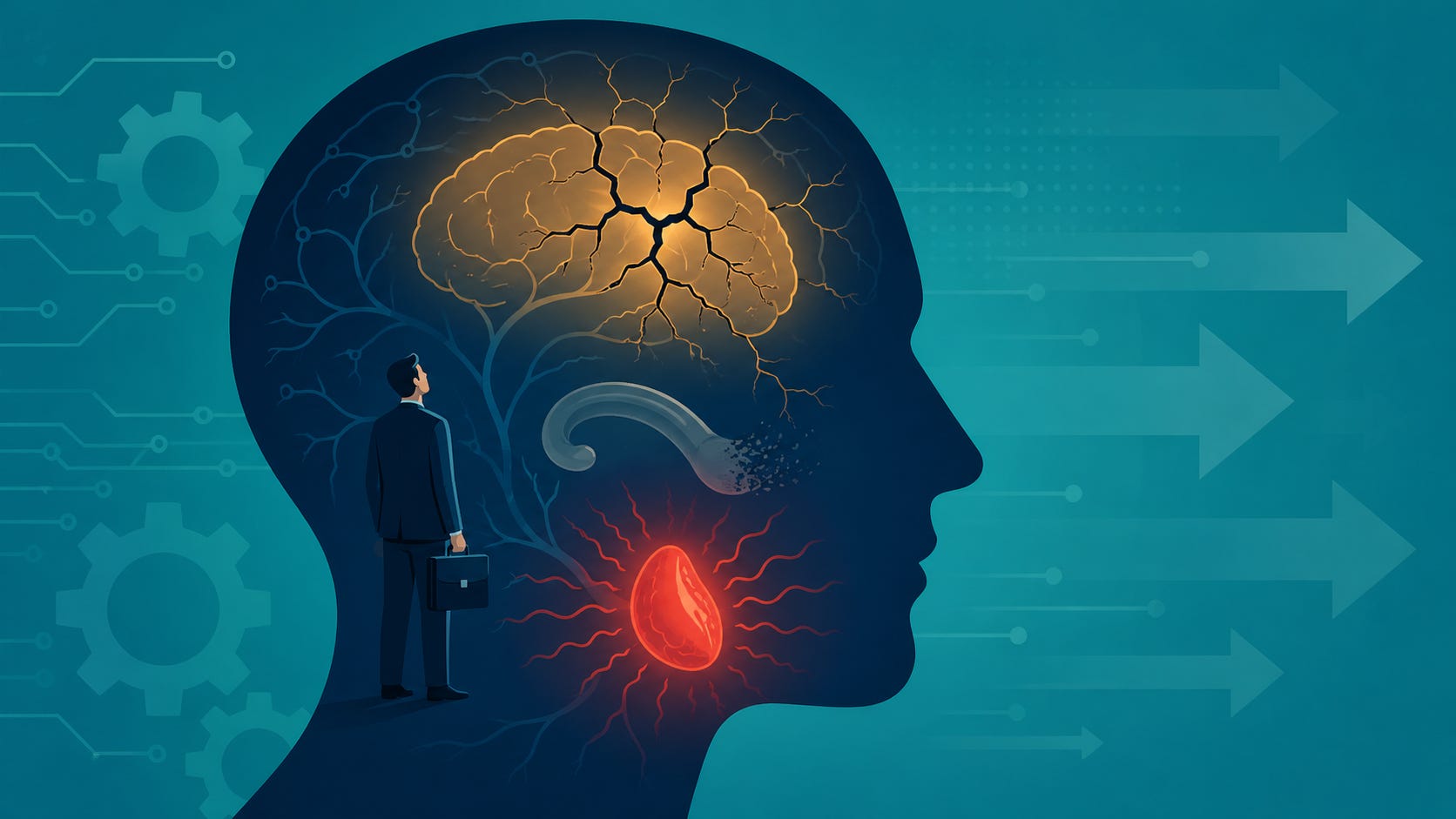
When the brain encounters a stressor, the hypothalamic-pituitary-adrenal axis triggers the release of cortisol, the body’s primary stress hormone. In short bursts, this is an adaptive and well-designed response. Cortisol sharpens attention, mobilises energy, and prepares the body to act. The problem emerges not from the response itself but from its duration. When cortisol remains elevated over weeks and months, the brain does not simply stay on high alert. It begins to change physically.
The region most consistently affected is the hippocampus, a structure central to memory formation, spatial navigation, and the regulation of the stress response itself. Research by Bruce McEwen at Rockefeller University, sustained over several decades, demonstrated that chronic stress exposure causes dendritic retraction in hippocampal neurons: the branching processes that allow neurons to communicate with one another physically shrink (McEwen, 1999). More recent work has confirmed that prolonged stress is also associated with reduced neurogenesis in the hippocampus, meaning the brain produces fewer new neurons in this region than it otherwise would (Bhagya et al., 2017). The hippocampus of someone under sustained stress is, in a measurable structural sense, different from what it was before.
The prefrontal cortex, responsible for planning, decision-making, impulse regulation, and perspective-taking, is similarly affected. Sustained cortisol exposure weakens the synaptic connections within this region and reduces its capacity to regulate the amygdala, the brain’s threat-detection centre (Liston et al., 2009). This creates a feedback loop that is worth understanding clearly: chronic stress impairs the very brain structures responsible for managing stress. The more overwhelmed you become, the less equipped the brain is to pull you back from that state.
The amygdala, by contrast, responds to chronic stress in the opposite direction. Rather than shrinking, it becomes more reactive. Studies using structural MRI have found that prolonged stress is associated with increased amygdala volume and heightened threat sensitivity, meaning the brain’s alarm system becomes louder and more easily triggered even as the structures designed to quieten it become less effective (Tottenham and Sheridan, 2009).
The brain under chronic stress is not simply a tired brain. It is a structurally reorganised brain: a shrinking hippocampus, a weakened prefrontal cortex, and a more reactive amygdala. These changes can be measured. They are also, importantly, reversible.
If you have spent a sustained period under significant stress and noticed that your memory feels less reliable, your thinking less clear, your emotional reactions harder to manage, these are not signs that you are failing to cope. They are consistent with what the neuroscience would predict. The brain you are trying to function with has been operating under conditions that physically alter its structure. That deserves to be taken seriously, not dismissed as weakness or oversensitivity.
There is also something important in the directionality of these changes. The hippocampus, prefrontal cortex, and amygdala do not operate in isolation. They form an interconnected circuit that regulates how threat is detected, how memories are formed around it, and how the stress response is eventually switched off. Chronic stress disrupts all three nodes of this circuit simultaneously, and in ways that compound one another. A hyperreactive amygdala generates more threat signals. A weakened prefrontal cortex is less able to evaluate those signals accurately. A compromised hippocampus struggles to contextualise them against past experience. The result is a nervous system that is harder to reassure, even when the original stressors have passed.
This matters for how we understand recovery. People who have been under sustained stress for a long time often find that reducing the external stressor is not enough to restore how they feel. That is not a psychological failure. It reflects the fact that the brain has structurally adapted to an environment of threat, and structural change takes time and the right conditions to reverse.
Take the timescale seriously. If you have been chronically stressed for months or years, expecting to feel restored within days of the pressure lifting is not realistic, and the gap between expectation and experience tends to generate additional distress. Recovery from sustained stress is a neurobiological process that unfolds over weeks and months. Naming that honestly tends to reduce the secondary burden of believing something is wrong with you for not bouncing back faster.
Comments
Nothing yet. Say the first thing.
Sign in to join the conversation.