
You say yes when you mean no. You apologise for things that are not your fault. You feel quietly responsible for the emotional state of everyone around you. This is not a personality trait. It is a survival strategy your nervous system learned a long time ago.
The Science
People-pleasing is rarely a quirk of character. For most people, it is a learned neurological adaptation, one that developed early, in conditions where it was genuinely necessary.
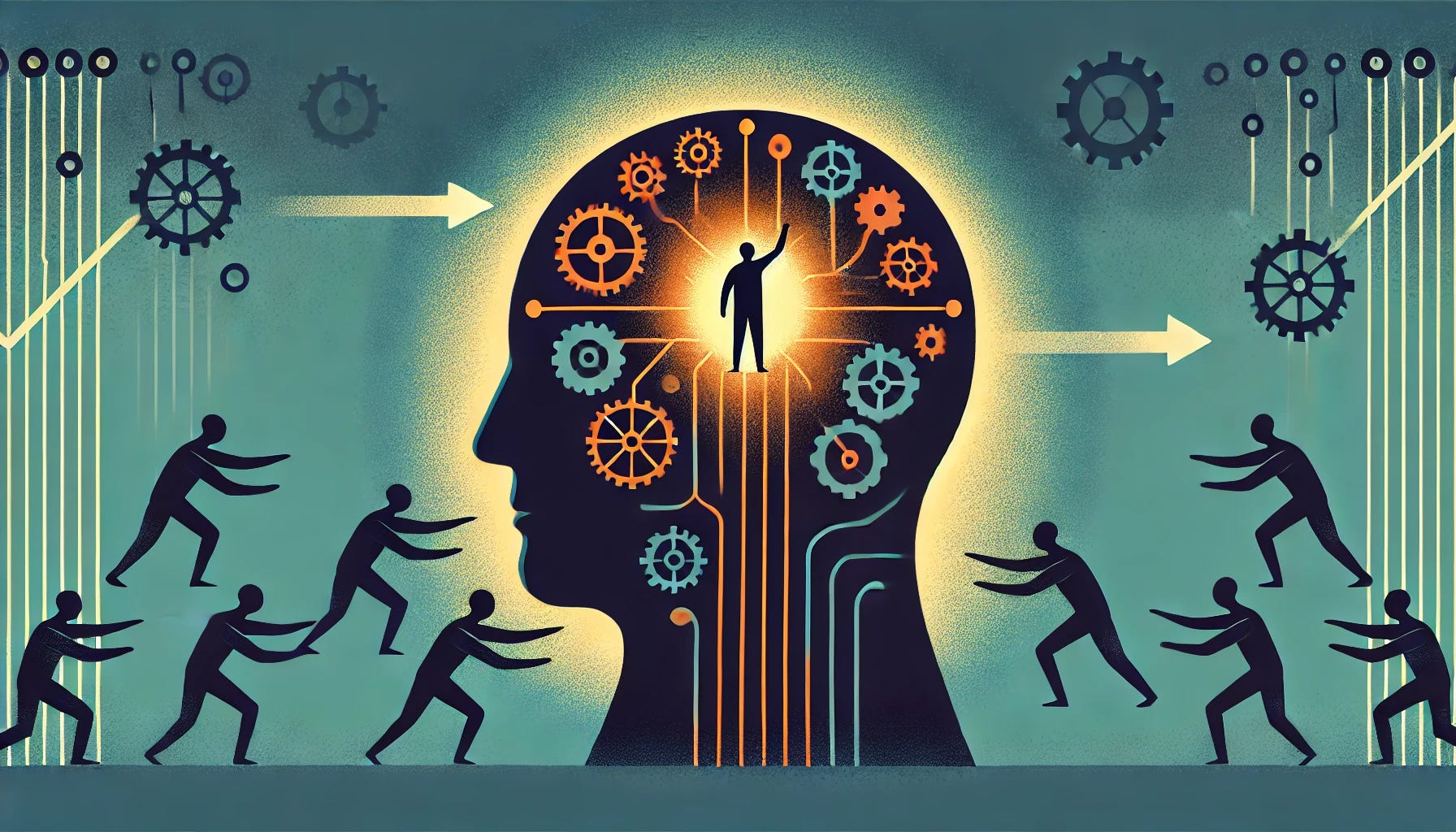
In childhood, the brain’s overriding biological priority is securing attachment. For children raised in environments where caregivers were unpredictable, critical, emotionally volatile, or consistently unavailable, the nervous system arrived at a conclusion that made complete sense at the time: the emotional states of other people are dangerous, and managing them is how you stay safe. The child who learned to read the room, to stay small, to smooth things over before conflict erupted, was not being overly sensitive. They were being adaptive.
This pattern becomes encoded in the brain’s threat-detection architecture. The anterior insula, which processes interoceptive signals and interpersonal cues, becomes highly calibrated to the emotional states of others. Research by Naomi Eisenberger and Matthew Lieberman at UCLA established that social rejection and disapproval activate overlapping neural circuits to those engaged by physical pain, including the dorsal anterior cingulate cortex and anterior insula (Eisenberger et al., 2003). When someone with a deep people-pleasing pattern senses another person’s displeasure, their brain is not being dramatic. It is registering something that, neurologically, resembles being hurt.
Alongside this heightened sensitivity to others, people-pleasers often show reduced activity in the ventromedial prefrontal cortex, the region associated with self-referential processing: knowing what you yourself want, feel, and need. Years of consistently deprioritising internal experience in favour of external demands can attenuate the very neural circuitry responsible for self-awareness (Denny et al., 2012). If you find it genuinely difficult to answer the question “what do I actually want right now?”, this is a plausible neurological reason why. The brain stopped practising that question because asking it did not feel safe.
The Meaning
People-pleasing is frequently misread, including by the person doing it, as generosity. And some of it genuinely is. But beneath the helpfulness, there is usually a quiet, effortful calculation running in the background: if I keep everyone comfortable, I will be safe. If I do not disappoint anyone, nothing bad will happen.
The cost is significant. Chronic suppression of one’s own needs and emotional responses activates the body’s stress systems in the same way external stressors do. Research on emotional suppression has consistently found associations with elevated physiological arousal, reduced immune function, and poorer psychological outcomes over time (Gross & Levenson, 1997). People-pleasers frequently report high rates of anxiety, resentment, burnout, and a persistent sense of not being truly known by the people around them. That last one makes sense: if you have spent years showing people a carefully managed version of yourself, genuine intimacy becomes structurally difficult.
Recognising people-pleasing as a nervous system adaptation, rather than a personality trait or a moral failing, makes both self-compassion and change more accessible. You are not too nice. Your nervous system concluded, based on early experience, that your own needs were a liability. That conclusion can be revised. It takes time, but it is not fixed.
Comments
Nothing yet. Say the first thing.
Sign in to join the conversation.