
When I was in high school, sports were my life. I thought I was pretty good. Then I played in the East/West All Star Game in Cincinnati; I saw great football players for the first time. After the first quarter, I recognized the need to embrace a different future. I played football at Dartmouth, had a great time, and prepared myself for a future in business.
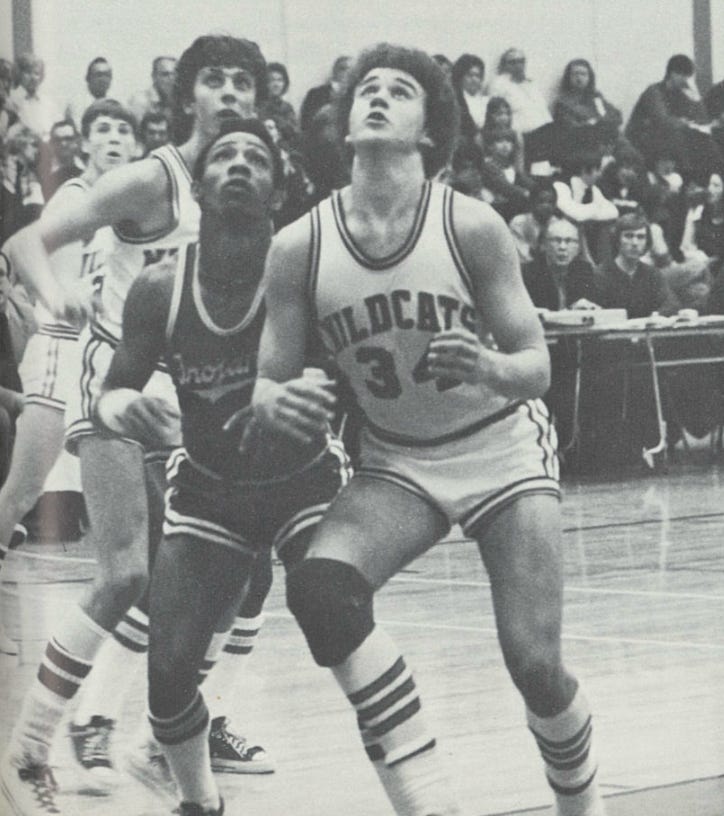
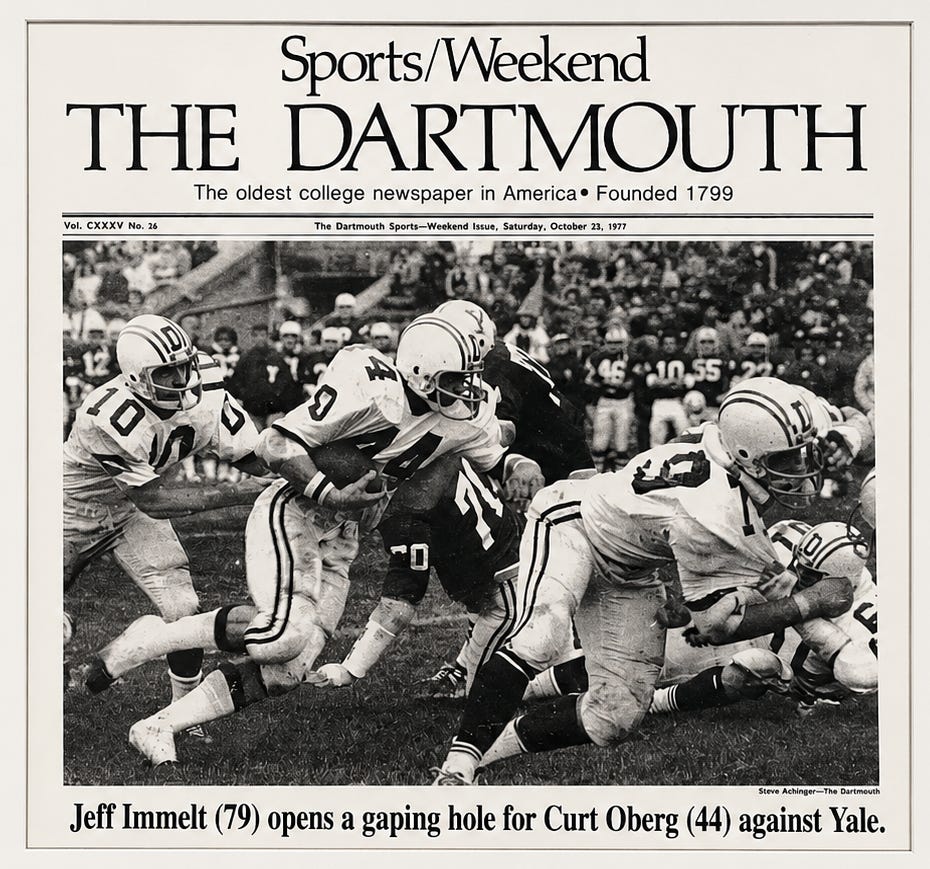
Anything I have achieved in life was based on having dedicated parents and attending a great public high school with phenomenal friends. I have lived and worked around the world but still consider myself a “Cincinnati boy.” I worked hard for a long time; frequently I was clocking 90-100 hours per week and 200 nights per year on the road. I am lucky. I had a chance to learn every day...I worked with talented people on important ideas...and could earn a great living.
Jim Collins wrote a book called “What to Make of a Life.” In it he outlines the steps people make as they manage personal transitions. He provides a concept called “flipping the arrow of money.” Instead of work being the means to money, money becomes a means to work. I wanted to combine my resources with my expertise; getting hands on in areas I cared about. In an earlier post, I described an initiative to build a training program for young executives. Look, big causes and charities are fine. I just wanted to see results; had I really learned skills that could translate to helping others?
Many of my friends have become more active in the community after retirement. For instance, Alex Dimitrief (former GE general counsel), has become a leader in the Ronald McDonald House; others have joined boards of hospitals or community organizations.
Having time is such a blessing. I define “joy” as being able to focus on something important, not expecting anything in return.
In 2020 – at the outbreak of COVID – the superintendent of my high school, Finneytown High School in Cincinnati, reached out to me. She said, “We are in danger of losing the school and need a little help.” Her comment really made me sad. Over the years I have donated money back to my school but lacked the time to really help.
I dug in and learned more about the recent history of the school, what I would consider a “typical American middle-class high school.” Here is what I found:
The community had gotten older and more economically diverse. Many school facilities were in disrepair.
The families were much more diverse putting a strain on our teachers to stay contemporary.
We were a net loser on all of the new “choice” initiatives...charter schools and open enrollment. This is a zero-sum game, where students pay the price due to no fault of their own.
Test scores were falling. The scars of COVID remain as schools re-establish rigor and focus.
The local business community had little connection with the school or knowledge of how to help.
A small group of parents were doing most of the work. They had no advocate.
Alumni had lost touch with the school...they cared but lacked any way to connect.
At first, the problems seem a little overwhelming. The physical plant (hardware) needed to be modernized. The curriculum (software) lacked critical funding to remain first rate. This is a tough cycle. Families move toward better resources; teachers receive little support; the wrong people end up in leadership; and the town unplugs from the school. We were fighting a negative wave of demographics and economics.
At the same time, the people are great. They retained a sense of purpose and pride. In my time at GE, I learned that the strength of the U.S. sits in the intelligence and optimism of the hard-working people on a local level. Everyone I met, parents and teachers alike, wanted a different future for their school.
Education is Hard
Finneytown sits between Wyoming (public) and St. Xavier (private), two of the best high schools in the country. These are the schools that many GE executives’ children attended. If we believe that wealth discrepancy is an issue — and upward mobility is a problem — then Finneytown must compete at their level. I was given that chance, to compete with the best. Why can’t this generation have the same opportunity?
As I began this journey, I thought that education NGOs or foundations could offer some guidance. I knew a few; GE had sponsored several education initiatives, and the Business Roundtable had targeted education as essential for a productive economy. I knew some of the foundations and benefactors around the city. I didn’t know quite what to ask for, but was open to ideas. What I found was a kind of latent arrogance... “if you fit my philosophy, maybe you can get my help.”
Everything in the U.S. has become political. And we have tried to politicize education. We saw the heavy hand of teacher unions during COVID. Meanwhile, conservative reformers tout school choice, charter schools and open enrollment. But what is working on a broad scale? Not much. Has a generation of growth in private schools created better citizens than public schools? I don’t see it. Education is about community, not politics. Locally, you are on your own.
Fixing public education is not easy; it is a complicated system. I hosted several college presidents at my Stanford class; in many ways their jobs are more complex than any CEO’s. High schools are even tougher; they have bigger problems with fewer resources. One thing is for sure: the rich are getting every advantage, while many are getting left behind. For years I have read about declining test scores or national education debates. I always assumed that “experts” would eventually fix the system. They don’t exist, so dig in!
For a businessperson, think about education as a turnaround. I learned to approach problems by thinking small. Try one approach at one place; learn and move on. What would be possible at “my school”? We have five skills that matter at the level of a local high school. The first is communication. We needed to treat our families like customers, make them believe that the school could listen and care.
The second is technology. Social media platforms allowed us to access generations of alumni. This is critical to building momentum. The third is leadership. Only parents can bring the passion for change. I can’t. Getting the right parents in leadership positions makes everything work better. The fourth is partnerships. I found that “Education NGOs” are myopic. If you can’t fit their “puzzle piece,” no luck. But local businesses have skin in the game and want to help. The last are funds and fundraising. Schools are strained for resources; a little bit of money goes a long way.
Sometimes it helps to focus big skills to small problems. Be a servant, not the boss. Support the ideas of others. Many parents and teachers and administrators have good ideas. A parent brings more passion than I can. Sometimes they just need encouragement. Set the highest bar you can. You can help.
Momentum
We went to work and are making progress. The real action happens with our team on the ground. This is from a recent newsletter:
“This week, we hosted a “Finneytown Vision Night” at our home with alumni, community members, Finneytown teachers, and friends who believe in this place. We shared our Finneytown stories – and the values that make this district and our experiences so special:
Well-Rounded Excellence: Students from diverse backgrounds who do it all – and do it all well.
Underdog Spirit: We’ve never had the deepest pockets, but we’ve always had the strongest drive.
Community That Lasts: You’re known by name and supported for life.
Legacy That Lives On: Every generation gives back for the next.
We also introduced our next goal: engaging 250 families in the Legacy Projects through our new Become a Champion Campaign – people who will give, share the story, and host gatherings to keep this momentum growing.
And momentum is growing. People are engaged. People are giving. Families are choosing Finneytown. Alumni are moving back. The shift is real – and it started with you.”
We have more work ahead. A major reconstruction project is underway at the high school. We have increased our private fundraising goals to $15 million. Parents are reengaging. Vastly upgraded performing arts and athletic facilities are in progress. Alumni are participating in record numbers. We are underdogs, and don’t want to lose that spirit. Our school is dreaming again. You can watch our progress or donate at: Finneytownalumni.org.
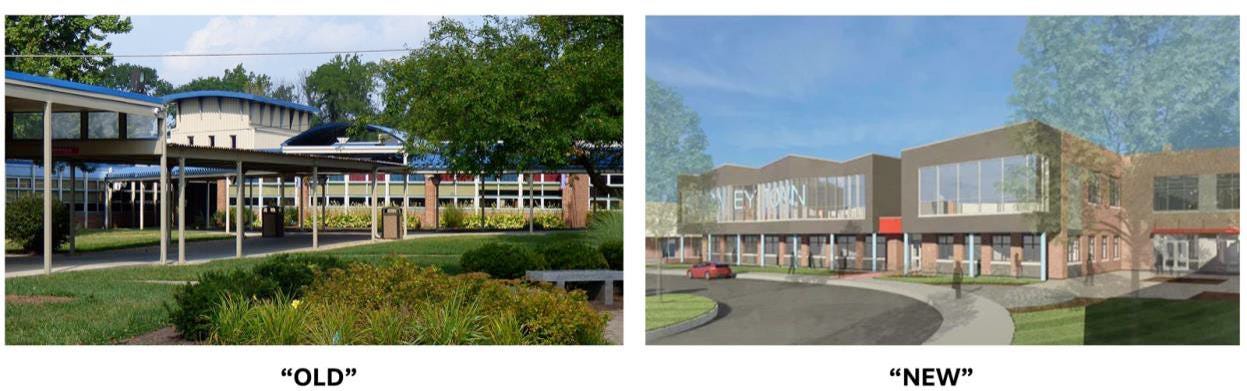
Young families can look at our town and see that we care. They are returning. In some ways, we have tackled the easy part first. The facilities will be competitive for the first time in a generation. Now, we need to support great teachers in a learning culture. The “software” must work.
Sometimes you can build change “top down.” Education is a “bottoms-up” game. Every school needs a series of “sponsors” who can bring skills and capital. When they are met by passionate parents and teachers, magic can happen. Our systems are broken, but don’t give up. Parents just need a catalyst. Go back to your school. Fix what you see and what you know. Own it and stick with it. Helping the local team to rejuvenate a place I love has been one of the most rewarding experiences of my lifetime. This might help:
TLV Tips
Create or support an organization outside the school boundaries that can catalyze change. Ours is called Finneytown Alumni Network. It is staffed by people in the community who care. Invest seed capital for full time leadership and to communicate with the community. Here is a roster:
Michael Steel (Program Leader)...an alum and parent of young children. Mike is an expert fundraiser. His father was my friend.
Scott Haarlammert & Ric Towner (Parents)...concerned parents, whose children graduated and loved their experience. Scott and Ric inspired me to do more.
Rick Kennedy (Communication)...Retired communication lead from GE Aviation and familiar with the town. Rick is a friend.
Kara Smoker (Social Media)...young alum with contemporary skills
Rick Payne (Finance)...local financial advisor who brings passion and discipline.
Invest in parents. There is a cohort of parents who are toiling with few resources. This includes boosters, PTA, school board, band parents, etc. They are heroes and they need help. Small dollar investments go a long way.
Prioritize projects...big and small. Get a few early wins backed by a multi-year plan. We passed a bond issue to fund school reconstruction on top of our 60-year-old campus. Private donations will fund a performing arts center upgrade and new sports facilities. We are moving quickly, with multiple projects completed. People can see the difference. Legacy and pride will be at the center of what we do.
Build a ground game with alumni. Many had lost connection, but not the love. I was not alone; most alums had a great experience and really cared. Many from the older alumni cohort may have financial resources and want to help; we just need to find them. The younger alumni have social media skills but little funds. Both groups are important.
Create metrics for success. There are obvious ones...like test scores. But there are even more important foundational goals...are more young families moving to town? That is what will make this effort sustainable.
Attach to community. Your school’s success should foster community success and vice versa. In our case, the town is doing great (Springfield Township). We need local business to support the schools.
Promote teaching and outcomes. We will create physical space to train and explore our potential. We want to develop a foundation for continuous learning and leadership. Cheer for the next generation of administrators and teachers who can see the changes happen over time.
Make change sustainable. Create an ongoing stream of funds for teacher training, scholarships, and content. Commit to making our students competitive, ready to enter and lead their world with confidence.
Make it Personal. Big “philosophies of change” in education aren’t working. Depart your fancy and lofty initiatives and go home. It starts with you.
In the end, I am realistic about my role. I am outside the system. I am not going to pick the leadership or vote for the school board. But I can remove the excuses and challenge the status quo. Time is of the essence.
Let me leave you with this: Wealth discrepancy is a big issue in America. A primary cause is the erosion of our public schools. Nationally, initiatives to repair public schools have largely failed. But it is possible to have an impact locally by aligning resources with leaders and families who care. We need a few people at each public school to “pitch in”...financially and emotionally. It is up to us.
My father was a product of the Great Depression. He would say, “Get a good education, it makes a poor man rich.” I graduated in 1974 from Finneytown High School and felt like I was king of the world. I could do anything. If we let our public schools erode, we take away those dreams. I’m lucky and have resources. Many of you do as well. Most of us enjoy investing in causes that are close to our heart. There is nothing more personal than your school. Part of my value is financial for sure. But time and experience matter more. Let’s keep exploring.
Hot Seat Proceeds Go to Finneytown HS
Thanks for reading The Long View! This post is public so feel free to share it.
Comments
Nothing yet. Say the first thing.
Sign in to join the conversation.