
Since the beginning of time, people have looked to the stars to find their way. Now – at a time when humankind has (arguably?) lost not only its bearings, the plot, control of the vehicle and its collective mind, we’re once again looking skyward for answers. Whether via astronomy, astrology or horoscopes (Eastern or Western), celestial timing is governing decision making – ie how people spend their money – more than ever.
“That’s a clear pattern: a significant share of travellers are letting cosmic timing influence when and how they go away.”

A few years ago, choosing a holiday based on your zodiac sign would have sounded niche, if not outright bonkers. In 2026, it’s barely even alternative, with several luxury operators citing astrological travel as a defining trend. Not to be confused with astro-tourism – another mobilising factor this year seeing amateur astronomers and star-spotters arrange their travel itineraries around celestial immersion: timed meteor showers, guided lunar rituals, astrophotography workshops and remote stays in certified dark-sky reserves. Astrological travel is using your birth chart or planetary timing to make your world, from travel to tarot, as spiritually personal and beneficial as possible.
Whether you see it as magical thinking or extreme escapism, the cards – sorry, the stats – never lie. According to Booking.com’s 2026 travel research 39% already say they plan holidays around astrological events such as Mercury retrograde or moon phases, while 47% of global travellers would consider changing or cancelling a trip if a spiritual adviser suggested the timing was wrong. 43% would rethink plans after a negative horoscope, and 17% would shift travel schedules to align with eclipses or full moons. That’s a clear pattern: a significant share of travelers are letting cosmic timing influence when and how they go away.
And if you’re already galloping bareback into the sunset on your Fire Horse, know this: there are a whole lot of people right behind you.
Astrology has recently really embedded itself economically. Pew Research found that roughly three in ten US adults engage with astrology, tarot or fortune telling at least once a year. The US psychic services industry generated around $2.3 billion in revenue in 2024. In India, astrology has grown into a $1 billion market since the pandemic, driven by digital consultations and app-based access. Globally, astrology apps are projected to grow from roughly $3 billion to about $9 billion by 2030, powered by subscription models and AI-personalised interpretations.
But why? And what exactly are we looking for?
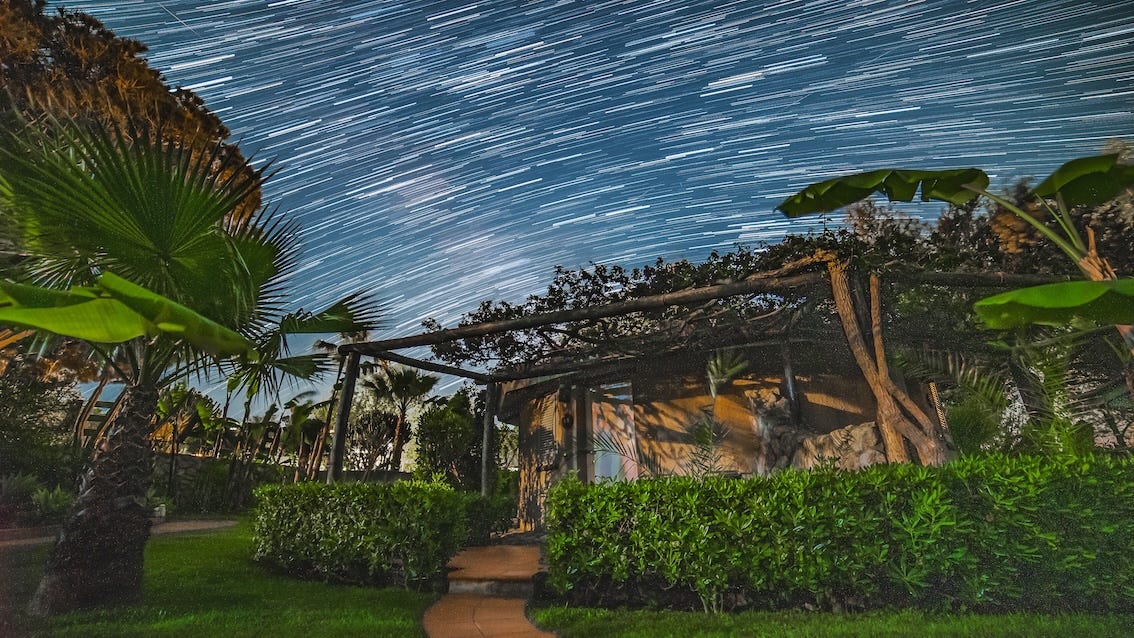
The leap from horoscope to holiday isn’t an especially new one – destination guides framed “according to your sign” have been standard digital fare for a while. But astrocartography – mapping a birth chart onto global locations – has seen reported interest surge by over 50% year-on-year.
Used in order to shape travel plans and relocation decisions it’s cleary gaining a lot of traction – is it because it actually (whisper it) works? Meanwhile lunar calendars appear in retreat marketing. Eclipse tourism creates booking spikes. Flights during Mercury retrograde may be disrupted...
Travel has always carried symbolic weight. We book trips for reinvention, escape, celebration, recovery. Astrology gives those impulses a storyline – and a personal one at that.
Faced, as most of us are these days, with choice overload, astrology provides a framework. It narrows options and adds narrative structure. And at a time when consumers expect tailored recommendations everywhere, a birth chart functions as a bespoke identity map: specific, even intimate, and… hopeful.
Uncertainty does, it turns out, make people buy. In one poll, 61 % of Americans agreed that astrology provides comfort in uncertain times. The broader astrology industry (including apps, services, readings, publications, etc) was valued at about $12.8 billion in 2021 and is projected to reach around $22.8 billion by 2031. The UK astrology app market is forecast to surpass £95 million in revenue by 2026, with ~30 % of users paying for advanced features (natal charts, personalised insights). Some 46 % of Brits say their horoscope influences major life decisions, with the figure rising to 78 % among 25–34-year-olds. Travel, wellbeing and relationships were among the areas influenced.
“Uncertainty does, it turns out, make people buy.”
Among the young, it’s not just cosmic coincidence that 6 x 7 is 42, the Answer to the Ultimate Question of Life, the Universe and Everything. Generations X, Y and Z all talk more freely of The Universe than any old-fashioned (probably male and beardy) religious deity – the language of the cosmos is the language of social fluency. Terms like “Saturn return” circulate freely. Astrology is conversational currency. And therefore, it’s commercially relevant.
“The language of the cosmos is the language of social fluency.”
Belief Isn’t the Point. Even if only a small proportion of adults say astrology guides major life decisions, engagement is none the less extremely high. People check horoscopes daily. They subscribe, get tarot readings, watch astrology content, and they share it. Travel decisions – as so many other consumer purchases – operate on emotion as much as logic.
Astrological language now appears in travel inspiration, timing discussions and destination framing. It offers consumers a way to articulate intent. It supplies identity language, timing logic and narrative coherence. Ultimately, it helps answer the unspoken question we’re all desperately trying to answer: where should we go from here?
No posts
Comments
Nothing yet. Say the first thing.
Sign in to join the conversation.