
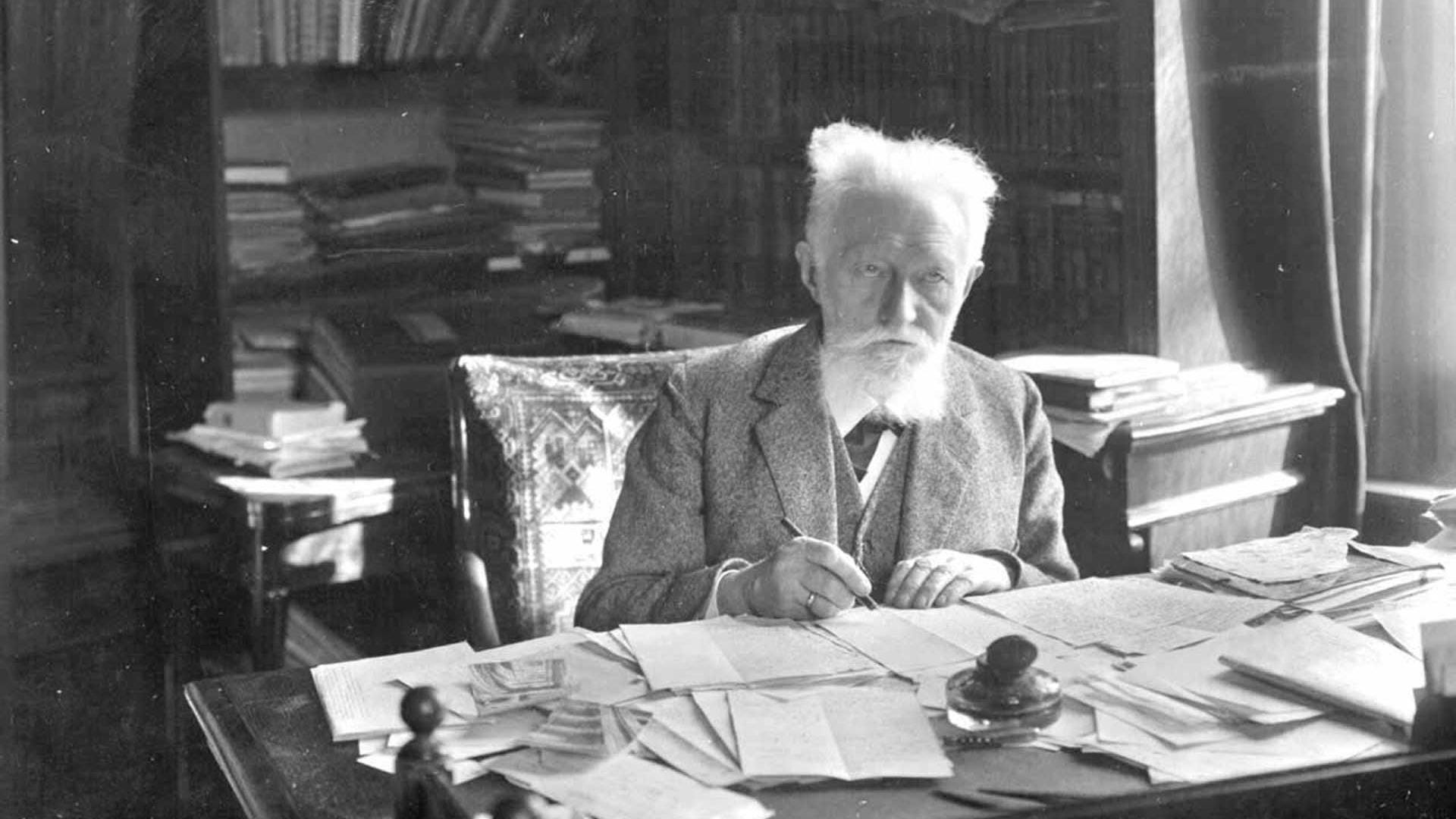
Walk through a workshop in the mid-1800s and you’ll notice something remarkable.
Every master craftsman had a secret.
Not written down.
Not measured.
Not calculated.
Simply...known.
The angle of a blade.
The pressure of a hand.
The feel of a finishing stone.
Ask two craftsmen to build the same thing and you’d likely receive two slightly different results.
That wasn’t considered failure.
It was craftsmanship.
For centuries, people believed excellence lived in gifted hands.
Carl Zeiss would spend his career proving it could live somewhere else.
Carl Zeiss opened his optical workshop in Jena, Germany, in 1846.
Microscopes were already changing medicine and science, but they shared an uncomfortable truth.
Even the best ones were inconsistent.
One microscope might produce remarkable clarity.
The next, built by the same workshop, might not.
Lens making was still driven largely by experience, intuition, and trial and error.
The best craftsmen earned reputations because they possessed something that couldn’t easily be taught.
Instinct.
That worked beautifully.
Until demand increased.
Then Ernst Abbe walked into the workshop.
Abbe wasn’t a craftsman first.
He was a physicist.
Instead of asking skilled workers to keep perfecting their technique, he asked a different question.
Why are we guessing?
He began developing mathematical principles that explained exactly how lenses should perform.
Measurements replaced assumptions.
Equations replaced folklore.
Consistency replaced luck.
It sounds obvious today.
It was revolutionary then.
For perhaps the first time, extraordinary optical performance became something that could be designed before it was built.
That may not sound exciting.
It should.
Because this wasn’t simply a better microscope.
It was a better way of making microscopes.
Before Zeiss and Abbe, quality depended largely on who happened to be holding the tools.
After Zeiss and Abbe, quality depended on whether the system worked.
That’s one of the most profound shifts in industrial history.
The company no longer relied on finding exceptional people.
It built an environment where ordinary people, following extraordinary systems, could consistently produce exceptional work.
Listen to how organizations describe success.
“We hired an incredible salesperson.”
“She’s our best designer.”
“He’s the engineer who holds everything together.”
There’s nothing wrong with extraordinary people.
Every organization needs them.
The danger comes when excellence depends on them.
Because heroes leave.
They retire.
They change jobs.
They burn out.
When they do, what remains?
Zeiss asked that question more than 150 years ago.
Its answer still feels radical.
Build systems that survive your stars.
The best systems rarely call attention to themselves.
Passengers don’t applaud aircraft maintenance checklists.
Patients don’t celebrate surgical sterilization protocols.
Restaurant guests don’t compliment food safety procedures.
Yet those invisible systems determine almost everything that follows.
Leadership often works the same way.
People notice charismatic speeches.
They rarely notice the quiet standards that shape behavior every single day.
The strongest cultures aren’t built through inspiration alone.
They’re built through expectations repeated so consistently that excellence becomes routine.
There’s another lesson hidden inside the Zeiss story.
Precision isn’t obsessive because perfectionists enjoy details.
Precision is respectful.
Scientists trusted Zeiss microscopes because lives and discoveries depended on them.
Astronomers trusted Zeiss optics because tiny distortions could change enormous conclusions.
When accuracy matters, precision becomes an act of service.
The customer isn’t paying for perfection.
They’re paying for confidence.
This sounds backwards.
Most people think systems limit creativity.
In reality, good systems create room for it.
Musicians master scales before improvising.
Pilots master checklists before facing emergencies.
Chefs master technique before inventing dishes.
Great systems don’t replace creativity.
They protect it.
Because when the fundamentals become reliable, attention can shift toward innovation.
Every founder secretly hopes to become indispensable.
The best founders quietly accomplish the opposite.
They create organizations that thrive without them.
Carl Zeiss eventually became one of the world’s most respected names in optics.
Not because Carl Zeiss personally built every lens.
Not because Ernst Abbe solved every problem.
But because together they created a way of working that outlived them both.
That’s one of the highest forms of leadership.
Not being the smartest person in the room.
Building a room that continues producing remarkable work long after you’ve left it.
Because in the end...
Talent inspires us.
Systems sustain us.
And while history remembers the names Carl Zeiss and Ernst Abbe...
Their greatest invention wasn’t a microscope.
It was making excellence repeatable.
No posts
Comments
Nothing yet. Say the first thing.
Sign in to join the conversation.