
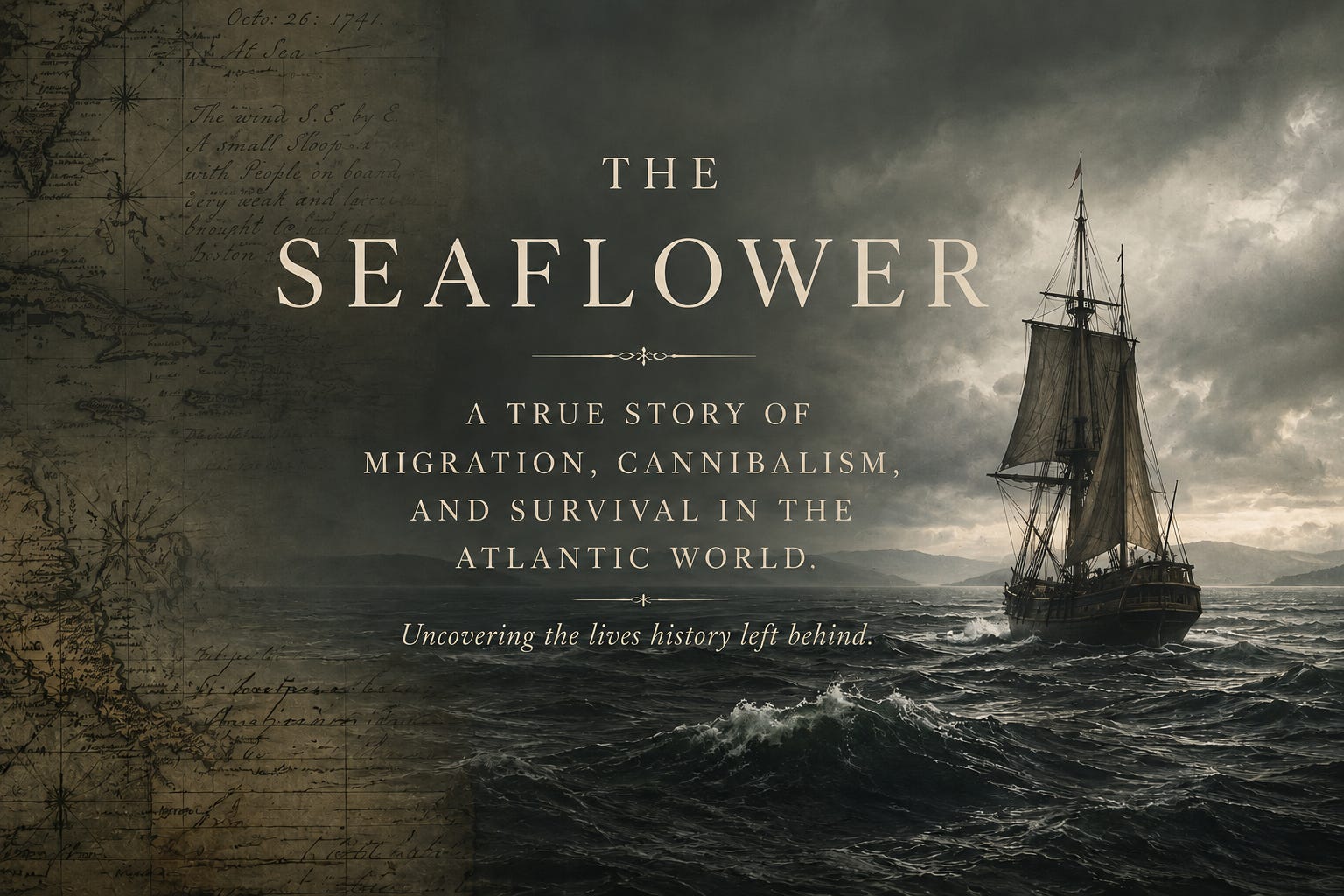
This is part of my on-going series where I’m reconstructing the lost world of the Seaflower survivors from 1741.
Before the passengers aboard the Seaflower became starving migrants drifting off the coast of Massachusetts, they belonged to a world of hearth fires, rough linen, crowded tables, spinning wheels, iron kettles, shared beds, and long winter evenings shaped by labor. They belonged to homes.
That sounds obvious, but it is one of the easiest ideas to lose in migration history. Shipwreck narratives tend to turn people into victims or survivors, suspended in the dramatic moment of disaster. But before they became desperate figures aboard a drifting vessel in 1741, the passengers of the Seaflower lived inside ordinary routines and material worlds that structured how they understood comfort, family, survival, and even hope itself.
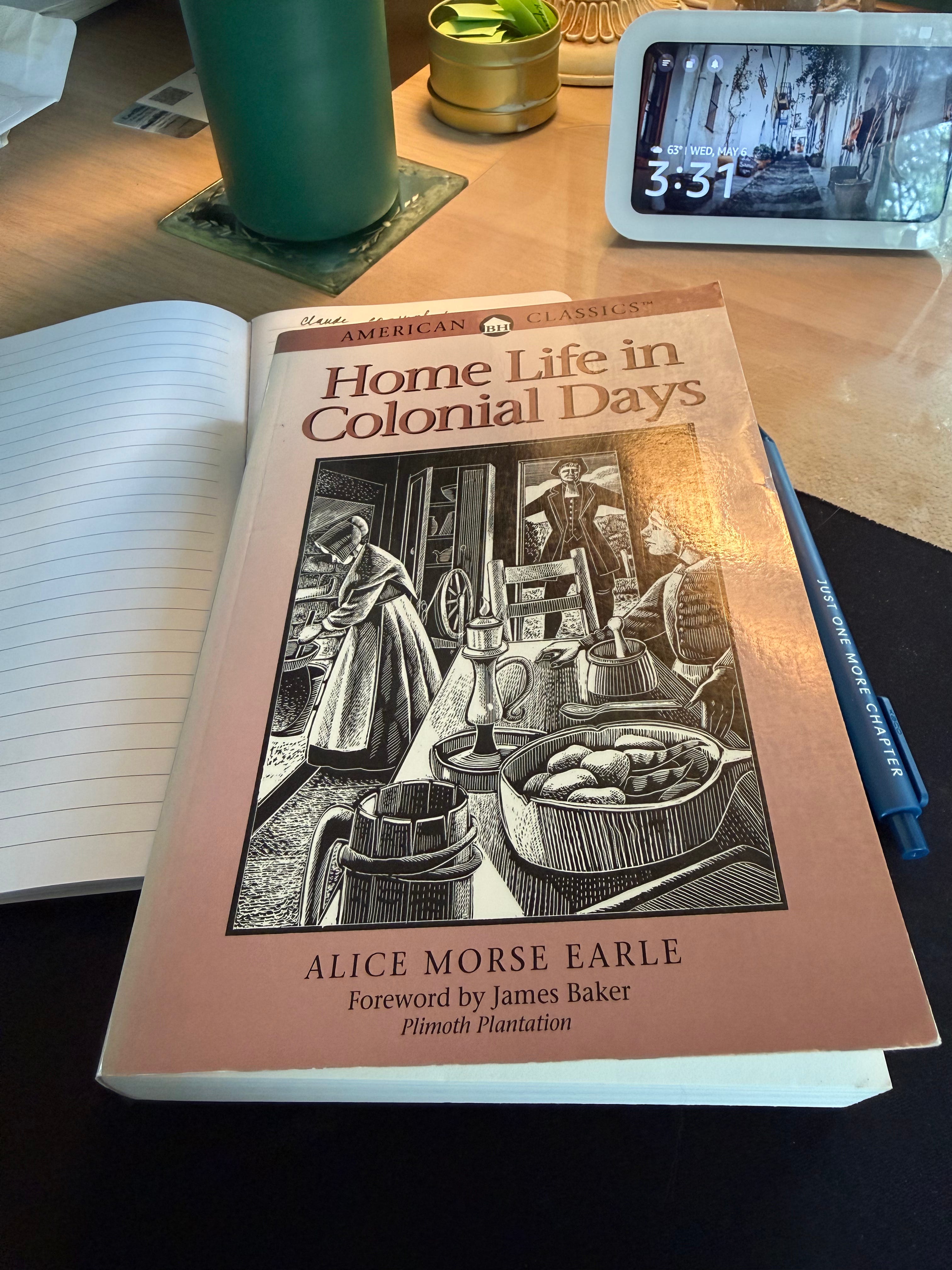
One of the challenges of reconstructing the Seaflower story is that we know almost nothing about many of the individual passengers. They left behind no diaries, no letters, no detailed accounts of their lives. Historians are often forced to rebuild lost worlds indirectly, through fragments and parallels, using surviving records that illuminate the environments ordinary people inhabited. Books like Alice Morse Earle’s Home Life in Colonial Days become useful not because they provide exact portraits of the Seaflower passengers, but because they help us recover the rhythms and textures of eighteenth-century life that shaped the people who crossed the Atlantic.
The homes many Ulster migrants left behind in the early eighteenth century were not quiet or spacious places. Families often lived in close quarters, surrounded by tools, animals, smoke, mud, damp clothing, and constant labor. Domestic life revolved around production. Women spun yarn, mended clothing, prepared food, brewed, washed, carried water, tended fires, and managed the endless cycle of household survival. Men labored in fields, workshops, docks, or the linen trade. Children began working as soon as they could walk. Privacy barely existed.
The modern imagination often romanticizes “colonial life” into some sort of curated simplicity. The reality was HARD and DIRTY and SMELLY. Homes smelled of peat smoke, sweat, wet wool, animals, food, and dampness. Light was limited. Food security was a constant threat, especially for poorer families already living close to subsistence. By the time the Great Frost descended over Ireland in 1739 and 1740, freezing rivers, destroying crops, and contributing to famine conditions, many families were already vulnerable.
This is one reason material life matters so much in migration history. People did not merely pack a bag and walk onto an emigrant ship. They carried their assumptions about what a household should be, what meals should taste like, how warmth should feel, how labor should be organized, and what forms of stability made life recognizable. Migration threatened all of that at once.
Aboard the Seaflower, ordinary domestic rhythms collapsed. There was no stable hearth, no permanent table, no familiar routine separating work from rest or public life from private life. Hunger gradually stripped away the structure of ordinary existence itself. The passengers lost not only food, but the material and emotional systems that had organized their understanding of the world.
That loss matters historically because famine and migration are often discussed in abstract terms: numbers displaced, mortality rates, shipping patterns, demographic shifts.
But catastrophe is always experienced domestically first.
It begins in kitchens, at tables, beside empty storage barrels, in weakened bodies wrapped against cold, in parents calculating portions, in clothing repeatedly patched because replacement is not possible.
The archives rarely preserve those moments directly. Historians reconstruct them from traces: probate inventories, household manuals, letters, advertisements, account books, surviving artifacts, and texts like Home Life in Colonial Days. Piece by piece, these fragments help restore dimension to people otherwise flattened by the historical record.
This, ultimately, is part of what Filling the Gaps is trying to do. Not simply to explain the Seaflower, but to recover the larger human world surrounding it. To understand not only how people died or survived, but how they lived before catastrophe overtook them.
Because the passengers aboard the Seaflower were not born starving on a drifting ship. They came from homes, however fragile. They came from routines, expectations, relationships, memories, and material worlds that once felt permanent. And somewhere in the darkness of the Atlantic, as hunger narrowed the boundaries of survival, those lost worlds must have remained painfully present in memory.
Please subscribe to keep learning about the Seaflower and to be one of the first to know when the book is released!
Comments
Nothing yet. Say the first thing.
Sign in to join the conversation.