

DISCLAIMER: This brief was written with events and information up to July 6, 2026; any events that have occurred since are not addressed. The NATO Ankara Summit (July 7–8, 2026) is an active near-horizon event — findings on summit outcomes are not incorporated. It aims to explore the dynamics driving events underneath the diplomatic cover that often saturates MSM headlines.
TFP CONFIDENCE TIERING: The Firebrand Project labels the confidence behind every significant finding in this piece. CONFIRMED means multiple independent sources have verified it. HIGH-CONFIDENCE means the sourcing is strong with minor gaps. DEVELOPING means the indicators are credible but not yet fully corroborated. CLAIMED means a single party — often one with skin in the game — has asserted it without independent verification.
The debate about whether Europe can defend itself has been running for forty years. What changed in 2026 is that it became operational. The United States formally classified Europe as a secondary theater in its National Defense Strategy, Secretary Hegseth conditioned future deployments on spending compliance, and 5,000 troops left Germany with no replacement date. The question now is not whether the US is leaving — it is what, exactly, it is taking with it.

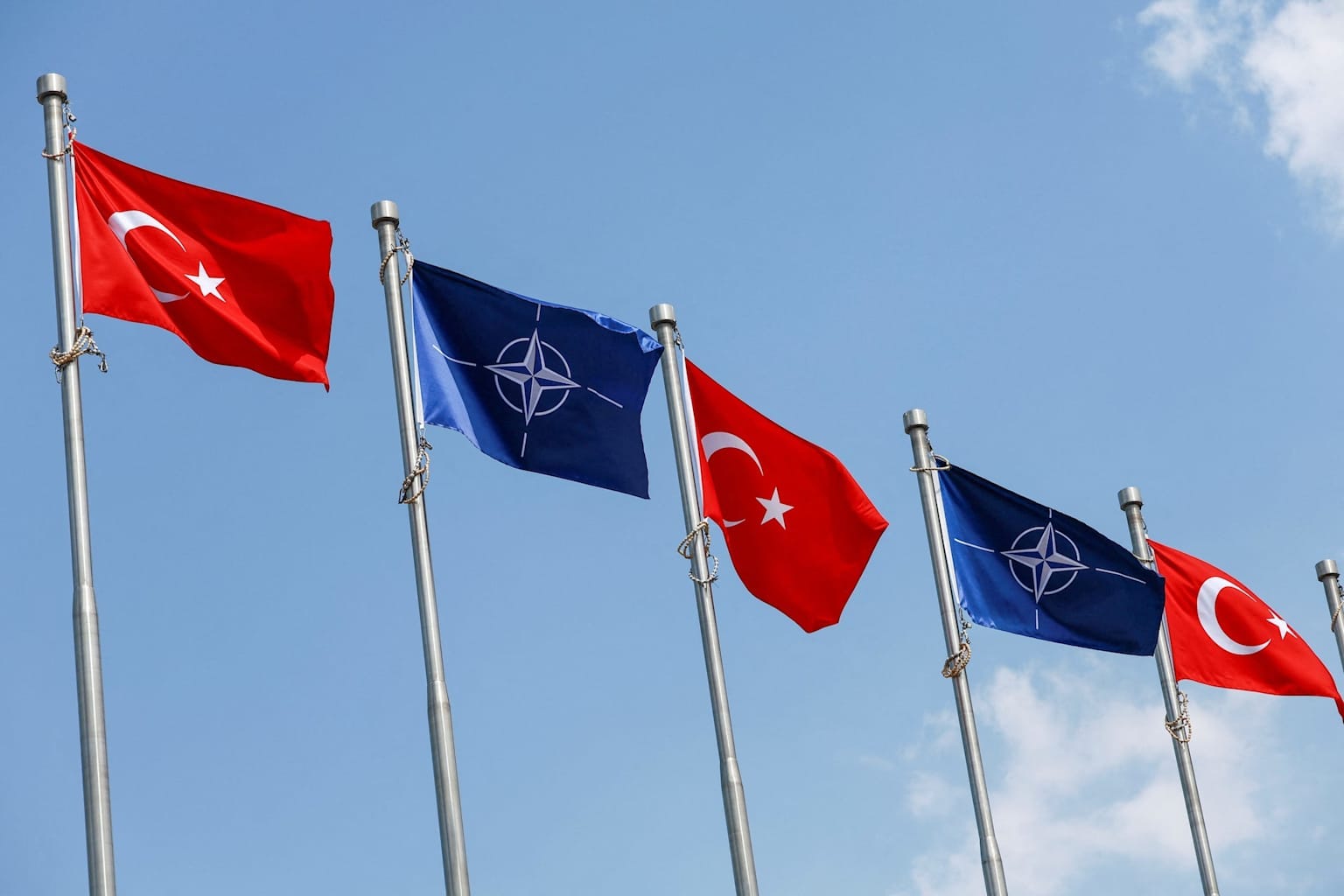
The announcement that drew headlines was the troop number: 5,000 personnel removed from Germany, one fewer earmarked armored brigade for NATO’s eastern flank, per the Atlantic Council in May 2026. That number was politically legible and strategically incomplete — what the US is withdrawing is not warm bodies, it is a capability stack. The 2026 National Defense Strategy formally states that European allies are “expected to take the lead in conventional defense of Europe” — language that reframes Article 5 from a US guarantee into a cost-sharing arrangement. Secretary Hegseth announced a formal posture review conditioning deployments on ally compliance with spending targets, per Breaking Defense.
The IISS calculated in 2025 that replacing the full US contribution to European defense would cost approximately USD 1 trillion over 25 years — around USD 226 to 344 billion at replacement cost. What it contains matters more than its size. The US contribution is a capability stack, not a headcount: integrated air and missile defense (IAMD) across the full theater; strategic airlift sufficient to move a division across the Atlantic in days; ISR satellite integration feeding real-time targeting; and long-range precision fires at depth. Remove any one of those and a European force that looks formidable on paper develops acute exposure the moment the shooting starts.
IAMD is the most acute shortfall. Ukraine faced 900 Russian ballistic missile attacks in 2025 alone, a pace that exhausted donated Western stocks and exposed how thin European-sovereign IAMD coverage actually is. Germany operates approximately 12 Patriot batteries — the largest European fleet — but has already deployed one to Turkey, donated others to Ukraine, and faces Raytheon production constraints that push new missile deliveries past 2028. IRIS-T SLM, the primary European-sovereign alternative, is running at approximately four systems per year against simultaneous demand from Ukraine and fifteen-plus NATO allies. The Hudson Institute assessed in June 2026 that Europe spent thirty years treating IAMD as an afterthought — and is now attempting to close that shortfall inside a ten-year window while a war is consuming available stock.
There is also a reciprocity dimension that rarely surfaces in public coverage. The US benefits from European intelligence networks in ways that are not symmetric. Estrangement from European HUMINT and SIGINT networks structurally degrades US counterintelligence against Russia — 80 years of coverage built into relationships and access that don’t transfer to a satellite or a budget line. When the US briefly suspended intelligence support to Ukraine in March 2025, documented by the Atlantic Council, it demonstrated the dependency runs both directions. America is leaving behind something it will not easily rebuild — and that includes what it forfeits in return.
WATCHING — US PROCUREMENT BACKLOG
In April 2026, the US formally notified Estonia, Lithuania, Finland, Norway, Poland, and the UK of expected delays to contracted weapons deliveries — HIMARS ammunition, NASAMS components, and missile systems — as Operation Epic Fury against Iran depleted stockpiles, per Reuters, DW, and UPI. CSIS estimated the US expended 1,060 to 1,430 Patriot rounds and fired more than 1,000 Tomahawk missiles during the Iran campaign — with Patriot inventory recovery projected no earlier than mid-2029 and Tomahawk recovery not until 2030–2031, per Breaking Defense. Secretary Hegseth acknowledged the shortfall publicly, stating it would take “months and years” to rebuild US stockpiles. Estonia is already exploring South Korean alternative suppliers. This is not a future risk — it is the current condition of the US Foreign Military Sales queue for Europe.
Questions
Most coverage frames this as “troops leaving.” Why does that framing miss the actual strategic risk?
IAMD keeps appearing as the single most acute vulnerability. Why is that specifically, and not ISR or strategic airlift?
The NDS language about Europe as a “secondary theater” is striking — is that a negotiating position or a structural shift?
Does the intelligence reciprocity finding change how you read the US withdrawal? America isn’t just leaving — it’s also losing something.
The troops leaving is not really the strategic risk. What we’re really seeing isn’t the bodies leaving — it’s the weapons platforms the United States provides, and how they fit into the mosaic that is the overall European defense structure, primarily for defending against Russia. What the United States is taking is its strategic bomber capacity, its integrated air missile defense systems, its intelligence, surveillance, and reconnaissance capacity. All of these things add up. These aren’t gaps that Europe has an equivalent to replace. The extent of which is worsened not only by the general Atlantic alliance drift we’re seeing, but beyond that, exacerbated by losses during the Iran war.
Integrated air missile defense is the biggest vulnerability Europe has. The reason it’s so urgent is because Russia uses ballistic missiles so aggressively, particularly in Ukraine. This is a very acute weak point that Europe has no functional replacement for. Beyond that, NATO relies pretty much exclusively on US Patriot missile defense, which is already compromised — not only from an availability perspective or effective replacements in Europe — but just the supply chain for the interceptors themselves. The US drawdown of its own stockpiles is likely to push back delivery timelines of Patriot missile interceptors, which means not only will the limited Patriot batteries Europe has see a reduction with the removal of US batteries — but beyond that, just supplying those batteries with ammunition is going to become increasingly difficult. Despite efforts to produce Patriot interceptors in other places like Japan, delivery times are being pushed back farther and farther, and are likely to be pushed even further in the near future.
The NDS language regarding a secondary theater goes in a lot of directions. I’m not necessarily certain what the original catalyst was. It could be collusion, or just placation for Putin. It could be a retaliatory measure for European militaries abstaining from the war in Iran. It could be something as simple as the US military already facing massive shortages and internal logistics issues — readiness among other things — and an aging fleet starting to see that it is stretched too thin, wanting to consolidate away from certain defense agreements it finds less valuable, particularly with the deteriorating relationship between Europe and the Trump administration.
The potential loss of more integrated intelligence, surveillance, and reconnaissance will definitely have an impact. However, it’s not necessarily driven by the NATO drawdown as much as US actions that have directly fractured the Five Eyes relationship from multiple directions. The UK and Colombia suspended intelligence cooperation after the US sank boats off South America, asserting the operations were illegal. DNI Gabbard’s July 2025 memo barred Five Eyes partners — the UK, Canada, Australia, and New Zealand — from receiving any intelligence related to Russia-Ukraine peace negotiations. The Netherlands separately withheld intelligence from the US over concerns Washington would misuse it. Canada has spent 18 months building alternative bilateral intelligence treaties to reduce its exposure to US dependence — a structural hedge, not a protest. America is losing significant cooperation and the available assets that are part of these European intelligence apparatuses as they draw down and weaken the existing NATO relationship. These intelligence-sharing arrangements — as well as the US decision to back adversarial states and figures like Orban in Hungary — have already significantly reduced the incentive for a close intelligence relationship. We would expect the loss of this intelligence to hamper the United States’ ability to operate around the world, at least in a clandestine sense, and to maintain a broader understanding needed to conduct foreign military operations — as a lot of these areas were likely neglected by US agencies because of foreign assistance and cooperation.
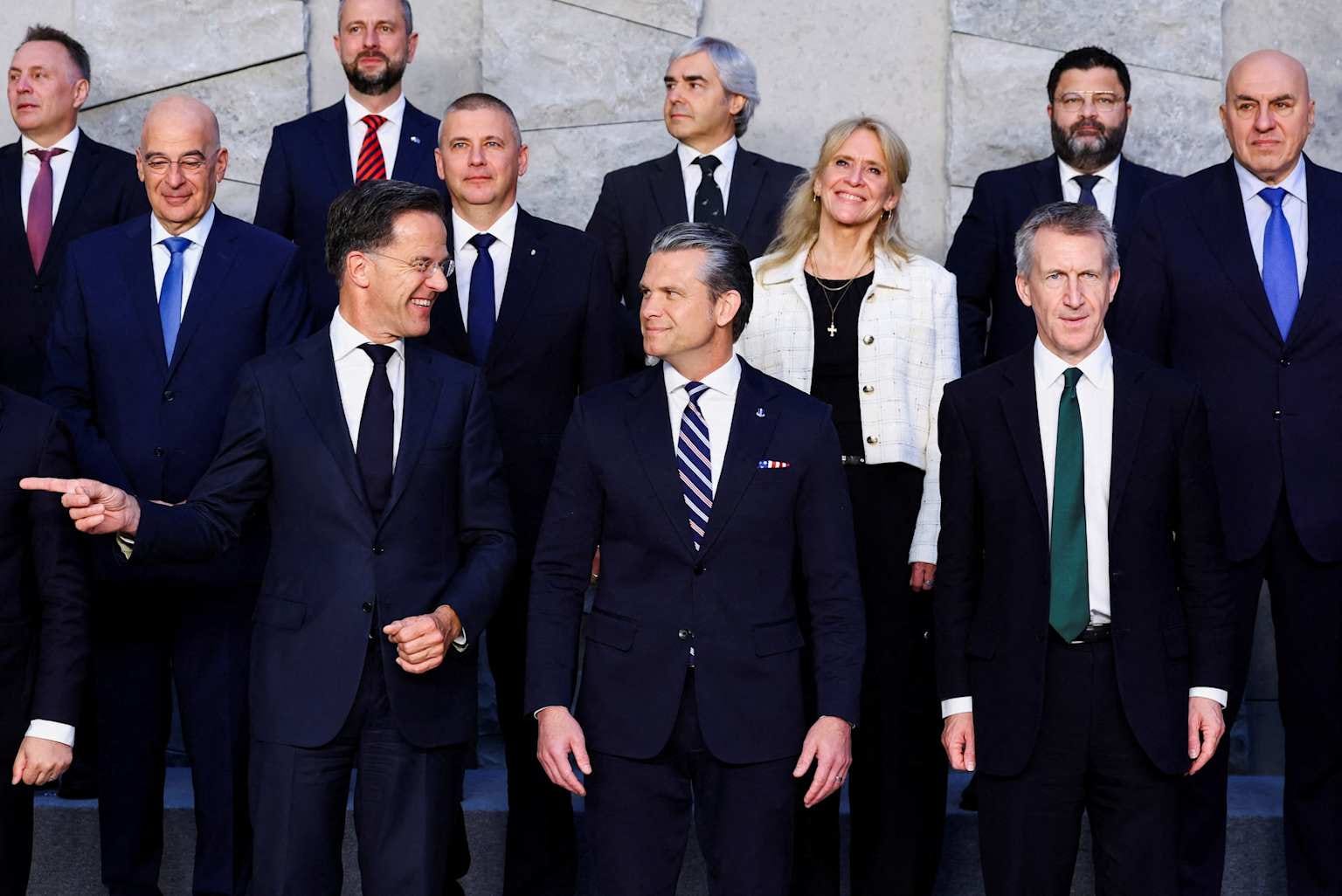
For the first time in NATO’s history, every single ally met the 2% GDP defence spending threshold in 2025. European NATO members and Canada increased defence spending by 19.6% that year — the second consecutive year at that rate. Norway became the first European ally to surpass the United States in defence spending per capita. The 2025 Hague Summit committed all members to 5% of GDP by 2035, split between 3.5% core defence and 1.5% broader security investment. These are genuinely extraordinary numbers that do not yet translate into an extraordinary military.
The clearest illustration is Germany. The Bundeswehr received a EUR 100 billion Sondervermögen special fund in 2022 — the largest single peacetime defence investment in German history. Four years later, the Parliamentary Commissioner for the Armed Forces reported in February 2026 that only approximately 50% of Bundeswehr major equipment is rated as fully operational at any given time. The Puma infantry fighting vehicle — Germany’s most advanced IFV — had a catastrophic exercise failure in December 2022 when all 18 vehicles committed to a NATO readiness demonstration broke down. Germany is spending at record levels and simultaneously unable to field a full combat brigade on short notice — a contradiction the spending headlines do not capture.
HIGH-CONFIDENCE: That shortfall is not uniquely German, but Germany is where it is most visible because the numbers are largest. Across major European NATO members, average operational availability for main battle tanks runs at approximately 60–70% of declared inventory, with armored infantry vehicles lower still. DEVELOPING — operational availability figures are self-reported by national defence ministries and independently audited only partially; treat the specific percentages as directionally correct, not precisely verified. The Oliver Wyman analysis of February 2026 found that European industries “continue to face challenges increasing production fast enough” while armies simultaneously struggle to meet recruitment and retention targets across the continent — a double constraint that capital alone cannot solve quickly.
The Financial Times assessed in March 2025 that Europe requires five to ten years to functionally replace most US military roles — and that estimate was made before the US withdrawal timeline accelerated in 2026. What is being built right now is capacity for the 2030s, not the 2026–2028 exposure window — the period when US capabilities have partially withdrawn and European replacements have not yet arrived. That deficit is documented, and no political pledge can compress industrial timelines.
Questions
Germany is the case study here — what actually explains the distance between the Bundeswehr’s budget and its combat availability?
The Puma failure in 2022 feels like it should have been a wake-up call. Has it been?
The IISS puts the cost of replacing US capabilities at USD 1 trillion over 25 years. Is that a number Europe can actually absorb, or is it a ceiling that exposes the limits of the thesis?
Is there a European military that has actually closed the spending-to-readiness gap — one that should be the model?
The general gap between budget and combat availability is dramatic, but it’s not exclusively a German problem or a European problem — it’s a global supply chain problem. You can’t make a weapon without the components; you can’t make the components without the rare earths and materials that go into them, and those are getting harder to acquire. Dependencies on foreign manufacturers compound this — whether orders will be prioritized as domestic priorities shift in those countries is never guaranteed.
Germany in particular has a historical track record of over-engineering vehicles that don’t perform under pressure. The Puma in 2022 is the current example, but the pattern goes back to World War II, where German tanks were feared on paper but the majority were lost not in tank combat but to mechanical failure. The Puma was a wake-up call in the sense that Europe is aware and spending is up — but what is actually going to be usable in the near term to replace what the United States is taking is not something they could produce on short notice. Even if every Puma were fixed tomorrow, they still need to manufacture more. And everything on order has an export queue ahead of it — do you honor those export contracts before turning to domestic production? Something you’ll have in 2029 is of no use if Russia starts launching missiles or drones tomorrow. So yes, Europe has woken up and is attempting to act — but whether it happens fast enough is the larger question, and that depends on factors these countries largely cannot control: supply chains, resource availability, and international shipping stability, all of which are under pressure.
To be candid, no — it’s not something Europe can fully absorb, and that is really the crux of it. The general criticism of analysts for the last decade has been that Europe chronically underspent on defense. Unfortunately, regardless of what statements the NATO Secretary General may make about gaps being filled and replacements being immediate, that is not true. Whether the precise number is $1 trillion over 25 years is a separate question — that figure can’t be projected with certainty. But the general assertion that these capabilities cannot be quickly replaced appears to be broadly correct.
There are caveats and potential alternative solutions. To circle back to the question of whether the lesson has been learned: you could argue that deeper collaboration with Ukraine and the commitment to drone technology is Germany learning that lesson. Germany has deepened its cooperation with Ukraine in recent months, which is absolutely the right decision. Whether that’s enough to close such a large gap is another matter, and the answer appears to be no. That doesn’t mean Europe is without teeth — it means Europe is facing a situation where creative solutions will be required to fill the gap at speed.
The military best positioned to serve as a model is not in NATO at all — it’s Ukraine. Ukraine is the only military that has seen active combat in Europe, short of Russia, and it is critical that its model be adopted: not only its effective low-cost supply chain and its low-cost solutions to expensive Russian platforms, but the doctrinal approach that underlies them.
The ballistic missile and air defense coverage question is one Ukraine is clearly working on. But I believe that as supply chains tighten and production drawdowns increase, countries like Russia may pivot toward cheaper options — drone technology. The best decision Europe can make is not to continue spending on Cold War-era weaponry and preparing for a conventional ground war with Russia, when the future of warfare is almost certainly going to be dictated by drones, at least in the short term. Whether that’s sustainable is another question — the entire technology build-out is heavily dependent on extractive measures from regions of the world facing continued and increasing volatility, and realistic alternatives in many cases simply don’t exist.

The question of whether Europe can build a modern military is, at its core, a question of whether Europe is willing to learn from the only force currently fighting a modern war on European soil. Ukraine’s defense industrial base opened 2022 worth approximately USD 1 billion. By 2025 it had reached USD 35 billion — roughly 900 enterprises, more than 2,000 active development teams, and a production tempo that reflects four years of live battlefield iteration, per the Council on Foreign Relations (February 2026). That is a defense industry forged by the threat, not built to anticipate it.
The drone numbers are the most legible part of that transformation. Ukraine produced over 4 million drones in 2025 and is targeting 7 million in 2026, per Aviation Week. That volume is not the point — the production system behind it is. Ukraine has compressed the loop between combat failure, engineering response, and battlefield redeployment to weeks. A drone jammed on Monday has a countermeasure patch by Friday. European defense procurement cycles operate on timelines measured in years, occasionally decades. That tempo disparity is the distance between a military that learns at war speed and one that learns at committee speed.
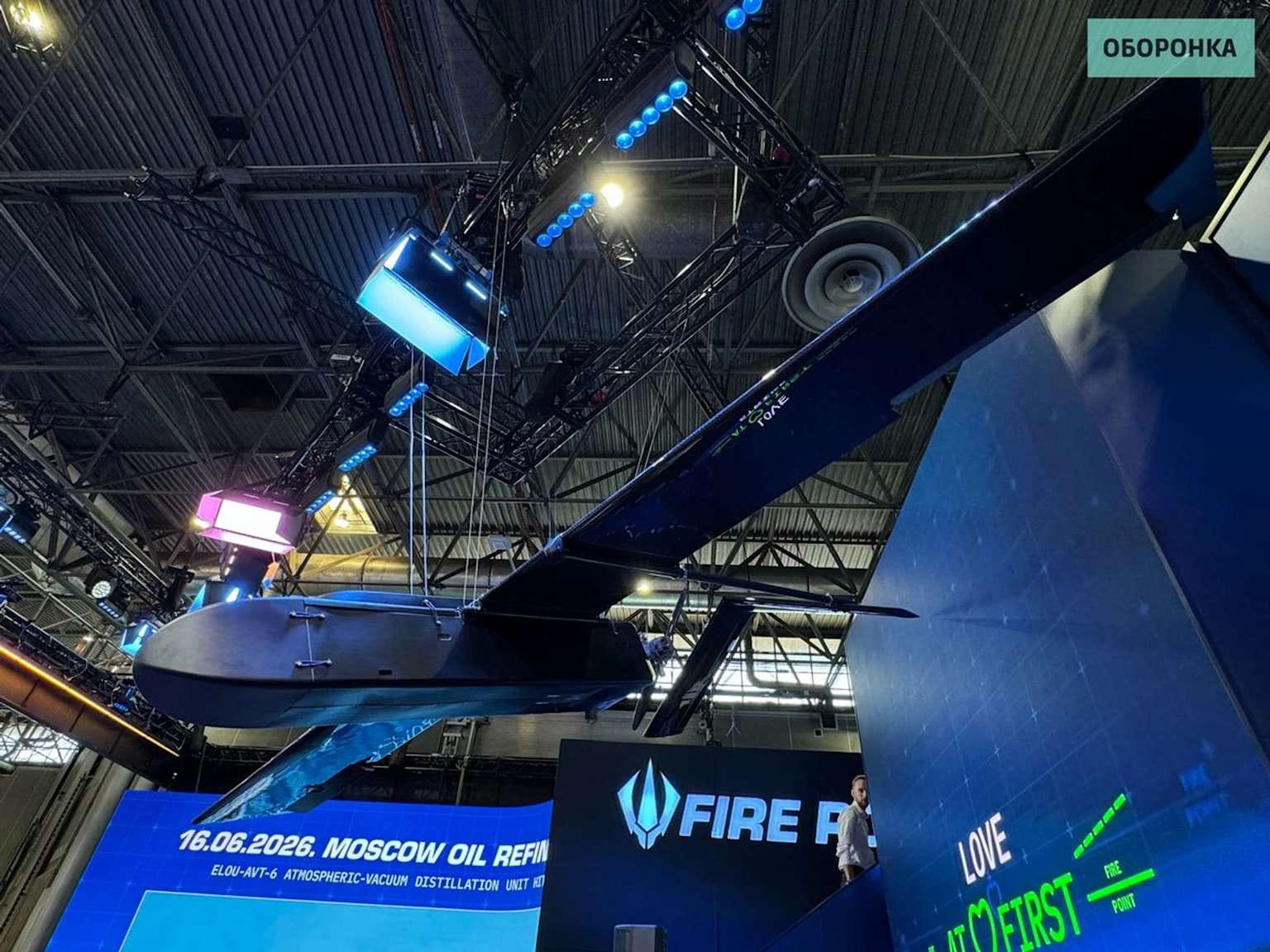
European institutions have recognized this and begun acting on it — with varying degrees of seriousness. The EU-Ukraine Drone Alliance, launched in 2025, aims to integrate Ukrainian drone production expertise directly into European industrial networks. The UK announced at least 120,000 drones for Ukraine in 2026 — the largest-ever single drone package — across long-range strike, reconnaissance, logistics, and maritime systems, with manufacturers Tekever, Windracers, and Malloy Aeronautics involved. Germany’s Diehl Defence signed a technology cooperation agreement with Ukrainian firm Fire Point in April 2026, targeting the Flamingo cruise missile for potential joint production — a low-cost, claimed-3,000km-range system — with production potentially moving to German facilities. Germany and Ukraine signed a formal defense industrial cooperation agreement on June 18, 2026. DEVELOPING — delivery timelines on cooperation agreements of this type routinely slip; the Diehl-Fire Point arrangement has not yet entered production.
The limiting factor is not awareness — it is absorption speed. Ukraine’s wartime innovation runs on necessity, informality, and battlefield feedback loops. European procurement frameworks run on regulatory compliance, export licensing, liability chains, and procurement law. Grafting Ukrainian tempo onto European institutions is not a merger of equals; it is a transplant that requires the host to change. The countries moving fastest — the UK on drones, Germany on the Flamingo, the Nordic-Baltic cluster on doctrine adoption — are doing so by creating parallel tracks outside standard procurement pipelines. Whether that scales across the alliance is the unresolved question.
Questions
The EU-Ukraine Drone Alliance and the Diehl/Flamingo deal are treated as significant. But cooperation agreements and signed MOUs are not weapons. What actually has to happen for this to matter in 2028?
Ukraine has battlefield-validated drone warfare at scale. Europe is trying to absorb that. Who in Europe is actually doing it and who is paying lip service?
There’s a tension here — Ukraine is simultaneously a drain on European stocks and an accelerant for European capability. How do you hold both of those true at once?
For all of these deals to mean something — these memorandums of understanding, which are really just signed documents of intent in front of cameras — we need to be looking for verifiable reality on the ground. This is where Ukraine’s cooperation genuinely can benefit Europe’s defense acceleration, because Ukraine is already producing at scale under pressure. An agreement for missile production in Germany doesn’t necessarily have to build everything from scratch — they have a working model. They literally just need to begin production. So whether these countries can act domestically with urgency is the variable we need to evaluate.
Whether this takes the form of funding Ukraine to produce weapons and export them, or the more common European preference of domestic production in association with Ukraine — the latter is the safer political option, but it adds a timeline to get things up and running. Does it matter in 2028? The better question is: can it matter in late 2026 or 2027? A world that perpetually forecasts two years out is going to be perpetually behind. This is especially true in defense, where contracts signed ten years ago are still being filled — Cold War-era order ledgers still being honored in the modern drone era of warfare.
The countries genuinely getting the most out of collaboration with Ukraine are those most closely supporting it and engaging in bilateral alignment. Germany has taken the lead here — despite its host of issues, it still has some of the best industrial capacity to produce weapons in Europe. Rheinmetall and Diehl are major manufacturers positioned to actually produce on short timelines. Germany has deepened its defense cooperation with Ukraine, with its defense minister actively visiting Ukraine to understand how they operate.
The UK, despite its military being in a difficult state on just about every level, is doing the right thing by attempting to pivot to drone production. However, its defense minister recently resigned because of the lack of committed funding. So while the UK enters a memorandum of understanding on one front, it is simultaneously underfunding on another — whether that produces results is entirely dependent on their ability to rapidly implement at scale domestically. All of these countries are moving in the right direction. But direction and speed are different questions.
Ukraine has more to offer Europe in terms of experience and production of effective modern weapons than the Cold War stocks it is draining. The entire modern Western military model is rapidly being outdated — and was ultimately proven ineffective in the Middle East, where the US-Iran war concluded in a June 17 MOU that requires the US to lift its naval blockade of Iranian ports by July 19 while leaving Iran’s authority over the Strait of Hormuz unresolved — a settlement that, by June 28, had already effectively collapsed, sending the strait back into operational paralysis. Al Jazeera confirmed more than 600 vessels, including 325 tankers, remain stranded in the Gulf. The European Commission launched an emergency energy package in April 2026 — Europe’s second energy crisis in four years — which will also constrain Europe’s ability to rapidly scale industrial production.
By working with Ukraine to find affordable alternative solutions — and by collaborating with European military scientists and companies — Ukraine will be positioned to out-innovate Russia, which puts Europe in a more advantageous position. Ukraine, while not as large as the United States, stands to fill some of the void the US is creating. While it is extremely unlikely the US would sanction Ukraine’s induction into NATO, that doesn’t mean European countries can’t individually strengthen defense ties with Ukraine to offset the Russian threat.
Critically: Ukraine’s shortage of Patriots is almost certainly going to yield an effective domestic solution. They have found a workaround to just about every other shortfall they’ve experienced in this war. The more quickly Ukraine is able to strengthen these relationships, the more certainly European countries will assist in scaling those programs to fill the void. Ukraine is innovating under pressure, which produces some of the most effective solutions — because lives are at stake. It’s not about capital, it’s about functionality and financial viability. That is entirely contrary to the current Western defense model, which is essentially about the exchange of wealth and pre-established relationships between governments and defense contractors.
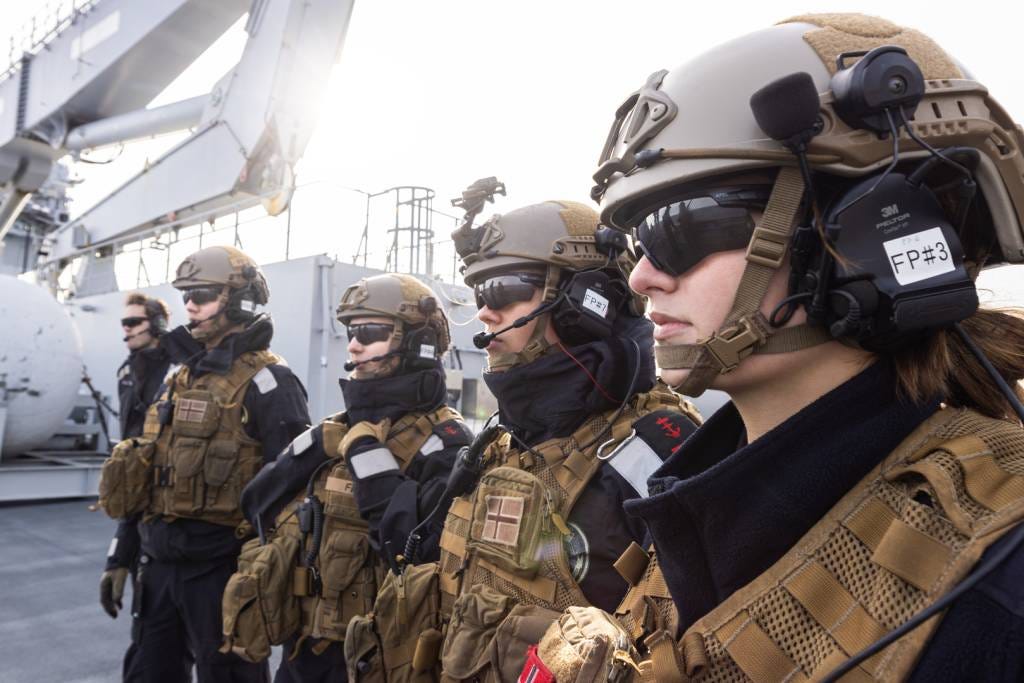
The debate about which European military is best positioned to lead the post-US transition is frequently answered with GDP percentages. That is the wrong unit. The right measure is combat-credible force that can deploy, sustain, and adapt in the 2026–2030 window — before the full replacement apparatus arrives. Against that standard, four militaries matter, and one geographic cluster is already deciding the shape of what comes next.
Poland is the most unambiguous case. Defence spending reached USD 55 billion in 2026 — 4.8% of GDP and climbing toward 5%, making it NATO’s top spender by GDP share, per Reuters. That number is not performative. Poland has built the largest force structure on NATO’s eastern flank, per GLOBSEC, is actively absorbing K2 main battle tanks from South Korea, and has a live-threat geography that makes its spending structurally different from France’s — Poland is not planning for deterrence in the abstract; it is planning for an adversary with a shared border. When US Congressman Don Bacon noted in May 2026 that the US cancelled a Polish armored brigade commitment while Poland was fulfilling every NATO ask, the political weight of that contradiction landed. Poland is the eastern anchor. It cannot be replaced.
France is the most consequential wildcard. On March 2, 2026, President Macron announced a fundamental revision of French nuclear doctrine — “Forward Deterrence,” shifting France from a purely national posture toward a quasi-European one. Eight countries, including Poland, reportedly expressed interest in cooperation, per the Casimir Pulaski Foundation. Macron is expanding France’s nuclear arsenal beyond 300 warheads and has signaled French Rafale deployments on allied territory as a forward presence tool. France is offering itself as a substitute nuclear umbrella for the one the US is quietly folding. The credibility ceiling is real — France retains sole launch authority, no ally can bind that commitment — but as a deterrence signal in the 2026–2028 exposure window, it is the most consequential development on the continent.
HIGH-CONFIDENCE: No other European power can make this offer. The doctrine revision is the single most structurally important development in European security since the 2022 invasion.
Germany is the essential industrial engine, for all its operational limitations. Rheinmetall’s revenue reached approximately EUR 11 billion in 2025, with production expansion across artillery systems, Lynx IFVs, and ammunition at eight European facilities. Germany cannot rapidly field a combat brigade on short notice — Section 02 established that. But it can produce the weapons that other forces need. The Diehl-Fire Point Flamingo cooperation, the Bundeswehr’s expanding role in Baltic defense planning, and Chancellor Merz’s constitutional debt brake revision to unlock unlimited defense spending for the next decade make Germany the industrial foundation of any viable European defense structure. Its operational limitations are real; its industrial necessity is beyond dispute.
The Nordic-Baltic cluster is the tactical laboratory. All eight governments — Denmark, Estonia, Finland, Iceland, Latvia, Lithuania, Norway, Sweden — issued a joint declaration on June 8, 2026 committing to deepened security and defense cooperation, with unwavering support for Ukraine. Sweden signed a civilian protection MOU for the Baltic Sea region in March 2026. NATO’s 2026 exercise calendar has shifted its center of gravity to this cluster, with DEFENDER-Europe, Nordic Fleet operations, and the Arctic Sentry initiative running as a year-round elevated posture, not just discrete exercise windows. Finland and Sweden’s 2023–2024 NATO accessions completed the Baltic Sea enclosure. The cluster operates with a shared threat perception, geographic coherence, and a forward deterrence doctrine that predates the current crisis. If a European defense identity emerges by 2030, it will have been built in this corner of the map.
The UK is the difficult case. Defence spending sits at 2.3% of GDP with plans to reach only 2.68% by 2030 — the Chief of the Defence Staff warned in June 2026 that the armed forces would have to “dial back day-to-day training, exercises and operations” without further Treasury funding. The resignation of the defence minister over funding shortfalls, the UK’s post-Brexit structural separation from EU defence mechanisms, and chronic readiness failures across land, sea, and air create a picture of a military that punches at its reputation rather than its actual output. The UK’s pivot to drone warfare and its 120,000-drone Ukraine package are the right instincts. But a country simultaneously warning about training curtailment and signing capability MOUs is one whose ambitions are running ahead of its foundations.
Questions
Poland is spending more than almost anyone and has a live threat on its border. What is its actual limiting factor — is there one?
Macron’s Forward Deterrence is the most structurally interesting move in European security in a generation. What is its actual credibility ceiling?
The Nordic-Baltic cluster keeps appearing as the most coherent piece of European defense. Why does it work when the broader alliance doesn’t?
The UK is the one that doesn’t fit the pattern. How do you read what’s happening there — is it a managed decline or something that could still turn?
The common thread across all of these cases — and we will keep seeing it — is that the limiting factor is time, not capital. And time cannot be rushed. A tank requires time to be assembled; it requires time for raw components to reach the assembly line; it takes time for the minerals, metals, and chemicals to be manufactured, shipped, and delivered. Poland’s spending is considerable, but it doesn’t translate immediately into deterrence. It is deterrence for the future, not deterrence now. The same is true for Germany, for France, for every other European country.
The countries that will fare better in the near term are those with strong domestic military-industrial complexes — France and Sweden chief among them — that are less dependent on external providers. Poland is spending aggressively, but it is dependent on deliveries from others. If you are not yourself producing the weapons, you cannot guarantee the timeline for their arrival. You are subject to the provider’s schedule, and that can shift based on geopolitical events, supply chain disruptions, or natural disasters. Capital without production sovereignty is a check that hasn’t cleared.
France genuinely does have the capacity to extend as a deterrent, and I believe France is going to take a leading role. It is one of the European militaries with the most real combat experience, having been active across Africa for the better part of fifty years — though its footprint has been reduced significantly since 2020, as former colonies across the Sahel ejected French forces.
France has its own limitations, however. While it has a nuclear-powered aircraft carrier, it has only one. Its air force is capable and domestically produced, but the numbers are constrained. It lacks strategic bombers and significant airlift capacity. The deterrence France can extend is functional, but it is not a like-for-like replacement for the United States — it cannot fill the gaps as a whole. The ceiling is quantity, diversity of platforms, and scale. That’s not to say those capabilities cannot be developed domestically — it’s that the time and investment were never prioritized, because US alternatives were always assumed to be available. France is now discovering the cost of that assumption.
What makes the Nordic-Baltic cluster work is that its core members never fully outsourced their defense to NATO in the first place. Sweden and Finland only recently joined NATO — during the Biden presidency — having previously abstained from the alliance entirely. That means these militaries were built to be self-dependent. Sweden developed its own fighter, the Gripen — one of the most capable and cost-effective fighter platforms in the world, and a highly viable alternative to US fighters. It is already working closely with Ukraine. Because the Nordic countries have near-unilateral control over their domestic defense industrial production, they can pivot and address gaps rapidly.
The Baltic states present a different but complementary picture. The near-absence of legacy military infrastructure — rather than being a weakness — gives them the ability to adopt Ukrainian-proven tactics from scratch, without the burden of having to phase out obsolete platforms or retrain forces built around Cold War doctrine. They can build a modern, drone-era military from the ground up. That flexibility is exactly what the larger European powers, weighed down by legacy equipment and procurement pipelines, cannot replicate quickly.
My concerns about the UK go deeper than defense. From the outside, the UK appears to be experiencing a domestic political crisis not unlike what the United States went through over the past eight years. Whether they experience full institutional capture is ultimately up to British voters, but the UK government has atrophied significantly — a large number of British officials and members of the royal family have connections to figures and networks associated with the same patterns of influence that contributed to the decline of US policy efficacy and the broader corruption that an oligarchic political environment produces. One notable difference is that the visibility of US events — including the involvement of figures like Elon Musk in attempting to export far-right political movements to the UK — has made those movements somewhat less viable on British soil.
Brexit compounded all of this. It was a serious strategic mistake economically, and the UK economy has been suffering for it. The UK remains closely aligned with Europe but no longer benefits from the full functions of EU membership — including the defense industrial coordination, joint procurement frameworks, and financial instruments that are now accelerating European military build-out. That structural exclusion will hamper the UK’s own capacity to fund and scale military production. The resignation of the defence minister is a bad sign — it signals that domestic partisan dynamics are actively usurping defense priorities at exactly the moment when those priorities should be most insulated from political disruption.

Closing Questions
What is Europe actually facing, and what should a reader watch for in the next 24 months to know whether it is closing the gap or losing the window?
Europe’s problem is time and production throughput, not political resolve. Increased spending does not produce weapons on a shorter timeline — it only funds a queue.
The United States is not entirely abandoning NATO, but by reducing the European theater to a secondary priority, it shifts the focus away from acting as a deterrent against Russian aggression toward its mission adventures in the Middle East and, likely, Indo-Pacific Chinese deterrence. 4.8% GDP spending is impressive, but Poland can order hundreds of tanks — it only has the tanks that have rolled off the production line. Intent is not deterrence. Weapons platforms and capability are deterrence.
The best thing to watch for is a country’s ability to scale production rapidly and cheaply — which means diverting away from traditional military pipelines and procurement, and working toward close cross-border EU production of weapons or fully domestic programs. The countries best positioned to do this at speed and scale are those with the least invested in older Cold War platforms. Those most vulnerable have the most opportunity to rapidly scale over the next 24 months: the Baltics, Sweden, and Norway — countries that are traditionally independent in their own defense. Switching away to a different form of platform development, they are not as dependent on foreign procurement as most NATO countries, which have thrown in — to a very large extent — with US weapons manufacturers. That means even their spending on certain platforms has sent money back to US production queues that are getting pushed farther and farther back. If they’re looking at a two-year window, the weapons being ordered from US manufacturers right now are not going to arrive in that timeline. We already have the proof of that — Poland, Estonia, Lithuania, Finland, Norway, and the UK were all formally told in April 2026 to expect delays on contracted HIMARS ammunition and missile system deliveries because the Iran campaign burned through US stockpiles. Hegseth said it himself: rebuilding will take “months and years.” CSIS puts Patriot inventory recovery at mid-2029 at the earliest. Tomahawk recovery doesn’t arrive until 2030 or 2031. Estonia isn’t waiting — they’re already talking to South Korea. That is the correct instinct. That means reallocating funds to deliverable timelines and actual production — which is precisely what the Ukrainian model offers.
With the Ankara Summit tomorrow, and Trump set to supposedly reaffirm an iron-clad Article 5, we will see exactly what that translates to in practice. But it doesn’t solve the underlying problem: the United States, at least under Trump, is moving away from Europe. Europe is going to have to pick up the slack. We really won’t know if they’re capable of doing so until it matters. The path is there. We will see if they take it. It is narrow, and requires the foresight to navigate bureaucratic hurdles with urgency and intent.
Vote on what we will cover next!
Note: I am committed to providing you with the best available information regarding the wider world. This work is hard, exhausting, and it does not pay.
Any support you can provide is now more important than ever. Thank you.
Find the Firebrand Project on other platforms, make donations, and support my work by visiting my link tree below.

Comments
Nothing yet. Say the first thing.
Sign in to join the conversation.