

DISCLAIMER: This brief was written with events and information up to July 22, 2026; any events that have occurred since are not addressed. It aims to explore the dynamics driving events underneath diplomatic cover that often saturates MSM headlines.
TFP CONFIDENCE TIERING: The Firebrand Project labels the confidence behind every significant finding in this piece. CONFIRMED means multiple independent sources have verified it. HIGH-CONFIDENCE means the sourcing is strong with minor gaps. DEVELOPING means the indicators are credible but not yet fully corroborated. CLAIMED means a single party — often one with skin in the game — has asserted it without independent verification.
The June ceasefire was declared “over” by President Trump at the NATO Ankara summit on July 8. Since then, CENTCOM has completed eleven consecutive nights of strikes against Iran, eighteen American service members are dead, Brent crude sits at a five-week high, and a Yemeni militia has opened a second front against Saudi Arabia that nobody asked for. None of the diplomatic language has caught up to what is actually happening on the map.

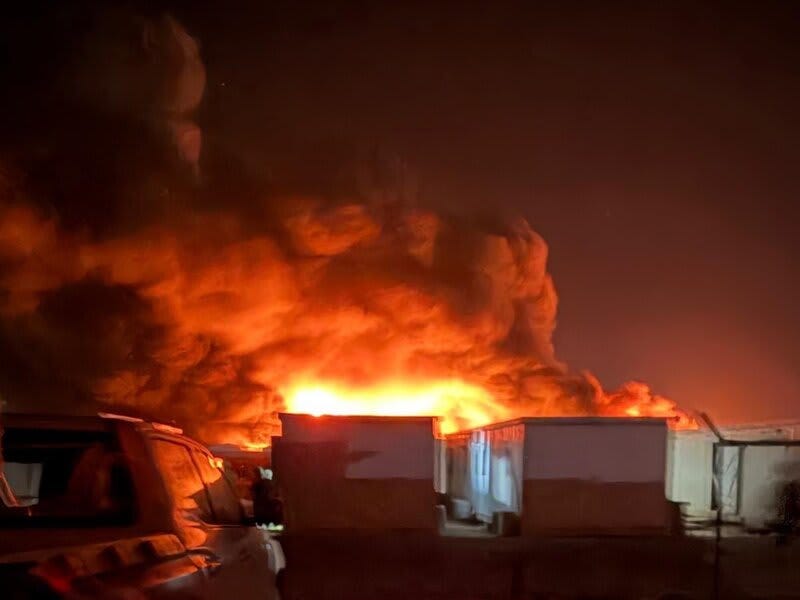
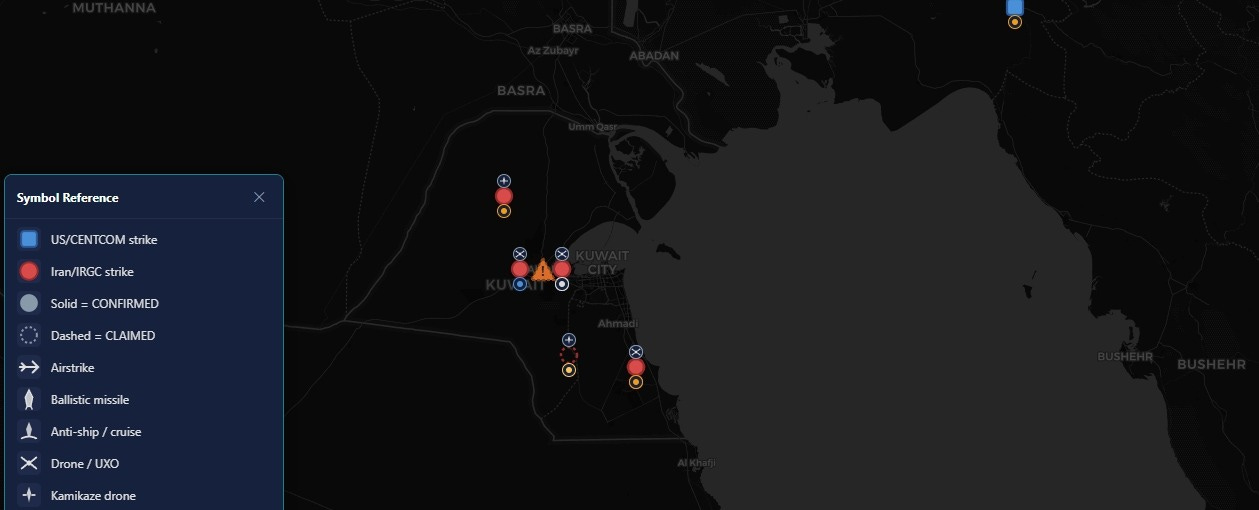
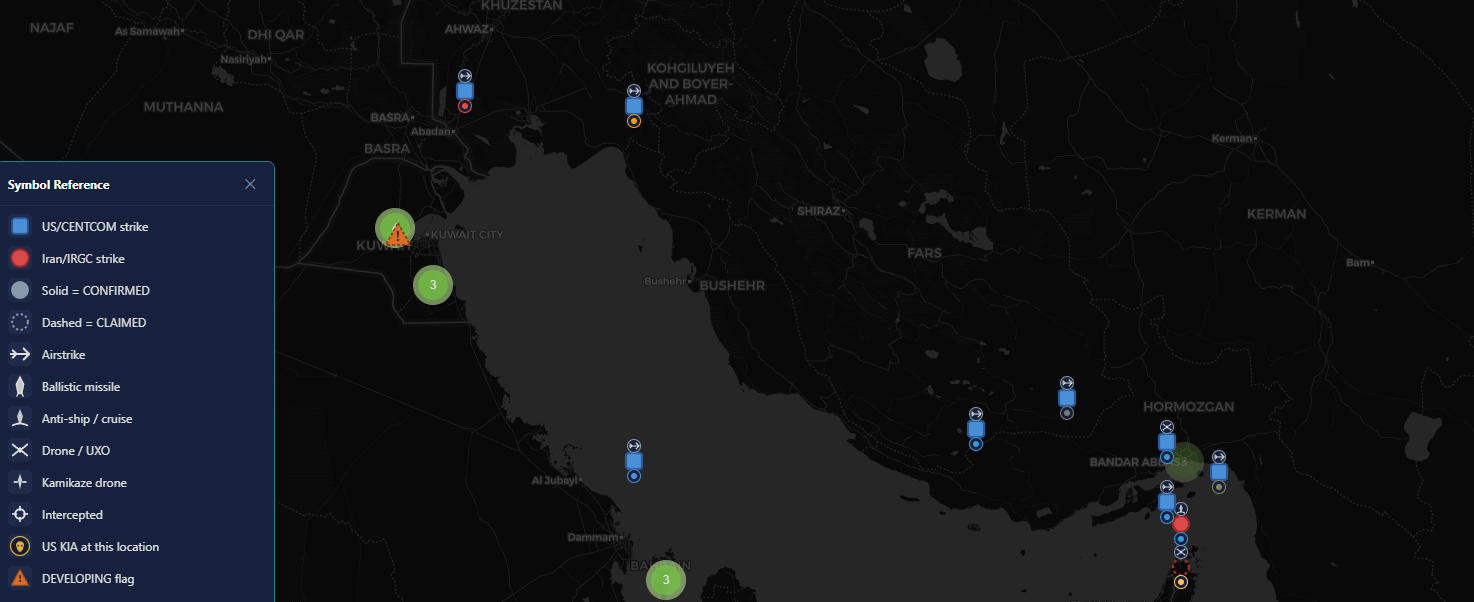
Of the twenty-six strike events The Firebrand Project logged and mapped between July 12 and July 21, seventeen were carried out or claimed by Iran and the IRGC, against nine confirmed CENTCOM strikes — a strike-volume ratio that runs nearly two to one in Iran’s favor. CENTCOM’s own campaign, for its part, has stayed narrowly coastal: eleven consecutive nights of strikes through July 21 targeting Iranian command centers, maritime capability, missile and drone sites, and air-defense systems along the Hormozgan and Khuzestan coast, plus the Darkhovin nuclear-adjacent construction site in Khuzestan, struck July 19 at approximately 0339 local time. The IAEA confirmed the Darkhovin facility was in “very early stages of construction” with no nuclear material present at its last inspection, so there is no radiological risk from that strike — but Director General Rafael Grossi’s renewed call for military restraint near nuclear-related sites signals how close CENTCOM came to crossing a line it had previously avoided.
What CENTCOM has not done, in eleven nights, is push its strike pattern north over Bushehr province — the same airspace where, on April 3, an F-15E Strike Eagle was shot down and an A-10 Thunderbolt II was lost near the Strait of Hormuz during a US combat search-and-rescue package staged through an abandoned airfield near Shahreza in Isfahan province. That mission required destroying two of its own MC-130J transports and several helicopters on the ground to keep them from Iranian hands. Iranian state media called the underlying operation a foiled infiltration; Washington called it a rescue. The Firebrand Project cannot independently verify which account is accurate, including the full account of every crew member’s fate — Iran’s foreign ministry spokesman at the time said “many questions and uncertainties” surrounded the operation, and that framing has never been resolved by either government. What is not in dispute is that CENTCOM has not gone back over that corridor since.
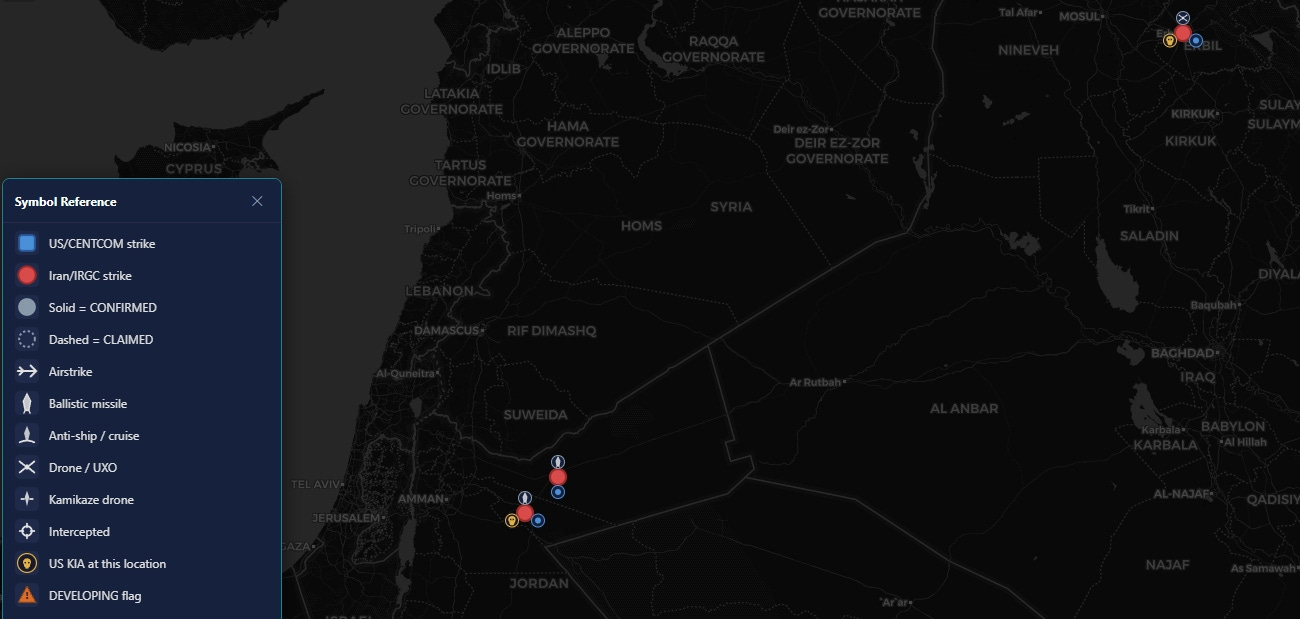
The human cost of the window is now eighteen US service members killed, up from seventeen after the Pentagon resolved Sgt. Angel S. Rampersad’s status from missing to killed-in-action on July 22, joining 1st Lt. Tyler James Feehan, 25, and Pvt. Isabella Gonzales, 19, at Muwaffaq Salti Air Base in Jordan, according to the Pentagon’s Defense Casualty Analysis System and reporting from Reuters, ABC News, and Military Times. A separate soldier, Sgt. Michael Emmanuel Swinton, 30, was killed by a controlled detonation of unexploded ordnance from a downed Iranian drone at what The Firebrand Project’s own coordinate-verification pass identified as Erbil Air Base in Iraqi Kurdistan, per Rudaw and the Washington Times. Wounded totals have climbed alongside the deaths and have been slow to surface: CNN’s investigation found the Pentagon’s public wounded count lagged its own internal Defense Casualty Analysis System by days to weeks, and Pentagon spokesman Sean Parnell separately disclosed that nearly 100 troops were injured in the two weeks since July 7 alone — 96 percent of whom, he said, had already returned to duty with what he characterized as mostly minor concussions. The official wounded figure stood at 447 as of July 21, up from 427 the day before.
DEVELOPING: a possible expansion of the Iranian campaign — internally tracked as “Phase 18” — targeting Camp Arifjan, Ahmad al-Jaber Air Base, and Ali Al Salem Air Base in Kuwait, plus tanker strikes on the southern Hormuz shipping route, first surfaced from a single non-Tier-1 source and has since been partially corroborated: the underlying Kuwait strike events themselves are now confirmed via Kuwaiti Ministry of Defense statements and wire reporting, but the specific military-effect claims attached to them remain CLAIMED and sourced only to an interested party.
Questions
If CENTCOM has effectively ceded the airspace north of Bushehr since the contested April rescue/extraction mission near Shahreza, what does that concession cost the US for the remainder of the campaign?
With the US wounded count revised upward twice in three days and the Pentagon’s own spokesman acknowledging under-disclosure, how much confidence should a reader place in any single-point-in-time casualty figure from either government?
Does the partial corroboration of the Kuwait strikes — confirmed events, unconfirmed military effects — change how the 7-of-17 Kuwait concentration should be read, compared to treating it as a fully settled pattern?
It is my observation looking at the strike distribution of the 21 strikes I have confirmed and those claimed that follow the pattern but are yet to be verified, that Iran is conducting a wide spread campaign targeting known gaps in US air defense capability. US strike concentration is on coastal batteries, and very few strikes have gone north over Bushehr province, which demonstrates that the US is hesitant to execute the same fashion of air campaign it was before the ceasefire in early April — following a botched mission to infiltrate and steal uranium that resulted in United States special forces being ambushed and their aircraft destroyed at an airfield near Shahreza. Satellite evidence suggests a massive battle of huge proportion, with at least one MQ-9 Reaper drone shot down as well as an A-10 Warthog. Whether the F-15E that prompted the event cascade was the trigger, or additional air support for the uranium heist was shot down, is uncertain. According to statements made by Trump and CENTCOM, at least one hundred special operators are unaccounted for. Whether that reflects the nature of their role, Araghchi’s statement the day following that they had prisoners was not a bluff, or whether they are dead is uncertain. We are unlikely to find out. This shows a US force that is hesitant. The Iranian focus on Kuwait, against both US military and domestic targets, shows Iran wants to put considerable pressure on Kuwait. This is likely because any US ground action would likely be largely staged in Kuwait — its proximity to Iran makes it the ideal insertion point for overland special forces and even a larger force. The focus on Bandar Abbas and coastal batteries is a clear attempt to remove Iran’s ability to use force to coerce the closure of the strait. However, this is unlikely to have a significant effect, as every day that drags on, the supply situation for the American blockade and its ability to defend against the ballistic missile threat is whittled down. Which again raises my suspicion on the volume of strikes against Kuwait having absorbed 7 of the 17 that The Firebrand Project analyzed.
Defense Secretary Pete Hegseth told the Senate Appropriations Committee on July 21 that the war has cost $37.5 billion to date — an increase of roughly $12.5 billion since his April 29 estimate of $25 billion and $8.5 billion since the Pentagon comptroller’s May 12 figure of $29 billion, confirmed independently by the Associated Press, Stars and Stripes, and Reuters. Hegseth was explicit that the figure captures munitions, deployed-personnel pay, and maintenance costs projected through the fiscal year’s end on September 30 — not the full downstream cost of aircraft losses, base reconstruction, or long-term care for the wounded, a gap Senator Chris Coons flagged as early as April when he called the Pentagon’s then-current $25 billion estimate “frankly certain” to be low.
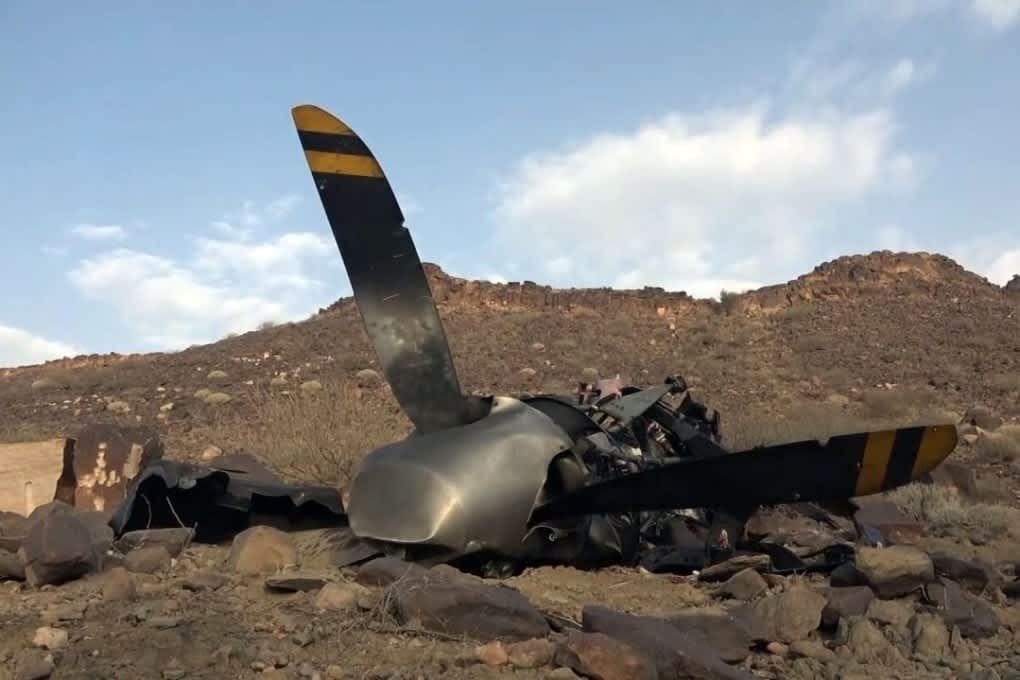
Munitions attrition is the sharpest edge of that spending. The US has lost at least 24, and by Bloomberg’s reporting as many as 30, MQ-9 Reaper drones since the campaign began February 28 — Bloomberg put the confirmed toll at roughly 20 percent of the Pentagon’s pre-war Reaper inventory as of late May, and reporting into July has cited losses trending toward 30 aircraft. The Firebrand Project’s own assessment places that figure at 30, potentially 31 — approximately 17 percent of the total US Reaper fleet — steep enough that Air Force Lt. Gen. David Tabor told the Senate in May the operational inventory had fallen to roughly 135 aircraft, 54 below the service’s 189-aircraft floor, according to Air Force Times. On the other side of the ledger, Iran’s missile and launcher stockpile has proven more resilient than early strikes suggested. DEVELOPING: US intelligence assessments reported by Reuters and the Irish Times put Iranian retention at roughly 70 percent of the pre-war stockpile, though CENTCOM publicly disputed that figure in May per the Wall Street Journal — meaning the true figure remains contested between the intelligence community’s own assessment and CENTCOM’s public messaging, not settled.
The market has already priced in the strain. Brent crude settled at $91.01 a barrel on July 21, a five-week high and its seventh consecutive overbought session, according to Reuters — up 33 percent year-over-year, with the Strait of Hormuz still structurally bifurcated between a US-protected southern route and an Iran-controlled northern route, and the central route mined. Into that already-strained picture, Yemen’s Houthi movement announced a naval blockade of Saudi Arabia on July 20, a new and separate pressure vector that Reuters reported Saudi Arabia has formally condemned and that Bloomberg confirmed independently — a second front opening on the same map the US is already stretched defending. Iran’s own resupply position, by contrast, held: overland routes through Pakistan stayed open throughout the window, and Iran sold enough oil during the June memorandum-of-understanding period to avoid the storage crisis that would have forced well closures — an outcome that would have been economically catastrophic for Tehran, and one airpower alone did not prevent.
Questions
If Hegseth’s $37.5 billion figure excludes aircraft losses, base reconstruction, and long-term casualty care, what would a comprehensive accounting of the war’s true cost look like — and why has that fuller number not yet been requested by Congress?
With the Reaper fleet already 54 aircraft below its own operational floor, what does the Houthi blockade threat against Saudi Arabia — a second front opening at the same time — do to whatever margin the US had left to respond to either crisis?
Given that CENTCOM disputes the 70 percent Iranian missile-retention figure while other US intelligence assessments support it, whose number should carry more weight in judging how much runway Iran actually has left?
Interceptor stockpiles at this point, following another extended duration of conflict, must be at minimum south of, or within a few points of, 30 percent. This mandates that the United States has a limited window in which it can carry on with this form of campaign before it is largely vulnerable to strikes across the entire Arabian Peninsula and wider Hormuz region — considering that standard doctrine would be to begin rationing, as we saw with Israel during the first phase of the war that terminated in early April and began with the first strikes on February 28 of this year. Gulf supplies are likely south of, or near, 20 percent, and US hostilities are more than likely to continue to increase. The fact that this phase of the conflict has begun is the biggest tragedy. Iran retained at least 70 percent of its launcher and missile stockpile capacity, as corroborated by CSIS and other analytical bodies toward the end of the MOU, with other analysts placing that number closer to 75 percent. There is enough verifiable evidence that Iran reconstituted well during the down period, weighed against the efficacy of US resupply and reconstitution and Hegseth’s confirmation that the war has cost $37.5 billion so far — which is exceptionally low, and likely only refers to munitions expended, not lost aircraft, treatment of hundreds of wounded, and rapid redeployment of the majority of forward-positioned US assets. That number is much higher. Iran has established overland resupply capability through Pakistan; it managed to sell a significant amount of oil while the MOU was in effect, allowing its storage crisis to be resolved and averting the possibility of being forced to close oil wells, which would have been economically catastrophic. Despite the efforts by Gulf states to make defense agreements with Ukraine, that country can spare little more than several hundred operators, as it is fighting the most intensive offensive we have seen from Ukraine in years, with leadership instability driven by the ousting of the former head of the armed forces — meaning those defense agreements are likely only functional in intent. The material deterrence is not available in the near term, which is the time period operationally relevant to Iran.

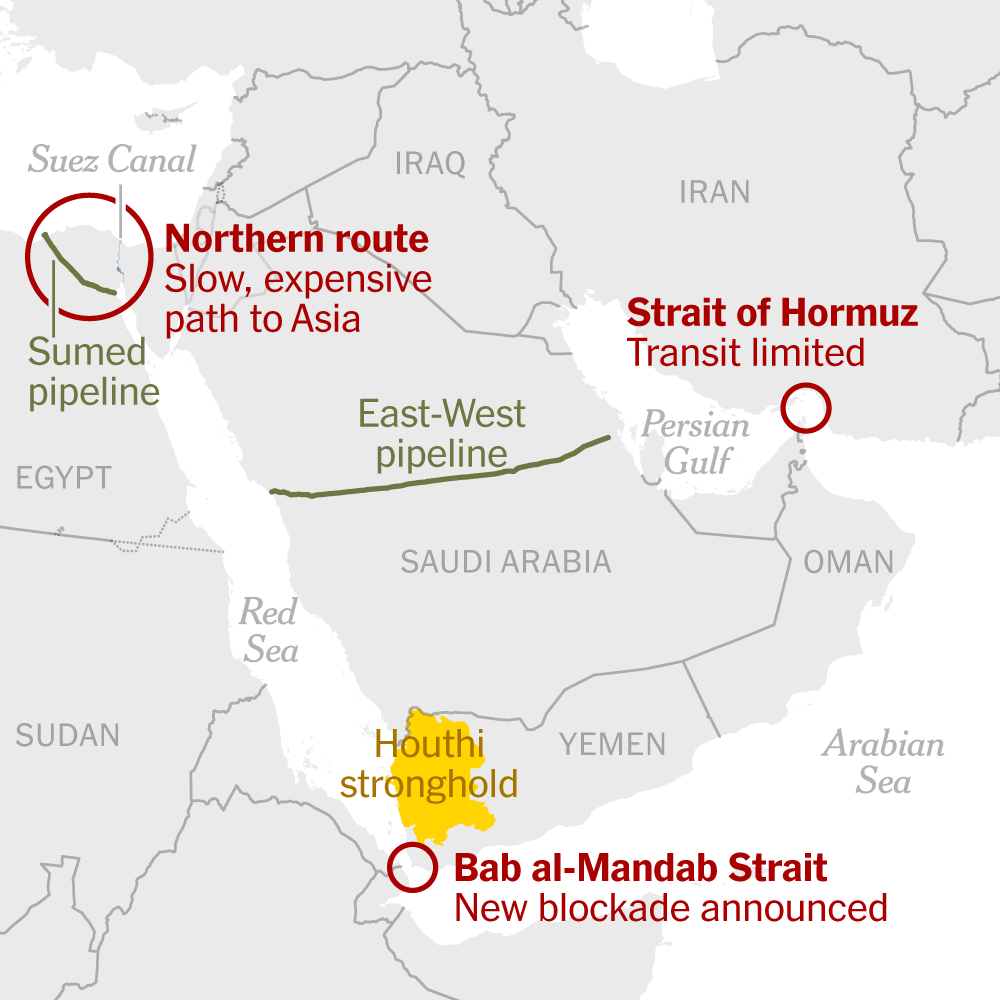
The strategic picture that emerges from eleven consecutive nights of CENTCOM strikes, a 17-to-9 Iranian strike-volume advantage, and two newly opened pressure fronts — Kuwait and now the Saudi blockade threat — is not one of American initiative. CENTCOM’s own campaign objective, according to its public statements, is maritime-capability degradation: air-defense systems, coastal radar, anti-ship missiles, and IRGC small boats, not maximum damage to Iran’s interior. That is a constrained-objective campaign, and it has facilitated roughly 900 commercial vessel transits and 450 million barrels of crude through the strait since early May — a real achievement, but one that has not stopped Iran from running its own regional operations, targeting US forces in Jordan and Iraq, and pressuring Kuwait on both military and civilian fronts simultaneously.
Diplomatically, the picture is just as stalled. Trump declared the June memorandum of understanding “over” at the NATO Ankara summit, and while a “technical talks” channel remains nominally open — Iran has publicly said it wants Trump to pursue a deal — that channel functions as a coercive-diplomacy posture rather than an active de-escalation mechanism, according to analysis from Al Jazeera assessing that the mediation window may be closing. The Doha diplomatic track remains stalled with no new movement. Meanwhile, Iran’s Atomic Energy Organization condemned the Darkhovin strike as “terrorism” and invoked IAEA safeguards resolutions — a claim The Firebrand Project treats as CLAIMED, since Iran is a belligerent party to the underlying conflict, but one that has raised the political cost of any future Iranian concession on enrichment regardless of the strike’s actual radiological insignificance.
What connects all of it — the strike-volume imbalance, the interceptor and Reaper attrition, the Kuwait concentration, the Houthi blockade threat, and the stalled diplomacy — is a single structural fact: none of the tools either side has used so far can stop a missile before it launches. Strikes degrade launch sites; they do not eliminate the capacity to rebuild and re-fire them, and Iran’s demonstrated capacity for overland resupply through Pakistan means the campaign of attrition can, in principle, run far longer than the US’s own munitions and airframe stocks can sustain. The only way to stop missile fire at its source, rather than absorb it indefinitely, is to physically take and hold the launch sites — an option this dataset gives no indication either government is currently prepared to exercise, and one that becomes harder to imagine the longer both Kuwait and the Saudi coastline remain under simultaneous pressure.
Questions
Is an eleven-night, maritime-degradation-only CENTCOM campaign consistent with retaining the operational initiative, or does the 17-to-9 strike ratio and the still-open Houthi front suggest the initiative has already shifted?
If “technical talks” are coercive diplomacy rather than genuine de-escalation, what specific Iranian concession would have to materialize before either side treats the channel as real?
With both the Kuwait staging ground and the Saudi coastline now under separate, simultaneous pressure, has the window for a ground option to “take and hold the launch sites” already narrowed past the point of being politically survivable for either government?
US targets cluster around key coastal defenses and drone launch sites, which is consistent with Iranian behavior for the duration of the entire conflict. If we are measuring the rate of success against Phase 1, which did see a notable drop in Iranian attack volume, we are not seeing that same trend here. Of the strikes The Firebrand Project has been able to verify with confidence, 17 have been carried out by Iran, with only 9 confirmed strikes by the US — which states plainly that Iran is hitting dozens of targets every night by comparison. This deviation is concerning, but to be expected, as the US military conducting the second round of strikes is severely depleted: troops are fatigued, airframes are battered, and magazines are low. Iran has claimed strikes on US magazines, drone and aircraft hangars, and radars. Any successful strike on these targets noticeably weakens the United States’ force posture, while Iran — fighting a defensive war with stable overland resupply that cannot be easily interrupted by US and Israeli bombardment — is built to absorb airstrikes and fight an extended attrition campaign with standoff weapons. This is evidenced by the focus on command-and-control facilities like the Fifth Fleet headquarters and the lethal strikes in Jordan. We will likely see an observable uptick in successful strikes on tactically critical targets; eventually this will cause a failure cascade, where the ability to effectively defend collapses and all points become vulnerable in isolation despite their proximity, because the essential network of radars, launchers, and command centers is destroyed. This is the worst-case scenario. The United States and Israel have one realistic option if they want to continue this conflict, and it is to stop the missiles before they launch — which can only realistically be done by taking and securing those launch sites at the source, not bombing them.
Closing Questions
Eleven nights of strikes, an eighteen-KIA toll still being revised upward, a Reaper fleet below its operational floor, and a second front now opening against Saudi Arabia — none of it fits the story either government is telling about where this war stands. If the strike-volume imbalance and the resource attrition both continue on their current trajectory, what single indicator should the reader watch most closely to know whether the failure cascade described above has actually begun, versus remaining a risk that has not yet materialized?
I have high confidence that casualties are being underreported to a tremendous degree. When we get satellite imagery, we will have a better idea of realistic casualty estimates. The decision to hold back from the Bushehr corridor is relevant here, because one who observed Phase One as rigorously as myself and other analysts would note that Jordan did not receive a high percentage of Iranian aggression relative to airbases located on or near the Gulf of Oman and the Strait of Hormuz — primarily Prince Sultan in Saudi Arabia and Al Dhafra in the UAE, both responsible for sustaining the high sortie rates of the intensive air campaign. The attentive observer would note that such a decision could stem from a calculated effort to compel their opponent to redeploy key systems to defend operationally critical locations during an ongoing strike campaign. I cannot confirm this occurred — it is merely me considering how such a devastating attack managed to hit a key US installation, regardless of the CENTCOM statement, which is as good as Kremlin reporting on its own success in Ukraine.

I need your help! The success of the Firebrand Project is driven by Firebrands like you. In the current algorithm-driven environment, your interaction is what makes this content visible.
If you have read this far, please help me reach more readers by liking, commenting, and re-stacking this post, and by sharing it on other platforms!
Burn Bright. In Solidarity.
Shane
Note: I am committed to providing you with the best available information regarding the wider world. This work is hard, exhausting, and it does not pay.
Any support you can provide is now more important than ever. Thank you.
Find the Firebrand Project on other platforms, make donations, and support my work by visiting my link tree below.

Comments
Nothing yet. Say the first thing.
Sign in to join the conversation.