
Growing up, many of us were taught a simple formula:
Work hard.
Do good work.
Keep your head down.
Success will follow.
For many people, that advice feels fair.
It feels merit-based.
It feels like the way the world should work.
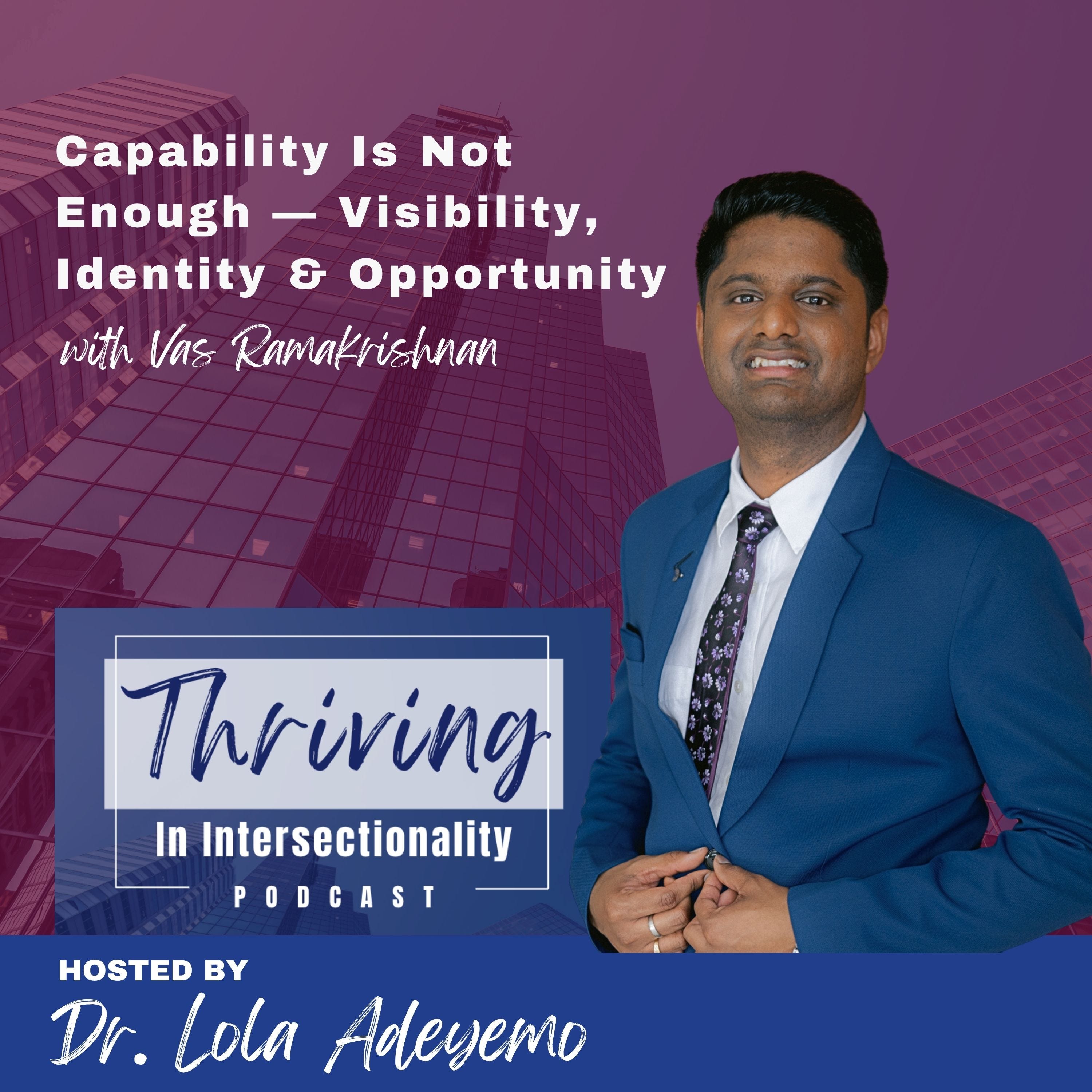
But as I listened to my conversation with Vas Ramakrishnan, I found myself reflecting on how incomplete that formula can be.
Because capability matters.
Hard work matters.
Excellence matters.
But sometimes they are not enough on their own.
Many immigrants arrive with impressive credentials, strong work ethic, and a deep belief that results will speak for themselves.
I know this story because I’ve lived parts of it myself.
We assume that if we perform well enough, opportunities will naturally follow.
That recognition will come.
That doors will open.
Sometimes they do.
But often there is another layer.
Visibility.
Understanding how systems work.
Knowing how to tell your story.
Building relationships.
Learning the unwritten rules.
None of these diminishes the value of hard work.
But they do acknowledge reality.
Because systems are built by people.
And people don’t always see everything automatically.
One of the themes that surfaced throughout my conversation with Vas was the difference between being capable and being recognized as capable.
Those are not always the same thing.
Organizations often say they want the best talent.
Yet talented people are overlooked every day.
Not because they lack ability.
Because their contributions are not visible.
Because they don’t know how to position themselves.
Because they are navigating unfamiliar systems.
Because nobody taught them how recognition actually works.
This is especially true for immigrants and global professionals.
Many arrive with expertise but must learn an entirely new set of expectations around communication, networking, leadership presence, and self-advocacy.
The work may be excellent.
But excellence alone does not guarantee visibility.
One reason I appreciate conversations like this is that they help us move beyond individual blame.
Too often, when people struggle, we assume they simply need to work harder.
But systems matter.
Processes matter.
Access matters.
Information matters.
The ability to navigate complex environments matters.
Whether we are talking about immigration, education, workplaces, or leadership pipelines, success is rarely determined by effort alone.
Understanding the system becomes part of the work.
That doesn’t make the system right.
But it does make it real.
One of the reasons this conversation felt so aligned with the mission of Thriving in Intersectionality is that Vas’s story highlights how many layers influence opportunity.
Immigrant.
Entrepreneur.
Technologist.
Advocate.
Neurodivergent professional.
Each of those experiences shapes how someone moves through the world.
Intersectionality reminds us that our challenges and opportunities rarely come from a single identity.
They emerge from the interaction of many different experiences.
And often those intersections determine what doors open, which ones stay closed, and what strategies we need to navigate both.
As I reflected on this conversation, I kept returning to a distinction that feels important.
Access and belonging are not the same thing.
You can gain entry into a room and still not feel seen.
You can have credentials and still struggle to be recognized.
You can have expertise and still feel invisible.
Belonging happens when people are able to contribute fully, be valued for their strengths, and feel that they matter within a system.
That requires more than access.
It requires visibility.
It requires understanding.
It requires human connection.
One of the lessons I continue to learn throughout my career is that excellence matters.
But excellence alone is rarely the entire strategy.
At some point, we must also learn how to communicate our values.
How to build relationships.
How to navigate systems.
How to advocate for ourselves and others.
Not because hard work doesn’t matter.
But because capability deserves the opportunity to be seen.
And when talented people remain invisible, everyone loses.
🎧 Listen to the full conversation with Vas Ramakrishnan below.
Where in your life or career have you assumed that hard work alone would be enough—and what additional skills, relationships, or visibility ultimately helped create new opportunities?
Thanks for reading Lola Adeyemo (PhD) - On belonging, leadership, and identity! This post is public so feel free to share it.
Comments
Nothing yet. Say the first thing.
Sign in to join the conversation.