
The previous essay ended with a question: if potential and talent alone do not determine where a creative ends up, what does?
There is a point in every creative career where talent stops being the deciding factor. What remains is something less elegant and more difficult to fake:
Confidence.
I see confidence as an asset, even a form of currency that we need to develop if we want to become creatives whose work is seen, discussed, exhibited, sold and collected. This begins with how willing we are to build in public, communicate our work and make ourselves visible.
The answer lies in the relationship between talent and confidence. In that sense, confidence can become more structurally important than talent in determining what actually becomes real.
Talent defines potential. Confidence determines trajectory.
Talent may influence what comes naturally to us. Confidence influences what we are willing to attempt, how we respond when things do not go as planned and whether we continue long enough for our abilities to mature. It allows experimentation, risk-taking and originality because it reduces the need to protect ourselves from failure.
My experience has gradually led me to understand that confidence is built through practice, perseverance and the repeated discovery that we can continue without certainty. It influences whether we begin a project whose outcome we cannot predict, apply for an open call before we feel entirely ready or continue after disappointment or rejection.
I did not arrive at this understanding through theory. It emerged through situations I did not know how to solve, challenges I had to work through and responsibilities I had never imagined taking on. Readiness rarely came first. It developed through doing.
Only part of the path ahead is ever illuminated. Moving forward requires us to trust that we can discover the next steps as we go. Confidence carries a certain optimism: the willingness to believe in possibility strongly enough to act towards it while the outcome remains unknown.
There was no single moment when I suddenly became confident. My confidence is sometimes higher, sometimes lower, but I would describe it as stable. Countless experiences have gradually changed my understanding of confidence and, through it, my relationship with myself.
Most of it has little to do with the creative act of making art.
Since 2022, I have served as President of the International Association of Hand Papermakers and Paper Artists, an international organisation with almost 700 members across more than fifty countries. A year earlier, together with a group of volunteers, I helped register the association in Germany, its first legal registration since its founding in 1986.
When I was elected President, leadership and management still felt like abstract ideas to me.
I effectively took on three roles at once: President, coordinator of the association’s international congresses and convenor of the 2023 Congress in Dresden, which brought together 120 participants. I learned organisational development through the work itself: building structures and procedures, clarifying governance and establishing systems that require continuous maintenance.
Following the Dresden Congress, I continued in my roles as President and congress coordinator for the 2025 Congress in China. I am now coordinating preparations for the next congress in India in 2027 with a highly dedicated convenor in Denmark and an international team of volunteers.
Alongside this, I have served as Director of The Xsabo Foundation in Uganda and there founded the Fancy Pads Initiative, developing biodegradable sanitary pads made from plant fibres to improve menstrual health while creating opportunities for local employment and economic empowerment for women.
I learned leadership by carrying responsibilities I had never held before, and confidence developed through the work. I had never imagined myself leading an international organisation or serving as Director of an Ugandan foundation, nor had I ever strived for either role.
This kind of doing, making and thinking is not separate from artistic thinking. It operates at a different scale.
Most of what I know today was learned while doing the work rather than knowing it before I started. I often describe my role as President or Director as a postgraduate study with the opportunity cost of time. Yet much of what it has taught me could never have been learned from a book or tutorial alone. My ability to build a life around my artistic work has benefited enormously from it. It required decisions before I knew whether they would succeed.
Every project presented challenges that I could only understand by working through them.
The development of my artistic practice followed a similar pattern.
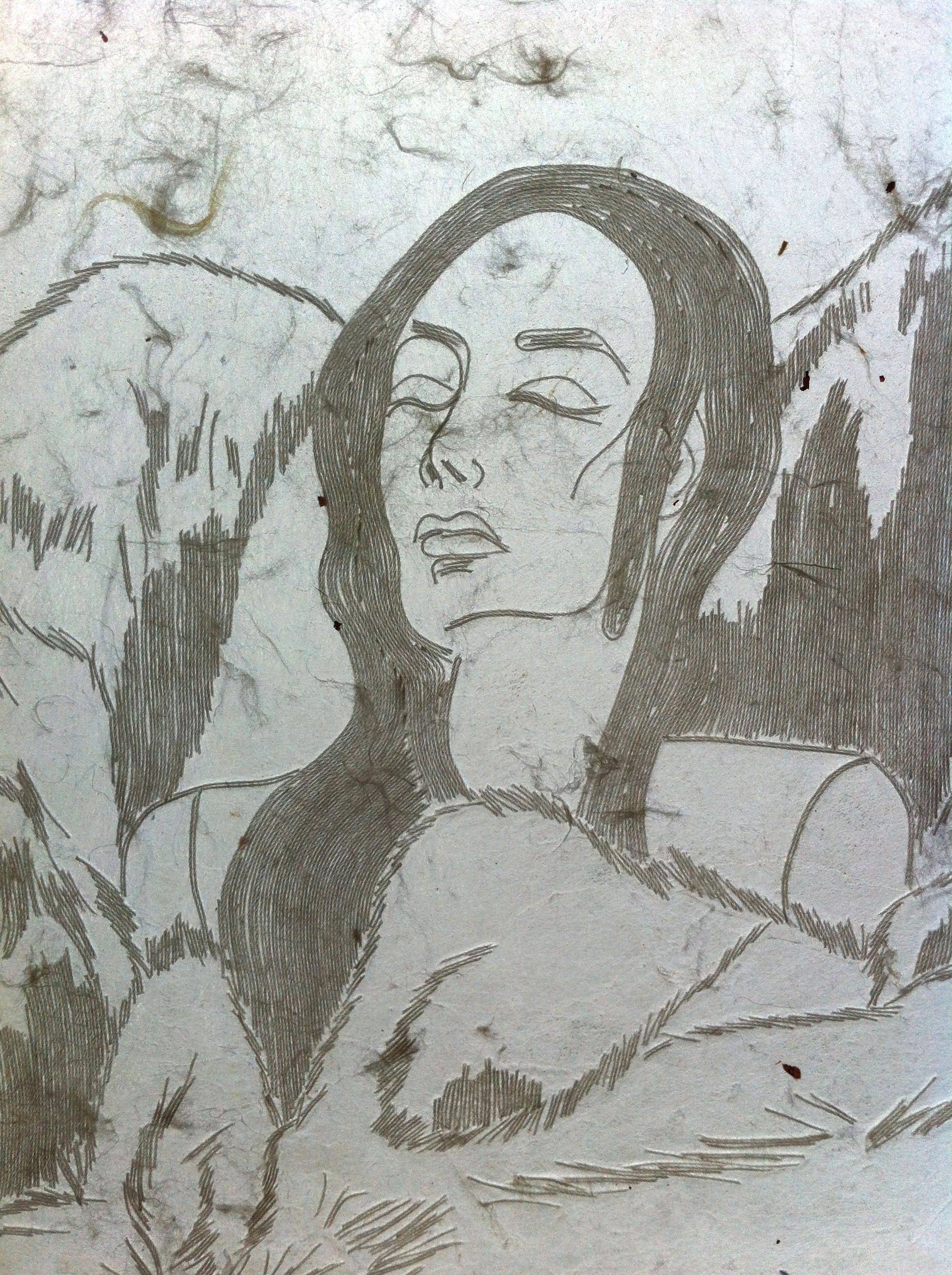
I did not wake up one morning and decide, “Today I will invent a new working technique I would call CartaStaminea.” The technique emerged through years of experimentation with handmade paper, materials and structures without knowing exactly where the process would lead.
Every experiment answered one question while immediately raising another.
Even now, I see each artwork as an opportunity to understand something I did not know before rather than a demonstration of certainty. The buyer of an artwork may never know this, but in a sense, they become the owner of a piece of that unique human process. I will explore the relationship between the maker, the artist and the buyer, the collector, in a future essay.
I understand confidence as our relationship with uncertainty.
Every time we enter unfamiliar territory, solve a problem, recover from a mistake or complete something we once believed exceeded our abilities, we gather evidence. We can also learn from the successes and failures of others, expanding our understanding without having to experience everything ourselves.
Confidence, in this sense, grows through trusting our capacity to keep learning.
One of the misconceptions surrounding confidence is that it grows mainly through achievement and overcoming challenges.
Some of the experiences that strengthened my confidence most did not unfold as I had hoped. Projects changed direction, ideas failed, applications were rejected and plans had to be abandoned. People contributed to this learning too: those with whom I built strong relationships as well as those with whom I experienced conflict. All of these encounters taught me something about my work, myself and my ability to adapt, but also about other people.
Confidence can grow through discovering that failure is rarely final.
A mistake can become information. A challenge we survive can show us what we are capable of withstanding. An experiment that fails can reveal something we could not have learned otherwise. What we do with the experience matters.
The same applies to creating. Every artwork begins with uncertainty. During almost every creative process, there are moments when I genuinely do not know whether the work will become what I imagine. Most of the time it does. Sometimes it takes an entirely different direction. Occasionally, it fails.
These moments are part of the creative process itself.
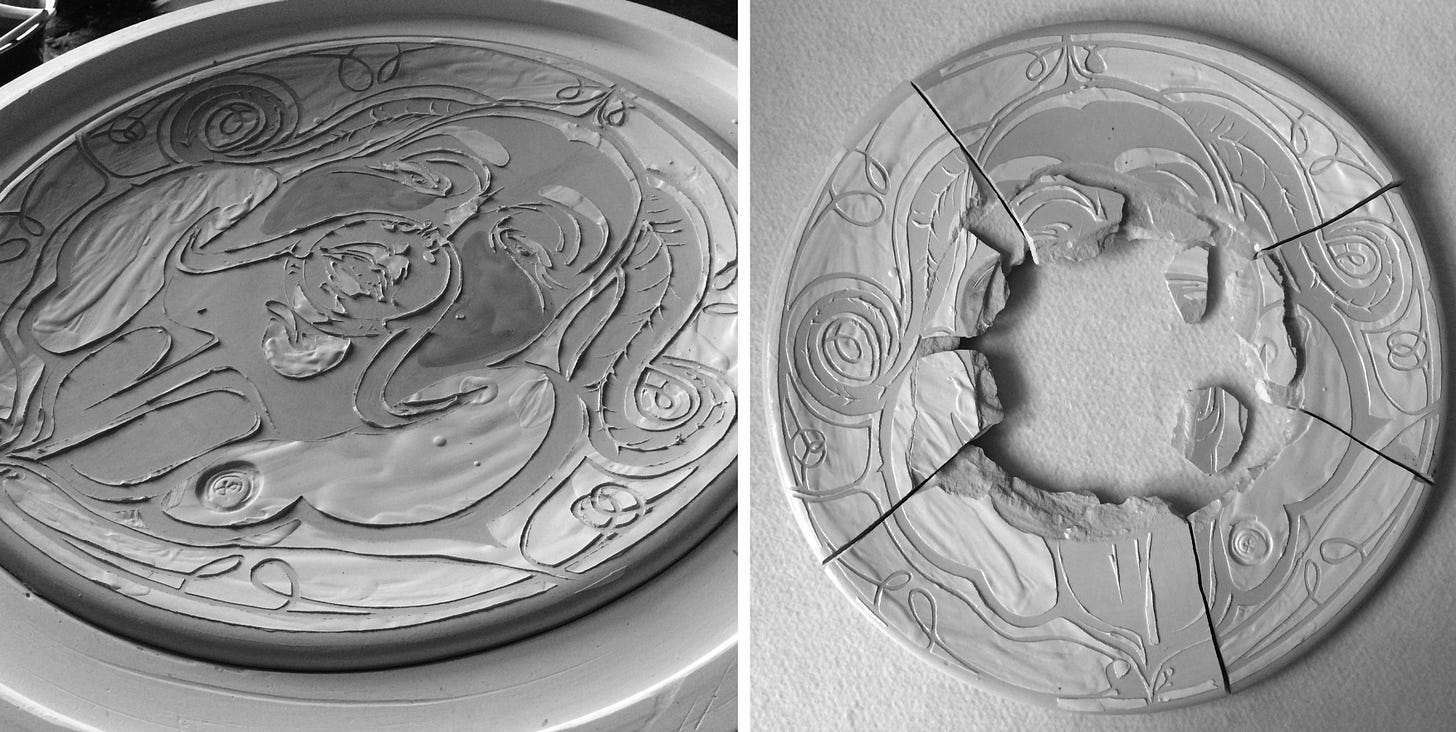
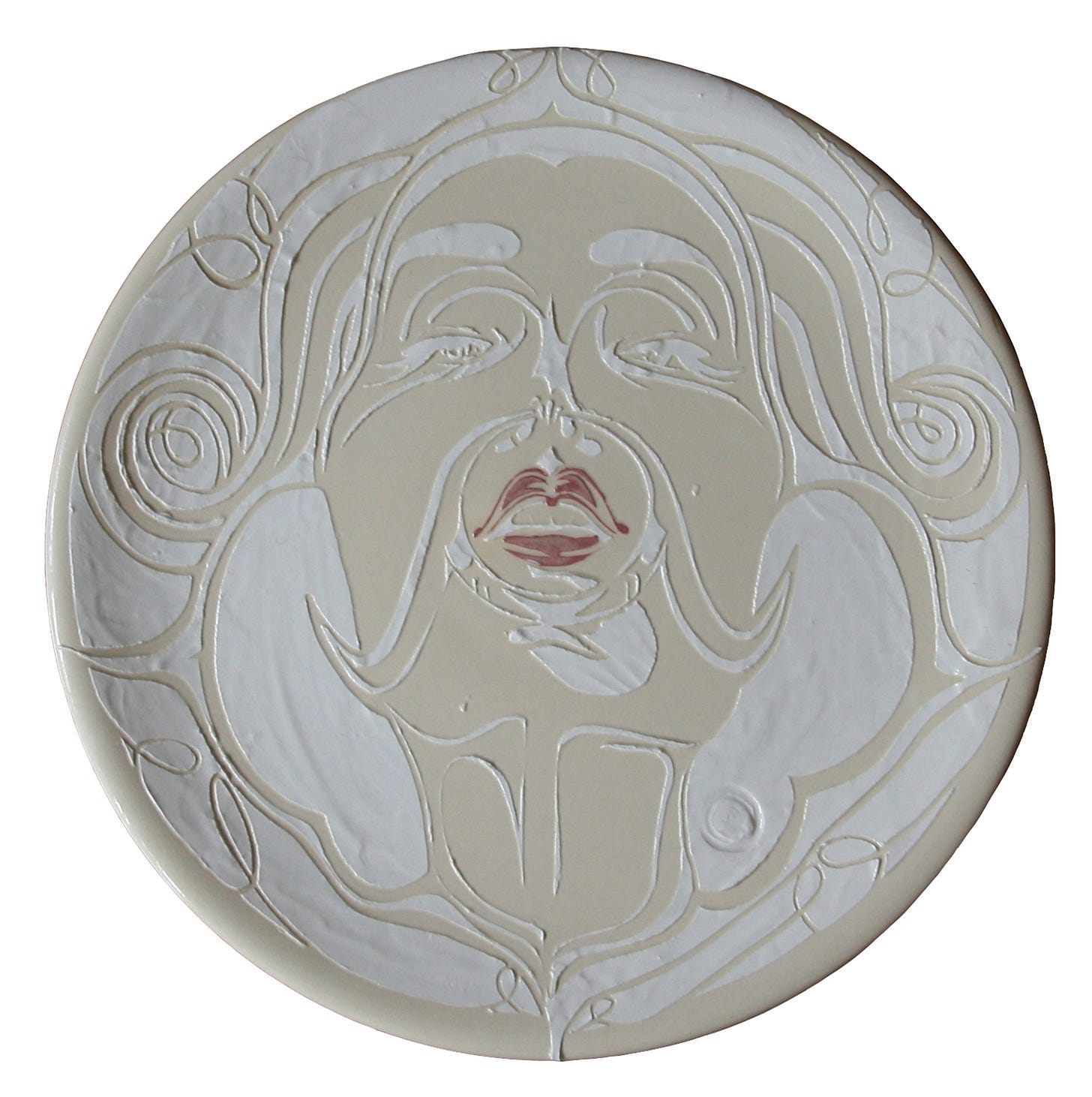
Creation is a conversation with the unknown, an adventure. I see it as a cycle: we make something to discover something, and what we discover changes what we make next.
Confidence allows us to remain in that loop instead of leaving it too early.
This is why I think of confidence as an artistic discipline.
Every uncertain decision, experiment and unfamiliar situation gives us another opportunity to develop it. Experience gradually shows us that we can respond when something does not work out as expected.
Our relationship with the work changes too.
An artwork does not need to prove our worth as artists. It is one moment within a much longer practice. If a piece does not succeed, it can still contribute to what follows. Sometimes we even return to it years later with different knowledge and see possibilities we could not see before.
Confidence grows alongside us through making, experimenting, leading, failing, learning, communicating and repeatedly entering situations whose outcomes we cannot control.
Perhaps this is what makes confidence a discipline rather than an achievement. There is no final point at which we possess enough of it.
If confidence develops through experience rather than appearing before it, you can deliberately create situations that allow it to grow. The purpose is not to convince yourself that you are confident, but to accumulate evidence that you can act, learn, adapt and continue.
Notice your progress. Occasionally, take stock of your path. Return to earlier work, projects, decisions and challenges and notice what has changed in your skills, thinking and the responsibilities you can carry. Development is difficult to recognise while we are inside it. Journalling can make it visible.
Keep evidence. Save meaningful feedback, exhibition acceptances, press or messages from your gallerist, art buyers or collectors. I have an email folder called Good Vibes for kind and constructive feedback, which I return to when something has gone wrong. It reminds me that one disappointing experience is only one piece of evidence among many.
Become a beginner again. From time to time, I participate in workshops or courses to work with an unfamiliar material or subject. Removing expertise from the equation gives you an opportunity to experience uncertainty without attaching your professional identity to the outcome. Curiosity can take the place of expectation.
Stretch the scale of uncertainty. Deliberately move slightly beyond what currently feels familiar. Submit the proposal or show an idea before you have resolved everything. Confidence develops when you gradually expand what you are willing to attempt.
Learn through observation. Observe yourself and observe others. Study the trajectories of people whose work you respect, including what happened between their visible achievements. Their rejected ideas, changes of direction and failed experiments allow us to learn without experiencing every lesson ourselves. Do the same with your own experiences. After something succeeds or fails, ask: What did I learn that I did not know before? An unsuccessful outcome can still leave behind knowledge, skills, relationships or a different direction. Success is only one possible return on an experiment.
Frame new projects as experiments. When you enter a new project without knowing what will come of it, try framing it in two ways: as an opportunity and as an experiment. An opportunity contains possibility. An experiment allows the outcome to remain open. Together, they reduce the pressure to succeed and make failure less definitive.
Confidence cannot guarantee that something will work. It gives you enough trust in your ability to respond, learn and continue. This way, uncertainty no longer has to make the decision for you.
~ Fides Linien
Further Reading:
Roxie Nafousi, Confidence: 8 Steps to Knowing Your Worth (2025)
Louise Hay, You Can Heal Your Life (1984)
We will look more closely at self-doubt and the voices that feed it in the essay next week. Some of the thoughts that make us question our work, direction or right to continue may not have originated within us at all.
No posts
Comments
Nothing yet. Say the first thing.
Sign in to join the conversation.