
In the previous essay, we explored confidence as something we develop through experience. Yet even when we have accumulated evidence of what we can do, self-doubt does not disappear.
Why do we doubt ourselves when experience gives us every reason not to?
For me, understanding this began with a belief I had carried for years: I thought I was not a real artist unless I could make a living from art alone. At one point, I even interpreted the rejection of my application to the Künstlersozialkasse (KSK), Germany’s social insurance for artists and writers, as formal evidence that perhaps I was not one.
This belief felt less like an opinion than a fact.
It was only in my thirties, while reading bestselling authors such as Mel Robbins and Susan Jeffers, that I began questioning where such convictions come from and asking myself: Who taught me to believe this? That question led me back to childhood, family, school and the environment in which I grew up.
My artistic ability was recognised and encouraged from an early age, and I eventually studied Fine Art. My parents supported my artistic education wholeheartedly. At the same time, I could sense from what they said that they considered making a living as an artist nearly impossible.
With distance, their perspective makes much more sense to me. My parents had lived through political and economic circumstances in which security carried enormous value, and their reservations about an artistic career reflected their own experience and concern about the possibility of financial insecurity.
Understanding this replaced much of the frustration I once felt with compassion. More importantly, I recognised that I had unconsciously absorbed part of their understanding of what an artistic career could realistically be and mistaken it for my own.
Our identities are shaped through our childhood, through thousands of conversations, expectations, encouragements, warnings and observations. Philosophers sometimes describe identity as dialogical: we become ourselves through our relationships with others long before we consciously decide who we want to be. Some of those perspectives remain with us for decades and eventually become so familiar that they resemble our own thoughts. This is one reason self-doubt can be so convincing.
The difficulty with self-doubt is that it does not remain inside our thoughts. It can begin to influence our decisions and, eventually, the opportunities we create for ourselves.
If we believe we are not ready, we may not apply. If we assume our work is not good enough, we may keep it private. If we think permission has to come from someone else, we may wait instead of creating an opportunity ourselves. We might hesitate to approach a gallery, communicate what we do, negotiate a fee, raise a price or propose a collaboration.
This is where self-doubt becomes entrepreneurial behaviour.
Over time, the absence of results can appear to confirm the original belief. We doubt ourselves, behave according to that doubt and then interpret the consequences as evidence that the doubt was justified. Self-doubt can affect our relationships and how we network, our applications, visibility, opportunities, pricing, communication and ultimately the direction of a career as a creative.
Recognising this pattern gives us an opportunity to interrupt it. Before accepting a doubtful thought as fact, we can ask whether it describes reality or is quietly helping to create it.
Self-observation helps to distinguish self-doubt from related ideas.
Self-esteem concerns how we value ourselves.
Confidence concerns what we believe we can do, learn or handle.
Self-doubt questions our judgement, abilities or sometimes even our legitimacy to proceed.
These can coexist. A creative may be confident in their technique while doubting whether anyone will take the work seriously or buy it. We can know that we are capable and still hesitate in unfamiliar territory.
Doubt itself can be useful. It can sharpen judgement, encourage revision and make us reconsider an assumption. The problem begins when we treat every doubt as truth.
Some doubts arise from genuine observation. Others come from inherited criticism, social conditioning, comparison, past experiences or opinions whose authority we never consciously chose. The challenge is learning to distinguish between them.
For a long time, another assumption shaped my decisions: the feeling that permission had to come from somewhere outside me. Creative careers make this particularly easy because many established structures depend on selection. Galleries, curators, institutions, juries and publishers decide who or what receives an opportunity.
External recognition matters.
It can create income, visibility, relationships and possibilities. The problem begins when recognition becomes a condition for giving ourselves permission to act.
The same applies to people pleasing. Trying to satisfy everyone around us, or imagining what they want us to be, gradually moves decisions away from our own judgement. Sometimes we have to do what we believe is right for us before anyone else approves it.
When I entered art university in the early 2000s, I had absorbed a fairly linear idea of professional progress. Because my own path did not resemble that line, later I often felt that my career had somehow failed.
For a long time, I barely used the word career to describe it. In my mind, a career was something you were allowed to call a career once you had accomplished enough and could prove that you had made it.
After my studies of Fine Art, I worked in luxury fashion while continuing to make art and exhibit, then moved through social entrepreneurship, management and leadership. It took me time to recognize these apparently separate experiences as parts of one professional development.
Today I think differently about career. I see jobs, projects and changes of direction as experiments. Some develop into something substantial. Others do not. Each leaves valuable knowledge behind.
Framing something as an experiment reduces the pressure attached to a single outcome. If it does not work, we can learn from it, change direction and continue armed with the new insight thus derived.
This is part of both a growth mindset and an entrepreneurial mindset.
For creatives, that entrepreneurial dimension matters. We may create through intuition, then need different faculties to communicate, market and sell the work. Learning to move between these modes is part of building a sustainable life as a creative.
Our environment continues to matter.
The absence of feedback can shape how we perceive our work just as strongly as criticism can. Silence is easily interpreted as evidence, even though it can mean almost anything.
I have come to think that many creatives are profoundly influenced by at least one believer or one doubter.
Some are sustained by someone who sees their potential before they fully see it themselves. Others develop determination from wanting to prove someone wrong. Both can become powerful forces.
I belong to the first group. I am deeply grateful to, and for, one person in my life who has never stopped believing in me. I have learned through this relationship that sometimes one genuine supporter is enough: someone who cheers you on, but also clears your head when doubt or confusion takes over. One person can influence an entire trajectory.
There is power in allowing another person’s perspective to matter, but we also decide how much authority we give it. Support should strengthen our own judgement rather than replace it. Someone else’s belief cannot remove self-doubt, but it can give us another perspective to return to when our own becomes temporarily narrow.
This is why our inner circle matters. We never become immune to influence, so it is worth paying attention to whose opinions we repeatedly allow into our minds.
There is also a more practical form of self-doubt that deserves attention.
Sometimes uncertainty is not rooted in childhood, psychology or inherited beliefs. Sometimes we simply do not feel prepared.
When someone buys an artwork, they do not only buy the object. They invest in the artist behind it, the story, the body of work and their confidence in where that artist might go. How we present ourselves therefore matters, although I think this is often overlooked. Our image often works for us before we have had the opportunity to explain who we are or what we do.
Professional photography is one part of this.
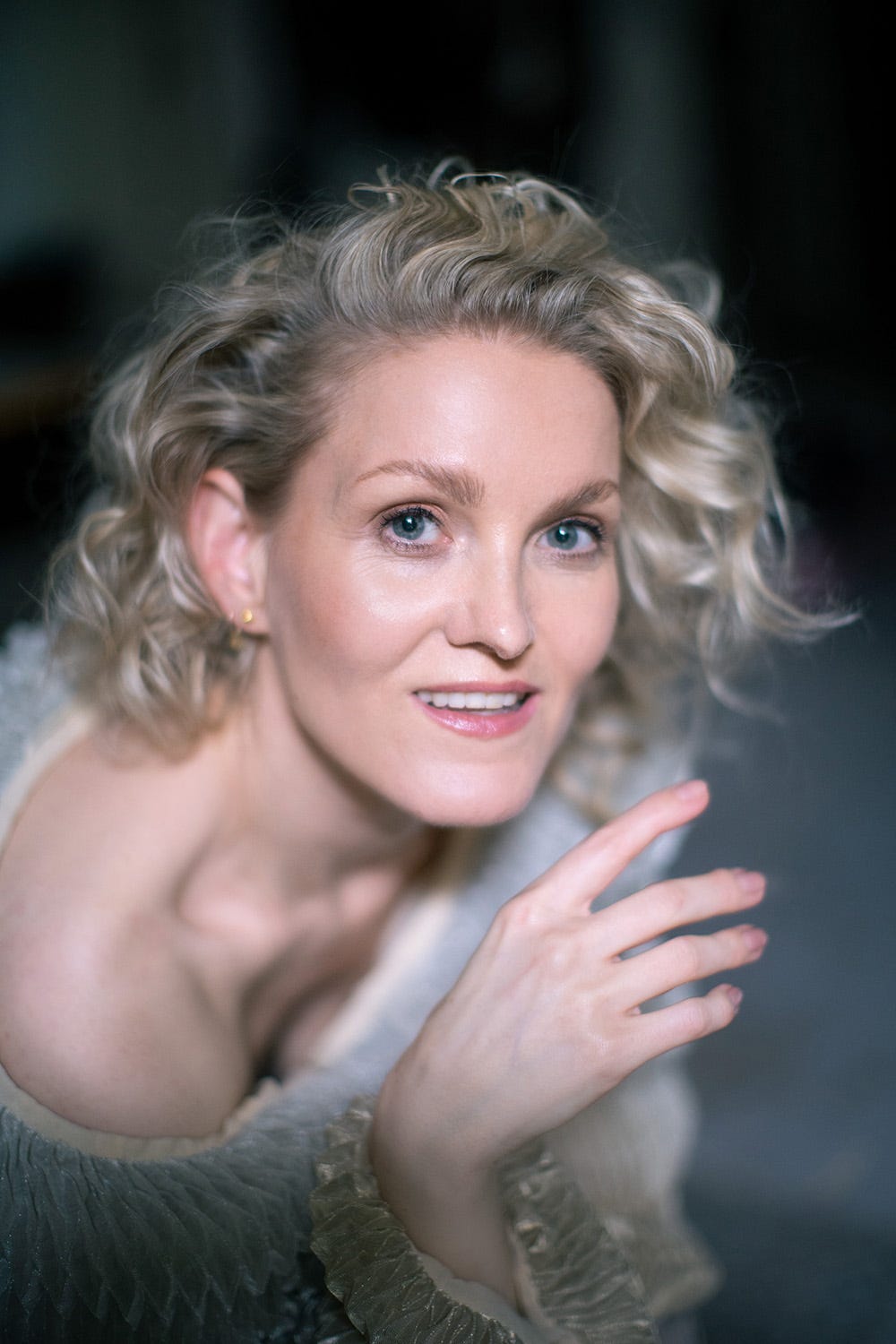
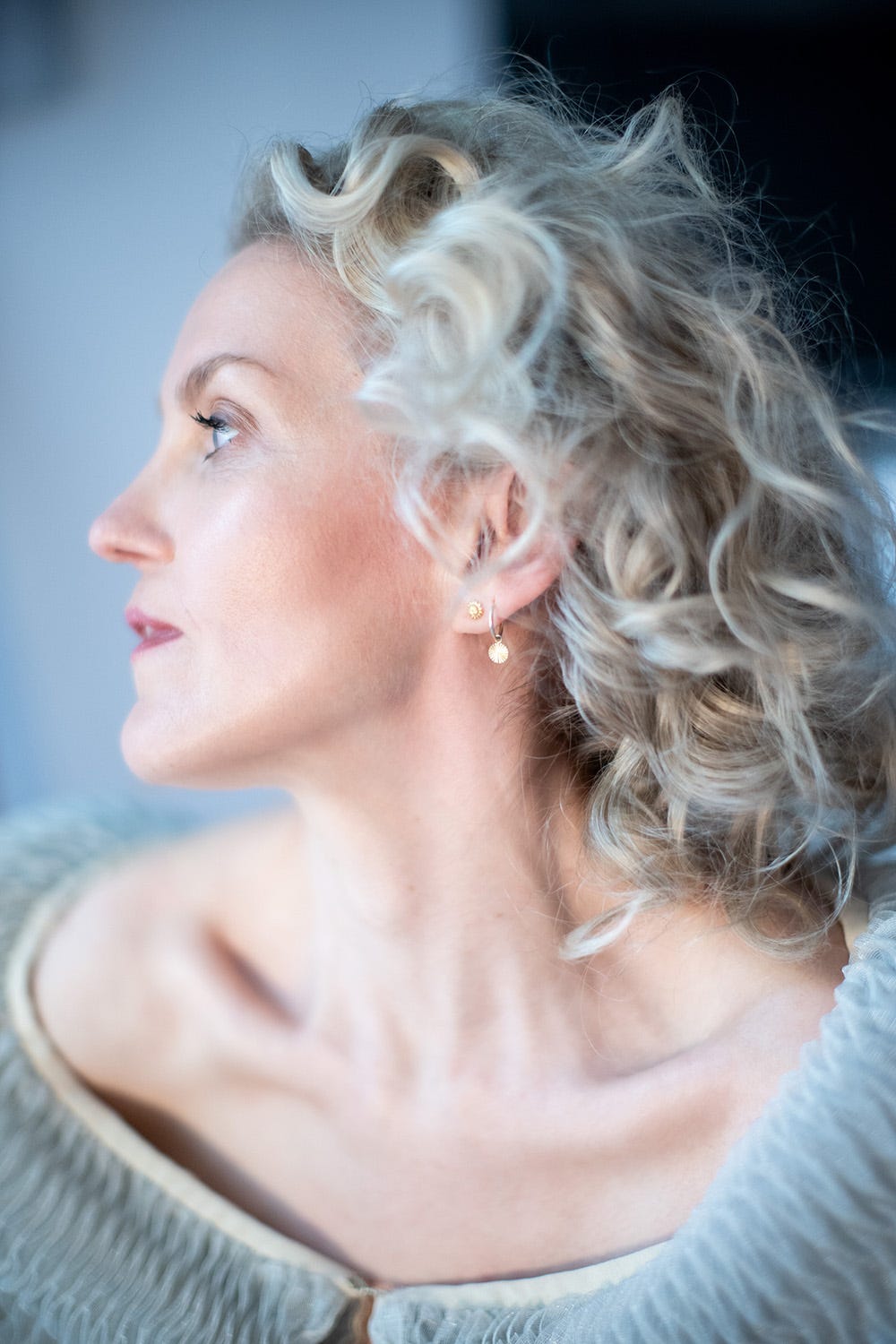
Every two or three years, I have a photoshoot for my website, portfolio, press and social media. These photographs have a purpose, and that purpose influences how they should look because they are part of visual communication and personal branding.
As a multipassionate creative working across several fields, this became particularly interesting during my 2025 photoshoot with Uwe Hauth and phc.studio in Berlin. We had to consider which facets of the same person the photographs needed to communicate.
I had been excited about the shoot, yet when we began, I felt unexpectedly uncertain. Being photographed requires surrendering some control over how another person captures you, and that requires trust. By the end of the session, before seeing a single photograph, I felt more confident than before.
That experience interested me because the photographer had given me something that would never appear on an invoice. The photographs were the visible product. The experience of seeing and presenting myself was part of their invisible value.
Photography is only one example of how preparation can have this effect. Having an up-to-date biography, artist statement, documentation and professional photographs means that when an opportunity appears, we can respond rather than begin from zero or scramble to prepare everything at the last minute.
Preparation cannot remove self-doubt, but it can remove some of the uncertainty that feeds it.
Great art often grows from an extraordinary degree of fascination, commitment and even obsession. To sustain that relationship with your own work, you need confidence and belief in what you are doing. Yet self-doubt will still appear. The task is not to eliminate it. The more interesting task is to examine it:
Where did this thought come from?
Is it based on something I can observe, or something I have assumed?
Whose judgement am I hearing?
Does this doubt contain information I can use?
Do I actually need permission?
The challenge is remembering to ask these questions in the moment when self-doubt actually appears. With practice, you can become more familiar with the difference between your own judgement and the perspectives you have absorbed from elsewhere.
You may still carry traces of beliefs that formed much earlier in your life. Knowing where they came from does not automatically erase them. It changes the authority you give them and, with it, how you decide and act.
Perhaps that is part of becoming an artist too: learning which voices deserve your attention without allowing every voice to determine your direction.
Most of your thoughts may not have begun with you. What matters is which ones you decide to keep.
~ Fides Linien
Further Reading:
Mel Robbins, The Let Them Theory (2024)
Susan Jeffers, Feel the Fear and Do It Anyway (1987)
Next week, I will move from self-doubt to imposter syndrome and explore why achievement does not always make us feel more legitimate.
No posts
Comments
Nothing yet. Say the first thing.
Sign in to join the conversation.