
I often heard different clichés when I was younger. Some were less optimistic, as I mentioned in my first essay, but others were encouraging:
“You have so much potential and talent.”
“You should do something with your art.”
“You could go far with what you do.”
At the time, these words meant very little to me because I did not know how to translate them into action.
Despite these encouraging comments, I, therefore, spent many years avoiding the idea of making a living through my art, even though people were already buying my work. The fact that others saw value in what I created was an early indication that my work had the potential to become something meaningful.
I was a student when I sold one of my first CartaStaminea artworks to the father of a friend. After purchasing the work, we sat together and talked about my art. I was comfortable being part of the conversation, but my feelings changed when the discussion shifted from talking with me to talking about me.
The father turned to his daughter and said:
“No, she cannot become a graphic designer. That would be a waste of her potential and talent. She has to become an artist.”
Ironically, while studying Fine Art, I still had no vision of building a career around my creativity, even though I was already moving towards it. I continued developing my artistic skills, but I had not yet learned how to build a life around my work. I simply kept creating because making art gave me a sense of freedom and fulfilment. It was familiar and made me feel at home with myself. The idea that my creativity could become my profession came much later.
Potential has become one of the most misunderstood words in the creative world. I have heard people speak about it as though it were already an achievement, when in reality it is only a possibility.
That is where the misunderstanding begins.
The difference between talent and potential is subtle, especially in the context of creative work, where the two are often used interchangeably.
Potential describes the possibility that something may develop beyond its current state. It exists in relation to what could become rather than what already is.
Talent is a natural inclination, sensitivity or ability that someone already possesses. It is the raw material: a particular way of seeing, thinking, feeling or making. An artist may have a talent for colour, composition, storytelling or observing nature. Talent alone does not determine what they become. It creates the possibility for development when it is deliberately cultivated.
Talent asks, “What comes naturally to me?”
Potential asks, “What could I become if I consciously develop what is already within me?”
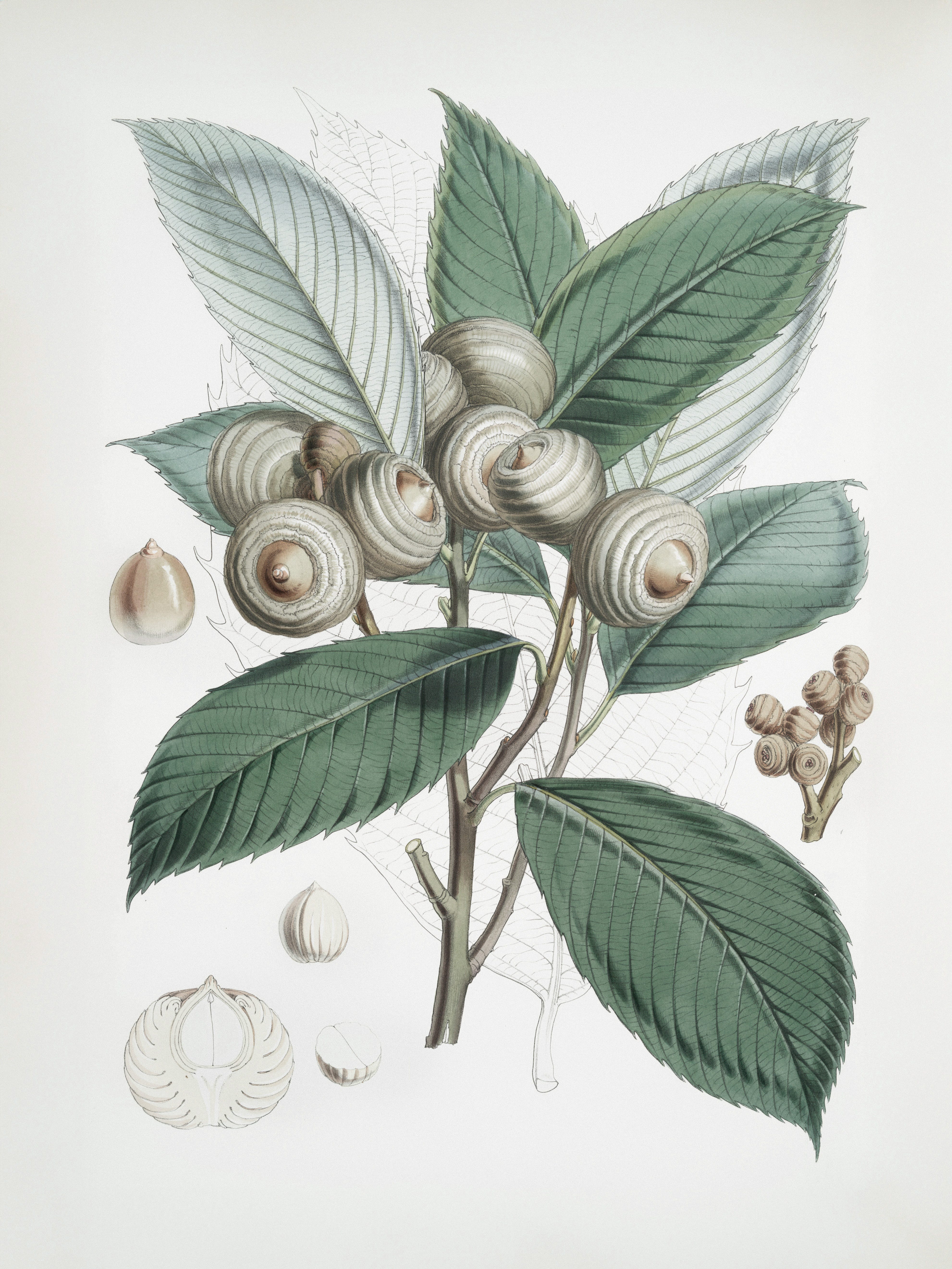
Like a plant, talent is the seed. Potential is the tree that the seed could become. Practice is the cultivation and achievement is the fruit. A seed contains the possibility of a tree, but no one mistakes a seed for a forest. The tree depends on cultivation, weather, nourishment and time. Creative work develops in the same way.
The distinction matters. Being talented becomes part of an identity. Potential becomes a reassuring story. Neither produces the work.
People rarely say: “You have excellent habits.”
Instead, they say: “You have so much potential.”
People love hearing it because potential is comforting. It requires nothing today. An unfinished project cannot disappoint. An unrealised body of work cannot be criticised. Remaining promising often feels safer than becoming accountable.
This is different from imposter syndrome, the feeling of being a fraud. It is not driven by self-doubt, but by identity. Potential describes who we believe we could become, while our work reveals who we are becoming.
The creative world celebrates emerging talent. It pays far less attention to the thousands of days and nights required to develop that talent into something visible.
This is where creative paths begin to separate.
As a child, I spent countless hours drawing. I was fortunate that my parents encouraged my curiosity and supported my creative path from an early age. After my art teacher invited my parents to a meeting at school to discuss my abilities and explain that she saw particular artistic talent in me, my parents enrolled me in an after-school art programme. They later supported my education at an arts secondary school and my studies in Fine Art (Freie Kunst, Free Arts in Germany), before I completed my Meisterschüler degree, a postgraduate qualification awarded to selected students.
I am deeply grateful for the support and trust my parents gave me because their support created the conditions in which my potential could develop.
Art saved me as a teenager.
I would probably not have passed my Abitur (German university entrance certificate) examinations without the opportunity to take practical art as my specialised subject and complete my final examination in it with an excellent result. Not because I lacked ability, but because I was lazy, stubborn and disliked learning things that were imposed on me rather than driven by my own interests.
My potential was recognised, encouraged and developed from an early age. Without those conditions, my story might have looked very different. I also know my path would have changed had I understood earlier what it means to build a life around creative work.
Potential is a possibility and never a guarantee. It is shaped by our circumstances, decisions and actions. Without support, knowledge, awareness and the right conditions, it remains unrealised. It develops through repetition, deliberate practice, feedback and patience that sustain growth. Small decisions that seem insignificant in isolation become defining when repeated over years.
Being recognised as someone with artistic potential was only the first step. Potential itself did not create my body of work. Years of learning, practising, experimenting and continuing through uncertainty gradually transformed ability into something visible.
Potential may open the first door, but walking through it requires commitment and the courage to keep developing. Talent may create the opportunity, but character, discipline and persistence determine how far the journey continues.
Along the way, there was always a quiet voice in my mind asking whether I should continue on the path I had chosen. Yet I trusted my instinct and believed that the further I climbed, the further I would be able to see. I am still climbing.
Just like potential, talent is never a guarantee of success.
History, and the present day, are full of gifted people whose work remained unfinished, while others with fewer advantages built remarkable bodies of work through discipline, commitment and persistence. Progress depends on consistency, priorities, courage, resilience and the willingness to keep showing up long after the excitement of being promising has faded.
Perhaps the more uncomfortable question is this:
“If I already possess the potential and talent I believe I have, what exactly stands between the person I am today and the person I could become?”
The answer lies in our beliefs, what we prioritise, the environments we grow up in and later choose.
It took me years to understand the conditions I needed in order to create in a way that allowed me to evolve. Gradually, I built a life model that enabled me to remain independent and free enough to develop as both an artist and a consultant.
Recognising my potential and believing in it was only the first step. The real decision was to nurture it deliberately until it became something tangible and could sustain a life around it.
Becoming and being an artist is as much about mindset as it is about making art.
At some point, you have to choose this path consciously and take responsibility for your own development.
The way you think shapes the decisions you make, the opportunities you recognise and the persistence you bring to your work. Belief in your own ability and the confidence to keep moving forward are essential. Confidence deserves an essay of its own, and I will return to it in the next edition because it has shaped, and continues to shape, my own journey.
Alongside the obligations of making a living, I gradually developed internal and external systems that gave me the knowledge, time and mental space to create. These systems evolved through years of experimentation, learning and adapting, but also through failures and hardships.



This is why I believe peers and role models are essential for artists. They provide orientation, expand our understanding of what is possible and show us how creative work can grow into something larger than ourselves.
We can see this across many fields: entrepreneurs who build companies around their ideas, as well as social media influencers and creators who build entire successful businesses around their work. They all started somewhere. Most had to discover their own path or invent their own job without a clear map. Their journeys remind us that we can create value for others while building a sustainable foundation for ourselves.
Transformation is shaped by your decisions, strengthened by your environment and sustained by the systems you build. Otherwise, potential becomes a story other people tell about you instead of something you actively shape. Potential is what others imagine. Practice is what you become.
There is a saying that captures this idea:
“You are what you do, not what you say you will do.”
You become through what you complete. Your actions create evidence of who you are and that evidence shapes your identity.
In the end, the distance between who you are today and who you could become is built one decision at a time. Potential begins the story. Behaviour determines how it unfolds, one decision at a time.
~ Fides Linien
In the coming essay, we will explore what actually determines whether possibility is fulfilled, taking a closer look at the relationship between talent and self-confidence and how the two shape what we are able to become.
No posts
Comments
Nothing yet. Say the first thing.
Sign in to join the conversation.