

How neobanks onboard you in 90 seconds and why fraud is breaking it.
Opportunities at Perplexity, Google’s AI Accelerator and the Oxford AI Ethics Fellowship.
15+ roles at top startups: Cartesia, Vercel, Cursor, Perplexity, Mercury, etc.
[NYC] Game Night, 6/11 (Thursday)
Founders + startup engineers. Poker and assorted games.
[SF] Orbit Dinner, 6/11 (Thursday)
Founders. Must be early stage, venture-backed / raising.
[SF] Game Night, 6/26 (Friday)
Founders + startup engineers. Poker and assorted games.
Perplexity Research Residency - 3 months, full-time in SF / Palo Alto

Google for Startups Accelerator: AI-First (North America)
Equity-free, 3 month accelerator for AI-first startups, with dedicated mentorship, technical training, and Google Cloud access.
Applications close June 30, 2026.
Oxford Institute for Ethics in AI — Accelerator Fellowship 2026/27
Fellowship for academics and professionals advancing ethical and responsible AI, with a £2,000/month stipend.
Applications close June 15, 2026.
Levels.fyi — verified, crowd-sourced compensation data across startups and big tech. Useful for benchmarking comp.
Email us (founders@the-collective.xyz) for an intro!

Name: Tina
Experience: Founder of Girls Who Innovate (Raised 13k in cash + 100k in awards). Incoming BCG China Part Time Intern. Product Management Intern for Odyseek. BS Finance, University of Virginia.
Open to: Summer internships in NYC (VC or startup product management roles)
Written by Annie Dong.
Revolut was launched in 2015 with a single product: a travel card that lets people pay in different currencies with no hidden fees.
Since its inception, Revolut has expanded across the FinTech product stack, reaching 68.3 million retail customers and 767k business customers, and recording profits of $2.3bn in 2025.
At the core of neobanks’ emergence is the global adoption of smartphones. By 2020, global smartphone penetration had surpassed 80%, fundamentally transforming how people spend money. As consumers became increasingly accustomed to digital-first experiences, banking was slow to adapt. Major institutions still relied on obsolete banking infrastructure, leaving an opening for digital challengers who could offer superior user experience at a lower cost.
Indeed, Revolut was just the beginning. Between 2015 and 2020, investor enthusiasm for neobanks reached unprecedented levels, with companies like Chime, N26 and Monzo collectively raising billions of venture capital. Today, neobanks – a category that barely existed a decade ago – span hundreds of companies across every geography and customer segment.
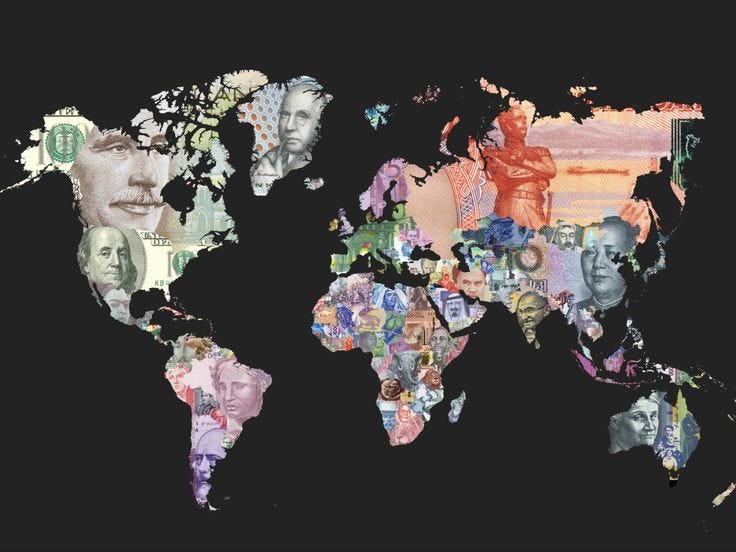
Banking but Software
The term “neobank” refers to a digital-only financial institution which provides banking services entirely through mobile apps and websites.
Most neobanks aren’t actually banks in the technical sense; they don’t hold customers’ money directly. Rather, they operate through a Banking-as-a-Service (BaaS) model, where a licensed, FDIC-insured partner bank sits underneath the product, holding deposits and providing the regulatory infrastructure, while the neobank handles the UI, onboarding, and product features.
Being digitally native enables neobanks to operate with minimal overhead. The cost of servicing a customer for a neobank can be as low as $20/year, compared to over $200/year for a traditional bank. Neobanks’ cost efficiency allows them to offer more attractive incentives to users, such as zero-fee banking, high-interest savings accounts, and (of late) billboards in Times Square.

The Landscape
The neobank category has fragmented into distinct segments, each with its own product logic, margin profile and competitive dynamics.
Consumer is where neobanking started. Early consumer neobanks targeted demographics that were overlooked by traditional banks, such as younger customers and immigrants navigating unfamiliar financial systems. Consumer banking is particularly challenging as its primary revenue source is thin interchange fees on debit transactions. To genuinely scale profitability, companies must encourage customers to borrow, invest, or upgrade to higher-paid tiers. Thus, despite producing some of the largest user bases in fintech, the consumer segment is also the most challenging to tackle.
The startup segment comes with more favorable economics. Venture-backed companies spend more, hold larger cash balances, and generate more interchange on corporate cards. They also tend to consolidate their financial operations in one place as they grow, which creates natural expansion opportunities – scaling from a checking account to treasury management to expense management to AP automation.
SMBs represent a much larger addressable market but a harder one to serve given their heterogeneity. Players in this segment often go narrow rather than broad. For one, Slash began by offering banking services tailored for sneaker resellers, then pivoted to performance marketing agencies, crypto firms, and HVAC operators as the sneaker resale market contracted. The startup now processes around $300M a month on its cards through its “vertical software approach” to banking.
Written by Priyal Taneja.
Open a neobank app for the first time, and the experience feels almost suspiciously easy. You type your name, snap a photo of your driver’s license, take a selfie, and within a couple of minutes you have a working bank account with a virtual debit card ready to go. There’s no branch visit, no paperwork, no waiting.
What you don’t see is one of the more complex real-time pipelines in consumer fintech, running six distinct verification stages in sequence before the app shows you a confirmation screen.
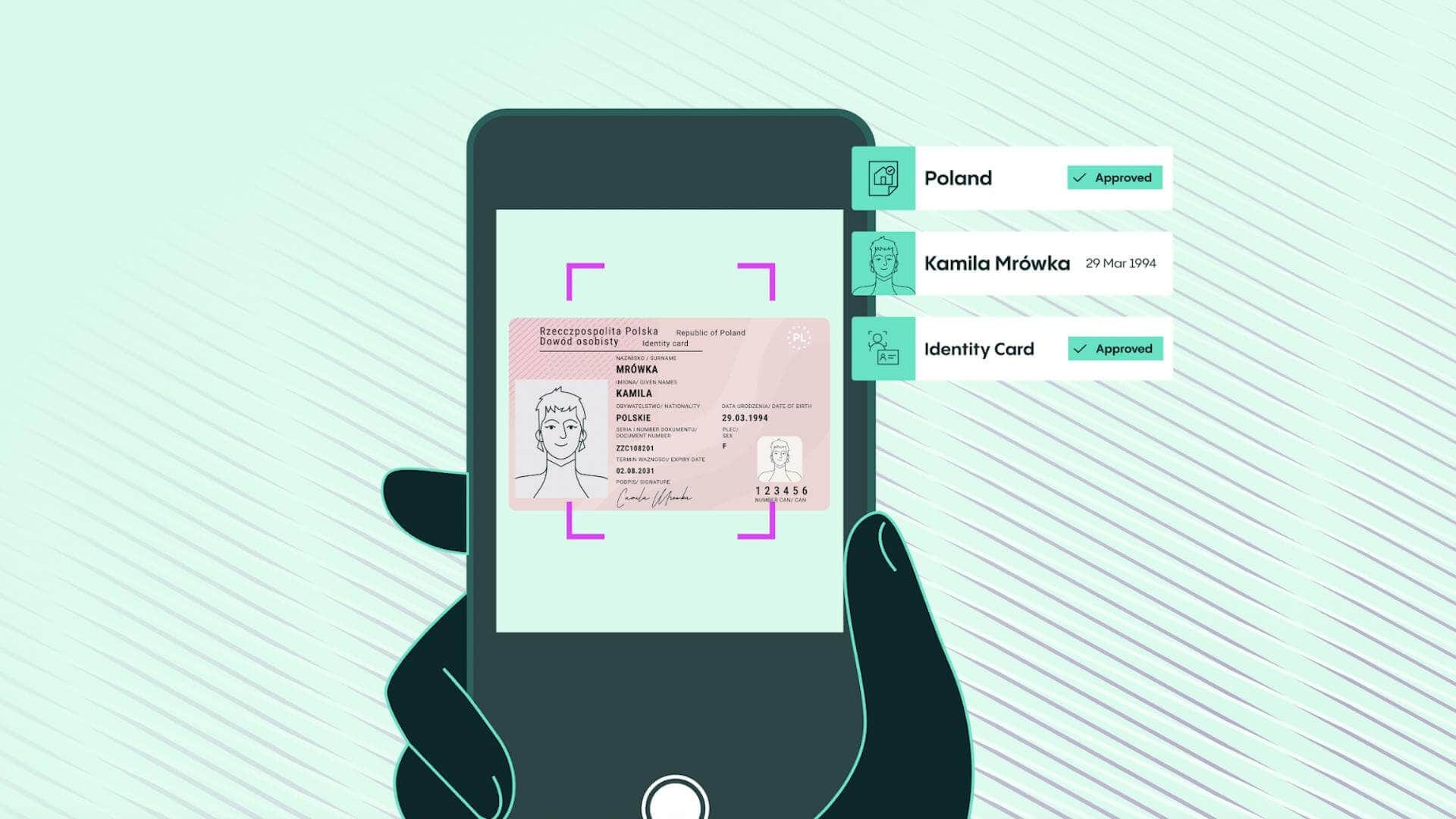
The Pipeline Looks Like: Scan, Match, Verify, Score
Document capture and authentication. When you photograph your ID, the app uses edge detection to find the document boundaries, then runs OCR to extract your name, date of birth, address, and ID number. It then authenticates the document itself by analyzing security features like holograms, microprint, barcode encoding, and font consistency against known government-issued templates. Modern systems can authenticate over 13,000 document types across 200+ countries.
Biometric matching. The app asks for a selfie, then a facial recognition model extracts a mathematical representation of your facial geometry and compares it against the photo on your ID. It’s measuring whether the person holding the phone is the same person on the document, reliably, across different lighting, angles, and camera qualities.
Liveness detection. This layer separates a real person from a photograph, a printed mask, or a deepfake held up to the camera. Passive detection analyzes skin texture, light reflection, and depth cues in a single image. Active detection asks you to blink or turn your head and checks the motion for consistency. Both are now being challenged by AI-generated deepfakes that simulate realistic facial movement in real time.
Identity network verification. Your extracted data gets cross-referenced against credit bureaus, government records, telecom registries, and address verification networks to confirm you’re a real person whose information is consistent across independent sources. This is where synthetic identities (fabricated personas stitching together real and fake data) are most likely to get caught.
Fraud and risk scoring. A fraud model evaluates contextual signals in parallel: is this a known fraud device? Does the IP address match the stated address? Did the user complete the flow faster than a human would? Has this identity data appeared in other recent applications? The output is a risk score that determines whether you’re auto-approved, flagged for review, or rejected.
AML and sanctions screening. Your identity is screened against anti-money laundering watchlists, politically exposed persons databases, and global sanctions lists (OFAC, UN, EU). This is a regulatory requirement that runs in real time during every onboarding.
All of that happens before you see “Welcome to your new account.” It’s just not apparent.
Where the Pipeline Is Breaking

The whole system was designed around one assumption: that identity documents and biometric data are hard to forge. However, that assumption is wearing away quickly.
Synthetic identity fraud, where criminals combine stolen data like a real Social Security number with fabricated names and AI-generated photos, is projected to cost financial institutions $58 billion annually by 2030, up from $23 billion in 2025. These identities are built specifically to pass automated checks, and because no real victim exists to report the fraud, detection comes far too late.
Deepfakes are making it worse. Over 55 new synthetic media generators were released in Q4 2025 alone, roughly one every day and a half. A recent threat intelligence report found that AI-generated identities are already passing digital onboarding at scale. The most sophisticated attacks skip the camera entirely, injecting synthetic video directly into the verification pipeline so that liveness detection never sees a real sensor feed.
The neobanks that survive this arms race will be the ones that move beyond checking your identity once at the front door and toward continuous authentication, where behavioral and biometric signals are evaluated throughout the entire customer relationship. The 90-second onboarding experience isn’t getting slower, but the infrastructure defending it is getting dramatically more complex.
Early stage
Goldbridge (YC F25) is building banking, treasury, and expense automation for real estate owners and operators.
Archer (YC P26) is building the AI business bank, letting companies deploy AI agents to spend, purchase, and move money autonomously on their behalf.
Slash is a vertical neobank building industry-specific banking for SMB segments that mainstream platforms decline.
Later stage
Mercury is a startup banking platform serving 200,000+ businesses. It received conditional OCC approval in April 2026 to establish Mercury Bank, N.A., with FDIC and Federal Reserve sign-off still pending.
Brex offers corporate cards and expense management for venture-backed startups, underwriting against funding history. It hit $700M ARR and 35,000+ clients before Capital One acquired it for $5.15B in January 2026.
Rho is a business banking platform combining checking, cards, AP automation, expense management, and treasury in one stack, targeting high-growth companies consolidating their finance tools.
Meow is a cash management platform helping post-raise startups earn yield on idle cash through money market funds and Treasury Bills, with up to $125M in FDIC coverage.
Cartesia: real-time voice AI built on the State Space Model architecture its founders pioneered at Stanford; $100M Series B. Software Engineer, Platform (San Francisco)
Vercel: the company behind Next.js and the v0 AI app builder (Series E). Forward Deployed Engineer, v0 (San Francisco)
Cursor: the AI code editor from Anysphere, at an estimated $2B ARR. Software Engineer, Billing (San Francisco)
Perplexity: the citation-first AI answer engine, valued near $21B. AI Software Engineer (Agents), Software Engineer (AI Platform) (San Francisco)
Mercury: banking built for startups, now serving 200,000+ businesses at a reported $3.5B valuation. Senior Backend Engineer, Personal Banking (San Francisco / Remote US)
Retell AI: voice AI platform powering AI phone agents for contact centers; ~$36M ARR in two years. Founding Senior Telephony Engineer (San Francisco)
Physical Intelligence: general-purpose foundation models for robots; ~$1.1B raised from backers including Jeff Bezos and OpenAI. Robotics Research Engineer (San Francisco)
Figure: humanoid robots powered by in-house Helix AI; reported ~$39B valuation. Helix AI Engineer, Senior Full-Stack Engineer (San Jose)
ElevenLabs: category-leading AI voice and audio; $500M Series D at an $11B valuation. Full-Stack Engineer (Back-End Leaning), Research Engineer (Remote, Global)
Hebbia: agentic AI for institutional finance, backed by a16z and Peter Thiel. Backend Engineer, Agents (New York)
EliseAI: AI agents across housing and healthcare; $250M Series E at a $2.2B valuation. Senior Software Engineer (New York)
Polymarket: the world’s largest prediction market, fresh off ICE’s $2B investment at a $9B valuation. Senior Product Engineer (New York)
Temporal: the open-source durable-execution engine for mission-critical workflows. Senior Developer Success Engineer, Infrastructure (Remote, US)
Glass Health: physician-founded AI clinical decision support and ambient documentation (YC-backed). Founding Full-Stack Engineer (Remote, US)
CopilotKit: open-source AI-agent infrastructure behind the AG-UI standard; $20.5M Series A. Forward Deployed Engineer (Seattle)

ft. NY Tech Week rooftop wellness
See you next week,
Maggie + Jonas
No posts
Comments
Nothing yet. Say the first thing.
Sign in to join the conversation.