

It’s the last few days before our official membership launch… taking final waitlist applications here.
Membership is application-based and selective. We’ve designed it to be a space where ambitious young people can supercharge their work - whether you’re building a company, looking for your next role, or are operating at the top of your field and want to be surrounded by others doing the same.
Here’s a sneak peek of what membership includes:
Private member portal and slack channels
Member-only meetups and events (e.g., weekly coworking sessions in NYC / SF, and other in-person events)
Access to our talent pool - we’ve hand picked candidates from across the country that are actively looking for their next role
Resources for people building companies - includes $500k in perks and credits. Also cofounder matching!
Under the radar jobs + market intelligence - includes cold outreach templates and strategy
Get hired by founders in the network - list yourself as a candidate and directly connect with founders who are filling roles
Anthropic closed a $65B round at a $965B valuation to pass OpenAI as the most valuable AI startup, while OpenAI confidentially filed for an IPO and Cerebras popped on its market debut
Applications are open for the Anthropic Fellows Program (July cohort), and NSF’s SBIR/STTR reopens to new project pitches on June 2
A hands-free computer demo, the company that ran up a $500M Claude bill in a single month, and two standout candidates open to new roles
[NYC] Tech Week Founder Wellness, 6/3 (Wednesday)
Founders only. Sunset rooftop mixer, sauna, cold plunge, red light therapy, and refreshments.
[NYC] Game Night, 6/11 (Thursday)
Founders + startup engineers. Poker and assorted games.
Applications are open for the July 2026 cohort: a four-month, fully funded program pairing engineers and researchers with Anthropic mentors on AI safety research.
$3,850/week stipend plus compute. No PhD or prior ML experience required.
NSF SBIR/STTR (America’s Seed Fund)
Reopens to new Project Pitches on June 2 for early-stage deep-tech and science startups.
Non-dilutive: the program funds R&D and takes no equity in your company.
Written by Annie Dong.
Everyone who has applied to a job in the last few years can feel that the job market is broken.
Cory Stahle, an economist at Indeed, describes the labor market as “low-hire, low-fire.” As he puts it, “As a job seeker, you’re having to work a lot harder to land that same job now because the competition has just really stiffened in the last couple years.”
AI is intensifying the competition, and recent tech layoffs show it. In mid-May, Meta laid off roughly 8,000 employees worldwide while pouring money into AI, with Zuckerberg writing that “the companies that lead the way will define the next generation.”
As competition intensifies, application volume surges, and companies end up facing the flip side of the same dysfunction. Hiring teams are under pressure to move quickly on the right candidate, while the cost of a bad hire has never been higher.
In this environment, the conventional hiring processes most companies rely on no longer hold up. Two problems explain why.
The Matching Problem
The first problem is one of matching. Supply and demand both exist: there are candidates who want jobs and companies that want to fill them. Even so, the discovery layer that connects the two remains surprisingly primitive.

On the employer side, over 90% of companies rely on automated systems to filter or rank applications, and roughly 40% of resumes are screened out before a human recruiter ever sees them. Candidates are often screened out not because of their qualifications, but because their resumes did not contain the right keywords.
On the candidate side, AI has made mass-applying easy. According to Greenhouse, the average job posting attracted 95 applications in 2025, up from just 28 in 2021, a 239% increase. Greenhouse CEO Daniel Chait calls the result an “AI doom loop”: candidates use more AI to break through filters, employers build stronger filters in response, and genuinely talented, well-suited candidates get buried in the noise.
The Signal Problem
The second problem appears downstream, and it hits technical hiring hardest. The standard technical interview has little to do with the day-to-day work of the job, and it no longer works well as a proxy for engineering talent. AI can solve these interview problems in seconds, which leaves companies with an awkward choice: ban AI during interviews and test for a way of working that is already obsolete, or allow it and watch every candidate score about the same.

The friction extends well beyond engineering. Job postings requiring AI skills more than doubled in the past year, according to the Brookings Institution. Across nearly every industry, the tools used to evaluate candidates are struggling to keep up with how quickly the jobs themselves are changing.
Written by Priyal Taneja.
In 2025, a survey by Karat found that 73% of engineering leaders believe strong engineers are now worth at least three times their total compensation, a figure that jumped sharply from prior years. The reason is not that engineering fundamentals changed. It is that AI widened the gap between engineers who know how to use it and those who do not. The same role, with the same title and the same job description, now produces very different output depending on how well the person in it works with AI tools.
This is a problem the traditional interview was never built to solve. Coding challenges, take-home projects, and whiteboard exercises all measure what a candidate can produce on their own. But when every engineer has access to the same AI assistants, the skill that sets people apart is no longer writing a function from scratch. What matters is knowing when to lean on the model, when to override it, and how to verify that what it produced actually works.
Why Traditional Signals Are Degrading
The standard technical interview has relied on a few core formats for decades, and each is breaking down under the weight of AI assistance.
Coding challenges test problem-solving and implementation, but a candidate can now paste the problem into an assistant and get a working solution in seconds. Banning AI creates an artificial setting that does not reflect how the person would actually work, while allowing it makes every candidate look the same.
Take-home projects assess how engineers approach larger tasks, but they only reveal the final output. Interviewers cannot see the candidate’s process, so they cannot tell genuine problem-solving apart from skilled prompting.
Behavioral interviews rely on self-reported experience, but saying “I use Copilot every day” says nothing about whether someone uses it well. A candidate can describe a polished workflow without ever demonstrating it.
The common thread is that traditional interviews measure output in isolation. What companies actually need to measure is process: how a candidate thinks with AI as a collaborator, not only what they produce with it.
What AI-Native Evaluation Looks Like
A new category of assessment tools is emerging to measure exactly this. Platforms like Rounds run candidates through 30 to 90 minute work simulations guided by an AI agent, and they score how the candidate works with AI throughout. What these evaluations measure breaks down into a few distinct capabilities.

Prompt quality and tool selection. Does the candidate know which AI tool fits which task? When they prompt the model, are they specific and well-structured, or vague in ways that produce generic output? A good prompt shows how well someone understands both the problem and the model’s strengths and limits.
Verification behavior. This may be the most important signal. When the AI returns an output, does the candidate accept it at face value, or do they review it for errors, test edge cases, and check the result against their own understanding? Catching the model when it is confidently wrong is what separates someone who uses AI productively from someone who uses it dangerously.
Knowing when not to use AI. Strong candidates show judgment about when AI assistance helps and when it does not. Some tasks benefit from AI acceleration. Others call for domain expertise, contextual judgment, or creative thinking the model cannot provide. Recognizing that boundary is a skill in itself.
Iteration and refinement. Effective AI collaborators do not stop at the first output. They adjust the prompt based on what the model returns, add constraints, give examples, and steer the model toward a better result, much like the best engineers do day to day.
Litmus takes a more targeted approach for technical hiring. It generates interview pipelines directly from a company’s actual repos, tickets, and job descriptions, so candidates work on tasks that resemble what they would ship in the role. Candidates use their own IDE with AI tools available, and their AI usage is tracked and analyzed throughout the session. The submission process resembles opening a pull request, so evaluators see not just the final code but the full process behind it.
The Measurement Challenge
Evaluating AI collaboration is harder than evaluating traditional technical skills, because what you are measuring is a relationship between the candidate and the tool rather than a fixed body of knowledge. The same candidate might use AI brilliantly on one task and poorly on another. The models keep improving, so the bar for effective AI use shifts with every major release.

There is also a fairness question. Candidates with more experience using specific AI tools, because they had access at work or could afford a subscription, may look more fluent than equally capable candidates who have not had the same exposure. The better evaluation frameworks try to account for this by providing the tools during the assessment rather than assuming prior access, but the playing field is not fully level yet.
What is clear is that the industry is moving toward process-based evaluation, where how you work matters as much as what you produce. The companies that learn to measure AI collaboration reliably will gain a real hiring advantage, because they will be selecting for the skill that matters most when the tools keep getting more powerful: the judgment to use them well.
Wellfound (Series B): a startup hiring marketplace that cuts out recruiters. Founders post roles directly, salary and equity are shown upfront, and candidates share work preferences and values from the start.
JuiceBox (Series B): AI talent sourcing. Recruiters describe who they are looking for in plain language, and the platform surfaces candidates who fit, including people a traditional keyword search would miss.
Rounds (Pre-seed): work simulations for hiring across functions. A 30 to 90 minute simulation guided by an AI agent named Sophia scores how well candidates work with AI.
Litmus (YC S26): technical interviews built from a company’s own repos, tickets, and job descriptions. Candidates work in their own IDE while AI usage is tracked, and submissions resemble opening a PR.
Asendia AI: voice AI for staffing agencies (YC P26). Founding Engineer, Founding GTM Lead (SF)
EffiGov: AI OS for local governments (YC S25). Founding Engineer, Mission Software Engineer (SF)
Floot: AI-first software foundation for non-coders (YC S25). Founding Full-Stack Engineer (SF)
Qodo: AI code quality and review platform. Full Stack Engineer, Senior Customer Success Manager (Scottsdale)
Velvet: systems for realistic AI-generated audio and video. Research Scientist (SF)
Multifactor: zero-trust authentication for AI agents (YC F25). Engineering Lead (SF)
ScaleOps: autonomous Kubernetes resource optimization. Senior Backend Engineer (Tel Aviv / Remote)
Mercor: AI talent marketplace for training frontier models. Software Engineer, Operations (SF)
Cognition: maker of Devin, the autonomous AI software engineer. Deployed Engineer, AI Enablement Engineer (SF)
Harvey: AI for the legal industry. Legal Engineer, Applied Legal Researcher (NYC / SF / London)
ElevenLabs: AI audio and voice generation. Full-Stack Engineer (Remote, Europe)
Figure: general-purpose humanoid robots. Helix AI Engineer (Sunnyvale)
OpenRouter: a unified API that routes between every major AI model. Platform Infrastructure Engineer, Customer Engineer (SF)
Decart: real-time AI world models. Research Engineer (World Models), ML Systems Engineer (SF / Tel Aviv)
Amca: aerospace and defense component manufacturing. Manufacturing Engineer, Program Manager (El Segundo)
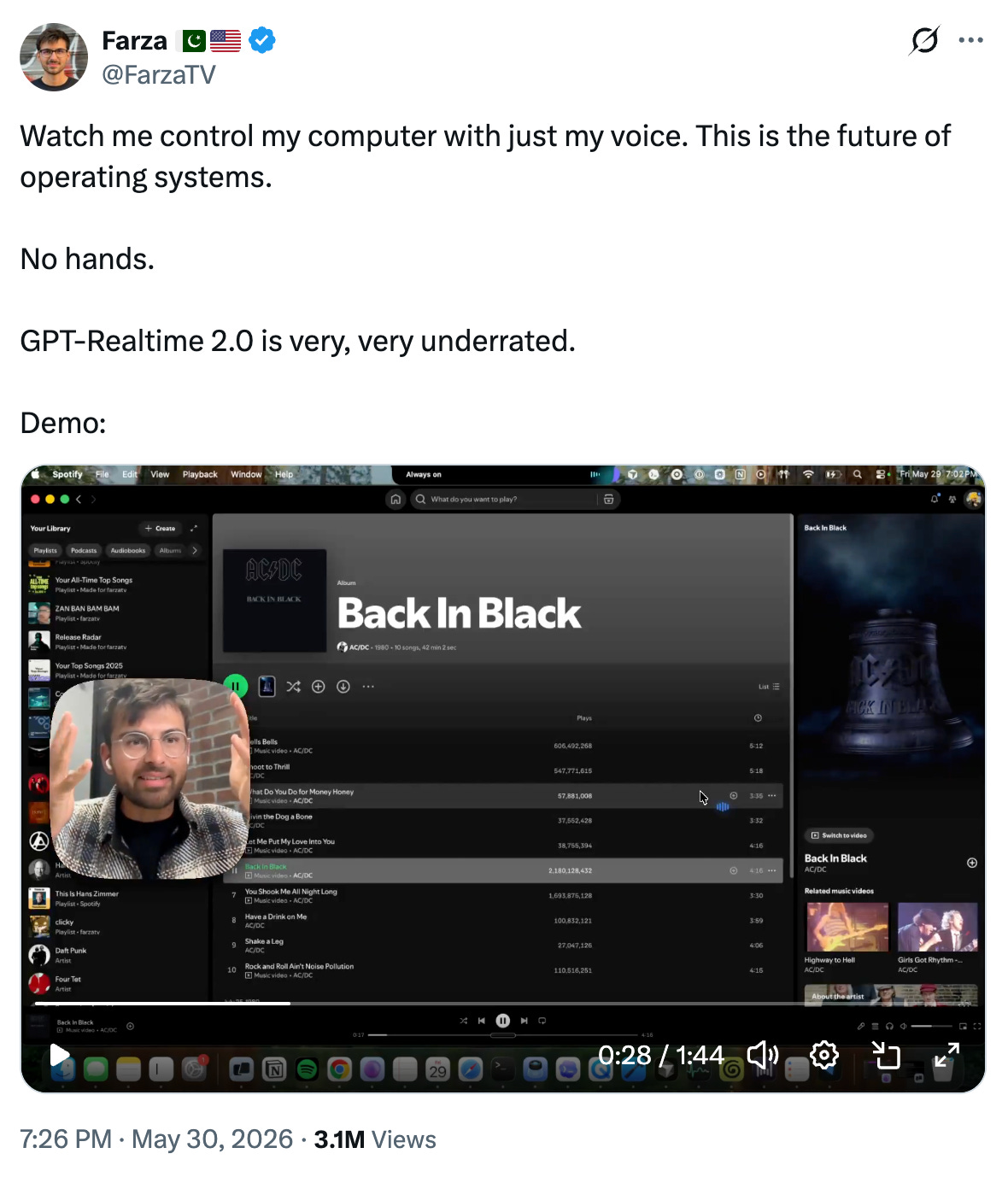
One company spent $500M on Claude in a single month after reportedly forgetting to set usage limits.
AI is coming for figure-skating scores. An optical tracking system analyzes video of a skater’s jump and suggests improvements, and is working with NBC Sports to help Olympics commentators and viewers follow the scoring.
Email us (founders@the-collective.xyz) for introductions!

Name: Ivanni
Experience: Sales at top 1% real estate team in NYC. Impact Investing + Partnerships at United Nations Pension Fund ($100B+ AUM). Consulting for Dell, Intel, and sustainable fashion. Climate research for NOAA. BS Economics, UC Berkeley.
Open to: Chief of Staff, GTM, and Partnerships (based in NYC).

Name: Maja
Experience: Writer of a Substack grown to 30,000+ subscribers in 8 months. Ex-McKinsey consultant with a background spanning strategy, narrative and internet culture. Grew and managed large social audiences, including a 1M+ follower art Instagram, ran $150k+ in creator campaigns, and now advises founders and writers on positioning, voice, and communications.
Open to: Full-time SF roles or advisory work across brand, narrative, growth, culture, product marketing, and company-building, especially with ambitious consumer, creator economy, AI, media, or culture-shaping companies.
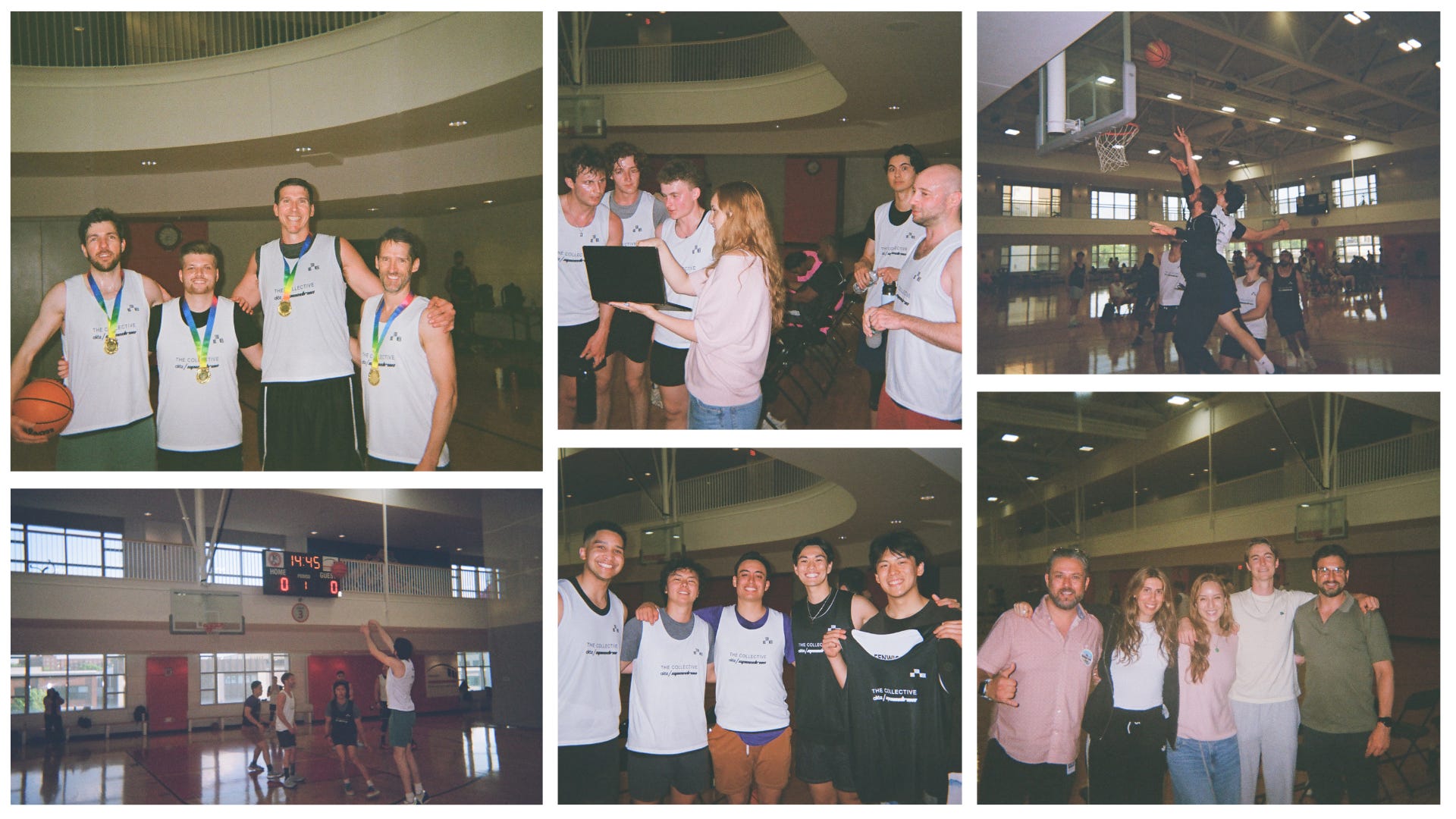
ft. Boston tech week basketball tournament
See you next week,
Maggie + Jonas
No posts
Comments
Nothing yet. Say the first thing.
Sign in to join the conversation.