

We officially launched and have accepted our first cohort of members.
Members get priority access to events AND:
access to our chapters in NYC, SF, Boston, + LA coming soon!
monthly IRL events (wellness, poker, game nights, etc.)
access to our private member portal + slack + network
$500k+ in perks & access to our partners
weekly coworking in SF + NYC
retreats + member matching
We’ll reserve a few spots at every event for people who are curious and want to learn more before becoming members. Those spots are limited and carefully curated.
Apply here to be considered.
[NYC] Coffee & Cowork, 6/19 (Friday)
Coworking and Friday hang for members in NYC.
Kicking off this week and will continue weekly!
[SF] Coffee & Cowork, 6/19 (Friday)
Coworking and Friday hang for members in SF.
Kicking off this week and will continue weekly!
[SF] Game Night, 6/26 (Friday)
Founders + startup engineers. Poker and assorted games.
Deadline: July 10
8-week global program, up to $1M in AWS credits, equity-free
Afore Founders-in-Residence (Summer 2026):
Begins summer 2026
$100K+, includes office space in SF
Written by Annie Dong.
Behind every aesthetic, geo-tagged Instagram travel story are hundreds of logistical decisions travelers painstakingly make: When to fly in? What to pack? How to navigate local transit? Which restaurants are actually worth it?
The problem is that travelers today confront an overwhelming volume of widely-dispersed information, from Google Maps reviews to reddit threads ten years out of date. Surplus optionality makes it evermore difficult to simply plan a trip.
In addition, the rise of travel content on social media has also rendered authentic experiences increasingly hard to find. Algorithms promoting “hidden gem” and “hole in the wall” spots are pushing the same video to millions of viewers, while paid partnerships further distill genuine, first-hand travel experiences.

The growing friction associated with traveling may partially explain the drastic uptick of all-inclusive vacations. A survey commissioned by Hyatt Inclusive Collections, published in March of this year, found that 6 out of 10 consumers are more likely to stay at an all-inclusive resort than they were five years ago. As trip planning becomes more time-intensive, travelers increasingly resort to ready-made packages.
Nonetheless, a new class of AI travel startups is betting they can deliver the ease of an all-inclusive with the authenticity travelers have been chasing all along.
Six Bets on the Future of Travel
Companies within this space typically fall into two camps. The first and most common are vertical agencies which act as the travel planner themselves, owning the customer relationship. The second are SaaS platforms, which sell software to travel agents and agencies.
Anecdote Travel is a WhatsApp-native hotel booking service. Travelers text their dates and destination and receive a curated shortlist of hotel options, handpicked by a human concierge powered by internal AI tooling. The proprietary platform ingests structured multimodal data about hotels, enabling concierges to research, quote, and book end-to-end at speed.
Odessia is a fully autonomous AI agent that books flights, hotels, and full itineraries in a single conversation. Founded by Sonder co-founder Francis Davidson, it runs on GPT-5.5 with integrations across major travel platforms. A luxury tier (”Odessia Collection”) of 2,000+ hotels promises VIP perks like room upgrades and early check-in.
Mindtrip is an AI travel app that generates bookable itineraries from prompts. Once travelers are on the ground, a “magic camera” feature lets them point their phone at a neighborhood, landmark, or restaurant menu and surfaces context, reviews, and translations in real time. Built on OpenAI tech with a database of 10M+ points of interest sourced from 30,000+ local experts, the discovery-native product is designed to replace the research phase entirely.
Layla is an AI trip planner. Travelers tell it their style, budget, and dates, and it builds a full plan covering flights, hotels, and activities using live pricing from partners like Booking.com, Skyscanner, Viator, and GetYourGuide. The product is free with a $49/year premium tier.
Wanderlog is a free trip planning app that lets individuals and groups build and manage travel itineraries in one place. Users can map out stops, collaborate with travel companions in real time, and automatically populate reservations by forwarding booking confirmation emails to the app.
Fora is a B2B2C platform that trains and certifies everyday people to become travel advisors, then equips them with AI tools to run a booking business. Advisors keep 70-80% of commissions earned from hotels and travel providers, while Fora takes a cut and supplies the infrastructure: booking tools, supplier relationships, training, and an AI layer that personalizes recommendations based on client data. More than 15,000 advisors have built businesses on the platform, together booking over $2.5 billion in travel across 180+ countries.
These companies represent at least four distinct bets on what’s wrong with travel: fragmentation (consolidate the tools), discovery (find people and places on social, not search), trust (put humans back in the loop), and automation (remove the human entirely).
Written by Priyal Taneja.
Two passengers sitting next to each other in economy on the same flight, in the same row, with the same legroom, can be paying wildly different prices. One booked a full-fare flexible ticket at $1,200 but the other grabbed a restricted discount fare three weeks earlier for $340. They’re in the same cabin, but their tickets belong to entirely different fare classes, and the system that decides which fare class is available at any given moment is one of the oldest and most sophisticated pricing engines in commercial technology.
Airline revenue management predates modern AI by decades. It started in the late 1970s after US airline deregulation opened the door to price competition, and it’s been refined continuously ever since. Understanding how it works explains something every traveler has experienced but very few can explain the mechanics of: why the same seat can cost $200 or $800 depending on when and how you search.
The Fare Class System
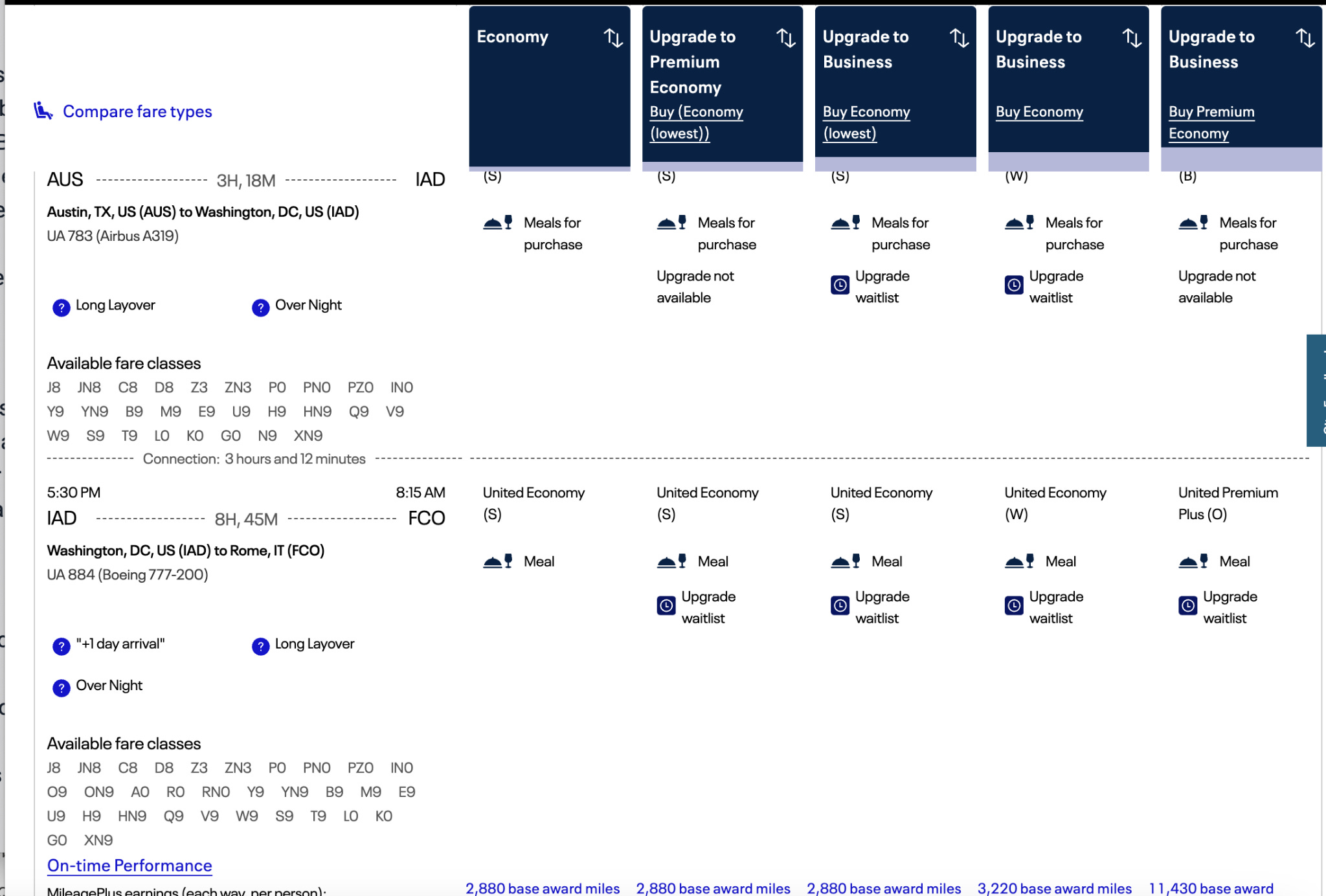
Airlines don’t set one price per seat. They divide every cabin into dozens of fare classes, each represented by a single letter code, each with its own price point and set of rules. A typical airline might have 12 to 15 fare classes within economy alone, ranging from Y (the most expensive, fully refundable, fully flexible economy ticket) down through codes like B, H, K, M, L, V, and Q, each progressively cheaper and more restrictive. British Airways, for example, runs 22 fare classes across its four cabins.
Each fare class corresponds to a “fare bucket,” which is a pool of seats the airline is willing to sell at that price. The cheapest buckets sell first. As a flight fills up or as departure approaches, the airline closes lower fare classes and only offers the more expensive ones. This is why a flight that was $400 last week might be $900 today even though the plane is the same, the route is the same, and nothing about the service has changed. The cheap buckets closed.
How the System Decides Which Buckets to Open
The revenue management system behind these decisions is constantly solving an optimization problem: how do we maximize total revenue across every seat on this flight? Sell too many cheap seats early and you leave money on the table when high-paying business travelers book last minute. Hold too many seats back for premium fares and the plane takes off with empty rows.
The system balances this by drawing on several categories of input:
Demand forecasting. Historical booking data for the same route, day of week, and season provides a baseline curve of when bookings typically arrive and at what price sensitivity. The system compares current bookings against this curve to determine whether demand is running ahead of or behind expectations.
Booking velocity. How fast seats are selling right now matters as much as how many have sold. A sudden spike in bookings signals high demand and triggers the system to close cheaper fare classes faster. A slowdown might prompt it to reopen discounted buckets to stimulate sales.
Competitor pricing. Airlines monitor each other’s fares through API integrations and shopping data aggregators that capture the full spectrum of price points observed during real customer searches. If a competitor drops their fare on the same route, the system may respond by adjusting its own availability.
Time to departure. As the departure date approaches, the system’s strategy shifts. Far out, the priority is filling base demand with lower fares. Close to departure, the remaining seats become more valuable because the buyers at that point (often business travelers) tend to be price-insensitive.
External signals. More advanced systems factor in weather forecasts, local events (conferences, concerts, holidays), economic indicators, and even day-of-week search patterns to refine their demand estimates.
All of this runs continuously. The fare you see at 9am might not be the fare available at 9pm, even if no new seats were sold, because the model’s demand forecast updated based on new competitive data or a shift in booking velocity.
The Shift to Continuous Pricing
The fare class system, for all its sophistication, has a fundamental constraint: prices can only move in discrete jumps between predefined fare buckets. If the optimal price for a seat right now is $437, but the closest fare classes are $410 and $470, the airline either undercharges or overcharges. Revenue is left on the table either way.
This is why the industry is moving toward what’s called continuous pricing, where the system can quote any price on a spectrum rather than snapping to a predefined fare class. Instead of opening and closing buckets, a real-time algorithm calculates a percentage adjustment to the base fare using price elasticity estimates, current demand signals, and the forward-looking value of remaining inventory. Airlines using these systems have reported 3 to 10% uplifts in total revenue.
The transition is still in progress. Most airlines operate in a hybrid mode where dynamic adjustments are applied on top of the traditional fare class structure rather than replacing it entirely. As one airline executive put it, the industry didn’t want to start with static fares, it had to start with them because of infrastructure limitations, and now the challenge is dismantling the system they’ve built.
Why This Matters for AI Travel Agents
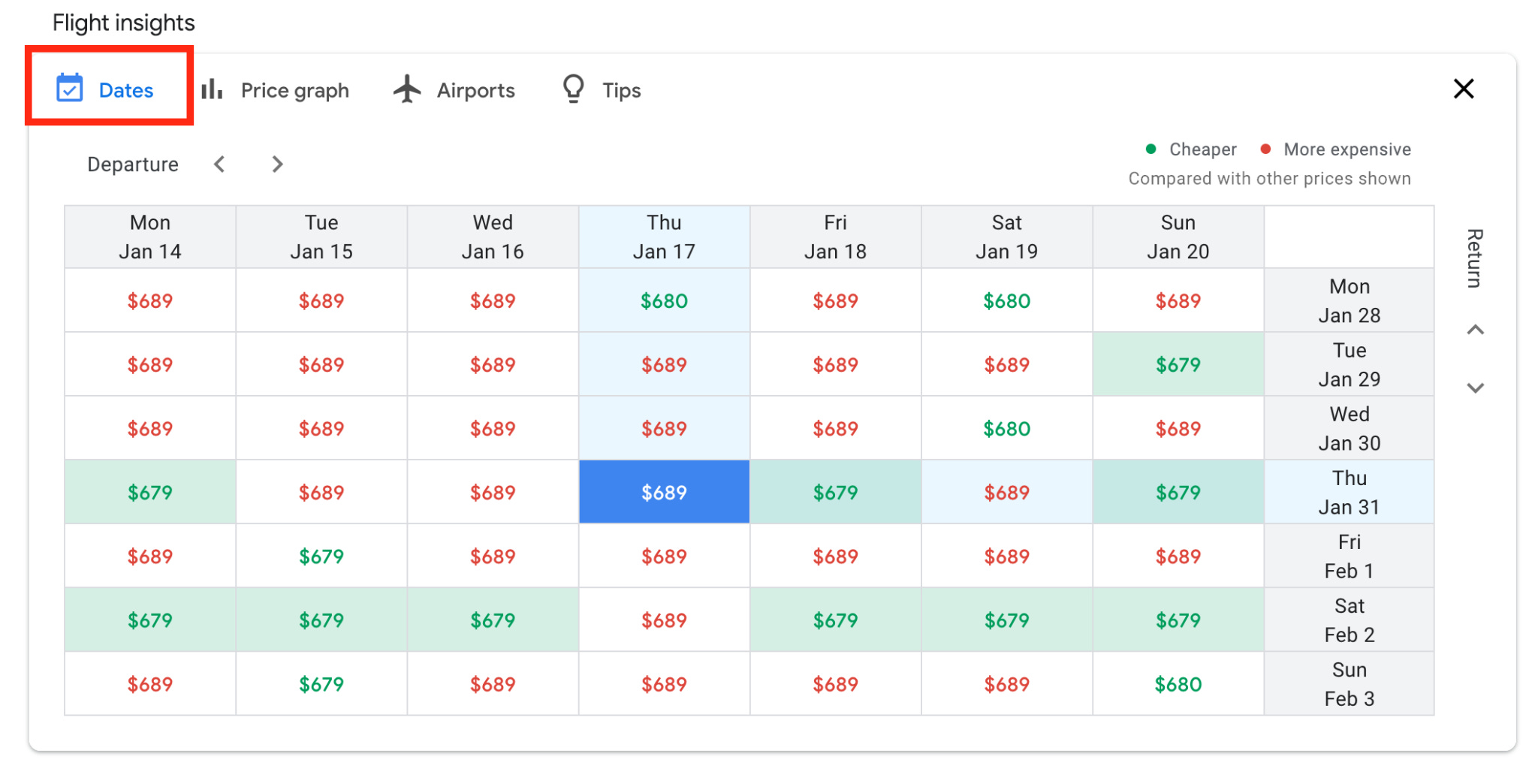
For the AI travel startups described above, dynamic pricing creates a genuinely adversarial environment. When Layla or Odessia queries a booking API for flight prices, the fare returned is a snapshot of a constantly moving target. The price can change between the moment the agent searches and the moment the user decides to book. It can change based on how many times the route has been searched recently. It can even change based on signals the airline infers from the query itself.
This means an AI agent building a trip itinerary around a specific flight price is working with information that has a shelf life measured in minutes. The agent might assemble a perfect budget-optimized plan, present it to the user, and by the time they click “book,” the fare class has closed and the price has jumped. Solving this requires agents to either hold tentative reservations (which most APIs don’t support for the cheapest fares), build in price volatility buffers, or move fast enough that the window between search and purchase stays narrow.
The pricing engine on the other side of that API has been optimized for over four decades. The AI agents trying to shop against it are just getting started.
Ramp: Corporate spend and finance automation. Software Engineer, Product Engineer (New York)
Anduril: Autonomous defense systems and software. Mission Software Engineer, Software Engineer (Costa Mesa, CA)
Sierra: Bret Taylor’s enterprise AI agents. Forward Deployed Engineer, Software Engineer (San Francisco)
Cognition: Maker of Devin and Windsurf. Software Engineer, Forward Deployed Engineer (San Francisco)
Harvey: Legal AI for law firms. Software Engineer, Forward Deployed Engineer (San Francisco / New York)
Mistral: Open-weight frontier AI from Paris. ML Engineer, Software Engineer (Paris)
Glean: Enterprise AI search and assistant. Software Engineer, Forward Deployed Engineer (Palo Alto)
Supabase: Open-source Postgres developer backend platform. Software Engineer (Remote, Global)
Lovable: AI app builder, vibe coding. Software Engineer (Stockholm / Remote)
Replit: Browser-based AI coding and deployment. Software Engineer (Foster City, CA / Remote)
Crusoe: Vertically integrated AI cloud infrastructure. Infrastructure Engineer, Software Engineer (San Francisco / Denver)
Mercor: AI talent marketplace for labs. Software Engineer (San Francisco)
Decagon: AI customer-support agents for enterprises. Forward Deployed Engineer, Software Engineer (San Francisco)
Abridge: Ambient AI clinical documentation platform. Full-Stack Engineer, ML Engineer (San Francisco / Remote)
OpenEvidence: citation-first ChatGPT for doctors. Software Engineer (Cambridge, MA / Remote)
Thinking Machines: frontier AI lab. Research Engineer, Software Engineer (San Francisco)
World Labs: spatial intelligence lab. Research Engineer, Software Engineer (San Francisco)
Suno: AI music generation for everyone. ML Engineer, Software Engineer (Cambridge, MA)
Clay: AI go-to-market and sales platform. Forward Deployed Engineer, Software Engineer (New York)
Linear: issue tracking and planning. Product Engineer, Design Engineer (Remote)

We’re super excited to announce our 2026 Fall Fellows!
We hand selected fellows from over 750+ applications due to their understanding of culture, tech, and innovation. This is a talented group and we’re excited to see what they accomplish.
Congrats to each of them!
See you next week,
Maggie + Jonas
No posts
Comments
Nothing yet. Say the first thing.
Sign in to join the conversation.