
If you’ve heard about The Author Ecosystems framework and felt yourself recoil or resist, even though you had some natural curiosity and pull toward it too…This post is for you.
Even though the idea of having a creative archetype sounds a bit woo and like it would box you in, there’s a lot of research that has gone into this framework, and it’s definitely worth your consideration when you are looking for new understanding around how to market and sell your books.
Here’s the truth I’ve learned after working with hundreds of authors across the major publishing models in the industry—resistance is part of the process. And sometimes, the thing we avoid most is the exact thing we need to create real change.
Over the past few years, I’ve heard the same objections surface again and again when authors first encounter this framework. What I’ve noticed is that the resistance itself is revealing—it often points directly to the breakthrough waiting on the other side.
Below are some of the most common objections I hear, and the deeper truths underneath each one.
You’re a whole human—not a personality type or a caricature. You create for your own reasons, in your own rhythms. For you, Author Ecosystems might feel like a trap.
I get it. And here’s what’s true: Author Ecosystems isn’t a box or a trap—it’s a map.
It doesn’t limit who you can be, but it reveals how you already operate. Most authors are already living in a dominant base ecosystem, they just don’t know it yet. The framework helps you name your terrain, see your natural advantages, and stop fighting with marketing and sales strategies and tactics that were never meant for you.
Think of it this way: knowing you’re right-handed doesn’t mean you can never use your left hand. It just means you stop beating yourself up for not being left-handed or ambidextrous.
It’s not about focusing on one thing or way of being forever—business is going to keep evolving. But it is about knowing your center, because that’s where you can build from.
“But I see myself in all the types.” You’re not wrong! Humans are complex, and honestly, the framework was designed to reflect that.
Every author has access to all six ecosystems. But one is usually your core or dominant system, and that is valuable to know.
Think of it like a native language. You might be fluent in several, but there’s one you dream in. That’s your core Author Ecosystem.
You’ll evolve through others as your business matures. You’ll borrow strategies across terrains. But when you know your starting point, you can stop spinning your wheels and start working toward your dreams with clarity.
The confusion you’re feeling? That’s actually valuable data. It means you’re seeing the nuance—and that nuance is exactly what the books help you navigate.
Totally fair. If you’re drowning in ideas and just want your next strategy to work, this might seem like a detour.
But what if the reason your tactics aren’t sticking is because they’re not rooted in your ecosystem?
This framework isn’t about navel-gazing. It isn’t about your inner child or shadow work (though I love both).
It’s instead about understanding your creative business from the root. It’s about alignment-based strategy. It’s what helps:
Deserts stop burning out on an increasingly complex publishing landscape
Grasslands stop second-guessing their pacing and strategies
Tundras stop chasing evergreen production and marketing/sales tactics
Taigas stop hiding their magnetism and trying to fit in
Forests stop feeling like they’re failing because they’re “too emotional”
Aquatics stop trying to build megabrands with no scaffolding or foundation
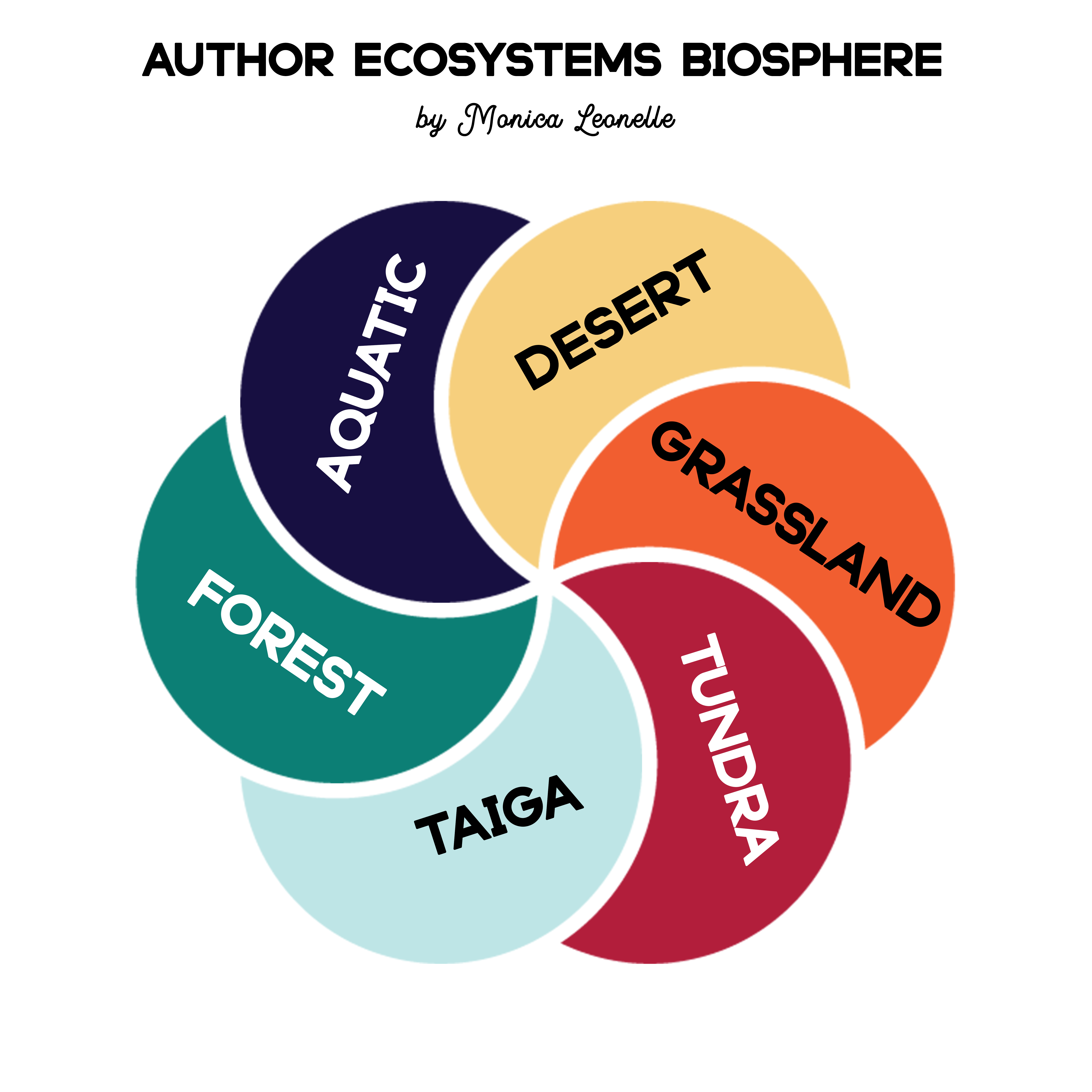
When you understand your creative nature, your path opens up.
You don’t need more tactics, you need the right ones for you. That’s exactly what Author Ecosystems can deliver, and it works for creatives at all skill levels:
Aspiring authors - If you are just starting your writing career or even writing your first book, Author Ecosystems can help you find your most productive and efficient path to both finishing the book and building a larger business around it, one book and system at a time. This framework can help you cut through the noise and better discern who + which tactics/strategies you should follow.
Established authors - If you’re years into your publishing career, Author Ecosystems doesn’t talk down to you—it helps you see the why behind your patterns. Specifically, it helps you see why things that you thought would work never worked, or why what used to work has stopped working. Established authors often tell me this framework finally gave them language for what they’ve sensed but couldn’t name.
Sure—it uses metaphor around biospheres, ecosystems, and other biome terminology.
But the applications are entirely strategic. The Author Ecosystems framework has been used to:
Design high-performing product stacks
Clarify ad strategy and release pacing
Match publishing models to author energy
Reverse engineer burnout cycles
Build brands that resonate and convert
It’s not fluff. It’s not vibes-only. It’s not a Buzzfeed quiz. It’s real-world creative strategy, built for sustainable careers. It just happens to honor your humanity, too.
When a Desert understands why rapid release drains them after two years, they can build sustainability before they crash. When a Taiga realizes their “slow” pace is actually their superpower, they stop apologizing and start leveraging it. When an Aquatic sees why they keep overbuilding, they can create scaffolding that prevents collapse.
That’s not woo. That’s strategy rooted in self-knowledge.
And let’s be clear: this framework didn’t appear out of nowhere.
The Author Ecosystem model was born from years of research, client work, and data gathered across hundreds of authors in every publishing model—traditional, hybrid, and indie. The archetypes reflect patterns that show up again and again in how authors create, publish, and sustain momentum. They are rooted entirely in the sales funnel + fandom flywheel business concepts that you can find in any textbook on marketing or sales, that you can study in any business program in the world.
It’s not guesswork. It’s not even personality typing. It’s a synthesis of creative psychology, market strategy, and long-term business modeling for authors.
It is measurable. Repeatable. And grounded in the lived experience of real author success stories.
Author Ecosystems is not just a map to your personal business—it’s also a map to the trajectory of the industry.
All businesses move along the spectrum between Desert and Aquatic. All industries do too.
When you are a Forest living in a Desert industry, you’re going to feel the pain of trying to succeed.
When you are a Desert who sees the industry shifting toward things that just…Aren’t in your wheelhouse, you’re going to panic about the future.
Author Ecosystems is a shared language that can help you articulate what’s happening and what you’re experiencing. It can help you understand how you and your business and its timeline fit with the industries best practice business models and timelines.
Author Ecosystems helps you future-proof your strategy—and make sure success doesn’t come at the cost of your well-being.
I’ve watched too many authors build six-figure businesses that quietly destroy them. The money arrives, the audience grows…And somewhere along the way, they stop recognizing themselves.
I’ve also watched too many authors never build six-figure businesses and eventually quit.
For both, understanding your Author Ecosystem and your evolution path isn’t about fixing what’s working. It’s about making sure what’s working now can sustain you for the next decade.
“What if I look and don’t like what I find?”
This one runs deeper. Because sometimes, we resist this work because we’re afraid it will confirm what we already know:
That we’re burned out
That we’ve built an unsustainable business
That we’re not cut out for the business models we thought we had to follow
But that clarity? I think it’s a gift. And this framework doesn’t shame you—it shows you what needs support, and offers a way to evolve. The question isn’t “am I doing it wrong?” The question is “how do I build from here?”
Author Ecosystems isn’t new or a trend—it’s just newly named. Every creative industry has always had these patterns. There have always been:
Deserts finding gaps and validating markets
Grasslands growing slow and wide
Tundras launching loud and creating events
Taigas getting paid to be themselves
Forests reflecting the culture back to itself
Aquatics inventing new genres and niches
Author Ecosystems is not new—what’s new is the language that lets us understand ourselves. Frameworks like this aren’t trends, they’re tools. And this one will be here long after the algorithms shift again.
What’s “working” in publishing this year might be obsolete next year…But this framework? It’s built for the long haul of your career.
Reading a website or a few books is an investment of your time and attention, but you get to use it forever, too. And if you are already familiar with other archetyping systems, you can use them in tandem with this one, too!
The most successful authors I know aren’t the ones following the “proven path.” They’re the ones who figured out their path and committed to it fully—even when it looked nothing like what everyone else was doing.
That’s what these books give you—permission to build your own path, and a framework for doing it strategically rather than randomly.
You’ve spent money, energy, hope. You’ve placed a down payment on your dreams but the house still isn’t built.
Here’s what I’ll say:
Author Ecosystems doesn’t promise a magic bullet…It cannot get results for you. You still have to do that part.
But it does offer something many other spaces aren’t, which is context.
It gives you a compass and a mirror so you can stop chasing someone else’s success path and finally build your own.
This isn’t about finding the next thing to try. It’s about finding the only thing that’s ever truly mattered—a publishing career built around how you—and only you—actually thrive.
For years, I have watched brilliant authors follow “proven” strategies that destroyed them.
They’d rapid-release until they burned out. They’d build massive email lists that felt like shouting into a megaphone with no one listening. They’d launch books that succeeded commercially but left them feeling creatively depleted.
Or they’d do everything right repeatedly and never really get anywhere with their careers.
Sometimes I’ve been that author myself, on both counts.
And I kept thinking: We know that two people can attempt to apply the same advice and get drastically different results. But why?
There was no personality typing system or framework that gave me any sort of answers for the gaps that I was seeing in Kickstarter and retailer data that I had access to.
So Russell and I made our own.
And now I’m continuing that work (in my version) with two books:
Passion + Profit with Author Ecosystems
Six-Figure Storyteller with Author Ecosystems
Together, these books do something most author business books don’t: they meet you where you are and help you build from there—not from where someone else started.
So if you felt resistance reading this post, that’s okay. That’s normal.
But I’d invite you to ask yourself: what is the resistance protecting?
Maybe it’s protecting you from being disappointed again. Maybe it’s protecting you from admitting something needs to change. Maybe it’s protecting you from the work of building differently.
Or maybe—just maybe—it’s protecting you from finally succeeding in a way that actually feels good.
And if you’re still not sure this is for you? That’s fine too.
The framework will be here when you’re ready.
No posts
Comments
Nothing yet. Say the first thing.
Sign in to join the conversation.