
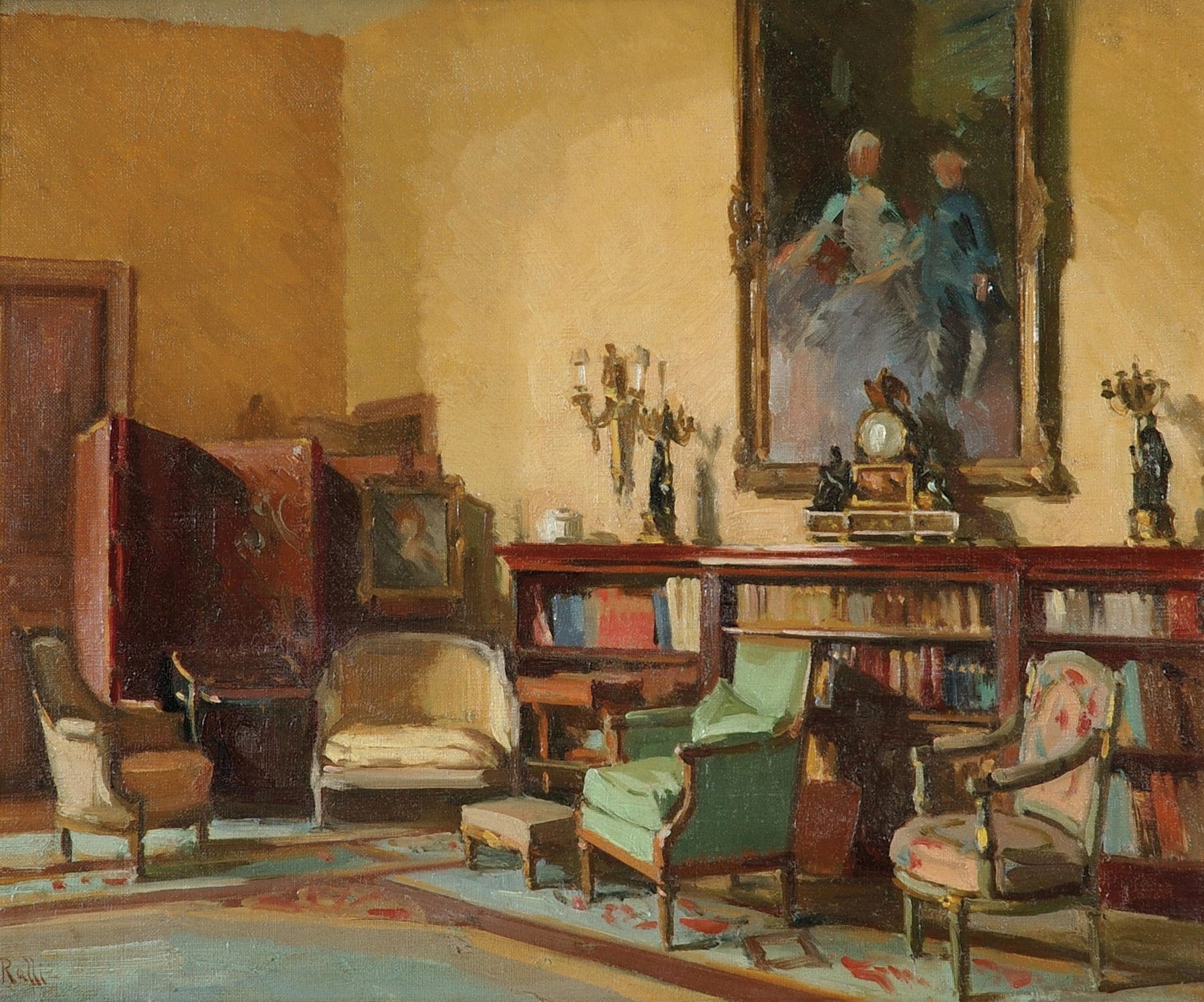
So you’ve arranged the furniture and painted the walls, everything is technically done. But the room still feels cold, unfinished, lifeless. Hard surfaces dominate. Wood floors, plaster walls, leather or wood furniture. Clean, minimal, correct. And somehow wrong.
What’s missing is not another piece of furniture or a different paint color. It’s textile. Not pillows stacked decoratively on a sofa or a gallery wall of framed prints. One good textile: a rug, curtains, a wool throw. Chosen well, placed right, and it changes everything.
Acoustic softening: Hard surfaces bounce sound. Wood floors, tile, plaster walls, they all reflect noise back into the room. Voices echo. Footsteps click. The space feels harsh.
Textile absorbs sound. A wool rug or linen curtain dampens that harshness. The room becomes quieter, calmer. You don’t notice it consciously, but you feel it.
Thermal warmth: Wool, cotton, linen add physical warmth. Not just visual warmth, actual warmth. A stone floor is cold. A stone floor with a wool rug on it is less cold. The textile insulates. It traps air. It makes the room feel warmer to inhabit.
Visual weight: A rug grounds the space. It pulls the eye down, creates an anchor point. Curtains frame windows, give vertical rhythm. A throw draped over a chair adds mass without clutter. The textile gives the room weight, presence, substance.
Tactile engagement: Something to touch, to walk barefoot on, to sit against, to feel under your hands. Textiles engage senses beyond sight. They make a space feel inhabited, not staged.
One good textile does all of this, multiple cheap ones do none of it.
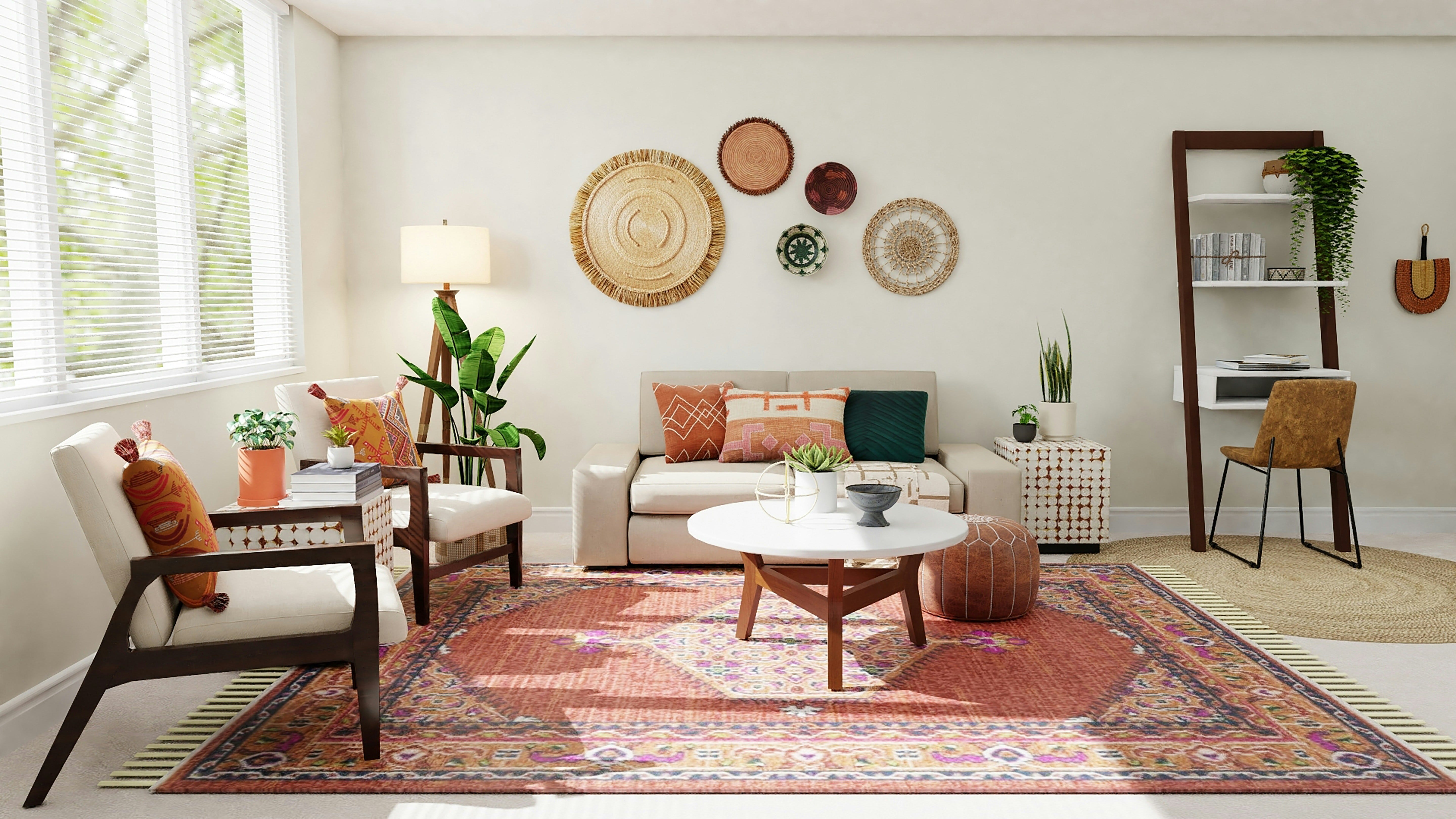
Material matters most so try your best to pick natural fibers only.
Wool: Durable, warm, ages beautifully. Best for rugs and throws. It develops patina over time. Slight wearing in high-traffic areas looks good, not damaged. Wool absorbs moisture, releases it, breathes. It’s naturally stain-resistant. A good wool rug lasts decades and looks better at year ten than year one.
Linen: Breathable, softens with use and washing. Best for curtains and lighter throws. It wrinkles, but that’s part of its character. Crisp when new, it relaxes into something more lived-in. The texture improves. Linen aged five years is better than linen fresh from the loom.
Cotton: Versatile, washable, less expensive than wool or linen. Good for lighter rugs, blankets, everyday use. Not as durable as wool, but honest. It wears visibly, which means you know when it’s time to replace it.
Avoid synthetics entirely! (very important)
Polyester doesn’t breathe, it pills. It looks cheap immediately and worse over time. Acrylic pretends to be wool but isn’t. It has none of wool’s properties: no warmth, no resilience, no aging. Synthetic blends degrade and they don’t develop character, they just deteriorate over time.
The test: Will this look better in ten years or worse? Natural fibers improve with age. Synthetics fall apart.
If your room is visually busy (artwork on walls, books on shelves, objects displayed), choose a solid textile or one with very subtle pattern. Let the textile ground the space, not compete with it.
If your room is sparse (minimal furniture, plain walls, few objects), pattern can add life. But choose carefully. Geometric patterns with repetition and variation work (the same principle as zellige tile: order with slight irregularity). Avoid chaotic, busy patterns. They tend to create visual noise and not rhythm. The textile should either anchor a busy room or enliven a spare one. Not both; it’s very important that it does not do both (it almost never works out in most cases).
For rugs:
Size matters more than placement rules. A rug should be large enough to anchor the space it belongs to, whether furniture sits on it or works around it. What fails isn't the arrangement but the scale: a small rug placed in a large room reads as an afterthought, not a foundation. When in doubt, go larger.
For curtains:
Floor-length, always. Curtains that stop at the windowsill look unfinished (many do this mistake). Mount them high, at the ceiling line, not at the window frame. This makes the room feel taller and the window more integrated into the wall.
Use generous fabric. Curtains should have folds, not be stretched tight across the window. The drape creates depth, softness, visual weight.
For throws:
Draped, not arranged. A throw folded into a perfect rectangle and placed just so looks styled but not lived. Drape it over the back of a chair or the arm of a sofa. Let it look casual, like it’s actually used, because it should be.
Pick one room. The room you use most.
If it’s your living room, start with a rug. If it’s your bedroom, start with linen curtains or a wool throw at the foot of the bed. If it’s a workspace, a wool rug underfoot changes how the room feels when you’re sitting at a desk for hours.
Start with one room and one textile.
Budget honestly. A good wool rug costs more than five mediocre synthetic ones. But it lasts, it improves, and it works. Better to save for one good piece than settle for many bad ones.
Live with it before adding more. Get one textile right. See how it changes the room. Notice the acoustic difference. Feel the warmth. Watch how it grounds the space. Then, if needed, consider the next one.
Your home doesn’t need textiles everywhere neither does it need throws on every chair, rugs in every room, curtains on every window. It just needs one good textile in the right place.
A natural material, the proper size, and intentional placement.
One piece doing real work beats ten doing nothing. Start small with one textile and with one room. Choose it well, place it right, and live with it.
That’s how you begin.
These are not just abstract ideas to me.
They are part of how I see the world. They shape the way I think about space, pace, and what makes a home feel like it remembers something deeper.
They are what guided the process behind something I made for others who feel the same way.
This is a 56-page visual and written guide on Moorish design for modern spaces.
It includes:
Core design principles rooted in Moorish-Andalusian tradition
Practical suggestions and layout ideas
Visual references and moodboards
A calm, intentional approach to creating beauty through atmosphere and meaning
The guide is for those who want more than just style. It is for people who are seeking feeling, presence, and a quiet elegance in their spaces.
You can find it here: https://ahmednaseem.gumroad.com/l/neo-moorish-home
Thank you for reading.
Whether you come for the the ideas, or the quiet philosophy behind it all, I’m truly grateful.
Until next Friday,
The Andalusian Edit
Comments
Nothing yet. Say the first thing.
Sign in to join the conversation.