
The world is flattening. Glass towers in Miami, Singapore, Shanghai—interchangeable facades, identical logic. Modernity has a template, and it’s being applied everywhere.
Traditional architecture, like the riads of Fez and Marrakech, the Albaicín quarter of Granada, the pueblos blancos scattered across Andalusia, is increasingly treated as quaint. Picturesque. Something to photograph but not to build. A relic of a less efficient, less rational past.
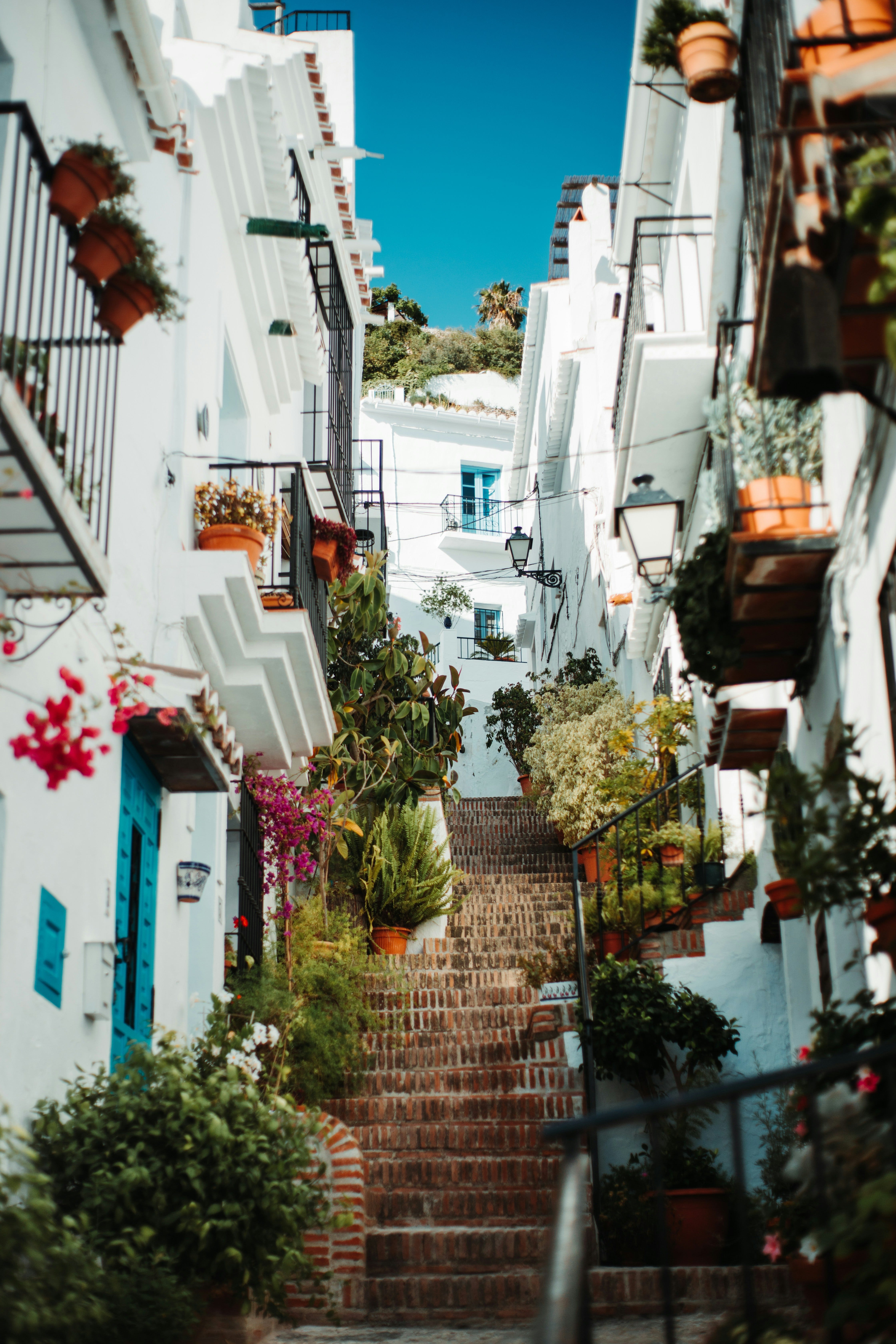
So why does tradition matter when everything around us is new and modern?
Because tradition isn’t nostalgia nor is it about romanticizing the past or resisting progress. Upholding tradition matters because it preserves knowledge that can’t be recovered once lost, maintains standards that modernity has abandoned, and offers an alternative to the relentless homogenization of contemporary life.
When tradition breaks, we lose something we can’t rebuild. And everything that comes after is diminished by that loss.
Knowledge that can’t be recovered. Craftsmanship is not only some aesthetic preference. It’s technical knowledge refined over centuries.
Take zellige tilework for example, the geometric mosaics that cover walls in Moroccan riads and Andalusian palaces. A master zellige cutter doesn’t just chip colored tiles into shapes. He understands geometry at a practiced level: how patterns tessellate, how pieces fit together with minimal gaps, how different glazes interact when placed adjacent, how to account for slight irregularities in hand-cut pieces, how to lay tile so it adheres properly to vertical surfaces in humid environments.
Practitioners developed this knowledge over generations. Apprentices learned from masters who learned from theirs. Techniques were refined through trial and error across centuries. The craft evolved in response to materials, climate, and architectural needs.
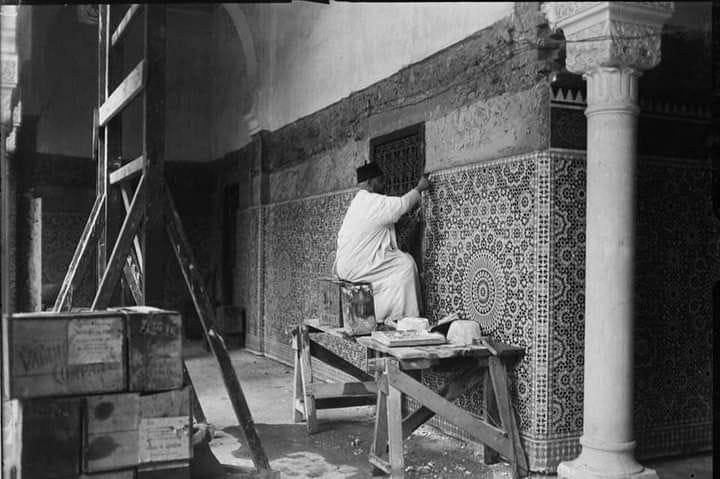
When the last master dies without passing this knowledge to an apprentice, it’s gone. You can’t reverse-engineer it from photographs. You can study the patterns, measure the pieces, analyze the chemistry of the glazes but you won’t have the practiced knowledge of how to actually do it. The hand pressure when cutting. The judgment of when a piece is close enough. The feel of the plaster mix. The sequence of assembly that makes the whole thing work.
The same applies to tadelakt plaster — polished lime plaster used for centuries in Moroccan hammams and water features. The ratios of lime to aggregate, the timing of polishing, the specific stones used for burnishing, the technique for achieving waterproofing without modern sealants, all of this is knowledge held by practitioners, not written in manuals.
Traditional builders knew materials intimately. They understood how cedar behaves in courtyard conditions, why lime plaster works in wet spaces, which stone to use for which purpose. This was practical wisdom developed through observation, testing, failure, and refinement over generations.
Modern architecture has replaced this material knowledge with engineering calculations and industrial specifications. We don’t need to understand how materials age because we assume they’ll be replaced before they fail. We don’t need to know how they respond to climate because we control climate mechanically.
But when those systems fail, when resources become scarce, when we need to build differently, that accumulated knowledge is no longer accessible. We’ve lost the literacy.
Buildings connect present to past in ways that books and images cannot.
In the Mezquita of Córdoba, you walk where people walked a thousand years ago. The columns they saw, you see. The light moving through the double-tiered arches, the same light, the same rhythm. The space itself is continuous.
When you enter a courtyard in Fez that’s been inhabited for five hundred years, you’re participating in a spatial tradition that predates modern nation-states. The fountain in the center, the zellige on the walls, the rooms arranged around the void.
This continuity matters. It grounds you in something larger than the present moment.
When we demolish traditional buildings for glass towers and parking lots, we sever that continuity. We erase the physical record of how people lived, how they built, what they valued. The past becomes something you read about, not something you inhabit.
Standards of Quality. Traditional craft maintains standards that industrial production has abandoned.
A master zellige cutter’s work is distinguishable from machine-cut tile, not just in pattern complexity but in the quality of execution. Hand-cut pieces have slight variations that create visual richness. The cutting itself requires skill: clean breaks, precise angles, pieces that fit together with minimal gaps despite being cut individually.
Machine-cut tile achieves perfect uniformity. Every piece is identical, same size, same angle, same tone. It's precise but lifeless.It lacks the subtle irregularities that make handwork legible as handwork. It’s cheaper and faster, but the standard of quality is lower.
The same distinction exists between hand-carved cedar and CNC-routed wood. A carved ceiling has depth, the tool marks are visible, the wood responds to the carver’s hand, there’s variation in the relief. CNC routing produces identical, shallow patterns that look like decoration applied to a surface rather than carved from it.
Tradition upholds quality standards because those standards were developed through practice, not through efficiency metrics. A master craftsman’s reputation depended on the quality of work, on maintaining standards passed down through generations. There was pride in execution, in doing it right.
Modern production optimizes for speed and cost. Quality is acceptable as long as it meets minimum specifications. There’s no tradition of mastery, no lineage of practitioners maintaining standards across time. Just products meeting requirements.
Traditional architecture evolved in response to specific climates. The solutions it developed are local, tested over centuries, and remarkably effective.
Like courtyards in hot, arid regions. The courtyard creates a microclimate: shade at ground level, hot air rising and escaping through the open top, cool air drawn in from shaded galleries. Water in the central fountain cools through evaporation. Plants transpire, adding humidity and oxygen. The whole system works passively, requiring no energy input.
Mashrabiya screens(wooden lattices on windows) filter harsh sunlight while allowing air circulation. They create privacy without blocking ventilation. The patterns diffuse light, reducing glare while maintaining brightness. Again: passive, functional, beautiful.
Thick walls in traditional buildings provide thermal mass. They absorb heat during the day and release it slowly at night, moderating temperature swings. In hot climates, interiors stay cool. In cold climates, warmth is retained.
Modern architecture imposes the same solutions everywhere, then compensates with mechanical systems. Glass towers in the Arabian gulf require massive air conditioning to be habitable. The same tower design in Stockholm needs intensive heating. The architecture ignores climate, and technology forces habitability.
This is not only inefficient but also unsustainable. Traditional solutions worked with available resources and natural systems. Modern solutions depend on abundant energy and assume indefinite access to fossil fuels or electrical grids.
Traditional architecture is designed for human perception and use. Proportions relate to the body: ceiling heights you can reach, doorways scaled to passage, windows placed for seated or standing views. Spaces are comprehensible—you can grasp the whole, understand how it works, feel oriented.
Ornament appears at scales where you can actually see it. Zellige at eye level. Carved plaster above doorways. Painted ceilings overhead. Each element addresses human vision, inviting close inspection or distant appreciation depending on placement.
Modern architecture often operates at scales that alienate. Vast atriums soar beyond human proportion. Endless glass facades reflect without engaging. Superhuman dimensions — towers a hundred stories tall, lobby spaces that dwarf occupants, blank walls stretching city blocks.
This isn’t wrong, but it creates a different relationship between people and buildings. Modern architecture can make you feel small, insignificant, reduced to a unit moving through space.
Traditional architecture, at its best, makes you feel located. You know where you are. The space acknowledges your presence. It’s designed for you, not despite you.
Globalization creates sameness. Airports look identical worldwide. Chain hotels could be anywhere. Office buildings follow the same logic regardless of location. The architecture of global capital doesn’t care about place, it just cares about efficiency, replicability, and brand consistency.
Traditional architecture is local. It uses materials from the region: cedar from nearby forests, stone from local quarries, clay for tiles fired locally. It responds to local climate: thick walls in deserts, pitched roofs where it rains, courtyards where shade matters. It reflects local culture: how people live, what they value, how they organize social life.
When every city builds the same glass towers, we lose diversity. Not superficial aesthetic diversity, but deep architectural diversity rooted in different climates, different cultures, different ways of being in the world.
Upholding tradition means preserving that diversity. There are other ways to build, other spatial logics, other relationships between inside and outside, public and private, individual and collective.
Tradition keeps those alternatives alive.
In Morocco, craft schools still train zellige cutters, plaster carvers, and woodworkers. The knowledge is being transmitted. Apprentices learn from masters who learned from theirs. The chain remains unbroken.
Restoration projects in Fez, Marrakech, and other cities use traditional techniques. When a riad’s plaster needs repair, it’s repaired with tadelakt, not cement. When zellige tiles crack, they’re replaced with hand-cut pieces.
Some new buildings incorporate traditional elements authentically. Not pastiche or theme-park Orientalism, but genuine engagement with traditional spatial logic: courtyards that function climatically, proportions that feel right, materials that age well.
The medinas (old city centers) still function as living urbanism. People live in traditional houses, shop in traditional souqs, move through narrow streets designed for pedestrians and pack animals, not cars. The urban fabric survives through use.
In Spain, Alhambra restoration teams work to preserve Nasrid techniques. Mudéjar buildings are maintained using methods as close to original as possible. Some architects are reviving traditional approaches, not copying forms superficially but understanding principles and applying them thoughtfully.
These are the places where tradition is being upheld. Where knowledge is still transmitted. Where standards are maintained. Where the chain hasn’t broken.
But it’s fragile.
Economic Pressure. Traditional methods are slower and more expensive than industrial production. A hand-carved cedar ceiling takes weeks. A CNC-routed panel takes hours. Hand-cut zellige requires skilled labor paid by the day. Machine-cut tile comes off a production line.
Developers prefer fast, cheap, replicable. Craftsmen can’t compete economically. The work exists but pays poorly. Younger generations choose other careers. The masters age without apprentices.
Cultural Dismissal. In many places, “tradition” has become synonymous with “backward.” Modernization means abandoning old ways. Glass and steel signal progress. Courtyards and carved wood signal the past.
Traditional buildings get torn down for development. Historic neighborhoods demolished for highways and parking. The architecture that connected generations to place is erased in the name of progress.
Knowledge Gaps. When the transmission breaks, when a master dies without teaching an apprentice, the knowledge is lost. It can’t be recovered from books or photographs. It’s practiced knowledge that exists only in the doing.
Some crafts have already disappeared. Techniques once common are now known only through fragments in museums. The gap widens with each generation.
The usual critique: “You’re romanticizing the past. You want to go back to pre-modern life.”
No.
This isn’t about returning to a world without modern plumbing, electricity, or medicine. It’s not about rejecting everything contemporary in favor of some imagined golden age.
It’s about preserving options. Maintaining knowledge. Upholding standards.
You can have modern plumbing AND traditional tile. You can have electricity AND courtyard-based climate control. You can have contemporary life AND human-scale architecture.
Tradition and modernity aren’t opposites. They’re not mutually exclusive categories where you must choose one or the other. You can definitely have both.
The issue is when modernity actively erases tradition. When we assume that new is always better, that old methods are obsolete, that traditional knowledge has no value because it predates computers and steel.
That is not progress.
The masters are aging. The apprentices are fewer. The economic pressures are intensifying. The cultural dismissal continues. The demolitions proceed.
Upholding tradition isn’t about resisting the new. It’s about not abandoning the good.
It’s about keeping options open. Maintaining standards. Preserving knowledge that took centuries to develop.
Because once it’s lost, we can’t get it back.
And everything that comes after will be diminished by that loss.
These are not just abstract ideas to me.
They are part of how I see the world. They shape the way I think about space, pace, and what makes a home feel like it remembers something deeper.
They are what guided the process behind something I made for others who feel the same way.
This is a 56-page visual and written guide on Moorish design for modern spaces.
It includes:
Core design principles rooted in Moorish-Andalusian tradition
Practical suggestions and layout ideas
Visual references and moodboards
A calm, intentional approach to creating beauty through atmosphere and meaning
The guide is for those who want more than just style. It is for people who are seeking feeling, presence, and a quiet elegance in their spaces.
You can find it here: https://ahmednaseem.gumroad.com/l/neo-moorish-home
Thank you for reading.
Whether you come for the the ideas, or the quiet philosophy behind it all, I’m truly grateful.
Until next Friday,
The Andalusian Edit
Comments
Nothing yet. Say the first thing.
Sign in to join the conversation.