
Most people who visit the Alhambra leave having seen it without having read it. The geometry, the muqarnas, the carved plaster, all of it registers as beauty, but the words covering nearly every surface of the palace go largely unnoticed, either because visitors cannot read the Arabic script or perhaps because nobody told them the walls were speaking. The Alhambra is as much a text as it is a building, layered with Quranic verses, dynastic proclamations, and poetry composed specifically for these walls by Nasrid court poets.
But to understand a bit of what we’ll be reading on the walls of the Alhambra, we need to look at a bit of history first. The official motto of the Nasrid dynasty, the phrase “wa la ghaliba illah Allah” is said to be inscribed around 3000 times which makes up about 60% of the inscriptions in the Alhambra palace complex, the motto translates to “There is no victor but Allah (God)”. Now, what’s the significance behind this phrase, why is this the motto? Well, according to the Marinid historian Ibn Abi Zar al-Fasi (born in Fez, Morocco, died ca. 1315), the phrase was carried on Almohad banners at the Battle of Alarcos in 1195, which was a decisive victory for the Almohads against the Castillians. The first Nasrid emir, Muhammad I of Granada, was born that same year and adopted the phrase as his dynasty's motto, tying his legitimacy to the year of that victory.

Now lets get to reading, starting with the walls of Sala de Dos Hermanas or the Hall of the Two Sisters.
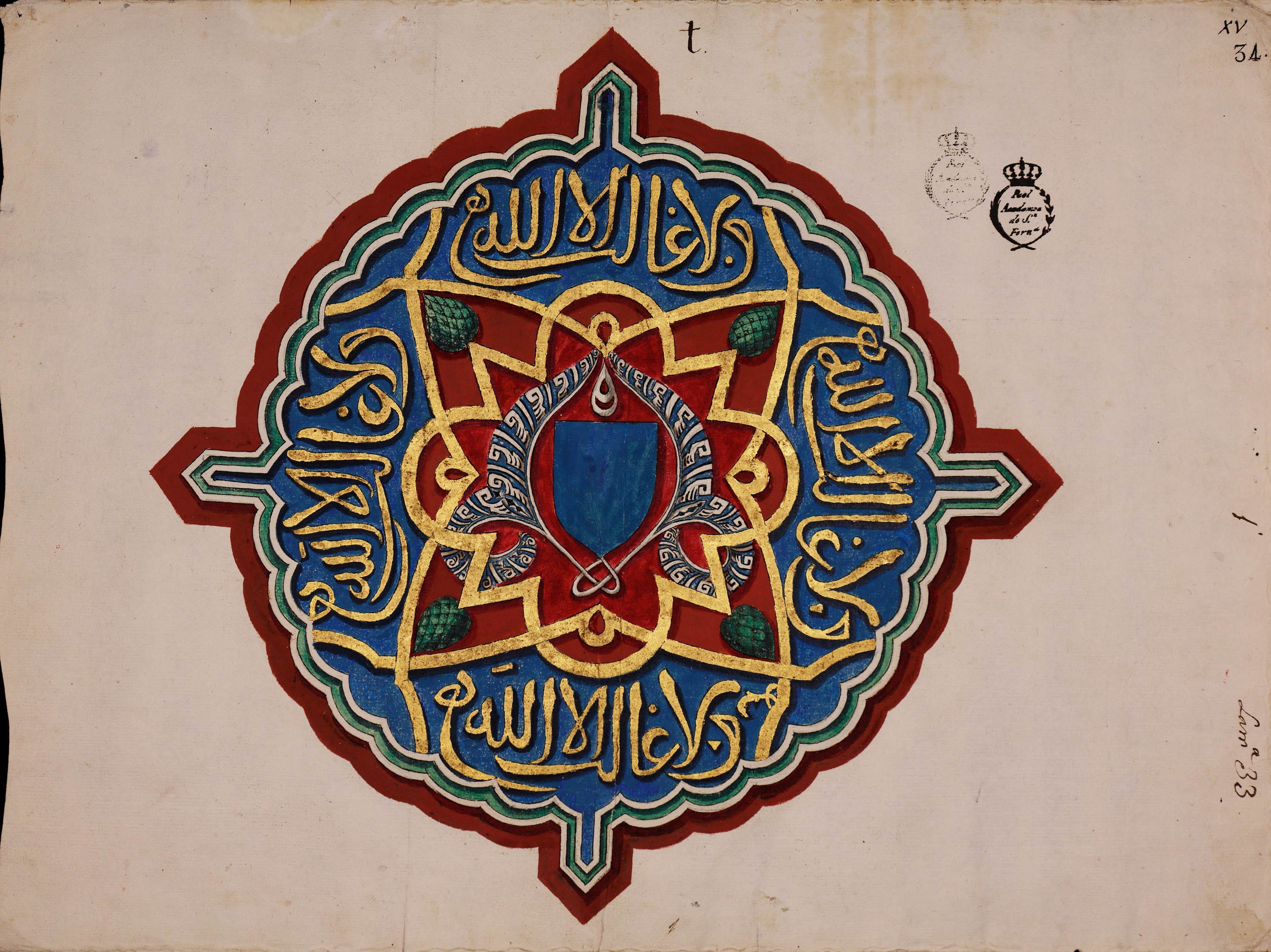
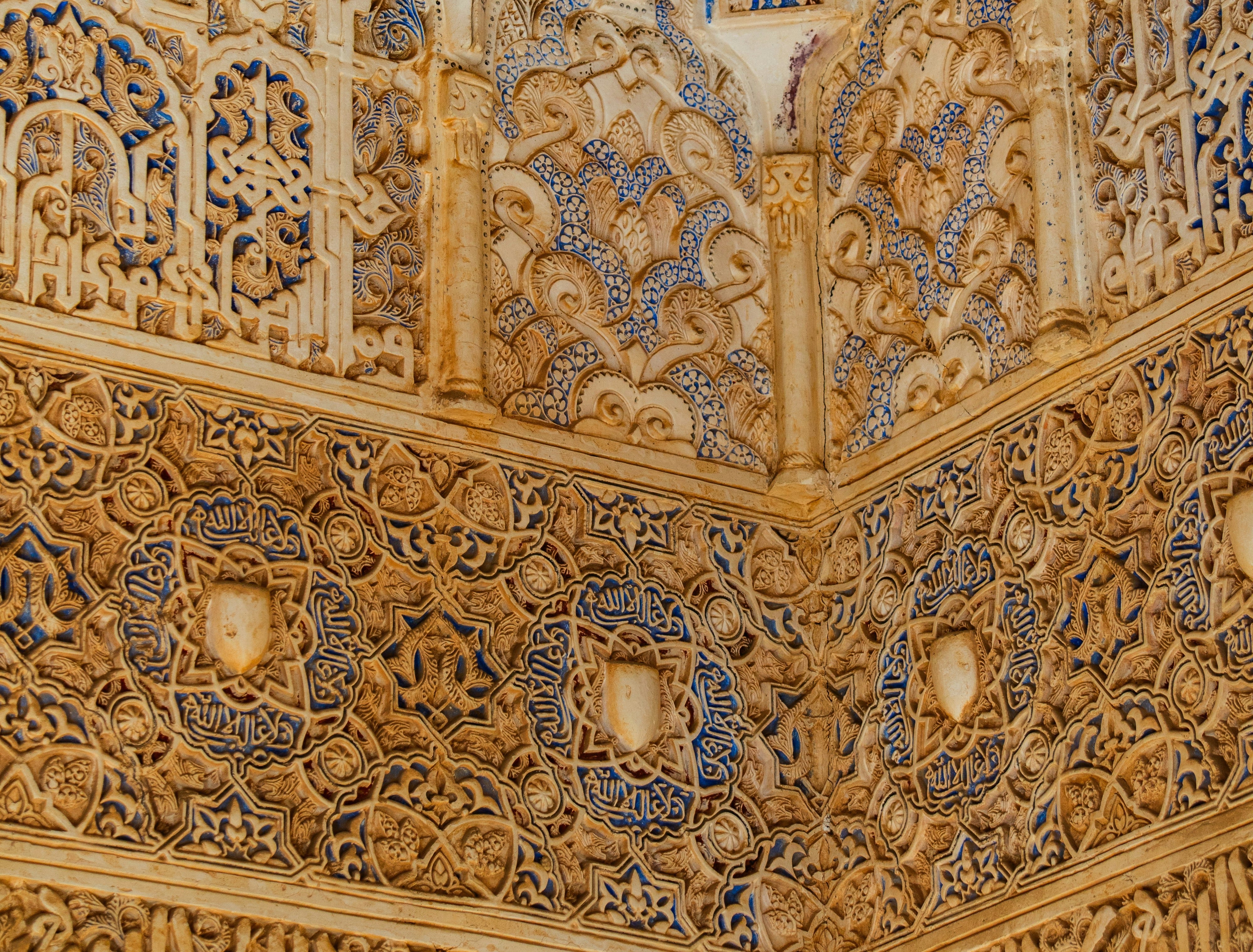
This motif can be found towards the top of the walls in the Hall of the Two Sisters. A shield in the middle with the phrase “wa la ghaliba illah Allah” (There is no victor but God) being repeated four times.
Here is an image of what it looks like in reality:
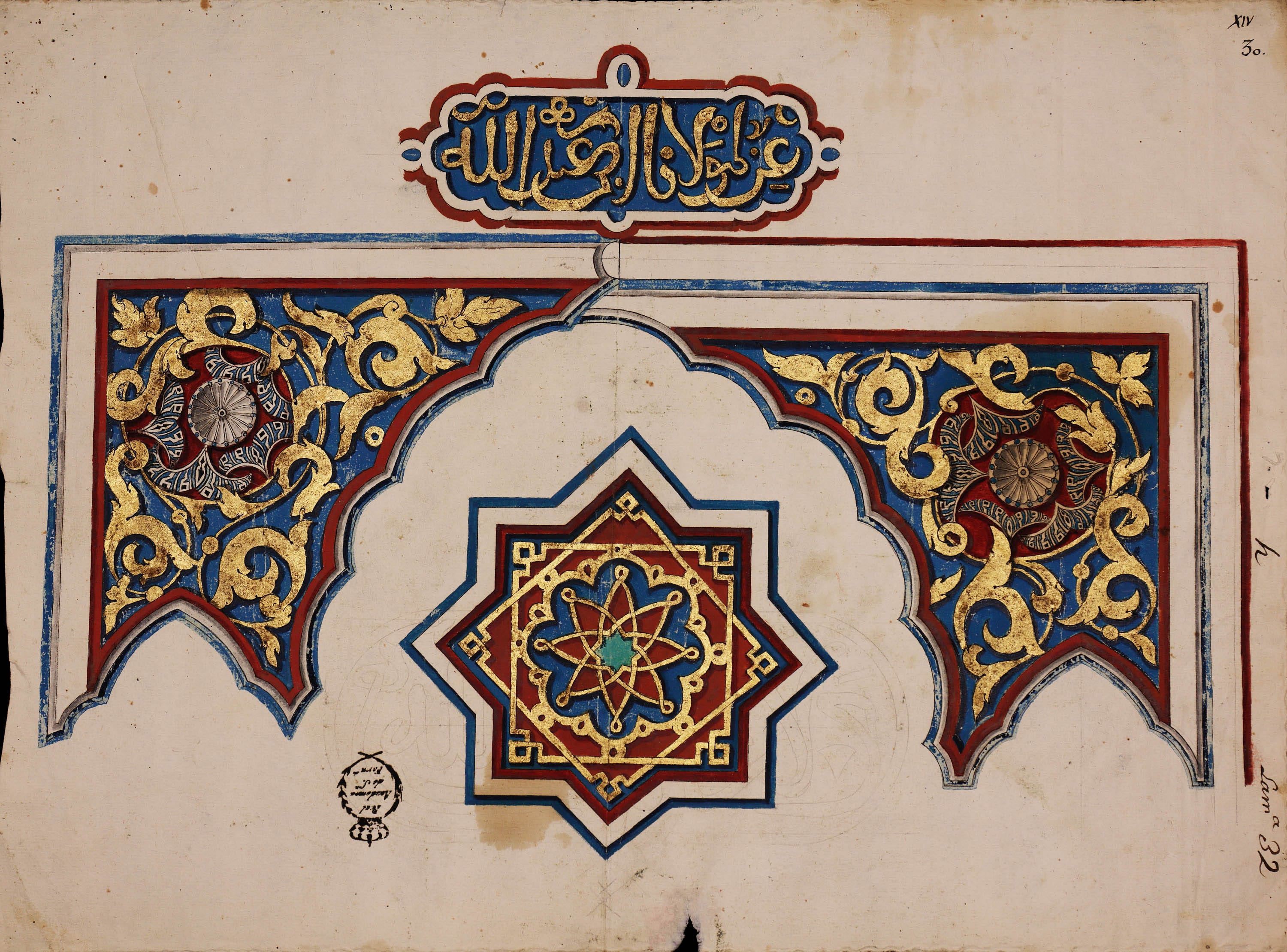
The phrase on top of the motif reads “ 'izzu li mawlāna abi abdillāh ” which translates to “Glory be to our lord/leader Abu Abdullah”.
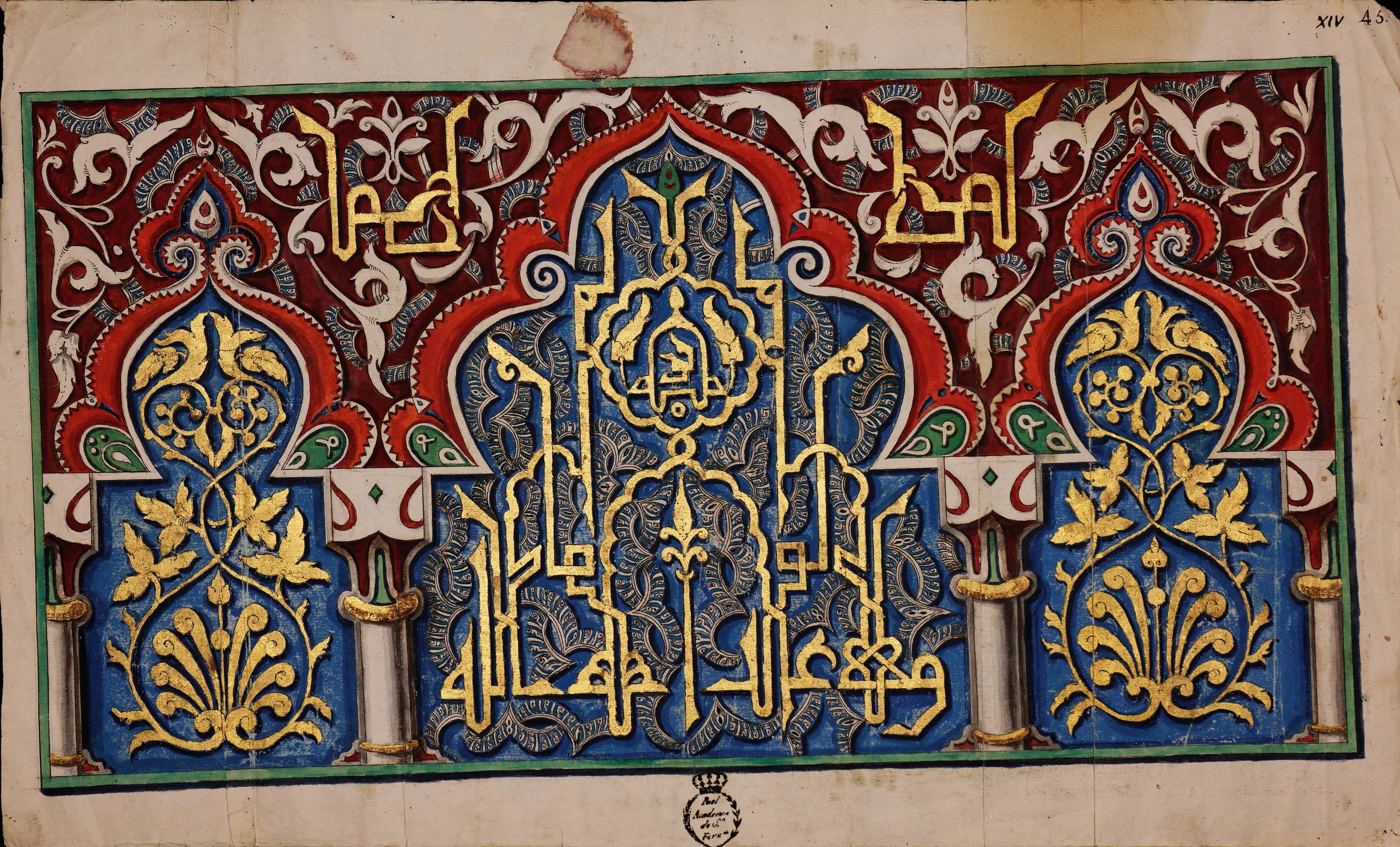
This is an interesting one, because the calligraphy here is not in the usual kufic script, it’s in a more artistic kufic script is what I would say.
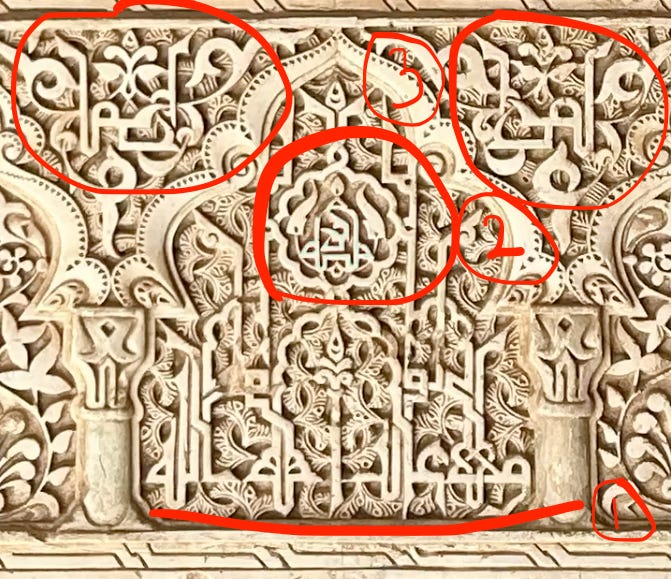
The main phrase in the middle (1) reads “wa la ghaliba illah Allah” (There is no victor but God), then there are two more inscriptions here, the word (2) “baraka” which translates to “blessing” is also seen in the middle along with the main phrase. The next word (3) is “yumn” which translates to “good fortune”, it’s repeated twice, on the right and on the left written in such a way that it mirrors the one on the right and not the way it should actually be written.
Here is what it looks like in reality, I’ve also marked which one is which to make it easier to identify the phrases:
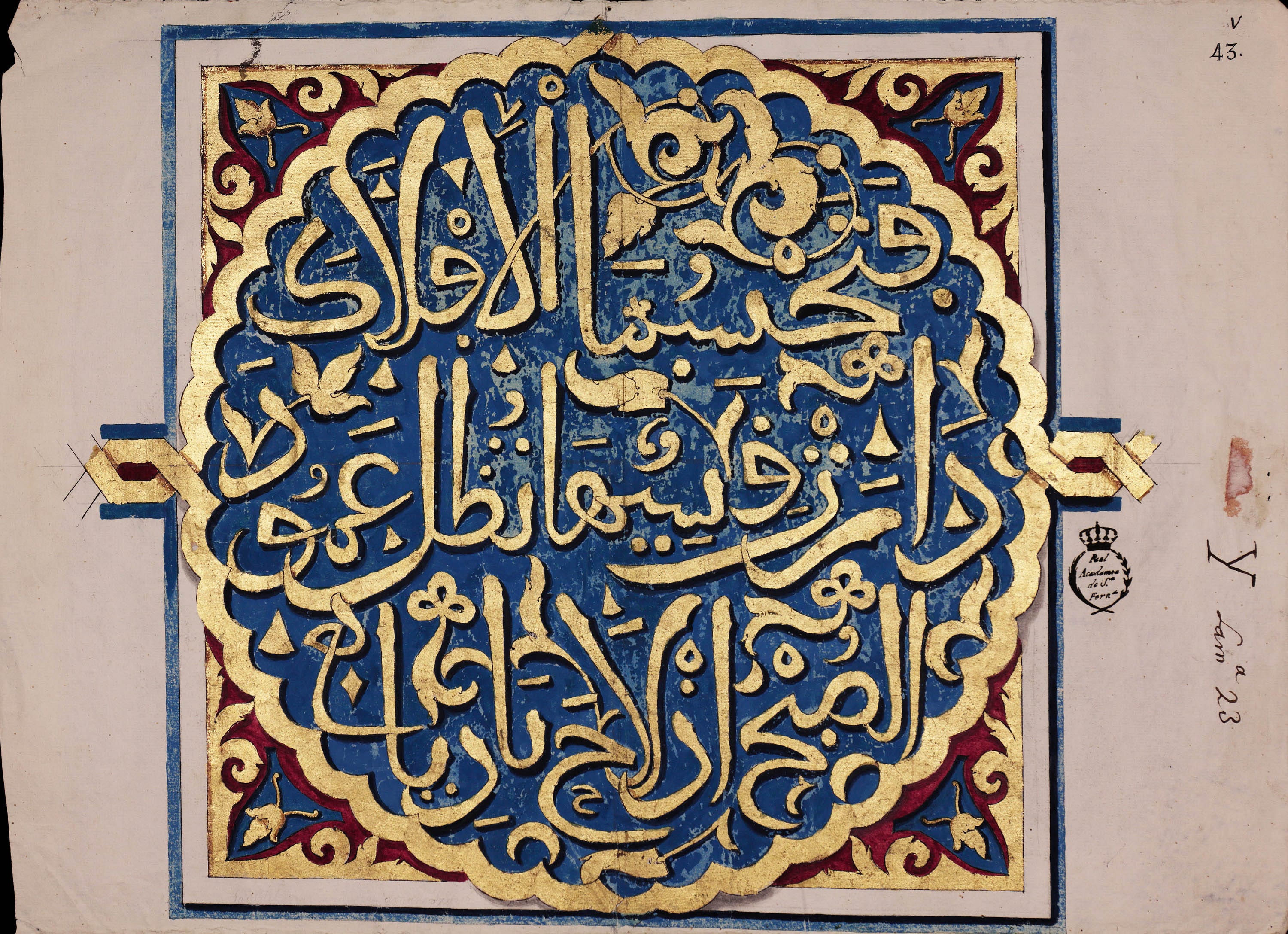
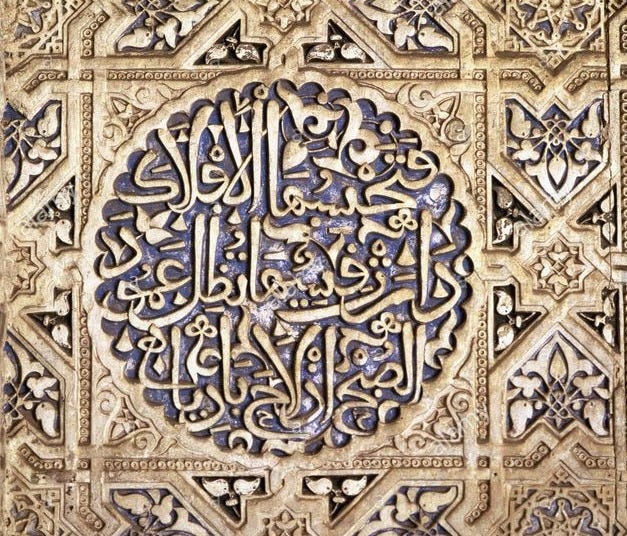
This is a verse from a poem most likely of the famous Nasrid poet Ibn Zamrak, which reads “Fa-tahsibuhā al-aflāka dārat qisiyyuhā tuẓillu 'amūda al-ṣubḥi idh lāḥa bādiyā” which translates to “They seem to be arches of turning spheres that cast a shadow upon the pillar of the dawn when it breaks”.
Here is an image of what it looks like in reality:
The inscriptions on the very top, the right and the left are repeated, it reads “wa mā al-naṣru illā min 'ind Allāh al-'azīz al-ḥakīm” which transalates to “And victory comes only from Allah (God), the Almighty, the All-Wise”. This comes from the ending of a verse from the Holy Qur’an in chapter 3 verse 126. The inscription in the middle reads “wa lā ghāliba illā Allāh” (There is no victor but God).
Now lets read the inscriptions at the mirador (viewpoint) of Lindaraja.
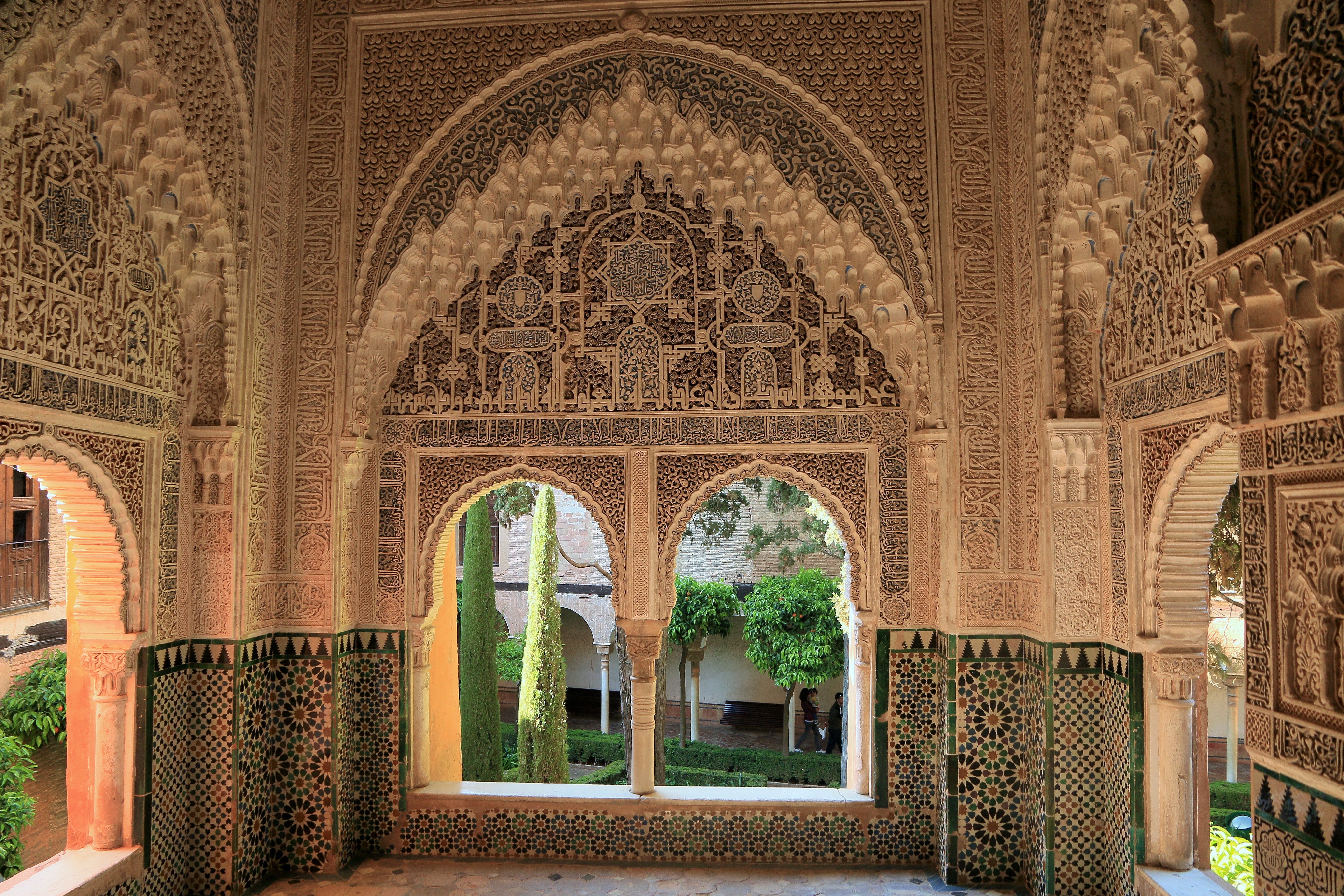
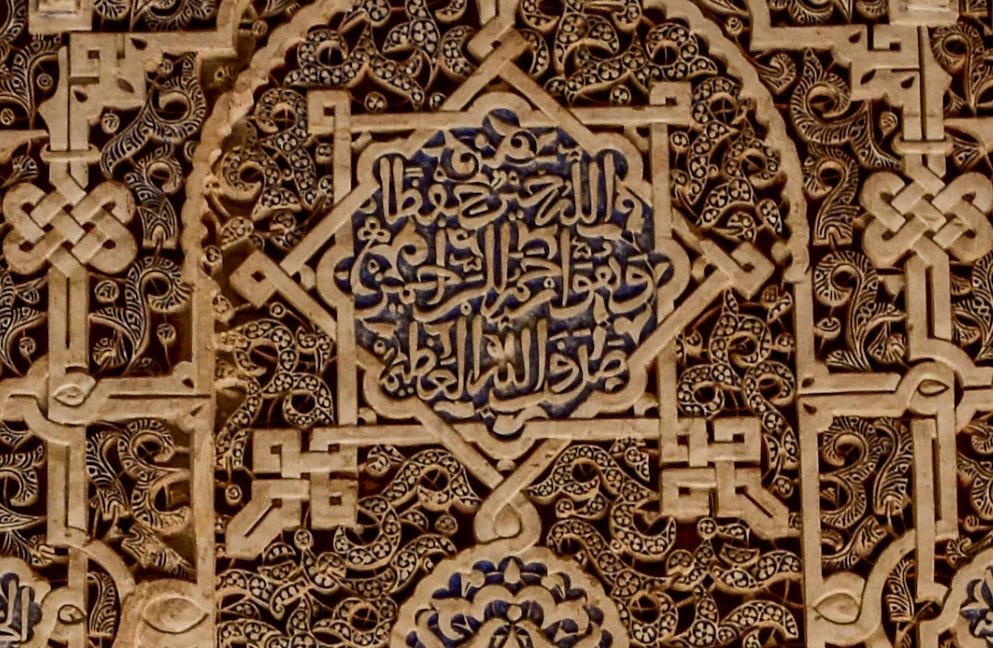
This inscription on the centre wall inside the eight-pointed star reads “Allāhu khayrun ḥāfiẓan wa huwa arḥamu al-rāḥimīn, ṣadaqa Allāh al-'aẓīm” which translates to “Allah (God) is the best Protector, and He is the Most Merciful of the merciful, God, The Highest has spoken the truth”. This part, “Allah is the best Protector, and He is the Most Merciful of the merciful” is the ending of a verse from the Holy Qur’an in the 12th chapter ‘Yusuf’ (Joseph).
“He responded, “Should I trust you with him as I once trusted you with his brother ˹Joseph˺? But ˹only˺ Allah is the best Protector, and He is the Most Merciful of the merciful.” (12:64)

This inscription reads “ ‘izzu li mawlāna al-sultān abi abdillāh al-ghanī billāh ayid Allāhu amrah wa adāma sa‘dah ” which translates to “Glory be to our lord/leader the sultan Abu Abdullah al-ghani billah, May God help/support his command/reign and maintain his blissfulness”
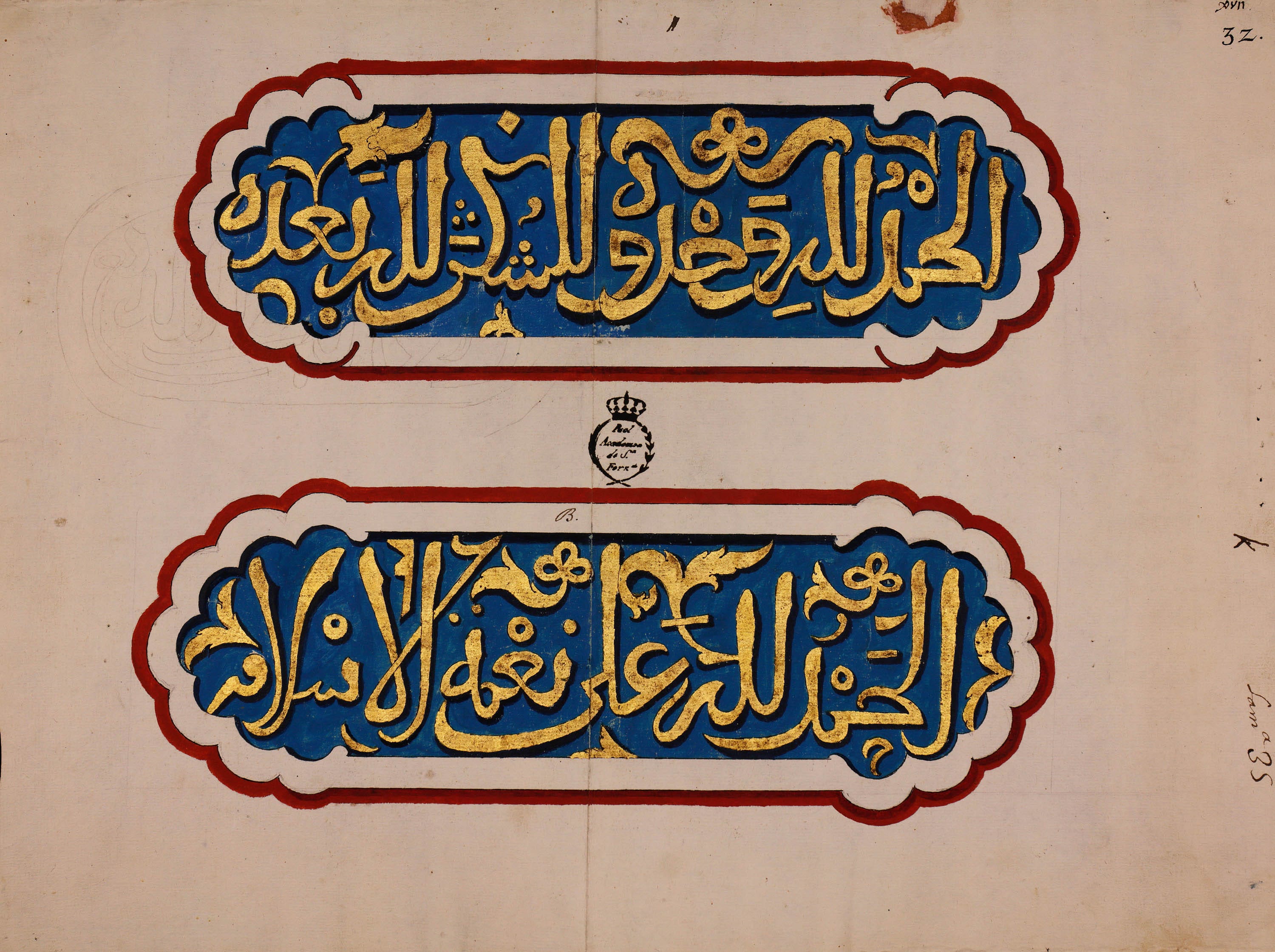
You can find these inscriptions on the centre wall of the mirador right below the shield motifs on the right and the left sides. The band of inscription on the top reads “al-ḥamdu lillāhi waḥdah wa al-shukru lillāhi ba'dah” which translates to “Praise be to Allah (God) alone, and gratitude belongs to God above all“ and the one on the bottom reads “al-ḥamdu lillāhi ‘alā ni’mat al-islām” which translates to “Praise be to Allah (God) for the blessing of Islam”. The top inscription can be found on the left side and the bottom inscription on the right side.
The inscription in the eight-pointed star reads “ 'izzu li mawlāna al-sultān abi abdillāh al-ghanī billāh ayid Allāhu amrah ” which translates to “Glory be to our lord/leader the sultan Abu Abdullah al-ghani billah, May God help/support his command/reign”.
Abu Abdullah al-ghani billah refers to Muhammad V of Granada, “al-ghani billah” was his reganl name which means “He who is contented with God”.
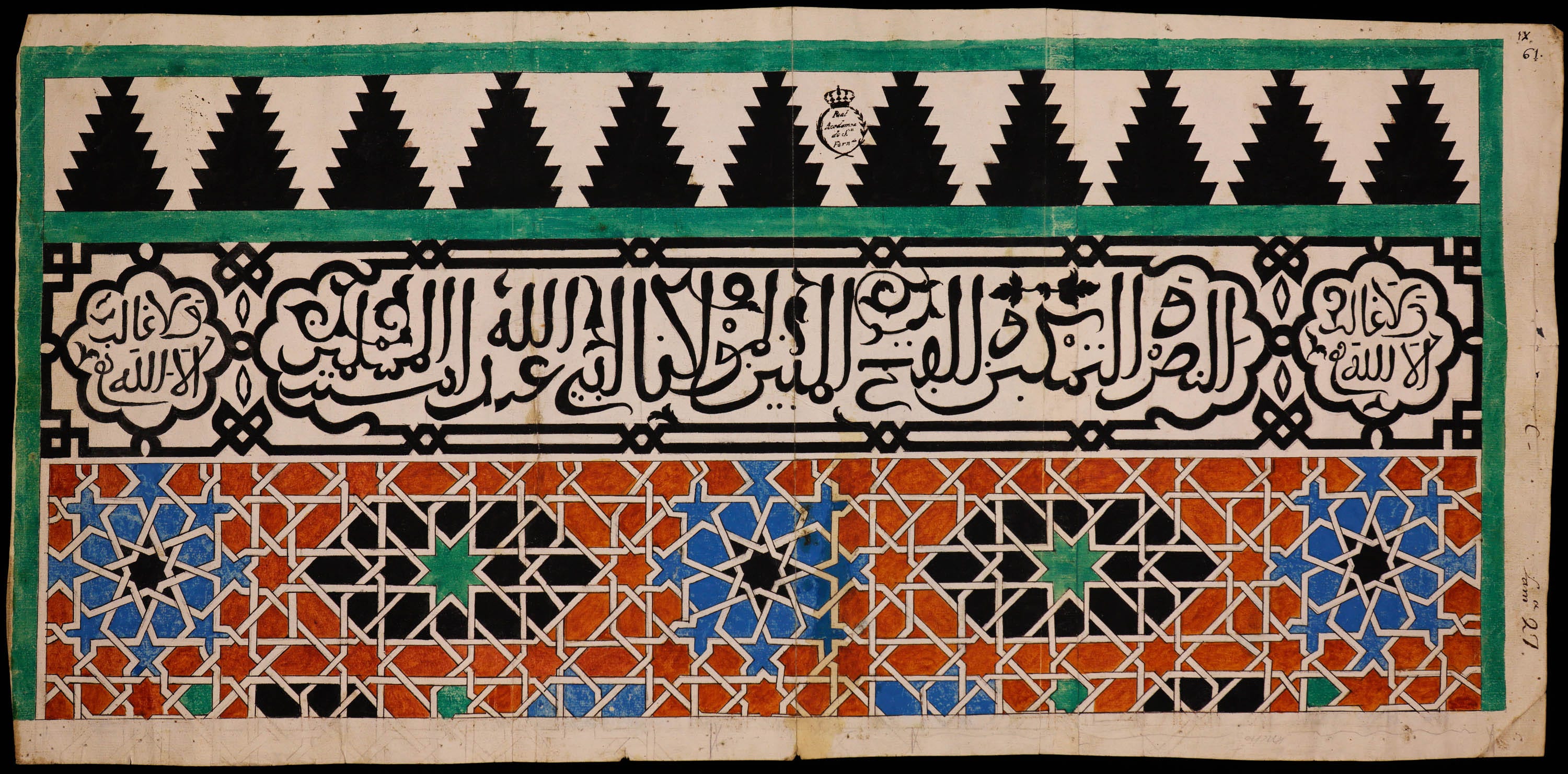
This zellige tile panel can be found on the right side of the mirador. The central inscription reads "al-naṣr wa al-tamkīn wa al-fatḥ al-mubīn li-mawlānā Abī ʿAbdillāh amīr al-muslimīn" which translates to “Victory and establishment and the manifest conquest belong to our lord Abū ʿAbdillāh, Leader of the Muslims”.
The inscription on both the ends read "wa lā ghāliba illā Allāh" (There is no victor but God).
Here is an image of what it looks like in reality:
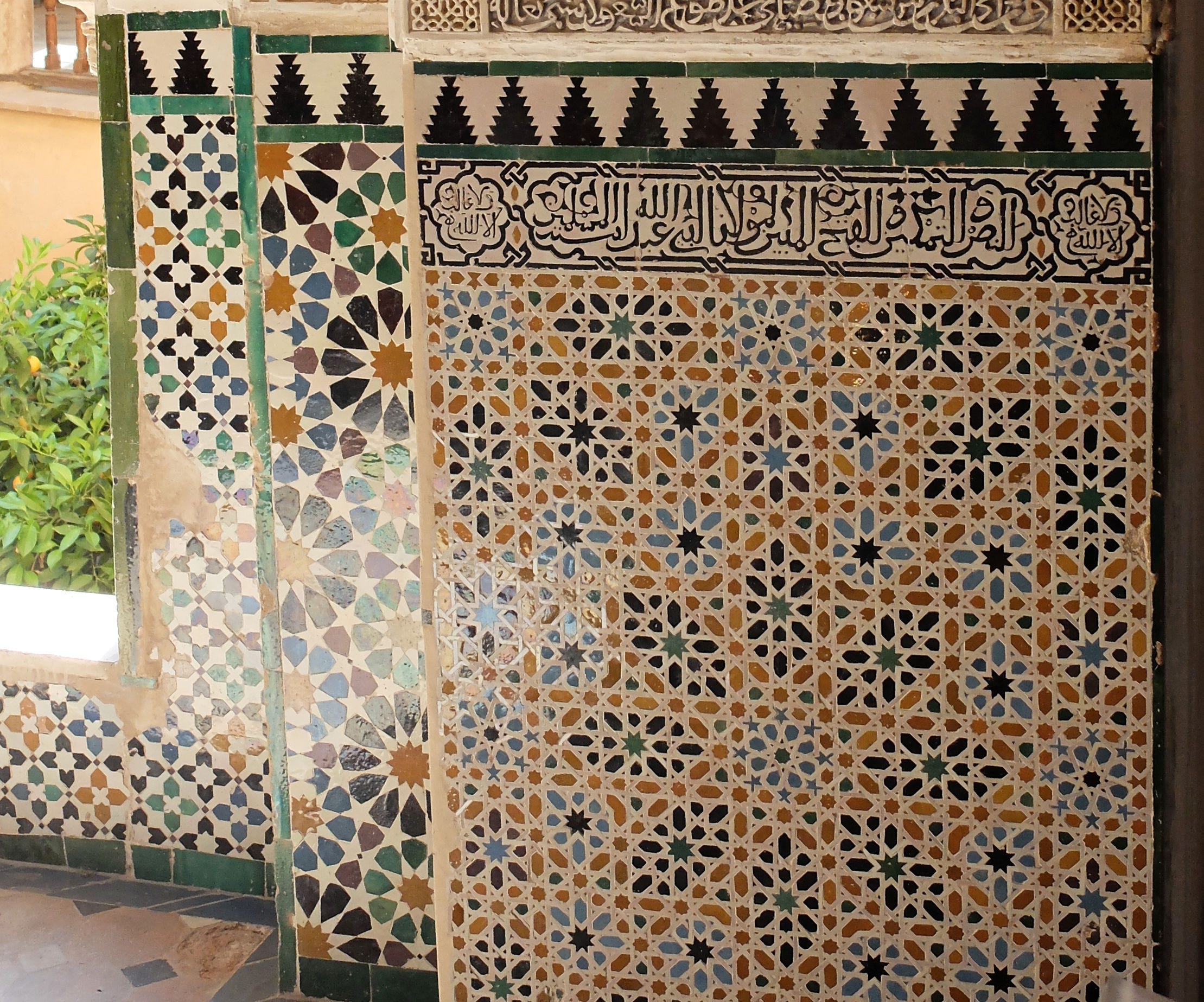
Here is another one similar in design that you would find on the left side:
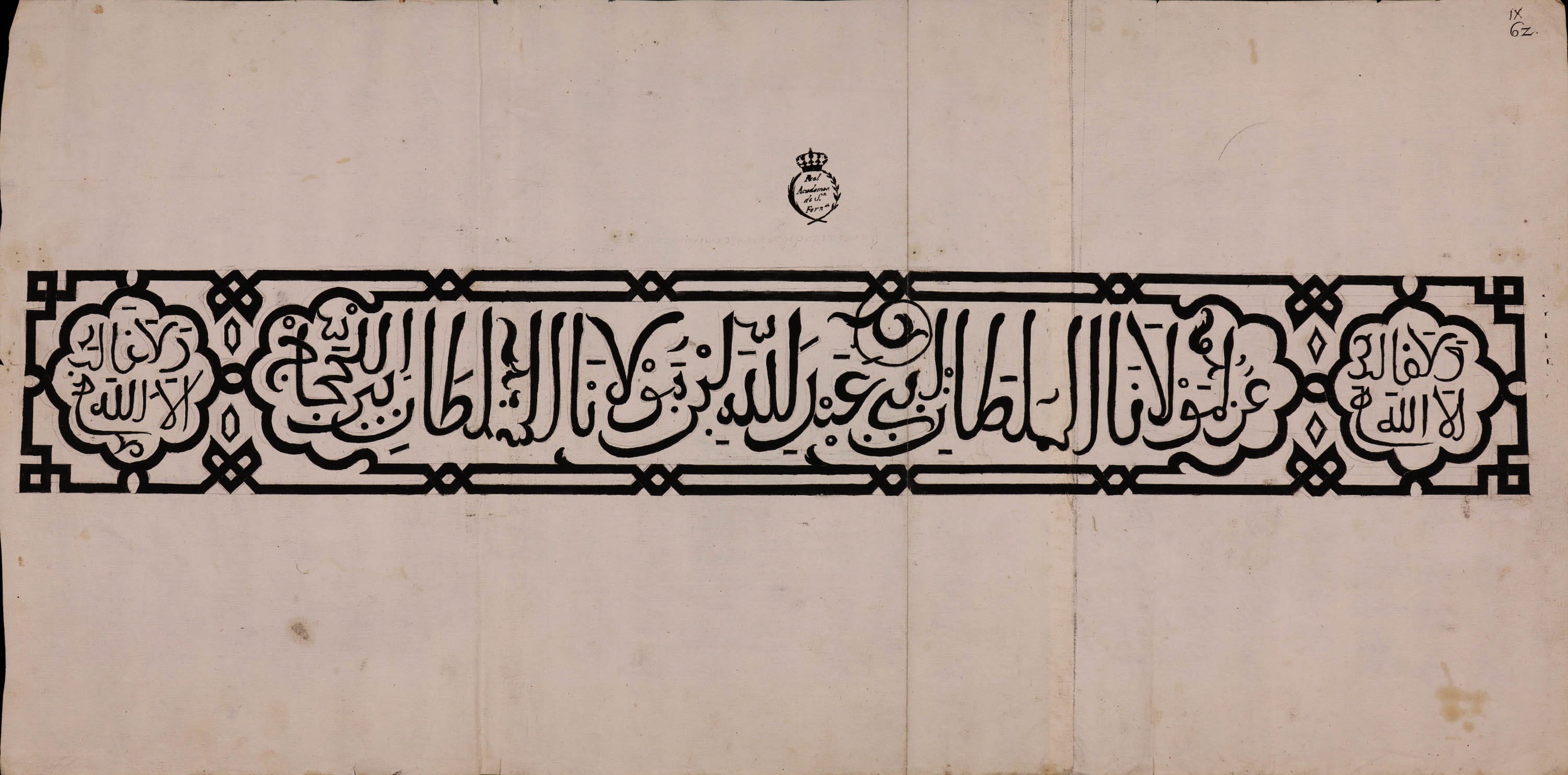
The central inscription here reads “ ‘izzu li mawlāna al-sultān abi abdillāh ibn mawlāna al-sultān abi al-hajjaj ” which translates to “Glory be to our lord/leader the sultan Abu Abdullah al-ghani billah son of our lord/leader the sultan Abu al-Hajjaj”. Abu al-Hajjaj refers to Yusuf I of Granada, who was the father of Muhammad V of Granada. The inscription on both the ends read “wa lā ghāliba illā Allāh” (There is no victor but God).
Muhammad V’s reign reportedly marked the pinnacle of Nasrid culture. He oversaw major construction and restoration projects, most notably building the Palace of the Lions, while also rebuilding the Mexuar and refurbishing the Comares Palace. This is most likely why there are quite a few inscriptions praising him.
Now we’re in the Hall of the Comares.
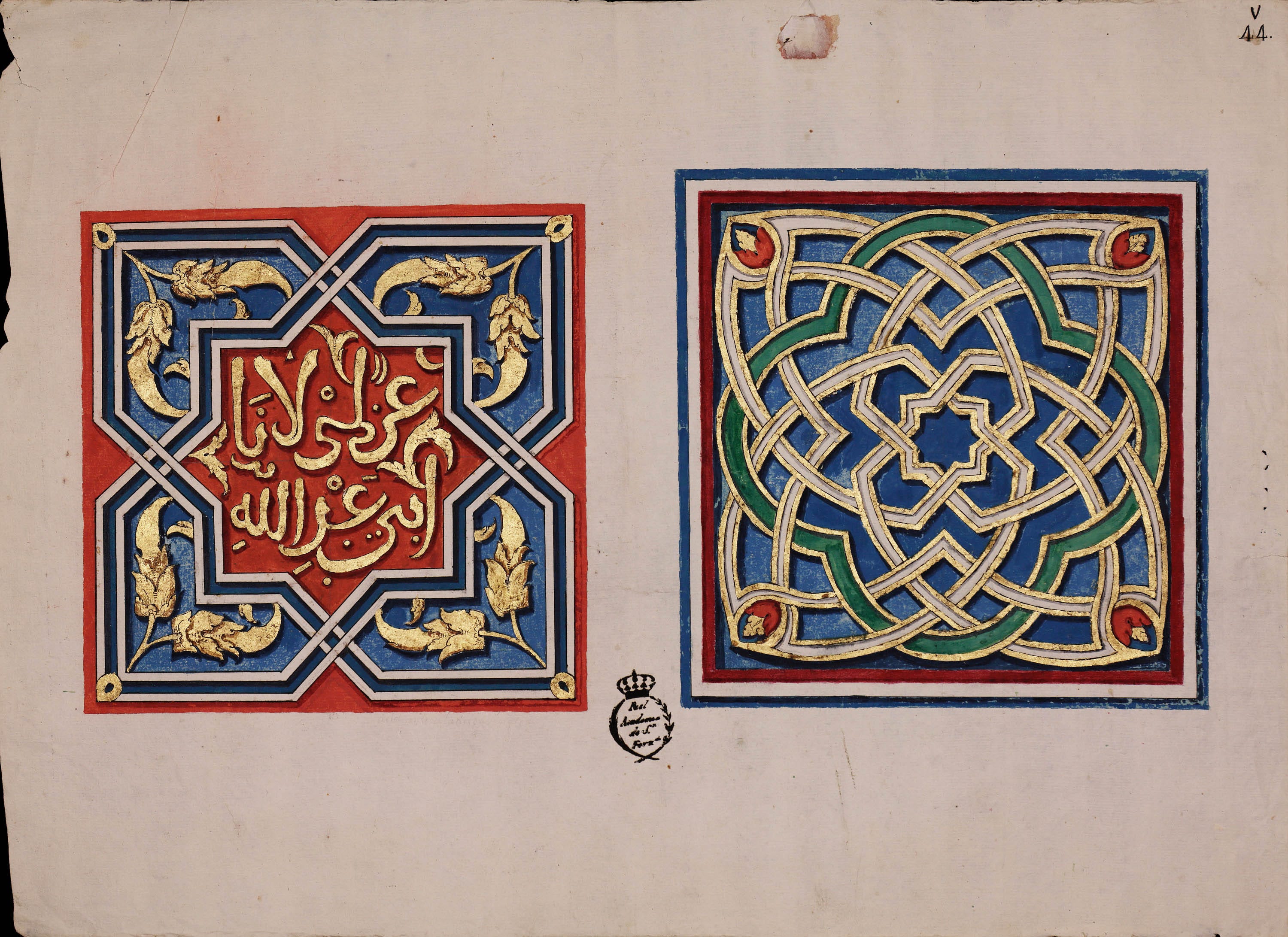
The inscription here reads “ ‘izzu li mawlāna abi abdillāh” which translates to “Glory be to our lord/leader Abu Abdullah”.
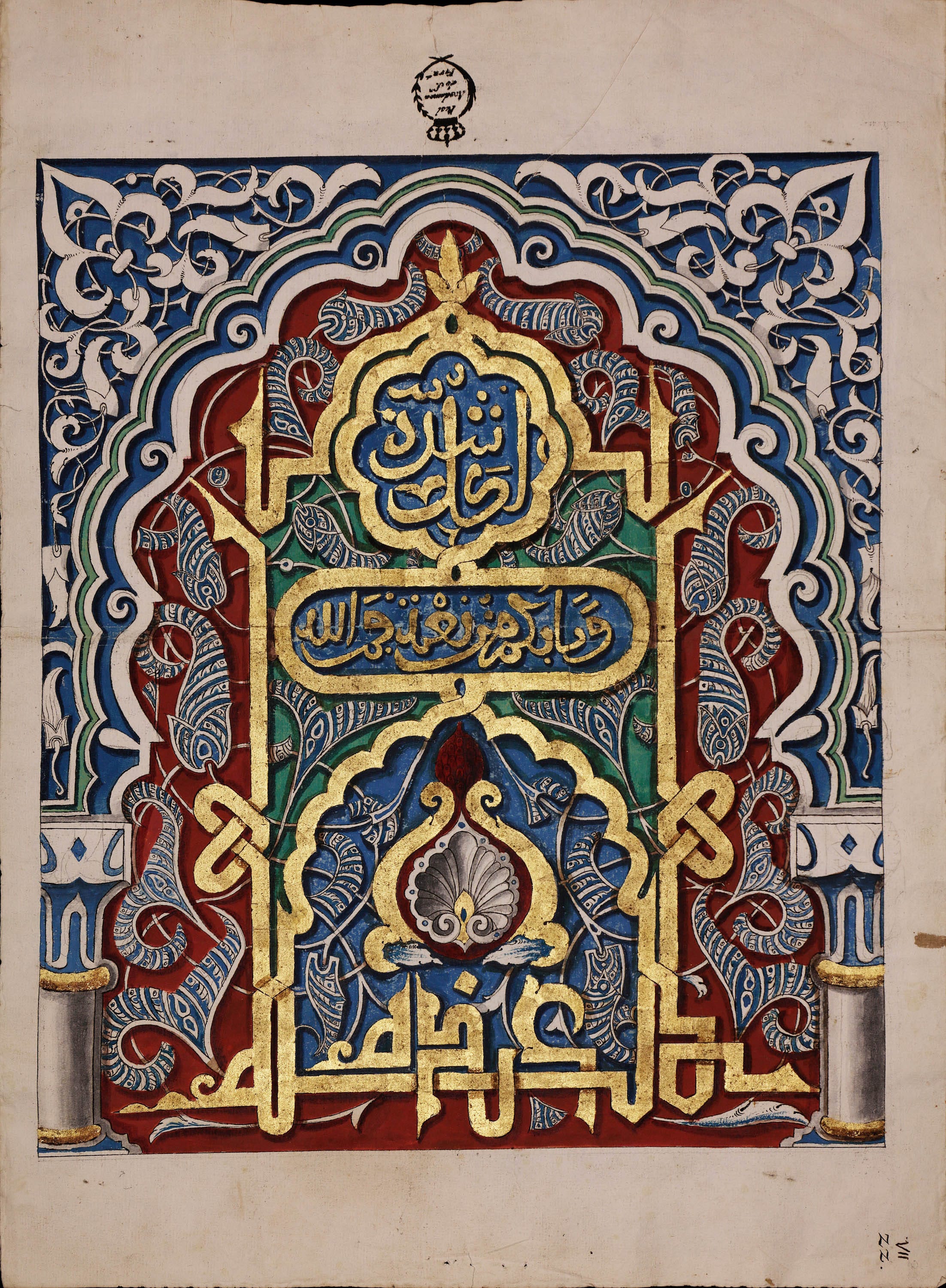
This is very interesting because there are only two phrases here but we can see three separate inscriptions. The inscription in the middle reads “wa mā bikum min ni'matin fa-min Allāh” which translates to “And whatever blessing you have is from God”. This is taken from a verse in the Holy Qur’an, from the 16th chapter ‘An-Nahl’.
“Whatever blessings you have are from Allah. Then whenever hardship touches you, to Him (alone) you cry (for help).” (16:53)
The next phrase is inspired from the verse and is separated into two parts, the first half of the phrase is at the very bottom and it reads “Allāhu 'uddah”, the second half of the phrase is at the top in the circular motif and it reads “li-kulli shidda”. Put it together and it reads “Allāhu 'uddah li-kulli shidda” which translates to “God provides for every hardship”.
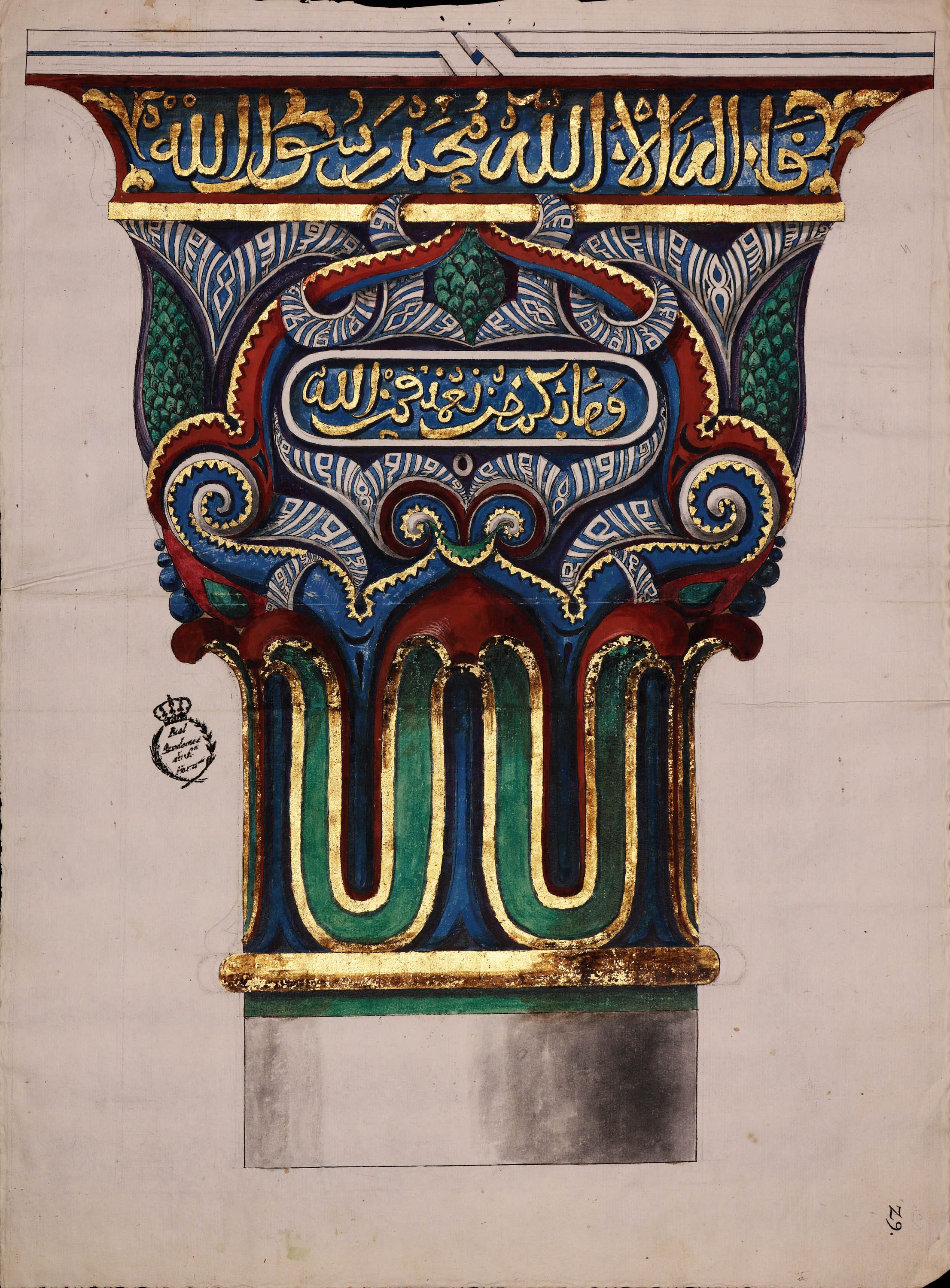
The inscription on the top of this captial reads “Lā ilāha illā Allāh, Muḥammadun rasūl Allāh” which translates to “ There is no god but Allah, Muhammad is the messenger of God“. The second inscription reads “wa mā bikum min ni’matin fa-min Allāh” (And whatever blessing you have is from God).
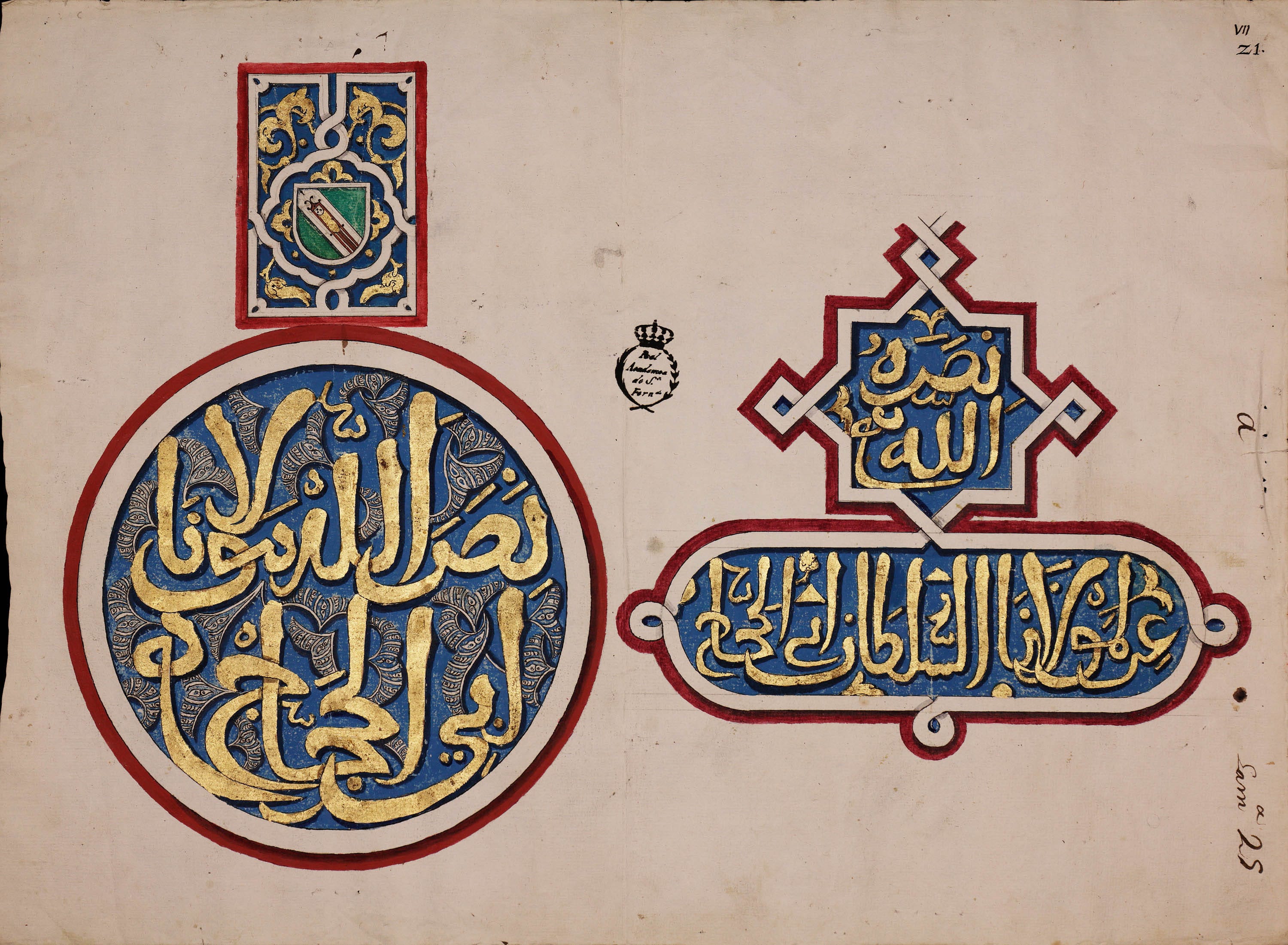
The inscription on the left in the rectangular motif reads “ ‘izzu li mawlāna al-sultān abī al-hajjaj” which translates to “Glory be to our lord/leader the sultan Abu al-Hajjaj”, the inscription on top of it in the eight-pointed star reads “naṣarahu Allāh” which translates to “May God aid him”. The inscription in the circle under the heraldic shield motif reads “naṣar Allāh mawlānā Abī al-Ḥajjāj” which translates to “May God aid our lord/leader Abu al-Hajjaj”.
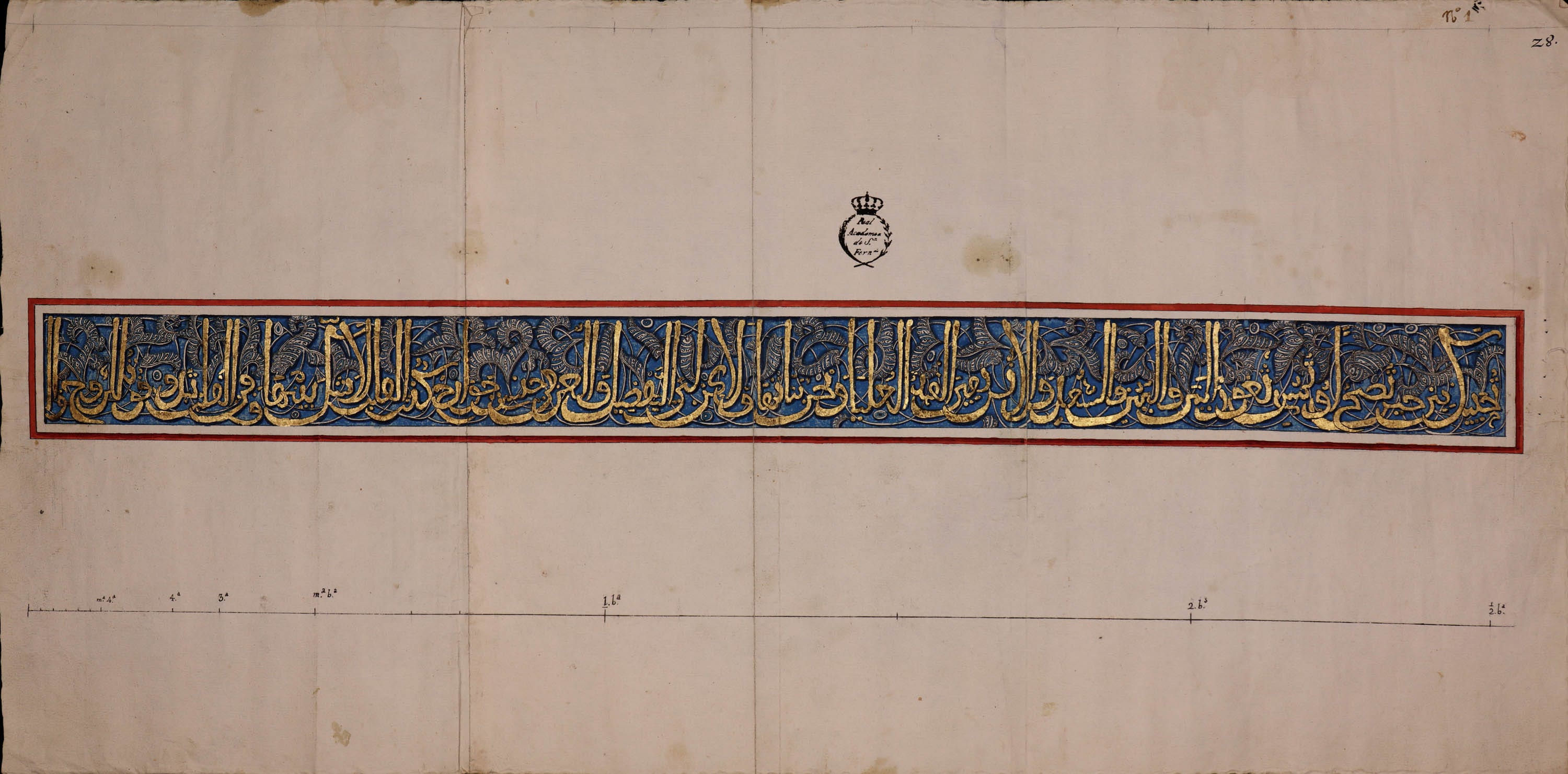
These are a couple of verses of poetry inscribed on the walls in the hall of the Comares most likely from a poem of either the Nasrid poet Ibn al-Jayyab or his student Ibn al-Khatib.
”Tuḥayyīka 'annī ḥīna tuṣbiḥu aw tumsī, thughūru al-munā wa al-yamani wa al-sa'di wa al-unsi
Hiya al-qubbatu al-'ulyā wa naḥnu banātuhā, wa lā kana lī al-tafḍīlu wa al-'izzu fī jinsī
Jawāriḥu kuntu al-qalba lā shakka baynahā, wa fī al-qalbi tabdū quwwatu al-rūḥi wa al-nafsi”
This translates to:
“Greeting you on my behalf, whenever you come at morning or evening, are the smiling faces of fulfilled wishes, of blessing, of happiness, and of intimacy.
She is the highest dome and we are her daughters, yet the distinction and glory within my kind belongs to me.
Among the senses I was the heart, undoubtedly among them, and in the heart the power of the spirit and the soul is made manifest.”
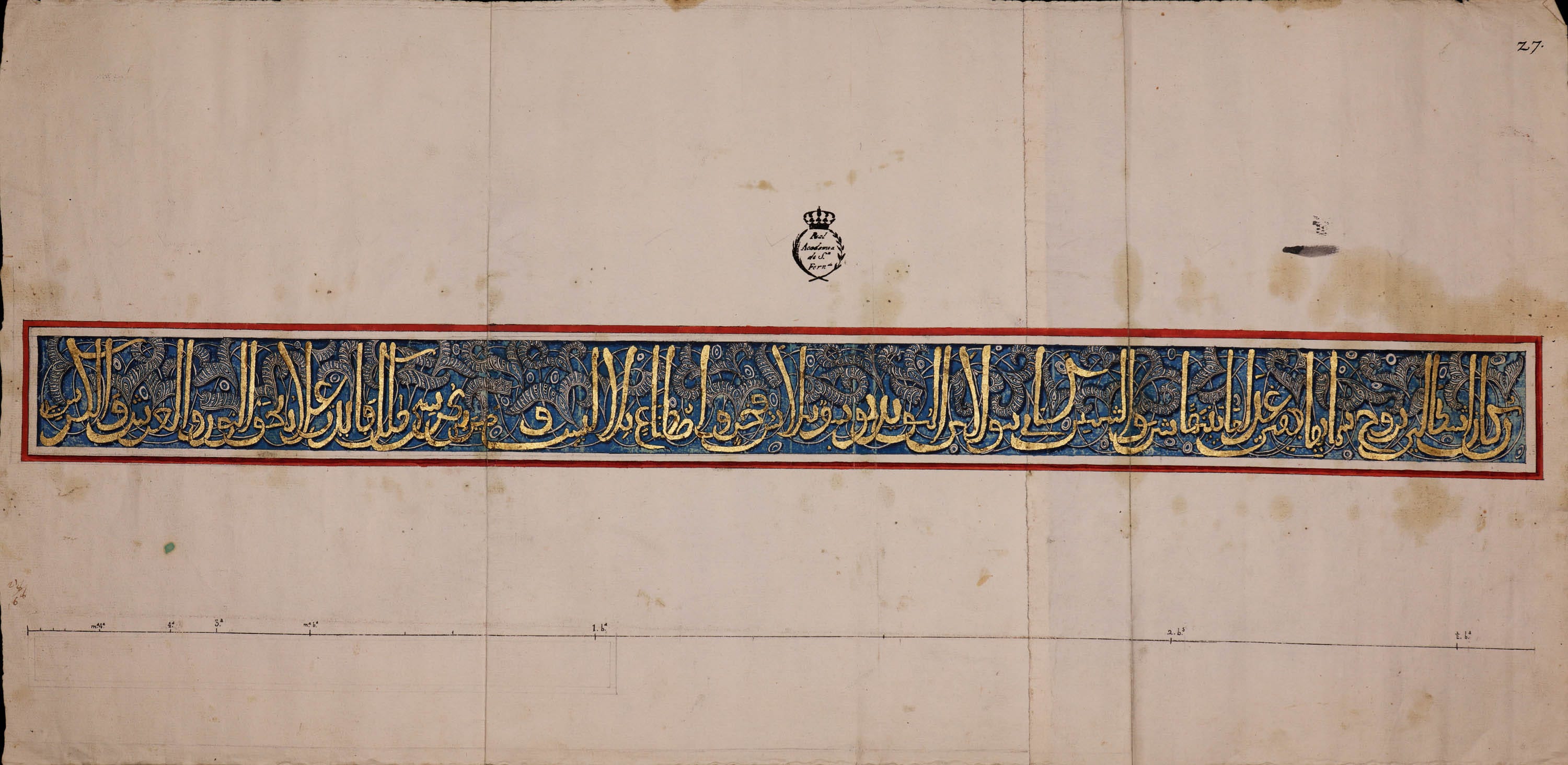
“Wa in kāna ashkālī burūja samā'ihā, fa-fiyya 'adā mā baynahā sharfu al-shamsi
Kasāniya mawlāya al-mu’ayyadu Yūsufu, malābisa fakhrin wa iṣṭinā’in bilā labsin
Wa ṣayyaranī kursiyya mulkin mu'ayyadu, 'alāhu bi-ḥaqqi al-nūru wa al-'arshu wa al-kursī”
This translates to:
”And if my forms resemble the constellations of its heavens, then within me there surpasses what lies between them: the exaltation of the sun.
My master, the divinely supported Yusuf (Yusuf I of Granada), clothed me in garments of glory and craftsmanship, without any doubt.
And he made me a throne of divinely supported sovereignty, elevated in truth by the Light, the Throne, and the Footstool.”
Now comes Patio de Los Leones or the Court of the Lions. One of the most beautiful features of the Alhambra palace complex.
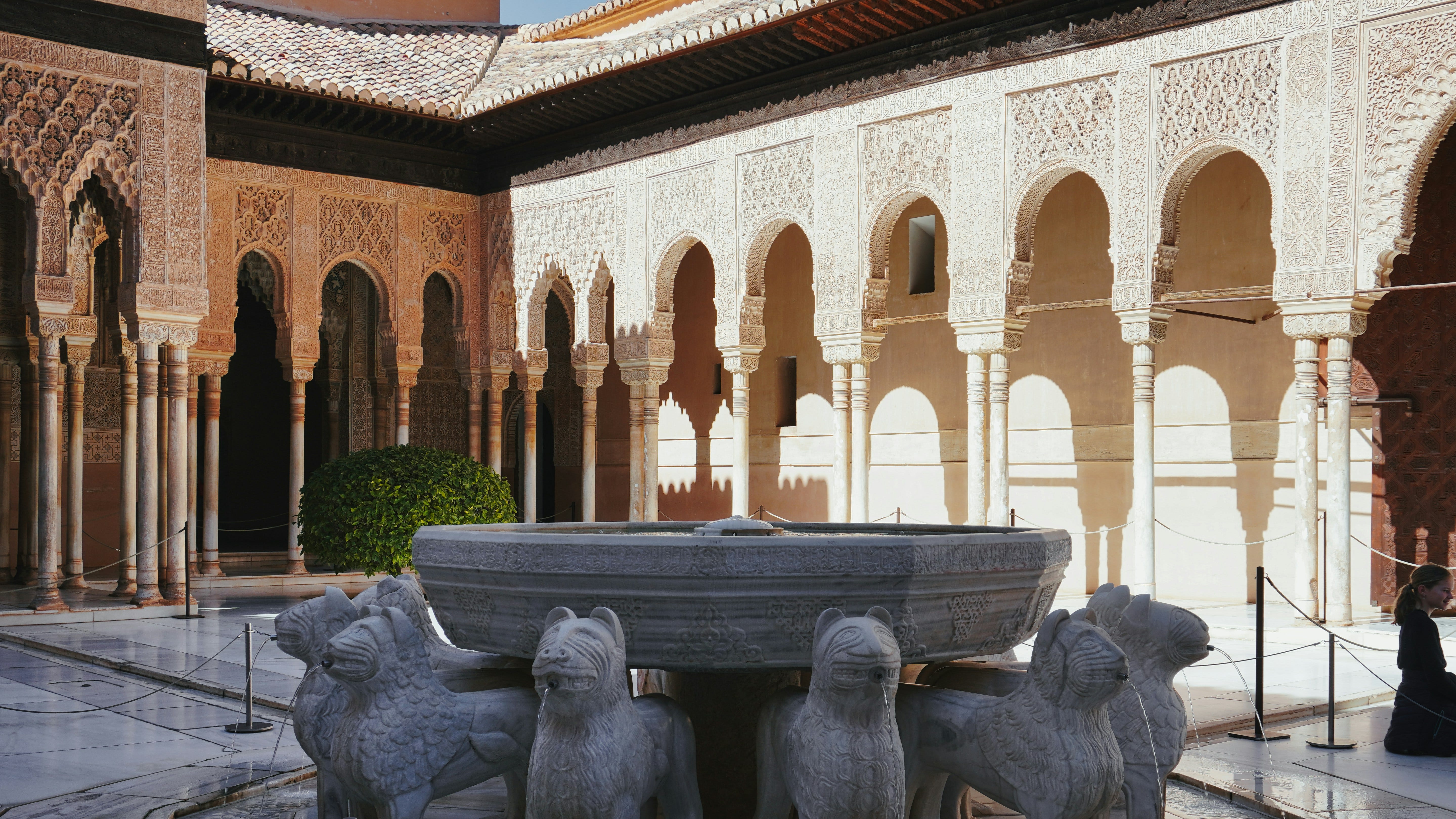
The “Court of the Lions” or the “Palace of the Lions” however is a modern name, derived from the lion sculptures around the fountain. Its original Nasrid name is unknown due to limited sources. It may have been called ‘Qasr al-Riyāḍ’ (Palace of the Garden) or ‘Qasr al-Riyāḍ al-Saʿīd’ (Palace of the Joyous Garden). The court features a marble fountain in the centre with 12 sculpted lions, and it’s not just a fountain, it’s actually a water clock disguised as art. While the fountain itself is beautiful, many don’t realise that besides the 12 lions, there are also 12 verses of poetry inscribed on to the fountain by Ibn Zamrak.
Verses 1-3:
“Tabāraka man a'ṭā al-imāma Muḥammadan, maghāniya zānat bi-al-jamāli maghāniyā
Wa illā fa-hādhā al-rawḍu fīhi badā’i’un, abā Allāhu an yulqā lahā al-ḥusnu thāniyā
Wa manḥūtatun min lu'lu'in shaffa nūruhā, tuḥallī bi-marfaḍi al-jumāni al-nawāḥiyā”
This translates to:
"Blessed be He who granted Imam Muhammad dwellings that have adorned other dwellings with their beauty.
Otherwise, this garden contains wonders for which God refuses to allow beauty a second equal.
And columns carved from pearl whose light shines translucent, adorning all surroundings with scattered pearls.”
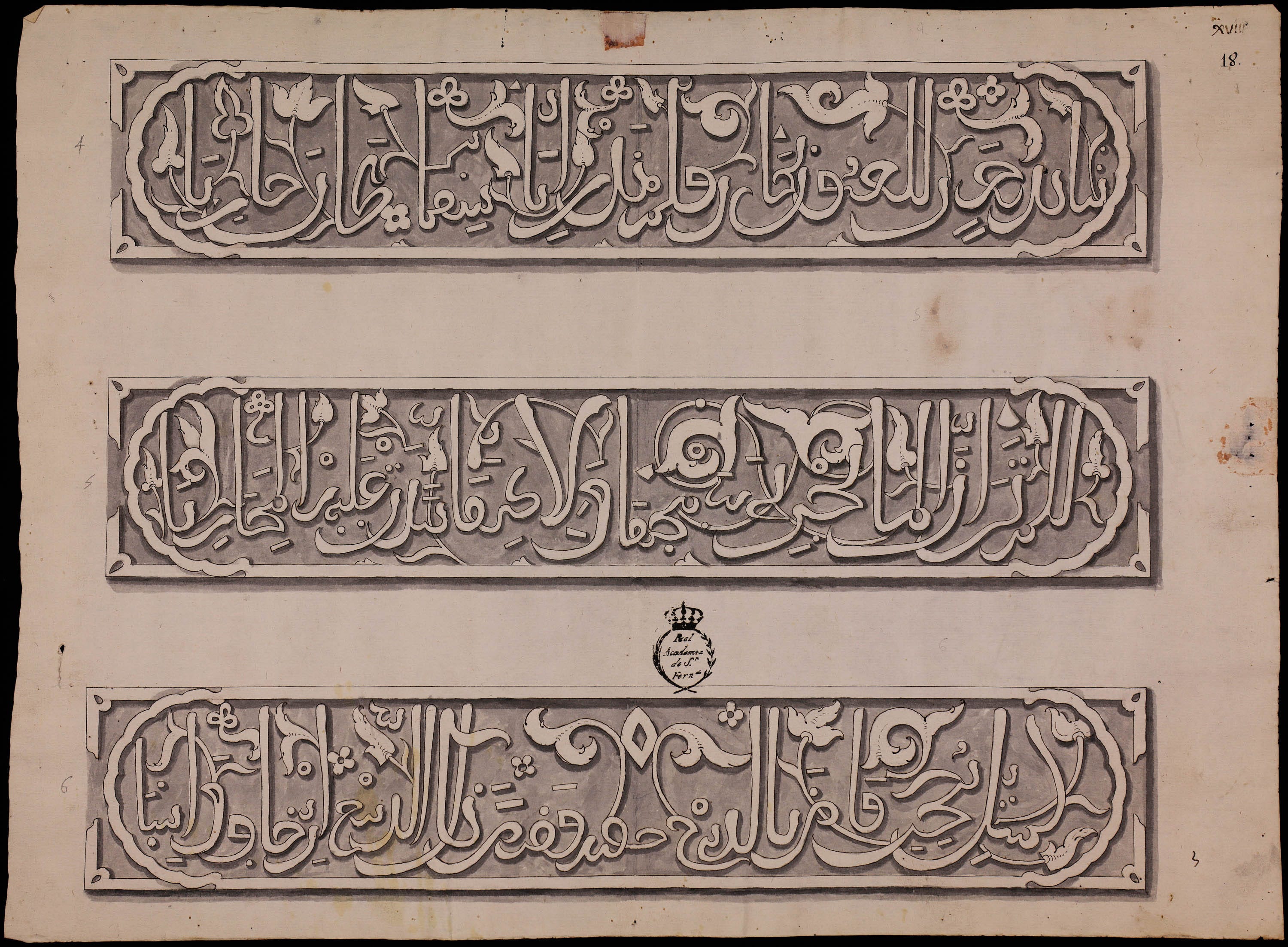
Verses 4-6:
“Tashābaha jārin li-al-’uyūni bi-jāmidin, fa-lam nadrī ayyan minhumā kāna jāriyā
Alam tara anna al-mā'a yajrī bi-ṣaḥfihā, wa lākinnahā inbarat 'alayhi al-majāriyā
Ka-mithli muḥibbin fāḍa bi-al-dam'i jafnuhū, wa ghayyaḍa dhāka al-dam'a idh khāfa wāshiyā”
This translates to:
“What flows and what stands still have become alike to the eyes, so we cannot tell which of the two was truly flowing.
Do you not see that the water flows across the basin's surface, yet the channels have risen above it?
Like a lover whose eyelids overflow with tears, then suppresses those tears fearing a tale-bearer.”
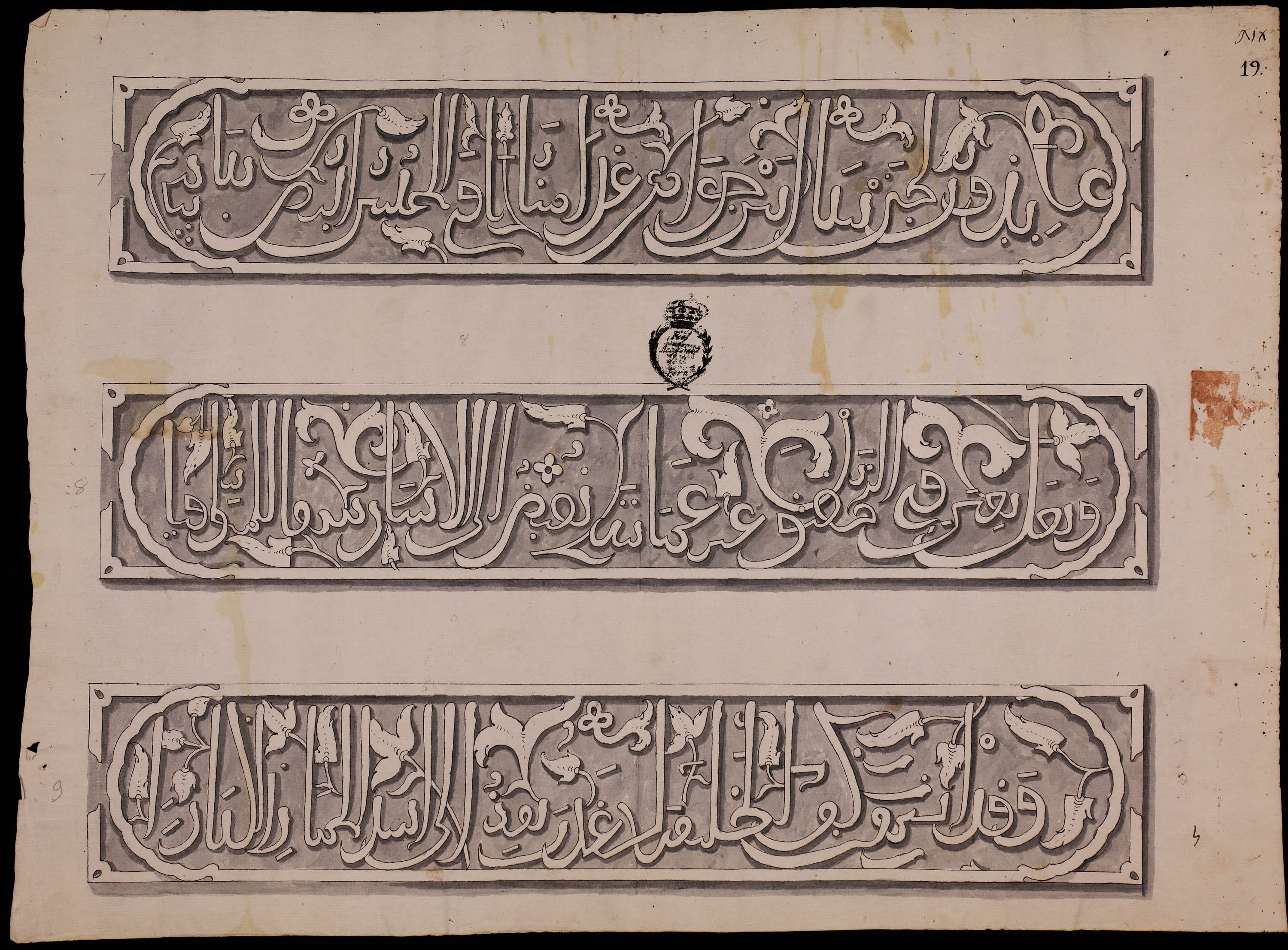
Verses 7-9:
“Bi-dhawbi lujayni sāla bayna jawāhirin, ghadā mithluhū fī al-ḥusni abyaḍa ṣāfiyā
Wa hal hiya fī al-taḥqīqi ghayru ghamāmatin, tufīḍu ilā al-āsādi minhā al-sawāqiyā
Wa qad ashbahat kaffa al-khalīfati idhā ghadat, tufīḍu ilā usdi al-jihādi al-ayādiyā”
This translates to:
"With molten silver flowing among jewels, its likeness in beauty became white and pure.
Is it not in truth a rain cloud, pouring its streams down toward the lions?
It resembles the open hand of the Caliph when it extends its gifts to the lions of holy war.”
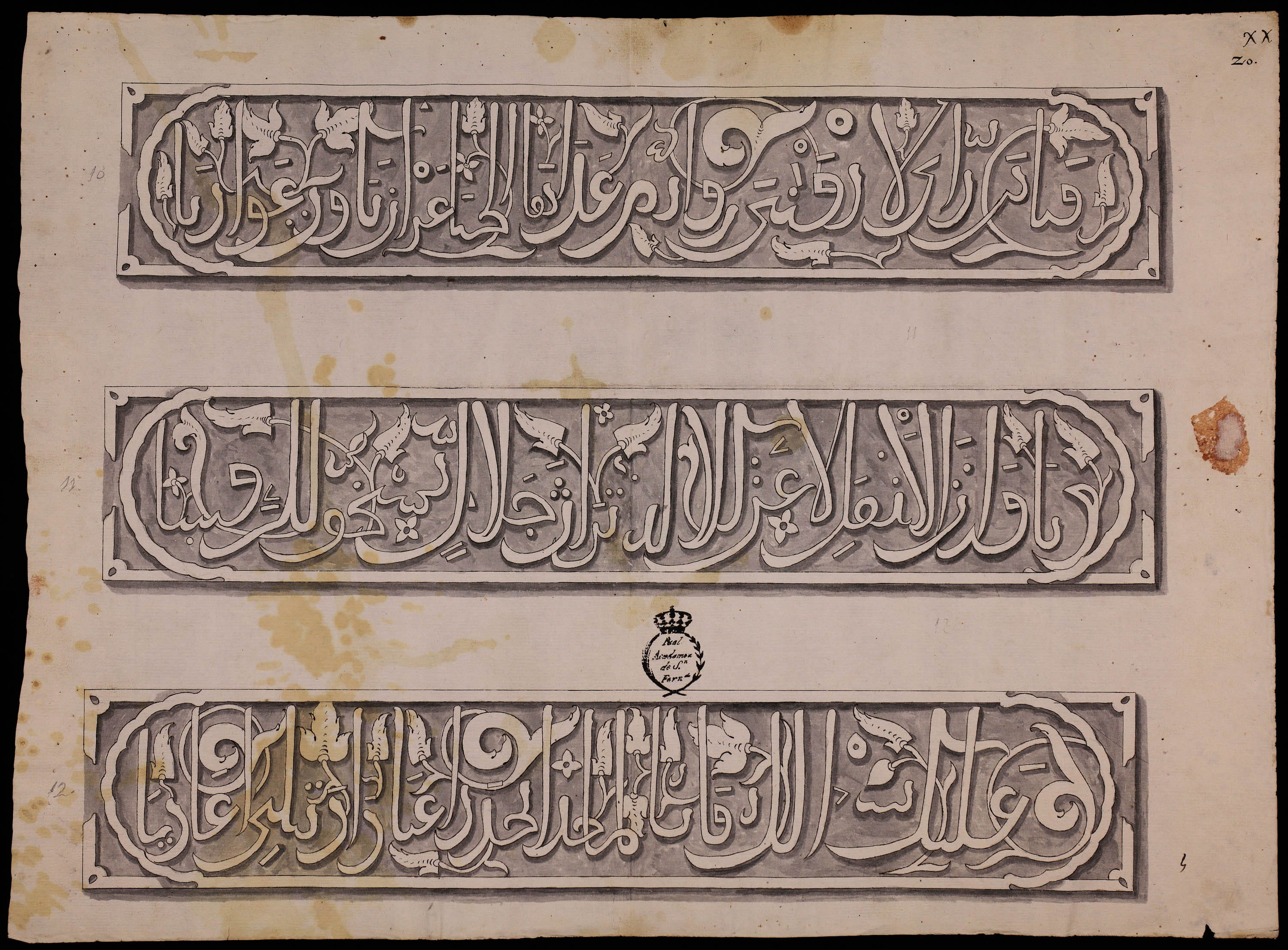
Verses 10-12:
“Fa-yā man ra'ā al-āsāda wa hiya rawābiḍun, 'adāhā al-ḥayā 'an an takūna 'awādiyā
Wa yā wāritha al-anṣāri lā 'an kalālatin, turāthu jalālin yastaḫhiffu al-rawāsiyā
'Alayka salāmu Allāhi fa-slim mukhalladan, tajaddad a'yādan wa tablī a'ādiyā”
This translates to:
“O you who see the lions lying still, it is modesty alone that has prevented them from being aggressive.
O heir of the Helpers, not through a distant relation, an inheritance of such majesty it makes mountains seem light.
Upon you be the peace of God, so remain eternally, with your feast days ever renewed and your enemies worn down.”
These verses just enhance the beauty of the fountain and allows one to truly appreciate its beauty.
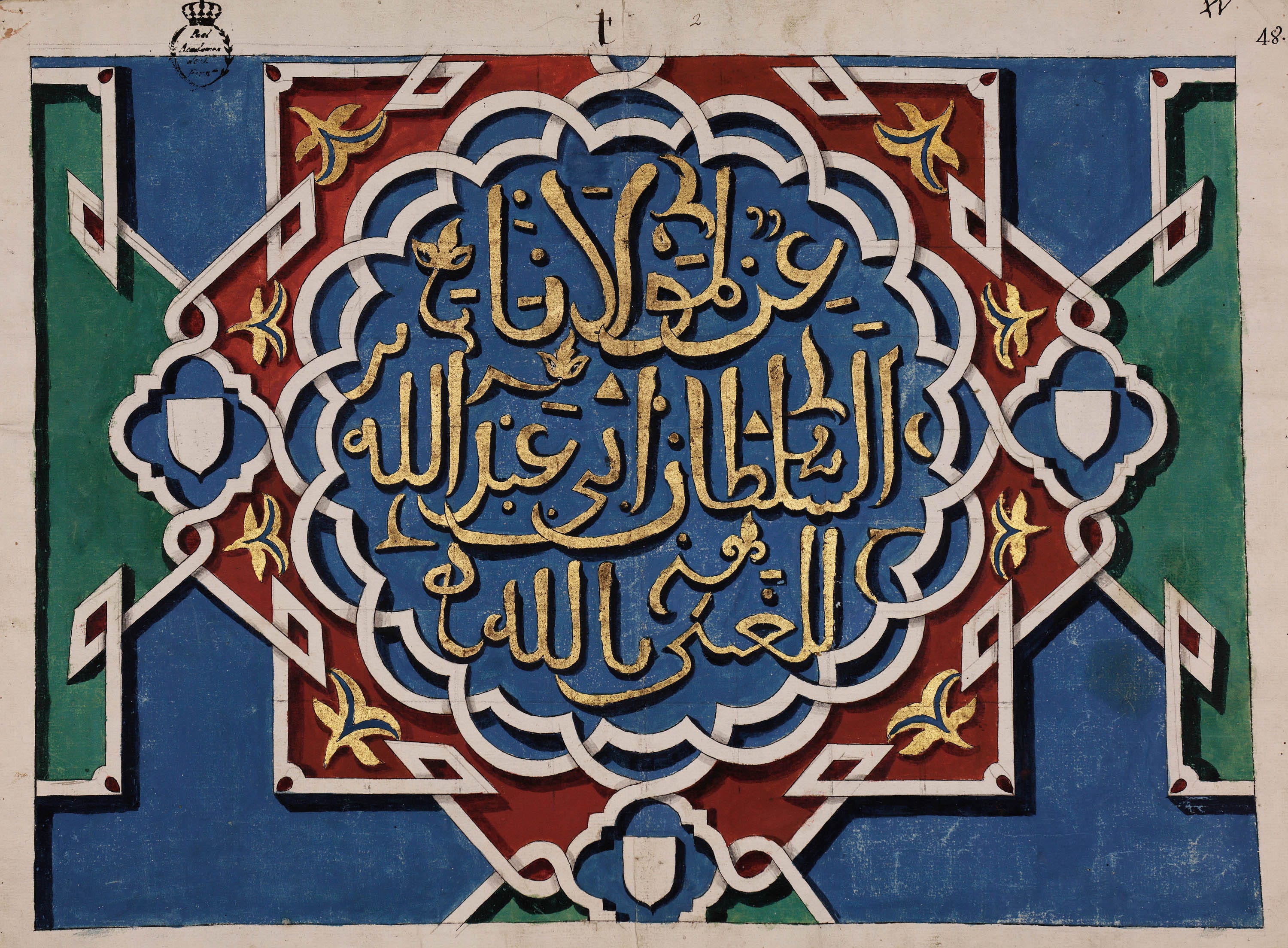
This inscription can also be found in the Court of Lions. It reads “ ‘izzu li mawlāna al-sultān abi abdillāh al-ghanī billāh” (Glory be to our lord/leader the sultan Abu Abdullah al-ghani billah).
Here is an image of what it looks like in reality:
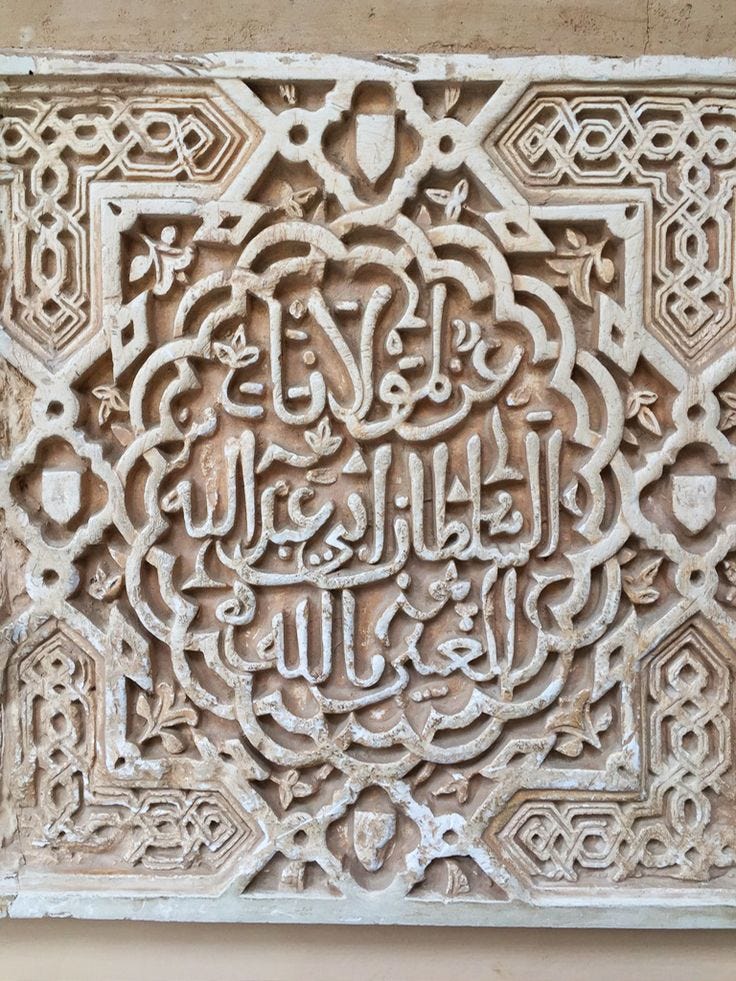
There are obviously so many more inscriptions on the walls of the Alhambra from so many other rooms and halls, but these are the few I could find that have been documented and illustrated by artists and architects who have helped preserve the beauty of the Alhambra and thought why not translate them. Some of these are translated all by my own to the best of my ability and some had already been translated before.
I recommend saving this so whenever you visit the Alhambra, you would be able to appreciate it even more!
If you’d like to read and research more about all the other inscriptions of the Alhambra, I suggest reading ‘The Diwan of the Alhambra’ by Dr. Salah Jarrar (for Arabic readers) and ‘Reading the Alhambra: A Visual Guide to the Alhambra Through Its Inscriptions’ by José Miguel Puerta Vílchez.
All illustrated works used here are of Diego Sánchez Sarabia (except when stated otherwise). You can access his work here: https://www.academiacolecciones.com/dibujos/mostrar-autores.php?id=sanchez-sarabia-diego
These are not just abstract ideas to me.
They are part of how I see the world. They shape the way I think about space, pace, and what makes a home feel like it remembers something deeper.
They are what guided the process behind something I made for others who feel the same way.
This is a 56-page visual and written guide on Moorish design for modern spaces.
It includes:
Core design principles rooted in Moorish-Andalusian tradition
Practical suggestions and layout ideas
Visual references and moodboards
A calm, intentional approach to creating beauty through atmosphere and meaning
The guide is for those who want more than just style. It is for people who are seeking feeling, presence, and a quiet elegance in their spaces.
You can find it here: https://ahmednaseem.gumroad.com/l/neo-moorish-home
Thank you for reading.
Whether you come for the the ideas, or the quiet philosophy behind it all, I’m truly grateful.
Until next Friday,
The Andalusian Edit
Comments
Nothing yet. Say the first thing.
Sign in to join the conversation.