
We make thousands of decision each day, rarely pausing to consider what my wife and I refer to as the second- and third-order effects. Yet the very first decisions made at the threshold of an experience (which can feel completely innocuous), quickly sets the boundary conditions for all the decisions that follow. Let’s walk though a couple you may find familiar.
Consider you just walked thru the sliding glass doors of your local grocery store. Right there in the doorway, you make a split-second commitment: cart, basket, or hands-free.
Not earth shattering, right? For me, going hands-free is an optimistic gesture where I tell myself I only need a few things. And if you are like me, it quickly becomes an unspoken challenge, testing the limits of how much we can balance in our arms before gravity or physics wins. But physical limits are absolute. As your hands begin to fill, your priorities narrow fast. You will pass up items that would have easily landed shopping cart space, because your current capacity simply will not allow them. The container you chose at the door didn’t just hold your items; it governed your attention, and your willingness to explore.

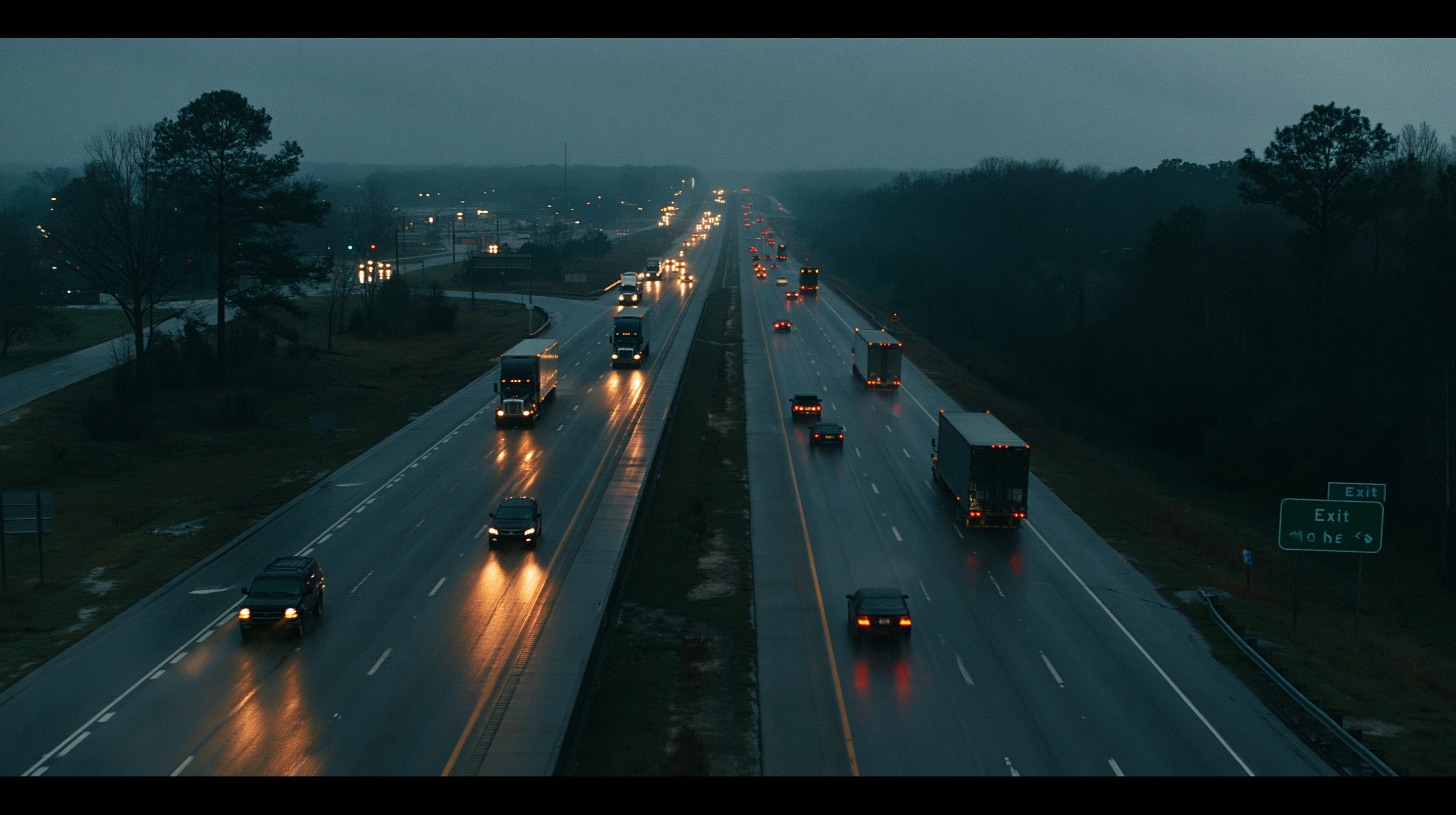
Another time might find you on a long road trip. You have watched the gas gauge slowly drop, passengers are restless for another bathroom break, and everyone is tossing hints of just how hungry they are. You watch exit signs roll past, taking polls on the perfect one that hits everyone’s wishes, holding out hope that just a few miles further satisfaction will be found. Eventually, the urgency for fuel and bathroom overrides the perfect meal selection, and an exit is taken. That single choice immediately limits your food options to whatever sits at the end of that specific off-ramp. We all know the mental friction. Getting back on the highway to search elsewhere after the fuel stop feels like too much friction, so you settle for what’s immediately accessible.
Choice generates more choices, but every initial choice further narrows the field. Weird paradox right?
This is Rule 1 from my [Hu]man Element framework:
Rule 1: The Container Principle
The initial boundary chosen at the threshold does not merely hold capacity; it establishes the operational constraints that dictate all downstream velocity, friction, cognitive load, and possibility.
You may read up to here and think the point is obvious: of course hands hold less than a shopping cart. Of course Exit 21 only has a Subway and a Shell station. That is just logistics.
But it isn’t. It is architecture.
See, the moment you grab a cart or leave it docked and go hands-free, you did not just choose a carrying capacity. You defined the physics of your entire shopping experience.
Hands-free means the initial goal was out the door in under 10 minutes. The cart—even for the experienced shopper—might have you still in aisle 4 selecting which new high-fiber protein-enriched granola bars to pick over you did not know existed 10 minutes ago. The container set a speed limit on the front side, but it also ramped the speed of shopping progressively if you were hands-free. Because as your hands began to fill, selection was narrowing to a premium out of necessity of space, weight management, balance, (and need we not forget) muscle-fatigue!
The few things you decided before entering the store (carton of eggs, gallon of milk, jar of honey, and fresh bagels) became a balancing act in your bare arms. Every step until the register became a mini-crisis. But rarely do I go to the store and come out with only what was on the list. I just came home from a “quick grocery run” of high fiber wraps, and salsa—that added 3 boxes of cereal, a gallon of tea, a half-gallon of milk, and Recees’ Peanut Butter Cups. I more than doubled the shopping results - which had me precariously perching the wares in my arms. That was only 2 extra aisles on a quick run. The awkward carrying friction, imposed a limit on getting more (or even being interested in what more might be.
For the normal shopper, the cart pusher has to actively decide not to buy the seasonal cookies on the endcap. (Note, I said the normal shopper. But if they were chocolate-chunk, small-batch… I might be persuaded to give them a try just this time. For Trish of course.) The average person going hands-free has a different decision that bears different consequences. Can I safely add this to the assortment I am already carrying, or do I risk my load being too cumbersome to arrive at the register without catastriphe. See, the decision tree just got a few more leaves of challenge on the branches. The permiter of hands-free (no longer empty) is impacting the choices being made in real time. The choice of no container did the heavy lifting, so the brain did not have to,
The exit ramp with only a Subway, means no wood-fired pizza, no meaty grease-fest burger, and no grilled chicken on a buttered bun. It means the possibilities are narrowed to what is available with the decision that got you here. Obviously, getting back on the highway in hopes of something being found later is a real possibility, but often the friction of delaying the drive with another exit ramp has gotten us to our next destination late - and still no dinner. That is a real possibility also.
The shopping cart, the off-ramp, the browser tab, the calendar block, the project scope, the deadline, the hobbies list. We think that we are making a thousand choices along the way, but we are actually just living within the containers we accepted at the threshold.
Capacity (Volume) - The scale of the initial container sets the mental default before execution starts. It defines how much we attempt to carry.
Scope (Perimeter) - The chosen pathway defines the field or arena of immediate execution. Once we chose an exit ramp, attempting to reach outside that local perimeter drains momentum, and forces costly detours.
Duration (Time) - The time allotted to a project. A task will expand to fill the duration you provide for it. A tight deadline creates urgency and intense focus, while unbounded time invites distraction, and diluted effort.
When you change the container at the outset, the downstream physics change automatically. Less friction, higher velocity, a clearer mind. I start with The Container Principle because every human endeavor has a starting point. But learning to see the container is only the first step in the [Hu]man Element framework. There are fifteen more RULES that define how we think, create, decide, and build once you step inside.
We will take a look at Rule 2, next.
THIS has been in the works since I first dove into AI. Shoot, I was working on this concept before I even explored AI and was still running my branding & marketing agency.
You see, everyone is treating AI like a tooling problem—obsessing over prompt syntax, model updates, and faster generation—while ignoring the fact that our creative output is flatlining. The failure isn’t in the technology; it’s that we are stepping up to an infinite canvas with zero boundaries, collapsing our own cognitive architecture under the weight of endless, frictionless choice. If we don’t master the human container at the threshold, AI won’t expand our creative agency—it will simply automate our mental drift.
So this… this is important.
Comments
Nothing yet. Say the first thing.
Sign in to join the conversation.