
Terry Pratchett has a way with words. His poetic fiction is as funny as it is deep, which makes sense when you’re known for high-fantasy-slash-sci-fi novels in which the world is, somehow believably, flat. One of my favorite books in his Discword series is a slapstick coming of age tale with Death’s Apprentice learning the ropes featuring a low charisma and lower drive main character, who if soever “compared a girl to a summer’s day it would have been followed by a thoughtful explanation of what day he had in mind and whether it was raining at the time.” But Pratchett’s irreverent waxing can often be followed by such fine prose you wonder what it is exactly that you’re reading. In Mort, Prattchett also writes…
There should be a word for the microscopic spark of hope that you dare not entertain in case the mere act of acknowledging it will cause it to vanish, like trying to look at a photon. You can only sidle up to it, looking past it, walking
past it, waiting for it to get big enough to face the world.
I love this passage, because it treats hope like a living, breathing thing, even if it’s as small as a photon. Hope as something that can change and grow, but also disappear without a moment’s notice, daring to describe a feeling we’ve all had before a big, positive change in our lives…
“Don’t count your chickens before they hatch.”
“Don’t worry, the other shoe will drop soon.”
“Don’t get your hopes up.”
But, even talking down to hope, stamping it out like the butt of a half-smoked cigarette, is to acknowledge that it exists in the first place- you see it, but you don’t see it; moreover, you’re unsure of your relationship to this baby crumb of hope. This observed, yet reserved attentiveness is a duality that I feel is lacking in a world vice-gripped by tech and social media, a world that demands us to look, look, look and react, react, react. But Pratchett and Buddhists alike offer an alternative- looking without seeing.
Put at pin in that thought for now, lets talk about cottagecore.
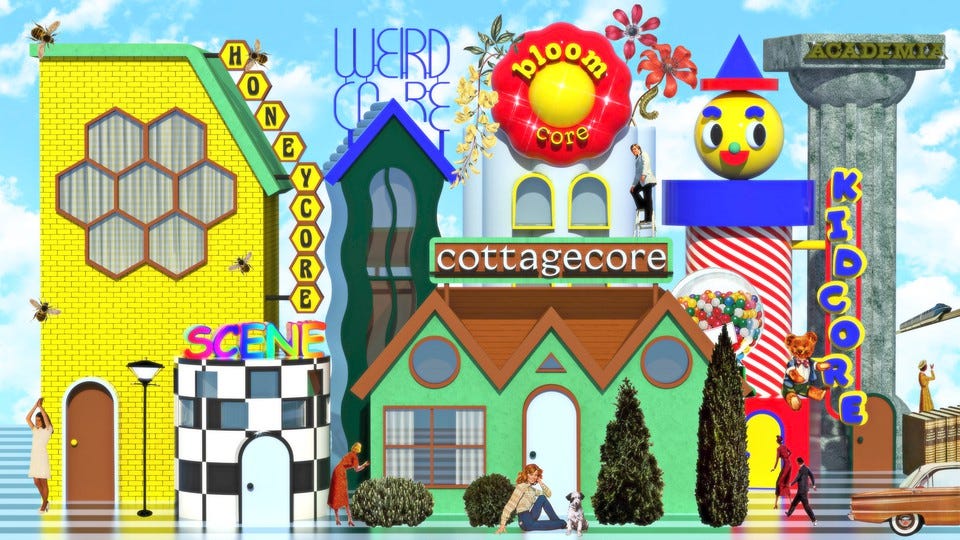
art by Pedro Nekoi from this article
Fashion trends have eluded me for most of my life; as a kid, a preteen, or adult, I never felt I had my fingers to the pulse of what’s “popular”. I was a weird child, and I’m a weirder adult. Even as a kid, thanks to my parents’ lessons, I knew friendships should be deeper than the color of our skin, cut of our jib, or the clothes we wear, and that sentiment only steadied as I grew up. The financial payoff of that mindset now, is that my style doesn’t change with every fashion season, requiring a new wardrobe, style, or choice of “in” accessory, be it bucket hat, peplum top, or gouchos. Fashion is all a circle anyway. There was, and always seems to be, bigger shit to worry about. To me, at least.
But at the start of the pandemic, when I was up to my neck in Instagram (and twitter, and reddit) I noticed the explosion of popular videos delineating a certain lifestyle “aesthetic”, maybe you remember too? During lockdown, it was cottage-core. But then, there were also the resurgence of new wave goths, sporty girls, really any girl… you could imagine. This hilariously aged article (published November 2020) outlines for us losers what these aesthetics are, on both ends of the nature vs tech spectrum. It reads like a player-character selection menu in a video game. Girls can be anything! As long as includes a “link”*
*apparently one of the most frequent single-word comments left on influencer’s tiktoks, demanding access to the products pictured in the videos. Shout out to Sam Slupski and their awesome substack for showing me the plague of begging for “links”
In no way am I saying Tiktok invented aesthetics. Hell, You can educate yourself on that, I sure haven’t. But, I was damn near clinically addicted to tumblr between 2012 and 2016 and trust me, there were plenty of “aesthetic” blogs then to go around too— for any proclivity imaginable. However, I think what is different about tiktok “girl types” is the fact that tumblr, at least in my experience and memory, didn’t always associate the content shared with things that could be bought, and cushioned bloggers with anonymity where desired. This is not to say tumblr cultivated healthy behaviors in young women at all on either end of the posting, but rather to note that a majority of tiktok aestheticians are facing out, open to the public; projecting a face, personality, and life in addition to the aesthetic. A life that’s more open to public comment and criticism, a life more subjected to harassment and stalking, and more often than not, a life that coincides with purchasing (or receiving, in the case of influencers) lots… and lots... of stuff. Tumblr may have popularized aesthetic posting, but tiktok has perfected it.
We know capitalism want us to purchase things unthinkingly, how much our media wants us to focus on “the wrong thing”, using technologies that make it easier than ever to spend money. And “girl type” influencers, in addition to the modern superstars of our days, are the digital arbiters of this transaction, much like crooked used car salesmen back in the 80s, peddling products that they themselves might not even really need, use, or love. Their online personalities sometimes vastly differ from how they actually are, and they often are paid to promote items that are worse quality than they appear online.
But, like Danny Devito says in Matilda, “nobody got rich by being honest”.
Maybe you’re picking up what I’m putting down. Despite the potential benefits of it being a creative outlet for self expression— “girl types” and “aesthetics” represent shallow, inconsequential, and market-driven decision making that is designed to soothe a deep yearning for power and change brought about by late-stage capitalism. Despite society at large being more aware of toxic masculinity and the patriarchy, women continue to be marketed freedom and self-actualization through— you guessed it— consuming products. We all know retail therapy has become an unfortunate cultural norm in the last century, made simultaneously commonplace and hidden in the modern age with the backdrop of online shopping. Social media is the avenue that shows us a rainbow of selves to be, some videos kind enough to include shopping list; you too can become me, for the low price of $350. Or, if you’re a coin boy, almost free.
Of course, our convenience culture comes at a cost beyond the material. I question a person of any age who, in the face of a problem that probes your inner conscience, or requires work that could be difficult, confrontational, and uncomfortable, instead reaches for a miracle cure, a silver bullet fantasy in the form of an cardboard box delivered straight to your door. Inside? Your brand new personality. This may sound harsh, but I genuinely wonder— why spend so much unnecessary brain power imagining all these different, more purchasable selves? Why pigeon-hole your style as directed by someone who is literally paid to do so? These selves are prescriptive, not descriptive. You can’t wear this top because you’re a summer, not a winter, babe— shame on you for even thinking it. These are not suggestions, they are instructions. Has an aesthetic POV ever dared to ask: How do you want to perceive your self, for and by yourself? I doubt it.
But, before the self, there is always bread.
So, you’re in the grocery store, and you need bread, but there are dozens, if not hundreds of different types of bread. Especially if you didn’t have a particular use in mind, you may get thwarted by a symptom of our over-saturated world of products: The paradox of choice.
The first effect of the paradox of choice starts at the time stamp, the second effect starts at 9:56. It’s 16 years old and a crunchy, dusty 240p but this ted talk is still very relevant.
~~~~
Sometimes, I think rations would’ve been cool. But I do prefer marbled rye over sourdough…anyway—What a waste of time right! With all the more options, we are…
less likely to decide, period.
more likely to feel dissatisfied with the decision we end up making.
This applies too, beyond the grocery store, to the girl types, coin boys, and, more broadly, with who we can be and do. With more options we tend to overthink, which leads to decision paralysis pushing us further from the selves we want to be, need to be.
The free market never fails, though! A few companies have sniffed out the disdain for brand names, the frustration brought on by too many choices; and, to no-ones surprise, one popular option among them is called Brandless. Another similar Canadian company, No Name, has been around a lot longer, and seems to take itself less seriously. They have succesfully capitalised on a consumer desire to make fewer decisions. While this is one way to solve the problem at hand, in a way you still become a loyalist to a the “brandless” brand, or just obsessed with the surface-level aesthetic of minimalism, and not its deeper, more spiritual roots. That in turn brings new problems, as taupe-obsessesd mommy bloggers are ranted about online when they won’t let their kids keep colorful toys (a necessary item in a baby’s developmental toolkit) because it conflicts with their beige aesthetic. Yeah, we’re there, white people.
So, on both ends of the product-based decision spectrum, you have extremes. In both cases you also have folks who desperately desire control over things that, in the long run, may have a null effect on their overall quality of life. What difference does it make if you can select from 100 different types of cheese, or limit the amount of uncoordinated colors in your living room, but can’t negotiate with your energy company (read: monopoly) to not spike prices with climate change looming on the horizon? This ability to choose frivolous products just for the sake of options, despite it being scientifically proven to be less satisfying than having fewer options, brings me to the next station of our substack journey. “Takes”.
Let me toot the familiar horn: it’s easy to have opinions, harder to take action, right? As any of your social media websites can show, the internet has become a cacophony of “discourse”, with personalities of various degrees of fame constantly weighing in on topics of which they usually don’t have expertise. The twitter expert, reply guys, and podcast bro stereotype seems to have become endemic to the internet. With more people (and more bots) online than literally ever before, the noise seems to be reaching a level that can no longer be ignored. I love the way Bo Burnham states (and restates) it in his 2021 magnum opus, “Inside”.
I find it interesting that, somewhere after this special came out, I started noticing articles, threads about “de-influencing”, where social media figureheads started respectfully stepping down from the craft of pushing products, lifestyles, or opinions. Oh Bo, why do you always know? I also have started seeing discourse about… discourse. Opinion fatigue is also being reported among those with high follower counts. Fancy that! People have had so much to say for so long, and we’re finally thinking that over; we’re tired of our own takes.
And this is gaining traction in internet communities. The phrase “go touch grass” has become a common insult to those who are “chronically online”, a less direct way to say “you’re so detached from reality that you need to log off for a while”. But the plot twist is: they are. I can smell the roses, people are starting to wake up to the orchestrated mania that is social media, waking up to the enshittification of it all— after all, why did, between 2008 and 2009 facebook’s entry bar change from “write something” to “whats on your mind?”. A small change like that created the memetic of people documenting every menial step of their whole life, if we’re old enough to remember ye olde days of cringe.
I believe, collectively, in both a literal and figurative sense, we’ve just been too close to the problem to call it one. We’ve all been there: looking at our phone, scrolling, first thing in the morning, or right before we go to bed; both preventing your brain from having mental space to adjust to a major consciousness change (sleep) and forcing your body to share physical space with the unnaturally bright magical rectangle, usually no more than 12 inches from your nose. Maybe you’re like me. The longer I use my phone throughout the day, the closer the phone usually ends up to my face. At my worst screen time levels I go nearly crosseyed, only taking breaks when my they are so strained I have to blink my eyes back to a normal level of focus. I literally couldn’t see straight.
About a year ago I made the choice to get laser corrective surgery on my eyes. Since 11, I’ve needed to wear glasses. But at 28, I finally had health insurance after a half-decade without it, and on my plan the fees for lasik were more reasonable. The consultation convinced me the procedure would be quick, painless, with a quick healing time. $3k on a interest free payment plan for a year… for the payoff of perfect vision? Something that could save my life in a pinch? This was one of the easiest decisions I’ve ever made.
After the most surreal 15 minutes of my life (for the squeamish I’ll spare the description of the surgery. Google it if you’re curious.) my partner drove me home. MAK can testify, I’m usually a chatterbox, but sitting in their car I was speechless, and not just due to the shock of minor surgery. Underneath the blur, there it was. Just the same as the first day I was driven home in glasses at 11 years old: the outline of leaves on the trees, clear and moving in the wind. Only this time my perfect vision was below a foggy layer the doctors said would disappear in about a week. They were wrong, turns out. The blurriness from lasik went away almost completely in just four days, and since then I can just… see?? It’s insane. The only times I’ve noticed my vision getting blurry is eitehr at the end of a long day, when I’m super tired, or when I’m super stressed. Ever since the surgery, I’ve tried to take better care of my eyes (since they were now an investment I was paying off $400 monthly). This meant better respecting the distance my eyes need from my phone and computer physically, and further, the space my mind needs from the sites that demand my vision from me in the first place. I also wear blue light blocking glasses, sometimes just as a comfort in & of themselves. My “new eyes” felt like a privledge and I had to honor the responsibility, seeing clearly.
Which circles us all the way back to looking without seeing! You can un-pin the thought now.
It is possible to look and not compute, not process, opt out. Abstaining from something via conscious effort is a wonderful antidote to decision paralysis, where we avoid decisionmaking altogether. For example, you’re invited somewhere that you know you won’t enjoy, and rather than placate others and go, or avoid making the call until the very last minute and bailing, you can consciously say “thanks, but no thanks” as soon as you read the vibe— don’t go and don’t feel FOMO via whatever folks share later. Better yet— don’t even look at what people share, because you’re too busy enjoying your own life! Looking without seeing doubly applies to how we show up online. We can dismantle the desires that were planted in us by our social media enclosure, stop reading or watching something the second we notice that media malignantly manipulating us, or conscientiously abstain from certain spaces altogether. It is possible to observe the enigma of social media without participating or perpetuating. It is possible to witness a topical scandal, and by some miracle of our 21st century god, have no opinion on it. How else will you be able to discern what actually matters to you in this life? Will we continue to waste our brain’s bandwidth on decisions designed to make us dissapointed in the end? I’d like to think not.
So here’s where I give my fucks. Fuck perscriptive aesthetics, fuck the culture where everyone has to have a “take”, and fuck, fuck, FUCK the “Free market” bombarding us with useless minor choices every day. I want to know why you say yes or no without the influence of a following, I want to see the inner makings of you, for you. I truly believe, much like the phenomenon of bullshit jobs, consumerism and social media subsuming our social lives has everything to do with why we now face so much anxiety, overthinking, and people-pleasing in the face of making hard decisions. I’m beyond tired of pretending this shit is normal, that it doesn’t hinder or brains and lives. I hate the way it all can prime us to only tolerate making small, easy, and surface level decisions when, in reality, we must do our best to face the giant, difficult, deep ones. And remember, if you’re managing to use social media in a way that confronts capitalism, somehow defying its quintesential design….
you are the exception, not the rule.
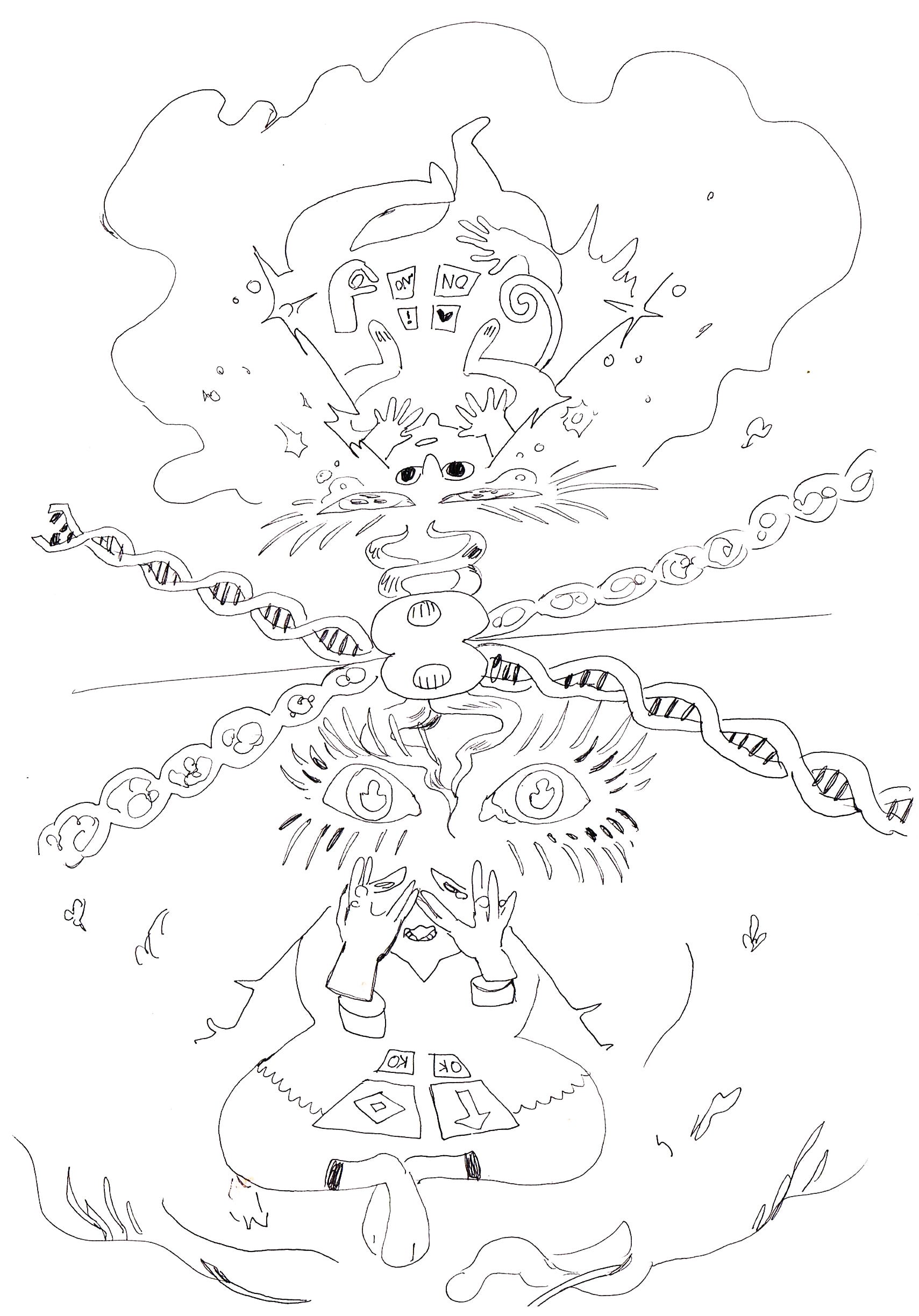
So why do you decide why you decide? Here’s why I do.
I think even with the most difficult decisions, it’s because I actually have very few viable options to choose from, and of those choices I have a balanced understanding of the consequences thereafter. Think about a difficult choice you’ve made in the last year. Were there really that many options? When I remember the hardest calls I’ve had to make in the last six months, I can remember how it was usually a choice between two options, something like a yes or no situation. An important problem with a tight deadline (especially a self imposed decision deadline) has a way of ironing out the possibilities and pointing us in the direction of our hearts, and making lots of those decisions in real time better prepares us for decision-making in “long time”. Of course, there are large dilemmas that appear before us with many future potentials; seemingly endless when the expanse of life unfolds before your imagination, but the reason I feel less unwilling to make those bigger, longer, life decisions is because I make frequent little ones, more confidently. My beating around the bush days are over. When I know what I want or need, I’ll make it known— and I do so respectfully, where possible.
In contrast, the reason picking an aesthetic for yourself as a young woman could feel so daunting, is because the options are only presented as a full spectrum; you can be anything you want to be! How horrible is that?! Sure there are literally thousands of “girl types” to choose from, but will the costume ultimately change you? No! Only you can do that from within. And unlike a costume which is changed all at once, the person we really become is built out of little incremental changes over time. For better or worse. Perhaps, just like the loaves of bread in the supermarket, whichever one you choose out of the many options will matter a whole lot less than what you put in between the slices. Sometimes those decisions with the most open of ends do end up feeling inconsequential no matter what, because we’ll zoom in on the shortcomings of our choice compared to others, or of our imagination against itself. Sometimes we feel certain things are inevitable, no matter what we decide. But these cases are the most significant, because sometimes we do choose to look in the face of our own, usually self-created, doom and say, fuck it- we’re gonna try anyway. Even if the destination is inevitable, we can dare to change the outcome at least a little bit. Like the rudder on a runaway boat.
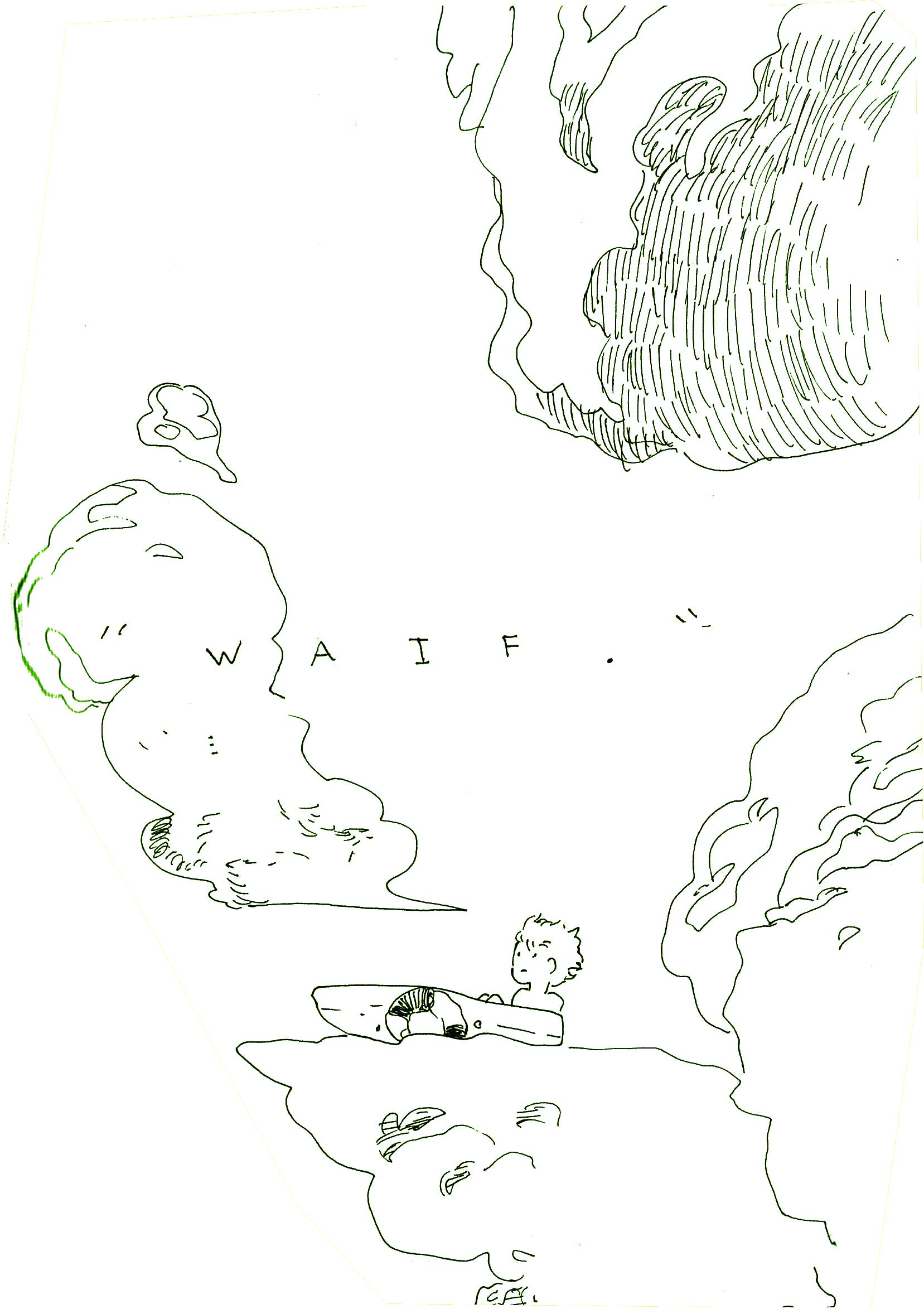
So, the next time you decide something with confidence, could be anything, notice the energy it gives you, and bank that energy for the decision that seems so open-ended it’s impossible, or the situation that feels doomed from the start (spoiler: it probably isn’t). Let me know in the comments what kind of situations feel the easiest to decide on, which feel the hardest, and why you were able to decide at all and and stay tuned for Part 3, where we focus on the functional. How do we do move through decision? What is our speed, and why? And, finally, how do you make difficult decisions that respect boundaries, better your mind-body connection, and brave the unknown? All this and maybe even a flowchart from the next editition of the Tater Patch.
Thank you for reading. Until next time! <3
Comments
Nothing yet. Say the first thing.
Sign in to join the conversation.