
Okay folks. It’s time to decide. We’ve gone through when and why, now we will deal with how. This is a pretty long one, so set it aside as needed, I know I did when writing it. :-) Taking my time to think about my emerging worldview was worth it, but it’s just that— my view; so take it with a grain of salt and savor it.
<あおペンキの中の僕の涙 translates to “My tears in the blue paint”>
I think this Ryuichi Sakamoto tune will get us through our first arc here. Imagine the baseline that carries this song is each step forward through the various ideas presented. Rest in peace you musical god.
We walk our talk, right? Think about your decision-making style like your walk. Think about your walk like your decision-making style. When you’re in a hurry to get somewhere, you walk with a quickness, with chest and body, even you head tilted forward towards your destination. In contrast, when life is the reason for the day, one foot is placed in front of the other with a sort of laissez-faire that only the retired can relate to. But often, a walk isn’t as simple as slow or fast. Sometimes we pace, tension knotted up in our neck or shoulders. Sometimes one spins while thinking, or walks in a sporadic way, stopping and starting, or suddenly jolting to take a turn. Especially as our temporarily-abled bodies age, our walks can change as a response to pains, aches, or injury.
If we walk too fast, our head enters a room before our heart; as a result we may be more cold, calculated— the problem-solver precedes the empathy-haver. In contrast, if we walk too slow, the head lolls behind looking at clouds, the heart may have enough time to tediously ponder feelings over facts, but that can create a schism between real and fake. It can cause us to overthink. Both can be right in certain moments and both can be wrong. But they can tell us a bit about ourselves or others, nonetheless.
I think walking is a great metaphor for how we decide. But it goes past metaphor, curiously enough, how we walk itself can be indicative of how we decide, too. Think about a friend who is a whip-smart decision maker. How do they walk? Fast, frantic, or with a big step? Similarly, your starry-eyed dreamers— do they strut with gaze above, behind? Does someone with a frenetic mind have a hard time keeping track of their elbows and knees? I’m guilty as charged of that.
Anyway, what’s your pace?
Okay headstrong heroes of today and tomorrow,* my people who move swiftly from one project to the next. Your fuel comes out of thin air. It powers you in admirable bursts of inspiration. Everyone looks up to your turnaround times, your push, the mind-drive of it all.
Your energy seems to last as long as your follow through, which goes fast in a fury*.
*but not forever…
Going fast, making mistakes, having to fix those mistakes now or later.
Going fast, making no mistakes, but feeling and being treated like an infallible machine by others.
Going fast, but feeling stirred up and indecisive, which makes you go back and forth, delaying time; sometimes to a degree where it actually slows things down.
Going fast, forcing others to go at your pace, burning others out, but staying true yourself, though feeling ostracized in your speed.
Going fast, accepting only perfection from yourself, making anxiety-forward decisions, leading to high pitched stress, and burn out.
Going fast, solving problems in a hurried or halfway fashion, fixing said problems at a high speed, but collecting new problems just as fast, if not faster.
Going fast, because of uncertainty, saying a lot while saying very little.
Going fast, but maybe leaving your slower loved ones behind.
*this is not an exhaustive list. If you’re someone who goes fast, this would be a good time to note how “fast” goes for you.
If “fast” is you— I encourage you to to ask yourself:
Do I savor things?
Do I have time to?
When mistakes happen, how do I act?
Do my thoughts live more in the past or future?
What does being slow do to my soul?
Maybe these questions can help you know your pace better.
Life is a spiderweb, beaded with dewdrops, and you are the moth that dances before it. On the right days, every detail of your world feels just in its place, and perfectly appreciated*, after all, you’d rather do something right the first time, even if it does take a little bit of time to get there.
You are always there to appreciate the little things.*
*even if that takes… for fucking ever.
Going slow, avoiding decision making, causing anxiety, which reinforces avoidance, which reinforces slowness
Going slow, because of uncertainty, saying a lot without saying anything
Going slow, overthinking decisions, because you don’t know what you want, and feeling guilt about that
Going slow, overthinking decisions, because you can’t predict what others want, catering only to others, deferring to another’s power
Going slow, being unaware of your surroundings and causing mishaps, losing track of deadlines or agreements, lowering social or workplace responsibility due to being unreliable.
Going slow, wanting to explore every single idea as equals, maybe even expressing aloud every potential; lowering overall strength of any single idea. (Paradox of choice, again)
Going slow, accepting only perfection, causing more time and potential for dissatisfaction, never completing anything…. and therefore never achieving perfection.
Going slow, finding the right solution to the problem, but it comes too late.
*this is not an exhaustive list. Maybe you go slow, and you know ways of your own; I lean this way personally.
If “slow” is you— ask yourself:
Do I hold onto things past their expiration date?
Do I get left behind?
Do I feel left behind?
Do my thoughts live more in the past or future?
How does going fast feel to my heart?
Maybe these questions can help you know your pace better.
And then there is the familiar feeling that comes around. I’m stuck. I’m not moving slow or fast. Hell, I’m not moving at all. This can crop up for me personally when a state of “too much regularity” sets in, for others it is the opposite. Recently my dear friend and I were talking about relationships and said “Oh, I can’t stand a plateau.” Relatable. The plateau feels dull, predictable, or worse, disempowering.
Power. It’s mostly given to those born under it. The rest of us have to drag it, kicking and screaming, out from their hands. Though nothing in life is binary, I feel there are just two main delineations of powerful people in this world: the powerful by birthright (think: trust fund kid with yacht club connections, or some son of an oil baron) and then there are the powerful by self-actualization (think: the rest of us). I feel I have met enough people in this life to sniff out the difference. But power by birth doesn’t equal power in action. Some of the most greedy, selfish people are also the most resistant to discomfort, difficult decision-making, playing life as safely as they can, for fear of losing their horde of gold. Talk about a waste of power.
So for the People At Large, how do we personally achieve power? Community organizers call tackling those large problems “eating an elephant one bite at a time”, which I love. But if you’re not even ready to eat? Lets get you there.
How willing are you to try? New things, old things, doesn’t matter— how hard do you try? What is your “I give up” threshold? And— when we’ve given something our best try, and things don’t work out— are we okay with that? These are real questions that we must ask ourselves. There is great power in having the confidence to try, as long as we view mistakes as lessons; altogether necessary themselves. Bravely making a risky decision can feel so isolating, especially in this modern world that values comfort before anything else. But avoiding decisions, completing no goals, or even having no purpose at all leads us to feeling stuck. Depressed. Duh.
Few worthwhile goals in life come easily. Risk is involved in most meaningful things we do, and if we choose to abandon risk we may choose to abandon a meaningful life altogether. It’s hard to admit to ourselves and even harder to live by this code. Modern society deludes us into thinking we have lives only as meaningful as they are comfortable, as we settle into late-stage capitalism, solidify habits or give up on the motives to change ourselves. Modern comforts can codify into a risk-less, even meaning-less, life. As we accept less risk we are not able to accurately assess risk at all— so even small ones may seem Goliath-sized with as little practice as is becoming common in the age of 21st century conveniences. I think this also explains the current Karen moment. That, and lead poisoning. I digress.
There are times when a risky decision comes and no matter how risk-less a life you have you can’t escape it. Immensely powerful decision-making moments, real moments of change, can make you feel like you’re experiencing the stages of grief:
denial
anger
bargaining
depression
acceptance
making meaning (the newest added, and most often forgotten)
In both grieving and big decision-making, these do NOT appear in any particular order, nor are they exhaustive, where you “get through” one and it never appears again. Any can show up in any order for as many times imaginable, for better or worse.
After I published the last entry into the Tater Patch (SEPT 2023, sheesh), I entered a dark period of time. As winter loomed and the growing season waned, the tumultuous phase of my relationship [that I had normalized] was over, so I knew I would have to face some unusually strong seasonal demons, the kind that have accumulated over many seasons, but get put aside for everyone else’s due to my nature or solving other people’s problems before my own. I had to decide to face mine.
So, I went through the stages. I denied, first, that anything was my responsibility— that my depression was due to some undue suffering inflicted on me by others, my partner, boss, parents, everyone, anyone. I was angry at my own childlike insecurities; as if being pissed at them would make them suddenly disappear. It does the opposite, actually. Bargaining happened effortlessly, “You’ll be less sad if you just do X… The bad feelings will go away after Y… Well, at least you don’t have it as bad as Z!!”. Depression, of course, comes uninvited and stays long after you want it gone. Because mental health isn’t a conveniently singular decision we make— it’s the result of small changes, done so stubbornly and repetitively, that your brain finally gives up the old neural pathways and accepts it’s actually better to create new ones. But before all that sublime shit, I had to accept that there’s a problem, and somehow make meaning from it.
And how ironic. In the first two thirds of 2023, because I had a new job and new freedoms, my decision making and autonomy felt like it was at an all time high— yet my disposition, personality, and ability to empathize were suffering greatly. People bothered me so much more than usual, their standards, their lifestyles, their decisions, lack of observation, the way they talked, the way they listened. I was pissed off. The main motivation behind this substack series was because I was fucking pissed!
I knew it was time to change something. I had to discover why I was so insecure about my life, and so judgemental of others— and the opportunity presented itself. But how do you decide the answer to a question you’re afraid to ask yourself? Luckily, making the call took the form of a call with my best friend* Mackenzie Becker.
*there is no “one” best friend for me, by the way. Life is full of best friends.
“Yeah, I just got out of therapy, she’s getting me on-boarded for EMDR. I think I’m ready, I’m super excited”, I told her on the drive back, a rare one without tears.
“Oh dude, it’s going to be amazing for you. It may be the most difficult thing you ever do, and you may go through some of the most hard feelings you’ve ever felt, but in 6 months you are going to look back and be like ‘Who the hell was that?’. If I hadn’t done it I don’t even know what I would be doing right now.” Mack poured out.
My friend was making it sound like a cure-all. And though I believe cure-alls typically cure nothing, I trusted her enthusiasm. But then she added something that caught me off guard.
“Oh, and one other thing— you should definitely stop drinking and smoking weed while you do it. You gotta be sober.”
What?
The conversation deepened, and given that I’d already spoken with her about a potential tolerance break before, it made sense she suggested it. Between my two Ma[c]ks, this had come up a lot in recent conversation— but this time it felt like the elephant in the room had been called out and it was finally time to eat it, one bite at a time. Because there was no question— I was going to do EMDR, but could I really give up my favorite flower for its undetermined duration? If EMDR was a Trojan horse, inside was the unbridled terror of sobriety.
“Oh yeah. You need life to be clear. And it will be, after you work through the shit.”
So. I started one therapy and stopped another. I journaled a lot. I started reading, trying to. I read Ester Perel’s State of Affairs to satiate and relate my morbid curiosity about infidelity, and ground it in some worldly realism thanks to Perel’s rainbow of experiences as a therapist. I read Come As You Are by Emily Nagoski, and loved that book, especially as someone who designs educational guides. It’s a sex book with homework, but is way cooler than that— Nagoski talks far more about the mindset of sex and why thats more important than all the moving parts. She talks specifically from the lens of feminism and female cultural training, too. In Come As You Are Nagoski also explains the stress cycle— and why it’s important to complete it. When we do, we’re telling our shaky, achy bodies and brains that we’re no longer in danger. Thanks to EMDR I realized with weed, especially in winter, I wasn’t completing the stress cycle when I was really depressed, just postponing it. The first week without cannabis I felt a surge of emotions I had been ignoring, rushing up from below like a well overflowing.
And I just had to ride those waves until eventually they met the shore.
Recently, Tierra Whack came out with a new, very raw album (World Wide Whack). She talks a lot about mental health, betrayal, being disappointed and abandoned by those she cares about, dealing with that trauma. Hearing these songs in her new album, and after reading Come As You Are, I realized she was completing her stress cycle in making these, getting it out of her head and into something else. Fear, shame, hurt, it all becomes so much smaller when it has somewhere else to go. And I think without weed I was able to understand my fears because I was no longer crushing out their embers before I could even understand why they were burning in the first place. Fears are just hopes wearing the wrong clothes.
In Whack’s wise words from World Wide Whack: “Death is real, life is fake. My advice to you, make some more mistakes.”
She’s right, feelings are not mistakes they just are. If I removed weed from the picture and let my feelings be what they are, I could potentially complete my stress cycle and heal from them. Taking that particular break from cannabis, when I was so depressed already, and would have usually relied on it more, was one of the hardest, most rewarding and clarifying experiences in my recent life. I owe this wonderful plant a lot of my good times, but it was time to remove it from my mental health equation to learn what was going on in my head, and renew it’s benefits later down the road upon re-visitation. I started EMDR, and was certain what I was feeling was just due to the effect of the therapy— not the lingering high of a wake and bake. I will probably write a whole essay about EMDR one day, but this is about decisions, and how we make them.
I did some deep soul-searching, in addition to the therapy and emdr, and realized I wanted to work harder and be better at what I did, I wanted to love without attachment and trust my partner. So, I tried. Hard. I created a whole lot of things for work that I believe are truly going to help people, made delicious meals, worked out, lived life. After a month with no weed, I reached a state of lucid normalcy— with an even emotional state on most days, therapy days being exceptions. I extensively talked to good friends about my struggles, and yet also self-isolated and reinforced certain behavior. Through persistence, EMDR helped move the needle on some core beliefs, I became less scared of abandonment, less paranoid of infidelity, and started to truly love the body I’ve been given. I made the decision every day for three months to stay sober and listen to my winter heart’s whispers. Seasonal effective disorder turned from an annual bedrot festival into an opportunity to uncover and discover myself.
The day I ended my tolerance break feels significant too. It was one of frequent days where I was having an extremely hard time being motivated for work. I remember feeling like I could really use an easy button and get motivated to do ANYTHING. Many people have the opposite experience, where weed makes them so distractible any semblance of productivity is stripped from their hands, dead on arrival. This is the largest reason why weed & I have been friends for so long. It gives me an intense focus, braces me better for problems when they arise, and makes boring or unpleasant tasks enjoyable. I missed that flowstate. So I took my first puff in months and it was…. fine. It wasn’t a monumental waves-crashing-on-the-cliffs-of-dover moment, because weed isn’t like that for me. It did what I wanted it to do— I worked for like 5 hours straight on a project I had been struggling with. And the next day? I didn’t even have any! And the day after that? I still didn’t!
But that did break the break, and I’m still navigating how I want my relationship with the flower to grow or change. I took another break before, in, and after Japan and have been really trying not to just smoke for any old occasion. But I’m not perfect— and, in my defense. It is summer, after all. I have a feeling I’ll have a decision to make, come winter again. Do I make a tradition of this? I think I could.
But, back to our point. Let’s send her home.
I bring up weed because it’s the closest thing I have to an addiction, and also the closest thing I have to brain meds. And like all people struggling with substances, consistency in change is hard, but sticking with it, for even a little while can be extremely rewarding. It can give us power; the power of noticing how you are, and maybe even why.
Noticing is a choice. It’s a choice to stop being fed and instead seek to eat; a way to take stimuli into your own control. Being observant in the face of our world’s extreme shortsightedness resists the global trend towards division; from humanity, nature, and life itself. And I’m not talking about observing trends online, maybe that’s too obvious— I’m talking about deep listening. Paying full attention when a friend is talking. Noticing the details of your neighborhood and the world. You can start to see relationships emerge from the dysfunctional systems and you can even find hope within them.
Humans are endlessly fascinating. It’s no wonder so many of us are narcissists.
And humans may be specially trained to be observant, anyway. Our ability to recognize patterns, the fact we have whites to our eyes, and our complex sensory makeup allow us to tune into this natural world expertly, if we choose to. But with how distracting media currently is, combined with the shortening of experienced time via news, technological breakthroughs, and 5 minutes of fame meme culture— it’s no wonder our skills to be critically observant are currently at risk.
Developing a skill in observation can depress, too. It can make you realize just how few people are really paying attention to their surroundings in 2024. Sure, it’s been memed by far right cartoonists, but god damnit, can we all just stop being phone zombies any time we’re in a line, on a plane or train, idle, waiting? Sometimes I will just rawdog waiting in line with the explicit purpose to see if I’m the only person who gets off their phone for more than a single minute of time. In fact, recently there have been tiktok challenges by travelers to “rawdog flights”, no games, phone, nothing. These go viral because people can’t imagine sitting with their thoughts for 17 hours, how crazy!!! Good lord, think about going without your phone for a day. That’s a long time. But, especially as the project of social media deepens into our culture, and other cultures globally— FOCUS in an age of great, unparalleled distraction, is all the more powerful.
But, even the brain-foggiest, most chronically online person can learn how to be observant. It’s not actually hard. Quite the opposite, it can even be gamified and made fun. And, once you’ve donned the specific vision goggles to start noticing things playing out before you, it’s hard to take it off. For better or worse. In fact, my favorite part of teaching gardening to young kids was watching them get that observational vision for gardening. When something that used to just be “that plant” becomes “cucumber”, “zinnia”, or “okra”, we are given a new way of seeing the world, and rewarded for the seeing in a very direct way; eating. As always, gardening as metaphor reigns supreme for me.
If you can build your observation skills— exercise them daily. How? It’s easier to list examples than wax hypothetical on this one. Here are some scenarios:
You are at a social gathering. A group lingers by the door, cigarettes prepared inbetween their fingers, and lighters in hand. Your close friend, though in conversation herself, is throwing eyes at the door, and maybe even bites a lip— distracted. You know she’s one week into quitting, so you ask if she’d like to go upstairs and play games with some other friends. She seems glad you suggested it.
You are walking a trail you’ve been on before. But, for the last two days, it’s rained. A lot. Deeper in the woods, you notice the trail becoming littered with old glass, cans that could be from 20 years ago, and other plastic detritus. Sure, it’s from the road you can hear whispering uphill and you’re down the slope, right where water would push litter— but it occurs to you that this rain event was pretty strong to dislodge such old trash— the kind whose labels have long since disintegrated, whose brands you don’t recognize anymore. And you think to yourself, given enough time, this trash could reach the actual watershed some 100 yards away. Eventually, the ocean. You think next time: bring a trash bag.
You’re having tea with an old man you haven’t seen in 10 years, but he still has the same smile as before. Through the thick language barrier, and largely because of his eyes and body language, you’re still able to understand that he is this way because he has QTIP (Quit Taking It Personal).
Self-observation without judgment allows us the power to adjust. There can be no long-standing adjustments fueled by shame, because even as shame may fluctuate, our behaviors may not match that fluctuation. Of course, past shame is accountability. If you’ve been really slacking or failing others a good hard look at yourself can be the antidote for your problems, the same way you’d talk to a lifelong friend who just keeps repeating the same loops. All of this can give us just enough room to make small incremental changes sustained over time.
And adjusting longstanding behavior, which should not be understated— IS A LIFELONG ENDEAVOR— is as rewarding as it is challenging. And the rewards shouldn’t be hoarded away in your private inner life; the most powerful way to learn is to teach others.
So, if you are in a position of power over someone, and they aren’t making decisions or performing to your standard or speed, maybe try to reach a point of observation with them— see if they can see what you see. Parents, bosses, partners; ask more questions than you make suggestions. Try to get someone to figure out their pace on their own. I think this may be especially important for parents and teachers— if people model their decision style after your example, it is your responsibility to set a good one.
But also reach across the aisle.
Find people that foil you. I am a slower doer, while my partner MAK is definitely a speed demon. I teach them how to relax and appreciate the little things, the journey, and they keep a fire under my feet to keep learning and be keenly aware of my surroundings. In fact, I owe a recent surge in my observational skills not only to gardening and seeing that world, but also seeing the world through MAK’s eyes, their very very observational eyes. And we’re not unique in our differences. I have met many couples which are opposites in this way; statistics even show that most couples are opposites in spirit, movement, or mindset— not similar. We learn from each other’s nature. Or at least, thats what a therapist told me many years ago.
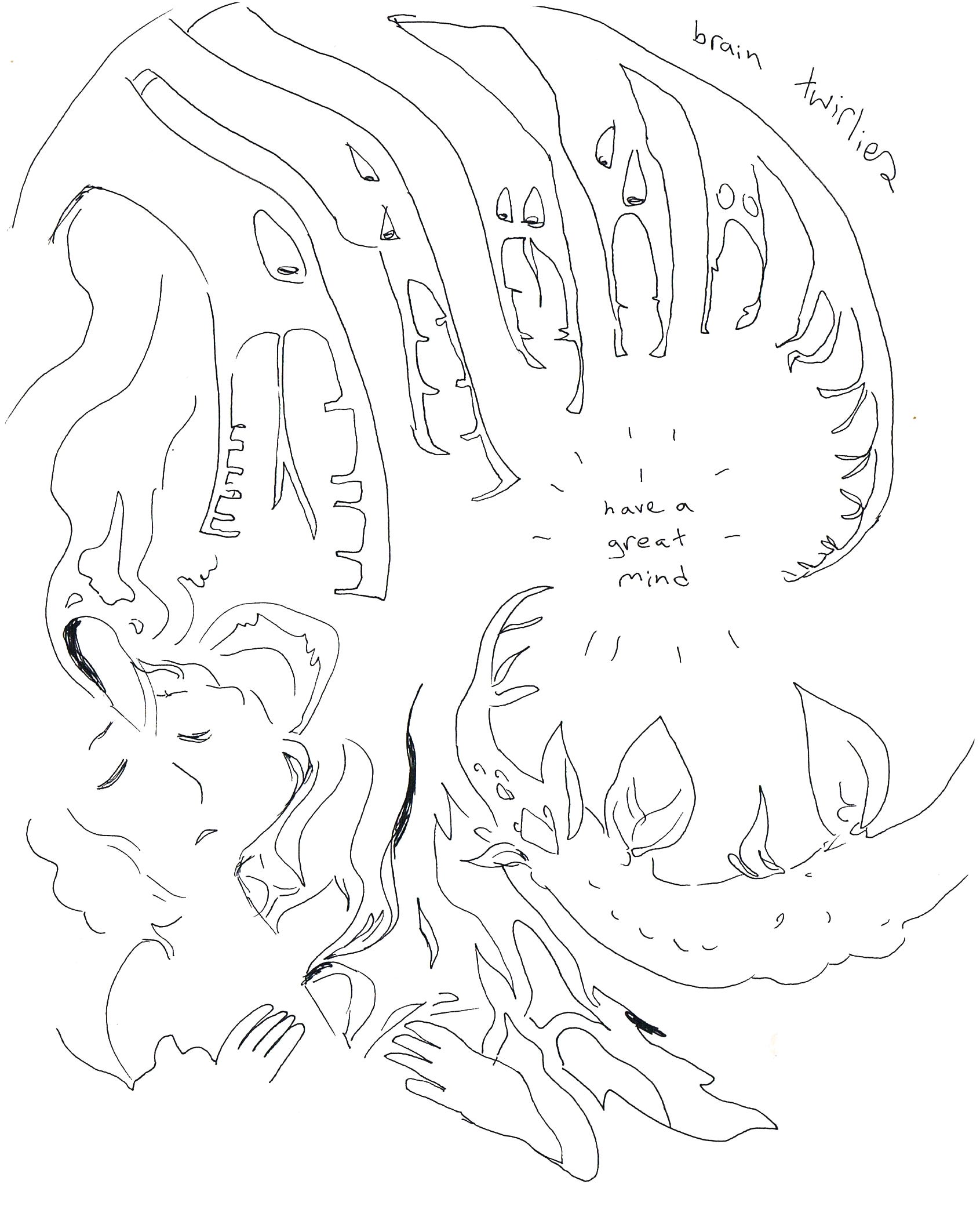
So here’s how I am trying to change my decision making skills, my “how”.
If something needs to get done, and I can do it in two minutes (move a paper, tidy an object, brush the cat, make tea, these are usually small chores or tasks that will improve life) I just fucking do it. I will never, ever remember better than the first moment I think “this needs to be done”. If you have a hard time knowing if something only takes two minutes, literally time yourself doing daily activities (at your normal pace) and write down certain things that take two, five, 15, 30 minutes. Us folks with ADHD often don’t know what to do with 40 extra minutes without some buffet options to choose from. Make a buffet that’s right for you so your time is spent better.
I’m trying to improve my pacing. Which for me, as a slower person, means turning up the gas a little bit more in my everyday— that means eating fucking protein first thing in the morning, excersizing to keep energy up, and celebrating accomplishments and goals to snowball into the next one.
I try to go into decisions with a clear head. Clearing my mind means I am more likely to know what is right to do, or what I want to do, the first time. Knowing what I want is getting easier the more intentional, observant, even risky choices I’m making.
Even if I don’t have a clear head on any given day, an even steady pace gives me the time to deliberate my options and know when to delay a decision to consider further, or communicate better if there are other people involved with my decisions. Because I trend slow, going a bit faster than my average means I don’t hold as many people back if I need more time to think.
I’m trying to change my “how” by asking for permission, not forgiveness. I would rather talk up front before doing something rather than cleaning up an emotional mess afterwards. That also becomes easier with more practice. I used to be a do now, ask questions later person— and that is just not the move for me anymore. Too much miscommunication and feelings bent outta shape.
I say yes when I mean it.
I say no when I mean it.
I am trying to deeply honor my commitments. Both the gentlest hang and the most pressing meeting. I am trying to show up 5 minutes, 10 minutes early, or, at bare minimum, on time. I want to show up as my best self. I want the power to make greater change, I want to understand others, and I want others to understand that they have that power too. Even if it’s never felt harder to get it.
All in all, I want an improved world. Who doesn’t? And I believe it would be a much better one if everyone felt as empowered to make decisions as possible; yes, everyone. Freedom is not given, it is taken. We have a responsibility to the planet, our ancestors, and our selves to be our best— so why not really try? Like, actually try to make space in your brain without all this extra white noise and distraction to notice who you are, call into your heart and love yourself, so you can adjust and become the person you want to be?
It sure as hell helped me.
Thanks for reading.
Comments
Nothing yet. Say the first thing.
Sign in to join the conversation.