
Sometimes, a dull conversation can be cut with a knife.
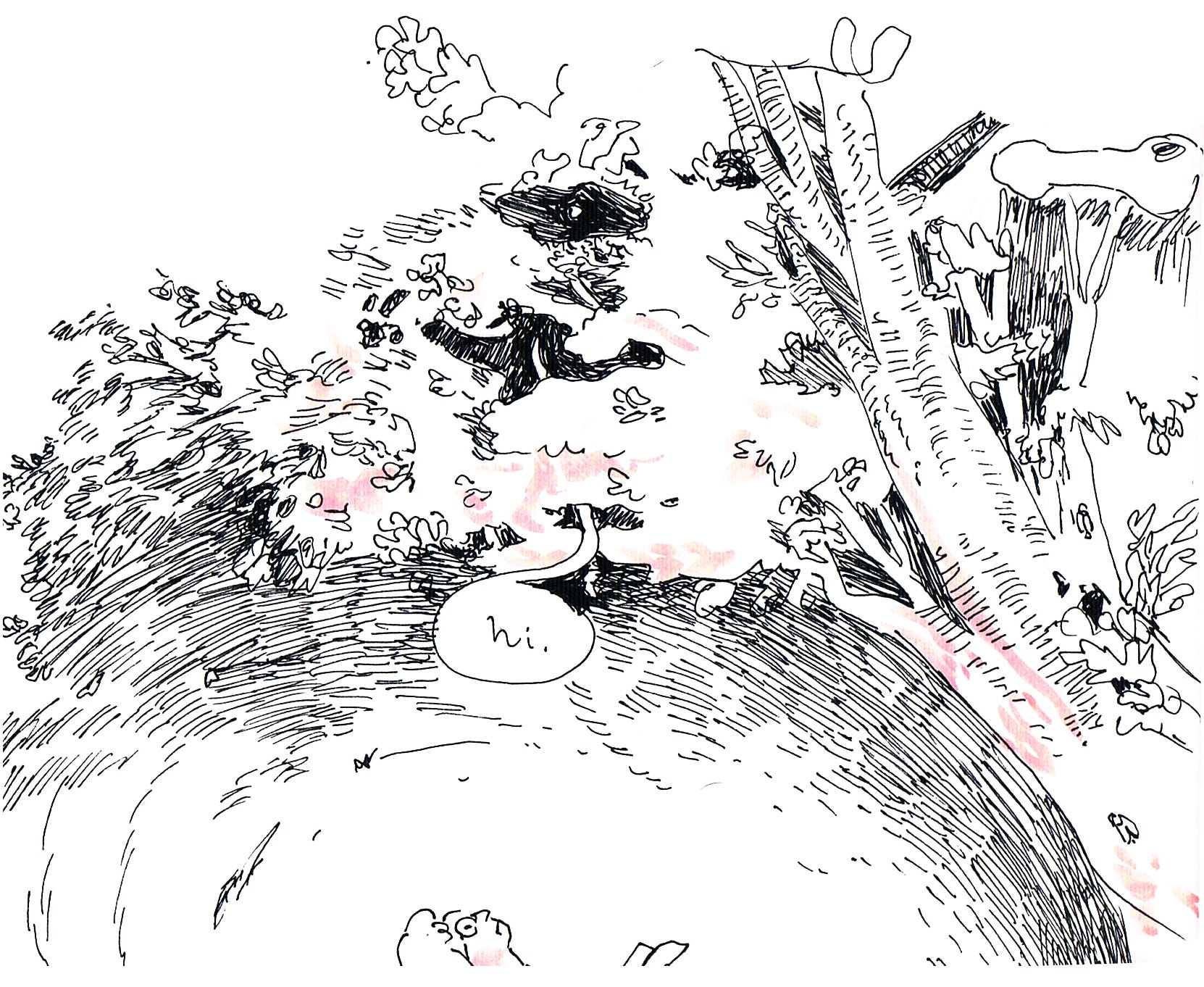
During one of my first zoom calls at my new job, my boss, amidst 40+ clerical minutes describing various benefits and technicalities of said new job, used an interesting phrase, one that surprised me. Because, not only do I rarely hear new vocabulary at the age of 29, but also— another important detail— my boss is the better part of 70 years old. Understandably, his vernacular is very different from mine, considering he grew up in the 70s in French-speaking Quebec. All that said, the phrase he used was: to be at loggerheads. It means, to be in dispute, or at a great disagreement or blockage. Encountered a problem without a clear or simple-minded conclusion? Congratulations! You’re at loggerheads with it.
So, I was at loggerheads recently deciding over a potential travel experience— should I stay or should I go? A familiar problem for anyone, for me it was downright reoccurring, because I seemed to have to make this decision over and over and over again. Not one, or two, but three friends asked me to go— separately; over the span of about 3 weeks. The first time I was asked, I went with my gut, who said “no, I can’t afford it right now, I’m saving money for my big Japan trip next year”. The former being sort of true, and the latter being definitely true. The second friend who asked me, I also turned down, for the same reasons— though it was a harder call to make. By the time the third friend asked, I was, by now, exceptionally annoyed and just exclaimed, with classic southern charm:
“Y’all gotta quit askin’ me about it, good lord!”
Before the flag of “first world problems” is flown on your mind’s flagpole, let me be clear: I was not sincerely mad at my friends for trying to include me. Exasperation aside, I loved it! I have always longed to be included, and am finally in a place in my life where I genuinely feel very invited into spaces, rather than forcing myself into them. No, what made my brain itch was having to repeatedly decide again and again— for different people, not myself. Me, myself, and I had already made the call. Of course, every time you’re presented with a question by someone new, the more you’re forced to answer it; so, you are more likely to change your mind, or worse, not decide at all.
So this gets to the point of this ultra rare, first of a three-part substack series about:
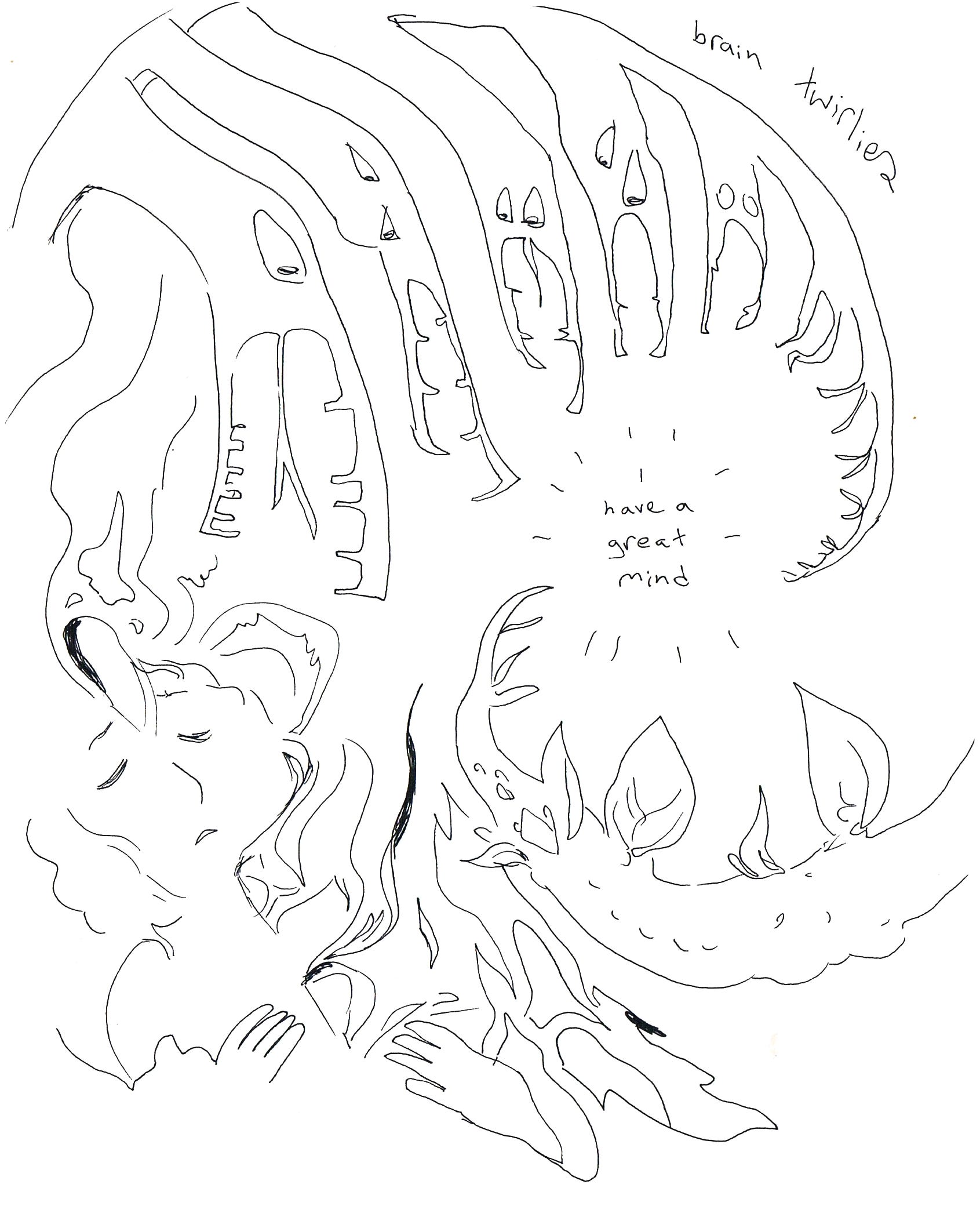
You, my lovely reader, are a part of a small but wonderful audience. I’d like you to ask yourself the following two questions:
“Am I a people pleaser? “
“Do I have a tendency to overthink things?”
If you answered yes to either of these things, these substack entries are for you. Like, in the most literal sense of the word, literally for you. Because those two things, at least for me, have contributed the most detriment to my decision-making than anything else. I am a people pleaser and overthinker in recovery. These days, it is easier to have better boundaries and not sacrifice myself for others, and as I age I give fewer fucks about what others think about me, but I do still find myself consistently overthinking certain things. This substack entry itself, for example, became an exercise in keeping my thinking linear, and trusting the process of writing.
So, traveling; here was a familiar problem. I decided once to not go, but then I’m asked again to go, so I doubt my initial decision, rethinking it. Then, in the gold-medal-winning level of an Olympian athlete, I do mental gymnastics all the way from flipping my decision back into my original decision, then pivot to it’s total opposite, and then somehow with a beautiful flourish, into the middle where uncertainty dominates. You know the drill. Hell, somebody may have even coached you.
But, the more I thought, the clearer it became that more important than the actual problem itself (“Should I go abroad?”) was how my brain was reacting to deciding what to do. I talked about it, and thought about it, even had a divination artist weigh in, and by the end of each conversation I was as uncertain, or more uncertain, of which decision to choose than I had been before. It was infuriating. I was so pissed at myself for just not having enough details, enough gut feeling, enough something! Anything!
~~~
In a previous substack, I talked about how hard it is to speak your mind. If you haven’t read it, I dunno. Maybe shelve the rest of this entry until you read that one. This feels like a logical follow up. Because, if the point is to walk your talk, but you’ve never talked, you gotta get there first. But, there is a middle ground, between talking and walking. It’s deciding. That’s, lately, where I’ve been spending most of my time.
And here’s my theory about deciding: it happens in stillness. But more on that later. Let’s talk about….
Have you ever seen someone rushing around so loudly you can’t help but notice? Of course you have! We live in a late-stage-capitalist society. If you haven’t seen someone being busy you’ve definitely seen someone pretending to be. I’m no super-fan of Saturday Night Live, but I do love weekend update, which once featured Heidi Gardner absolutely embodying the coworker who is just, Jesus H. Christ, so busy.
This coworker, with her salad bowl (would you just LOOK how it perfectly landed at the end of the table? Heidi is an artist), her quivering voice, running only on caffeine and the strongest prescription cocktail known to man, may have what David Graeber calls a Bullshit job— AKA doing a bunch of shit that ultimately does nothing, helps no one, and is to itself, its own end. Maybe you, dear reader, have had the misfortune to live with a bullshit job. I know I have.
Never do we look our own pointlessness more directly in the eye when employed in a position that sees us going nowhere, doing nothing of note, and ultimately burning out. According to Graeber, the jobs come in a number of forms, ranging from receptionists and telemarketers to even CEOS and “leadership professionals”, whatever that means. He asserts “that the pains of dull work are suitable justification for the ability to fulfill consumer desires, and that fulfilling those desires is indeed the reward for suffering through pointless work”. It’s a viscous cycle.
Point is, when we can verifiably perceive our job has no point, or even if our job has great meaning yet we still toil 50+ hours for it, it reduces us down to a leathery nub, where we live for only the tiniest sliver of time available at the end of the night when we’re usually dead tired, wiped out. And what do we often do during that time? If we have children, take care of them— if not, sometimes we commit bedtime procrastination— where we stay up later than is healthy as an act of revenge to “take back” some of the time robbed of us by working during the day. Only, this can further depression, and create even worse habits then before. And what are worse habits often soothed by? Even worse habits. Porn, pill, and impulse purchase addiction has the modern world in it’s finger-lickin’ clutches, bro.
Recently, I’ve been trying to zoom out on my own coping habits, and this shit is scary and uncomfortable. But it is required to improve and become the human I am gonna be, required to be if I am to show up for the people I want to keep around for a lifetime. And one of my longest-running coping habits, before flower or drink, is actually just decision avoidance.
A lazy person stereotypically avoids all work and decisions, and becomes the focus of a productive society’s judgement. But the opposite extreme— The Coworker Who Is Extremely Busy Doing Nothing? She is so overcome with anything but work, that anything outside of work is de-prioritized, which is a fancy way to say: procrastinated. Just the same as their lazy counterpart, the CWWIEBDN avoids. “Colin, How are you? Don’t answer that- I literally don’t have time”, Heidi mocks in the skit, yet we’ve all been there with someone. The question itself has become a paper-thin veil, which suits us fine; for many Americans work is the hat we put on our head to please others and/or avoid addressing issues that stretch deeper, darker. The busybody is still aptly practicing decision avoidance, shelving choices they should make about their personal life and instead reserving their brain’s bandwidth for things that pay the bills, making capitalism run with a purring hum.
At the risk of burying the lede, I’ll admit a lot of this substack was inspired by reading Jenny Odell's book How to do Nothing. I feel like she was one step ahead of everything I was experiencing in real time as I read the book, from my need to abstain from the FOMO machine that is Instagram, to even taking a trip to the Bay Area, where many of the locations and projects referenced in the book are from. In the book she writes with scrutiny about the nature of our attention in the modern world, how it is mined, and weaponized against one another, and maybe more importantly, against ourselves.
Odell also outlines the difference between opting out, resisting in place, and making space to resist at all. Sure, we can fuck off to the woods, and never relate, react, or be responsible to others again, a la Silicon Valley executives on six-figure retreats, or cult leaders in 60s communes— or, or… we could dis-invest in the current speed of things where we are at. And the 2023 speed of being busy just for the sake of being busy, to engorge our Google Calendars with the most possible obligations per day, does that not reduce our capacity for quality across the board? I’m a firm believer in quality over quantity. You can’t argue with me that the same person will be as attentive to 10 one-hour meetings back to back to back as they would 6 half-hours with plenty of breaks in-between. No matter how herculean we can imagine ourselves, when humans overwork, we stress. And when we stress? Our decision-making center in the brain is shut down. This can be temporary, or permanent, given your occupation or disposition.
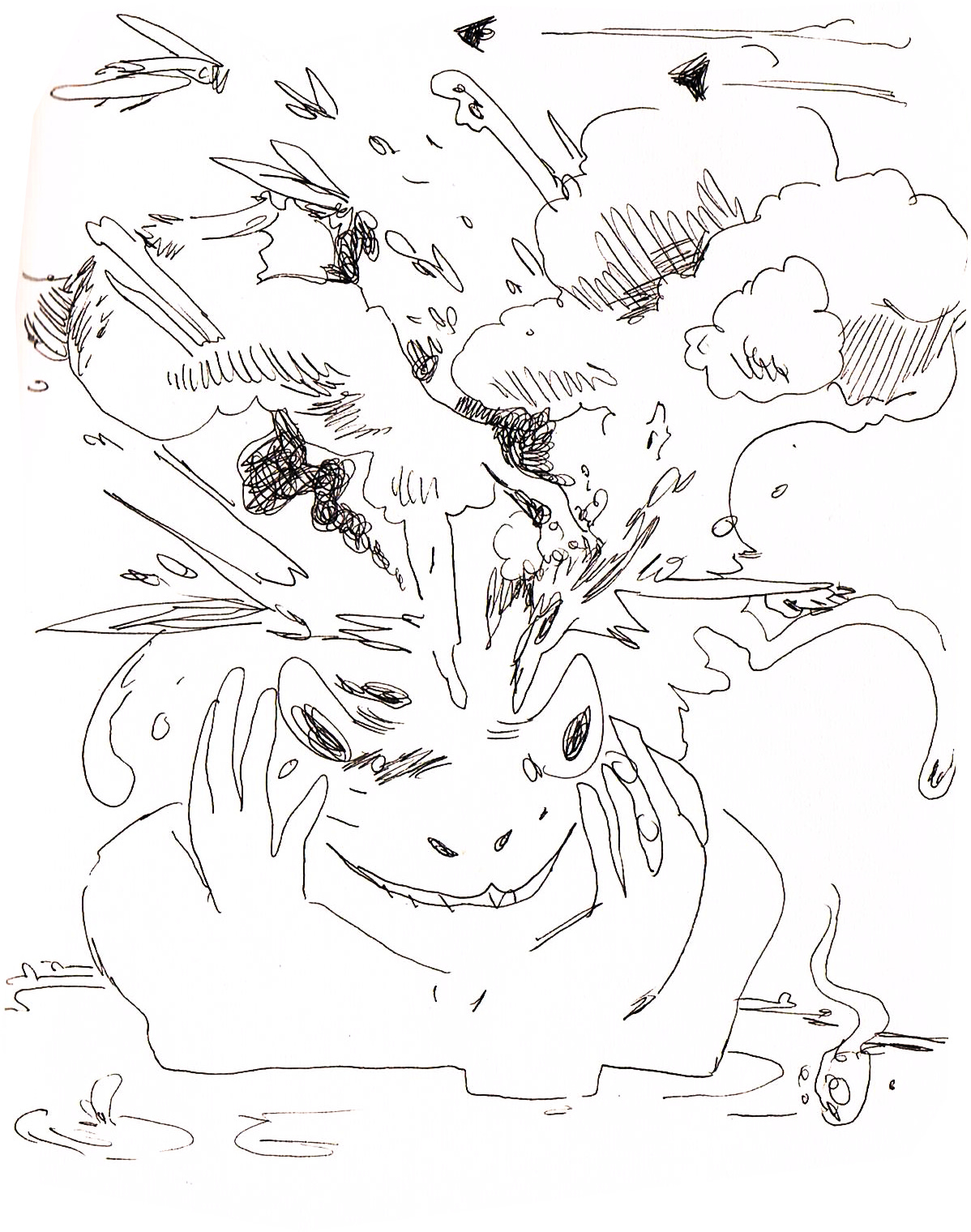
As an artist. I’m obligated to hate math. But I don’t, really. I’m bad at math, but how could I hate it? Math built the modern world. Math got us to the moon, god dammit...
Anyway, I’m a big believer in the Transitive Property of Equality, an algebraic principle that states:
I remember when I learned this in school, I feel like something clicked for me. Sure it made algebra make a little more sense, but I understood this on a broader level, metaphorically. I loves to call a spade a spade, to this day. So….
If busy = stress and stress = brain dysfunction, then busy = brain dysfunction
Algebra!
Sure, it’s a little extreme. But think of the busiest person in your life. Don’t they also, in their own way, seem a little extreme? How would that person change if they suddenly decided, a la Julia Roberts in Eat, Pray, Love, that they wanted some, if not all, of their time back? Shit would be pretty insane, huh? Who would they be without their busy?
So when we want to decide better, we have to take our time back.
Back from what? The center of the modern hellscape of capitalism and social media, duh! Capitalism encourages a lack of time and or lack of mental space to do planning, it banks on it, and social media is there after work to scoop up what remains of your mental space to mine it for specialized ad data. Why else would we get persuaded to buy things we don’t need? If we had the time to consider what would benefit our happiness on a deeper level than sheer consumerism, we might decide (defying the gods of the free market) to look inward. Busyness is begging us to be BOGO bitches. To hunt for a buyable solution that will be the salve over our lack of quality of life and our excess in quantity of obligation.
Which brings me back to the initial question:
When do we decide when we decide? Here’s what I think.
We make the hardest decisions when we stop doing things. Stop for a moment from the urgency of a workday, the pacing of a project, even the chapter of a life to make the decision itself to be the task at hand. No action, no matter how positive or passionate it may be should be done in a disheveled rush, performing the action just to get to the next task, to get to the next task, to get to the next task. This way of moving through life primes us to make snap decisions either to please others or prioritize easy, quick ways out. To find the right way out, we must stop.
For one fucking second, could be all it takes.
So, did I stay or did I go? I’ll tell you.
After a day of belabored deliberation, I was spending quality time with my partner, MAK. They are one of the most lovely people I’ve ever known, and very talented at drawing decisions and deep thoughts out of others, like a master weaver drawing a single winding thread from a complex tapestry— Its one of their best qualities, and for those of you who are lucky enough to be friends with them, you probably value this a lot too. Sometimes it’s uncomfortable, but it always feels safe to do around them. And this process always helps, in the end.
MAK and I have this occasional ritual where one of us lies on the ground, and the other stretches their legs like a physical trainer at a major league baseball game. It’s a great way to end the day, and we usually have hearts-to-hearts during these stretching sessions. And that night, we were really getting to the bottom of shit! The deep exhales accompanied frustrated groans as I weighed my options for the trip again, both financial, social, and emotional. MAK did the groundwork by patiently helping me navigate my own logic, but - almost like a light going off in a dark room— the moment when I sincerely, finally made my damn mind up was when I was in Shivasana.
You may know it. Shivasana (“corpse pose”) is the final, and undeniably most important pose in all of yoga, where you lay down and, in the words of my favorite yoga teacher and dear friend Joy Monzon, “let the benefits of all the previous poses wash over you”. And she’s literally right. Your blood has the chance to move around freely after a lot of time pinching and pushing it between tightly held muscles; and with blood comes oxygen, the thing that powers our brains. And there, doing nothing, I decided.
I decided not to go.
Even though I love those three friends immensely and may want to go to that travel destination eventually; the hasty ~$2-3k it would’ve cost me could please me more being spent on a trip to a place I couldn’t sooner live without. And I had decided a long time ago that place would be Osaka, again— somewhere that I wanted, not just somewhere I was wanted. I love being wanted, I love having friends, but ultimately I would be saying yes to people pleasing, not my deeper interests.
A hard decision to make once. I made it five times, in the end. No, yes, no, yes, no. I know it disappointed some people a little, but I also know they are fine; I am truly grateful to be thought of, and even more grateful that this ordeal got me thinking about a new topic to write about. A new way to recognize my own growth and growing pains surrounding decision-making. I used to take a lot longer, I used to be a lot more uncertain. I still have uncertainty, I still take my time. So it goes.
This time, we dealt with the “when” of decisions. Next week, I’ll go into the “why”, and finally after that, the “how”. I hope you’ll stick with me as I unravel my own thoughts, as it is greatly helping me uncover parts of my brain that I have long overlooked, for fear of what I would find. Thankfully, what’s inside our minds— underneath reaction, projection, and trauma— is more beautiful and complex then we could’ve imagined, I trust this is true for all of you.
In the meantime, be thinking of the moments you make space & time to decide, whether its on a walk, lying down, or in the middle of shivasana, and leave me some insightful comments to consider! I’d love to hear it.
Thank you for reading. Until next time! <3
Comments
Nothing yet. Say the first thing.
Sign in to join the conversation.