
It’s a few weeks after the solstice and it feels like we’ve made it through the spring marathon. Over the past few weeks we finished planting leeks, preparing and planting the hoop house, our winter squash patch, and our sweet potatoes. The hectic growth of spring is giving way to summer and the balance of work is shifting from bed prep and planting to weeding and harvesting. It is an exciting time of year, beginning to see the fruits (vegetables, rather) of our labor, and while there’s not exactly a chance to catch our breath the weeks have fallen into more of a routine which makes it feel a bit more steady.
I feel overdue for an update, so just wanted to briefly touch on some of the bigger projects we’ve been up to. At this point in the season all of our summer plantings are in (we have another round of big planting coming up for fall brassicas like cabbage, broccoli, and cauliflower).
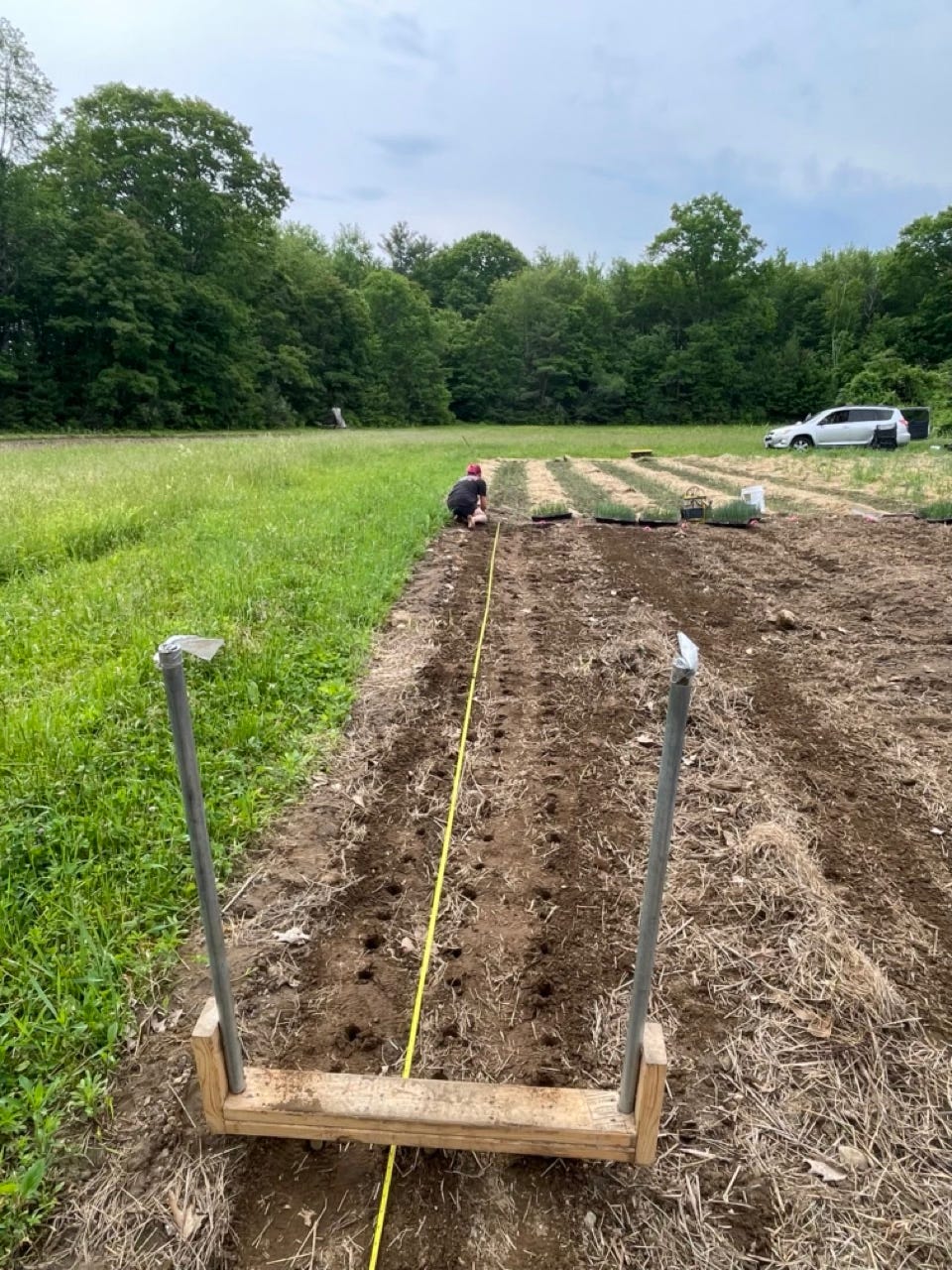
Leeks are one of my favorite vegetables to grow, they have such a beautiful color and elegance about them. One of the first things that we seed into trays early in the spring. They’re still smaller than most of the grass surrounding the field by the time we take the tarp off and get ready to plant them. This area had been cover cropped early on, and about a month before we wanted to plant we mowed it down and covered it with a tarp. During the heat of the summer the tarps work to break down residue and kill weeds in closer to two weeks, but during cool spring days it takes much longer.
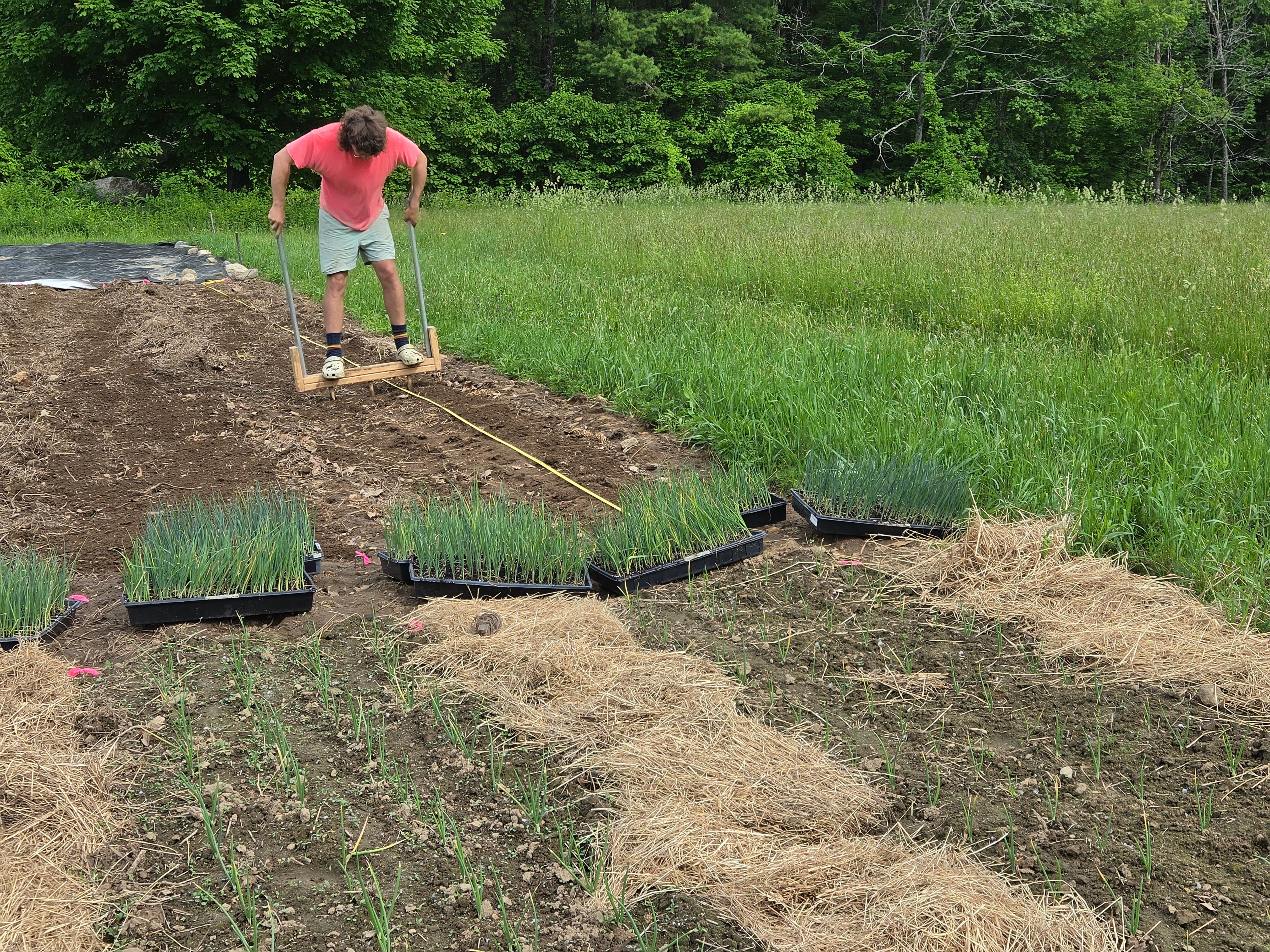
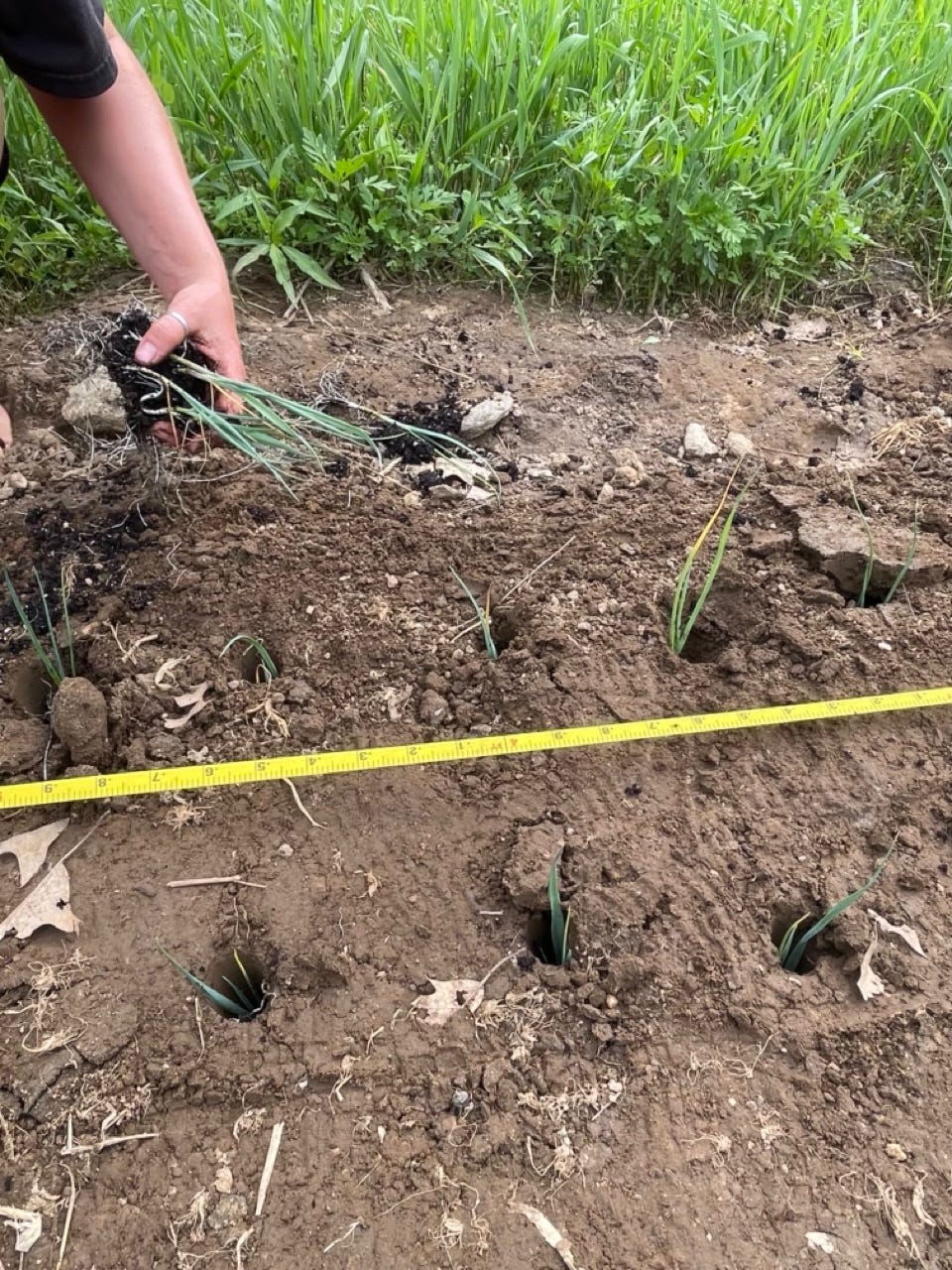
For planting, we borrowed a planting tool made by our farm mentors. Leeks are probably best known for their long white shanks. In order to produce them, they really benefit from being planted as deep as possible, so we use a dibbler (tool for making holes - basically an ergonomic stick) to create a deep hole for each plant before plopping them in. To speed up the process, these farmers made a tool with three posts so we can do all three rows at once. At six inch spacing that’s 300 plants per bed, but we only have to stomp holes 100 times. For five beds. Easy peasy.
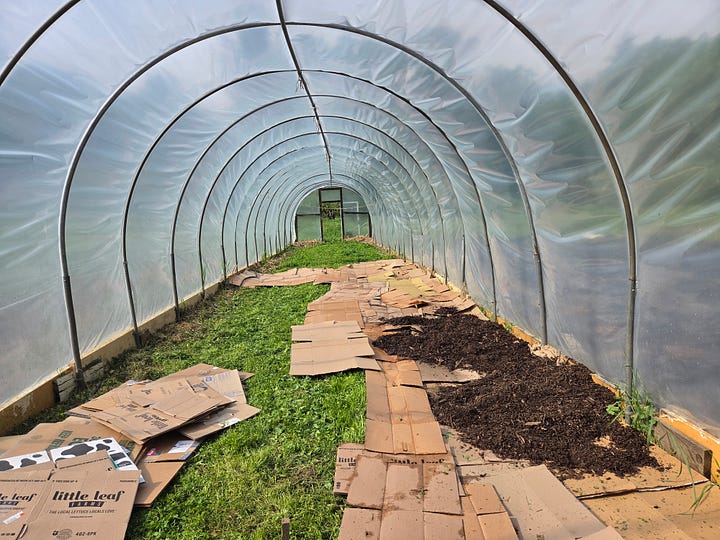
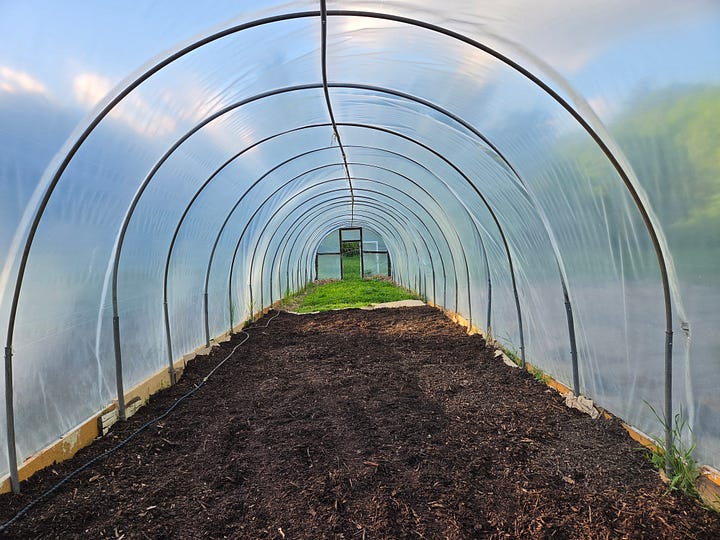
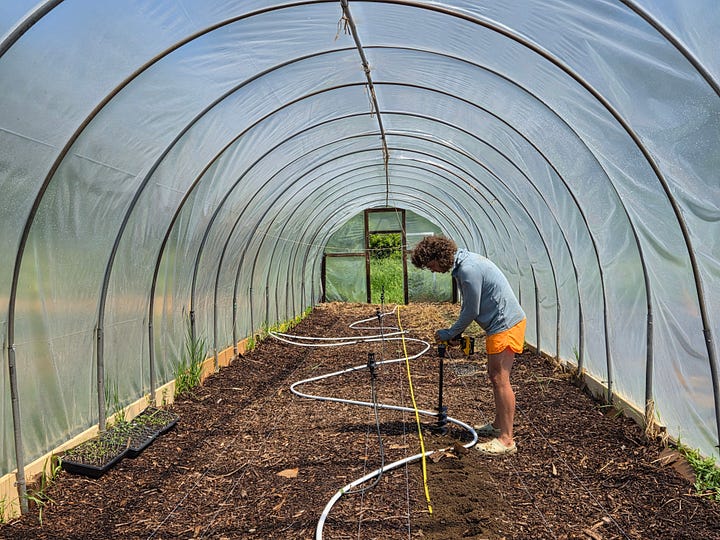
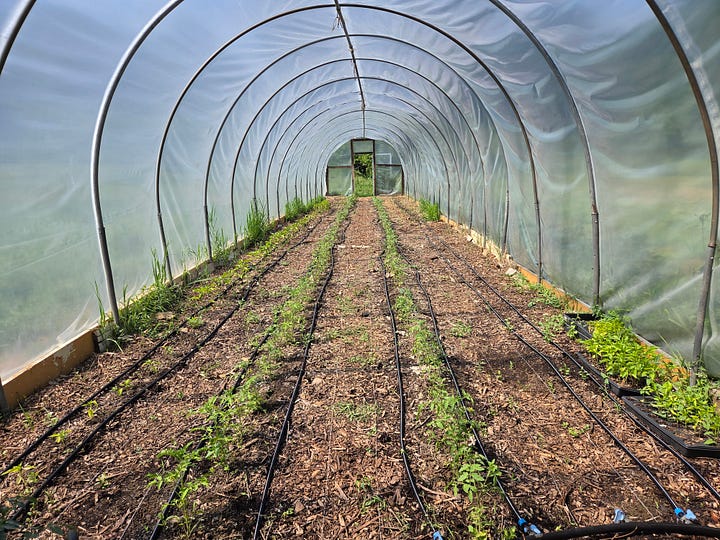
I’ve written a bit about the hoop house. It’s a new space to us this year, and it has been such a boon for tool storage and seed starting. We’re excited to be trialing some ginger this year, and growing our peppers and tomatoes in there too, but it has taken a lot of labor to prepare. While our dense clover sowing worked pretty well to keep down the annual weeds, the mint and bindweed were still coming through, so we decided to use cardboard as a physical barrier, and then cover it with wood chips to hold it in place and add organic matter. In order to get down to the soil for planting, we used a bulb augur - a two foot, three inch wide screw that pops into our power drill. This let us get through the cardboard and also plant the tomatoes deep, since they’ll put out roots from every node that’s under the soil and establish a stronger base.
Before planting, we soaked the house thoroughly with our new overhead irrigation system. I designed it to be somewhat modular and mobile, and was pleased with how relatively easy its been to work with. But for the rest of the season we ran lines of drip tape down the beds. Drip tape operates at very low pressure and has emitters spaced along the line that allow water to slowly soak into the soil. It’s more work to set up initially, and works best for crops that will be in the ground a long time (like tomatoes and peppers), and uses less water overall by decreasing loses to surface evaporation, watering directly above plant roots. We had access to some old drip lines so it worked out well in this case.
We had trouble starting our squash this year. Some critter snuck in and plucked out every seed out of 8 trays the day after we seeded, and we had to order replacements to reseed. While it was heartbreaking at the time, it actually helped out with our timings. By setting us back a couple weeks, that tiny squash fiend gave us the chance to leave our tarps on a little longer, resulting in a beautiful patch for planting into. Our cover crop had almost entirely broken down and the soil was light and rich, a noticeable difference from even just last year.
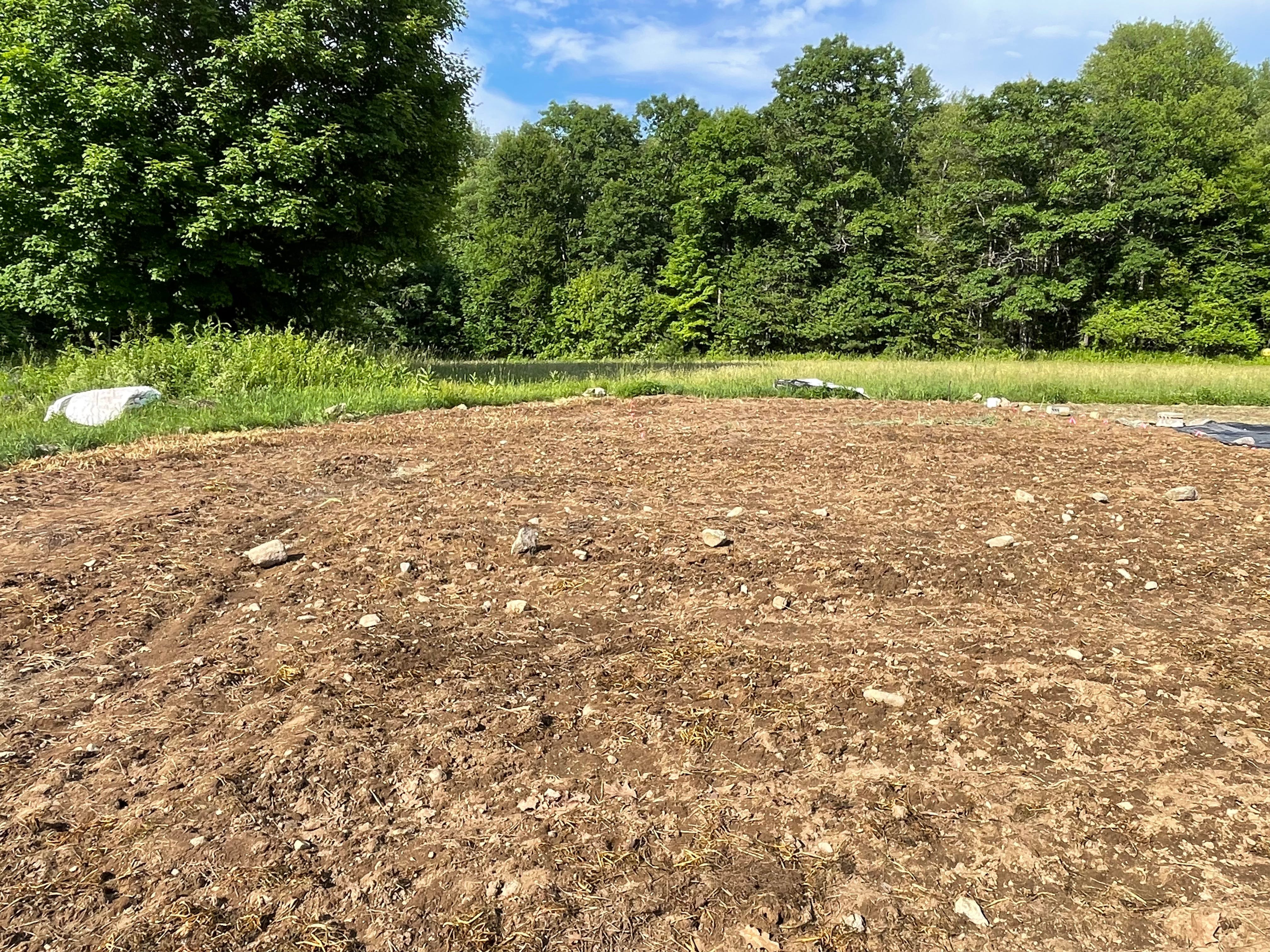
Again, the bulb augur was a huge help to us for quickly making holes and planting, significantly speeding up and easing the process. After drilling the holes, we added a small amount of compost, as we did with the tomatoes and peppers in the hoop house. The next morning, before a heavy rainstorm, we went out again and spread clover seed over the bare soil. The clover will provide a living soil cover and continue feeding the soil as the squash grows. Though we know better now than to expect it to prevent all the weeds from coming up, it will help.
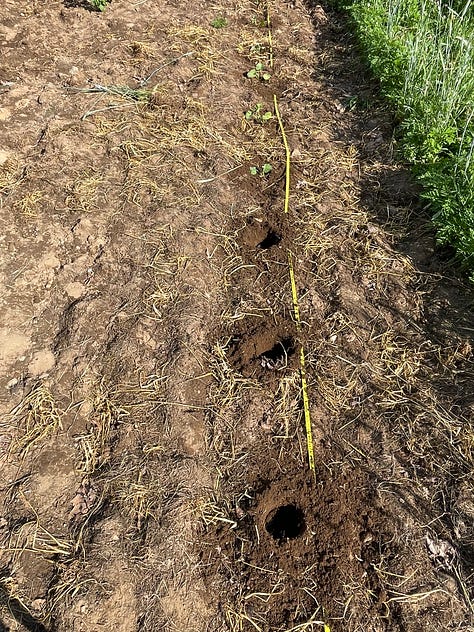
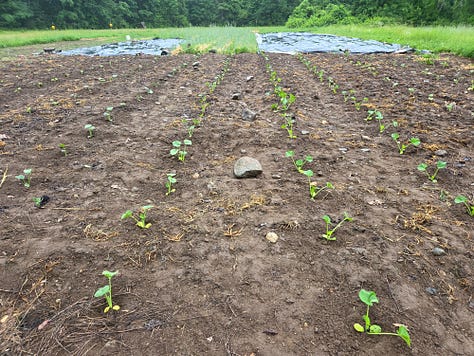
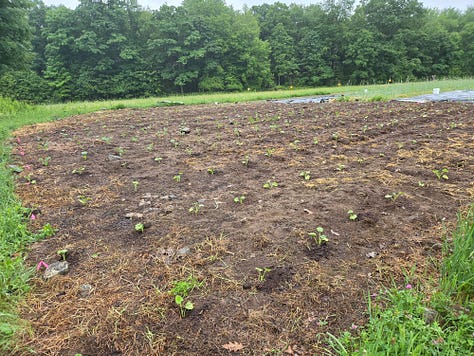
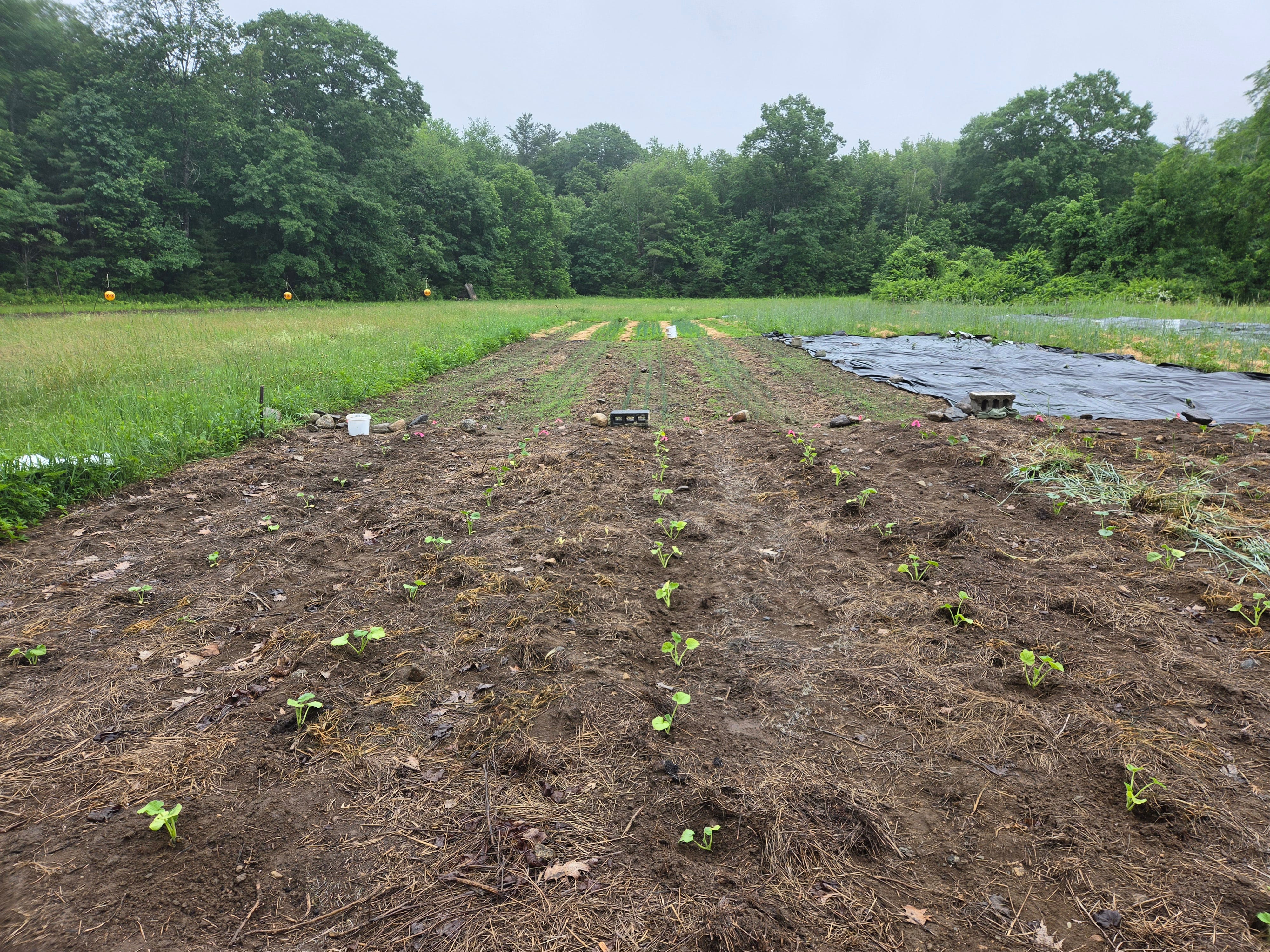
Our last big project in this field was to plant sweet potatoes. We try not to use a lot of plastic in our farming, and especially not the thin single use weed barriers. But sweet potatoes like hot soil and as they vine become really hard to weed around, so we do use woven landscape fabric when we plant them. Again, we used the bulb augur to drill deep holes, which allowed us to plant the slips quite deep. Like tomatoes, they'll put out roots from whatever is buried, and hopefully the clutches of sweet potatoes will be deeper than last year.
We nearly had our biggest setback of the season with the delivery of our sweet potato slips. Since we ordered them back in February, they got delivered to an old address and were left outside in some sever heat and rain. We tried to salvage what we could, but there wasn’t much left by the time we got to the plants. Fortunately, we were able to scrounge up what we needed thanks to the generosity of some other farmer friends who had extras after their plantings. Though we are all working on our own projects, growing food is a community effort, and being able to lean on each other in times of need is essential to everyone’s success.
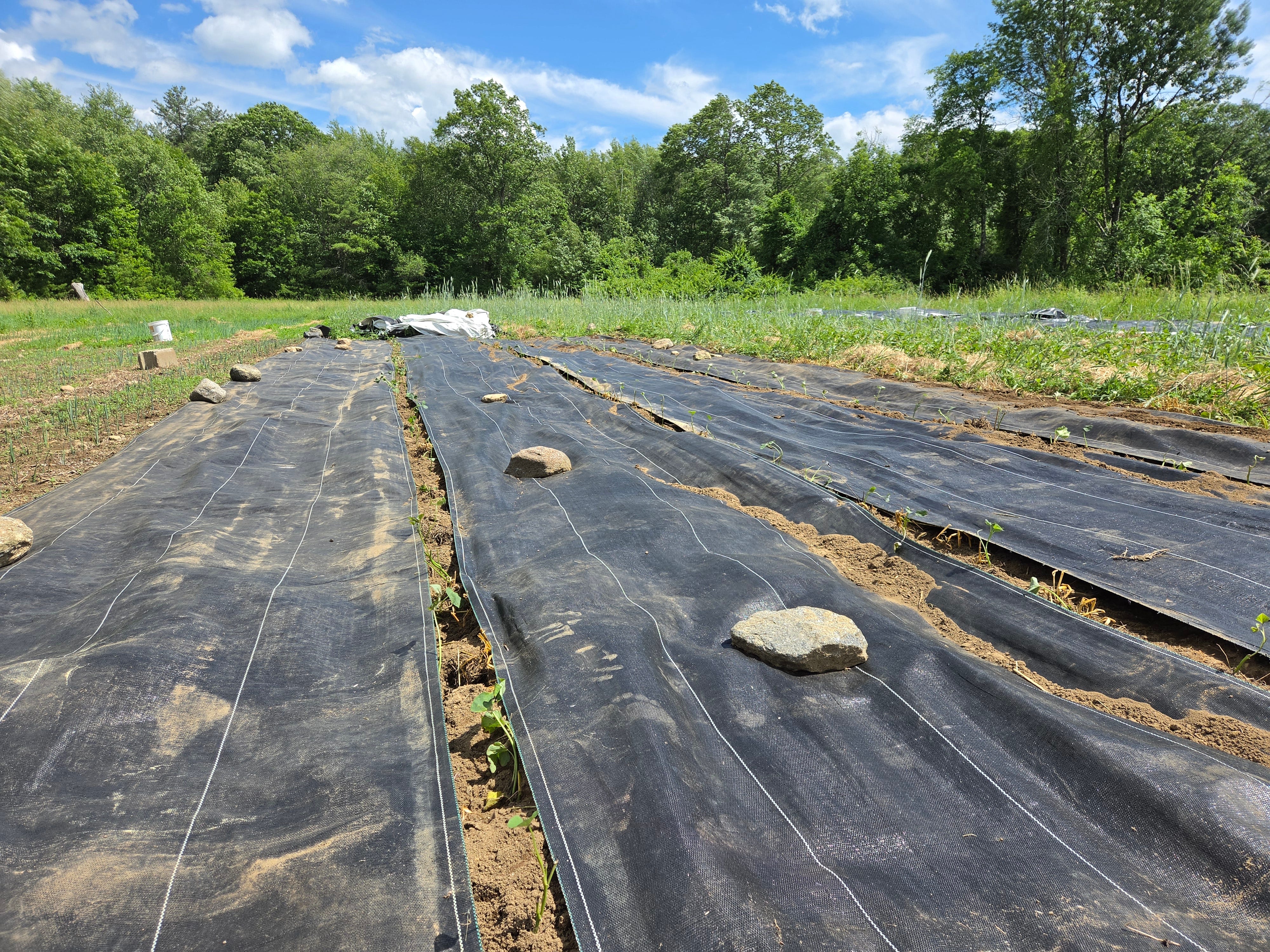
With the sweet potatoes in the ground, we’ve got all our crops planted in this field; potatoes, onions, leeks, winter squash, and sweets. In the coming weeks, after the spring cover crop residue has broken down some more, we’ll spread a summer cover crop in the section we didn’t plant, about two 50’ x 25’ tarps worth. I’m excited to put some deep rooted tillage radish in the mix, which will penetrate the compacted soil and then rot, creating pockets of nutrients and air, invigorating the soil life and making it easier to work next season. And of course for the increase in organic matter that will come from decomposed plants which have created pounds of biomass out of thin air.
Now that it’s all planted, we just have to stay on top of the weeding. Easier said than done, especially when we get a heat wave coupled with several inches of rain and 16 hours of sunlight causing the weeds to grow 6 inches per day. This is the time of the season when we call in friends and family for some extra help.
No posts
Comments
Nothing yet. Say the first thing.
Sign in to join the conversation.