
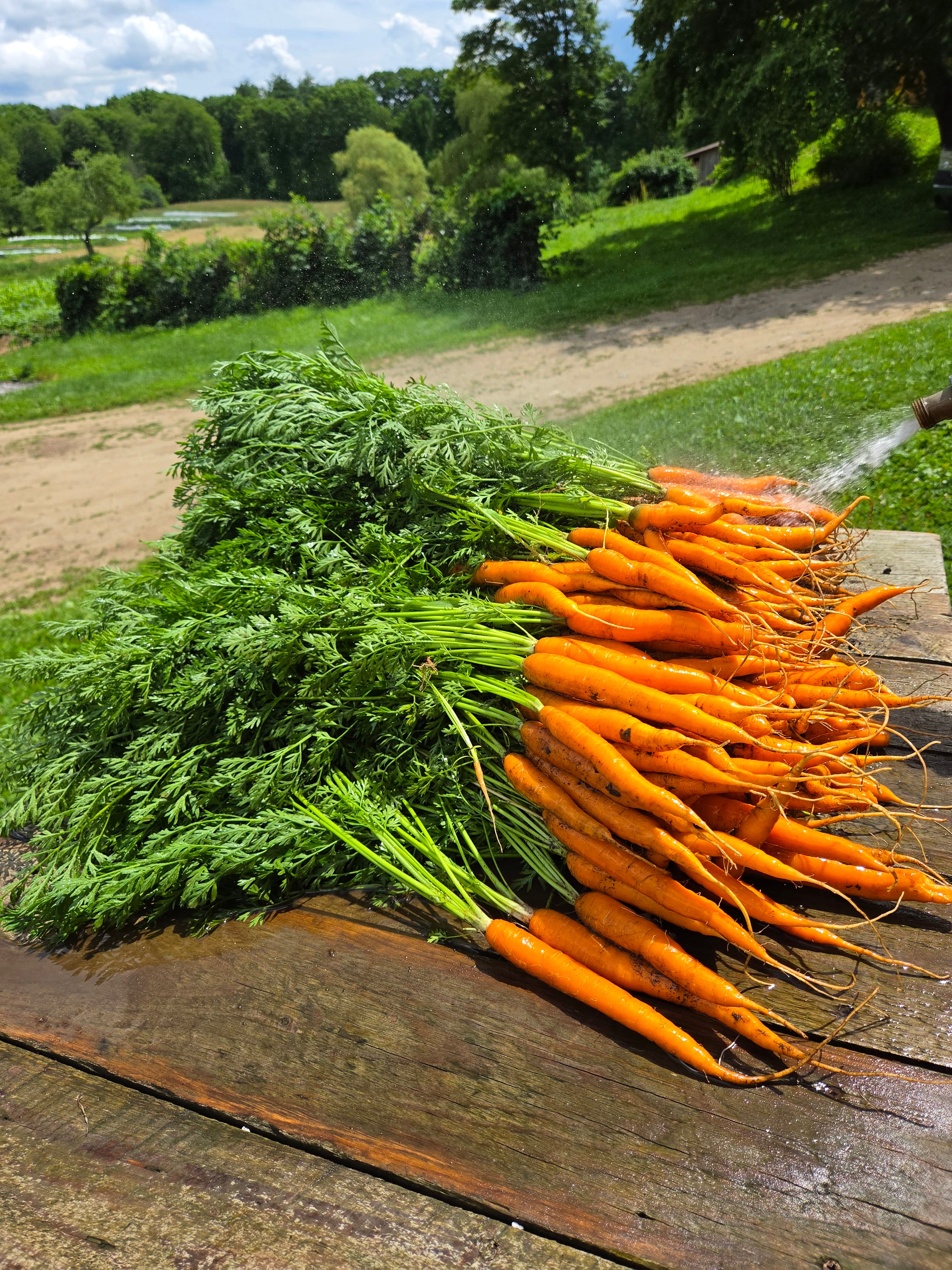
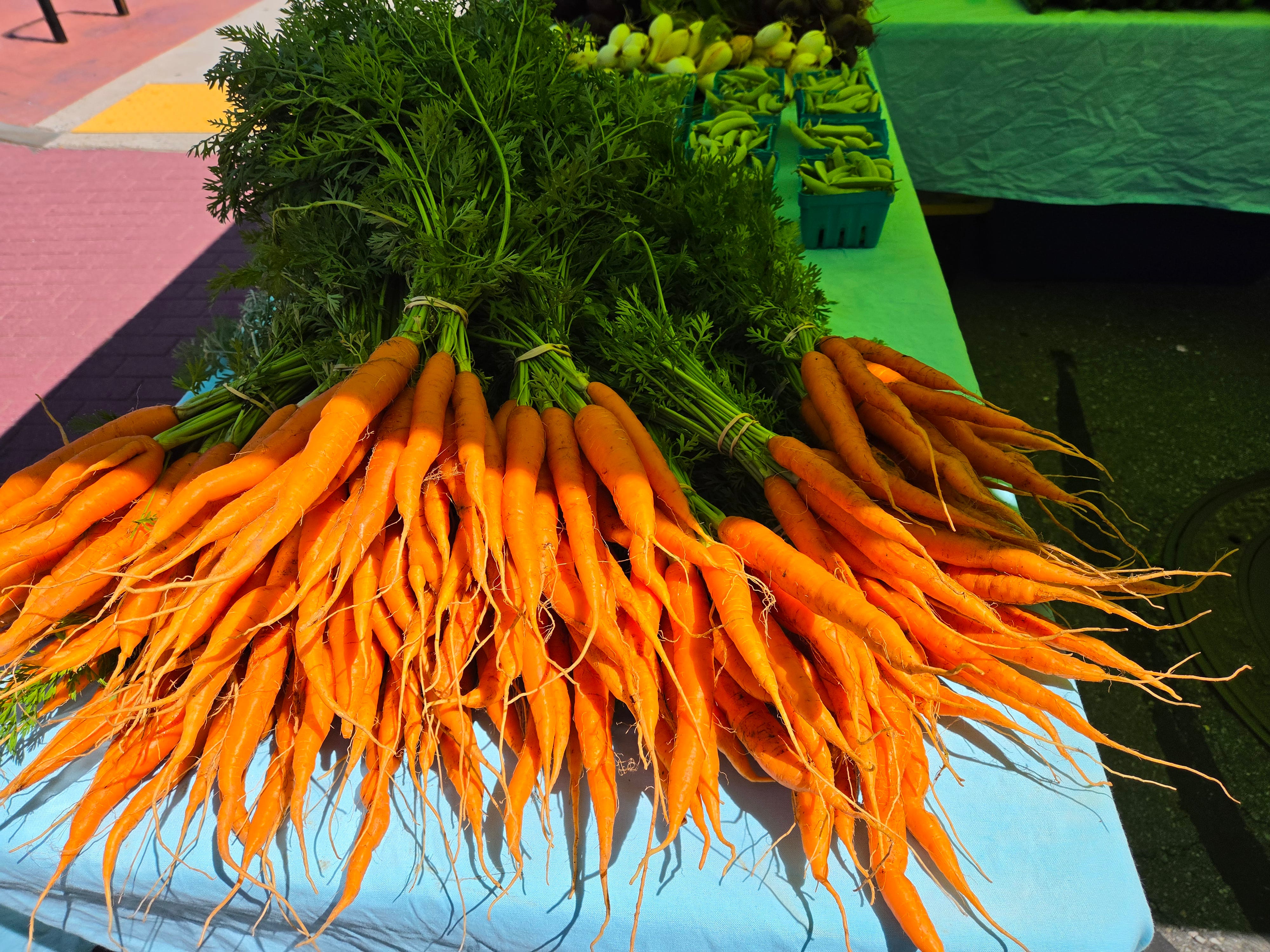
We harvested our first carrots this week. Root crops are some of my favorite veggies to grow and harvest; you never know what’s waiting just beneath the surface, and I was blown away by these ones. My first few passes with the digging fork were tinged with trepidation, but once I had unearthed a few of the gleaming orange beauties I knew we were in good shape. These were coming out with just the right ratio of long and perfect roots to fun and funky shapes. I like carrots with character.
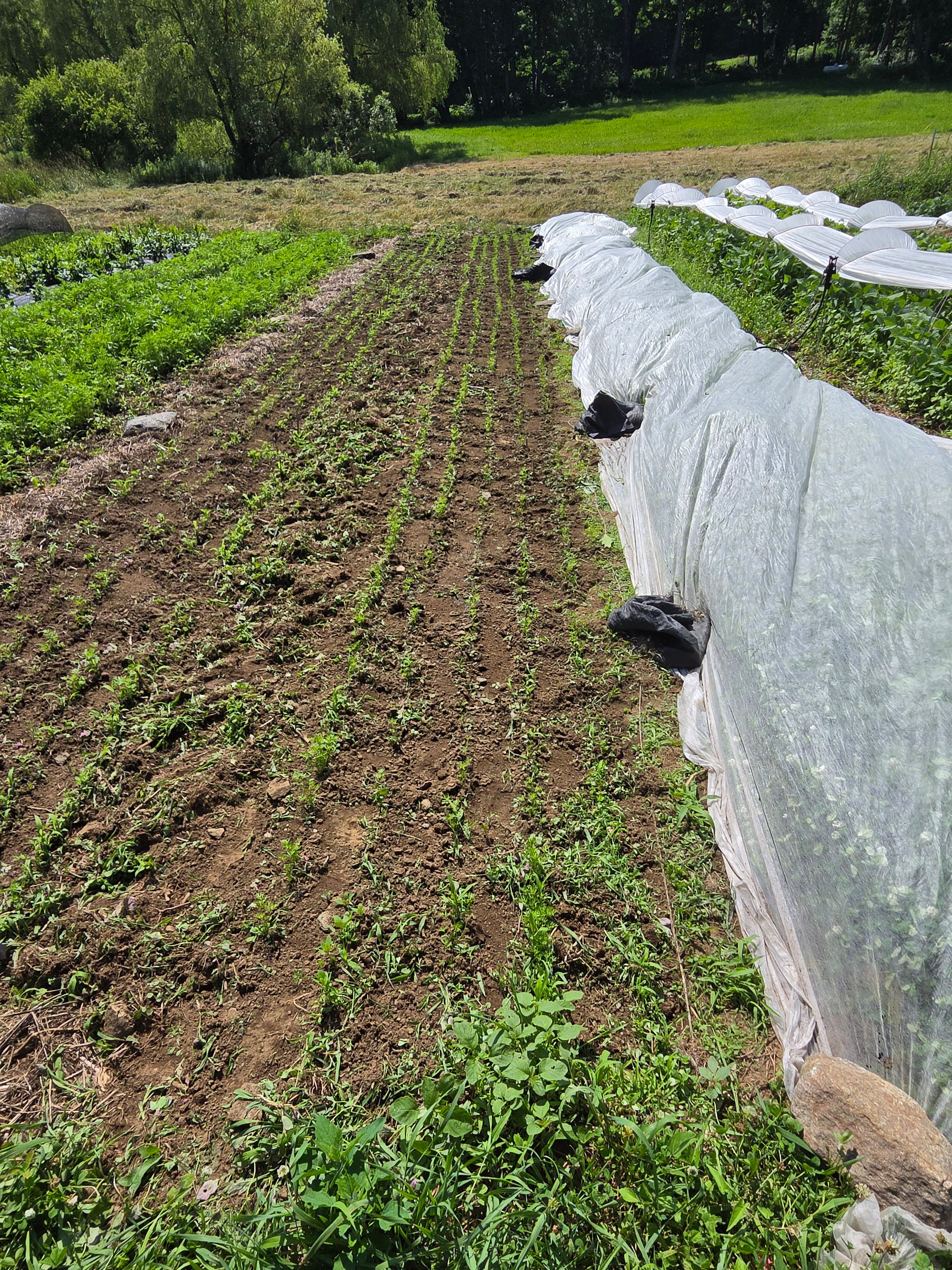
Carrots are notoriously tricky to germinate. The seeds are highly sensitive to moisture levels in the soil and have a long germination period. While we’ll see the first cotyledons of lettuce or radish just a couple days after planting, carrots often take more than a week. That leaves the baby sprouts highly susceptible to drying out before they even reach the surface, and once they do, that surface is often already sporting a green coat of weeds.
I’ve written before about how we use a lot of row covers on our crops as a form of pest protection as well as temperature control, helping protect from light frosts. But we can also use row covers for some level of moisture control, especially when we lay them on a bare seed bed. Earlier on, we used to use our silage tarps with the white side facing up to germinate carrots. The tarps don’t allow any moisture through, so we thought it would be a good way to hold the moisture after an initial hand watering post seeding. Reflecting most of the energy from the sun also helped keep the soil cooler in the summer.
Despite being very useful tools for no-till systems, the tarps are kind of a pain to deal with. This year I’ve mostly replaced them with our remay. The tight weave still traps moisture, it reflects plenty of light, and there’s less of a risk of smothering seedlings. Plus it’s much easier to daisy chain up and move around when I’m done with it.
Baby carrots are also tricky to weed, as they are very fragile for the first few weeks. Once they’re a couple inches tall and have put down their main taproot they’ve got a good grip on the soil and can stand more thorough weeding. Unfortunately, that’s also the critical period for most weeds, and they can be easily outcompeted at this stage. So we take advantage of the slow germination time relative to the fast growing weeds. Just before the carrots pop, we do a pass with the flame weeder. The high temperatures toast the tender weed seedlings while the carrots remain protected under the soil. It’s a bit of an art form, sweeping a giant torch across the bed, to kill the weeds, protect the carrots, and not set any mulches on fire.
After flame weeding, the beds always look clean, and the carrots pop up in neat little rows a couple days later. Yet there always seem to be more weed seeds in the seed bed, so we’ll do a pass between the rows of carrots with the collinear hoe at least once to make sure the carrots have breathing room as they develop. The collinear hoe is one of my favorite tools, it’s very versatile and I’ve gotten pretty adept at it. A sharp blade attached perpendicularly to the five foot handle lets me walk along the bed and slice weeds just under the soil line. When done at the appropriate time (before they’re too robust), it makes quick work of large areas. The narrow handle allows it to fit in between tall and bushy crops - like carrots - to keep the space between rows clean.
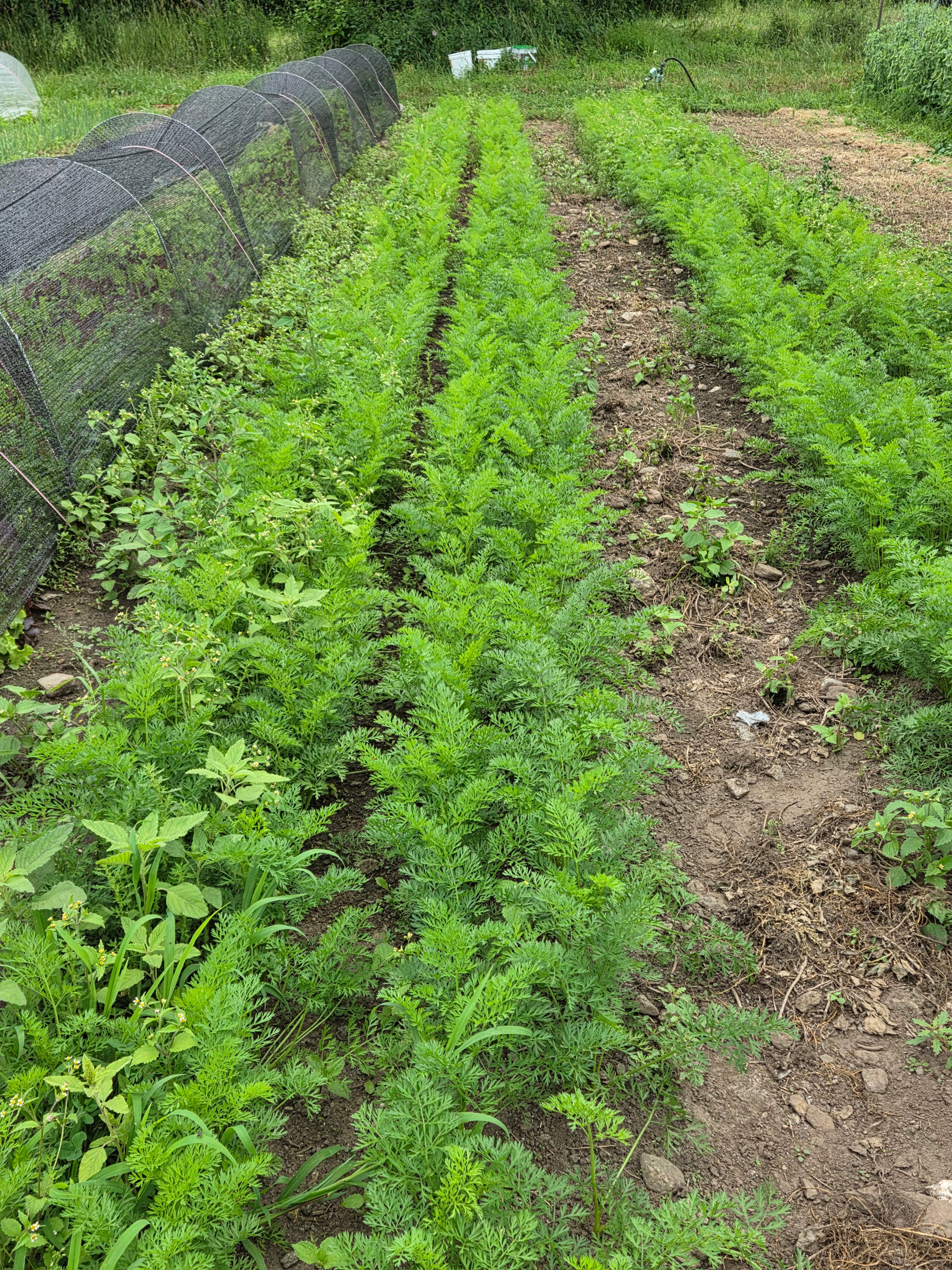
Even with all of this, sometimes we have to do some hand weeding of carrots. At this stage, they’re generally a good size, and it’s less a matter of ensuring a good harvest than ensuring the weeds don’t go to seed and add more pressure for next year. Farming is always a matter of existing in multiple time scales; thinking about how what we’re doing today will affect the future. Taking care to be thorough as possible in each step of the process makes the next step easier.
While harvesting this year’s first round, I couldn’t help but marvel at how well the carrots were doing at providing many of the benefits of tilling with none of the destructive qualities. For months, as we carefully tended them, they’ve been feeding the soil through photosynthesis, building organic matter by feeding sugars to the microbes that live around the root system and help transfer necessary nutrients back to the plant roots. During that time, they’ve been plunging down into the soil, opening new pathways which aerate and loosen it as we harvest. Now they’ll be feeding us, and they’ve left the soil in the bed even more lovely than when they were first planted.
No posts
Comments
Nothing yet. Say the first thing.
Sign in to join the conversation.