
Spring is probably the busiest and most chaotic time of year for most vegetable farmers. Although the work isn’t necessarily as physical as it is later in the season when we’re doing lots of harvesting, April and May is when we’re laying the foundations for the season. By June we’ll have settled into a rhythm which makes us feel less like we’re running around putting out fires despite being more labor. The past couple months we’ve been tying up loose ends for administrative work, gathering all our supplies, adjusting our starry eyed deep winter plans as they make contact with the explosive growth of spring and real soil and climate conditions, and handling all the challenges that can make or break a season at this point. If I’ve learned anything from farming, and I’ve learned so much, it’s that it is always worth it to address problems as early as you spot them (depending on having the tools and capacity). Missing a pass with the flame weeder as the weed seeds germinate means you then have to go through with the trapezoid hoe to slice the sprouted weedlings (weed seedlings), and if you miss that, you’re looking at hours of tough hand weeding and a weaker crop. But during that first week after pulling the tarp off the soil, when there’s a hundred other things to do, it’s easy to put off the maintenance tasks for a day or week too long. While we don’t have much to harvest right now, waking the farm up from winter and staying ahead of the intense pressure of spring plant growth has been taking up a lot of our time.
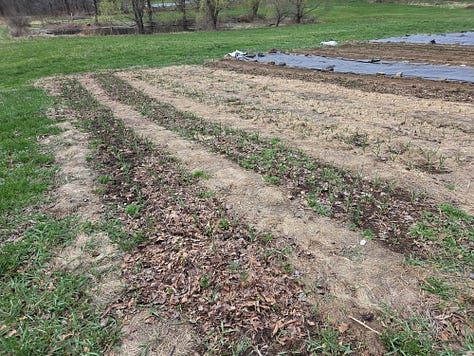
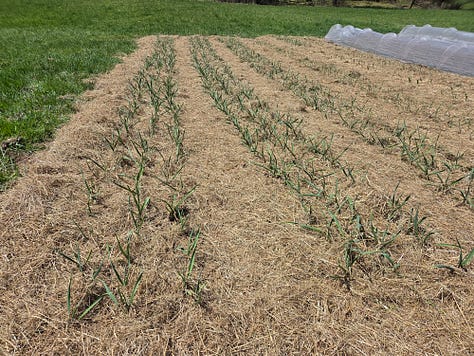
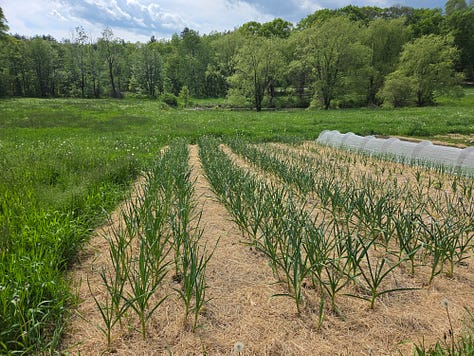
In the midst of that, we have about half of our beds planted, with the rest cover cropped or tarped in preparation for later successions of crops, as well as a new irrigation system and a new market set up. At this point in the season we have our first two successions (three of some crops) in the ground. They’ll mature about three weeks apart, and if all goes well we’ll have an uninterrupted supply of tender and juicy lettuce mixes, spinach, radish, turnip, carrot, and peas through June and July. And if all continues to go well, we’ll be planting further successions next week and every few weeks until it gets too cold.
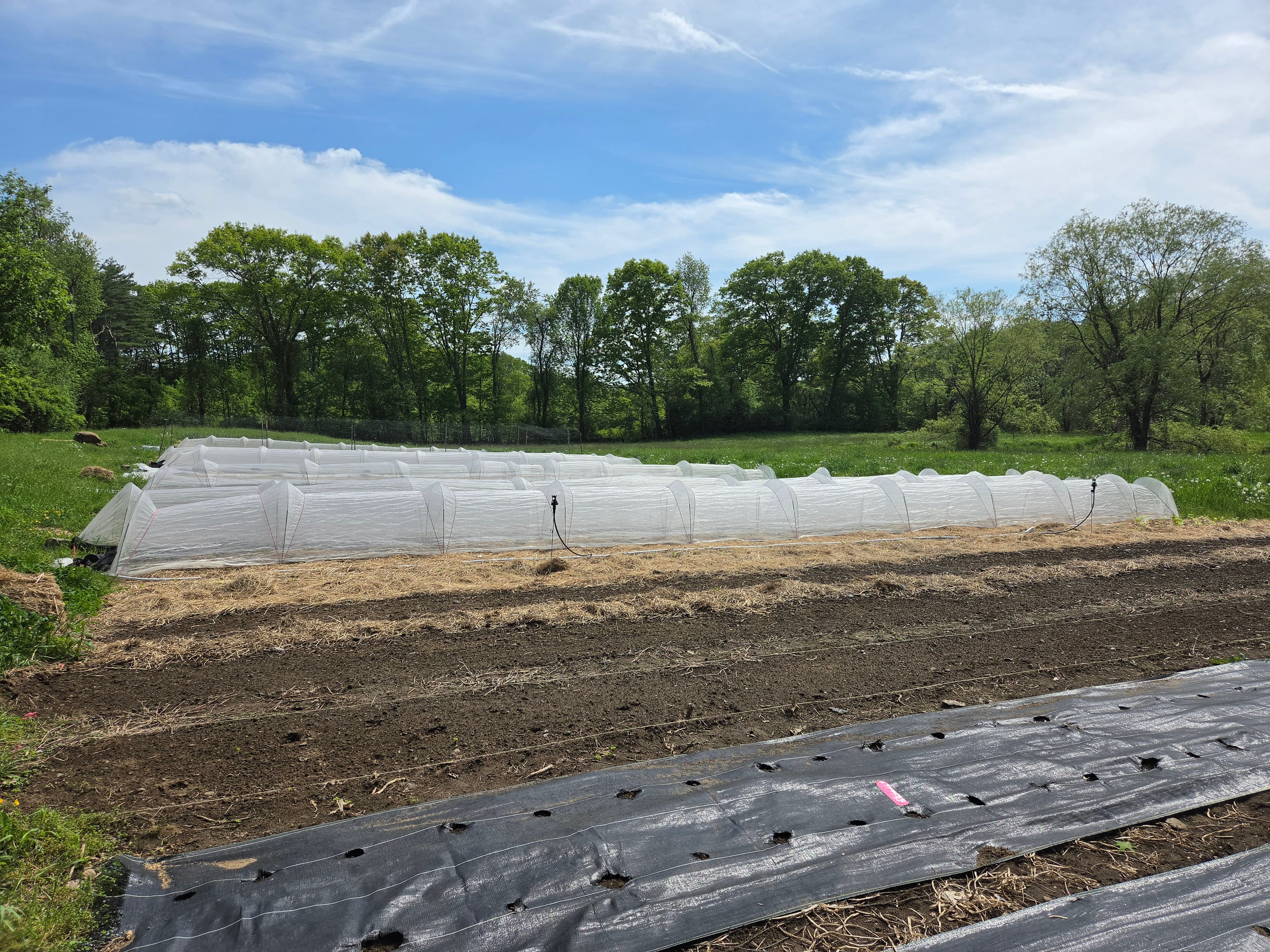
We’ve also been learning the quirks of growing in a high tunnel, something new for us this year. We’ve worked at other farms that utilize tunnels, but just like learning specific soil conditions at our different plots we’ve been getting to know the growing conditions (and pest pressures) in this tunnel. Our biggest concern for it last fall was the pressure from perennial and annual weeds as well as temperature and moisture management. To help control those three things, we seeded a dense stand of low growing dutch white clover as soon as we moved our tarps out at the beginning of this season. That clover has now developed into a lush green canopy, and it is incredible how much cooler it is to stand in the green growing section of the tunnel compared to our seedling propagation and tool storage area where we have a heavy duty tarp on the ground as flooring. The perennial weeds are still poking through, as we expected, but the clover has done a great job of holding back the annuals. At this point we’re planning to mow and cardboard the house before planting our tomatoes, peppers, and ginger in there. For now, the clover is feeding the soil, and when we terminate it in a few weeks, will continue to provide fertilizer and nutrients to those heavy feeder crops as it breaks down under the cardboard. Mint can be a nuisance in the garden with its tendency for aggressive expansion, and it’s one of the perennials we’ll be trying to control by covering with cardboard. But stepping on it as we harvest the spinach bed is such a pleasant experience for the sinuses that I hardly mind it as a weed.
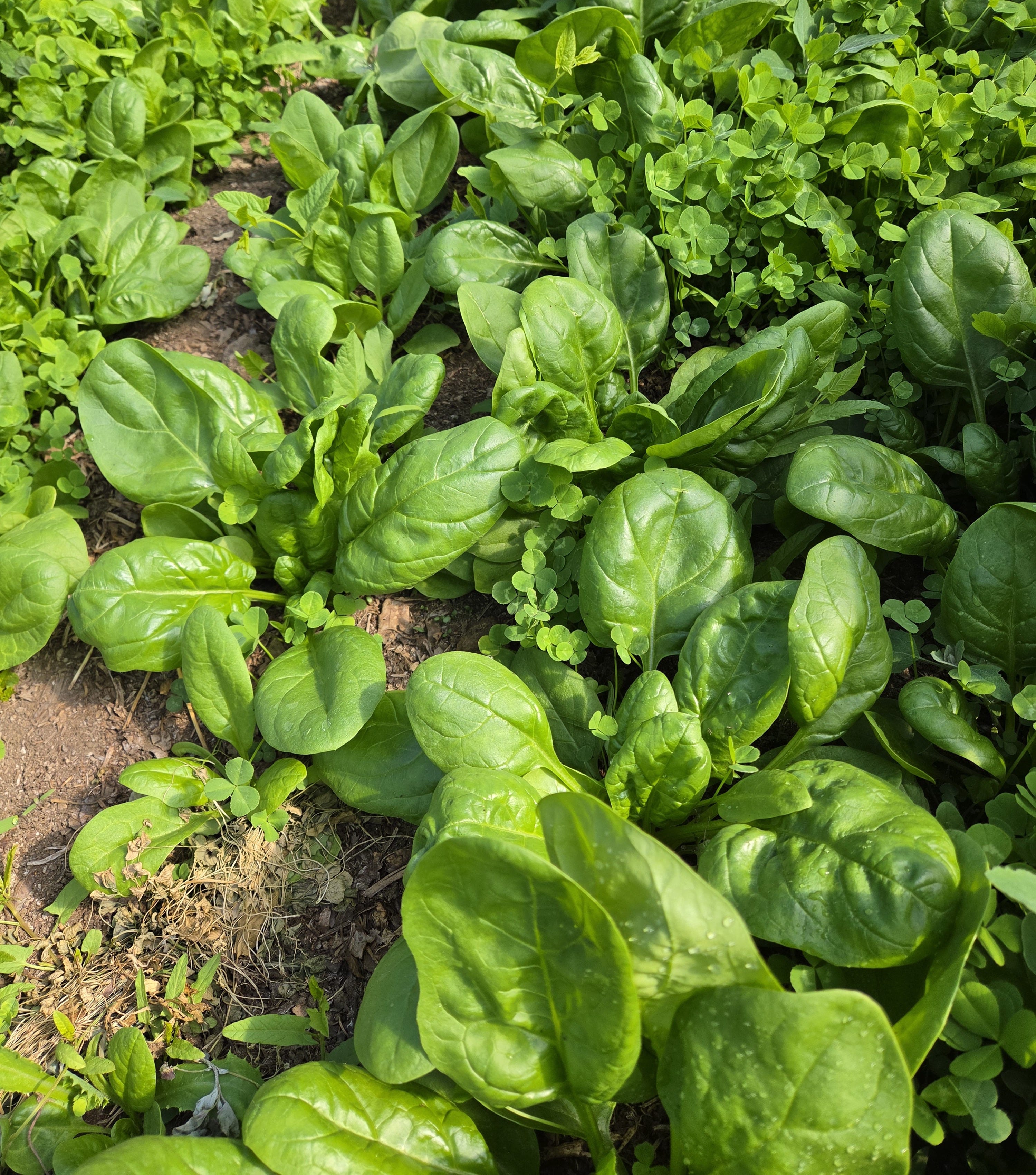
I seeded a bed of spinach down the middle of the house, once it was clear the clover hadn’t germinated there (where the old pathway was and the soil was more compacted and didn’t hold moisture as well). The spinach has grown into a beautiful crop, nursed by the clover and protective conditions of the tunnel. It’s almost too tender to harvest without damaging, and makes a great snack fresh from the bag.
One of our biggest challenges so far has been pest pressure, as it often is. Some of our early brassica beds are getting chomped by flea beetle again. The tiny black beetles overwinter in the soil, and while we rotate our brassica beds to try to mitigate the damage they are everywhere. As long as we are able to nurse the plants up to adolescence they should recover just fine, but it is disheartening to see swiss cheese leaves during the morning field walk.
In the high tunnel it’s rodent pressure. We lost a whole tray of broccoli that had just sprouted, they came through and chomped the tender cotyledons (anyone who enjoys microgreens will understand the appeal), very neatly leaving behind a tray of sad stalks. That was a special variety we were excited to be growing this year, so we’ve reseeded in a more protected location. But something like that can set our plan back by a couple weeks, and with our limited growing area we have a tight schedule. As soon as one crop comes out of a bed a different one goes in. Fortunately, I did startle a snake who was prowling through the clover in the tunnel when I was watering the other day. It’s nice to know we have backup in there. And it’s interesting to observe that once seedlings reach a certain size the voles and mice leave them alone, so we’re going to be sprouting our trays elsewhere before bringing them to the house. I don’t love having so many locations for trays, but I love even less walking in to see perfectly dug up squash seeds that have had the all the tasty and nutritious germs eaten out.
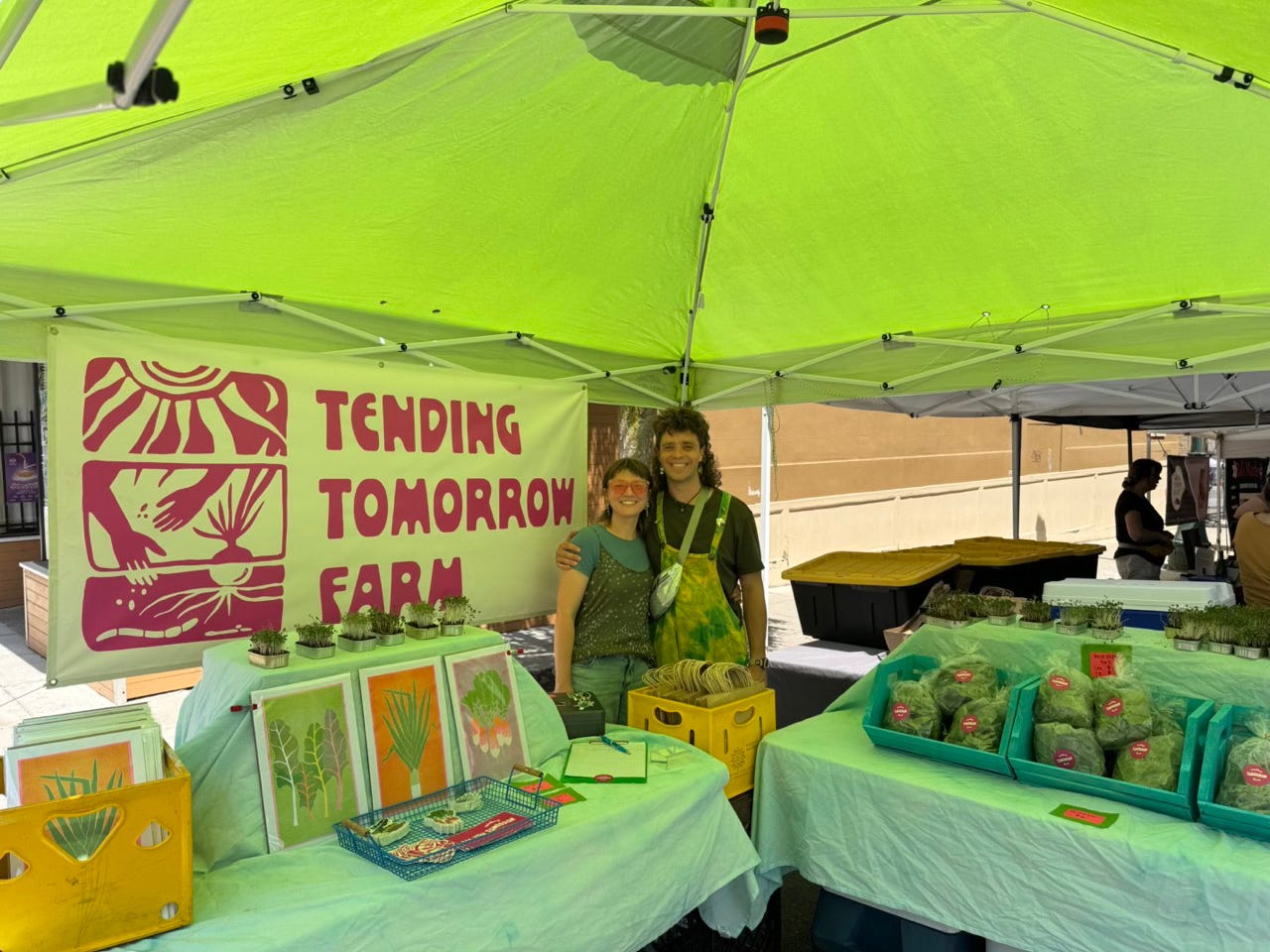
Despite these challenges, this year has felt great so far. We feel more on top of our plan and field maintenance than ever. We’ve developed some solid systems for preparing our beds and a fertility plan that is powered by living (or fermented or decaying) plants rather than chemicals. We have a new, highly efficient irrigation system to work with our low pressure water source, which will improve crop health and mitigate pest pressures. We’ve been working with people in our community to acquire much of what we need for cheap or free, rescuing old metal shelving from going to the dump, buying local hay. And we had an incredible first market at Market on Exchange in Worcester on Sunday. It’s shaping up to be another great season, full of life, color, and community.
I wrote this piece a few weeks ago, and so much has changed and happened since then, but I wanted to get an update out there. More updates and more in depth discussion about some of our experiments coming soon!
No posts
Comments
Nothing yet. Say the first thing.
Sign in to join the conversation.