
At 4:37 a.m., with the bedroom windows open, an American robin rings out forty minutes before sunrise. I rise reluctantly, still under the heavy spell of jet lag from a journey that took me through Juneau, Ketchikan, Skagway, Sitka, Icy Point, Anchorage, and the Olympic Peninsula. Whether from the decks of the Silver Moon along the Inland Passage, the Hoh Rainforest in Olympic National Park, or here in the Vermont dawn, these birds have kept a steady chorus on either side of North America.
The morning stands at sixty-three degrees, touched by a gentle southern wind. To the northeast, thin blue-gray clouds gather along the ridgeline, leaving Mount Cube and Moosilaukee softened in a wash of weather, a meteorological bruising. As a bright quarter moon tips southward, the thick fog haunting the White and Connecticut rivers lifts and thins, receding much like the Mendenhall Glacier I recently witnessed. (Wolves and black bears move beneath a forest of Sitka spruce and emerging western hemlock that, fifty years ago, was a river of receding ice.)
Now sunrise blooms over Smarts Mountain in pale pink and orange.
In the uncut meadows, vetch, yarrow, and oxeye daisy stir with goldfinches. After nearly a month in the Pacific Northwest, I had left my bird feeders idle; once refilled, the sunflower-bright goldfinches returned within the hour, followed by chickadees and blue jays the next day. While the robins begin their third clutch, the goldfinches have yet to nest, drifting meadow to meadow harvesting seeds.
The morning procession unfolds in measured steps:
- 4:59 a.m.: Red-eyed vireos and tufted titmice joined the robins.
- 5:03 a.m.: An American crow called out, its pitch distinct from its Alaskan cousins. Birds, like people, carry regional accents.
- 5:12 a.m. The acoustical floodgates opened with veeries, indigo buntings, song sparrows, and the inventive, nonstop song of the grey catbird.
- 5:17 a.m.: Rose-breasted grosbeak, sweet as ever.
- 5:21 a.m.: Northern cardinal.
- 5:28 a.m.: Chestnut-sided warbler and chipping sparrow
- 5:31 a.m.: A great crested flycatcher and a northern yellow warbler offered a study in contrast—one gruff, the other sweet.
- 5:35 a.m.: On the top of Hurricane Hill, the pine warbler still sings (louder and less musical than I recall).
The yellow-bellied sapsuckers had fledged while I was away, leaving behind a pair of cavities in the aspen that marked their 2025 and 2026 nesting efforts. Part of the sapsucker superspecies three-pack, red-breasteds of the temperate rainforest, neon-bright, as yellow-bellieds dipped into cabernet, were beginning to nest; our local sapsuckers have left an aspen tree to the elements, to become softer and even easier to excavate next spring (if it doesn’t fall).
- 5:44 a.m.: northern parula warbler and eastern wood pewee join the chorus.
- 5:45 a.m., a brown creeper wanders up a nearby pine trunk, its song a mere whisper as the day began in earnest.
Eventually, a broad-winged hawk, pileated woodpecker, mourning dove, common raven, red-bellied woodpecker, common grackle, cedar waxwing, eastern bluebird, Baltimore oriole, house finch, red-winged blackbird, scarlet tanager, blue jay, dark-eyed junco, and both nuthatches, red- and white-breasted. Thirty-seven species in all.
Sunlight makes the maple canopy gleam, backlit as I pause underneath, sunshine oozing down the trunk, living green. Makes oxygen, sequesters carbon, and is gorgeous ... what more could you want on a cool July morning?
The deep green world:
Izzy (5) and Aiden (3) spent a week with their parents, uncles, their significant others, and me, roaming Olympic National Park and boating around the Straits of Juan de Fuca. Their young eyes saw much: breaching orcas; basking Steller sea lions; swimming harbor seals in shoreline swells; black-tailed deer, twin fawns nursing in the backyard of our Airbnb, less than a hundred feet away; a black bear grazing meager forage on a dusty hillside and bolting up the hill, dirt cascading behind; bald eagles, bald eagles, and more bald eagles.
What caught their attention, arrested their interest? Banana slugs.
There are two prominent species of slugs in the rainforests of the Pacific Northwest: the native and BIG banana slug, sometimes yellow and spotted (like an overripe banana), sometimes gray, and the invasive European slug, almost as big. One afternoon, as we sat in rainforest shade, our backs against a western cedar so tall we couldn’t see the crown, eating lunch. Izzy wandered off, alert and searching, into the forest's fluency. The ground was spongy. Puddles and seeps and rivulets that opened into pools and drained into streams.
Although we kept an eye on Izzy, no one was concerned that she wandered off on her own. In fact, we exulted in her explorations, her careful searching into bouquets of fern and fireweed. She was, for an enchanted moment, George Wilhelm Steller and Vitus Bering, exploring an unknown land, chronicling every little discovery, as only a five-year-old can. No electronics. She had the overwhelming forest, trees two hundred feet tall, for stimulation. A cocoon of green shade, warm and moist. Then, she broadcast exuberance.
“A banana slug.”
We rushed over, bits of crackers in our wake. When we assembled around her, Izzy pointed at the three-inch yellow slug. Jonas Salk might not have been prouder.
Another reminder to step outside, linger there a while, and let the world reveal itself at its own pace.
Rainforest portfolio
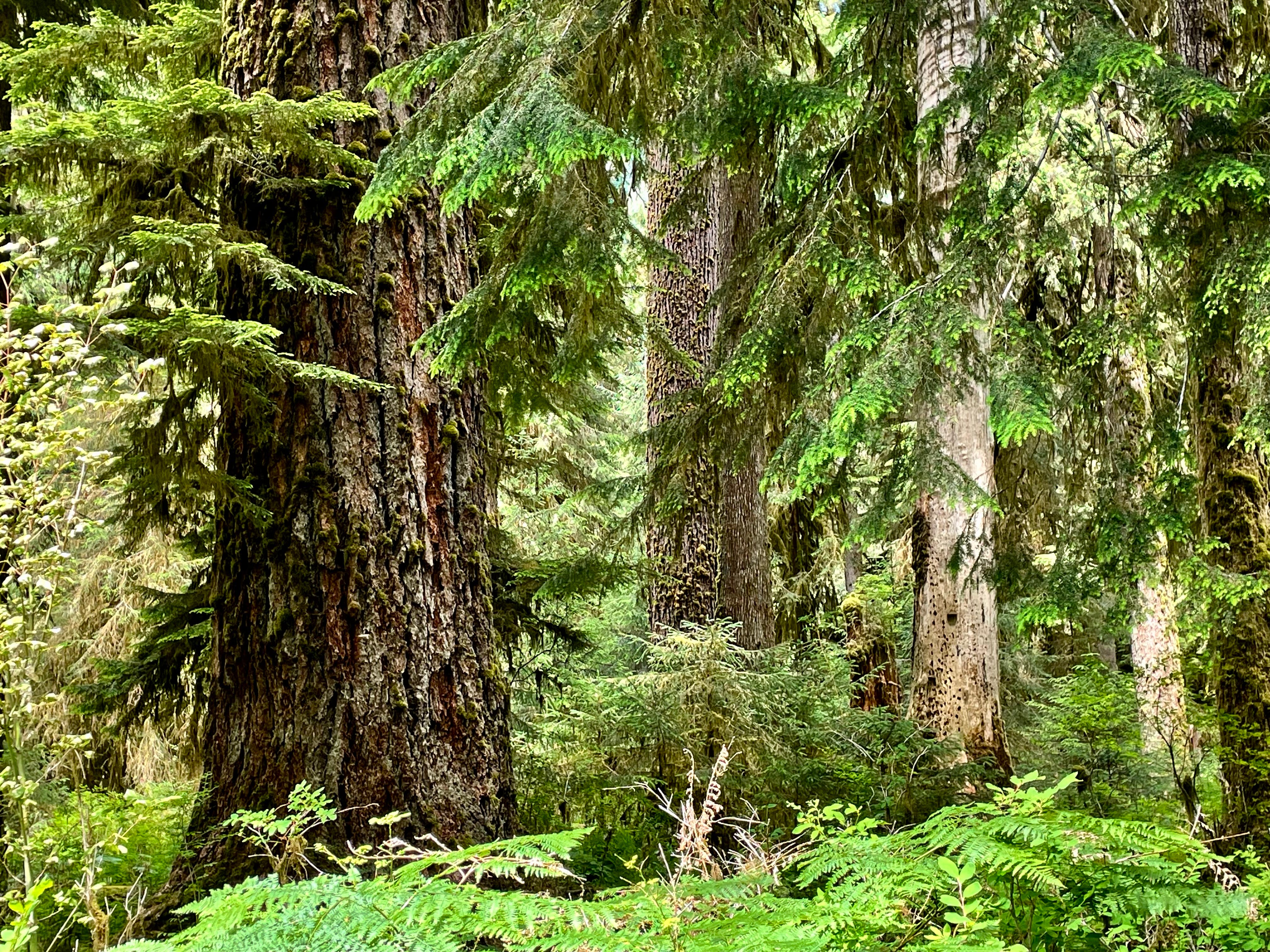
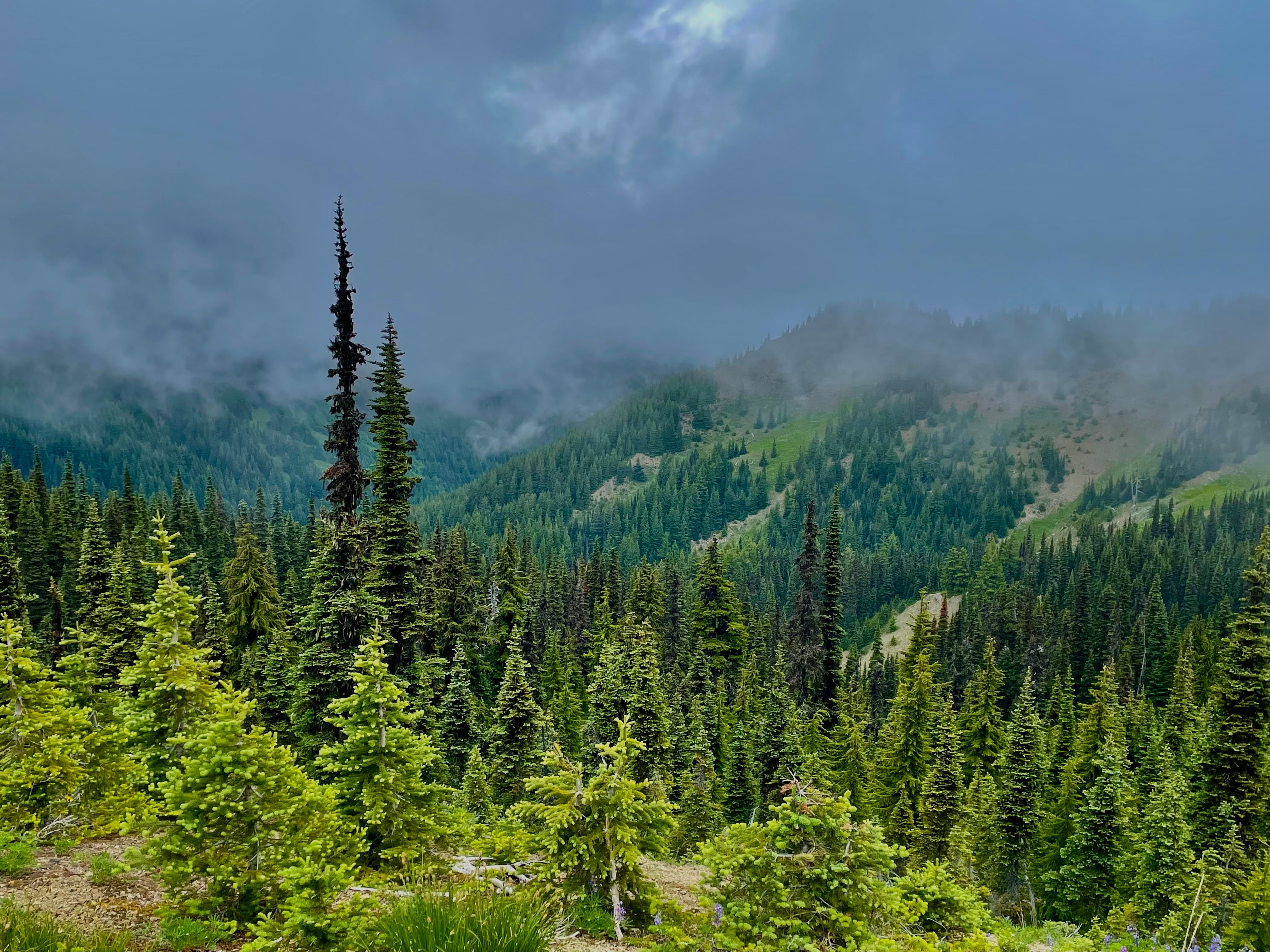
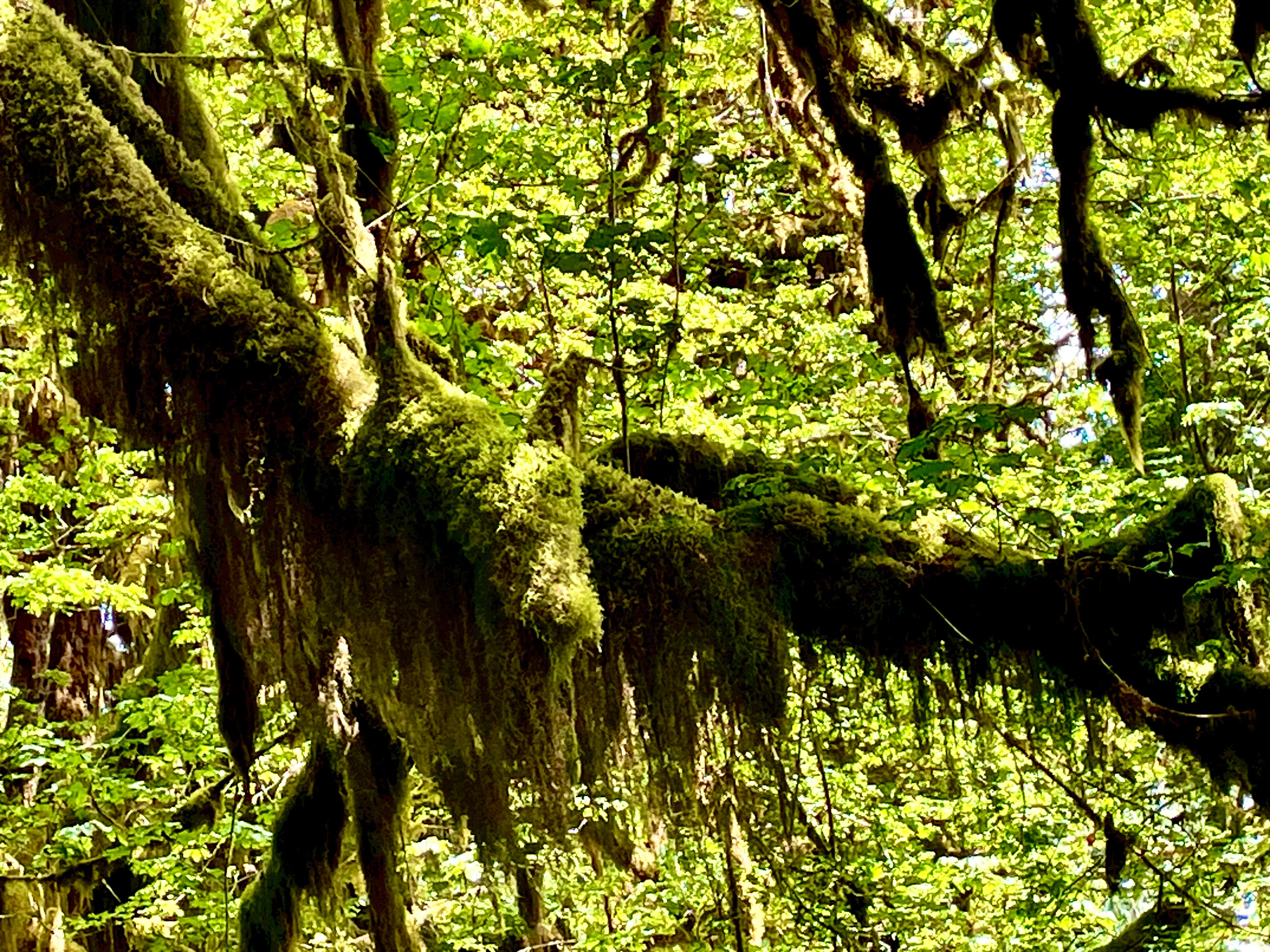
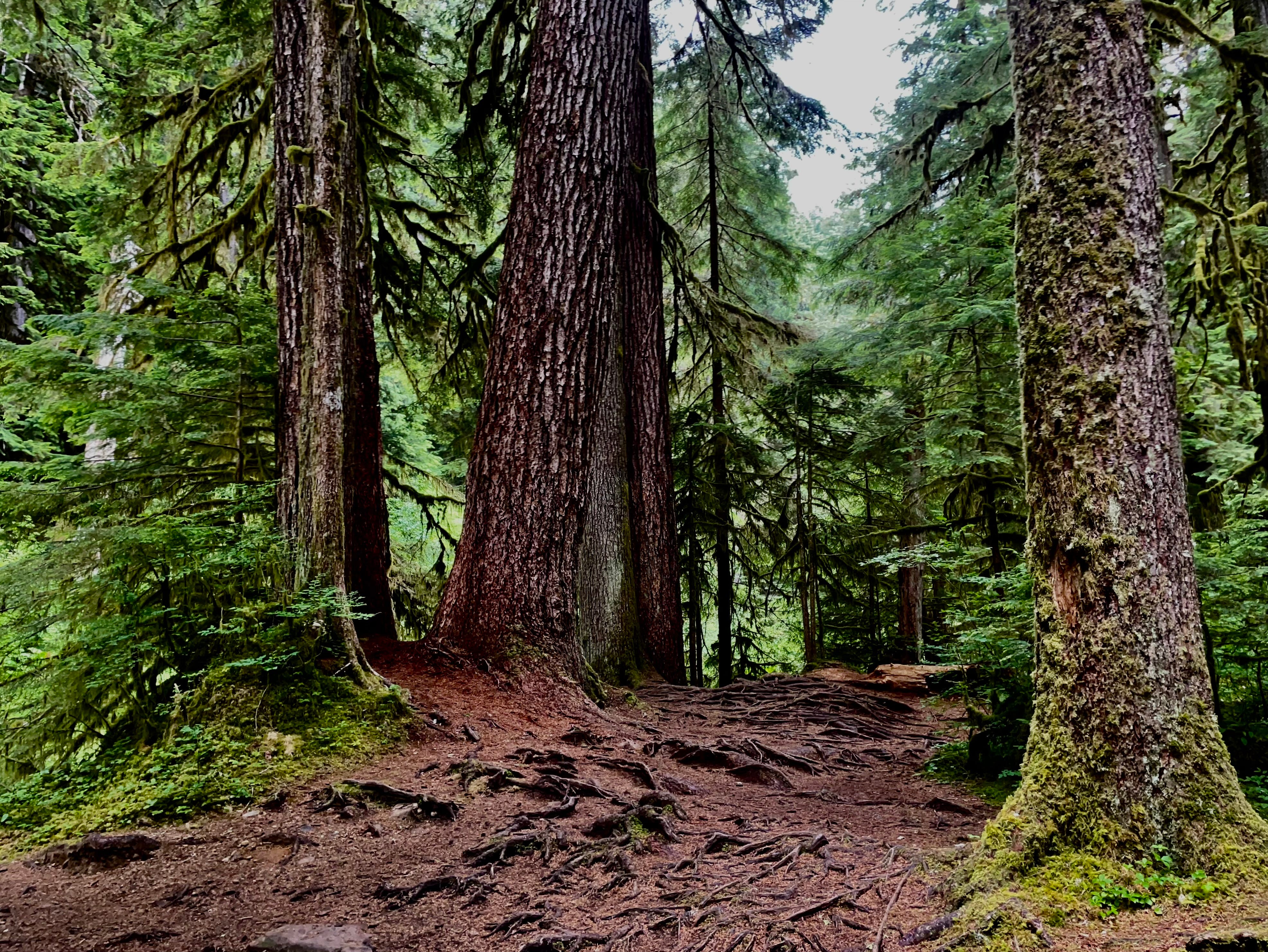
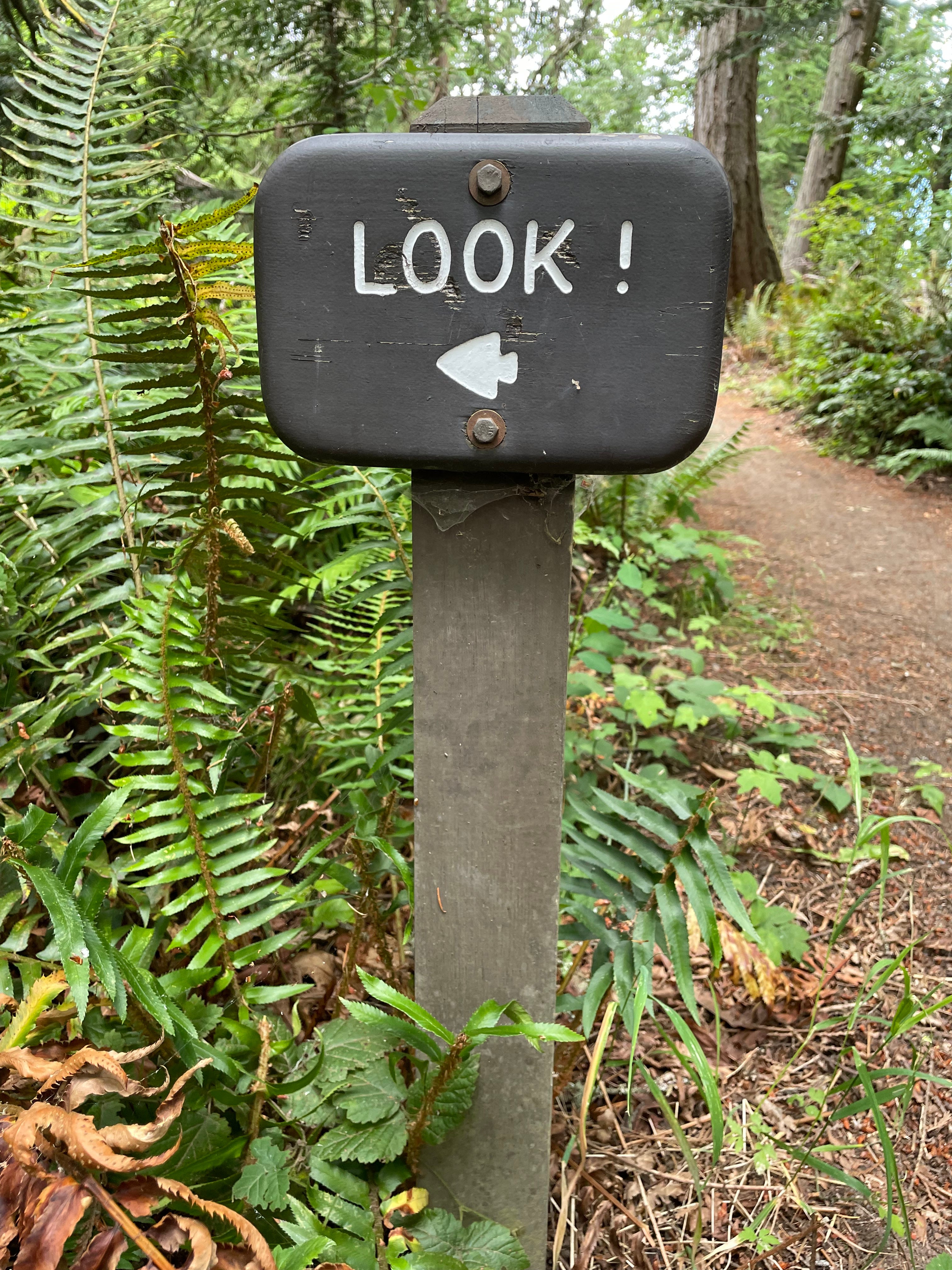
Was this the work of D.O.G.E.? A Trump-era budget cut, park service sign … four letters and a punctuation mark. Limited information.
A consideration: Watching and writing are how I make my way in the world. Your support matters. Thank you all for sticking with me on this journey. Revel in the ripening of summer and the breathtaking expanse of our continent.
As a lifelong naturalist and Yankee fan, I follow a trail blazed by John Burroughs and John Muir, neither of whom paid much attention to baseball. My work has appeared in Houghton Mifflin’s The Best American Sports Writing, Audubon, Sierra, Sports Illustrated, National Wildlife, OnEarth, National Geographic Traveler, National Geographic Books, Yankee, The New York Times, Newsday, The Boston Globe, The Chicago Sun-Times, The Guardian, and The Daily Telegraph, among other publications and anthologies. For twenty-four years, I was a regular commentator on Vermont Public Radio, and occasionally on NPR. I am the author of Backtracking: The Way of a Naturalist (1987), Blood Brook: A Naturalist’s Home Ground (1992), and Liquid Land: A Journey Through the Florida Everglades (2003), among other works of nonfiction. I received the Burroughs Medal in 2004, the highest literary honor awarded to an American nature writer. E. O. Wilson called America’s Snake: The Rise and Fall of the Timber Rattlesnake (2016) a beautifully written book [that] demonstrates just how good nature literature can be.
Beginning on 14 March 2020, the day after I returned home from Costa Rica, at the onset of the pandemic lockdown, I started writing a daily journal—part natural history, part memoir, and part commentary—that appeared here on Substack. Since the 25 August 2021 post, I have edited the 526 entries (deleting, combining, modifying) into a new book, The Promise of Sunrise: Finding Solace in a Broken World, which Green Writers Press published on the vernal equinox of 2025.
From: Seven Days
Ted Levin, Green Writers Press, 400 pages. $21.95.
A pissed-off woodpecker flies in and screams...
When COVID-19 crashed into his life in 2020, naturalist Ted Levin began taking a walk each day at sunrise through the woods and wetlands around his home in Thetford. His walks begat a daily blog and now a lyrical book that brings to life the world of efts and otters, warblers and wrens, chickadees and coyotes. Engaging natural history lessons — loon semen and mammoth bones make an appearance — weave through the daily entries, and slowly the reader also learns the story of the author’s life.
Levin’s writing can be extraordinarily vivid: Coyotes “hurl their voices at the crescent moon”; a bobcat has a face “like a soiled, fraying softball”; chickadees are “four maestros working on a score.” Writing such as this demands to be read as one reads poetry, in small sips, to be fully savored.
—Candace Page.
No posts
Comments
Nothing yet. Say the first thing.
Sign in to join the conversation.