
This essay is the second in a three-part series on the economics of jazz. Part I traced how the recorded music industry’s consolidation, ownership structures, and digital collapse produced a disproportionate impact on jazz — a compounding loss without parallel in any other genre. This essay asks what that collapse felt like from inside.
When a jazz set ends, the illusion ends with it. The musicians pack their own instruments, load their own cars, settle the bandstand pay in cash or by app, and drive back into a world where mastery and income rarely line up.
A moment earlier, the room heard a language of extraordinary sophistication—a pianist who can play almost any standard the bandstand calls, a bassist hearing the harmony before it arrives, a drummer making a small room feel as if it has lifted off the ground, a horn player spending decades learning to make a single note speak. The audience bought a ticket. The band played. The applause was real. And then the market priced all of that sophistication as if it were casual labor.
That is the working paradox of jazz.
The first essay in this series described how the recorded-music economy became less hospitable to living jazz musicians. But the damage spread inward, into the lives of players.
The result was the fragmentation of the jazz life, not its disappearance. Musicians are too stubborn for that.
A serious player could still make music — could still record, teach, tour, or maintain a day job that left nights free for gigs. But increasingly, the career itself became an improvisation. The musician had to build a livelihood out of pieces that did not naturally fit together.
Jazz had taught musicians how to listen to changes.
The economy forced them to live by them.
Economists use the phrase human capital to describe the training, skill, discipline, and experience that increase a worker’s productive value. In many professions, the logic is straightforward enough. More training produces more income. A surgeon, engineer, lawyer, or software architect is paid partly because the work requires long preparation and because the skills are scarce.
Jazz disrupts that logic.
A serious jazz musician may begin training as a child. The training begins with the physical instrument: tone, time, endurance, and control. Then comes the musical language: harmony, repertoire, improvisation, and form. A player must absorb recorded history, learn standards, hear substitutions, understand rhythmic feel, and develop a personal sound. Much of this work is solitary. Much of it is unpaid. Most of it happens long before the musician becomes employable.
By the time a strong young player can function on a professional bandstand, thousands of hours have already been invested in skills that are difficult to acquire and easy for non-musicians to underestimate. The player may not have literally counted the way to Malcolm Gladwell’s famous 10,000-hour benchmark for mastery, but the reality is usually close: years of solitary practice, failure, repetition, and gradual command.
The modern jazz musician is also more formally trained than the romantic mythology suggests. The old image of the entirely self-taught genius emerging from jam sessions still has power, and there have always been extraordinary exceptions. But the contemporary jazz workforce is deeply shaped by universities and conservatories, summer programs, masterclasses, and private instruction. Many working musicians hold undergraduate or graduate degrees. They have studied classical technique, theory, composition, and arranging.
That institutional turn changed both how jazz is taught and how many trained players enter the market each year.
In practice, all that training often leads to a $100 gig.
The contrast with classical training is instructive—though not in the way it might first appear. A young musician who pursues a symphony career enters a system with defined positions, union scale, employer benefits, and pension contributions. But those positions are few, turn over slowly because of tenure, and are declining in number as orchestras consolidate or close. The classical musician’s problem is getting into a support structure that exists; the jazz musician’s problem is that no comparable structure does. Both paths ask for the same years of preparation. Neither reliably pays for them.
The discrepancy can feel almost absurd. A player may have the equivalent discipline of a classical musician, the harmonic agility of a composer, the reflexes of an improviser, the endurance of a touring athlete, and the emotional intelligence required to make collective decisions in real time. Yet the market often offers roughly the same nominal fee that musicians were receiving decades ago.
Skill is not the issue. The market in which that skill is sold is small, fragmented, and structurally weak.
The audience for serious jazz is devoted but limited. The number of available club dates is finite. The clubs themselves face difficult economics. Recorded music no longer provides a dependable middle-class income. Streaming rewards scale more than depth. Teaching positions are competitive. Institutional jobs are rare. And every year, music schools produce more capable players who want the same scarce opportunities.
The result is a labor market in which the supply of excellent musicians exceeds the demand for well-paid jazz performance.
That is the heart of the human-capital paradox. The art form requires elite preparation, but the labor market rarely pays elite returns.
Nothing captures the problem more plainly than the club date.
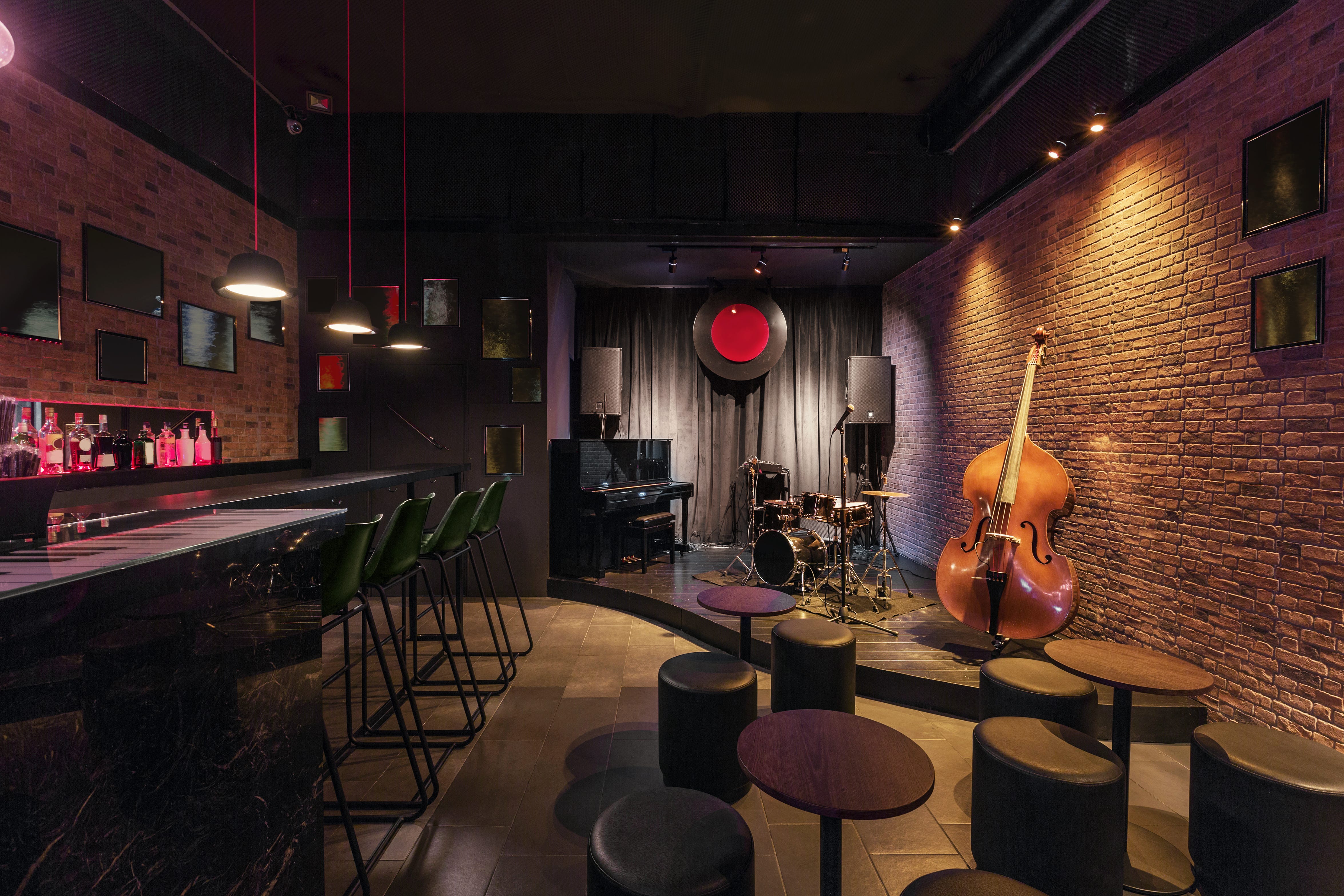
For many working jazz musicians, the local club gig remains the symbolic center of the life. It is where the music breathes. It is where musicians test ideas, build reputations, meet one another, deepen repertoire, and maintain contact with an audience. It is also where the economic stagnation is most visible.
In many cities, a sideman could earn roughly $75 to $100 for a club date in the 1970s or 1980s, a range consistent with union scale records and the work-life accounts documented in musician surveys of the period. In too many cases, a comparable local gig today may still pay roughly $100 to $150. The nominal number has hardly moved. Everything around it has.
The inflation arithmetic is punishing. Using the Consumer Price Index, a $100 club fee in 1980 would require roughly $400 today to preserve the same purchasing power; a $75 fee in the mid-1970s would also be worth several hundred dollars in current dollars. The musician who accepts a $100 or $150 club payment today is accepting a real wage far below what the same night of work produced a generation ago.
Rent, health insurance, instrument costs, and travel all rose around it. The cost of living in the cities where jazz musicians most need to be—New York, Los Angeles, Chicago, New Orleans, and San Francisco—rose sharply. The gig remained frozen.
That frozen fee explains much of the modern jazz life.
It would be easy to blame club owners. Sometimes blame is justified. But often the economics are more complicated. A small jazz club is not a luxury technology platform with near-zero marginal cost. It is a fragile physical business. It has rent, insurance, staff, licensing fees, taxes, and the constant risk of empty seats.
Many jazz clubs depend less on the music itself than on the customer behavior around the music. The cover charge helps, but the bar often determines survival. A room filled with respectful listeners who nurse one drink through two sets may be artistically ideal and financially disastrous. A louder, less attentive crowd buying cocktails may keep the doors open.
Smalls and Mezzrow are two intimate Greenwich Village clubs dedicated entirely to straight-ahead jazz. The Village Vanguard, the most storied jazz club in the world, has anchored the corner of Seventh Avenue South since 1935. Even in well-established rooms like these, fixed costs arrive before the club knows whether the room will fill. None of those costs wait for a good night.
That is one of the quiet humiliations of the jazz economy: the music asks for listening, while the venue often needs drinking.
The economics are especially hard because jazz does not scale easily inside a club. A quartet needs four musicians whether the room holds 40 people or 100. A sextet costs more. A big band is almost impossible without special circumstances. If the venue raises ticket prices too much, it risks losing the audience. If it keeps tickets low, it cannot pay the musicians properly. If it relies on food and beverage, the music becomes partly dependent on margins from something other than music.
The musician sees the result at the end of the night.
The fee arrives without paying for preparation, travel, instrument maintenance, or the unpaid years required to be good enough to play the gig. It is simply the cash attached to the appearance.
The public sees the performance. The musician bears the full cost of readiness.
The frozen gig would be difficult enough if the number of musicians were stable. But the supply of trained players has expanded dramatically.
Jazz education, which was once concentrated in a small number of schools and informal apprenticeships, is now a substantial institutional system. That system has done many good things. It has preserved repertoire, broadened access, created teaching careers, and given young musicians tools earlier generations often had to acquire more haphazardly.
But it has also changed the labor market.
That change is measurable. In the mid-1970s, the United States may have had only 15 to 20 formal college jazz programs, graduating perhaps 100 to 150 students a year with official jazz credentials. By the early 2000s, the number of programs had grown to roughly 110 to 130, with annual jazz-degree graduates closer to 400 to 450.
Today, according to data from the National Association of Schools of Music and the National Center for Education Statistics, the United States has roughly 160 to 180 accredited programs offering dedicated bachelor’s, master’s, or doctoral degrees in jazz studies, while broader directories list many more institutions around the world offering some jazz coursework or ensemble training. Programs such as Berklee, North Texas, The New School, Juilliard, and many others helped make jazz a serious academic discipline.
Data from the National Center for Education Statistics suggest that U.S. colleges now award roughly 550 to 600 dedicated jazz-studies degrees each year. Over fifty years, that pipeline may have produced something like 18,000 to 22,000 formal jazz graduates.
And that understates the broader supply of jazz-trained labor. Thousands of music-education and classical-performance students also play in university big bands, take jazz pedagogy, study improvisation, or acquire enough jazz vocabulary to compete for commercial gigs. The modern pipeline is therefore larger than the formal jazz-degree count. That is a cultural achievement. It is also a labor-market fact.
The result goes beyond more graduates: a steady inflow of young, highly trained musicians willing to move to major cities, accept low-paying gigs, teach privately, share apartments, and play for exposure in order to enter the scene. The educational system has scaled; the number of stable jazz jobs has not.
Many creative fields have similar dynamics. But jazz is particularly exposed because the performance market is small and because the training is so demanding. A music school can graduate more horn players, pianists, drummers, bassists, and vocalists. It cannot create an equal number of well-paid club residencies, record deals, touring chairs, faculty posts, or institutional appointments.
The educational system raises the level of musicianship while contributing to the oversupply that suppresses wages.
The market sorts players into a narrow set of outcomes.
At the top, a small number of bandleaders, touring artists, institutional figures, and first-call studio musicians may build real careers. At the bottom, some players leave the field or keep music as an avocation. In the middle sit thousands of serious musicians: skilled enough to contribute meaningfully to the art form, but not positioned to earn a stable living from jazz performance alone.
That missing middle class is one of the central facts of the modern jazz economy.
The stars remain visible. The students keep arriving. The institutions celebrate the canon. The festivals present the names they can sell. But the middle—the sidemen, local leaders, arrangers, and mature professionals who are neither famous nor amateur—has become increasingly difficult to sustain.
A healthy art form needs that middle. It is where scenes are built, where young players learn, and where accompanists, composers, and teachers create the daily life of the music. Without it, the art form becomes a pyramid with too little structure between the conservatory and the star.
The pyramid keeps filling from the bottom—which raises an obvious question: if the economics are so difficult, why do so many people still want to enter the field?
One musician friend once answered that question better than any economist could. When we were discussing other jobs he might pursue, he said, “I can play any song in any key. How could I do anything else? It is who I am.”
That is the part of the labor market a spreadsheet cannot see. Musicians respond to identity, mastery, community, and the need to make a life inside the music—not wages alone. Jazz offers something rare: the chance to develop a personal voice within a shared language, to join a tradition without merely repeating it, and to experience the exhilaration of making form in real time with other people.
That aspiration is one reason jazz survives—and one reason the economics can remain so punishing. When people love the work deeply enough, they will accept conditions they would reject in a more ordinary trade. They will teach more, travel farther, rehearse unpaid, record at their own expense, take the low-fee gig, and keep showing up because the music still gives back something the market does not measure.
Artistic commitment explains why musicians continue without justifying an economy that depends on underpaying them.
There is no better proof than the trombonist. The instrument is the oldest punchline in the music—nearest the floor of the pay scale, the butt of every bandstand joke—and players keep choosing it anyway, because the thing it can do to a room is worth more to the player than the thing it does to the income. Every working jazz musician is, in that sense, a little bit trombonist: holding on to a craft the market keeps trying to discount.
Because jazz performance alone rarely provides a living, the working musician becomes a portfolio worker.
The term is literal. Income comes from multiple small sources: club dates, private teaching, university adjunct work, weddings and private events, church services, theater pits, cruise ships, and day jobs.
The National Endowment for the Arts study Changing the Beat, directed by sociologist Joan Jeffri of Columbia University’s Research Center for Arts and Culture, documented this basic pattern in the work lives of jazz musicians in a 2003 report for the National Endowment for the Arts. Performance income was only one part of the picture. Teaching, composing, arranging, commercial work, grants, and non-music income all helped fill the gap. The modern jazz career is less a single occupation than a portfolio of small engagements.
The work is often genuinely satisfying. Teaching can be meaningful. Private events can be professional and well paid. Studio work can be thrilling. The activities themselves are not the issue. They become necessary because the core artistic work cannot reliably support the musician.
That necessity changes the life.
The jazz musician may spend the week teaching beginners, coaching high school ensembles, playing background music at a reception, reading a theater book, driving to a regional gig, answering emails about a festival, arranging a tune for a vocalist, repairing an instrument, and trying to practice after midnight. Somewhere inside that schedule, the musician tries to remain an artist.
The portfolio life provides resilience, but at a cost: fragmented attention, consumed time, irregular practice, and a constant pull toward work that pays today over work that matters most artistically.
Every musician understands the tradeoff. Take the private event and pay the rent, or take the original music gig and strengthen the artistic life. Accept the teaching load and secure predictable income, or protect the hours needed to practice and compose. Take the cruise contract and save money, or remain on land and preserve local relationships. Sit in the pit for eight shows a week, or stay free for creative projects that may not pay.
These are household-budget dilemmas, not romantic ones.
Jazz musicians do not usually lack work ethic. They often work constantly. The problem is that the work is scattered across markets that value different things. The wedding client wants familiar songs at the right volume. The church wants support for the service. The theater conductor wants accuracy. The student wants guidance. The jazz club wants artistry, but cannot always pay for it. The musician must serve all of these markets without losing the inner thread that made the musician in the first place.
That is the divided life.
Teaching became one of the great stabilizers of the jazz economy—and one of its great contradictions.
Teaching allowed many musicians to remain close to the music while earning steadier income. It preserved knowledge, created institutions, and gave younger players access to masters. It helped move jazz from an oral and club-centered tradition into universities, conservatories, community programs, and private studios. Without teaching, many important musicians could not have stayed in the field.
The list of major artists who taught seriously is long. Kenny Barron, pianist, composer, and NEA Jazz Master, anchored his career with more than 25 years on the faculty at Rutgers University. Most taught privately. A distinguished few held university posts. Some led clinics, residencies, and masterclasses. Others became central to regional music scenes precisely because they formed the next generation.
Teaching, at its best, is transmission.
But it is also a tradeoff. The hours spent teaching are hours taken from touring, composing, recording, or practicing. The academic calendar may conflict with performance. The institution may reward credentials, committees, recruitment, assessment, and administrative discipline more than the messy life of the bandstand. The musician who entered teaching for stability may find that the stability comes with its own obligations.
Private teaching has a different set of pressures. It can be flexible, but it is still time-for-money work. The teacher earns only when teaching. Cancellations, student turnover, and travel time all affect the economics. A full teaching studio can support a musician, but it can also crowd out the very artistic work that gives the teacher authority.
This is the paradox of jazz education. The music survives partly because musicians teach. But musicians often teach because the music does not pay enough.
Private events are another pillar of the survival economy.
They are often treated dismissively by musicians, sometimes unfairly. A good wedding or corporate band requires real professionalism. The musicians must be punctual, prepared, responsive, and able to read the room. They must know repertoire outside their preferred idiom. They must support the occasion rather than dominate it. That is a skill.
It can also pay far better than a jazz club.
A musician may earn several times as much playing familiar material at a private party as the same musician would earn playing original music for a listening audience. The buyer’s willingness to pay is simply different. A wedding, corporate dinner, or private celebration has a budget. Music is part of the event’s experience. The buyer is purchasing reliability, atmosphere, and memory.
The jazz club, by contrast, is often selling a fragile cultural experience to a small audience at a modest ticket price.
The musician understands the arithmetic. A private event may subsidize the club gig. A Saturday wedding may make it possible to play original music on Tuesday. The professional standard is high—punctuality, repertoire range, reading the room, keeping the dance floor moving—and a skilled band can create real excitement for the guests.
But the repertoire repeats. Every wedding wants the same tunes. The moments when genuine jazz is possible—the cocktail hour, the reception—are precisely when the audience is not listening closely, hearing music generically rather than attending to it.
For a musician whose identity is built around improvisation, risk, and personal sound, the specific cost is the quiet suppression of the thing that matters most.
Work that serves someone else’s occasion pays better than art that asks an audience to enter the musician’s.
Other forms of work fill out the same portfolio, each with its own bargain.
Church services offer regularity and, in communities where gospel and jazz traditions overlap, can be musically rich—but the musician is there to support the service rather than develop a voice.
Theater pits can provide a run of contracted work with union protections and reliable pay, though the job rewards precision over reinvention; playing the same part night after night is not the same as shaping music in real time.
Cruise ships can solve immediate financial problems—housing, food, steady pay, savings—while removing the musician from the local scene for months, so that the musician returns with money and finds the network has moved on.
Day jobs in real estate, technology, hospitality, or arts management can protect artistic independence, but claim energy, schedule, and identity; the player becomes a professional in two worlds, often fully at home in neither.
The deeper question is why so much private improvisation is required to support a public art form.
Some conventional paths still support a performance life, but each is a refuge for a few rather than a solution for many.
The first is the road. For a small number of bandleaders and sidemen with a following, booking representation, and festival access, touring can still sustain a career. But the road is not an escape from the economics; it is another version of them.
A booking agent may take 10 to 15 percent of the guarantee and a manager another 15 to 20, and the artist still has to pay the band—often three to five musicians—move the gear, cover the travel days, and protect enough margin to justify leaving home. It can look glamorous from the audience side and punishing from the musician’s. The road still supports some players. It does not rebuild a broad middle class.
The road also has a physical clock—the van travel, the late nights, the early morning drives—that does not get easier with age, and there is no graceful exit from it.
The second is the nonprofit institution. Jazz at Lincoln Center and SFJAZZ treat the music not as nightclub entertainment but as a cultural form worthy of stages, salaries, education, commissioning, and civic support—Jazz at Lincoln Center on an annual budget in the tens of millions, SFJAZZ on the philanthropy that built a dedicated concert center.
SFJAZZ, founded by Randall Kline in 1983 as a two-day festival and now the largest nonprofit jazz presenter in the world, produces more than 400 performances a year across its Bay Area season, festival, and summer series—serving more than 250,000 people annually. That scale creates spillover: visiting artists book additional dates at regional clubs and venues across Northern California.
But some local clubs see a different effect—a dominant institution competing for the same audience and the same nights, making it harder for smaller rooms to find a foothold.
These institutions changed the cultural status of the music and can do what clubs and labels cannot: present ambitious projects, support large ensembles, commission new work, preserve repertory.
A few major institutions cannot replace a dense national network of clubs, small labels, presenters, and working bands, nor employ more than a fraction of the musicians capable of contributing to the art. They may create excellence at the top while leaving the middle exposed.
The third is the commercial studio. Los Angeles remains the clearest example: film, television, advertising, and games all require musicians who can sight-read flawlessly, match any style instantly, and deliver under pressure.
The irony is sharp—some of the greatest improvisers earn their living by not improvising, reading precisely what is on the page for a film cue or a pop session by day and playing jazz at night for far less. The work is difficult, prestigious, and well paid, and it subsidizes the artistic life.
But this sanctuary has narrowed too: home-studio technology, remote recording, sample libraries, and smaller media budgets have thinned the traditional session calendar, concentrating the work among a small first-call network. Like the road and the institution, the studio is a sanctuary for some, not a solution for most.
The fragmented labor required to stay in jazz is one half of the burden. The other is what the portfolio life leaves unprovided: health insurance, retirement security, a durable safety net.
Jazz musicians usually work as independent contractors. They move from gig to gig, city to city, project to project. That status keeps them outside many of the structures that protect workers in more conventional jobs: employer-sponsored health insurance, disability coverage, retirement contributions, and paid time off. Many have spouses, partners, teaching jobs, union work, or other arrangements that provide coverage. Many do not.
Union protections have helped in parts of the music economy, especially in theater pits, studio work, some touring contexts, and certain institutional settings. But much of the jazz life has always lived outside durable union structure: club dates, private events, small tours, and teaching. That is why the safety-net problem persists even in a field with a long history of professional musicians’ unions.
Before the Affordable Care Act and related state-level reforms expanded access to individual health insurance, the situation could be brutal. A 2002 survey by the Future of Music Coalition found that 44 percent of musicians lacked health insurance entirely, compared with about 15 percent of the general public—roughly three times the national rate.
Even today, some musicians remain uninsured or underinsured. A musician could be internationally respected and still be one medical event away from financial catastrophe. A serious illness, surgery, accident, or chronic condition could overwhelm years of modest earnings. Benefit concerts became part of the culture: an act of love, but also an indictment of the system.
The community often responds with extraordinary generosity. Musicians play fundraisers. Friends organize campaigns. Organizations step in. The Jazz Foundation of America, MusiCares, the Hearts of Music Fund, and other charitable efforts remain important lifelines for musicians in crisis.
These events carry their own emotional weight. Musicians consider it an honor to be asked — a chance to give back to someone who gave the music something, in the language both share.
The performances can be among the most moving a musician gives. The audience knows why it is there. The musicians know what they are saying.
And for an evening, the music does the work that the system failed to do.
The Dizzy Gillespie story belongs to that tradition and illustrates its limits. Dying of pancreatic cancer at Englewood Hospital in New Jersey in early 1993, Gillespie made a request of his oncologist, Dr. Frank Forte: find a way to get the medical care he was receiving for musicians who could not afford it. That request became the Dizzy Gillespie Memorial Fund, administered through the Jazz Foundation of America, which has since provided millions of dollars in free medical services to nearly two thousand musicians.
These efforts have helped real people in real emergencies, but they remain charitable responses to a structural failure.
A benefit concert can help a musician survive a crisis. It cannot substitute for a labor market that provides reliable income, insurance, and retirement security. Nor can it erase the anxiety of living for decades without a durable safety net.
The music is treated as a national treasure, but many of the people who make it have had to rely on informal networks, emergency funds, personal sacrifice, and luck to meet basic needs.
That contradiction should be uncomfortable. A country can praise an art form and still fail the artists who sustain it. For Black musicians, who built the music and have historically faced the sharpest exposure to its economic gaps, that failure has been most acute.
The paths that remain are narrow, and they have not been equally narrow for everyone.
What has become harder to sustain is the ordinary middle-class life of the working jazz musician.
Here, middle-class has a narrow meaning. It does not mean wealth. It means the ability to live with some stability from the work itself. It means paying rent, keeping insurance, raising a family, and continuing to practice and perform without turning every week into a financial emergency.
For too many musicians, that stability disappeared or never arrived.
The old recorded-music economy came up short. The club economy failed to keep pace. The teaching economy helped, but absorbed time. Private events paid, but pulled musicians away from original work. Healthcare remained precarious. Institutions and studios provided refuge for a limited number. The road demanded exhaustion. Streaming would eventually offer reach, but not enough revenue for most.
So the musician became the shock absorber for the entire system.
When record labels stopped investing, the musician adjusted. When clubs could not pay more, the musician adjusted. When healthcare was unavailable, the musician adjusted. When the road became punishing, the musician adjusted. When recorded music lost value, the musician adjusted.
Improvisation became an artistic method and an economic condition simultaneously.
That may be the deepest irony of the modern jazz life. The very skills that make jazz musicians extraordinary—listening, responsiveness, invention—also allowed the system to keep asking more of them. Because they could adapt, they were expected to adapt. Because they could piece things together, the market let them piece things together. Because they loved the music, the system could underpay the music.
Love became part of the subsidy.
The audience sees the set.
It does not see the morning lesson before the gig, the wedding contract for next weekend, the insurance premium due next month, the unexpected instrument repair, the unpaid rehearsal, the charts written at the kitchen table, the uncompleted grant application, or the unpaid benefit concert for a musician in trouble.
It does not see the mental arithmetic behind every artistic decision.
Every artistic decision carries a financial calculation: whether to take the gig that pays or the one that matters, whether to stay or move, whether to keep going at all.
The music sounds spontaneous because the musician has mastered uncertainty. The life is uncertain because the economy never fully valued the mastery.
That is the high price of the groove.
It is paid in fatigue, compromise, ingenuity, pride, stubbornness, and sometimes heartbreak. It is also paid in beauty. The music survives because musicians keep choosing it, even when the economics advise against it.
That choice deserves admiration—and analysis. A culture that depends on underpaid devotion should not mistake devotion for a business model.
It is a hard story, with more to come.
The same technological changes that damaged the old system also created new tools. Recording became cheaper, distribution more open, and a growing set of digital channels began to give musicians ways to reach audiences without waiting for a label, radio programmer, retailer, or club owner to grant permission.
The newest of those tools is generative AI, which some musicians are already using and others regard as the thing that will finish off the job the last twenty-five years started.
The new model shifts more work onto the musician and falls short of restoring the old middle class.
But one change stands above the rest: it gives the musician more control.
That is where the final essay in this series begins: with the more modest and more interesting possibility that musicians can now own more of the relationship between their work and their audience—rather than any fantasy that the jazz economy has been fixed.
Jazz musicians have always known how to improvise inside difficult changes.
Now they are doing it economically.
Next Week
On Their Own Terms
AI, Ownership, and the New Economics of the Jazz Musician
* * *
Ted Hall is a vintner and rancher at Long Meadow Ranch in Napa Valley. For more than five decades, he has advised chief executives and boards of major companies, including more than 25 years as a senior partner at a global management consulting firm. A trombonist who has performed in orchestral, Dixieland, small jazz ensemble, and big band settings from New York to San Francisco, he co-founded Monarch Records, an independent jazz record label.
He served for a decade as a trustee of SFJAZZ, helping shape its early strategy, and for nine years in leadership roles on the San Francisco Symphony Board of Governors. He is currently a member of the advisory board of the Frost School of Music at the University of Miami. He writes about economics, incentives, and how complex systems shape real-world outcomes across agriculture, food, wine, music, and culture.
The experiences behind these essays are collected in a memoir, Tell the Truth and Do the Right Thing—125 stories from a life that has included McKinsey, Napa Valley, a Pacific crossing, and the Village Vanguard.
No posts
Comments
Nothing yet. Say the first thing.
Sign in to join the conversation.