
This essay is the third and final part of a series on the economics of jazz. Part I traced how the recorded music economy turned against living jazz musicians. Part II described the working life that resulted: a career assembled from pieces, sustained by devotion the market learned it did not have to pay for. This essay asks what those musicians can now build for themselves.
AI is at the center of the answer. It is the most immediate threat to working musicians and, at the same time, the most useful instrument they may have gained in a generation. AI here means more than the models that generate a song from a prompt. It includes the intelligence increasingly able to connect and direct the digital tools musicians already use.
Competent, formulaic music is becoming virtually free. What holds its value is music that could only have come from a particular musician. Jazz musicians have more of that than almost anyone, and they may be among the first who can now capture more of the value they create.
For most of the last century, a jazz musician who wanted to put a record in front of a listener needed a series of people to agree. Someone had to pay for the studio. Someone had to press the discs and ship them. A store had to give the record shelf space, and a radio programmer had to play it, and every one of those people could say no.
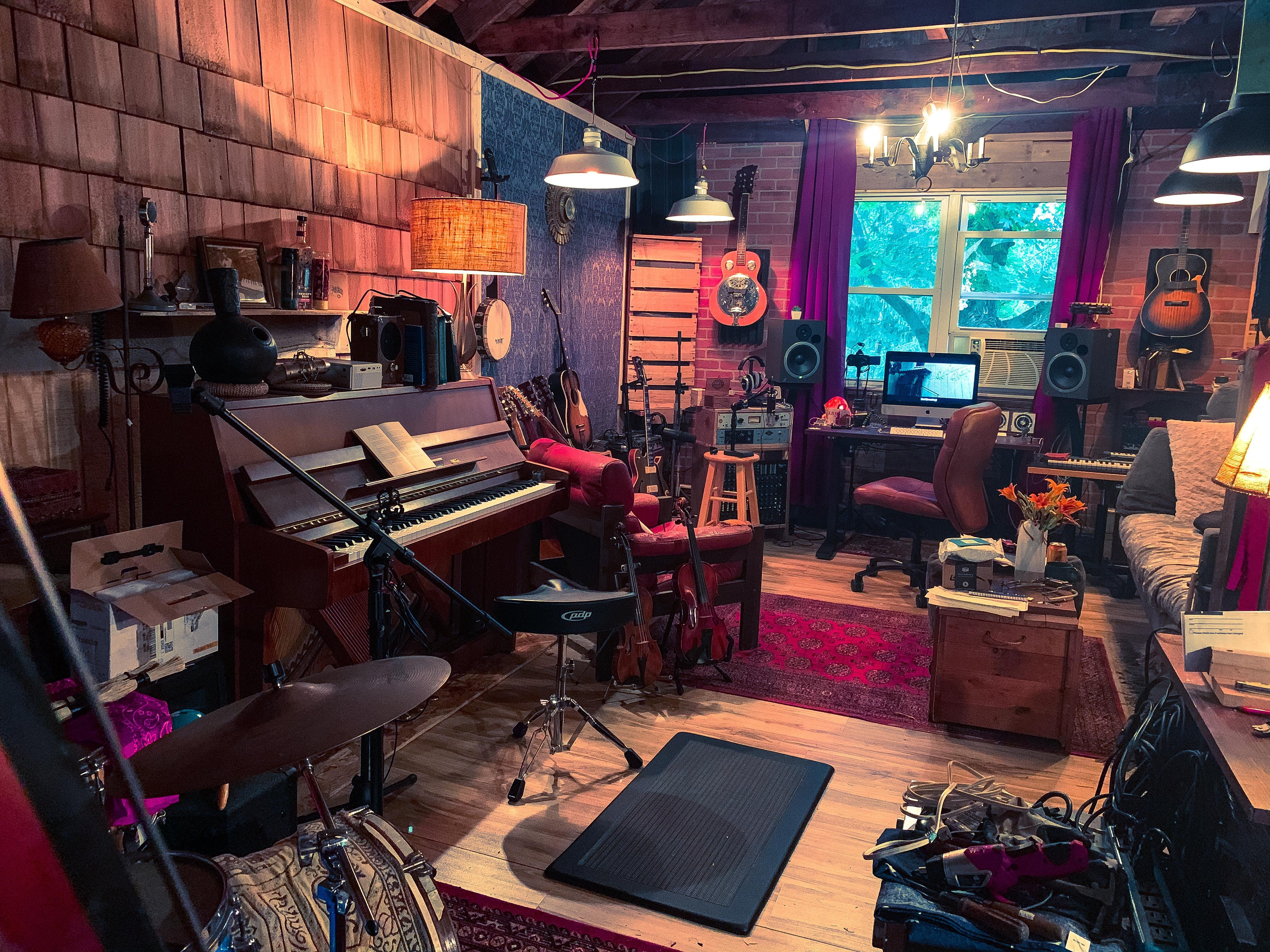
Now much of the machinery that once stood between the musician and the listener can sit in the musician’s own studio in a converted garage. Their permission is no longer required.
Those gates did not disappear all at once. Digital tools for writing music, recording, creating sounds, storing files, and distributing music removed them one by one. AI is now beginning to knit those tools together, allowing one musician to manage work that once required a studio, a staff, or a label.
That does not mean anyone is obliged to listen. More music is released in a day than a person could hear in a lifetime, and a record that exists is not a record anyone finds. What has changed is narrower and still substantial: the musician increasingly controls whether the music gets made and released, who owns it afterward, and how it is taken to market.
AI is where this becomes both visible and contentious, but the technology is not the argument. The argument is control—over how music gets made, who owns it afterward, where it can be licensed, and how it reaches the people who want it.
Those are the questions.
None of those questions matters if no one is listening.
The recorded music collapse was real, and Part I documented it. Revenue from recorded jazz fell roughly 80 percent in less than a decade. What did not happen alongside it is the thing worth noticing. The National Endowment for the Arts has tracked live jazz attendance since 1982: roughly 22 million American adults went to at least one performance in 2002, about 17.6 million by 2008, and approximately 16 million in the most recent survey, taken in 2022 just after the pandemic. The audience fell by a bit more than a quarter across two decades that included a digital collapse and a pandemic. The business built on it fell by four fifths.
That gap is the finding. Jazz’s one percent share of recorded music says far more about what happened to the business than about whether an audience for jazz still existed.
The audience that remains is unusually devoted. Of the adults who attended a jazz performance in 2022, 11.5 percent went six or more times, the highest frequency of any performing art the NEA measures, ahead of classical music, opera, musical theater, and ballet. The jazz audience has never been large.
Jazz also has a substantial audience outside the United States—and in some markets, a younger one. Festivals fill summers across Europe, the Americas, Asia, and Africa, with Montreal alone drawing crowds in the millions. Jazz cruises sell out well in advance. In South Africa, the number of people saving jazz tracks to their Spotify libraries went from about 167,000 in 2021 to more than a million in 2025, and South African listeners generated nearly 175 million jazz streams in the year before the 2026 Cape Town festival.
For twenty-five years a devoted audience stood on one side and the people who made the music stood on the other. They could meet in a club, but it was extraordinarily difficult for a musician to find that audience, keep it, and reach it directly wherever it lived. That is the part that has changed.
The history of the music is a history of new machines. Almost every instrument now thought of as native to jazz arrived as someone’s technological novelty, often unwelcome.
The saxophone was an industrial-age invention patented in 1846, designed for military bands and dismissed by the classical establishment as a vulgar curiosity; it sat largely unloved for half a century until jazz musicians picked it up and made it the defining voice of the music.
One machine in that line was built to compose, and the composer who did the most with it had come up playing jazz. Milton Babbitt grew up in Jackson, Mississippi, took up clarinet and saxophone as a boy, and played in the jazz groups and theater pit orchestras that passed through town. The music stayed with him. In 1957 he wrote All Set, a piece for an eight-piece jazz ensemble premiered by a band that included Bill Evans and Art Farmer.
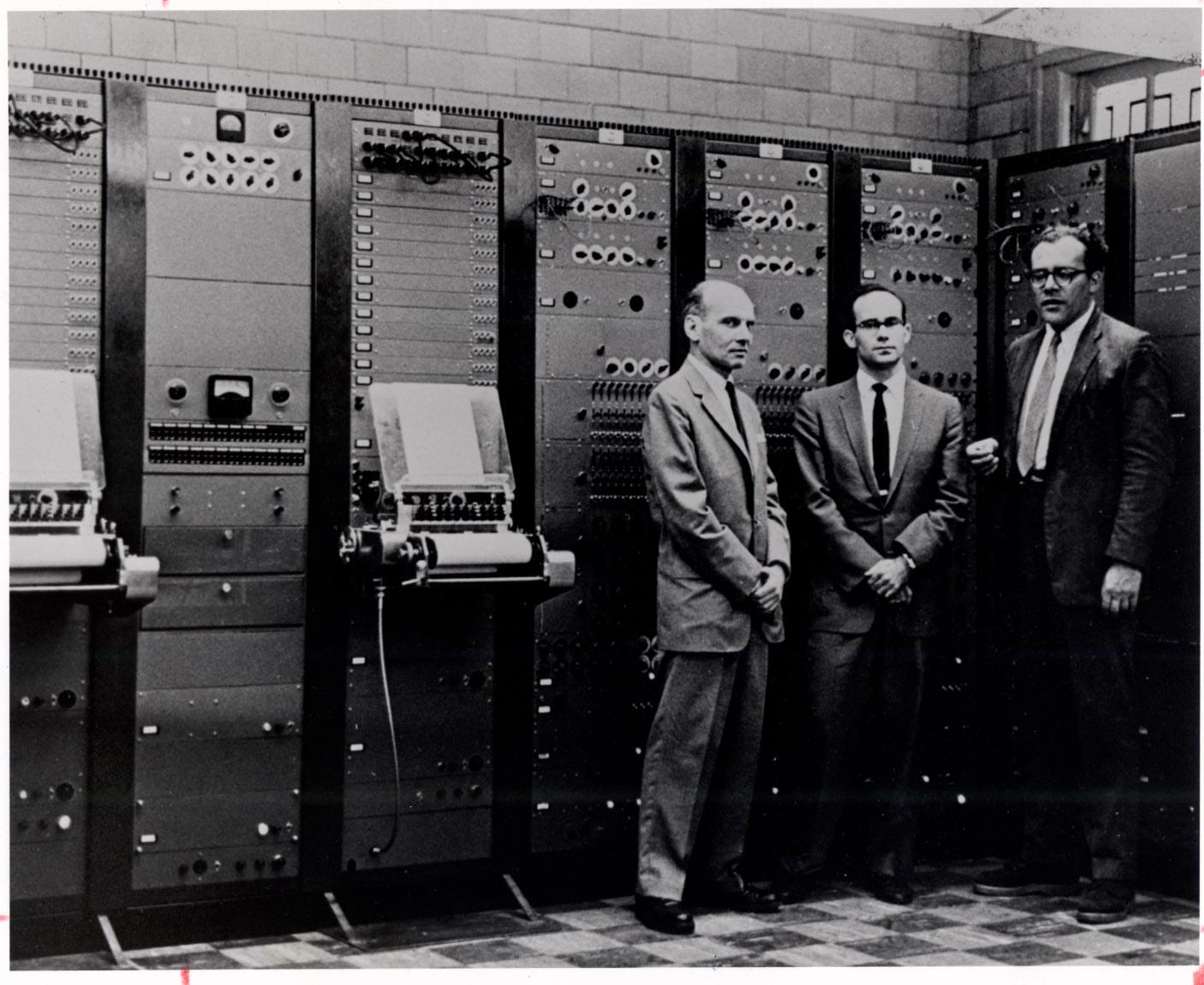
Four years later he completed Composition for Synthesizer on the RCA Mark II at the Columbia-Princeton Electronic Music Center. That instrument was not played by hand at all. Its operator typed a score in a form of binary code that punched holes in a paper roll, and the machine read the roll and produced the sound. Music generated from written instructions is about sixty-five years old. What has changed since is the speed at which the instructions get written.
Why RCA built the machine is the part worth noticing. The two engineers behind it, Harry Olson and Herbert Belar, set out to automate the writing of popular songs, and began by running statistical analysis on existing melodies to generate new ones from the resulting parameters. The commercial logic was plain. A company that could extract the formula for a hit could produce hits at will, and an earlier version of the machine was meant to reduce what record companies paid unionized musicians. The instrument Babbitt composed on had been designed to industrialize songwriting and to lower the cost of the players.
None of that is what he used it for. Babbitt wrote music on the Mark II that no formula would have produced and no market wanted. Computer-generated music was called cold, contemptuous of its listeners, and not really music. Those are the objections now raised against generative AI. An article of his from 1958 had already been retitled “Who Cares if You Listen?” by an editor without his consent, and the phrase followed him for the rest of his career. The machinery changed. The argument did not.
AI arrives on that same line. The code that once had to be punched into a paper roll now writes itself, faster and at almost no cost, and a musician with a laptop can direct it. A musician who refuses it on principle is in roughly the position of a writer who refuses a word processor, free to work that way but handing an advantage to everyone who doesn’t.
What is different this time is scale. To many observers the scale is large enough that what they see is a machine for making the market worthless.
Generative AI tools can now produce finished songs by the thousand, complete and competent, at almost no additional cost per song, and they are doing exactly that. By early 2026, the streaming service Deezer reported that fully AI-generated tracks had grown from roughly a tenth of its daily uploads at the start of 2025 to nearly half—about 75,000 new machine-made songs every day, more than 2 million a month.
In blind tests (including a widely cited Deezer/Ipsos study of 9,000 listeners across eight countries), 97 percent could not reliably distinguish a fully AI-generated track from a human one.
In the summer of 2025, a band called the Velvet Sundown gathered more than a million monthly listeners on Spotify before its creators admitted the whole project had been generated with AI. If the case for human music rested on the ear alone, it would already be lost.
But the case for human music does not rest on the ear alone, and the same story shows why. The Velvet Sundown drew its million listeners as a mystery and a curiosity; once the novelty passed, it became a footnote, not a following.
For all those millions of AI uploads, fully AI-generated music accounts for only 1 to 3 percent of what people actually stream, according to Deezer’s own platform data, and much of even that listening appears to come from bots and schemes designed to generate royalties rather than real fans. The machine can fill the shelves. It cannot make anyone come back.
The analogy has another limit. AI raises questions the saxophone and synthesizer never had to answer: what material trained the model, whether the creators of that material consented or were compensated, and how the displacement of musicians and composers should be addressed. Those questions are real, but they concern where the training material came from, whether permission was given, and how it is used—not the technology in the abstract.
Musicians can increasingly build or direct models trained on material they own, license, commission, record, or create specifically for the purpose. Choosing what a model learns may itself become part of the creative act. The relevant boundary is not human versus machine. It is permission, ownership, and control.
Students are already working it out. At the University of Miami’s Frost School of Music, where I serve on the advisory board, teams entering the international AI Song Contest have avoided the services that generate a finished track from a text prompt, on the grounds that no one can say whose recordings went into them. They build their own models instead, out of material somebody agreed to provide. One team needed a singer’s voice to become another singer’s voice across the length of a song, as the music moved from R&B to grunge. They built two voice models from recordings the two vocalists made for that purpose, then blended intermediate versions until the change of singer could not be located by ear.
The contest scores entries on ethics alongside composition and craft. What separates this from taking creative work without permission is not the use of a model. It is whose work went into it, and whether anyone asked.
The self-reliant musician is increasingly able to determine not only what music to make, but what kind of machine will help make it—and what that machine is allowed to learn from.
Type a sentence—a melancholy country song about leaving home, a 1950s ballad with muted trumpet, an upbeat Latin groove for a cooking video—and a service like Suno returns a finished track with melody, arrangement, vocals, and production. That capability gets the most attention and is the least useful thing here for a working musician.
What matters more happens around the actual performance—and sometimes inside it. Musicians still gather in a studio, microphones up, and play. But some of the sounds or responses can now come from software or a model. Much of the work before the session and after everyone goes home can also be done by one musician.
Before the session, AI can serve as a sketchpad. It can quickly try chord sequences, bass lines, alternate versions of a section, and secondary melodies, letting a musician hear an idea before committing to it. It handles conventional harmony well but is less reliable with the unexpected chord changes common in jazz. A piano-and-vocal demo can be expanded into a string arrangement or a big-band arrangement before anyone books a studio.
Much of the daily use is plainer than that and matters more. A model can listen to a passage and report what the player half suspected about pitch accuracy or rhythmic timing. It can put a phrase into a key the musician has spent a career avoiding. It can hold the chords and rhythm steady at midnight while a player works something out—a backing group that once required several other musicians and a booked room.
After the music is recorded, much of the remaining cost comes from preparing it for release. A recording can be separated into stems—isolated parts such as vocals, drums, or bass—for repair or remixing, cleaned up, mixed, mastered for streaming, and prepared in alternate lengths for film and advertising. Professional mixing and mastering can still cost thousands of dollars for a song, and elaborate post-production much more. Much of that work can now be done with software sold by monthly subscription.
A musician still needs the basics: recording equipment, a microphone, software, and a room that is not terrible. What has collapsed is everything built on top of it. But a subscription is not a free afternoon. The work that used to be hired out is now work the musician does, and doing it takes time and takes learning. The cost moved from dollars to hours, and for a musician piecing together several kinds of work, hours are the scarcer currency.
Cheaper tools are only half the story. Musicians already know the pieces: Finale, Sibelius, and Dorico for notation; Pro Tools and Logic Pro for recording and production; Band-in-a-Box and iReal Pro for accompaniment and practice. For years those functions lived in separate programs. AI is increasingly the conductor, beginning to bring them together.
The other thing that collapsed is the cost of a bad idea. Trying something used to mean booking a room and paying people to be in it, so a musician tested the ideas they were reasonably sure of and left the rest alone. A wrong turn now costs just an afternoon. A player can try a melody against an unfamiliar combination of sounds, put a familiar jazz tune into a style where it seemingly does not belong, or layer forty vocal parts no ensemble would ever assemble, and find out in twenty minutes whether it is any good. Most of it is not. Some of it is, and there was previously no way to find out which without paying to find out.
That is worth stating precisely, because it is where the money moves. The machine supplies competence, and competence used to be expensive. It was bought by the hour from arrangers, engineers, and hired studio musicians, and the cost of buying it was the main reason a musician could not make a record without a label. Basic competence is now close to free. What a subscription produces is not what a first-rate engineer produces, and anyone who has worked with one knows the difference. But the choice is no longer between hiring that person and not making the record at all.
What stays scarce is the judgment that directs it: knowing what to keep, what to throw out, and what the piece is finally for. In the old system, that judgment was hidden inside an expensive production process. As the technical work gets cheaper, judgment becomes the scarce part.
The same arithmetic runs through the work around a release. Schedules, distribution, and press materials once required a staff or the musician’s evenings. Software absorbs most of it, and the hours return as practice, writing, teaching, or sleep.
The gain is lower cost. The risk is sounding generic and losing a distinctive voice.
The question a working musician actually has is not whether a machine can write a song. It is whether any of this makes better music, and who decides.
Jazz pianist Herbie Hancock has been through this before. When jazz trumpeter Miles Davis put an electric piano in front of him, he did not want to play it, and a good part of the acoustic jazz audience treated what followed as a defection. He went on to build the album Head Hunters around synthesizers and to put turntable scratching on pop radio. He also holds a degree in electrical engineering, which is not the usual second subject for a jazz pianist.
At 86 he is using the new tools and saying plainly what he thinks of them. He has been working with the audio-processing service Moises and the generative-music service Suno, and told an interviewer in April that a lot of what comes out still sounds like “elevator music.” That is the whole of it, from the person with the most standing to say it. The tools are worth using. Most of what they produce is not worth keeping. The musician decides which is which. That is the job.
There are forty years of answers behind him. George Lewis began building Voyager in 1985. A trombonist who had joined the Association for the Advancement of Creative Musicians (AACM) in Chicago at 19 and spent a decade as one of the most inventive improvisers in the music, he did not want software that would accompany him. Voyager listens to what a player is doing and responds, and it also acts on its own, because Lewis gave it the right to disagree. He has spent the decades since making the case in print, in an essay whose title is the entire question: “Why Do We Want Our Computers to Improvise?” It is another musician on the stand, made of code, built that way by someone who believed the ethic of the music is mutual response and saw no reason a machine could not be held to it.
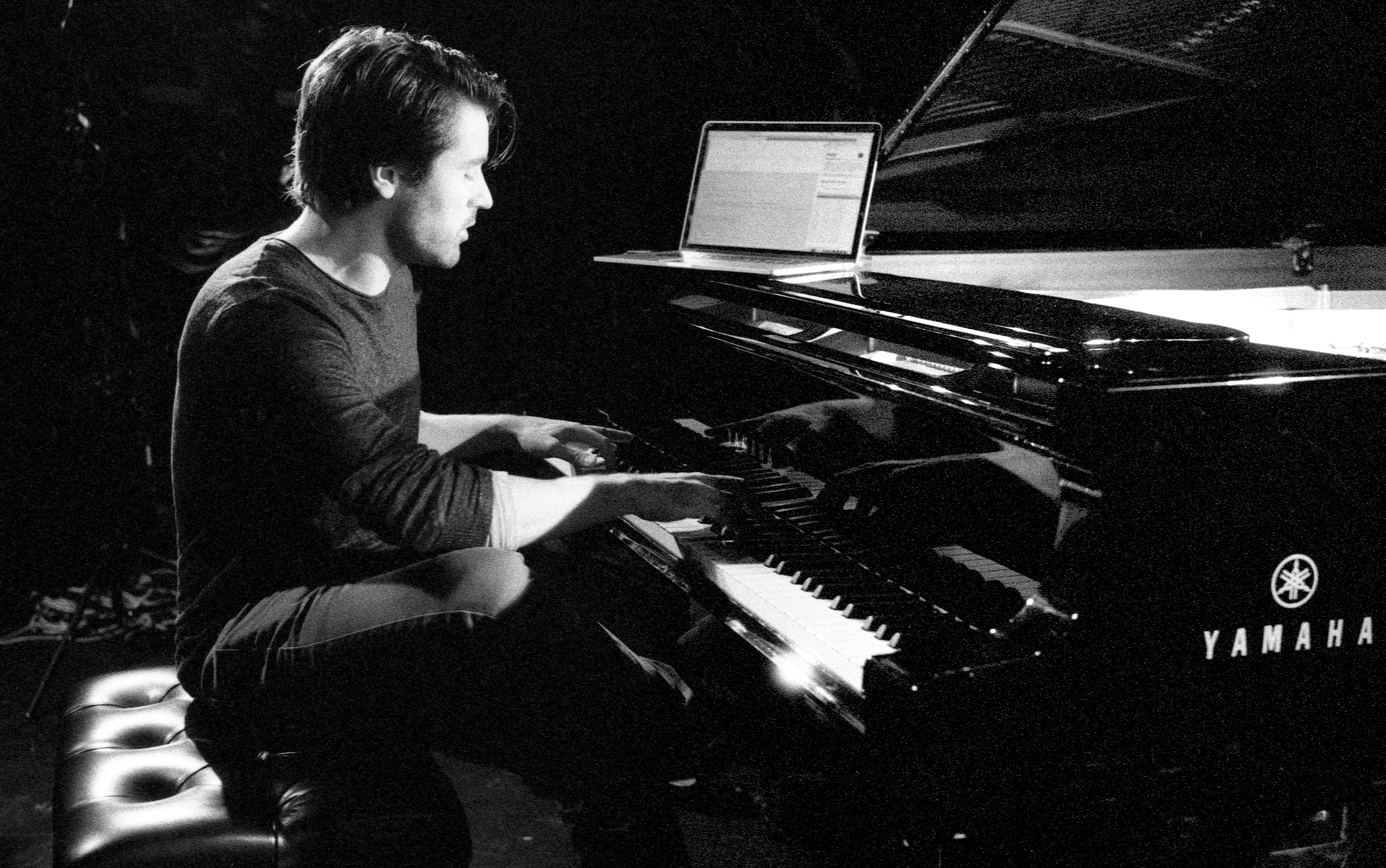
Jazz pianist Dan Tepfer’s version is the most literal. He studied astrophysics, taught himself to code, and writes programs that talk to a Yamaha Disklavier, an acoustic piano whose keys can be driven by a computer. He improvises, the computer answers, the piano plays the answer with real hammers on real strings, and he responds to that. Nothing is written in advance; he writes the rules and the piece happens inside them. The music he wants, he says, lives at “the intersection of the algorithmic and the spiritual.” The 11 tracks of his album Natural Machines were each recorded in one uninterrupted take.
What comes out is music no pianist could play: more voices at once than a person has hands, at speeds that stop only where the instrument stops. The computer answers instantly; the hammer needs about 60 milliseconds to reach the string on a loud note, and longer on a soft one. The code extended what he could reach. The piano’s wood and felt set the limit.
And it can be taught. At the Frost School, a student team trained a model on roughly 180 heavy-metal guitar parts, fed it the melody of “Silent Night,” and arranged the result so the track opens as noise with nothing recognizable anywhere in it and resolves into the carol only at the very end. In effect, it was theme and variation run backward: the recognizable tune appeared only at the end. It is a joke and it is also a piece of music, and the pleasure of it is the moment a listener works out what has been hiding in the noise the whole time. It finished third in the world and second in the international public vote. The structure was the students’ idea. The model could not have had it.
Lewis, Tepfer, and the students were each after something that could not be reached any other way: Lewis a bandmate who would argue with him, Tepfer more hands than a person has, the students a carol arriving out of noise. The machine was a route to a musical idea that already existed, and the payoff was musical rather than financial.
I can add a smaller example from my own experience. I have composed and collaborated on substantial works, but I am not primarily a composer. I wanted to write a song for the artisans at Long Meadow Ranch, the people who make the wine, grow the fruits and vegetables, tend the livestock, cook the food, and keep the place running. I wrote a heartfelt lyric and, with the help of an AI service, shaped it into verses, a chorus, and a bridge, guiding the melody toward a bluegrass arrangement.
What came back was recognizably mine—my words, my intention, my admiration for the people it was about—in a form I could never have produced alone. More than a demo, it gave me a composition that could be refined, printed, and handed to a real bluegrass band.
The AI was the bridge to the bandstand, not the endpoint. Real musicians would bring it to life in a way that reaches beyond what the tool itself can do. I would not have been able to create that piece without the tools. Yet it is a true expression of something I wanted to say, and its final destination is not a computer screen but a stage.
That is the order of priorities: better music first, economics second. The reason for an artist to use these tools is to make better music. If they do not, the economics are irrelevant, because a musician who has reduced the cost of making something not worth hearing has saved nothing at all. The economic argument matters only after that.
None of which settles the question a listener actually faces, which is whether any of it can be told apart from what the machines turn out on their own.
The ear test is over and the musicians lost it. The blind listening studies settle that, and no argument about soul or feeling is going to reverse it.
But being able to detect AI was never what listeners were paying for. What a musician needs is not a listener who can identify the machine but a listener who comes back, and coming back runs on something no thirty-second sample measures.
What a listener is actually receiving is somebody’s feeling about something, in a form that never resolves into a statement. A phrase arrives late, or a note is held past comfort, or the tone thins at the top of a line, and none of it means one thing. It can be heard as grief, or as restraint, or as a player thinking, and it stays available to all three readings for as long as anyone keeps returning to it. That ambiguity is the content rather than a byproduct of it. It is why a record survives a hundred playings, and why the same solo does not mean the same thing at 25 and at 60.
A machine can produce a bent note, and it can be taught to produce that same bend again. What it does not have is the twenty years behind it: the same person carrying experience from one record and one bandstand into the next, making related choices and becoming recognizable through them. A listener hears a few measures and knows exactly who is playing because the sound belongs to a history, not just a pattern.
Multi-instrumentalist and singer-songwriter Jacob Collier, a seven-time Grammy winner, puts it plainly: he has spent a lot of time trying to get AI to produce something interesting, and finds it very hard to do. What a person needs, he says, is another imperfect, wiggly person to relate to. The machine can finish the sentence. It cannot be the person you want to hear finish it.
The economics of polish have flipped as well. Flawless execution used to be evidence of investment, because it had to be bought: studio time, an engineer, a good room, enough takes to get one clean. A polished record meant somebody had spent money and cared enough to spend it. Now that polished sound can be produced cheaply, polish no longer tells the listener that someone spent substantial time and money achieving it. What now signals human presence is the recorded performance with the breath left in, the voice that thins at the top of a phrase, the spoken ‘one, two, three, four’ audible before the band comes in.
Those used to be the errors that money removed. They now say a person was in the room.
Jazz sharpens all of it, because so much of the value is made in the moment. On a good bandstand nobody knows what the next chorus—the next pass through the tune—will hold, including the people playing it. A drummer hears something in a phrase and answers it before deciding to. A recording preserves the result and cannot preserve the fact that it was uncertain, which is why a record has always been an advertisement for the live performance. Hearing it happen cannot be duplicated, uploaded, or paid for at a fraction of a cent. It is bought at the door, one seat at a time, and the flood does not reach it.
The flood also changes what is scarce. As competent anonymous sound approaches free, the scarce thing is the particular player a listener will return to and pay to see. That is where ownership begins to matter.
Once a musician no longer needs a label to assemble the machinery, there is less reason to surrender ownership of the recording simply to get the record made and released.
For most of the twentieth century, making a record required substantial money up front. Studio time, tape, mastering, pressing, trucks, and shelf space all had to be paid for before anyone heard a note, and almost no musician could pay for them. The label could. That was the deal underneath every other term in the contract, and it is why the terms were what they were.
The capital wall is gone. A musician can record, edit, master, and release without asking anyone. A label provided more than financing; it also provided distribution and attention, and being heard is as hard as it ever was. What the fallen wall changes is not mainly the cost of making a record. It is who owns the record afterward.
Every piece of recorded music is two separate properties: the song and the particular recording of it. They are usually owned by different people, which is why using one track has always required two permissions.
Under the old arrangement the label held the recordings, called masters, and the musician kept the reputation and the road. It looked like a fair trade while the recording was a promotional expense and the money came from touring. It stopped looking fair once old recordings and the rights attached to them became some of the most valuable assets in the business. A reissue thirty years later, a request to use a track in a film or advertisement, or a streaming surge after a film features one track: under the old deal all of that returned to the company, and the person who played it got a royalty statement.
That is the accounting. The experience is worse than the accounting. A player who signed a record away hears it years later under a scene in a film, or in a commercial, or reissued with a cover nobody asked about, and what registers is not that the payment was too small. It is that something made on one particular afternoon, out of one particular life, is being handled by people who never asked. It can feel like theft. It can feel like listening to an impostor play your own music. No payment can fully compensate for either feeling, which is why the ownership question was never only about money.
The reverse is less often said. A musician who owns the record owns the fact of having made it. The reissue is theirs to authorize, a proposed use in a film or advertisement theirs to refuse, and the work goes on standing as evidence of what they can do rather than sitting as an entry in somebody else’s catalog. Pride is not a line item and it is not nothing.
British jazz musician and composer Shabaka Hutchings records for the storied jazz label Impulse!, which released John Coltrane and Pharoah Sanders, and he did not leave it. He built a second one alongside it. Native Rebel Recordings exists so that he can decide who makes a record and how it gets made, down to the working method: three days at RAK Studios, no rehearsal beforehand, because he counts the rehearsal as part of the recording. A label responsible for many artists cannot easily organize itself around the working method of just one of them. What ownership bought him was not simply a better financial deal. It was control over the conditions under which records are made, extended to other people’s music as well as his own.
One of the clearest financial benefits of ownership is synchronization licensing—the use of music in film, television, advertising, and games. A synchronization, or ‘sync,’ fee is paid up front for one specific use. If the artist owns both the recording and the underlying song, the person choosing the music can obtain both permissions in one place instead of negotiating separately over the recording and the song.
That market is now splitting. Generic background music that only needs to fit a mood or style is increasingly being supplied by machine-made tracks, and prices are falling.
That work was never glamorous, but it mattered. Studio-session work, advertising jingles, pre-made music for film and video libraries, and demo recordings helped pay the rent and subsidize a musician’s more artistic work—the arrangement Part II described. Now some of those supporting jobs are disappearing just as musicians need to earn more from the artistic work itself. That is the hardest fact in this account, and there is no version of it that is not a loss.
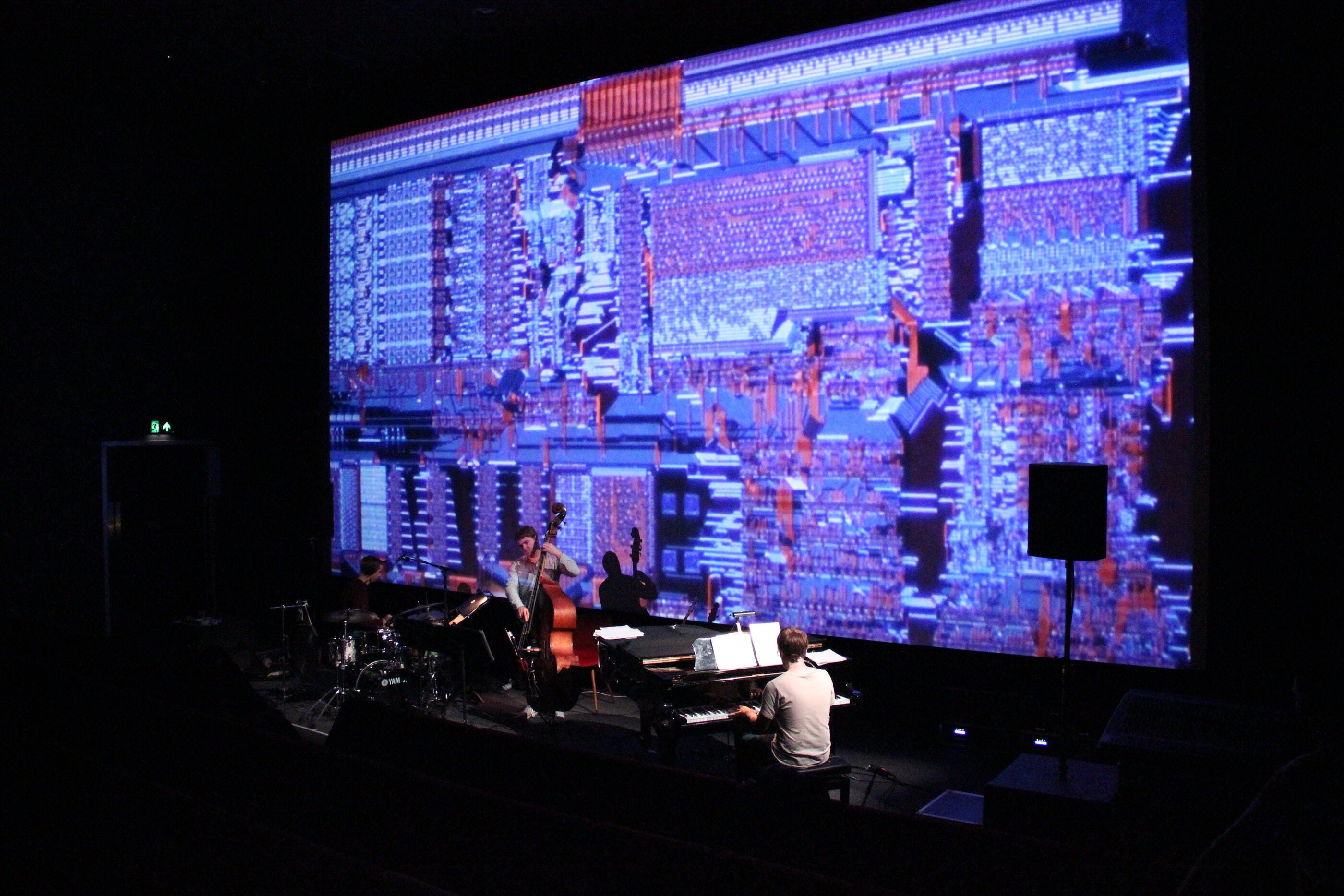
What holds value is the placement where somebody wanted that specific sound. When the band GoGo Penguin was asked to write a new score for the film Koyaanisqatsi, it was being asked to replace the original score by composer Philip Glass—not a job anyone gives to an interchangeable band. The new score has continued to generate performances for the band for a decade because the commission was never for just any piece of music. It was for them.
The principle runs past sync. A recording treated as one more anonymous stream is worth almost nothing. The same recording, answering a specific need for someone who needs exactly that sound, is worth a negotiated fee. The question that pays is who needs this specific sound, and for what.
Most recordings never reach someone looking for a specific track for a film, television program, advertisement, or game. They go to streaming, where the economics run the other way.
What matters are the payment rules behind streaming, because they explain why a musician can be heard constantly and paid almost nothing. Spotify counts streams, not minutes listened.
Once a track has passed the minimum listening threshold, a ten-minute jazz performance counts as one stream just as a three-minute song does. Spotify does not pay a fixed amount for each stream; instead, royalties are divided according to each track’s share of total listening on the service. Effective payouts are often only a fraction of a cent per stream, so roughly a million plays may return only a few thousand dollars. Long-form music is therefore at a disadvantage built into the counting system.
The discovery system creates another mismatch. Playlists reward mood, consistency, and resistance to being skipped, and algorithms reward music that can be classified confidently. Jazz can meet those conditions when it wants to. The parts of jazz that matter most, a solo that develops over choruses, a band discovering something together, the surprise that makes the recording worth keeping, can look like noise to a system built to predict what someone will tolerate next.
Then there is the minimum payment threshold. Spotify pays recorded-music royalties only on tracks that clear a thousand plays in twelve months, on the argument that it is redirecting sums too small to collect. For a musician with a catalog of recordings and an audience in the hundreds, the policy states the position plainly: presence on the platform is not the same as being paid by it.
None of which is an argument for staying off. Listeners look there, and so do journalists, concert presenters, and people who book venues, and a musician who cannot be found there does not exist to anyone who has not already heard of them. It is an argument for knowing what the platform is for. A track earning a few dollars a year can still fill a room in Portland, sell a small pressing of vinyl records, or bring a dozen students to an online class.
The recording is the introduction. The income comes from the relationship it creates, and the rest of this essay is about building that relationship.
Part I described a line item that appeared in the sales reports of a small jazz label in the 2000s: SBA, sales by artist. It counted the CDs musicians sold out of a bag at the gig, at the merch table, in the parking lot afterward. Within a few years it was the largest single customer category the label had. At the time it read as evidence of collapse, which it was. It was what remained after record stores closed and physical sales shrank, and nobody mistook it for a strategy.
That direct-sales route is now the first one a working musician builds. What has changed is that it no longer requires the bag.
For most of the last century somebody else controlled every point of contact with the audience. The label controlled the record, the retailer controlled the shelf, the station controlled the signal, the club owned the room. A musician met the audience most directly at the gig; almost everywhere else, somebody stood between them. Now the mailing list can belong to the musician, and so does everything that can be sold through it: recordings, lessons, subscriptions, whatever a committed listener will pay for.
Florian Arbenz shows what that permits. The Swiss drummer, known for the trio VEIN and for work with saxophonists Dave Liebman and Greg Osby, set out in 2021 to release 12 albums with 12 entirely different groups, recorded in his own studio in Basel and sold largely direct. No label would have funded that. A dozen records with a dozen bands is not a project anyone approves; it is a project someone executes, once approval has stopped being the thing that stands in the way.
He finished all 12 inside three years, the jazz press reviewed them as they appeared, and the complete set now sells direct from him as a limited boxed edition. Because he sells the boxed set directly, more of each sale stays with him, and no distributor has to agree to stock it.
The arithmetic works at small scale, which is the point. One hundred listeners paying $5 a month produce $6,000 a year, and at $10 a month the same hundred produce $12,000. Earning $12,000 from streaming takes millions of plays. The difference is not the size of the audience. A direct payment is the whole transaction, while a stream is a thin slice of somebody else’s subscription, divided again after the platform and the labels, publishers, and others who own rights in the music take their shares.
The hard part is the hundred. Assembling that many people who pay every month takes years of showing up, and it asks for something no amount of practice prepares a musician to do, which is to write to strangers regularly without sounding like a fundraiser. The offer has to be worth having on its own terms: the record before anyone else hears it, the video of the session, the reasoning behind the arrangement. And the listener has to feel like part of something rather than a line in someone’s budget.
None of this is new to jazz, which has always run on committed communities: clubs, patrons, students, the people who kept a scene alive between the moments anyone was watching. What is new is that a musician can find those people, reach them, and keep them without asking permission from anyone. What they are paying for was never the file. And what develops over time is something no streaming platform or social media algorithm can produce: a genuine personal relationship between the artist and the listener.
The subscriber who has followed a musician for three years, attended the shows, read the notes on each recording, and watched the music change recognizes the artist as a person, not a content feed. The artist, in turn, knows who keeps showing up. That mutual recognition, built slowly through sustained commitment on both sides, is the oldest thing in jazz and the newest thing in the economics. No conventional channel can deliver it. A stream is anonymous. A follower is a number. A subscriber who stays is a relationship.
If the direct relationship is how a musician keeps an audience, discovery is the problem of finding one, and most of it now happens on platforms built for something else entirely. The wariness is reasonable. Nobody spends fifteen years on time and tone in order to make short videos for a system that rewards frequency and spectacle.
What the platforms are good for is narrower than fame and more useful. They are where a stranger encounters a musician for the first time. Icelandic singer and songwriter Laufey built an audience on TikTok and Instagram before the sold-out halls and the 2024 Grammy, and the keyboard-and-drums duo DOMi & JD BECK were known to other musicians through short clips of ferocious playing well before the record label Blue Note released them.
Both make music that survives being cut into thirty seconds, which straight-ahead jazz—the more traditional acoustic form—often does not. An improvised solo that takes four minutes to develop cannot be excerpted without becoming a different thing. But the fragment does not have to be the music. A rehearsal that falls apart and gets fixed, a story about why a tune is played that way, thirty seconds of somebody practicing a musical phrase until it sounds right: those carry sound and sensibility, and a stranger who watches one will sometimes go looking for the record. The clip can be copied. Whoever is in it cannot.
Critics, radio hosts, and club bookers have not stopped mattering. They have stopped being the only route in.
What the fragment cannot do is finish the job. It produces a stranger, and a stranger is worth little until something turns them into a listener who buys the record, subscribes, or comes to a live performance. Finding listeners and giving them a direct way to support the musician have to work together.
The old system could not afford a dispersed audience. A label deciding what to release was really asking whether enough people within reach of its distribution would buy it, and reach meant shelves, in stores, in cities, in countries where the company had an operation. A few thousand devoted listeners spread thinly across the world were worth nothing, because assembling them cost more than they would ever spend. The arithmetic excluded them, and the arithmetic is what has changed.
Spotify reported 777 million monthly active listeners in the second quarter of 2026. That is not a jazz audience and should not be read as one. Nor does it mean those listeners are easy to win. What has become nearly free is distribution: once a musician finds a listener, delivering the music across the world costs almost nothing.
That changes the size and location of the audience a musician needs to find. The hundred people who pay every month do not have to live anywhere in particular. They can be in Basel, Osaka, and a town in Michigan, and delivering music to the hundredth listener costs little more than delivering it to the first. A taste too specific to sustain a career in any single city can sustain one across a connected world. The audience was always scattered. What has changed is that being scattered is no longer fatal.
The same change also weakens the old need to fit neatly into a genre. Record stores had to put an album on a particular shelf, and radio stations had to fit it into a format. A musician who crossed categories could be hard to sell. Online, that physical constraint disappears. A player can move among styles and still find the listeners who want that particular music, even if there are not enough of them in any one place to fill a room.
That freedom, to make the music an idea requires and then go find the people who want it, is closer to what jazz has always been than anything the old arrangement offered.
Self-determination is not the same as ease. The musicians who have made working lives out of it did not find one thing that paid; they combined recording, performing, teaching, subscriptions, and other work so that each activity helped build an audience for the others. None of the three examples that follow is a template, and the differences between them matter more than the similarities.
Jacob Collier came out of YouTube making elaborate split-screen arrangements alone in a room, which is an inexpensive way to demonstrate an expensive level of craft. What he did next matters more. He made the audience a participant. The Audience Choir turns a hall full of people into an instrument he conducts, so the thing they paid to see is partly a thing they are making, and a performance that cannot happen without them is a performance nobody can stream instead.
The large ensemble Snarky Puppy had a problem most bands solve by getting smaller. The group that formed around bassist Michael League grew to 25 members in regular rotation, and an ensemble that size cannot live on touring revenue because the overhead eats it. They kept the size and built the business around it: GroundUP Music, a label and later a festival. Instead of treating the large ensemble only as a cost, they made its size part of what audiences came for and built other sources of income around it.
Emmet Cohen, named DownBeat Readers Poll Pianist of the Year in 2025, started with no choice at all. In the first weeks of the 2020 lockdowns, with every gig canceled, he began streaming from his Harlem apartment on an iPhone, playing with the two musicians he happened to be quarantined with. The music was serious and the room was somebody’s living room, and that combination became the show.
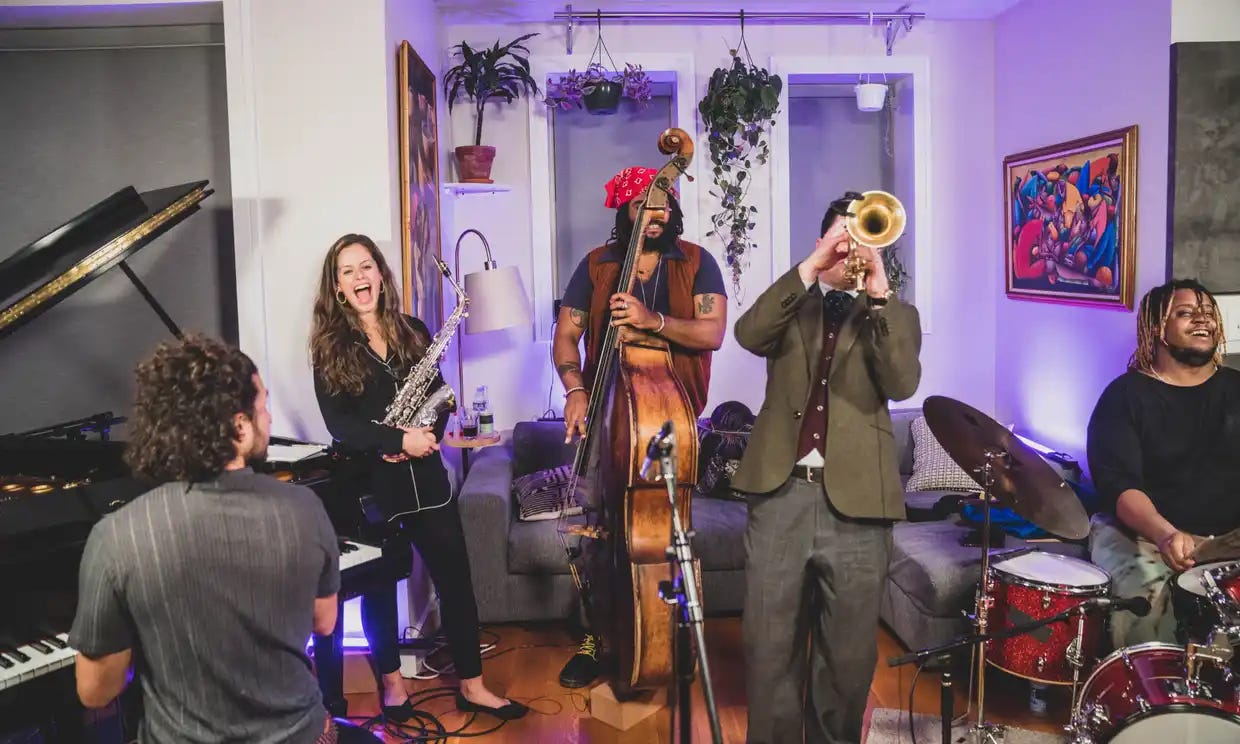
Live From Emmet’s Place now runs weekly, has drawn more than 100 million views across platforms by his own count, and has grown a paid membership and a free master class series around itself. It now broadcasts from Power Station on West 53rd Street, the studio where Springsteen and Herbie Hancock recorded, rebuilt a few years ago with the livestream capability the series happened to need. The show also tours, selling out halls by recreating the apartment on a stage. What began as a substitute for touring became a reason to tour.
What repeats in these stories is the structure. Each musician built activities that feed one another, so a listener found through one can support the musician through another, and no single gatekeeper can end all of it at once.
Jazz musicians have always assembled careers from multiple sources. What is different now is how many of those pieces can be created, owned, and connected directly by the musician.
A regional saxophonist assembles a different set of pieces than a YouTube virtuoso does, and a trombonist may still need jokes and patience. What a career built this way buys is the ability to fail one piece at a time instead of all at once.
Mastery is not the question. A musician who cannot play will not be rescued by a mailing list, and the instrument, the repertoire, the theory, and the hours in the practice room remain what they have always been. The question is what else a degree now owes a student, and the honest answer is: two things it mostly does not provide.
The first is fluency in the tools. If AI is the next instrument, then learning to command it belongs in the craft, and the reflex to forbid it repeats a mistake the field has made with every machine that ever became an instrument. A student taught to fear these tools is being trained for a world that will not exist. That fluency will increasingly include knowing how to choose, build, or direct the models themselves—not merely how to use whatever a commercial service provides.
The second is the economics, and here the gap is wider. A player leaves most conservatories able to handle a difficult chart and unable to read a recording contract. Royalties, who owns a master and for how long, what a signature gives away, how to document who wrote what before a record comes out and the question turns into a dispute: none of that is exotic knowledge, and all of it determines whether twenty years of work produces an asset or a memory. A young musician should also learn the thing this essay has been arguing throughout, that a hundred people who pay every month are worth more than a hundred thousand who scroll past.
Schools have started. Juilliard, NYU, Berklee, and others now offer entrepreneurship or music-business coursework. The problem is where it sits. Business literacy is an elective, a seminar, a career-services workshop, while lessons, ensembles, performance exams, and repertoire remain the unquestioned center, and students absorb the message: the playing is the degree and the rest is administration.
Conservatories are also built around genre. Classical, jazz, and pop are separate departments with separate faculties and separate degrees, and a student is admitted into one of them. The Frost School of Music at the University of Miami puts entrepreneurship in the core and trains across those divisions, on the reasoning that a musician who can work in more than one is prepared for a market in which no genre label or institution guarantees an audience.
Jazz education has always known how to teach a musical voice. What it has not taught is the economic one: how to own the work, hold the rights, build an audience, and assemble a career instead of waiting to be hired into one.
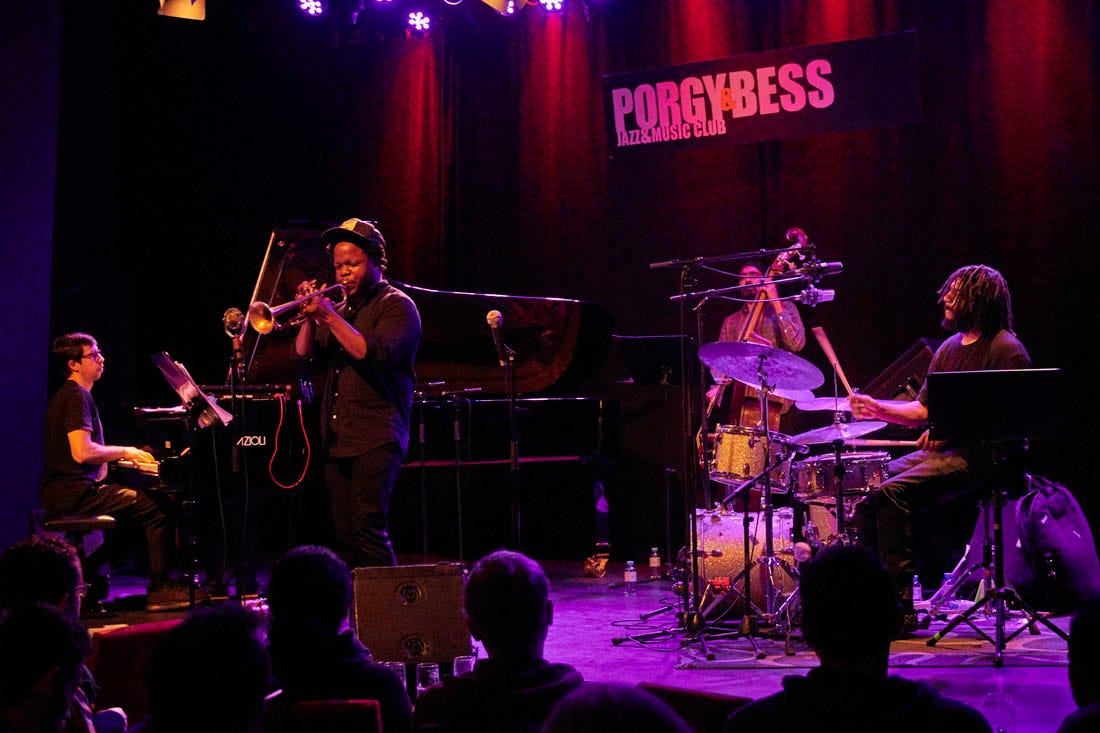
In jazz, ‘the changes’ are the chord changes—the harmonic road map of the tune. A player who knows them hears where the music is going. When someone calls ‘On Green Dolphin Street’—names the tune for the band—the road map is already there: the Latin-rhythm opening, the shift into swing, the points where the harmony changes direction. The player does not control what anyone else in the band will do, but knows the form well enough to move inside it without fear.
The economic changes are audible now in the same way. The record deal, the club gig, and the road no longer carry what they once did. What has risen in their place gives musicians more direct control: they can own the recording, license the sound, and maintain the audience relationship themselves.
None of it is salvation. It is a redistribution of work. The artist owns more and does more, and there is no reason a great player should also be a good marketer, or want to be. Self-reliance does not mean self-sufficiency. It means deciding what to do yourself, what to buy, what to automate, and whom to bring into the work. It replaces none of what the music still needs: clubs that stay open, concert presenters willing to book challenging music, health coverage that does not depend on a spouse’s job.
For some musicians, the transition is harder still. A player thirty years into a career built inside the old structures, with a sound and a following and a way of working that fit what existed, meets the new tools as a demand rather than an opening: learn this, adapt to this, compete on these terms. That is not a failure of nerve. It is what it costs to have built honestly inside a system that then changed, and the path from there is narrower. Saying so is part of telling the truth about it.
That is the answer, such as it is, to where these three essays have been going. The first described a system increasingly ill-suited to how jazz is made and heard. The second showed how love of the music itself subsidized that system: musicians kept playing even as the economic rewards deteriorated. The love is not going anywhere.
What has changed is that more of the value created by that devotion can now stay with the musician rather than passing first through a record company. That is a smaller claim than justice. It is also a meaningful improvement after half a century of worsening terms.
And jazz was never built on good conditions. It came from people working under constraint, which is where its methods came from: make something coherent out of uncertainty and constraint, and keep moving. The business now asks the same discipline. The musician stays inside the market. The point is to be less trapped by it, and more able to work on their own terms.
But after the economics have had their say, there is still the playing. More of what a player can imagine is within reach now than at any time in this history. That is what the tools are for. What gets made with them is its own kind of economic improvisation.
And then somebody counts off the next tune.
Next Week
They Came Back
What 3.8 Million Napa Visitors Mean for Wineries Now
* * *
Ted Hall is a vintner and rancher at Long Meadow Ranch in Napa Valley. For more than five decades, he has advised chief executives and boards of major companies; his career includes more than 25 years as a senior partner at a global management consulting firm. A trombonist who has performed in orchestral, Dixieland, small jazz ensemble, and big band settings from New York to San Francisco, he co-founded Monarch Records, an independent jazz record label.
He served for a decade as a trustee of SFJAZZ, helping shape its early strategy, and for nine years in leadership roles on the San Francisco Symphony Board of Governors. He is currently a member of the advisory board of the Frost School of Music at the University of Miami. He writes about economics, incentives, and how complex systems shape real-world outcomes across agriculture, food, wine, music, and culture.
The experiences behind these essays are collected in a memoir, Tell the Truth and Do the Right Thing—125 stories from a life that has included McKinsey, Napa Valley, a Pacific crossing, and the Village Vanguard.
No posts
Comments
Nothing yet. Say the first thing.
Sign in to join the conversation.