

This essay is the first in a three-part series on the economics of jazz. It follows an earlier essay, “How Do They Know?,” that asked how jazz musicians can step onto a bandstand, call a tune, and create order together without rehearsal. That essay described the musical system beneath the freedom. This series turns to the economic system around the music: how jazz is recorded, sold, performed, and taught — and how it has survived.
Every genre felt the decline of the recorded music economy. But jazz fell through the floor — and the forces that drove it there are the subject of this series. Jazz has never represented more than 3 percent of recorded music sales, a market small enough that an industry optimizing for scale could sacrifice it without noticing.
As with the wine essays, this series looks past romance and reputation to the economic system underneath. No jazz expertise is required.
I spent nearly two decades as co-founder and chairman of Monarch Records, an independent jazz label in San Francisco that closed in 2007—and I watched much of what follows from the inside.
If you want to understand the economic paradox of the American jazz musician over the last half century, do not begin with the stage.
The stage can mislead you.
There, the music still looks like freedom. A pianist leans into the harmony. A drummer lifts the room. A saxophonist finds a line that did not exist a moment earlier. The audience hears discipline, risk, intelligence, and beauty. What the musician feels is harder to name—something closer to necessity, the sense that the music has to be made regardless of what it pays or costs. It is easy to believe that a culture capable of producing music that sophisticated must have built an equally sophisticated economic system to sustain it.
It did not.
To understand what happened, step back into the late 1990s, near the high point of the compact-disc economy. This was the moment when recorded music looked most prosperous, but the structure beneath jazz was already turning against many living musicians.
The modern story sits within a longer history of racial exclusion, unequal bargaining power, and Black musical invention becoming cultural capital controlled by others. This essay does not attempt to tell that full history. Its focus is narrower: how the modern recorded-music economy reinforced an older pattern by shifting control away from many of the musicians who created the value. The ownership structures described in this essay — masters held by labels, royalties structured to favor the company, creative labor priced as commodity input — have roots that predate the CD era by decades.
Jazz has survived repeated attempts to contain, commercialize, and misprice it. But the modern jazz economy was shaped by a hard fact: the more the industry consolidated, the less room it left for the professional middle of the music—the sidemen, regional leaders, small-label artists, and developing voices who sustain jazz between the conservatory and the star system.
Between the middle of the twentieth century and the end of the 1980s, jazz musicians worked within a more forgiving world than the one that followed. It was not easy, and recording alone rarely provided a complete living. Musicians have always needed other sources of income: clubs, touring, teaching, and private events. But the world around the music offered more points of entry.
There were fewer highly trained jazz musicians competing for space, more vibrant club circuits in many cities, and fewer alternatives to live entertainment. There was also a far more decentralized recording network.
Independent labels and semi-autonomous jazz imprints were central to the music’s development: Blue Note, Prestige, Riverside, Savoy, Contemporary, Delmark, ESP-Disk, CTI, ECM, Strata-East, Tribe, and many others documented scenes, sounds, and players that a more centralized industry might never have noticed. Some were substantial businesses; others were regional, fragile, or short-lived. But together they created a wide set of doors through which jazz musicians could enter recorded history.
The economics were still difficult, but many mid-century jazz records were made with a relatively simple production model. In the 1950s and 1960s, a jazz album could often be recorded live in the studio in one or two days. Usable performances were usually selected from complete takes; tape could be spliced, but the music was not built through the kind of multitrack overdubbing that later became common.
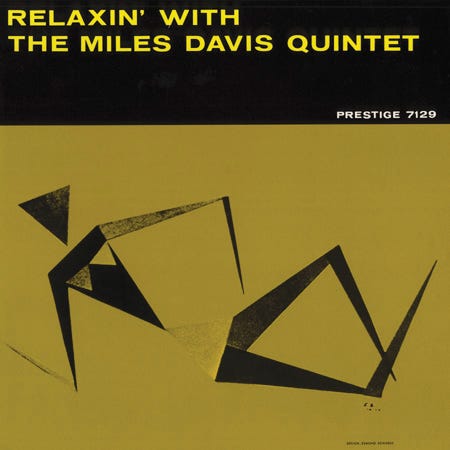
Prominent musicians could be prolific as leaders while also appearing frequently as sidemen. Miles Davis’s 1956 Prestige sessions with his first great quintet are an extreme example: two marathon recording dates produced the material later released as Cookin’, Relaxin’, Workin’, and Steamin’. That was not a normal career model, but it illustrates how much more quickly jazz could be documented in that era.
Records also played a different role. A recording could document a player, establish a reputation, create modest royalty income in some cases, attract reviews, help secure bookings, and connect a musician to a wider audience. Recording rarely guaranteed a living. But it was once a more available pathway into the working world of clubs, critics, labels, festivals, teaching, and reputation.
By the late 1990s, that pathway had narrowed.
Jazz has long been celebrated as one of America’s great original art forms—praised in universities, museums, festivals, documentaries, and public ceremonies. But the economic architecture surrounding the music has often treated living musicians less as creators of future value than as interchangeable inputs into a system controlled by others: labels, distributors, broadcasters, and retailers.
The modern jazz economy did not arrive at this condition through one cause. It was shaped by an accumulation of forces—structural, commercial, and technological—that this essay traces in turn. Each one compounded the damage to the working musician’s position.
The late 1990s were supposed to be a golden age for recorded music. In 1990, U.S. recorded-music revenue was about $7.5 billion, according to data from the Recording Industry Association of America (RIAA). By 1999, it had nearly doubled to $14.6 billion, the high-water mark of the CD era.
The growth was not simply the result of more people suddenly becoming music fans. It was driven in large part by the CD-replacement cycle: consumers replacing vinyl and cassette collections with compact discs, often buying albums they already owned in earlier formats.
The CD was not simply a cleaner-sounding record—though for most listeners it was. It eliminated the clicks, hisses, warps, and degradation that came with vinyl and tape. Purists argued, with some justification, that early digital reproduction truncated dynamic range and lost harmonic complexity that analog formats preserved; the debate about whether the format was an aesthetic improvement never fully resolved. But the CD prevailed anyway, because the economics were overwhelming.

Production costs per unit fell sharply as volume scaled—stamping a disc was cheaper than pressing vinyl, and the CD’s compact size made storage, shipping, and retail display more efficient. Early CDs retailed for around $21, roughly double the price of vinyl; that premium eventually compressed, but even as prices fell the format’s margins widened on the blockbuster volumes the industry was generating.
The digital format also made the underlying content far easier to repurpose. A tape master could be converted to CD without the generational loss that came with analog copying. Old catalog recordings could be remastered, cleaned up, and reissued with relatively modest investment. The same master could yield a standard release, a deluxe edition, a greatest-hits compilation, a box set, and a regional licensing deal, each generating new revenue from an asset whose original recording costs had been paid years or decades earlier.
For a company sitting on a deep catalog, the CD era was not merely a good market—it was a multiplier.
The format created a powerful incentive for major labels to think about recorded music differently: not as a series of individual releases to be promoted and sold, but as a library of owned assets to be managed, repackaged, and monetized across formats and time.
But the windfall was not evenly distributed.
Ownership was the fault line.
A series of mergers and acquisitions concentrated power in a small number of global music companies. Seagram’s acquisition of PolyGram and its merger into Universal Music Group reduced the old “Big Six” to the “Big Five.” Sony and BMG later combined their recorded-music divisions, and Universal eventually absorbed EMI’s recorded-music operations. The modern recorded-music business came to be dominated by three global companies: Universal, Sony, and Warner.
Those companies commanded greater reach, deeper catalogs, and more leverage over distribution and marketing than any independent could match. They also had larger overhead, more pressure for predictable returns, and less patience for artists whose economics were difficult to scale.
Jazz did not fit easily into an industry organized around scale, catalog, and predictable return. That mismatch was not just about artistic preference—it was reinforced at every practical level by how the major labels used their size.
The reason is structural. Consolidation created companies so large that only releases capable of moving very large numbers were material to the income statement. A jazz record that sold respectably by jazz standards—tens of thousands of copies, a devoted audience, critical acclaim—simply could not register as significant revenue for a company operating at the scale of a major label.
The same dynamic produced the blockbuster era in Hollywood, where studio consolidation made a modestly profitable original film irrelevant compared to a franchise sequel grossing hundreds of millions. The industry rode the large horses already established in the market. The strategy became explicitly hit-driven and star-driven—concentrating resources on proven artists and proven formats, and measuring success by the scale of the return.
Jazz increases in value with the listener’s attention and prior knowledge rather than spreading through casual exposure. Its musicians’ individual voices are the product rather than a feature of it—you cannot substitute one jazz artist for another within a proven format the way a label can rotate pop acts. That resistance to substitution—the thing that makes jazz worth making—made it a poor fit for an industry whose economics now required the music to move at a scale jazz was never designed to reach.
The major labels did not abandon jazz entirely—they retained the catalogs of the biggest established names, where the star logic still applied. What they stopped doing was developing the next generation.
Size translated into control at every link in the chain. The major labels could afford full-page advertisements in the trade magazines that shaped taste and informed buyers. They could subsidize concert tours, using ticket sales to generate radio play and retail visibility simultaneously. Radio promotion alone—ensuring regular airplay on the stations that mattered—required the kind of sustained, expensive presence that only a large label could finance. Booking agents and promoters who worked regularly with major-label artists had strong incentives to favor those relationships.
The result was not a conspiracy. It was a structural advantage that compounded at every stage: the bigger the label, the more levers it could pull simultaneously, and the harder it became for an independent to compete for the same ears.
I watched this happen. As co-founder and chairman of Monarch Records—the self-declared Jazz Label of San Francisco—beginning in the early 1990s, we spent years trying to get our artists heard in the same stores that carried the major labels’ catalogs. The major labels didn’t need to be hostile. They simply had more money. End-caps—the high-visibility display positions at the end of the bin rows—cost more than an independent jazz label could reliably afford.
Listening stations were increasingly dominated by labels with promotional budgets to match. The fee to place a record in one could be set high enough to favor the companies best positioned to pay it—meaning the majors’ priority releases crowded out independents trying to introduce genuinely new artists. The discovery machinery that should have helped a label like Monarch reach the right audience was being priced out of reach.
The retail channel was one battlefield. The recording contract was another.
The royalty rate payable to the artist might look respectable at first glance, often stated as a percentage of the retail price or wholesale base. But as Donald Passman explains in All You Need to Know About the Music Business, the label was not simply sharing revenue with the artist. It was advancing capital and then recouping many of those costs from the artist’s minority royalty share.
Studio time, advances, session musicians, tour support, and sometimes video or marketing expenses could all be charged against the artist’s account.
Packaging deductions made the arithmetic worse. Originally justified by the physical cost of vinyl packaging and later CD jewel cases, these deductions often reduced the artist’s royalty base by 20 to 25 percent. Even after CD manufacturing costs fell, the deduction could remain embedded in the contract.
A jazz artist could make a respected album, sell what seemed like a meaningful number of units, and still not earn enough royalties to repay the label’s advances and charges. Steve Albini’s famous 1993 essay, “The Problem with Music,” made the same point more brutally. The album existed. The label owned the master. The catalog value stayed with the company. The artist’s statement might still show a negative balance.
The structure was not new. Versions of it had extracted value from Black musicians for decades before the CD era made it visible across a wider range of artists and genres.
The musicians creating the music rarely owned the asset most capable of appreciating over time. The label held the master. The artist held the reputation, the touring burden, and the hope that the record might lead to more work.
That structure became more damaging as catalog values grew. Labels were not simply selling recordings. They were building libraries of owned rights that could be repackaged, licensed, remastered, streamed, and sold again in new formats. The performer’s work became part of a corporate balance sheet.
For jazz, a music built on individual voice, collective risk, and improvisational presence, this was a strange bargain. The musician created something that could not be repeated, and the company owned the repeatable economic claim.
Ownership was only one part of the story. The other was the gradual narrowing of what the commercial system wanted jazz to sound like.
By the 1980s and 1990s, radio and record companies had become increasingly sophisticated at segmenting audiences. That sophistication was not inherently bad. Every business needs to know its customers. But in music, the tools of market research can quickly become tools of artistic compression. The more precisely companies measured immediate listener comfort, the more they favored music that created no friction.
One of the most influential forces was Broadcast Architecture, a radio programming consultancy that helped define the smooth-jazz and adult-contemporary radio landscape. Its audience-testing methods, including real-time dial research, measured listeners’ immediate reactions to short musical fragments. Music that produced friction—too much improvisation, harmonic density, rhythmic instability, or surprise—could be treated as a programming risk before it ever reached a broader audience.
This was the environment in which smooth jazz became a powerful commercial format.
Smooth jazz did not emerge from nowhere. It drew from fusion, rhythm and blues, pop production, instrumental soul, and the softer edge of contemporary jazz. Some of its players were superb musicians. Some had deep jazz credentials. The issue was not the existence of smoother, more accessible music. It was that a corporate format began to stand in for the broader public idea of jazz.
Radio programmers and consultants learned which sounds could hold affluent adult listeners in cars, offices, restaurants, and retail spaces. The music needed to be polished, attractive, and unobtrusive. It needed enough jazz flavor to sound sophisticated, but not so much complexity that the listener might change the station. Improvisation could remain, but within boundaries. Dissonance, extended solos, and rhythmic instability became liabilities.
In that world, the economic signal to musicians was clear: format fit paid better than artistic risk. Music that functioned as lifestyle atmosphere could travel farther through commercial channels than music that demanded active listening. Kenny G’s Breathless, released in 1992, became a 12-times-platinum adult-contemporary phenomenon.

Joe Henderson—one of the great tenor saxophonists of his generation—recorded Lush Life the same year, a tribute to the songbook of Billy Strayhorn, Duke Ellington’s long-time collaborator and composer. It was a major triumph for straight-ahead jazz—critically acclaimed, Grammy-winning, and widely considered one of the finest recordings of the decade—yet had sold only 90,000 copies by the time of Henderson’s death in 2001. The comparison is not a judgment on either artist. It is a measure of the market’s scale.
Some musicians crossed over willingly. Others did so reluctantly. Many simply watched the market separate cultural prestige from commercial reward.
This divide affected instruments differently. Rhythm-section players—pianists, bassists, drummers, and guitarists—often had more flexibility. A first-rate bassist or drummer could work across bands, styles, sessions, and commercial contexts without necessarily becoming the defining sonic signature of the project. A horn player or vocalist had a more recognizable musical identity. The sound itself could become too distinctive to disappear into multiple local projects.
Saxophonists benefited most from the smooth-jazz format; trumpeters and trombonists had fewer comparable openings—a fact this “sometimes” trombonist absorbed early.
The deeper point is not about one instrument. It is about how markets sort musical labor. Jazz celebrates voice. The commercial system often rewards usefulness, format fit, and audience familiarity. Those are not the same thing.
Even artists who survived the smoothing of jazz faced a more formidable competitor: the dead.
The CD boom created a remarkable opportunity for labels that owned historic catalogs. They could remaster and reissue classic recordings whose original production costs had been paid long ago. The margins were attractive. The names were known. The reviews were effectively written by history. The risk was low.
For a record executive, the comparison was obvious. Why spend heavily to record and promote an unknown twenty-eight-year-old trumpeter when the company could repackage Miles Davis, John Coltrane, Bill Evans, Sonny Rollins, or Thelonious Monk? Why bet on an emerging artist when the label already owned masterpieces?

The industry’s incentives and the consumer’s caution reinforced each other. Labels flooded the market with boxed sets of reissues, greatest-hits packages, and curated collections. Sony/Columbia mined its Miles Davis holdings through premium archival releases, while Verve and Blue Note reintroduced large parts of their mid-century catalogs through remastered editions and related archival campaigns.
Retailers gave those products space because they sold, and critics could write about them because the historical narratives were already rich. Public radio and jazz programming could lean on them because listeners recognized the names.
None of this was irrational. Much of the music deserved renewed attention. The tragedy was not that the great recordings remained available. They should remain available. The tragedy was that the living musician had to compete with the entire accumulated history of the music, often on terms set by companies that owned the past more securely than they were willing to invest in the future.
Jazz became a museum and a marketplace at the same time.
That is a difficult position for a living art form. The tradition remains essential. Young musicians learn by listening to the masters. Audiences need pathways into the music. Reissues can educate, preserve, and inspire. But when the economics of rediscovery become more attractive than the economics of discovery, the system changes. The past becomes not only an inheritance but a competitor.
In a narrow commercial sense, the dead artist is almost ideal. Economists who study art markets have documented this as the death effect: an artist’s death fixes supply, simplifies the market story, and can intensify demand by closing the catalog and settling the legacy.
The story is finished. There are no difficult new artistic turns, no creative disputes, no need to explain why the music has changed. The corporate machinery of anniversaries, box sets, streaming playlists, and biopics can continuously refresh catalog value without creative risk.
The living artist is messier: still developing, still taking risks, still capable of failure and surprise. That is what makes living art necessary. It is also what makes it harder to underwrite in a consolidated system seeking predictable return.
The boom that made catalog exploitation so attractive was itself built on foundations that could not last. That boom had a second engine beyond the replacement cycle: an extraordinary run of blockbuster records that distorted what the industry thought was normal. It began in the early 1980s with Michael Jackson’s Thriller (1982), which sold more than 65 million copies worldwide—a figure without precedent, and one that reset expectations about what a hit record could do.
Bruce Springsteen’s Born in the U.S.A., Prince’s Purple Rain, and Madonna’s Like a Virgin followed in 1984, each reinforcing the illusion that outsized returns were becoming the new standard.
When the CD arrived, the 1990s produced its own blockbuster wave—now entirely at CD prices. The Bodyguard soundtrack sold 45 million copies worldwide; Shania Twain’s Come On Over and the Backstreet Boys’ Millennium each sold 40 million; Alanis Morissette’s Jagged Little Pill sold 33 million. The decade produced an unprecedented concentration of blockbuster sales, with multiple albums surpassing 10 million certified U.S. units—a benchmark rarely reached before.
The industry built its advance structures, its overhead, and its expansion plans on the assumption that this run represented a new normal. It did not. The replacement cycle would exhaust itself as collections rebuilt, and the blockbuster pace would revert to the mean.
That fragility was exposed just as a new pressure arrived. The first phase of the digital revolution did not democratize the jazz economy. It destabilized it.
Napster, launched in June 1999 by eighteen-year-old Shawn Fanning, was a peer-to-peer file-sharing service that allowed users to find and download music from one another’s computers directly, bypassing any payment to labels, artists, or retailers. It was not the first such service, but it was the easiest to use, and it spread with extraordinary speed. By February 2001 it had an estimated 80 million registered users downloading nearly 3 billion songs a month.

At its peak, Napster users were exchanging the equivalent of the entire annual CD market every 28 days—for free. The RIAA sued and eventually forced a shutdown in July 2001, but the damage to the habit of paying for music was already done. The successor networks—KaZaa, LimeWire, Grokster, BitTorrent—were decentralized and harder to combat.
What Napster had embedded in the public consciousness could not be unembedded: recorded music, for a generation of listeners, was something you found online rather than something you bought.
The timing made everything worse. The industry had consolidated during the CD boom, when scale, catalog ownership, and global distribution looked like advantages. Then Napster and the peer-to-peer era hit the revenue base that supported that structure. The sudden decline in recorded-music revenue did not create consolidation by itself, but it accelerated the logic behind it and intensified the pressure on the companies that remained.
The industry was not merely moving from one format to another. It was watching the economic foundation of recorded music erode in real time.
Larger companies now had larger catalogs, larger overhead, and a greater need to protect predictable returns. The boardroom’s framework had no room for music whose value was real but whose returns required patience—and jazz paid the price for that failure of imagination.
The numbers moved quickly. U.S. recorded-music revenue peaked at $14.6 billion in 1999. By 2003 it had fallen to $11.9 billion—a decline of nearly 19 percent in only four years—and it continued falling to $6.6 billion by 2010, a drop of more than 54 percent from peak to trough in little more than a decade.
Volume told the same story. CD album sales alone lost more than three-quarters of their peak volume by 2011. The ten top-selling albums in 2000 sold a combined 60 million units; by 2002, the same list totaled 34 million, and the decade that followed brought no recovery.
Legal digital downloads briefly stabilized the market in 2004, but they did not restore the old economics; the unbundling of the album had already changed consumer behavior, and the decline would continue through the decade. The industry that had built its structures, its overhead, and its retail network on the CD boom was looking at a collapse of historic proportions.
The volume collapse destroyed the retail channel. Virtually the entire specialist music retail infrastructure disappeared through contractions, closures, and bankruptcies—Tower Records, Sam Goody, Camelot Music, Wherehouse Entertainment, and hundreds of regional chains and independent shops. The stores that had defined how people discovered and bought recorded music were gone within a decade.
Before that collapse, physical retail had offered one imperfect but important mechanism: discovery.
A record store was not only a place to buy music. It was a physical search engine. Tower Records, at its peak, became famous for deep inventory rather than only current hits. A good jazz section had its own geography. The bins told a story. Blue Note, Prestige, Impulse!, ECM, Verve, Columbia, and smaller labels sat near one another.
A curious listener could arrive looking for one record and leave with three others. The clerk mattered. So did the cover art, the end-cap, the listening station—and the serendipity that made all of it possible.
For an emerging jazz artist, visibility in a serious record store could confer legitimacy. A new release placed near the classics had a chance to be discovered by a listener already in the right frame of mind. The store did not solve the economics, but it created a public space where new work could stand physically beside the canon.
For jazz, the loss cut especially deep. Jazz discovery often happens this way: one record leads to another. A listener who loves Miles might be led to Wayne Shorter, then Herbie Hancock, then Tony Williams, then a younger drummer influenced by that lineage. The act of browsing reveals relationships. It makes the music legible.
Tower Records and retailers like it had been built for vinyl—deep inventory, knowledgeable staff, high-margin specialist retail. The CD boom gave them a windfall they expanded on, mistaking a temporary premium for a permanent one. But the format’s compact size and standardized packaging made it easy to distribute through conventional supply chains, and mass-market retailers like Walmart and Best Buy could stock CDs alongside household goods and price them aggressively as traffic drivers, undercutting the specialist stores on margin.
The mass-market retailers stocked only the established hits—the top 100 or so titles at any point in time. They claimed the high-volume end of the market and in doing so destroyed the specialist retailers’ ability to sustain the depth of inventory that had always been their purpose.
Tower generated roughly $1 billion in annual revenue at its peak, according to industry reports. When piracy eroded volume and the mass-market channel claimed the commodity end of the business, Tower’s overexpansion and real estate burden became fatal. It filed for bankruptcy protection in 2004 and was liquidated by the end of 2006. Retailers built for the CD boom could not survive the new economics.
The record store had been imperfect, but it was human.
The demise of Tower hit especially hard for Monarch. Tower had San Francisco roots, and Monarch had always seen it as a natural ally—the store most likely to give a serious jazz record from a local label the placement it deserved. When Tower collapsed, we lost not only a retail partner but the physical space where a jazz listener in San Francisco might have stumbled across a Monarch record by accident. That kind of serendipity does not migrate easily to a streaming playlist.
For the major labels, the collapse was painful but survivable. They still owned catalogs. They could consolidate further, cut costs, license music, and eventually adapt to streaming. For jazz musicians, especially emerging ones, the damage was different. The physical path to discovery disappeared before the digital replacement was ready to help them.
For jazz and other smaller genres, the damage was more acute than the industry averages suggest. The first response throughout the supply chain was to reduce SKUs—the number of individual titles stocked—and concentrate inventory on high-volume releases. A retailer who had once stocked 50 jazz titles cut to 10. One who had stocked 10 cut to two or three.
For a label like Monarch Records, the effect was devastating. Stores would order no more than 5 or 10 copies of any title, however well-reviewed. Every time Monarch had a breakthrough—an award nomination, a significant radio play, a favorable review—the label lost more sales to out-of-stock shelves than it made from the attention. Estimated lost sales sometimes ran 10 times actual sales. The distribution channel had not merely shrunk; for independent jazz labels, it had effectively disappeared.
The numbers behind that experience were not unique to one label. According to RIAA data, jazz represented 3.0 percent of total U.S. recorded music sales in 1999—already a modest share of a large market. By 2005 that share had fallen to 1.8 percent. By 2008 it stood at 1.1 percent. Over the same period, total industry revenue fell by more than 40 percent. Jazz’s market share fell by more than 60 percent on top of that decline.
What the data reveal is not simply that jazz declined with the industry. Jazz declined within a declining industry — losing market share at the same time the market itself was collapsing. The result was a compounding loss unlike anything other genres experienced. The combined effect of both declines was that jazz revenue in the recorded music economy collapsed by roughly 80 percent in less than a decade—far steeper than the industry average. Jazz held 3 percent of a $14.6 billion market in 1999 — an estimated $438 million. By 2008, the last year the RIAA reported jazz as a separate category, its share had fallen to 1.1 percent of an industry that had itself shrunk to $8.7 billion — under $100 million. A collapse of roughly 80 percent in nine years.
The obvious answer was digital delivery, and Monarch tried every available format. We experimented with every platform that existed, including the Rio—the portable digital player that predated the iPod and that the RIAA, protecting its existing model, went to court to suppress.
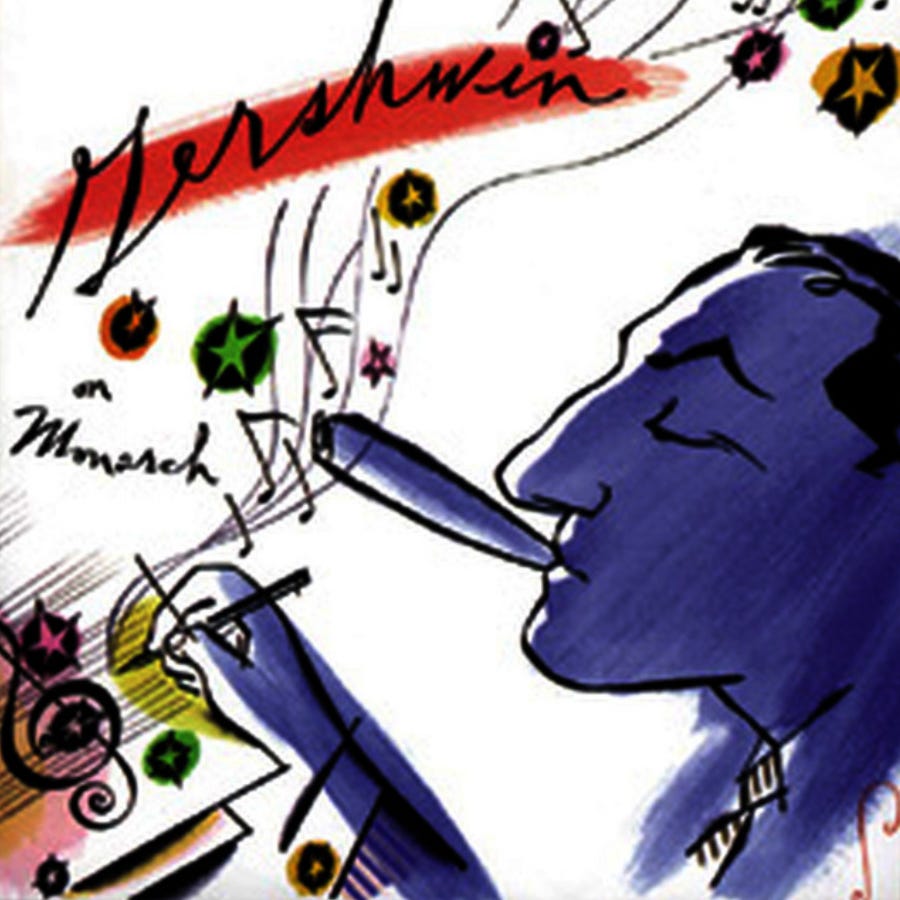
In 1998, on the Gershwin centennial, we produced what may have been the first digital live stream of a major orchestral concert: the San Francisco Symphony performing a program that promoted our own release of Gershwin reimagined as jazz. The technology worked. The audience did not materialize—most listeners did not yet have the bandwidth or the hardware to receive it. A few thousand people heard it. It was an expensive lesson in the gap between an idea whose time had come and an infrastructure that had not yet arrived.
Apple eventually provided what the industry needed—iTunes in 2003, the iPhone in 2007—but the scale that would have mattered to a label like Monarch arrived too late and too slowly. The retail channel was gone. The digital channel was not yet real.
The structural collapse was damaging enough on its own. The major labels compounded it. Throughout the transition, they concentrated resources on catalog and high-volume blockbusters, effectively squeezing entire genres out of the market and disadvantaging the new artists who might have carried jazz and other forms forward to new audiences.
They opposed digital distribution not because it could not work but because it threatened their existing model—and when innovators tried to build new platforms, the labels deployed expensive litigation to slow or block them. The resources required to build a viable digital platform at scale were already formidable; fighting simultaneous legal actions from the major labels made it nearly impossible for any independent player to succeed.
Apple had the financial reserves and the negotiating leverage to bring the labels to the table. Smaller innovators, like smaller labels, had neither. The result was a years-long gap between the collapse of one channel and the emergence of another—a gap that cost jazz a generation of audience development it has never fully recovered.
Between 2001 and the early 2010s, recording a jazz album meant releasing it into something close to a void.
At Monarch, a new line item appeared in our sales reports: SBA—Sales by Artist, the channel that tracked direct sales from musicians to listeners at gigs. It became the largest single customer category in our channel breakdown. Jazz musicians were selling CDs out of a bag at every gig, at the merch table, in the parking lot after the show. It was not distribution. It was the last available channel. For many players, it was the only evidence that a record existed at all.
The economics of recording—studio time, production, manufacturing—could not be justified when the only way to move units was hand to hand. The musicians who kept recording did so because they needed the music to exist, not because they expected to recoup the cost.
Monarch closed in 2007, unable to sustain the effort through a gap whose end was not yet visible. The decision was not made with knowledge of what was coming. It was made under the conditions that existed. The act of recording had become an act of faith rather than an act of commerce. That is how dark the period was.
What the collapse pushed musicians toward was what they had always known: the stage. When the recorded music economy contracted, live performance shifted from artistic priority to economic necessity. The gig that had once supported a recording career now became the career itself—with all the physical demands, geographic constraints, and income instability that entailed. The musician who could no longer sell records had to play more, travel further, and charge less.
The rest of the industry eventually recovered. Streaming reversed the overall decline, and by 2024 U.S. recorded music revenue had reached $17.7 billion — exceeding its 1999 peak. Jazz did not follow. By 2023, jazz held roughly 1 percent of the total U.S. recorded music market, one-third of its 1999 share. And within that diminished slice, more than 90 percent of jazz streaming is catalog — recordings older than 18 months — the highest ratio of any genre. The recovery that lifted every other segment of the industry passed over living jazz musicians almost entirely.
When streaming first arrived, the damage was already structural: jazz represented just 0.3 percent of all music streamed on Spotify in 2013 and 2014, at a time when Spotify’s catalog included virtually every jazz recording ever made. The music was available. The audience had not been rebuilt.
It is tempting to say that corporate consolidation broke jazz because executives were hostile to the music. That explanation is too easy.
The forces that broke the jazz economy worked together rather than in isolation. The ownership trap meant musicians could not build long-term value from their own recordings. Royalty structures extracted money from artists before they could earn it—often before a record had sold enough to repay its own costs. The smooth-jazz and radio-format pressure narrowed what the commercial system would carry. Meanwhile the reissue boom crowded the shelves with the catalogued past.
Then the digital shock arrived and removed the one remaining mechanism that had kept new music visible—before a replacement was ready. The accumulated damage was not the result of any single decision. It came from a system whose logic worked against jazz at every point. The conventional explanation for jazz’s decline blames the music itself — too complex, too demanding, too far from popular taste. That explanation mistakes the outcome for the cause.
Jazz was disproportionately damaged not because audiences rejected it but because every structural incentive in the consolidated music economy worked against it — against music that resists substitution, requires patient discovery, rewards deep listening over casual exposure, and cannot be scaled to blockbuster economics.
The system was not built to destroy jazz. It was built to reward the opposite of what jazz does, and the result was an 80 percent revenue collapse that no other major genre matched.
The streaming era confirmed the diagnosis. When the industry rebuilt itself on a platform that rewards frequency, brevity, and algorithmic recommendation, the same structural incentives that damaged jazz in the physical era continued to work against it in the digital one. The overall industry recovered to record revenue. Jazz's share continued to shrink. The problem was never a single technology or a single corporate decision. It was a set of incentives that penalize depth, patience, and musical complexity — and those incentives survived every format change the industry went through.
It is equally wrong to pretend that jazz would have commanded a mass audience if only the industry had behaved differently.
Jazz has always offered its listeners something different from most popular forms. Its pleasures come from harmonic movement, rhythmic interplay, tone, and improvisational intelligence—not from immediate familiarity, but from engagement that deepens with each return. The audience that finds jazz tends to stay found—which made the industry’s unwillingness to invest in that discovery all the more costly.
The digital shock exposed how fragile the consolidated industry structure had become—and the industry’s response made it worse, opposing the channels that might have replaced what was lost and prolonging the gap between the collapse of one system and the emergence of another.
That is precisely why the institutional structure was so consequential. Those difficulties arose against a backdrop of genuine shifts in popular taste—rock, soul, funk, and hip-hop all drew listeners toward other music—but a demanding art form needs sustained development, knowledgeable intermediaries, and discovery systems that understand context. Corporate consolidation did not create every difficulty jazz faced. It made the system less capable of the kind of patient, human discovery on which living jazz depends.
That incapacity compounded over time. A generation of listeners who might have found jazz never had a knowledgeable intermediary to guide them toward jazz. The musicians who might have reached those listeners had no viable channel to do so.
The central economic story is this: Jazz remained culturally prestigious while becoming economically fragile—honored as art while being managed as inventory, praised as freedom while its living practitioners were bound by contracts, repayment rules, formats, catalogs, and platforms they did not control.
The title of this essay is not meant to suggest that the past is the enemy. The ghosts are not villains. Miles, Monk, Coltrane, Ellington, Parker, Holiday, Mingus, Evans, and the rest remain central because they earned it. Their music still teaches. It still astonishes. It still provides the shared language every serious player must confront.
Problems arose when the boardroom discovered that ghosts are easier to monetize than living musicians. The same financial logic drove other choices with similar consequences.
The boardroom made choices—ones driven less by what the music required than by the logic of short-term return. Concentrating resources on catalog rather than development, opposing digital distribution rather than building it, deploying litigation against innovators who might have shortened the gap—none of this was aimed at jazz.
It was the collateral damage of a decision-making framework built for scale and predictability—one that had no patience for music whose audience relationship takes time to build, that travels through knowledgeable intermediaries, and resists easy categorization. Not all of the damage was inevitable. Some of it followed from choices that could have been made differently.
In the end, the jazz economy was broken.
For the musician inside it—the player who had spent years learning the music, building a following, and trying to make a living from something he loved—the broken economy was not an abstraction. It was the gig that didn’t pay enough, the record that sold out of a bag, the label that closed. The musicians who survived did so largely by returning to what they had always known: the stage, the room, the next gig.
Part II begins there: not with a solution but with a portrait—the working life of the musician who had to absorb everything this essay has described.
Jazz did not disappear. But the economics around it changed the terms of survival.
Next Week
The High Price of the Groove
50 Years of Hustle, Heartbreak, and No Safety Net
* * *
Ted Hall is a vintner and rancher at Long Meadow Ranch in Napa Valley. For more than five decades, he has advised chief executives and boards of major companies, including more than 25 years as a senior partner at a global management consulting firm. A trombonist who has performed in orchestral, Dixieland, small jazz ensemble, and big band settings from New York to San Francisco, he co-founded Monarch Records, an independent jazz record label.
He served for a decade as a trustee of SFJAZZ, helping shape its early strategy, and for nine years in leadership roles on the San Francisco Symphony Board of Governors. He is currently a member of the advisory board of the Frost School of Music at the University of Miami. He writes about economics, incentives, and how complex systems shape real-world outcomes across agriculture, food, wine, music, and culture.
The experiences behind these essays are collected in a memoir, Tell the Truth and Do the Right Thing—125 stories from a life that has included McKinsey, Napa Valley, a Pacific crossing, and the Village Vanguard.
No posts
Comments
Nothing yet. Say the first thing.
Sign in to join the conversation.