
The summer club season is a bit of a whirlwind, to put it lightly. We’re practicing every night with tournaments every weekend. Those practices and tournaments roll right into tryouts for the next season. As soon as tryouts are done, it’s time to start mapping out logistics for the following year. Over the last few weeks, we’ve been building out schedules and staffs, setting up team stores, and ordering uniforms and apparel (A LOT of it!) for the ~40 teams we’ll operate in 2026/2027.
I know I recapped a lot of our summer through The Scoop as it was unfolding. You can check out some of what was a very successful summer here, here, and here. Beyond the weekend recaps, there are always more takeaways from the summer outside of what’s going on with our 91 programs, so I thought I would share a few of those here.
Share Team 91 Charlotte’s Substack
The 2028s were the focus this summer as coaches evaluated them leading up to the first contact date on September 9th. Overall, it’s considered one of the better classes in recent years. I’m excited to see where some of our guys find homes at the next level. I would summarize our 2028 class with 91 Charlotte and 91 South as one of our more balanced groups. There is a lot of depth but likely fewer high-level recruits, which I’ll also hit on with NCAA rule changes. We may not have a star that commands the attention of every ACC school, not many teams do, but we have ~20 kids who already have coaches asking about them in some way.
In general, the 2028 class is very deep with goalies and left-handed attackmen. It lacks high-level defensemen, and many of the defenders look very similar. It’s hard to identify ~40 defensemen you’d want to fill ACC, Big Ten, and Ivy recruiting classes so some coaches may not fill them. The faceoff position will come down to preference for college coaches, with a large group battling for the top-of-class title.
Here are the non-91 Charlotte or South players who stood out to me this summer. If you are curious what the top recruits in a class look like, and what young players should aspire to, here you go:
Chase Aquino – Midfield – He is bigger, faster and stronger than most players already. He can shoot it with both hands at a high level. He has pretty good genetics… his brother Hunter is considered one of the best players in college lacrosse.
Ben Hristoforatos – Midfield – A carbon copy of Aquino. And they play together on the same midfield line. We played them twice this year. Saying they’re tough to defend doesn’t do it justice. There was no one this Summer that could cover both of them consistently.
Danny Varone – Midfield – Another Ben/Chase type midfielder but probably more consistent this Summer and potentially a better shooter on the run. The three of them will be the most sought-after midfielders in the class.
Casey Gilchrist – LSM – I absolutely love his motor and ability to make plays all over the field. I was impressed every time I saw him play. I’m not sure how he projects as an elite level college defender in college but he is a guy I would want on my team.
Cooper Smoragiewicz – LSM – Similar to Gilchrist in that he creates chaos all over the middle of the field but he is a little bit bigger and stronger. He has more ability to play close defense in college than Gilchrist which might separate him but it’s really a 1A and 1B type situation for what I think is the top defensive players in the class.
Ben Smith – Attack – Be bigger, faster and stronger than the other guys but also have a ton of skill. Have a quick release but also play with a high IQ so you know how to put yourself in the right spots. The sport is easier when you have all that and Ben Smith does. In a class full of left-handed attackman, I thought he was at the top of the group.
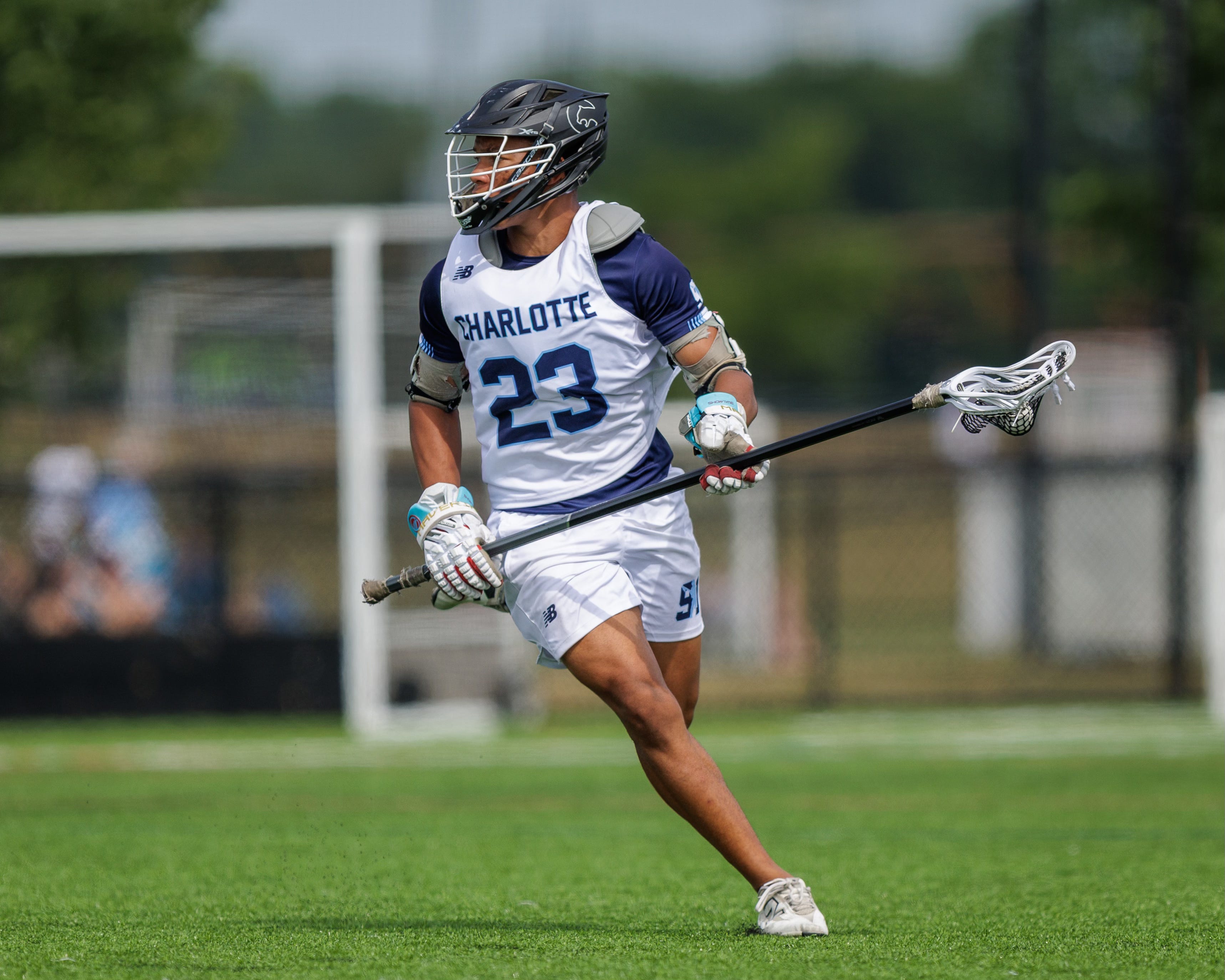
This summer, the NCAA passed new eligibility rules that give players five years to play five seasons of college sports. The clock starts either in your first year of college or the first school year after you turn 19.
Said another way:
If you get to college as a 17-year-old freshman, you have five years to play.
If you get to college as a kid who turns 20 in October of your freshman year, you get the same five years.
If you turn 20 as a senior in high school, you only get four years to play college sports.
Roster spots are limited at some schools in D1 and D2 lacrosse, and the sport is growing much faster at the youth level than at the college level. You have more players competing for essentially the same number of spots, or less, each year which is making them even harder to get.
I think the NCAA is actually giving parents and players instructions, if you want to play high level college athletics. You want to turn 19 during your senior year of high school to give yourself the best chance at playing in college. You’ll be as physically developed as possible for a college coach to optimize the five years they have with you. The clock starts in the school year after you turn 19 or when you step foot on campus… you might as well try to line that all up to be the same time.
In 2025, the NCAA put roster caps on a number of Division I schools that opted into a revenue-sharing model—primarily ACC and Big Ten lacrosse programs. Some schools did not opt in and therefore do not have NCAA-imposed roster caps, though they may still have school-imposed caps.
For men’s lacrosse, you cannot carry more than 48 players. This includes injured players who historically would have been redshirting (now irrelevant with 5-for-5).
Two key factors:
When the NCAA announced 5-for-5, they did not increase roster caps. If you historically played with four recruiting classes under a 48-player cap, you now have five recruiting classes under the same cap. Each class shrinks accordingly.
Just because players have five years doesn’t mean they’ll spend all five at the same school. Many will likely play four years in the Ivy League, Patriot League, or elsewhere, then transfer into the ACC or Big Ten for their fifth year. Coaches at revenue-sharing schools want to save scholarship money and roster spots for those transfers.
Examples:
Duke has six players in their 2027 class; I expect 2028 to look similar.
UVA has five in their 2027 class. That may grow a little over the next few weeks but it will still be small.
Notre Dame and UNC have ~11 players—they have no choice but to take smaller 2028 classes.
There will be a waterfall effect:
Players who used to be ACC/Big 10 recruits will now land in the Patriot League, the ASUN, etc.
Players who used to be Patriot League/ASUN/etc. recruits will look elsewhere across D1, D2, and D3.
Having said that, there is talk that schools without roster caps may take larger classes because they can now recruit players they used to lose to ACC/Big Ten programs. They might be able to enhance their roster with the new rules versus what they could historically land in recruiting but we’ll see how that plays out.
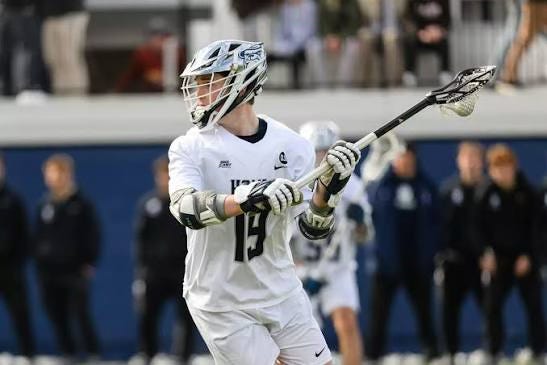
I could write an entire newsletter on this topic. I actually think there can be a lot of positives to private equity entering lacrosse because growth is essential to a PE firm. More kids playing is good for them and good for everyone. They will never invest in something and try to make it shrink. They’ve also helped bring improvements—LeagueApps, SportsYou, TourneyMachine, e-commerce platforms, and travel planning options all likely have PE ties and have improved the youth sports experience.
However, between parking fees, stay-to-play hotel rules, age/grade verification, and random registration fees, this summer had more of the “private equity in youth sports” feel than previous years. To be clear, some of this isn’t actually private equity—it’s just an easier way to describe the feeling.
Examples:
The most expensive tournament of the summer with the strictest stay-to-play rules is run by the college coaches.
Parking fees come from facility operators, not event operators. It’s not lacrosse (or sport) specific.
Age/grade verification was started by US Lacrosse—not a PE firm—as a way to increase membership. Once they started it, the private market looked to improve (and profit) off it.
Unfortunately, there isn’t much we can do. We can get frustrated, but it’s unlikely to change. And honestly, boys club lacrosse is better than most other sports. It’s much worse on the girls’ side. The fractured nature of boys club lacrosse creates a way of policing itself.
You’re never as good as you think you are. You’re never as bad as you think you are. You’re always somewhere in the middle. That applies to every player, every team, and every coach.
One of the best lines I heard this summer is that players are generally a level below where they think they are and two levels below where their parents think there are.
I’ve been fortunate since 5th grade to be surrounded by incredibly talented players. Our high school team was the #1 team in the country—and since we were a public school, it was all the kids we grew up playing rec with. Playing at UNC and then professionally for 10 years, everyone you play with was at some point among the best on their team, in their grade, or in the sport. Now coaching, I’ve worked with guys like Colby Barsz and Ryan Stines (PLL draft picks) and Bobby Van Buren, Jack Ransom, and Brevin Wilson (staples on top college teams). I’ve been surrounded by unbelievably talented players my entire lacrosse life.
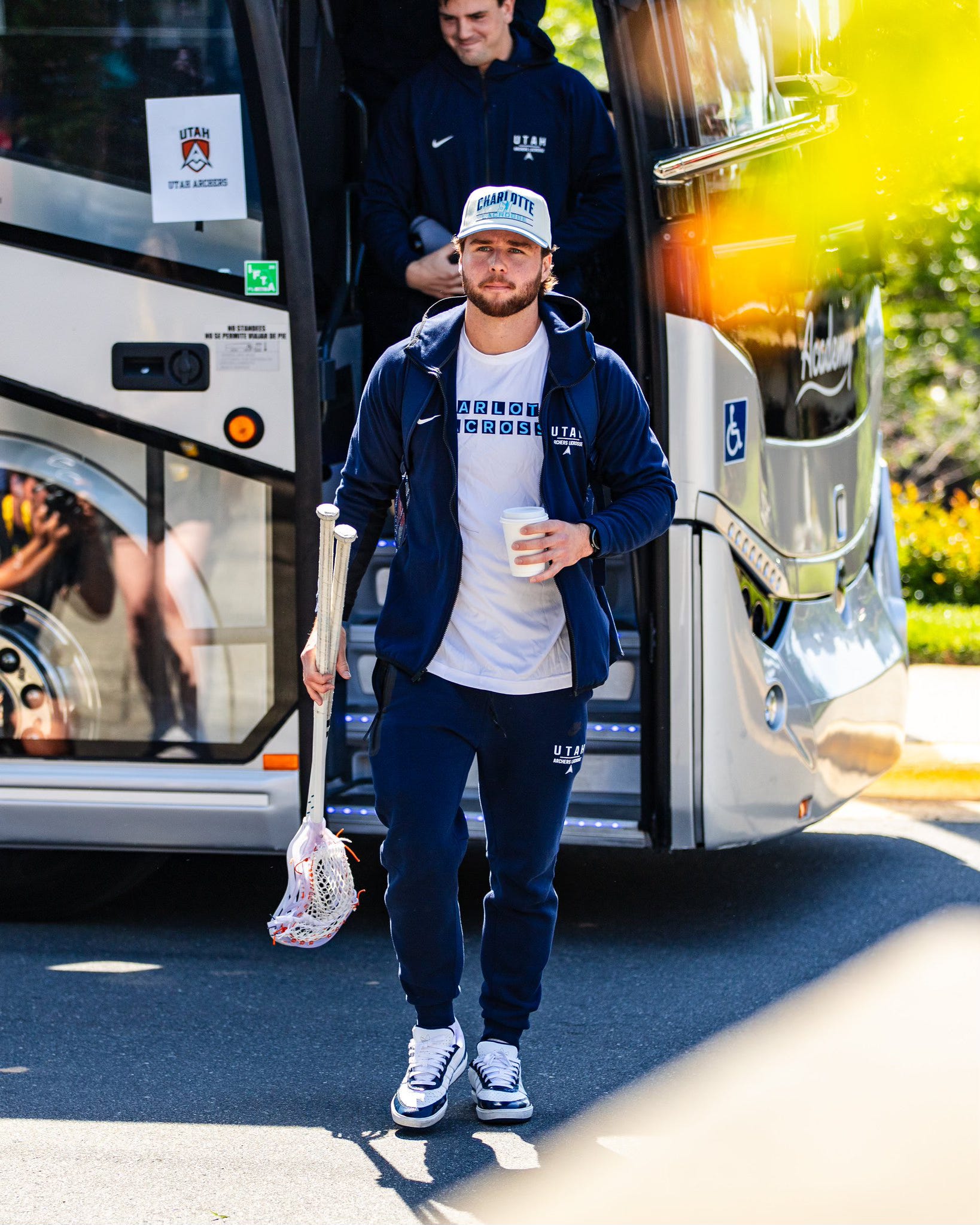
With that context, over the last year I have:
Had more than one parent tell me their child is “special” and needs something more to reach their goals that we couldn’t provide.
Had a parent tell me kids want to play on a team because their child is on it.
Had a middle school player tell a coach he’s one of the best players in the country.
Had a parent with no playing or coaching experience tell a very talented and experienced coach that he isn’t coaching correctly.
Had a parent tell me their elementary school player is among the best in the class.
Heard a middle school coach refer to a player as the best in the class. (Maybe… but call me after puberty.)
You get the point. You’re probably shaking your head just like I do. More often than not, the truly elite players are incredibly humble and just love playing ball.
The hubris in club lacrosse may be at an all-time high. Social media drives a lot of it, and that isn’t going anywhere. The business of youth sports encourages write-ups, rankings, and constant praise—deserved or not.
My advice to parents and players: you’re never as good as you think you are, and there is always someone better or something you can improve on. Be humble, constantly look for ways to improve, and recognize that everything you need to reach the highest level of lacrosse is right here… just like it was for Colby, Ryan, Bobby, Jack, Brev, Karter, Tucker, AK, and many more.
This past summer was a ton of fun with a lot of takeaways. Our players accomplished great things and continue to raise the bar for lacrosse in the Carolinas.
We’re kicking it all off again on August 31st when our travel teams start practicing, and on September 11th when our Academy programs and leagues begin.
You can learn more about our Academy programs here.
And about our Fall Leagues here.
We hope to see your son or daughter on the field soon!
Ryan Flanagan P.S. Still looking for a travel team for the 2026/2027 season? Complete one of our Team 91 Charlotte player applications to be considered for any openings:
Girls Application
No posts
Comments
Nothing yet. Say the first thing.
Sign in to join the conversation.