
Watching Christopher Nolan’s The Odyssey this past weekend with my family reminded me just how much I enjoy ancient travel myths and hero journeys. You know the ones I mean; the hero travels to far away lands full of magic, giants, dragons and sea serpents. Venture far enough from the familiarities of home and anything is possible.
Later writers, such as Jonathan Swift and C. S. Lewis, have carried on this tradition with stories like Gulliver’s Travels and The Voyage of the Dawn Treader (perhaps my favorite of the Narnia series). Swift was writing satire, and Lewis allegory, but what was the motivation for the original myth-tellers of old, captured in classics like The Odyssey? The likely answer to my mind is wonder.
Wonder is a wonderful thing. People often speak of how small the ancient world was with most people rarely, if ever, travelling far beyond the village of their birth. News of the outside world trickled in slowly, carried by itenerant bards, pilgrims and merchant traders. So in a certain respect, yes, their world was small compared to ours. Certainly it was much more local.
But by another way of thinking, their world was larger than we might appreciate. Precisely because the known world was so small, the world beyond the edge of the map loomed much, much larger in their imagination. In those dark places, there was room for all sorts of wonderful and fantastic things. “Beyond here there be dragons.” And why shouldn’t there be?
An island where a giant cyclopes dutifully shepherds his flock of sheep? Why not? Monsters of the deep that can sink ships? Certainly possible. Sirens who lure sailors to their death by their song? Is it really so hard to imagine? Vast indeed is the unknown.
Or it was, once upon a time.
Today, our world is fully charted; and not just charted, but available. From the comfort of my living room, I can spin the globe on Google Earth and zoom in on the coast of the Adriatic Sea, walk the streets of Jerusalem, or peek in on the Antarctic research station all dutifully monitored by the watchful eyes of never-sleeping sattelites.
Furthermore, the answer to any question of science, history, or culture that may pop into my head is only a search query away. There's no need to travel to a library to satisfy my curiosity, far less to an unknown land. We've eliminated the need for wonder.
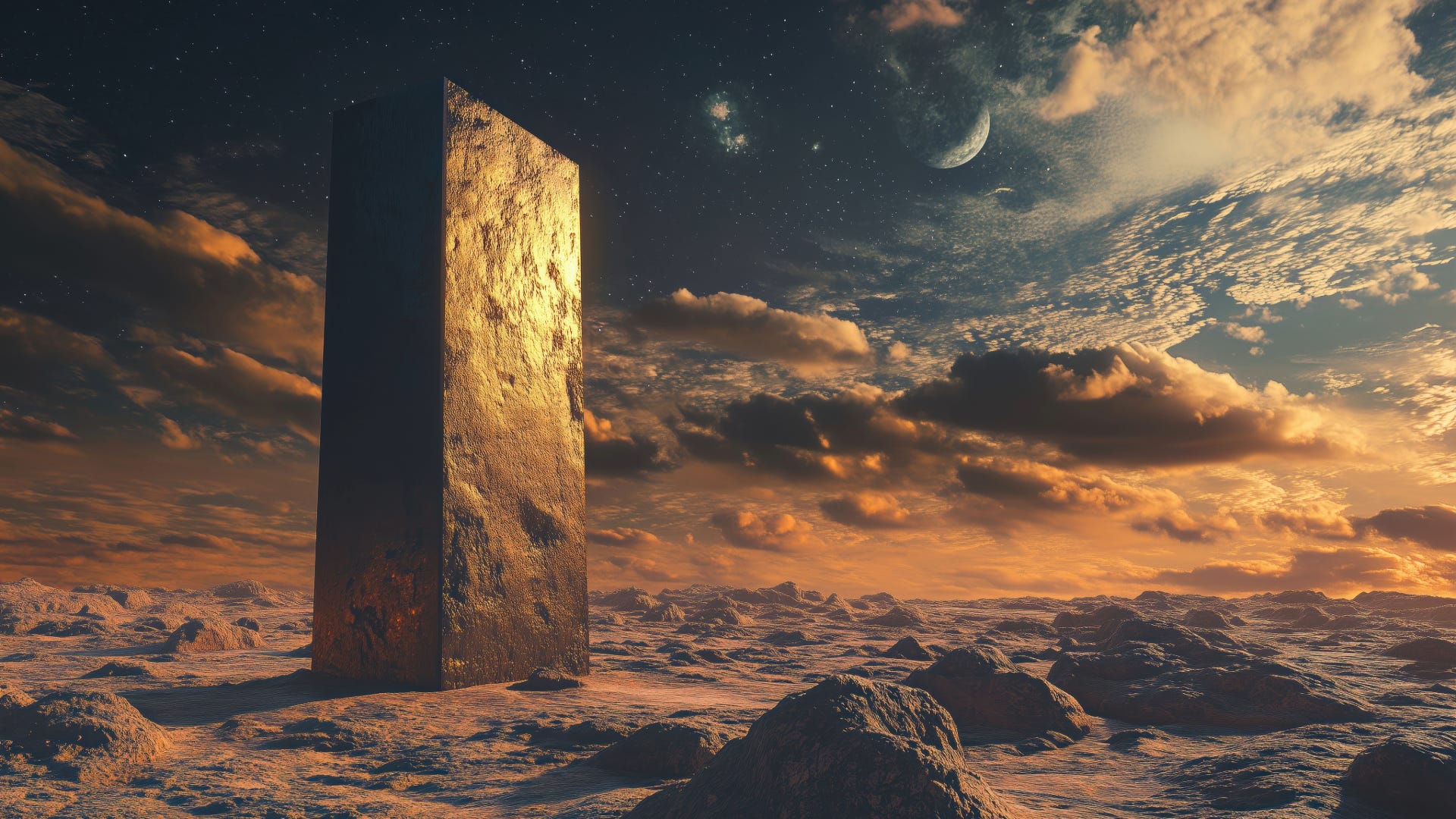
But the human capacity for wonder still remains. We cannot help but be tantlized by the possibilities that lie beyond the borders of our knowledge. I think this helps explain the modern fascination with aliens. With the earth fully exlored (more or less; we still really don't know what secrets the ocean depths may contain), the frontiers of modern exploration lie beyond our planet. The more we learn about the universe, the more we discover just how unbelievably large it is. Anything could be out there, even things that make ancient monsters look mundane!
This isn't to say aliens are just modern-day myths. Maybe they exist. Maybe they don't. (If you are curious about exploring the ramifications to the Christian faith of the existence of rational extraterrestrial beings, Jimmy Akin explores that question rather thoroughly in this episode of his Mysterious World podcast.)
Aliens loom large in the modern imagination precisely because they are unknown, and therefore could be anything. If we do discover extraterrestrial beings one day, I wonder how long they would hold their fascination.
Unicorns aren't real, but rhinoserouses are, and are they really any less strange? Dinosaurs couldn't breathe fire, but would our anscestors have considered them anything other than dragons? If giant squids don't qualify as sea serpents, I'm not sure what would. And have you seen a girraffe? Fantastic things really do exist; only our familiarity with them makes them feel mundane.
We are the prime example! Consider what a wonder the human person is. No other creature on earth tells myths, writes poetry, falls in love, wonders about the stars, or prays to unseen gods. Why do we, uniquely, do these things? Where does this impluse come from?
This leads us to another avenue of exploration beyond even the sea and the stars, which is the spiritual realm. Human beings have forever been curious about what forces operate beyond the observable limits of our physical experience. The ancient myths are full of angels and demons they called gods whose machinations intercepted at times with the human world.
The world of the spirit remains, even moreso than space, the great unknown beyond the edge of the map. The only way to get there, it would seem, is to make a journey you can't return from (though some have managed to swim a bit out from shore and come back with Near Death Experiences). What happens to our unquenchable human spirit after the body dies? If only someone from the other side were to come to reveal that to us …
Ultimately, I think this is what our fascination with the unknown is pointing us toward -- the great unknown that is God. We naturally intuit that there must be more to the world than what we see, more to discover than our limited experience might allow for. Our universe is truly full of wonder, and no matter how much we catalog and classify the things that are in it, there will always be more beyond the edge of our understanding.
In Homer's original Odysssey, Odysseus’ chief fault was hubris. He thought he was so clever, and his reliance on his own cleverness led him to no end of trouble. As our knowledge of this world increases, I hope our fascination with myths will keep us humble before the great mystery of all that yet lies beyond.
Comments
Nothing yet. Say the first thing.
Sign in to join the conversation.