
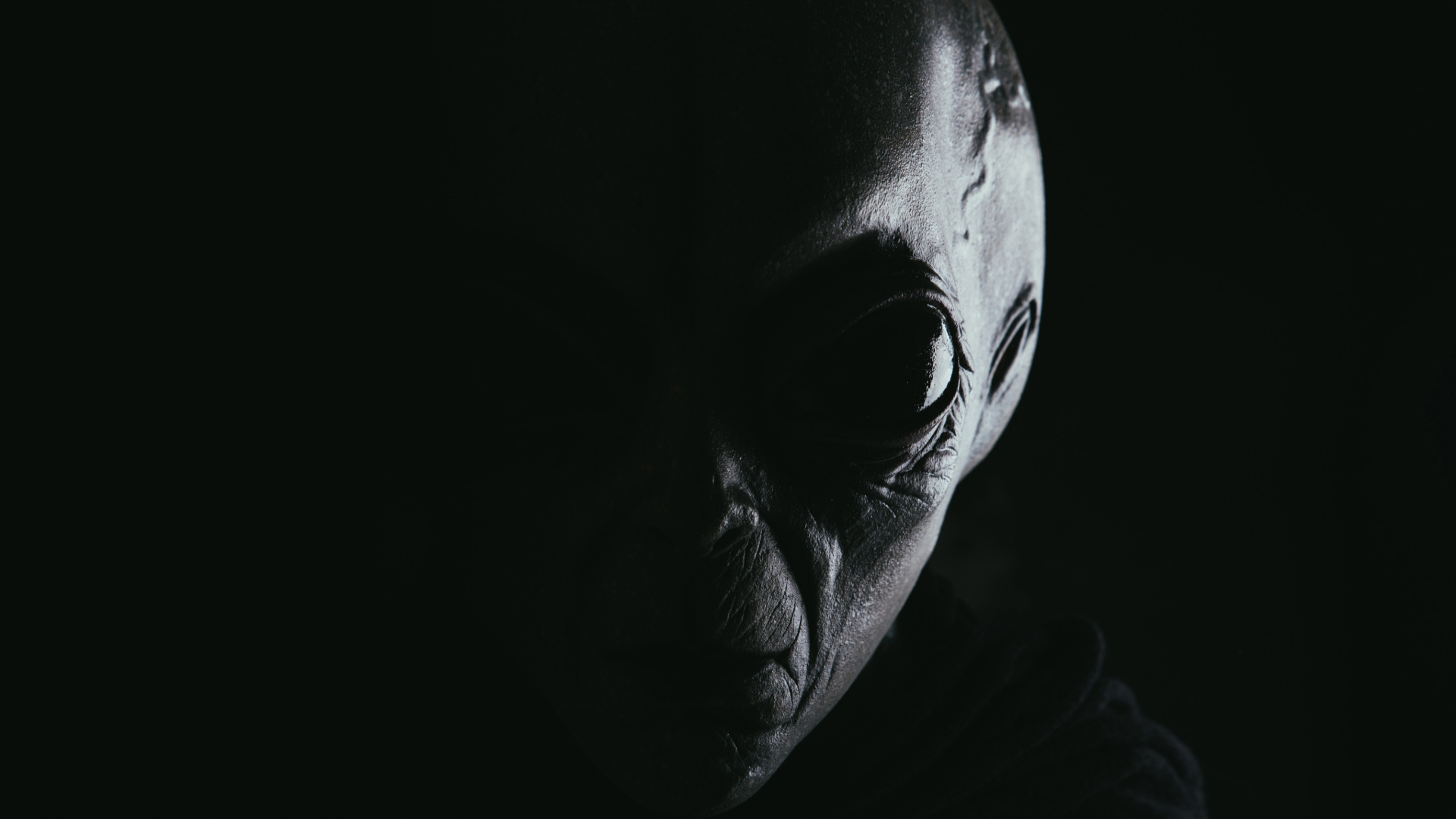
I had the chance recently to view Steven Spielberg's latest alien flick, Disclosure Day. I'm generally a fan of sci-fi movies, and in particular those dealing with government alien cover-ups. This movie in particular promised to explore how people of faith might respond the existence of advanced alien life, so I had a special interest in seeing it.
While I found it entertaining enough, I came away grossly disspointed at how it did (or more accurately did not) grapple with that issue. I have to say at the outset that Spielberg did manage to treat the topic respectfully, in the sense that religion was not presented as “the bad guy" or something silly that humanity needs to discard as a relic of the past. I am grateful for that. I'm just dissapointed in the shallowness of how faith was presented on screen.
One of the main characters is a young woman named Jane (played by Eve Hewson), whom we learn was once a novice pursuing a religious vocation. She is the primary catalyst for religious dialogue throughout the film. Somewhat typically, Catholicism serves as a cinematic stand in for religion in general.
The fact that Jane left the convent is meant to signal to us that she's not necessarily “all in" with religion. She's a questioner, but she still maintains a degree of faith, witnessed by the fact that when she and her boyfriend are in trouble, the monastary is where they run for refuge.
When said boyfriend, Daniel (Josh O'Connor) reveals to Jane his evidence that the government has been covering up the existence of intelligent extra-terrestrial life for decades, she expresses concern with how disclosure of this truth may impact people's belief in God. Daniel objects that he didn't think she even believed in God anymore, so why should she care about that. She responds that she still believes in God, she just “can no longer say with certainty that God is divine.”
That's when I inwardly groaned.
She believes in God, but no longer believes God is divine? I am an ordained minister with theology degrees and I have no idea what that is supposed to mean.
The word “divine" refers to God. Something is divine inasmuch as it pertains to God. That's the meaning of the word. So to say, “I believe in God, I just don't believe that he's divine,” is nonsensical. There are any number of things you may or may not believe about God. You may struggle to believe in God's goodness, for example, or in his transcendence. But to disbelieve in God's divinity is to disbelieve in the very concept of God.
The writers themselves seem to struggle with even basic concepts of God, which is what I find so dissapointing. A few moments later in the same scene, after saying that God is essential to how we (as humans) define ourselves and is “what keeps the whole civilzation together” -- good points, I might add -- she then says, “We've been raised to believe in a supreme being, and now you want to show actual supreme beings? People can't handle both.”
I'm sorry, what?
Here is what we (and Jane) know about our alien visitors at this point in the film: they are technologically advanced enough to travel between stars, and so at least in that regard possess a high level of intelligence; they physically appear smaller and weaker than we are. Later in the film we learn that their language is based around mathematics (the “universal language”) and that they regard empathy as the highest virtue. But does any of that make them supreme beings? Do the writers know what a supreme being is?
Jane is concerned that people will be tempted to worship the aliens as gods, and that's a fair concern. After all, we are tempted to worship celebrities and politicians, so why not aliens with advanced tech? There is a lot that can be explored along those lines. But the way that concern is expressed belies a childish, not-even-surface level concept of who and what God is.
The first line of the Creed, which Christians hold to as the most fundamental expression of faith, is, “I believe in God, the Father Almighty, maker of heaven and earth.” “Heaven and earth" here is an idiom that means everything, all that is.
God is the unique creator of all that is; the source of being itself. That is fundamental to a monotheistic faith. This means God cannot himself be a creature within the universe. He must be outside of creation, which is to say, transcendent. Further, to create existence out of nothing he must be infinitely powerful, which is to say, omnipotent. Most all the qualities of God we can deduce from natural reason flow from this one fact that he alone is the uncreated creator of all that is, which is to say the supreme being. Almond-eyed aliens with zoomy-zoomy spaceships and cool math clicky language don't even come close to that category — and someone who used to be a religious novice ought to know that. Jane's characterization of religious faith just comes across as unbelievable.
In another scene, she calls her former Mother Superior on the phone for some faith-based consolation, asking how she would react if she learned of the existence of alien life. To her credit, the good Mother says it wouldn't shake her faith at all. In fact, she rather expects that in all the vast universe, God probably did make other intelligent life. At least it wouldn't surprise her.
Jane pushes back, pointing out that Genesis says we (human beings) are God's supreme creation. Mother corrects her, saying Genesis only says we are God's supreme creation on earth.
Only Genesis says neither of those things.
Genesis says we are created in God's image and that we are to have dominion over the fish and the birds and “every living thing that moves upon the earth" (Gen 1:26-28). So there is a heirarchy to God's creation. But it never says we are God's supreme creation, on earth or anywhere else. In fact, the scriptures frequently menion beings created by God that are much more powerful than us, and indeed closer to God. They are called angels. Human beings are specifically called “lower" or “less" than the angels (Ps 8:5; Heb 2:7). Rather than representing a challenge to Christian faith, the existence of beings much more powerful than we are is actually embedded in Christianity.
Again, someone who was a former novice, and certainly a Mother Superior of a convent, ought to be familiar enough with scripture to speak about it intelligently, and that just doesn't come across in this film's dialogue. This tells me that, while the script writers thankfully showed some respect for the religious perspective in the film, they didn't take it seriously enough to learn even the most basic things about it. And that's dissapointing.
If you are interested in exploring the actual implications of the possible existence of alien life to Christianity, from people who do take that perspective seriously, I recommend the book Would You Baptize an Extraterrestrial, by Brother Guy Consolmagno, SJ, which offers answers to some of the most frequently asked questions received by Vatican astronomers, or, for a really deep-dive, listening to episode 55 of Jimmy Akin's Mysterious World, dealing with Aliens & Religion.
Comments
Nothing yet. Say the first thing.
Sign in to join the conversation.