
For the past two years, the boardroom question was “Which model should we use?” This week, the more consequential questions are becoming “Where will the compute come from? Who controls the data? How do we secure autonomous agents? And can we prove the economics?”
In the West, AI infrastructure is becoming a capital-and-energy story, while enterprise AI is increasingly being sold through consulting and implementation ecosystems. In the East, India is building sovereign capability while Singapore is benefiting directly from the global AI investment cycle. Across Australia and New Zealand, CIOs are moving toward hybrid-cloud and AI architectures while confronting the practical realities of data, sovereignty and infrastructure.
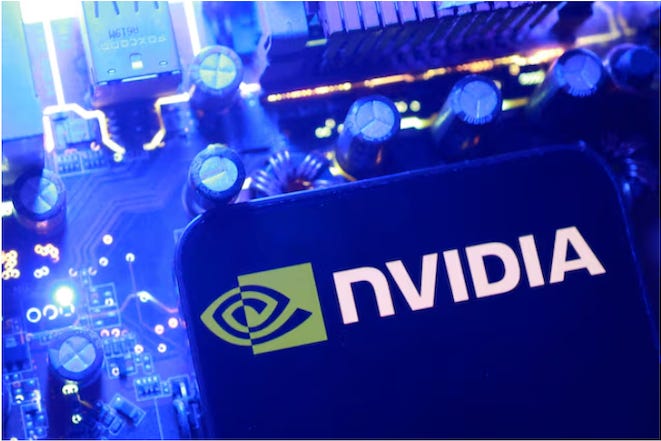
Nvidia’s latest move may be one of the clearest signals yet that the AI infrastructure race is becoming vertically integrated. The company has committed to provide up to $105 billion in guarantees supporting OpenAI’s 20-year lease of an Ohio data-centre project expected to scale to 8GW, while also investing $1.5 billion in SB Energy. The project demonstrates how access to power, land and financing is becoming as strategically important as access to GPUs. For CIOs, this raises a board-level question: are AI infrastructure commitments becoming long-term balance-sheet dependencies? (Reuters)
IBM and OpenAI are partnering to bring OpenAI technology into IBM’s enterprise ecosystem, strengthening the implementation and distribution layer around frontier models. The significance goes beyond another model partnership: enterprises increasingly want AI delivered with consulting, integration, governance and industry expertise, rather than simply access to an API. That is likely to accelerate the shift from “buying AI” to buying AI transformation capability. (TechCrunch)
Read the TechCrunch enterprise coverage
A new US presidential memorandum authorizes vetted private-sector companies to participate in federally supervised cyber operations against foreign transnational criminal organizations. The move represents a significant change in the relationship between government and technology companies: private firms could potentially participate in cyber surveillance and disruptive operations under government oversight. For CISOs and boards, the immediate issue is not participation — it is understanding how threat intelligence, incident response and offensive capabilities could increasingly overlap. (Reuters)
CrowdStrike’s latest threat research shows attackers are using AI to accelerate reconnaissance, credential theft and exploitation, while AI systems themselves are becoming attack surfaces. The company’s research found an average eCrime breakout time of just 29 minutes, with the fastest observed case at 27 seconds. The implication for enterprise architecture is uncomfortable: traditional patching and SOC response cycles may simply be too slow for machine-speed attacks. (CrowdStrike Holdings, Inc.)
Read CrowdStrike’s threat research
IBM’s $240 million agreement with Together AI will create a large Nvidia-powered inference cluster on IBM Cloud, initially using around 2,000 Blackwell chips. The strategic signal is important: enterprises are increasingly evaluating open models not just because they are cheaper, but because they can provide greater control over data, deployment and security. The model race may therefore evolve into a three-way competition between proprietary frontier models, open models and enterprise-specific models. (Reuters)
Europe’s AI Act is moving from policy discussion into implementation. The coming transparency and governance requirements mean enterprises need to know where AI is being used, what data it touches, what decisions it influences and how those uses can be demonstrated to regulators. For European CIOs — and global companies operating in Europe — AI governance can no longer sit solely with legal or compliance teams. It needs to become part of enterprise architecture and product development. (CIO)
The Western AI race is increasingly about capital, infrastructure, cyber resilience and enterprise distribution — not simply model performance.

Singapore raised its 2026 GDP growth forecast to 4.5–5.5%, following stronger-than-expected Q2 growth of 5.9%. The government specifically pointed to the global AI investment cycle and strong capital expenditure as important growth drivers. This matters beyond macroeconomics: Singapore is increasingly positioning itself as a regional node for AI infrastructure, semiconductor activity, cloud and high-value enterprise technology. (Reuters)
India’s AI strategy continues to centre on domestic compute, indigenous models, datasets and skills. MeitY’s latest reporting shows the IndiaAI ecosystem has established access to more than 38,000 GPUs, with 3,011 datasets and 243 AI models onboarded to AIKosh. The strategic implication for enterprises is significant: India is building the ingredients for a sovereign and commercially deployable AI ecosystem, rather than relying exclusively on foreign model providers. (MeitY)
Andhra Pradesh’s tax department reportedly used AI to generate an additional ₹750 crore per month through improved compliance monitoring and detection of anomalies. Regardless of the specific technology stack, the bigger lesson for CIOs is that government AI deployments are beginning to be judged on measurable operational outcomes rather than pilot numbers. The same discipline should apply inside enterprises: AI projects need a measurable business baseline and a measurable post-deployment result. (The Times of India)
Read the Times of India report
Andhra Pradesh’s government has announced an ambition to position Amaravati as a deep-tech capital spanning AI, cybersecurity, blockchain and quantum computing. While such ambitions need execution to become meaningful, the direction is strategically important: Indian states are increasingly competing for AI infrastructure, research, engineering talent and technology investment rather than only traditional IT services. (The Times of India)
Read the Times of India report
The Philippines’ IT-BPM ecosystem is explicitly framing its next phase as a move from traditional digital transformation toward AI transformation, with enterprises focusing on automation, talent redesign and new operating models. For CTOs with distributed delivery organisations, this matters because Southeast Asia’s advantage is increasingly shifting from cost arbitrage to AI-enabled delivery capacity. (CIB.O’s Transformation Summit)
Read the Cebu IT-BPM transformation report
The UAE continues to push AI into strategic infrastructure, including satellite communications and national-security applications. A reported partnership between UAE-based Space42 and Leonardo DRS focuses on integrating AI-enabled satellite capabilities with secure communications infrastructure. The board-level signal is that Gulf AI investment is increasingly tied to sovereignty, defence, communications and national infrastructure, rather than consumer applications alone. (Reddit)
Read the reported Space42–Leonardo DRS development
India is building capability, Singapore is benefiting from capital flows, Southeast Asia is redesigning delivery models, and the Gulf is tying AI to national sovereignty.

New research cited by Australian IT media indicates that 93% of Australian enterprises describe their cloud strategy as hybrid. This is an important counterpoint to the simplistic “everything moves to the public cloud” narrative. AI workloads are forcing organisations to think more carefully about data residency, latency, cost, security and the economics of moving data between environments. (IT Brief Australia)
Read the Australian cloud analysis
Australia’s AI infrastructure ambitions increasingly intersect with electricity availability, renewable energy and cooling efficiency. Tasmania’s proposed AI Factory Zone, for example, illustrates the attractiveness of locating compute where renewable power is available and where innovative cooling architectures can reduce energy consumption. For Australian CTOs, power availability may increasingly become part of technology strategy.
Read the Tasmania AI data-centre analysis
SAP’s AI strategy in Australia is increasingly centred on bringing AI into core ERP, finance, procurement and supply-chain workflows rather than treating AI as a separate application. The significance for CIOs is architectural: the next productivity gains may come from AI embedded inside systems of record, where agents can actually execute business processes. (SAP)
Read SAP’s Australia & New Zealand AI strategy
The recent Australian technology leadership conversation is increasingly shifting from “what can AI do?” toward how organisations can establish trusted data, governance and measurable outcomes. The iTnews State of Data & AI research highlights the tension between scaling AI and maintaining trust — a particularly important issue for regulated industries such as banking, healthcare and government. (iTnews)
Read the iTnews State of Data & AI research
New Zealand’s emerging AI data-centre build-out is prompting questions around energy use, noise, transparency and who ultimately pays for infrastructure. That debate is worth watching because it illustrates a broader issue facing every AI-heavy economy: data centres are no longer invisible IT infrastructure; they are becoming physical infrastructure projects with political and community consequences. (Reddit)
Read the community discussion around NZ AI data centres
The Australian enterprise market is increasingly looking beyond conventional data-science teams toward AI engineering, agent orchestration, security and AI-enabled software development. Recent enterprise events and programmes across Sydney and Melbourne are reflecting this shift. For CTOs, the talent question is becoming less about “how many AI specialists do we hire?” and more about how many existing engineers can become effective AI-native builders? (Clutch Events)
Read the Sydney enterprise AI trend
Australia and New Zealand are moving into the practical phase: hybrid cloud, AI infrastructure, energy, governance and workforce redesign.
Map every AI agent with production access — identity, permissions, data access, APIs and ability to take action.
Calculate AI infrastructure exposure — GPU commitments, cloud contracts, inference costs, power dependencies and data-transfer costs.
Create an AI ROI scorecard — productivity alone is insufficient; track revenue, cost, cycle time, quality and risk outcomes.
Review shadow AI — identify employees using consumer AI, coding agents and autonomous tools outside the approved technology stack.
Test AI-specific cyber scenarios — prompt injection, compromised agents, stolen credentials, malicious MCP/tool connections and synthetic identity attacks.
Review data sovereignty — particularly if your AI workloads cross India, Singapore, Europe, Australia or the Gulf.
Prepare for regulatory evidence — document what AI systems do, what data they use, who owns them and how humans intervene.
Revisit the talent model — train existing engineers in agentic architecture, AI security and evaluation rather than relying exclusively on AI hiring.
Challenge every AI pilot — if it cannot show a credible path to production and measurable value, stop funding it.
19 Aug — CodeSecCon 2026
DevSecOps, secure coding and safe AI integration. Event details
25 Aug — Forrester AI Forum, Sydney
Enterprise AI strategy and adoption. Event details
26 Aug — Developing an AI Agent Governance Strategy
A useful session for teams moving agents into production. Event details
27 Aug — 2026 iAwards, Sydney
Australian technology and innovation showcase. Event details
2 Sep — Integrate 2026 + Security Exhibition & Conference, Sydney
Relevant for infrastructure, security, integration and enterprise technology leaders. Event calendar
8 Sep — Aotearoa AI Summit, New Zealand
A key regional AI conversation for New Zealand leaders. AI Forum New Zealand event calendar
9 Sep — WWT AI Day, Singapore
Focus on moving AI from priority use cases into production scale. WWT AI Day programme
22 Sep — Gartner Security & Risk Management Summit, London
A useful European checkpoint for cyber resilience and AI risk. Event details
6 Oct — WWT AI Day, Mumbai
Enterprise AI architecture, agents, security and infrastructure. WWT AI Day programme
8 Oct — WWT AI Day, Bangalore
AI productionisation and enterprise infrastructure. WWT AI Day programme
No posts
Comments
Nothing yet. Say the first thing.
Sign in to join the conversation.