
This week’s signal is clear: AI is becoming an enterprise infrastructure story, not simply a software story. In the West, the debate is shifting toward who pays for compute, power and risk. In India and Southeast Asia, infrastructure and adoption are accelerating. Down Under, governments are moving more aggressively into AI governance and sovereign capability.
For CTOs, the boardroom question is therefore changing from “Where can we use AI?” to “What operating model, infrastructure and governance do we need when AI becomes embedded everywhere?”
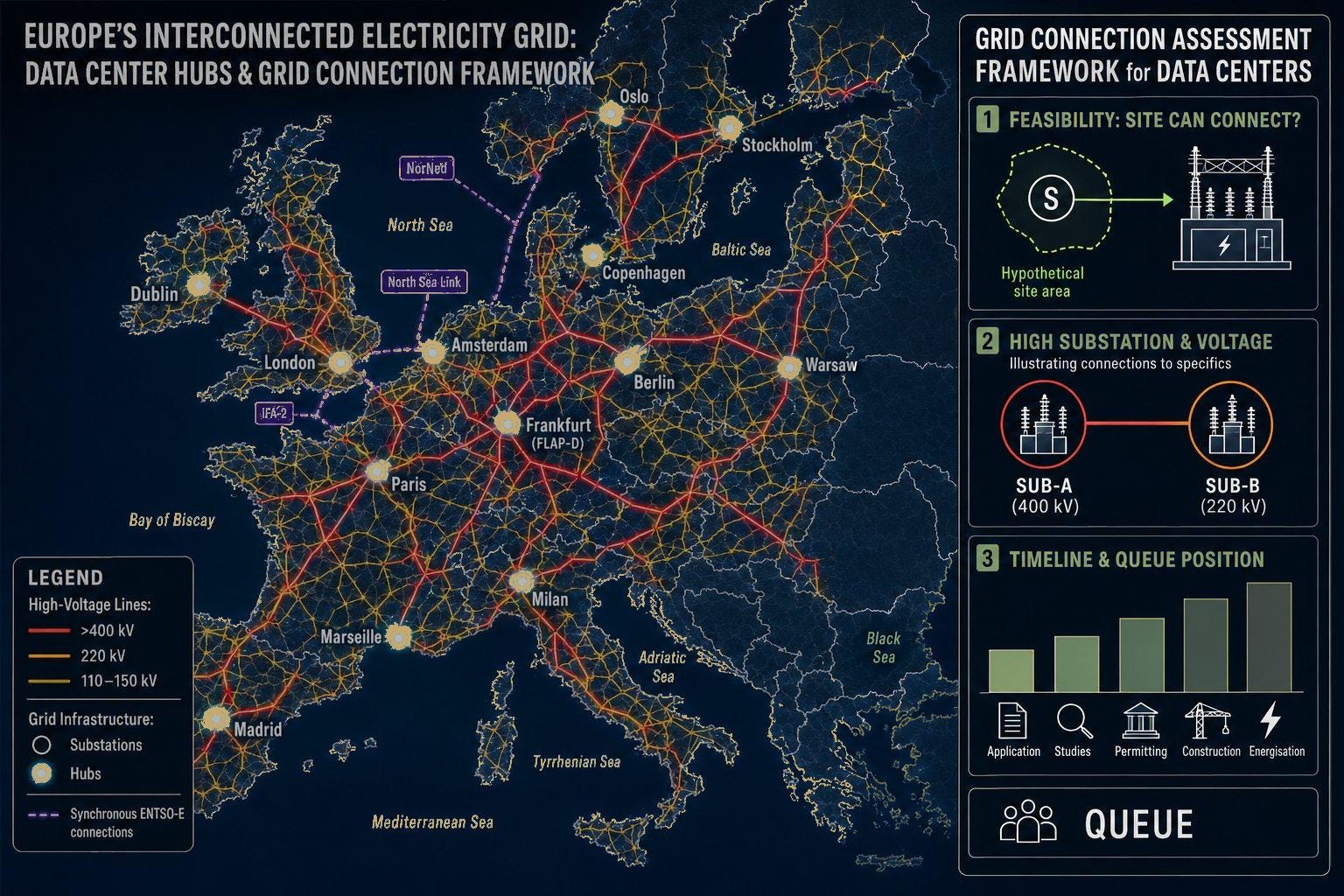
US lenders are increasingly scrutinising data-centre projects not just for demand and technology risk, but for local opposition, power availability, water consumption and permitting. Reuters reports that at least 75 projects worth roughly $130 billion encountered local resistance in Q1, forcing financiers to build community and environmental risk into their underwriting. For CTOs, the implication is important: infrastructure strategy can no longer be separated from energy, regulatory and stakeholder strategy.
Reference: Reuters — Lenders scrutinize US data center financing
Anthropic is turning Claude Code’s auto mode on by default, reducing the amount of human intervention required while software is being developed. The move is another indication that AI coding is moving from “developer assistant” toward agentic engineering infrastructure. CTOs should now be thinking about code-review controls, identity, permissions, auditability and rollback — not simply whether developers are allowed to use coding copilots.
Reference: TechCrunch — Anthropic turns Claude Code auto mode on by default
OpenAI has acquired presentation startup NextSlide, with the team joining ChatGPT. The strategic significance is larger than the acquisition itself: AI platforms are increasingly moving up the enterprise workflow stack, from answering questions to creating business artefacts and completing knowledge-work tasks. Expect competition between AI vendors to increasingly centre on workflow ownership rather than model benchmarks alone.
Reference: TechCrunch — OpenAI acquires NextSlide
The European Union is planning seven AI gigafactories backed by roughly €10 billion as it attempts to reduce dependence on US and Chinese AI infrastructure. This is more than an industrial-policy story: European enterprises are likely to have a growing choice of sovereign compute, local AI infrastructure and region-specific deployment options. CTOs operating across Europe should factor sovereignty into future cloud and AI architecture decisions.
Reference: Reuters — EU plans seven AI gigafactories
Recent European earnings are showing that established technology businesses — rather than only AI-native startups — may capture significant value from the AI boom. Their advantages include existing enterprise relationships, distribution, data and installed infrastructure. The boardroom takeaway: AI disruption does not automatically mean incumbent disruption; companies with strong enterprise distribution may be better positioned to monetise AI.
Reference: Reuters — Europe’s established tech firms emerge as unexpected AI winners
Researchers are seeing AI-generated “slop” entering the vulnerability-reporting ecosystem, creating fake or low-quality vulnerability reports and increasing pressure on already stretched disclosure pipelines. As AI becomes better at generating both code and security findings, enterprises need to improve the quality and provenance of security intelligence, rather than assuming more automated reports automatically mean better security.
Reference: The Register — AI-generated fake vulnerabilities enter the CVE pipeline

Microsoft launched its largest Indian data-centre facility in Hyderabad, taking its Indian cloud footprint to four regions. Adani Group and HDFC Bank are among early users, while Microsoft has committed billions of dollars to expanding its Indian operations. The larger signal for CTOs is that India is rapidly becoming a strategic AI infrastructure market, not merely an engineering talent market.
Reference: Reuters — Microsoft opens largest India data centre hub
The expansion of hyperscaler capacity is occurring alongside India’s own AI-infrastructure investments. For enterprises, the growing availability of local compute should make latency, data residency and workload economics more attractive for AI deployments. The strategic question is no longer whether to use cloud AI, but which workloads should remain regional, sovereign or hybrid.
Reference: Reuters — India AI/data-centre expansion
Meta has launched Muse Glimmer, adding another dimension to the increasingly competitive AI model landscape. The important issue for enterprise architects is not simply model quality but model optionality: companies increasingly need architectures that can move between proprietary and open models without rebuilding their applications.
Reference: Indian Express — Meta launches Muse Glimmer
New research reported by CRN Asia indicates that Singapore businesses increasingly expect a payoff from agentic AI, even as organisational readiness remains uneven. That gap will be familiar to many CIOs: the limiting factor is increasingly process redesign, data quality, governance and workforce capability, rather than access to models.
Reference: CRN Asia — Singapore businesses expect agentic AI payoff despite readiness gaps
Researchers in India have proposed NiyamAI, an architecture designed to make AI-agent safety constraints cryptographically verifiable. The work highlights an emerging enterprise requirement: as agents receive permissions to send messages, query databases or execute actions, “trust the model” is not an adequate control framework. Agent permissions, tool calls and policy enforcement will increasingly need auditable evidence.
Reference: NiyamAI research paper
An Indian parliamentary panel has called for faster progress on an India-US trade agreement while specifically highlighting AI, cloud computing, cybersecurity, digital health and fintech as higher-value export opportunities. For technology leaders, this reinforces India’s positioning not only as an engineering hub but as a global delivery and technology-services platform for AI-era workloads.
Reference: Reuters — India parliamentary panel on US trade and technology services
South Australia has announced a Royal Commission into the use and impact of AI, beginning in October and reporting in 2027. The inquiry will examine AI across areas including education, healthcare, industry and the arts. This is a significant escalation: AI governance is moving from policy discussion toward formal institutional scrutiny. Enterprises should expect more attention on accountability, safety, privacy and deployment practices.
Reference: The Guardian — South Australia announces Royal Commission into AI
The state has signed an MOU with OpenAI covering AI skills, innovation, investment and infrastructure. The interesting tension is that Australia is simultaneously trying to attract frontier AI investment while increasing scrutiny over how AI is deployed. That dual approach could become a model for other jurisdictions: attract compute and capability, but attach stronger governance expectations.
Reference: The Australian — South Australia signs AI MOU with OpenAI
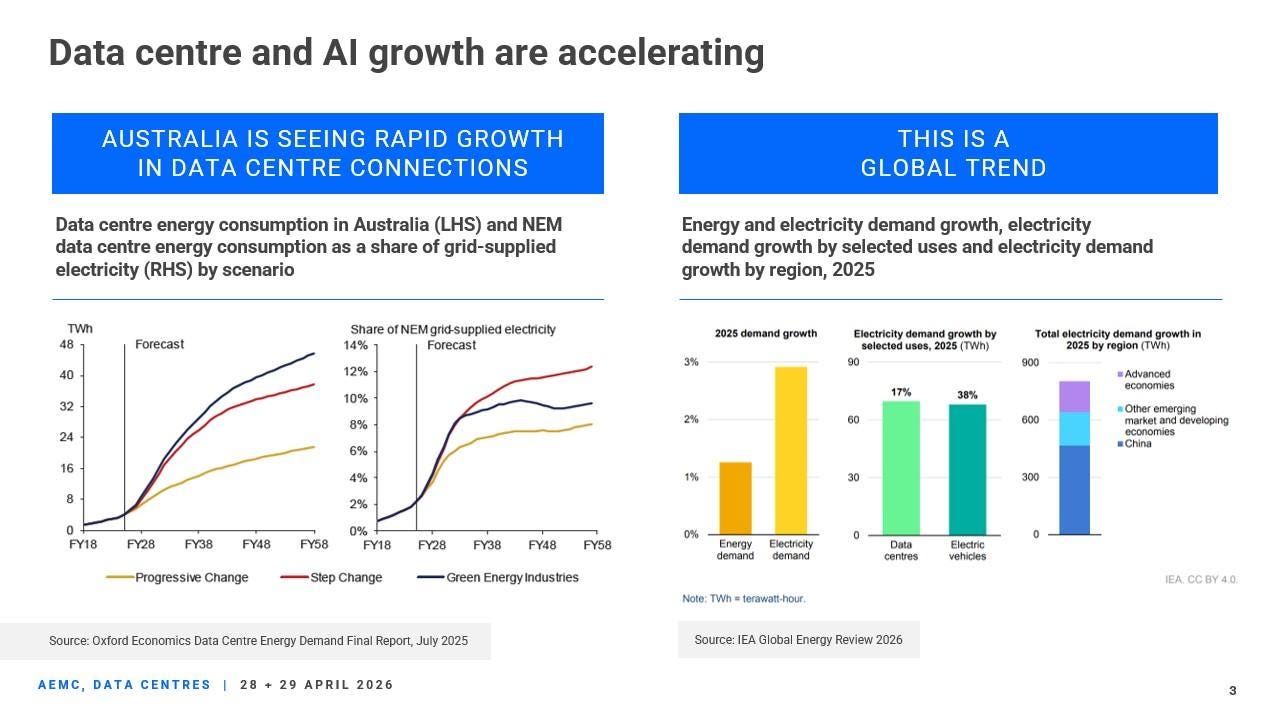
The Northern Territory is now at the centre of a dispute over whether new data centres should rely primarily on renewable energy or gas-backed generation. The issue matters to technology leaders because AI infrastructure decisions increasingly depend on power availability, grid capacity, energy cost and regulatory approval, not simply land and connectivity.
Reference: The Courier-Mail — Renewables-first rule for NT data centres
The Future Fund is taking a deliberately diversified approach to AI investment, warning that it is too early to know which companies, models or technology stacks will ultimately dominate. The same logic applies to enterprise architecture: avoid designing the organisation around one model vendor, one GPU architecture or one agent framework. Optionality is becoming a strategic asset.
Reference: The Australian — Future Fund warns it is too early to pick AI winners
Recent Australian industry analysis points to rapid growth in public-cloud and AI infrastructure spending, while highlighting persistent problems around fragmented data, legacy architectures, governance and skills. The important CTO lesson is that Australia does not primarily have an AI access problem; it has an AI execution problem.
Reference: iTnews — 2026 Cloud Covered Report
1. Audit your AI infrastructure dependency.
Map where you depend on a single model provider, cloud, GPU architecture or AI API. Identify the workloads that would be difficult to migrate.
2. Put power and infrastructure on the AI roadmap.
For organisations operating large compute environments, track electricity availability, data-centre capacity, cooling, grid constraints and energy pricing alongside cloud capacity.
3. Treat agents as privileged software.
Every production agent should have defined permissions, identity, tool access, audit logs, human escalation and a kill switch.
4. Establish an AI unit-economics dashboard.
Track cost per task, cost per successful outcome, inference spend, utilisation and human-review cost — not just token consumption.
5. Prepare for regulatory fragmentation.
US, EU, India, Singapore, Australia and New Zealand are moving at different speeds. Your global AI architecture needs a policy abstraction layer as well as a technical one.
6. Revisit your workforce architecture.
Don’t ask only how many people AI can replace. Ask which workflows should be redesigned, which roles become supervisors of agents and which capabilities become strategically scarce.
11 August — IDC & HPE Executive Roundtable: Making AI Real, Jakarta: The executive roundtable will focus on turning AI ambitions into practical enterprise outcomes, with discussions around AI business cases, infrastructure and deployment. For CTOs and IT leaders, it offers a useful perspective on moving beyond experimentation toward scalable AI adoption.
13 August — AI & Data Summit Malaysia, Kuala Lumpur: The summit will explore the evolving AI and data landscape, with particular relevance to agentic AI and enterprise adoption. Technology leaders can use the event to understand how organisations in Southeast Asia are approaching AI implementation and data readiness.
13–14 August — IEEE SASIGD 2026, Hyderabad: The conference will focus on responsible and sustainable approaches to AI and digital technology. It is particularly relevant for technology leaders looking at AI governance, responsible deployment, sustainability and the long-term implications of scaling AI systems.
20 August — Forrester AI Forum Singapore: The Singapore forum will bring together technology leaders around AI strategy, enterprise transformation and emerging technology priorities. CTOs can expect discussions focused on translating AI investments into measurable business outcomes.
25 August — Forrester AI Forum Sydney: The Sydney edition will focus on AI strategy, transformation and enterprise adoption in the Australian market. It should be particularly relevant for IT leaders assessing how AI is changing operating models, technology investments and workforce strategies.
13–15 October — TechCrunch Disrupt 2026, San Francisco: TechCrunch Disrupt will bring together startups, investors and technology leaders, with AI expected to remain a major theme. For CTOs, the event is worth watching for emerging AI companies, enterprise technologies, funding trends and potentially disruptive technologies that could influence technology roadmaps.
The AI race is entering its infrastructure-and-governance phase.
The winners will not necessarily be the organisations with the most AI pilots or the largest model. They will be the ones that can combine compute + data + energy + security + governance + redesigned workflows into a repeatable operating model.
For CTOs, the question for the next quarter should be: Can our architecture absorb AI becoming 10× more autonomous without becoming 10× more risky or expensive?
No posts
Comments
Nothing yet. Say the first thing.
Sign in to join the conversation.